29 Yes or No Survey Questions Examples
Explore 25 yes or no survey questions examples with clear sample questions to improve surveys, boost response rates, and guide better insights.
Yes or no survey questions are closed-ended prompts that help you collect fast, clear answers without making people overthink it. In yes or no surveys and yes or no questionnaires, that simplicity often leads to higher completion rates and analysis that is refreshingly painless.
Fast answers, useful patterns
Here’s the thing: you can learn a lot from a tiny checkbox. In this guide, you’ll find practical yes or no questionnaires, good yes or no survey questions by survey type, when to use them, and how to turn binary feedback into action.
Customer Satisfaction Yes or No Survey Questions
Sample questions
Were you satisfied with your overall experience today?
Did our product meet your expectations?
Was your issue resolved during your first interaction with us?
Would you purchase from us again?
Did you find our checkout process easy to complete?
Quick feedback, zero customer homework
Customer satisfaction is one of the best places to use yes or no questionnaires because you get fast answers without asking people to write a mini memoir.
Plus, yes or no surveys make it easy to spot friction points fast, especially when customers are fresh off a purchase, support chat, delivery, or service visit.
Why & When to Use
Use these good yes or no survey questions when you want a quick read on satisfaction, service quality, and immediate customer sentiment.
They work especially well in post-purchase surveys, support follow-ups, delivery check-ins, and post-service yes no questionnaires sent by email or SMS.
Here’s the thing: most customers will answer one-click questions, but far fewer will happily tackle a long form while waiting for coffee or pretending to enjoy hold music.
For practical use, keep your yes or no questionnaires focused on the moments that matter most:
overall satisfaction after an interaction
whether expectations were met
whether a problem was resolved quickly
likelihood of buying again
ease of checkout or booking
On top of that, pair one key yes or no question with an optional open-text follow-up like “What could we improve?” so you get context without overwhelming people.
That way, your yes or no surveys stay simple, but still give you useful insight you can actually act on.
Pew Research Center found closed-ended forced-choice yes/no questions can outperform “select all that apply” formats by reducing underreporting in online surveys (source).
Create a yes or no survey in HeySurvey in 3 easy steps
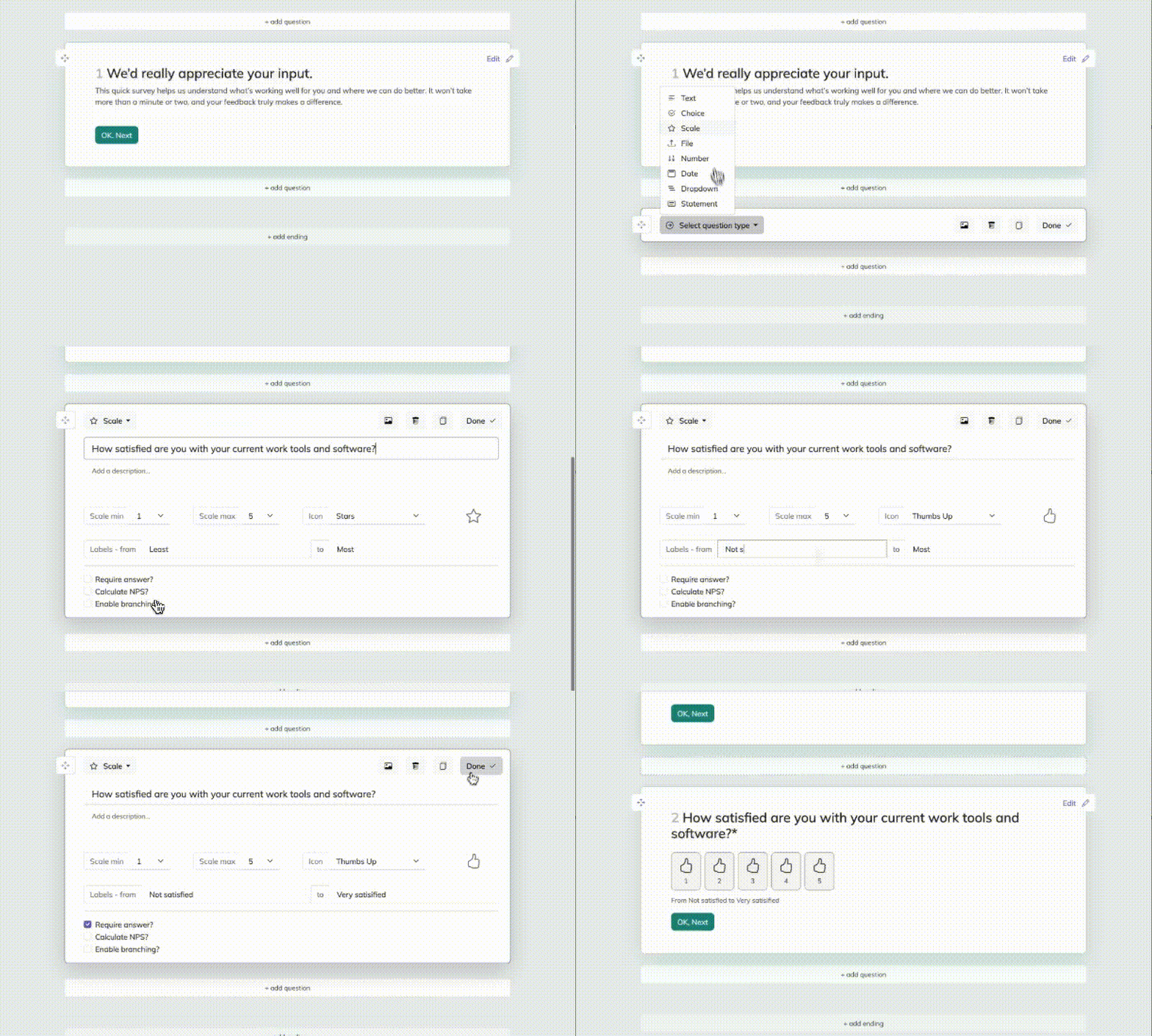
Create a new survey
Open HeySurvey and start from a template using the button below, or choose a blank survey if you want to build from scratch. You can begin without an account, but you’ll need one to publish and view responses. Give your survey a clear name so it’s easy to find later.Add questions
Click Add Question and choose a Choice question. Enter your yes/no question, then add two answer options: Yes and No. You can mark the question as required if you want every respondent to answer it. Repeat this step for each yes-or-no question you want to include.Publish survey
Review your survey in Preview to make sure everything looks right. When you’re ready, click Publish to create a shareable link. You can then send the survey to your audience and start collecting answers right away.
Employee Engagement Yes or No Questionnaires
Sample questions
Do you feel valued at work?
Do you clearly understand your job responsibilities?
Do you have the tools you need to do your job well?
Would you recommend this company as a good place to work?
Have you received useful feedback from your manager in the past month?
Fast answers can reveal slow-building culture problems
Employee engagement is a smart use case for yes or no questionnaires because you can quickly gauge morale, role clarity, workplace support, and day-to-day engagement without turning the survey into a homework assignment.
Plus, yes or no surveys often get better participation from busy teams who do not have time to wrestle with long forms between meetings, messages, and the mysterious disappearance of lunch breaks.
Why & When to Use
Use these yes no questionnaires when you want a quick pulse on how people feel, what they understand, and where support may be missing.
They work especially well for pulse surveys, onboarding feedback, manager check-ins, and internal culture reviews where speed and clarity matter.
Here’s the thing: anonymity can make a big difference, because people are much more likely to answer honestly when they know their response will not boomerang back into tomorrow’s one-on-one.
To make your yes or no questionnaires more useful, keep each question focused on one issue at a time:
morale and feeling valued
clarity around responsibilities
access to tools and resources
confidence in leadership or management
recent feedback and support
On top of that, repeat your yes or no surveys over time instead of relying on one snapshot.
That helps you spot patterns, track changes, and build better yes no questionnaires that lead to action, not just a spreadsheet with feelings.
Brief pulse surveys of 5–10 focused questions can identify early disengagement and work best when employees trust responses are anonymous. Source
Market Research Yes or No Surveys
Sample questions
Have you heard of our brand before today?
Have you purchased this type of product in the past six months?
Would you consider switching from your current provider?
Do you believe this product solves a real problem for you?
Would you pay more for a product with this added feature?
Quick answers can give you early market signals before you spend bigger money
Market research is one of the best uses for yes or no questionnaires when you need fast validation around demand, brand awareness, buying habits, or early product-market fit clues.
Plus, yes or no surveys help you gather simple directional data without asking people to write a mini memoir about shampoo, software, or snack preferences.
Why & When to Use
Use these yes or no questionnaires when you want a quick read on whether people know your brand, buy in your category, or see value in a new idea.
They are especially useful for audience segmentation, concept testing, product development, and competitor comparisons where speed matters and you need answers before going deeper.
Here’s the thing: yes no questionnaires are great for validation, but they should not make the whole decision for you.
On top of that, the smartest teams pair yes or no survey questions with segmentation data so they can see who said yes, who said no, and which groups matter most.
Keep your good yes or no survey questions clean and neutral so you do not accidentally lead people toward the answer you want.
Use market research yes or no surveys to explore:
brand awareness
recent buying behavior
willingness to switch
perceived problem-solution fit
feature-based price tolerance
Plus, combine your yes or no surveys with age, location, usage habits, or purchase behavior for sharper insights.
Event Feedback Yes or No Survey Questions
Sample questions
Did the event meet your expectations?
Was the registration process easy?
Did you find the content relevant to your needs?
Would you attend another event hosted by us?
Did the event start and end on time?
Fresh feedback is gold when the coffee is still warm and the session is still fresh in your mind
Event feedback is a perfect fit for yes or no questionnaires because you can quickly measure success without making attendees work too hard after a webinar, workshop, conference, or training session.
Plus, yes or no surveys help you spot what worked, what flopped, and what quietly caused friction before the next event rolls around.
Why & When to Use
Use these yes or no questionnaires right after the event ends, when details are still clear and people do not have to play detective with their memory.
They work especially well for webinars, conferences, workshops, training sessions, and virtual events where fast feedback can guide immediate improvements.
Here’s the thing: yes or no surveys are excellent for catching operational issues quickly, especially when you want clear signals on timing, registration, access, and attendee satisfaction.
For cleaner analysis, separate logistics questions from content questions so you can tell whether the problem was the schedule, the sign-up flow, or the actual session material.
Use yes no questionnaires to review:
event expectations
registration experience
content relevance
repeat attendance intent
timing and schedule reliability
On top of that, good yes or no survey questions make it easier to compare one event against the next without turning your spreadsheet into a jungle.
SurveyMonkey recommends sending short post-event yes/no surveys immediately after an event because fresh feedback is easier to analyze and helps pinpoint friction quickly (source)
Product Feedback Yes or No Questionnaires
Sample questions
Was the product easy to use on your first try?
Did the setup instructions make sense?
Have you used this feature more than once?
Did the product solve the problem you bought it for?
Would you recommend this product to someone else?
Quick answers can uncover big product truths before your support inbox starts doing cardio
Product feedback is one of the smartest uses for yes or no questionnaires because you can learn fast whether people understand your product, use its features, and actually get value from it.
Plus, yes or no surveys give you clean signals without asking users to write a mini memoir after sign-up, which is good for everyone involved.
Why & When to Use
Use these yes or no questionnaires to assess usability, feature adoption, onboarding clarity, and overall product fit across digital and physical products.
They work especially well for SaaS tools, apps, digital products, physical goods, and beta testing programs where quick feedback can highlight barriers before they become habits.
Here’s the thing: good yes or no survey questions help teams quickly identify friction in onboarding and usability, especially when users drop off early or never return after first use.
To make yes no questionnaires more useful, map each question to a product goal so you know whether you are measuring adoption, retention, satisfaction, or problem-solution fit.
Use yes or no surveys at key lifecycle points:
right after sign-up to test onboarding clarity
after first use to measure usability
after repeat use to track adoption and value
On top of that, these yes or no questionnaires make it easier to see whether the issue is setup, feature discovery, or overall product experience.
Lead Generation and Qualification Yes or No Survey Questions
Sample questions
Are you currently looking for a solution to this problem?
Do you have a budget allocated for this purchase?
Do you need to implement a solution within the next three months?
Have you used a similar product or service before?
Would you like a team member to contact you?
Short forms can do surprisingly heavy lifting when your goal is better leads, not more scrolling
Yes or no questionnaires are a smart way to qualify leads without turning your form into a tiny hostage situation.
Plus, yes or no surveys help you quickly spot buyer readiness, urgency, need, and overall fit, which makes follow-up a whole lot easier for your team.
Why & When to Use
Use these yes no questionnaires when you want to identify who is ready to buy, who needs nurturing, and who is better suited for a self-serve path.
They work especially well on website forms, consultation requests, sales intake surveys, and pre-demo questionnaires where speed matters and attention spans are not exactly training for a marathon.
Here’s the thing: good yes or no survey questions should stay brief, focused, and essential so people do not abandon the form halfway through.
A few well-placed yes or no questionnaires can help you route leads more effectively:
sales-ready leads to your outreach team
early-stage leads to nurture campaigns
lower-fit leads to self-serve resources
On top of that, yes or no surveys feel less intrusive than long qualification forms, especially when you only ask what truly helps determine fit.
Keep it lean, use only the must-know questions, and you will collect cleaner signals without making prospects work for the privilege.
Best Practices for Writing Good Yes or No Survey Questions
Sample questions
Did you complete your purchase during this visit?
Was the checkout process easy to follow?
Have you contacted support in the past 30 days?
Did this feature solve the issue you came for today?
Would you recommend this tool based on your most recent experience?
Great yes or no questionnaires feel effortless to answer and incredibly useful to analyze
When you write yes or no surveys well, you make it easy for people to respond fast and easy for your team to trust the data.
Here’s the thing: the best yes no questionnaires are clear, specific, and placed where a quick decision actually makes sense, not where people need a mini therapy session.
Why & When to Use
Use these best practices when you want yes or no questionnaires to produce clean answers instead of confused clicks.
They are especially helpful when writing onboarding forms, feedback polls, lead forms, and customer check-ins where short, mobile-friendly questions usually win by a mile.
A solid setup usually looks like this:
Start with easy, factual questions before opinion-based ones.
Keep survey length tight so people do not tap out halfway through.
Use simple wording that works well on small screens and for accessibility.
Test internally to catch vague phrasing, bias, or accidental double meanings.
Plus, good yes or no survey questions should focus on one idea only, use a recent time frame, and avoid loaded wording that nudges people toward one answer.
Replace yes or no surveys with rating scales when you need degree, not just direction.
On top of that, use open-ended prompts when nuance matters, because sometimes a plain yes or no is about as helpful as a shrug in spreadsheet form.
Common Mistakes That Make Yes No Questionnaires Less Useful
Sample questions
Is this question specific enough to answer with confidence?
Are you sending this yes or no survey right after the relevant experience?
Would a rating scale work better than a yes/no choice here?
Can you separate results by customer type, team, or touchpoint?
Have repeated “no” answers pointed to the same broken step?
Strong yes or no questionnaires work like a flashlight, not a fog machine
Why & When to Use
Poorly written yes or no questionnaires can make your data look neat while quietly telling you almost nothing.
Here’s the thing: yes or no surveys are best for confirmation, qualification, and simple sentiment, not for unpacking complex motivations, mixed feelings, or messy human behavior.
Weak yes no questionnaires usually fail for three big reasons:
The wording is too broad.
The timing is off.
The question forces a binary answer when reality is more nuanced.
For example, “Do you like our brand?” is fuzzy, while “Did you find the pricing page easy to understand?” gives you something you can actually use.
Mistakes to Avoid
Watch for these common traps before launch:
Asking broad questions that could mean five different things to five different people.
Using yes or no surveys when respondents really need a scale, comment box, or “not sure” option.
Sending questions too early, too late, or at a random moment like survey confetti.
Failing to segment responses by audience, stage, or interaction point.
Ignoring repeated “no” patterns that point to the same friction in a process.
Plus, review completion rates and answer quality after launch, because good yes or no survey questions should earn clear answers, not polite guesswork.
Turning Yes or No Survey Insights Into Action
Sample questions
Which repeated “no” answers show the biggest problem in your process?
Are you grouping yes or no questionnaires by audience, stage, or team before making decisions?
Have your yes or no surveys improved compared with last month or last quarter?
Which department can act fastest on the most common friction point?
Are you reusing the same yes or no survey questions examples to track progress over time?
Simple answers become powerful when you actually do something with them
Why & When to Use
Once responses come in, your job is not to admire the spreadsheet like it just won a talent show.
Here’s the thing: yes or no questionnaires become useful when you sort answers in a way that reveals patterns you can act on quickly.
Start by grouping yes or no surveys by:
Theme
Journey stage
Audience segment
Department or team
This helps you see whether problems show up during onboarding, checkout, support, or somewhere else entirely.
Pay special attention to high-impact “no” responses first, because they often signal friction, confusion, or unmet expectations.
Plus, compare results over time so your yes no questionnaires can show whether changes actually worked, not just whether everyone felt optimistic on a Tuesday.
Next Steps After Collecting Responses
Use repeated “no” answers as a to-do list for fixing processes, product issues, or unclear messaging.
Then make the findings visible to stakeholders who can act on them, and prioritize changes based on response frequency and business impact.
A smart action plan often includes:
Fixing the most common pain points first
Assigning each issue to a specific owner
Sharing only the most relevant findings with each team
Re-testing with the same good yes or no survey questions for consistency
On top of that, the real value of yes or no questionnaires is not collection. It is measurable change.
Related Surveys
29 Social Media Survey Questions
Explore 25 social media survey questions with practical sample prompts to help gather insights on...
31 Job Satisfaction Survey Questions
Explore **25 job satisfaction survey questions** with sample prompts to improve employee feedback...
29 Quantitative Survey Questions Guide
Explore 25 quantitative survey questions with sample questions, examples, and tips to build effec...