31 Job Satisfaction Survey Questions
Explore 25 job satisfaction survey questions with sample prompts to improve employee feedback, engagement, and workplace insight.
If you want better retention, stronger engagement, and a healthier culture, the right employment satisfaction questions can do a lot of heavy lifting. Job satisfaction surveys are simple tools that help you measure how people feel about their work, team, growth, and day-to-day experience.
In this guide, you’ll explore different employment satisfaction questions, when to use each type, and how to turn feedback into real improvements. Plus, you’ll see where survey questions job satisfaction, questions related to job satisfaction, an employee job satisfaction survey sample, and employee satisfaction survey sample answers fit, without making your survey read like a robot wrote it.
Overall Job Satisfaction Survey Questions
Sample questions
How satisfied are you with your job overall?
How likely are you to recommend this company as a great place to work?
To what extent does your job meet your expectations?
How motivated do you feel to do your best work here?
How likely are you to still be working here 12 months from now?
These questions set your baseline.
Why & When to Use
Use these employment satisfaction questions when you want a quick, high-level snapshot of how people feel about work overall.
They work especially well in quarterly pulse surveys, annual engagement surveys, onboarding follow-ups, and exit trend analysis.
Here’s the thing, these are core questions in almost any employee job satisfaction survey sample because they give you a benchmark you can track over time.
Start with these survey questions job satisfaction items early in the survey, while attention is still fresh and before people hit question fatigue. Nobody gives their sharpest feedback when they are mentally shopping for lunch.
A smart setup includes both rating-scale questions and short follow-ups so you get numbers and context.
Use a scale for consistency and easy comparison.
Add one open-ended prompt like “What most influenced your rating?”
Compare results across quarters instead of treating one survey like the whole story.
Use findings to flag patterns, not to guess root causes too quickly.
On top of that, remember that overall scores alone cannot explain why people feel the way they do.
That’s why questions related to job satisfaction in later sections matter too, especially if you want stronger employee satisfaction survey sample answers and more useful job satisfaction survey answers.
Research shows single-item overall job satisfaction questions can be reliable and valid for workplace surveys (PubMed).
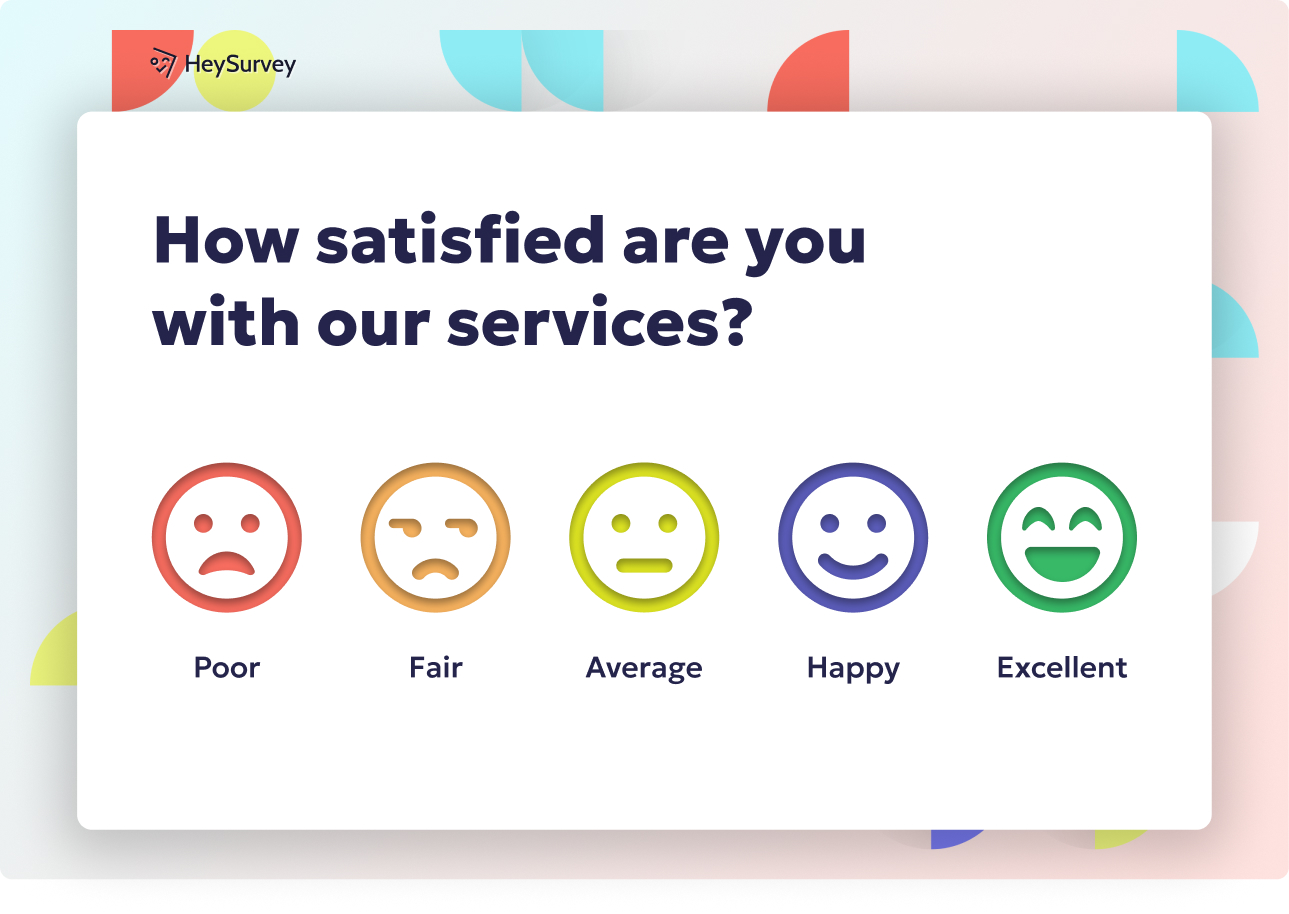
3 easy steps to create a job satisfaction survey in HeySurvey
Create a new survey
Start by opening a job satisfaction survey template from the button below, or begin with an empty sheet. If you’re new to HeySurvey, this is the fastest way to get started without needing an account. You can edit the survey name later in the editor and choose a simple layout that works well for employee feedback.Add questions
Click Add Question to include the items you want to ask. For job satisfaction surveys, use Scale questions for ratings, Choice questions for multiple-choice answers, and Text questions for open comments. You can mark questions as required, add descriptions, and rearrange them anytime.Publish survey
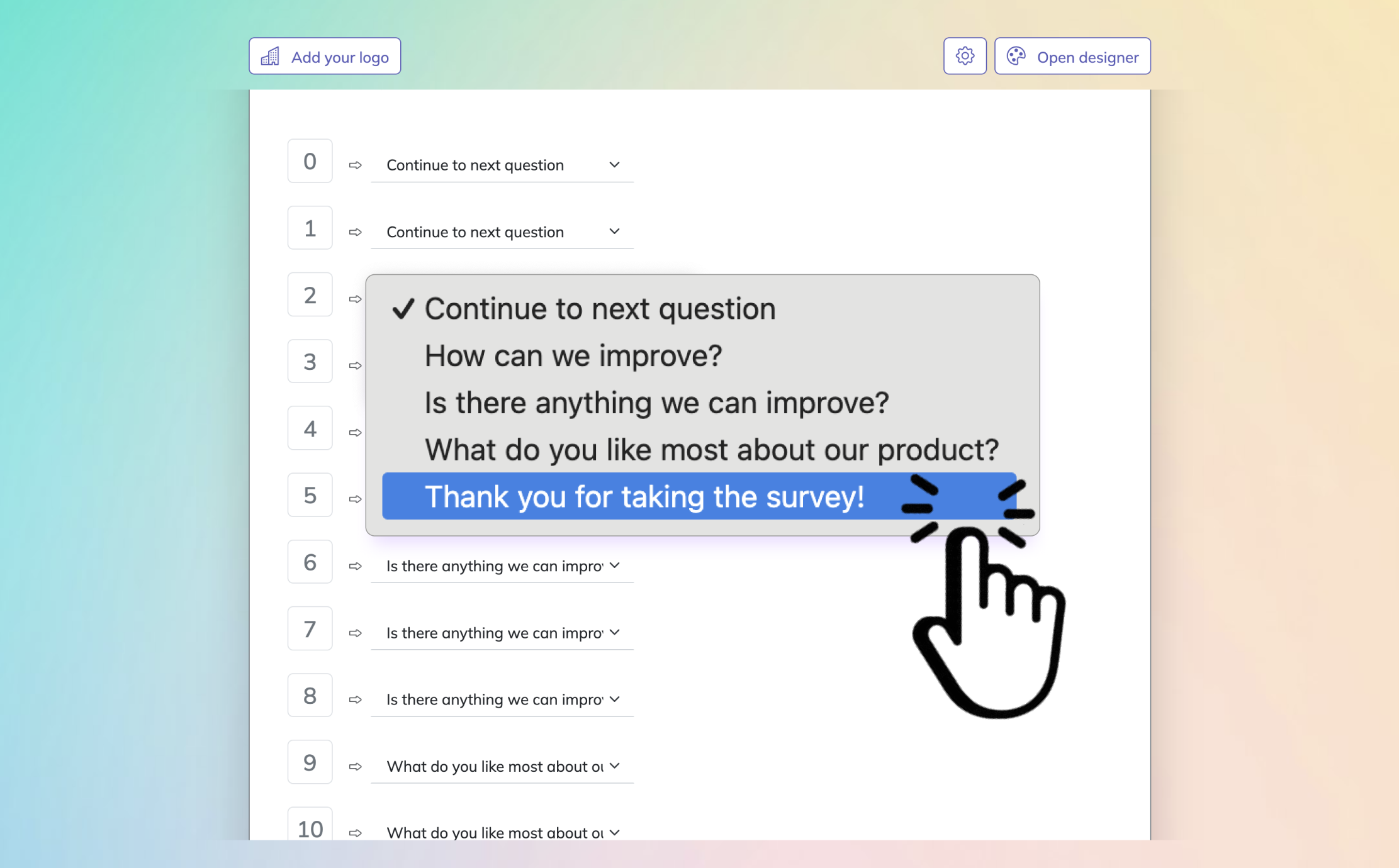
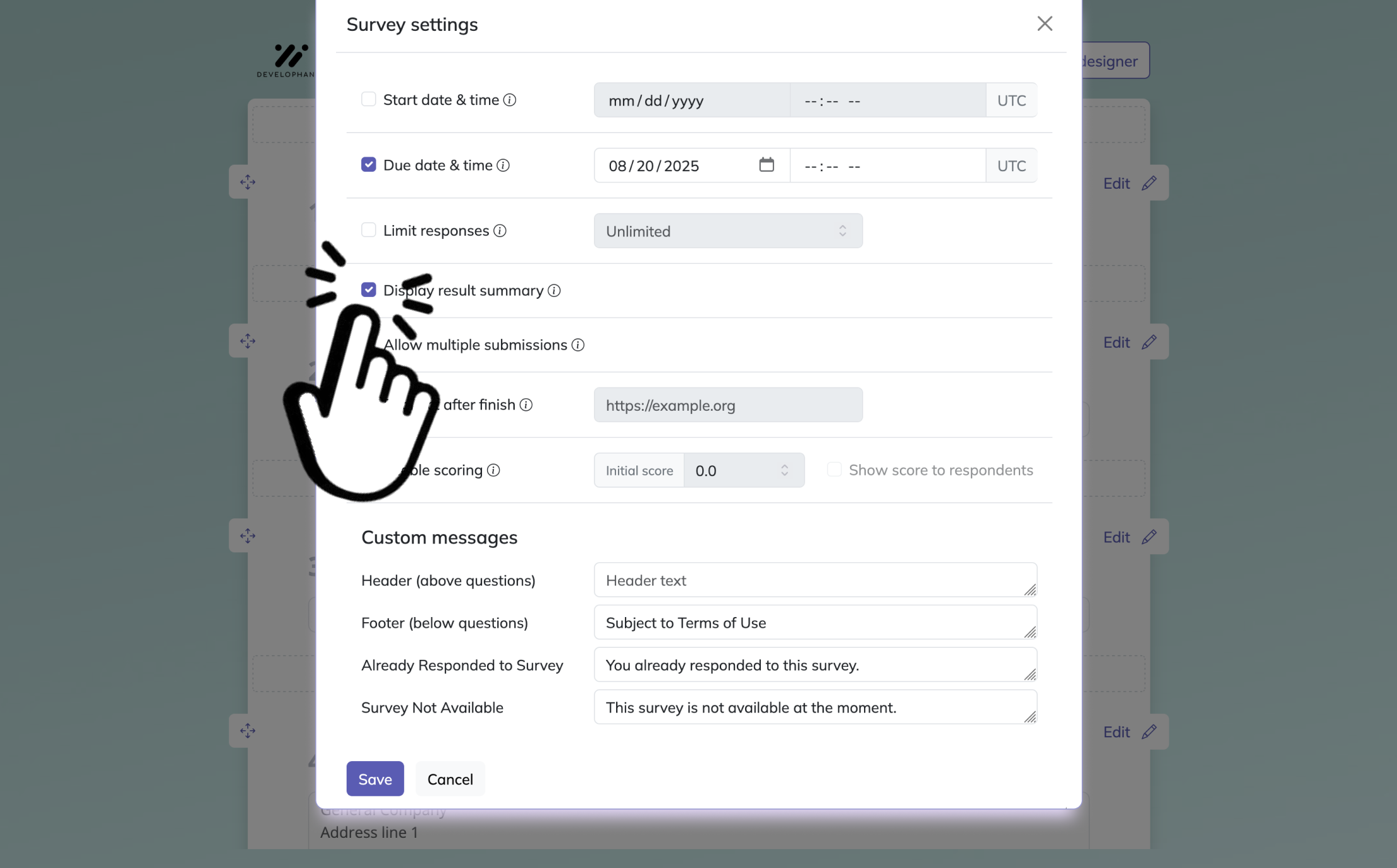
When your questions are ready, preview the survey to check how it looks. Then click Publish to create a shareable link. If needed, you can also add your logo, adjust the design, and set options like response limits or a thank-you message before sharing.
Role Clarity and Day-to-Day Work Satisfaction Questions
Sample questions
I have a clear understanding of what is expected of me in my role.
My workload is manageable within my normal working hours.
I have the tools and resources I need to do my job well.
My daily work makes good use of my skills and strengths.
I can complete my work without unnecessary obstacles or process issues.
Clear roles make work feel a lot less like improv theater.
Why & When to Use
Use these employment satisfaction questions when you want to understand how day-to-day work actually feels, not just how people rate the company overall.
Role clarity has a huge effect on satisfaction, performance, and stress levels, so this section earns a permanent spot in a strong employee job satisfaction survey sample.
Here’s the thing, unclear expectations can seriously distort job satisfaction survey answers because people may say they dislike the job when the real problem is confusion, overload, or clunky processes.
These survey questions job satisfaction teams should use are especially helpful when your organization is scaling, restructuring, hiring fast, or seeing blurry ownership across teams.
Plus, this is one of the best groups of questions related to job satisfaction for uncovering operational friction that slows people down.
Review workload, autonomy, and resources separately so you do not mash different problems into one vague conclusion.
Pair low scores with manager interviews or team follow-ups to get better employee satisfaction survey sample answers.
Look for signs of role design issues, like unclear ownership, versus staffing issues, like too much work for too few people.
Use patterns in career satisfaction survey questions to spot whether frustration comes from the job itself or the system around it.
Meta-analytic evidence shows role ambiguity is strongly linked to lower job satisfaction, supporting role-clarity questions in employee surveys. Source
Manager and Leadership Satisfaction Questions
Sample questions
My manager gives me the support I need to succeed.
I receive useful feedback that helps me improve.
My manager treats employees with respect and fairness.
Senior leaders communicate a clear vision for the company.
I trust leadership to make decisions that support employees and the business.
People do not just experience your company, they experience it through their manager first.
Why & When to Use
These employment satisfaction questions belong in almost every employee job satisfaction survey sample because a direct manager shapes daily morale, recognition, clarity, and whether someone wants to stay.
Here’s the thing, people may love the mission and still dread Monday because of poor management, which is not exactly a gold-star culture moment.
Use these survey questions job satisfaction teams rely on when retention is slipping, trust feels shaky, communication is uneven, or major change is rolling through the business.
Plus, separate direct manager items from senior leadership items because they measure different things.
A manager affects coaching, support, and fairness, while leadership questions related to job satisfaction should focus more on vision, trust, transparency, and decision-making.
When you collect employee satisfaction survey sample answers on managers, protect anonymity carefully so people can respond honestly without worrying who might connect the dots.
Tell employees clearly that responses are confidential, especially for manager-related questions.
Break down results by department only when group sizes are large enough to protect privacy.
Review manager scores alongside engagement and retention trends to spot where leadership quality is shaping outcomes.
In leadership sections, measure communication, trust, and transparency separately so job satisfaction survey answers are actually useful.
Compensation, Benefits, and Recognition Satisfaction Questions
Sample questions
I am satisfied with my overall compensation.
I believe my pay is fair for the work I do.
The benefits offered meet my needs.
I feel recognized when I do good work.
Rewards and recognition are distributed fairly across the organization.
Fair rewards matter more than fancy slogans.
Why & When to Use
These employment satisfaction questions help you measure a topic employees care about deeply, even if they do not bring it up in every meeting.
Here’s the thing, pay is not the only driver of satisfaction, but perceived fairness can make or break morale, trust, and retention faster than a sad breakroom coffee machine.
Use this employee job satisfaction survey sample during compensation reviews, benefits updates, or anytime turnover rises and offer declines start creeping up.
Plus, these survey questions job satisfaction teams use should connect rewards with appreciation, because people want both solid compensation and clear recognition for good work.
When reviewing employee satisfaction survey sample answers, separate compensation, benefits, and recognition instead of lumping them together.
A low score may reflect unclear bonus rules, weak benefits communication, or uneven praise, not just dissatisfaction with salary.
On top of that, neutral wording matters because sensitive questions related to job satisfaction can trigger guarded responses if they sound loaded or accusatory.
Helpful ways to keep this section useful include:
Measure pay fairness separately from pay satisfaction.
Ask about benefits clearly, especially during plan changes or enrollment periods.
Include recognition examples like spot awards, praise, bonuses, or peer shout-outs.
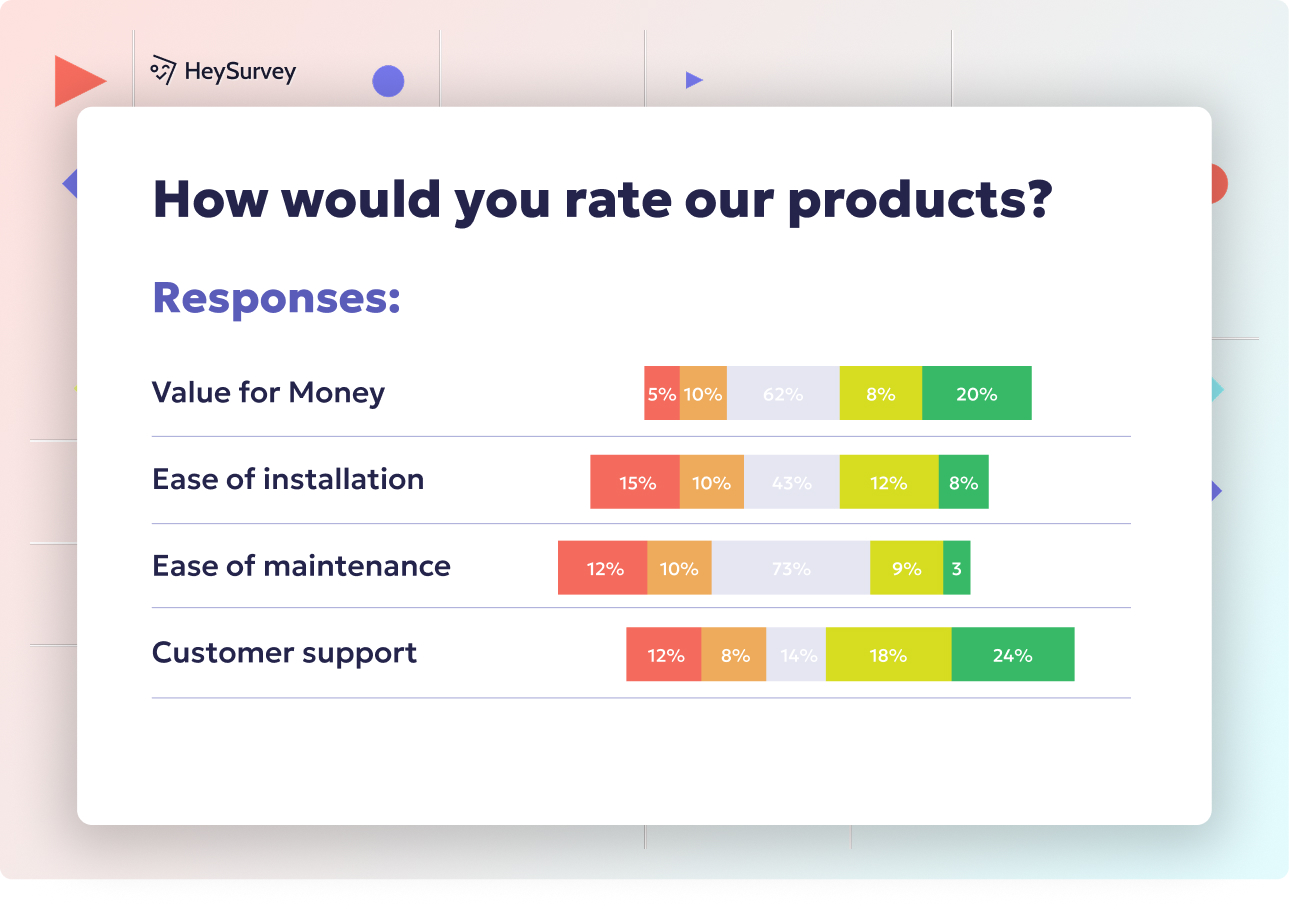
Review job satisfaction survey answers for fairness patterns across teams, not just average scores.
Use bonus transparency and benefits communication as follow-up areas when scores dip.
A meta-analysis of 134 studies (260,604 employees) found that employee benefits’ availability and perceived value are positively related to job satisfaction and well-being (source).
Career Growth and Development Satisfaction Questions
Sample questions
I see good opportunities for career growth at this company.
I understand what I need to do to advance here.
I have access to learning and development opportunities that support my goals.
My manager supports my professional growth.
I believe my career goals can be achieved here.
A job feels very different when you can actually picture your next step.
Why & When to Use
These employment satisfaction questions help you spot a major retention risk early, because people who like their current role can still disengage if they cannot see a future path.
Here’s the thing, employees do not need a promotion tomorrow, but they do need to believe growth is possible without reading tea leaves in the org chart.
Use this employee job satisfaction survey sample when internal mobility is low, promotion paths feel fuzzy, or learning participation is weaker than expected.
Plus, these career satisfaction survey questions are especially useful for long-term retention and succession planning, because future leaders rarely appear by magic.
When reviewing employee satisfaction survey sample answers, separate promotion opportunity from skill development and career path clarity.
A low score in survey questions job satisfaction often points to poor communication, unclear expectations, or weak manager support, not always a complete lack of opportunity.
Helpful ways to make these questions related to job satisfaction more useful include:
Ask separately about promotions, learning access, and career path visibility.
Include examples like career ladders, mentoring, job shadowing, and stretch assignments.
Review employee satisfaction survey sample answers for manager-level differences in growth support.
Treat weak job satisfaction survey answers here as a retention warning sign.
Use follow-up questions to learn whether the problem is access, awareness, or confidence.
Workplace Culture, Belonging, and Well-Being Questions
Sample questions
I feel respected by the people I work with.
I feel a sense of belonging at this company.
I can speak up with ideas or concerns without fear of negative consequences.
My work environment supports my mental well-being.
I am able to maintain a healthy balance between my work and personal life.
Culture shapes how work feels when nobody is looking, and yes, people notice.
Why & When to Use
These employment satisfaction questions help you understand whether employees feel respected, included, safe, and energized, not just whether they like the snacks or the salary.
Here’s the thing, culture-focused survey questions job satisfaction often uncover the emotional reasons people stay, disengage, or quietly update their resume during lunch.
Use this employee job satisfaction survey sample when you are tracking burnout, hybrid work strain, DEI progress, or team collaboration problems.
Plus, questions related to job satisfaction in this area are especially useful when morale feels uneven across departments or when remote and in-office experiences do not match.
When reviewing employee satisfaction survey sample answers, treat psychological safety, inclusion, and burnout as separate topics.
A team can feel friendly but still feel unsafe to challenge ideas, and a group can feel inclusive while still running on fumes.
Helpful ways to make these career satisfaction survey questions more useful include:
Review results by team, because one manager can shape culture more than the office mural ever will.
Avoid overgeneralizing company culture from one group’s job satisfaction survey answers.
Mention hybrid and remote work context where relevant.
Pair survey results with listening sessions, workload reviews, or manager coaching.
Use employee satisfaction survey sample answers to spot whether the issue is belonging, safety, or exhaustion.
How to Write Better Job Satisfaction Survey Questions
Sample questions
Instead of “Are you happy with your pay and benefits?” ask: “How satisfied are you with your compensation?” and “How satisfied are you with your benefits?”
Instead of “Does your manager communicate well?” ask: “My manager communicates clearly about expectations.”
Instead of “Do you have growth opportunities?” ask: “I understand the career growth opportunities available to me here.”
Instead of “Is the culture good?” ask: “I feel respected and included at work.”
Instead of “Is your workload okay?” ask: “My workload is manageable within my normal working hours.”
Clear wording gives you cleaner data, and cleaner data causes fewer forehead wrinkles later.
Why & When to Use
Even strong employment satisfaction questions can fall flat if the wording is vague, leading, double-barreled, or just too broad to mean much.
Here’s the thing, a messy question creates messy results, which makes your employee job satisfaction survey sample much less useful when you actually need answers.
Use this section when you are building a survey from scratch or tightening up an existing employee satisfaction survey sample.
Plus, this is the bridge between decent survey design and reliable insights you can actually trust.
Good survey questions job satisfaction should be simple, neutral, and consistent from one section to the next.
That means using the same rating scale where possible, explaining what the scale means, and avoiding jargon or emotionally loaded wording that nudges people toward a certain answer.
Helpful rules for writing better questions related to job satisfaction include:
Ask one thing at a time.
Use clear language your whole team will understand.
Keep wording neutral, not leading.
Stay consistent with response scales across themes.
Add 1 to 2 open-ended questions at the end of each major theme or at survey close.
On top of that, reviewing employee satisfaction survey sample answers can show you where wording confused people, because fuzzy questions often produce fuzzy job satisfaction survey answers.
Best Practices for Job Satisfaction Surveys
Sample questions
Are we clear about what decisions this survey will inform?
Are we keeping the survey short enough to complete without fatigue?
Are we protecting anonymity and communicating it clearly?
Are we prepared to share results with employees promptly?
Do we have a plan to act on the top findings?
Great surveys are not just written well, they are run well too.
Why & When to Use
Strong employment satisfaction questions matter, but execution is what turns an employee job satisfaction survey sample into something useful instead of just another form people click through while reheating lunch.
Use this section when you are about to launch, relaunch, or improve a survey, especially if you want better completion rates, more honest employee satisfaction survey sample answers, and results you can actually use.
Here’s the thing, even smart survey questions job satisfaction can miss the mark if the rollout is clunky, the survey is too long, or nobody explains what happens next.
A practical employee satisfaction survey sample should be easy to complete, easy to trust, and tied to real decisions.
Dos
Align employment satisfaction questions with business goals and employee experience goals.
Use a consistent scale across most questions so job satisfaction survey answers are easier to compare.
Segment results by team, tenure, or location only where confidentiality is protected.
Communicate the purpose, timing, and follow-up plan before the survey opens.
Repeat key career satisfaction survey questions over time to track trends.
Don’ts
Don’t ask questions related to job satisfaction if leadership will not act on the findings.
Don’t make the survey so long that quality drops and people start speed-clicking like they are in a game show.
Don’t combine multiple ideas into one item.
Don’t overreact to one result without looking for patterns.
Don’t share results in ways that expose individual respondents.
Turning Job Satisfaction Survey Results Into Action
Sample questions
Which survey themes scored lowest and affect the most employees?
Which issues can managers address quickly at the team level?
Which findings require executive action or policy changes?
What actions will we communicate to employees in the next 30 to 60 days?
How will we measure whether the changes improve job satisfaction survey answers over time?
Feedback earns trust only when people can see it turning into change.
Why & When to Use
Collecting responses is just the first step, but the real value of employment satisfaction questions shows up when you turn findings into visible action.
Use this wrap-up section when you want to close the loop on an employee job satisfaction survey sample with action planning, communication, and clear accountability.
Here’s the thing, even the best employee satisfaction survey sample answers will not build trust if employees never hear what happens next.
A simple approach works best:
Identify the biggest themes in your survey questions job satisfaction results.
Look for root causes behind low scores or repeated comments.
Separate quick wins from longer-term structural fixes.
Assign an owner to each action.
Set timelines and report progress back to employees.
Plus, it helps to sort issues by level.
Team-level fixes might include manager training, better recognition, or clearer weekly priorities.
Organization-level fixes might include career path clarity, workload balancing, or policy updates.
On top of that, communicate one thing fast, even if it is small, because silence after a survey is like waving at trust and watching it walk away.
The best job satisfaction survey questions, career satisfaction survey questions, and questions related to job satisfaction only create momentum when employees can connect survey feedback to meaningful change over time.
Related Surveys
29 Social Media Survey Questions
Explore 25 social media survey questions with practical sample prompts to help gather insights on...
29 Quantitative Survey Questions Guide
Explore 25 quantitative survey questions with sample questions, examples, and tips to build effec...
29 Family Survey Questions
Explore 25 family survey questions with sample questions to gather honest feedback, improve engag...