31 SWOT Analysis Survey Questions
Explore 25 SWOT analysis survey questions with sample questions, insights, and practical examples to improve strategy and decision-making.
If you want sharper feedback fast, swot test questions can turn vague opinions into clear next steps. In a survey, SWOT analysis uses structured questions to uncover strengths, weaknesses, opportunities, and threats from employees, customers, stakeholders, or team members.
Here’s the thing: you’re probably not here for theory and a fancy acronym parade. You want practical SWOT analysis survey questions you can use right away, plus question sets by use case, best practices, and simple ways to turn responses into action using an online survey tool.
Employee SWOT Analysis Survey Questions
Sample questions
What does our team do especially well compared with other teams or competitors?
Which internal processes slow down your work or reduce productivity?
What new tools, training, or support would help you perform better?
What external changes could create growth opportunities for our team or company?
What risks or challenges could prevent us from meeting our goals over the next 6–12 months?
Honest employee input reveals what dashboards miss.
Why & When to Use
Employee swot test questions work best when you want a real-world view of how your team operates day to day. Your employees often spot strengths, weaknesses, opportunities, and threats faster than leadership can, because they are the ones in the weeds, where the useful stuff lives.
Use these swot test questions when you're reviewing team performance, planning annual goals, managing change, restructuring departments, or trying to fix workflow issues before they become full-blown headaches. Plus, employee feedback is especially useful for uncovering hidden operational threats, like bottlenecks, unclear ownership, or culture issues that quietly eat productivity for lunch.
A few practical tips can make your survey much more useful:
Encourage anonymity so employees feel safe sharing honest answers.
Use open-ended swot test questions when you want detail, examples, and unexpected insights.
Add rating-scale follow-ups when you need measurable patterns you can compare over time.
Segment responses by department, tenure, or role so trends are easier to spot.
Show employees how their feedback will be used, because nothing kills survey energy faster than a black hole.
Research on employee voice shows anonymity increases workers’ willingness to raise concerns, improving the candor SWOT-style surveys need to uncover risks and process weaknesses (SAGE study).
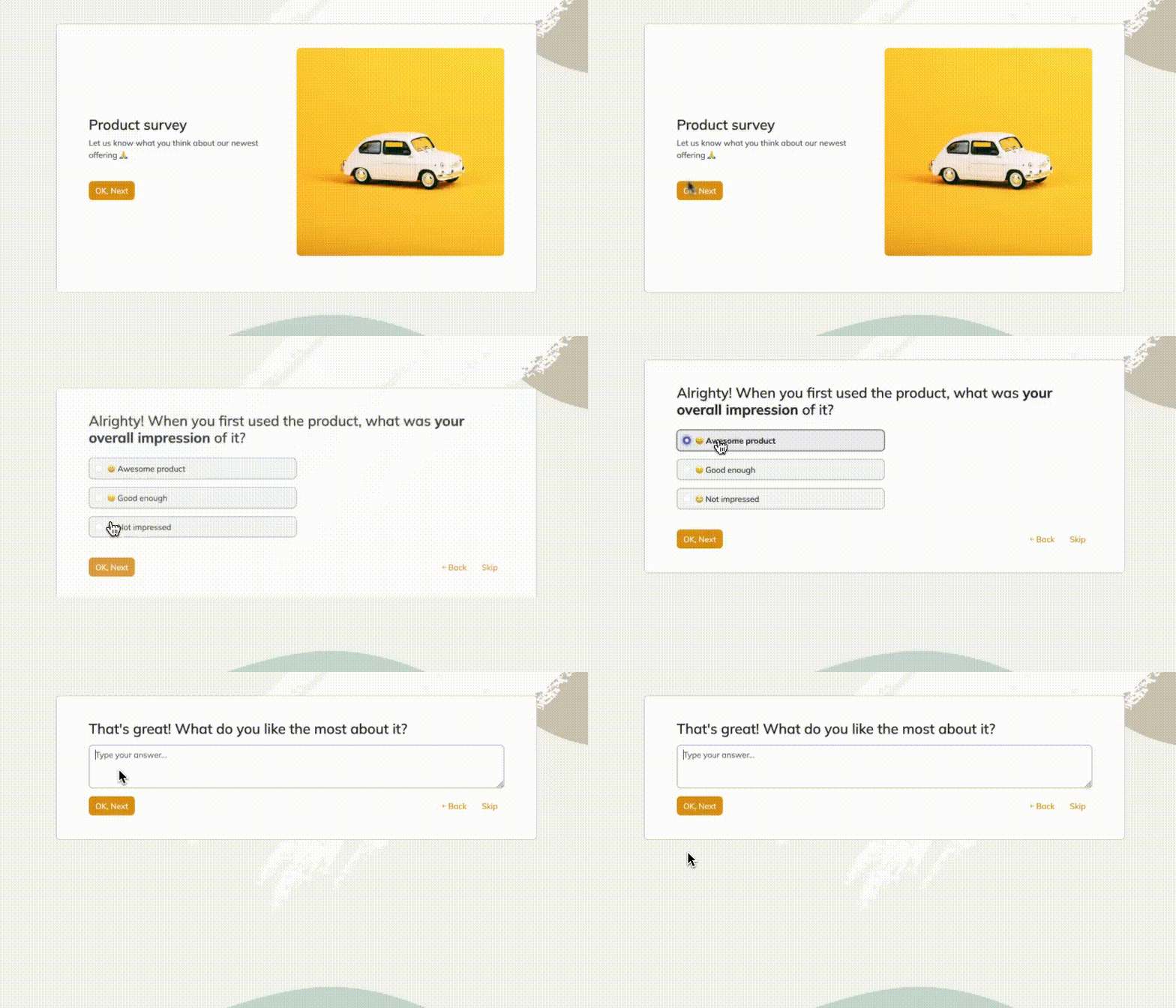
How to create a SWOT analysis survey in HeySurvey
1. Create a new survey
Start by opening a SWOT analysis template, or choose an empty sheet if you want to build it yourself. If you’re new to HeySurvey, you can begin without an account. Just click the template button below these instructions to get started quickly.
2. Add questions
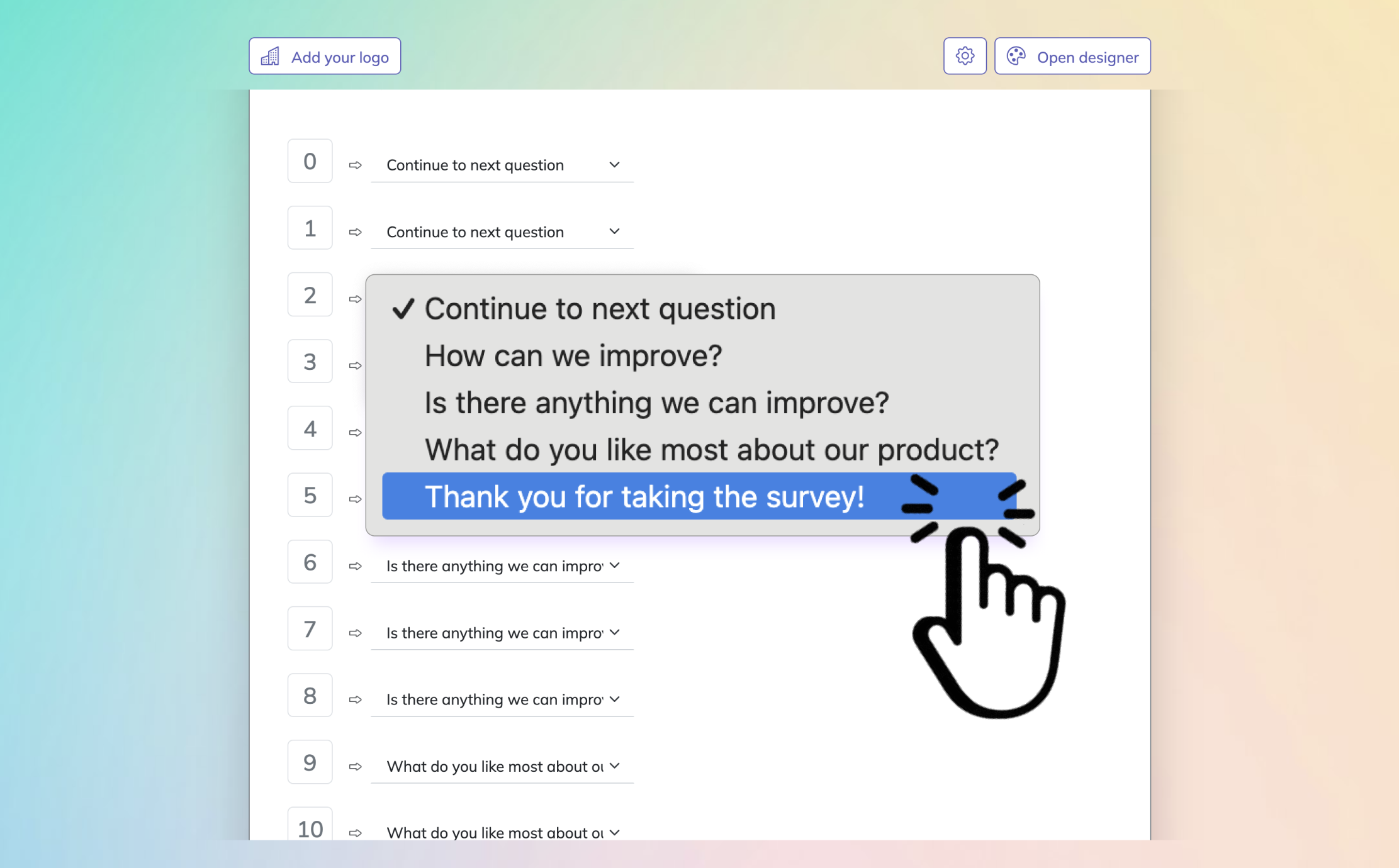
Click Add Question and create your SWOT survey sections. Use Choice questions for strengths, weaknesses, opportunities, and threats, or add Text questions for open feedback. You can also use Scale or Ranking questions if you want respondents to rate or prioritize items. Mark important questions as Required so people do not skip them.
3. Publish survey
Review your survey in Preview to make sure everything looks right. Then click Publish to make it live and get your shareable link. If needed, you can adjust the design, add your logo, or change settings before publishing.
Customer SWOT Analysis Survey Questions
Sample questions
What is the main reason you choose our product or service over alternatives?
What frustrations or pain points have you experienced when working with us?
What additional features, services, or improvements would make our offering more valuable to you?
What other brands or options did you consider before choosing us?
What might cause you to stop buying from us in the future?
Customer feedback spots what your internal team can accidentally gloss over.
Why & When to Use
Customer swot test questions help you understand how people actually see your brand, not just how you hope they see it. That makes them especially useful for uncovering real strengths, service gaps, unmet needs, and competitive threats hiding in plain sight.
Use these swot test questions when you are improving a product, reviewing retention issues, rebranding, testing pricing, or repositioning in the market. Here's the thing, customers often reveal opportunities and threats your internal team may miss because they compare you with other options while holding the wallet.
A few smart ways to use them well:
Send surveys after purchase, onboarding, support interactions, or renewals, when feedback is fresh and specific.
Compare answers from loyal customers and new customers so you can spot what earns trust and what creates friction.
Use responses to map customer-perceived strengths against competitor threats, which is a fancy way of saying, "find out why people stay and why they stray."
Add these to customer research templates as swot test questions so your insights stay organized and easier to track over time.
Plus, when customers tell you what almost made them leave, they are handing you a cheat sheet.
Surveys reveal what drives customer loyalty and retention while highlighting strengths, weaknesses, and improvement areas critical for competitive SWOT insights (SurveyMonkey).
Small Business SWOT Analysis Survey Questions
Sample questions
What do customers value most about our business today?
Where do we lose time, money, or efficiency internally?
What market trend or customer need could create our next growth opportunity?
Which competitor advantages concern you most?
What is one change that would improve our business performance fastest?
Small business swot test questions work best when they lead straight to decisions, not a dramatic meeting with twelve color-coded spreadsheets.
Why & When to Use
Small business swot test questions are built for lean planning, fast feedback, and real-world decisions. If you run a startup, local business, or growing service company, these questions help you gather focused insight from staff, customers, partners, or trusted advisors without turning research into a full-time hobby.
Use these swot test questions when you are planning budgets, weighing expansion, redesigning services, or trying to fix what feels clunky behind the scenes. Plus, small businesses usually need highly practical answers tied to immediate choices, not vague ideas that sound smart and do nothing by Friday.
A few practical ways to use them well:
Keep surveys short so more people actually finish them.
Reuse the same core swot test questions each quarter to track patterns and shifts over time.
Rank feedback by impact and ease of implementation so you know what to tackle first.
Focus on action, not over-analysis, because insight only helps if you use it.
On top of that, these surveys are especially useful when cash, time, and attention are all limited. That means your questions should help you choose the next best move, not just confirm what you already suspected.
Product or Service SWOT Analysis Survey Questions
Sample questions
Which features or aspects of this product or service deliver the most value?
What problems, limitations, or usability issues have you noticed?
What customer needs are not being fully addressed by this offering?
What emerging alternatives or trends could make this product less competitive?
What improvement would most increase your satisfaction or likelihood to recommend?
Product-focused swot test questions help you fix what people actually use, not just what looked great in the planning deck.
Why & When to Use
Use these swot test questions when you want feedback on one specific product, service line, feature set, or customer journey. That makes them ideal for launches, relaunches, feature prioritization, quality reviews, and product-market fit analysis.
Here’s the thing: product-level SWOT is different from business-level SWOT. You are not asking whether the whole company is strong or weak, but whether this offer solves the right problem in the right way.
These SWOT analysis survey questions for product development work best when you collect input from different groups, including:
Active users who know the day-to-day experience
Trial users who can spot early friction fast
Lost prospects who can tell you why they did not choose you
Plus, combine open-ended comments with satisfaction scores so you get both story and signal. One tells you what people feel, and the other helps you spot patterns without needing detective music in the background.
On top of that, group responses into practical buckets:
Feature strengths
Adoption barriers
Market threats
That structure keeps your swot test questions focused and makes the feedback far easier to turn into product decisions.
Effective product-feedback surveys pair quantitative ratings with open-ended questions to reveal both patterns and root causes behind satisfaction and usability issues (Qualtrics).
Strategic Planning SWOT Survey Questions
Sample questions
What internal capabilities give us the strongest competitive advantage right now?
Which organizational weaknesses could limit execution of our strategy?
What market, technology, or partnership opportunities should we prioritize next?
What external threats are most likely to affect revenue, growth, or stability?
Which issue should leadership address first to improve long-term performance?
Strategic swot test questions work best when they surface choices, priorities, and risks you can actually act on.
Why & When to Use
Use these swot test questions when your leadership team needs clear input before making big decisions. They fit best during annual planning, expansion discussions, mergers, investment planning, and major pivots.
Here’s the thing: strategic SWOT surveys should not collect vague opinions that sound smart but change nothing. You want decision-relevant insights that help leaders choose where to invest, what to fix, and what to protect.
Plus, send your swot test questions before planning meetings, not during them. That gives people time to think independently, which usually leads to more honest answers and fewer follow-the-loudest-voice moments.
A smart setup includes asking respondents to rank issues by urgency and impact. That helps you separate what is important someday from what needs attention before your next coffee gets cold.
On top of that, keep risks in two buckets:
Short-term threats that could disrupt current performance
Long-term strategic risks that could weaken future growth
Leadership input is valuable, but it should not live in a bubble. Compare these swot test questions responses with employee and customer feedback so your strategy reflects reality, not just boardroom confidence.
Personal or Career SWOT Test Questions
Sample questions
What skills or personal qualities help me perform better than others in similar roles?
What habits, knowledge gaps, or limitations hold me back?
What upcoming opportunities could help me grow professionally?
What external factors could make career progress more difficult?
What is one realistic action I can take this month to build on a strength or reduce a weakness?
Personal swot test questions help you turn self-awareness into a career plan you can actually use.
Why & When to Use
Use these swot test questions for self-assessment, coaching, career planning, leadership development, or training workshops. They are especially useful when you are preparing for a promotion, interview, role change, or a personal development plan.
Here’s the thing: some people search for swot test questions when they really want self-evaluation prompts, not business strategy tools. This version is all about you, your growth, and your next step, not market share or corporate drama.
Honest reflection works better than vague self-talk. Saying “I need to improve communication” is fuzzy, but saying “I speak confidently one-on-one but struggle in group presentations” gives you something real to work with.
Plus, your view should not be the only view in the room. Pair your answers with feedback from a manager, mentor, or trusted peer so your strengths and blind spots are not playing hide-and-seek.
Once you have answers, turn them into a simple development plan with deadlines.
Pick one strength to use more intentionally
Choose one weakness to improve first
Match one opportunity with a specific action
Set a deadline for each step
On top of that, revisit your swot test questions monthly. Career growth loves consistency, even when your calendar acts like it does not.
How to Design Effective SWOT Analysis Survey Questions
Sample questions
Which area of the business, product, or role are you evaluating in this survey?
Can you share a specific example that supports your response?
How significant is this issue or advantage to overall performance?
Is this factor internal to us or driven by the external market?
What action would you recommend based on your answer?
Great swot test questions do more than collect opinions. They give you feedback you can sort, compare, and actually use.
Why & When to Use
Use this section when you want to customize swot test questions for your own audience instead of copying a generic list and hoping for magic.
Here’s the thing: this is the bridge between a basic template and decision-ready insight. If you are building a survey for employees, customers, leaders, or even personal review, better wording leads to better answers.
Start with specificity. Ask about one product, one team, one role, or one goal at a time, because vague questions tend to bring back vague answers wearing business casual.
To improve your SWOT analysis survey questions, keep these rules in play:
Ask one thing at a time, not two mashed together in a trench coat
Avoid leading language that pushes people toward a preferred answer
Use open-ended questions for detail and rating questions for priority
Tailor wording to the audience so the question feels natural and clear
Ask for examples so answers can be verified and classified as strengths, weaknesses, opportunities, or threats
Plus, the best swot test questions make action easier. If a response cannot help you decide what to fix, protect, improve, or pursue, the question probably needs a rewrite.
Best Practices for SWOT Surveys
Sample questions
Which audience is best positioned to answer each SWOT category accurately?
How will you define strengths, weaknesses, opportunities, and threats for respondents?
What timeframe should respondents consider when answering?
How will you prioritize themes once responses are collected?
What follow-up question will help turn each insight into action?
Smart swot test questions are clear, focused, and built to lead somewhere useful.
Why & When to Use
Use this section after your sample swot test questions so you can tighten the survey before it goes live.
Here’s the thing: even strong questions can flop if the setup is fuzzy, biased, or too broad. This guidance helps you improve response quality, reduce confusion, and turn raw feedback into decisions you can actually use.
Keep your SWOT survey practical and scannable by following a few simple rules.
Dos
Define the survey objective before writing swot test questions
Tailor questions to the audience and decision you need to make
Ask for examples so broad claims have proof behind them
Keep the survey concise and easy to complete
Categorize responses by impact, frequency, and urgency
Review results across multiple groups for a fuller picture
Don’ts
Don’t ask vague questions that invite generic answers
Don’t combine multiple ideas in one question
Don’t rely on only one respondent group
Don’t collect feedback without a plan to review and act on it
Don’t ignore minority feedback if it points to a serious threat or weakness
Don’t treat SWOT as a one-and-done task if conditions change fast
Plus, the best swot test questions include a timeframe and a follow-up action prompt. That small tweak can save you from a pile of interesting but unusable answers, which is basically clutter wearing a clipboard.
Turning SWOT Survey Insights Into Action
Sample questions
Which identified strengths should we protect, promote, or scale first?
Which weaknesses have the biggest impact on performance or customer experience?
Which opportunities align best with our current resources and goals?
Which threats require immediate mitigation plans?
What actions, owners, and deadlines should be assigned based on survey findings?
Great swot test questions only pay off when you turn answers into clear next steps.
Why & When to Use
Use this final section to move from collecting feedback to making smart decisions with your swot test questions.
Here’s the thing: if insights just sit in a spreadsheet, your survey did cardio but built no muscle. This section helps you connect responses to priorities, accountability, and real business progress.
Start by grouping similar answers into themes across strengths, weaknesses, opportunities, and threats. Then rank each theme by impact, urgency, frequency, and how realistic it is to address right now.
A simple action plan keeps the process useful.
Pick the top themes that matter most
Assign an owner to each action
Set a deadline for progress
Define a success metric so you know what improved
Flag any threat that needs immediate mitigation
Plus, share high-level results with stakeholders so everyone sees the same picture and supports the same priorities. On top of that, repeat your SWOT survey regularly to measure whether actions actually improved the areas your swot test questions uncovered.
The short version is simple: the real value of SWOT analysis survey questions is not the answers alone, but the better decisions those answers help you make.
Related Surveys
29 Social Media Survey Questions
Explore 25 social media survey questions with practical sample prompts to help gather insights on...
31 Job Satisfaction Survey Questions
Explore **25 job satisfaction survey questions** with sample prompts to improve employee feedback...
29 Quantitative Survey Questions Guide
Explore 25 quantitative survey questions with sample questions, examples, and tips to build effec...