31 Screen Time Survey Questions
Discover 25 screen time survey questions with sample questions to measure digital habits, trends, and insights for better research and analysis.
If you are building a screen time questionnaire, the questions you ask can reveal a lot about habits, health, learning, and daily routines. A screen time survey, or screen time assessment questionnaire, helps organizations, schools, researchers, clinicians, and parents measure how people use phones, tablets, laptops, and TVs without guessing.
Here’s the thing: the best screen time questions depend on who you are asking and why. You might need a screentime questionnaire for baseline assessment, behavior change, academic research, wellness programs, family media planning, or school device policy.
Sample questions
On a typical weekday, how many total hours do you spend using screens outside of work or school requirements?
On a typical weekend day, how many total hours do you spend using screens?
Which devices do you use most often each day: smartphone, tablet, laptop, desktop, TV, gaming console, or smartwatch?
At what times of day do you usually spend the most time on screens?
How often do you feel your daily screen time is more than you intend?
General Screen Time Assessment Survey Questions
A strong screen time questionnaire starts with the big picture.
Why & When to Use
Use this type of screen time survey when you want a broad first look at total screen exposure across devices and times of day.
It works especially well for employee wellness surveys, school-wide pulse checks, community health projects, and general audience content built around terms like screen time questionnaire and screen time assessment questionnaire.
Here’s the thing: this format is ideal as a baseline before you break results down by age, purpose, or device.
If you start too narrow, you can miss the habits hiding in plain sight, like late-night scrolling that somehow "doesn't count" because your brain filed it under vibes.
Plus, a general screen time assessment questionnaire makes analysis easier when you need fast, comparable data from a mixed audience, including a screen time questionnaire for students or a screen time questionnaire for adults.
Keep these practical tips in mind:
Separate weekday and weekend behavior so your data reflects real-life routines.
Use answer ranges instead of open text, like 0 to 1 hours, 1 to 3 hours, or 3 to 5 hours, for easier reporting.
Define total screen time clearly so people do not double count multitasking across devices.
Include both required and discretionary use if your goal is to measure full exposure.
Sample questions
On school days, how much time do you spend on screens for classwork or homework?
How much time do you spend on screens for entertainment after school?
How often do you use your phone during class without permission or for non-class activities?
Do screens help you stay organized and learn better, distract you, or both equally?
How often does screen use delay your bedtime on nights before school?
A validated adolescent screen-time questionnaire found content should be split by activity and reported separately for weekdays and weekend days for clearer measurement (source)

How to create a screen time survey in HeySurvey
1. Create a new survey
Start by opening a screen time survey template with the button below, or create a survey from scratch. HeySurvey does not require an account to begin, so you can try it right away. Once the survey opens in the editor, give it a clear name so you can find it later.
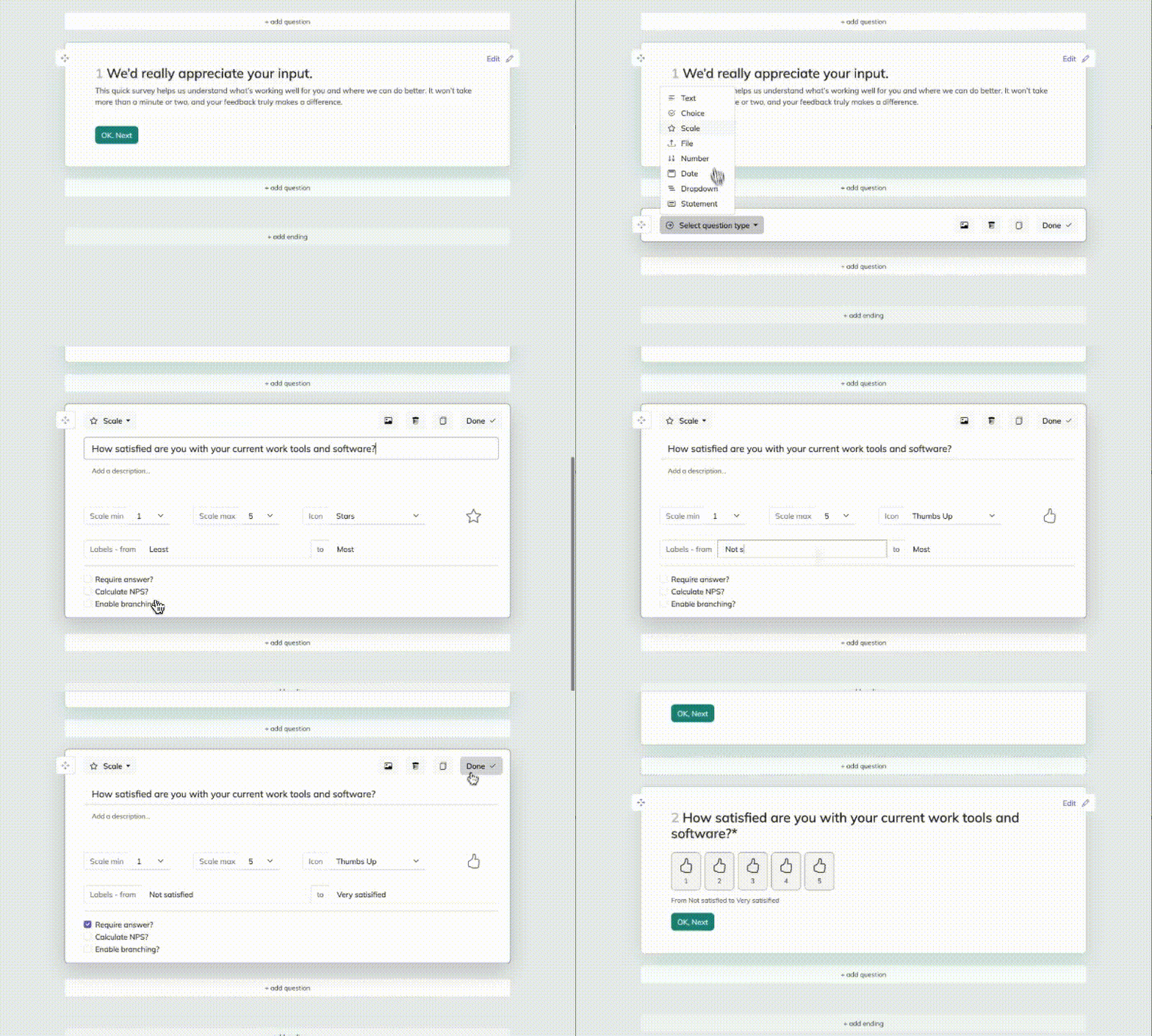
2. Add questions
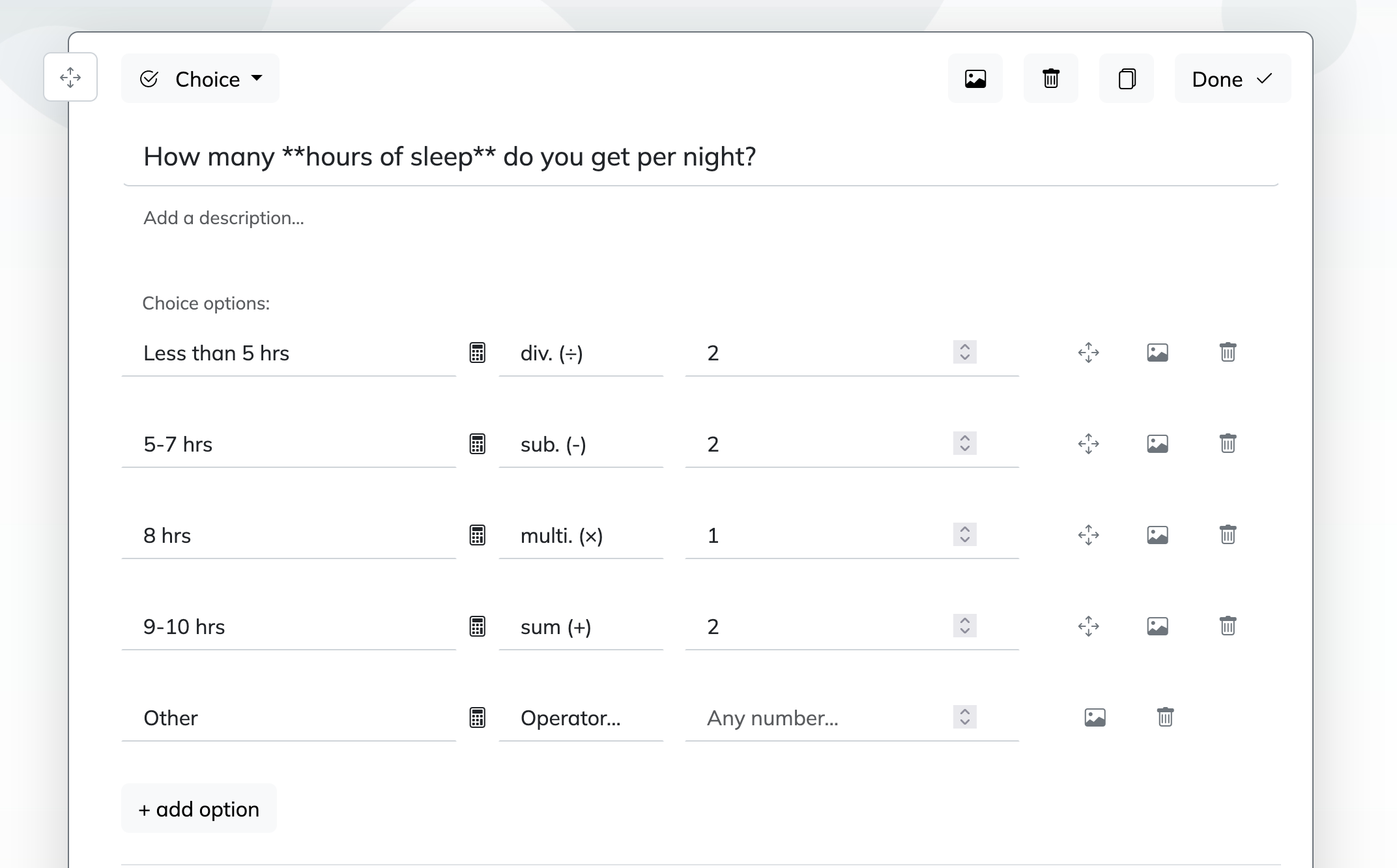
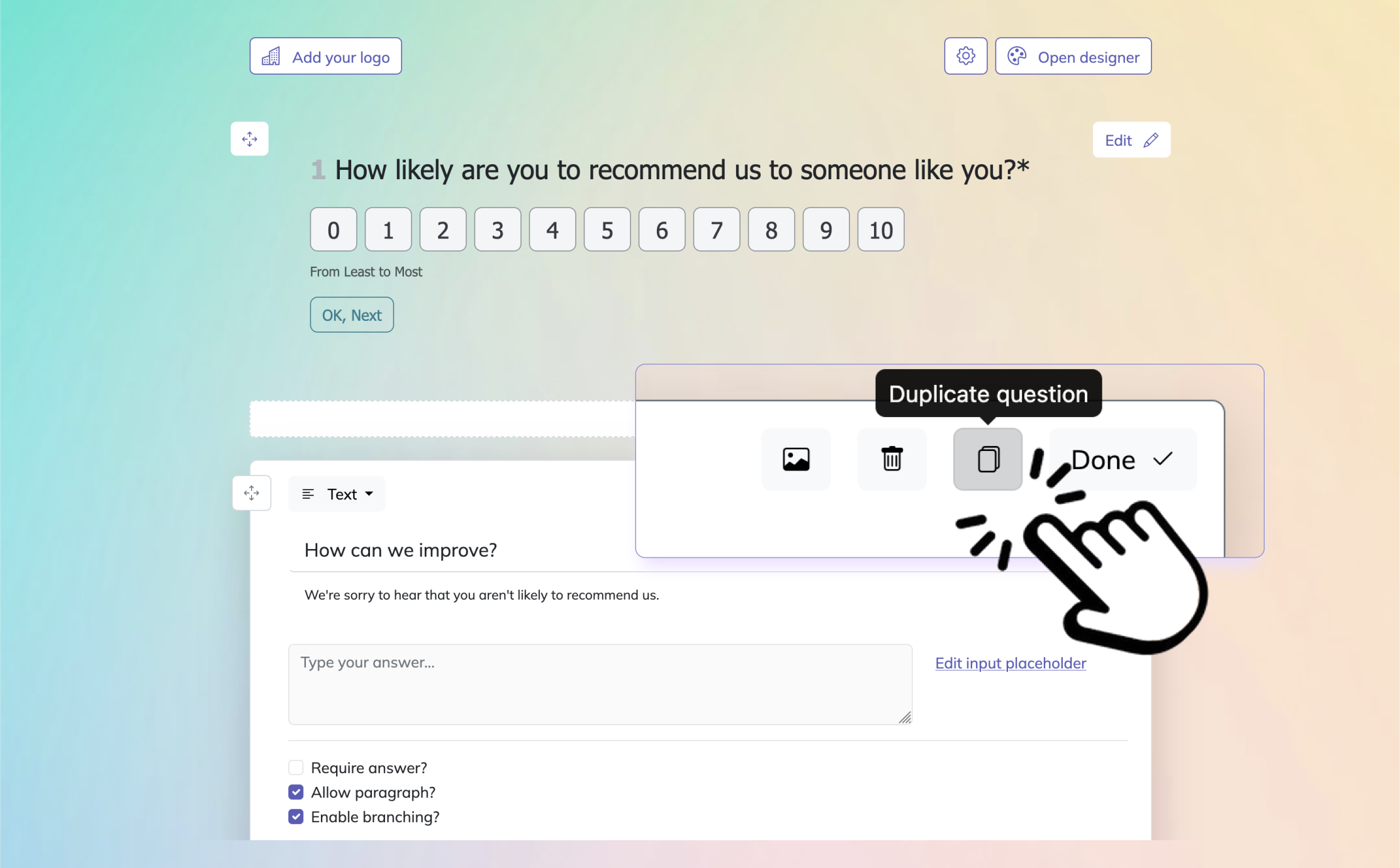
Click Add Question and choose the question type that fits your screen time survey. Use Choice questions for multiple-choice items, Scale for ratings, Number for hours or minutes, and Text for open answers. You can ask about daily screen time, device use, bedtime habits, or how screen time affects focus and sleep. Mark important questions as Required if you want every response completed.
3. Publish survey
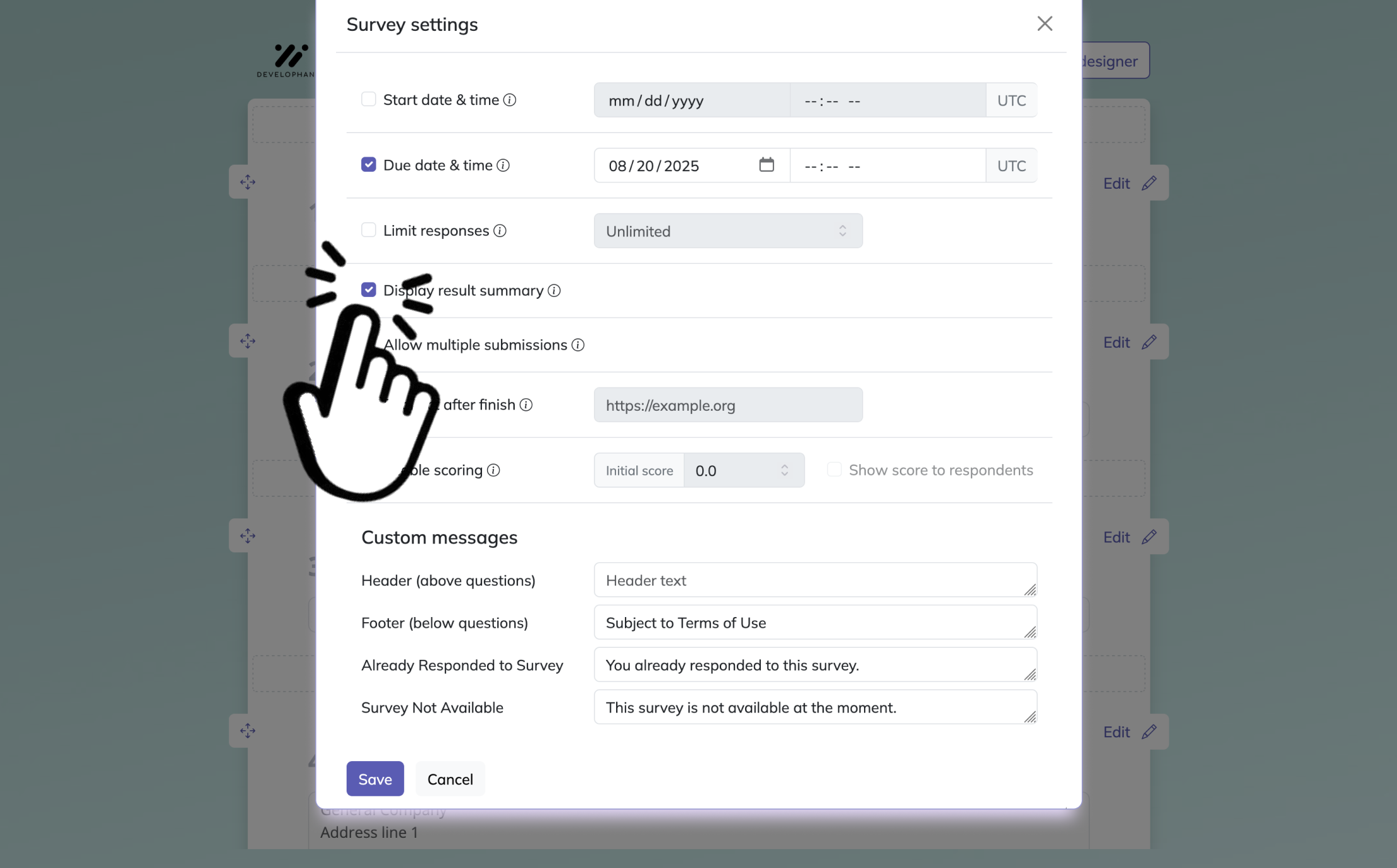
When your survey is ready, preview it to check the flow and wording. Then click Publish to create a shareable link. If needed, you can also adjust settings like progress bar, branding, or response limits before sharing the survey with respondents.
Screen Time Survey Questions for Students
A student-focused screen time questionnaire works best when it separates learning from scrolling.
Why & When to Use
Use this screen time survey when you are building a screen time questionnaire for students in K to 12 schools or college settings.
It is especially useful when you want to see how academic device use compares with entertainment, social media, streaming, or gaming.
Here’s the thing: a screen time questionnaire for students should not treat all screen use as the same, because writing an essay and watching dance videos at 11:47 p.m. are very different life choices.
On top of that, this format connects naturally with related needs like cell phone use in school survey questions and a broader screen time assessment questionnaire.
Schools can use this kind of screentime questionnaire to shape digital wellness efforts, homework expectations, and device policies that feel grounded in actual student habits.
Keep these practical notes in mind:
Separate school-related screen time from non-school use so your results are easier to interpret.
Use age-appropriate wording, with shorter answer scales for younger students.
Make responses anonymous when asking about in-class phone use, since honesty improves when students do not feel watched.
Use findings to compare patterns across policy, academic performance, sleep, and wellbeing.
Plus, this approach also fits related searches like screen time questionnaire for children and can support a wider site:heysurvey.io content cluster.
Sample questions
On a typical day, how much recreational screen time does your child have?
Which screen activities does your child do most often: videos, games, learning apps, social communication, or TV?
How often does your child use screens during meals, before bed, or in the car?
How easy or difficult is it for your child to stop using screens when asked?
What rules or limits does your household currently use for screen time?
Validated adolescent screen-time questionnaires measure educational and recreational use separately, improving accuracy when assessing student media habits (ScienceDirect).
Screen Time Questionnaire for Children and Parents
A screen time questionnaire for children works best when it reflects real family routines, not just total hours.
Why & When to Use
Use this screen time survey for households, pediatric clinics, family media planning, and parent-reported check-ins.
It is the best fit for search intent around a screen time questionnaire for children because it helps you look at habits in the places families actually notice them most.
Here’s the thing: younger children often need parent proxy responses, while older kids can usually answer parts of a screen time assessment questionnaire themselves with helpful parent context added in.
Plus, this format works well for routine family check-ins, not just one-time audits that disappear into a drawer never to be seen again.
A strong screen time questionnaire should break habits into specific routines so your results are easier to understand and act on.
Keep these practical notes in mind:
Ask about screen use during meals, bedtime, car rides, and family time instead of only asking for daily totals.
Include questions about co-viewing, content type, and parental controls, not just duration.
Compare parent responses with child self-reports when age-appropriate, since that gap can reveal useful patterns.
Use neutral wording so your screen time questionnaire for children feels supportive, not judgey.
On top of that, this kind of screen time assessment questionnaire can make family conversations calmer, clearer, and far more useful.
Sample questions
How many hours per day do you spend on your phone, excluding required school tasks?
Which apps or activities take up most of your screen time each week?
How often do you check your phone within 10 minutes of waking up or before going to sleep?
Do you feel screen time improves your social connection, harms it, or both?
How often does screen use affect your mood, focus, or sleep?
Teen Screen Time Survey Questions
A teen screen time questionnaire works best when you let teens describe their real habits in their own words.
Why & When to Use
Use this screen time survey when your audience is adolescents and you want to look at independence, routines, sleep, social media, and emotional effects.
This section matches search intent for a teen-focused screen time questionnaire, and it also fits a broader screen time assessment questionnaire when you need more honest self-report data.
Here’s the thing: teens usually have more independent access to phones, tablets, and laptops, so their answers often reveal patterns adults never fully see.
Plus, that makes a screen time questionnaire for students especially useful in schools, youth programs, counseling settings, and public health campaigns.
A strong screen time questionnaire should explore not just hours, but also notifications, nighttime scrolling, and how digital habits shape mood and focus.
Keep these practical notes in mind:
Ask about social media habits, app use, notifications, and late-night screen routines.
Use non-judgmental wording so teens answer honestly instead of giving you the "acceptable" answer. Sneaky? A little. Useful? Very.
Frame emotional impact questions around patterns and experiences, not diagnosis.
Add an optional free-response field so teens can name specific apps, habits, or pressure points in their own words.
On top of that, a well-built screentime questionnaire gives you clearer, more actionable insight than total-hours questions alone.
Teen screen time surveys should ask about bedtime use, notifications, and social media because these behaviors are linked to shorter sleep and more sleep disturbance in adolescents (source).
Screen Time Questionnaire for Adults
Sample questions
On a typical workday, how many hours do you spend on screens for work-related tasks?
How many additional hours do you spend on screens for personal use each day?
How often do you feel mentally drained after long periods of screen use?
Which screen-based activities are most important to your daily life and responsibilities?
How often do you intentionally take breaks from screens during the day?
A screen time questionnaire for adults works best when you separate necessary screen use from the habits that quietly eat up the rest of your day.
Why & When to Use
Use this screen time survey for workplace wellness, healthcare screening, lifestyle coaching, and personal productivity check-ins.
It aligns closely with what people look for in a screen time questionnaire for adults, especially when you want a practical screen time assessment questionnaire instead of vague guesses.
Here’s the thing: adult screen use is rarely just scrolling for fun.
Your day may mix work tasks, caregiving, messaging, streaming, scheduling, online shopping, and a dozen tiny digital errands that breed like rabbits.
That is why a screen time questionnaire or screentime questionnaire should help you spot overload, eye strain, stress, poor boundaries, and sleep spillover.
Keep these practical notes in mind:
Separate occupational screen time from recreational use so your screen time survey results are actually useful.
Ask about eye strain, posture discomfort, mental fatigue, stress, and whether screen habits affect sleep.
Use more detailed categories for remote or hybrid workers, since laptop time, meetings, messaging, and after-hours work can blur together.
Connect findings to action, like break reminders, workload changes, screen-free routines, or coaching goals.
On top of that, a better screen time assessment questionnaire helps turn raw hours into changes you can actually feel.
Sample questions
How much time do you spend each day on social media, streaming, gaming, messaging, reading, or video calls?
Which device do you use most for entertainment, and which device do you use most for work or school?
How often do you multitask across two or more screens at the same time?
What percentage of your daily screen time feels productive versus passive?
Which screen activity is hardest for you to limit once you start?
Activity-Specific Screen Time Questions by Device and Purpose
A better screen time questionnaire gets much clearer when you ask not just how long people use screens, but what they are actually doing on them.
Why & When to Use
Use this screen time survey when one big total-hours question feels too fuzzy to be useful.
It works well for researchers, marketers, educators, and health professionals who need richer behavior patterns from a screen time assessment questionnaire.
Here’s the thing: device, platform, and purpose often matter more than raw hours alone.
Someone can log four hours on a laptop for school, two hours on a phone for messaging, and one sneaky late-night streaming spiral that does the real damage.
That is why detailed screen time questions and questions about screen time can reveal habits that a basic screentime questionnaire might miss.
Keep these practical tips in mind:
Segment by activity, not just total hours, so your screen time questionnaire captures real behavior.
Group similar behaviors like streaming and short-form video, or messaging and social chat, for cleaner reporting.
Ask about multitasking, since using two screens at once can throw off self-estimates fast.
Include a primary purpose option when one device serves many roles, especially in a screen time questionnaire for students or a screen time questionnaire for adults.
Plus, this approach also works nicely in a screen time questionnaire for children when parents need clearer context, not just one giant guess.
Sample questions
Does your screen time questionnaire clearly define what counts as screen time before respondents begin?
Are you separating required screen use for school or work from optional recreational use in your screen time survey?
Does your screen time assessment questionnaire use the same time ranges and response scales from start to finish?
Are your questions neutral enough that people can answer honestly without feeling judged?
Have you pilot tested your screen time survey with a small group before rolling it out widely?
Best Practices for Writing a Strong Screen Time Survey
A strong screen time questionnaire is clear, consistent, and comfortable to answer.
Why & When to Use
Use these best practices when you want your screen time survey to produce answers you can actually trust.
Here’s the thing: even a smart-looking screen time assessment questionnaire can fall apart if the wording is fuzzy, biased, or way too long.
Dos
Build for reliability first, then make it easy on the human filling it out.
Define screen time at the start, so people know what to include.
Separate required use from recreational use.
Split answers by age group, weekday versus weekend, and daytime versus nighttime when it matters.
Keep time ranges and scales consistent throughout the screentime questionnaire.
Use neutral wording and skip loaded terms like “addicted” unless there is a clinical reason.
Pilot test the screen time questionnaire for students, adults, or families with a small sample first.
Plus, use self-report when people can reliably describe their own habits, and parent-report when you need a screen time questionnaire for children.
Don’ts
A messy survey is like asking for directions with a potato map.
Don’t combine multiple behaviors into one question.
Don’t assume all screen use is harmful, or all educational use is automatically helpful.
Don’t demand exact hours when ranges will get better accuracy.
Don’t ignore sleep, school, work, or family context.
Don’t make youth surveys too long or complex.
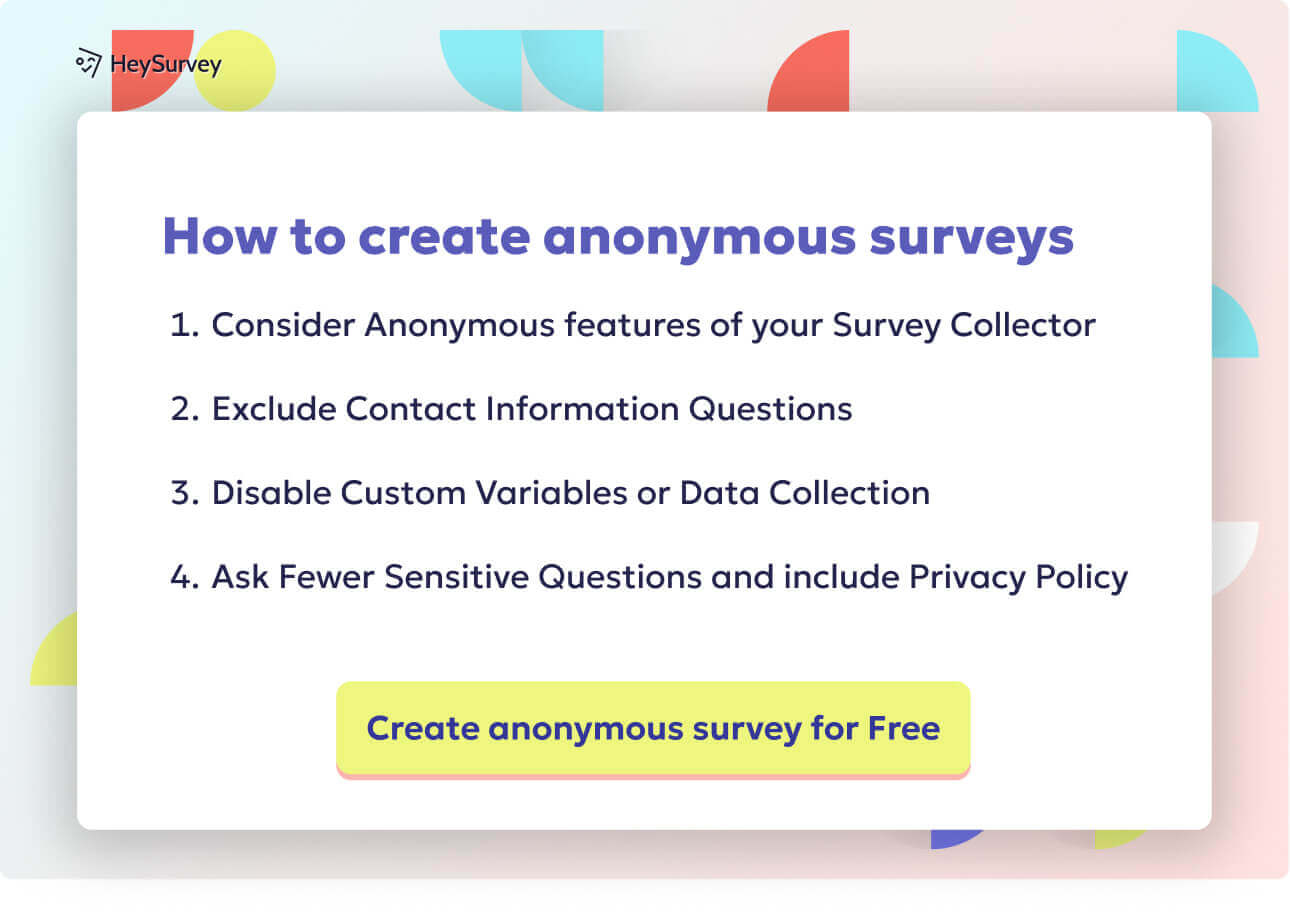
Don’t collect sensitive data unless you clearly explain why and how privacy is handled.
On top of that, align every question with the action your site:heysurvey.io survey is meant to support.
Sample questions
Which age groups or audience segments report the highest discretionary screen time?
How do weekday and weekend responses differ?
Which screen activities are most linked to sleep disruption, distraction, or stress?
Where is there a mismatch between intended screen limits and actual behavior?
Which respondents are most open to changes such as breaks, limits, or schedule adjustments?
How to Analyze Screen Time Survey Responses
Good analysis turns a screen time questionnaire into decisions, not just data.
Why & When to Use
Use this step when your screen time survey is complete and you need to spot trends that actually help you act.
This is especially useful if you built a screen time assessment questionnaire for schools, workplaces, families, or research, because the real goal is not a pile of averages.
Here’s the thing: analysis should answer a practical question, like who needs support, what habit is causing the most friction, or which change could help first.
5 Sample Questions
Start by looking for patterns, gaps, and useful segments inside your screen time questionnaire results.
Compare averages, ranges, and outliers so you can see both the typical response and the surprising ones.
Segment your screen time survey by age, role, device, and purpose to find meaningful differences.
Cross-tab responses with sleep, focus, mood, stress, or distraction questions to uncover stronger connections.
Look for gaps between intended limits and actual behavior, because ambition and reality rarely share a calendar.
Use your findings to prioritize one or two high-impact interventions first, instead of trying to fix everything at once.
Plus, whether you are reviewing a screen time questionnaire for students, a screen time questionnaire for adults, or a screen time questionnaire for children, the best insights are the ones you can use right away.
Sample questions
What is the single biggest screen time pattern your survey revealed?
Which audience segment needs the most support or education first?
What one policy, routine, or habit change could address the biggest issue?
How will you measure whether changes improve screen use over time?
When will you repeat the survey to track progress?
Turning Screen Time Survey Insights Into Action
The best screen time questionnaire is the one that helps you decide what to do next.
Why & When to Use
Use this final step when your screen time survey is done and you are ready to turn findings into action, not just nod thoughtfully at charts.
Here’s the thing: a strong screen time assessment questionnaire should lead to a clear next move, whether that means a family rule, a school guideline, a workplace norm, or a personal habit experiment.
Keep the goal realistic.
You do not need to chase perfect reduction like a hero in a productivity cape.
Instead, use your screen time questionnaire results to target one useful improvement, such as reducing bedtime scrolling, adding better break habits, or limiting low-value screen use during work or study hours.
A practical action plan can be simple:
Parents can set device-free routines around sleep, meals, or homework.
Schools can use a screen time questionnaire for students to shape digital wellness lessons or break policies.
Employers can use a screen time questionnaire for adults to encourage healthier meeting, messaging, or focus habits.
Individuals can test one small change, then track whether it improves sleep, attention, or stress.
On top of that, repeat your screentime questionnaire or screen time survey later to measure progress over time.
Effective surveys do not just collect answers.
They help you make better decisions, with less guessing and more confidence.
Related Health Survey Surveys
31 Health Care Satisfaction Survey Questions
Explore 25 health care satisfaction survey questions with sample examples to improve patient feed...
31 Body Image Survey Questions
Explore 25 body image survey questions with sample prompts to assess confidence, self-perception,...
29 Domestic Violence Survey Questions
Explore 25 domestic violence survey questions with sample prompts, insights, and survey tips to b...