31 Body Image Survey Questions
Explore 25 body image survey questions with sample answers and insights to understand self-perception, confidence, and wellness.
A body image survey helps you understand how people think, feel, and act about their bodies, plus the social pressure wrapped around all that fun. Organizations, educators, researchers, counselors, wellness brands, and community leaders use body image questions to spot patterns, guide support, and make smarter decisions.
Here’s the thing: not every body survey should ask the same thing. This guide sorts body image questionnaire ideas by goal, so you can choose the right questions to ask about body image, body image discussion questions, and even body positivity questions without playing survey roulette. If you’re building one with an online survey tool, the question mix matters even more.
General Body Image Survey Questions
Sample questions
How satisfied are you with your overall body appearance right now?
How often do you feel comfortable in your body during everyday activities?
To what extent does your body image affect your confidence in social situations?
How frequently do you compare your body to your personal ideal?
When you think about your body, which emotions do you most often experience?
A strong starting benchmark
Why & When to Use
These body image survey questions work best when you want a broad read on overall self-perception, appearance satisfaction, and day-to-day comfort in your body.
They are a smart fit for baseline screening, student wellness check-ins, workplace wellbeing surveys, community health programs, and introductory research.
Here’s the thing: general body image questions are especially useful at the start of a longer body image questionnaire because they give you a clear benchmark before you dig into specific behaviors, pressures, or beliefs.
If you are choosing questions to ask about body image for a mixed audience, this set keeps things simple, useful, and easy to compare. Plus, it helps you avoid jumping straight into heavy topics like a survey in hiking boots on a beach day.
For cleaner results, keep your format consistent and practical:
Use Likert scales, such as 1 to 5 or 1 to 7, so responses are easy to compare.
Define a timeframe like “in the past 30 days” to make answers more reliable.
Balance negative-framed and neutral body image questions to reduce response bias.
Add one optional open-ended prompt so people can share nuance that a scale might miss.
On top of that, these questions about body image can double as body image discussion questions when you want to pair survey data with guided conversation.
Sample questions
How often does dissatisfaction with your body affect your mood?
To what extent does your body image influence how you value yourself as a person?
How frequently do you avoid social situations because of how you feel about your appearance?
How often do you feel anxious when others may notice or judge your body?
How easy or difficult is it for you to speak kindly to yourself about your body?
The BAS-2 showed full scalar invariance across 65 nations, supporting body image survey questions that enable reliable cross-cultural comparisons (source).
How to create a body image survey in HeySurvey
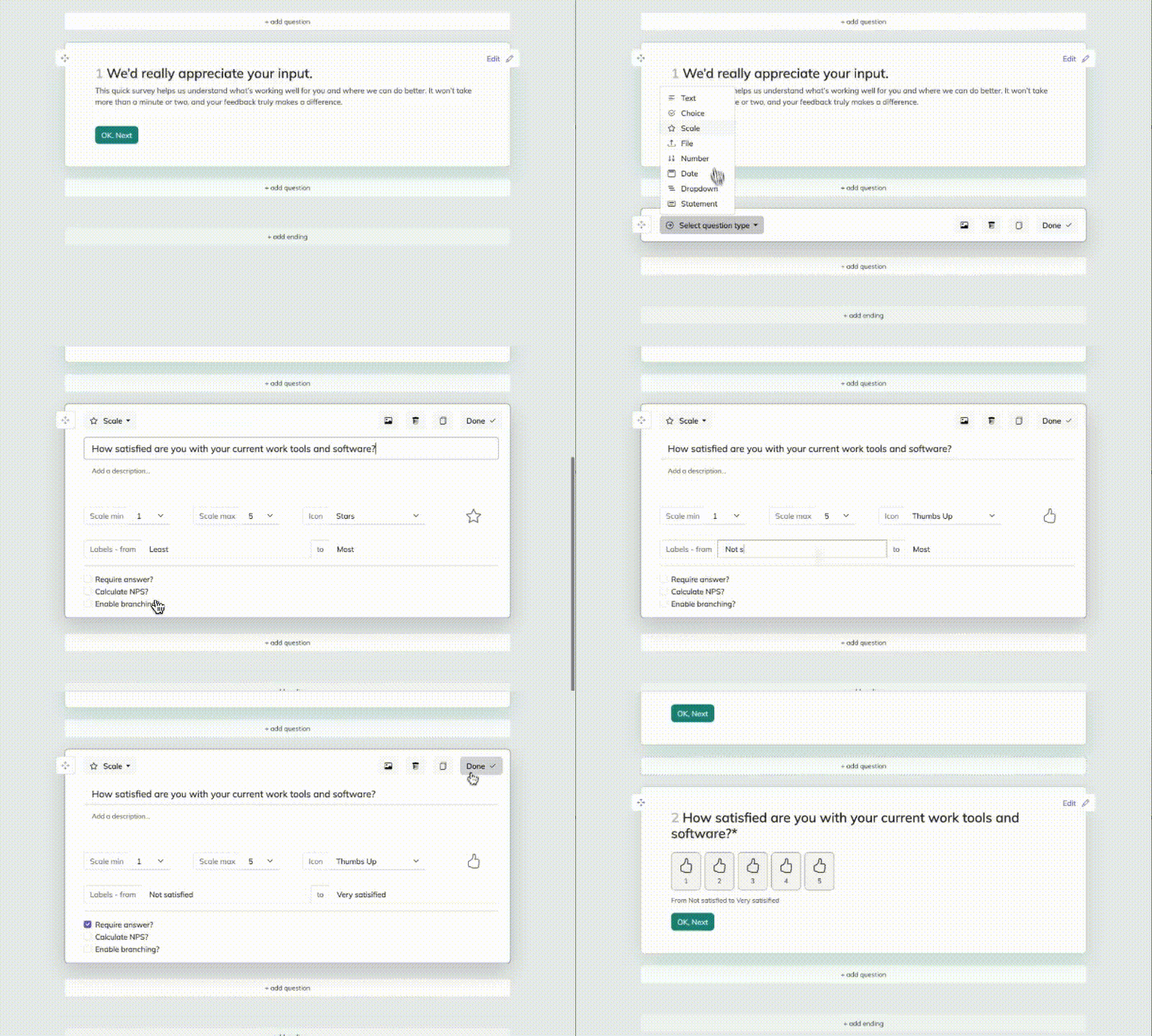
Create a new survey
Open HeySurvey and start from a body image survey template, or choose a blank survey if you want to build it yourself. You can begin without an account, but you’ll need one to publish and save responses later. Give your survey a clear title, such as “Body Image Feedback Survey.”Add questions
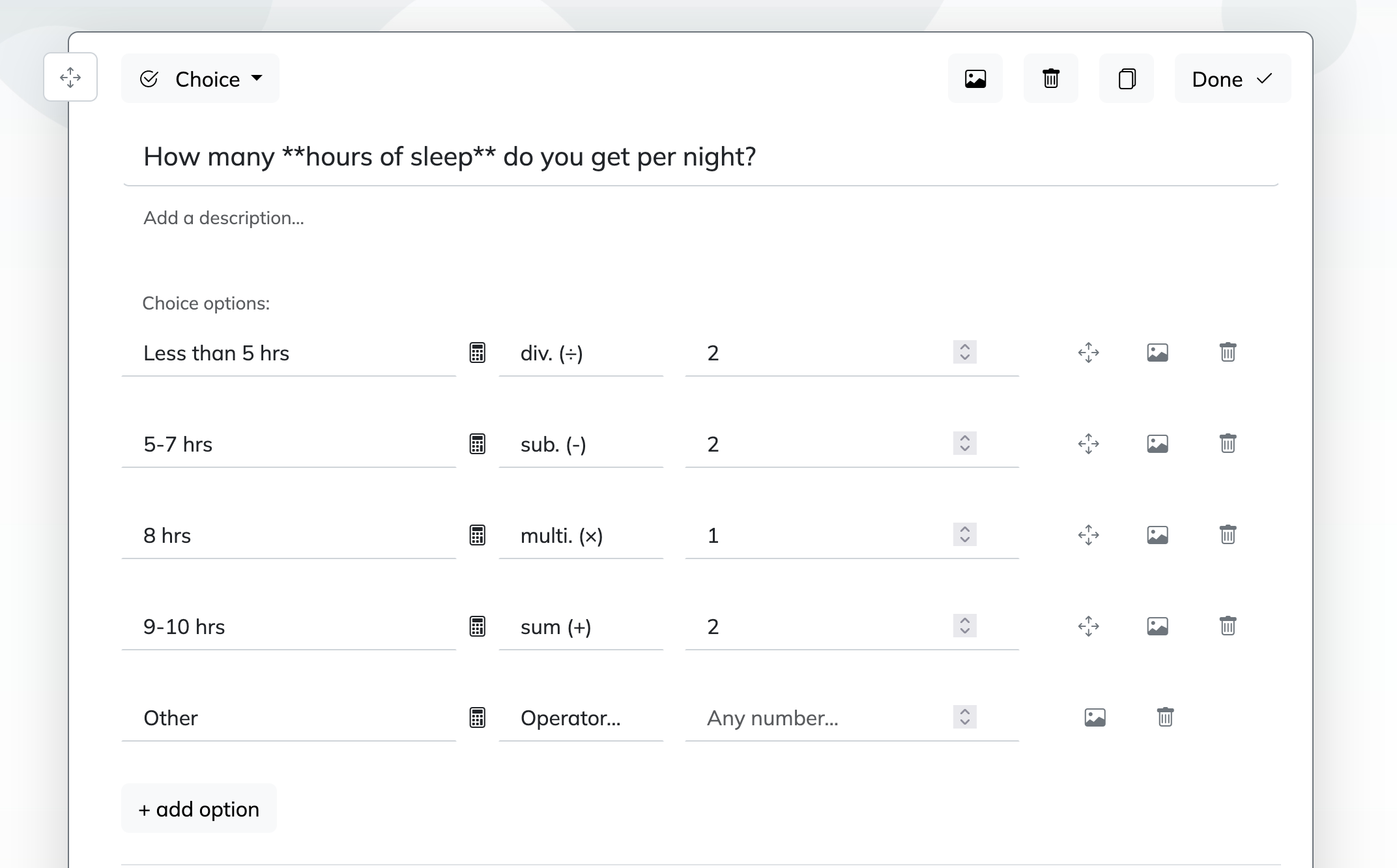
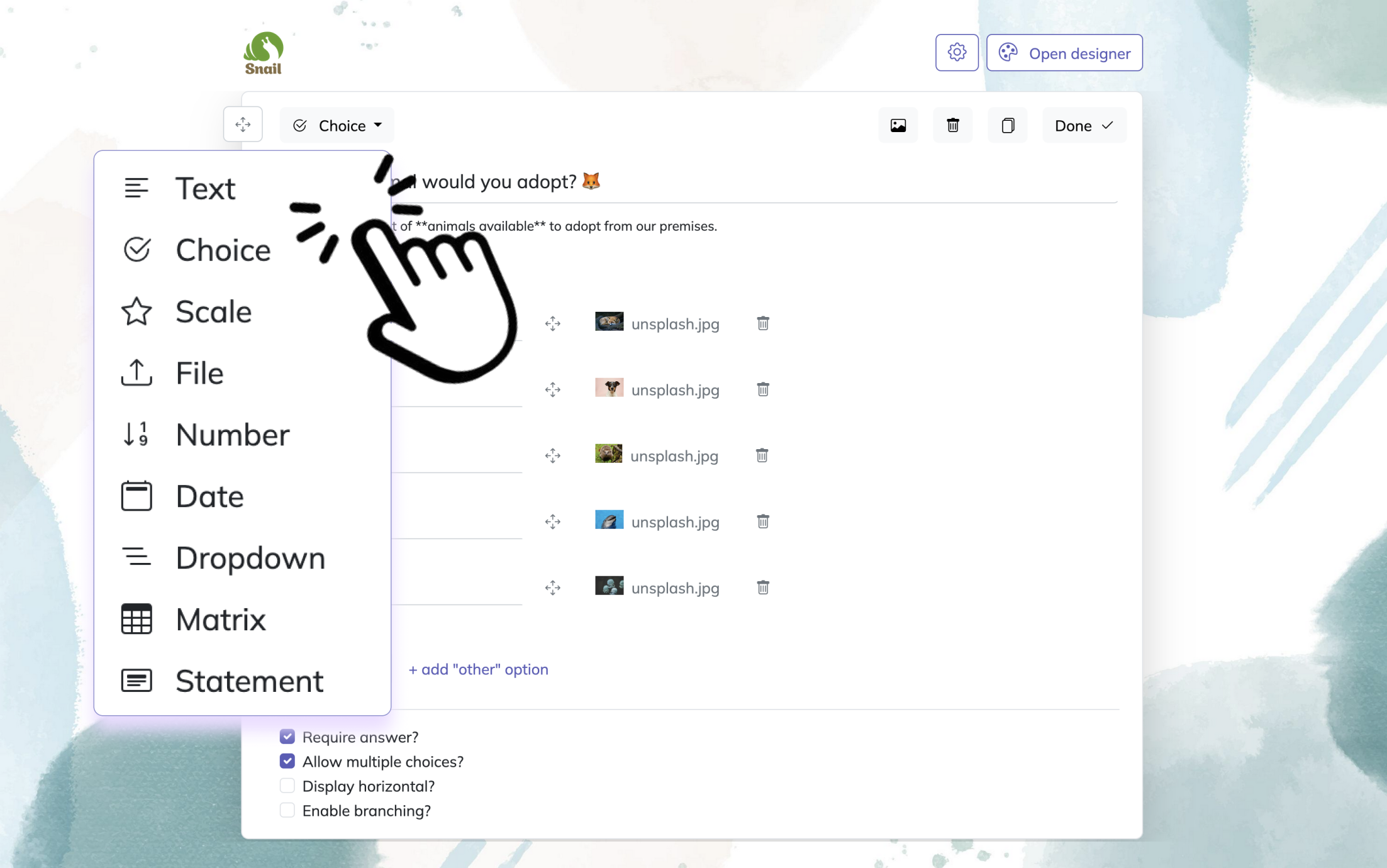
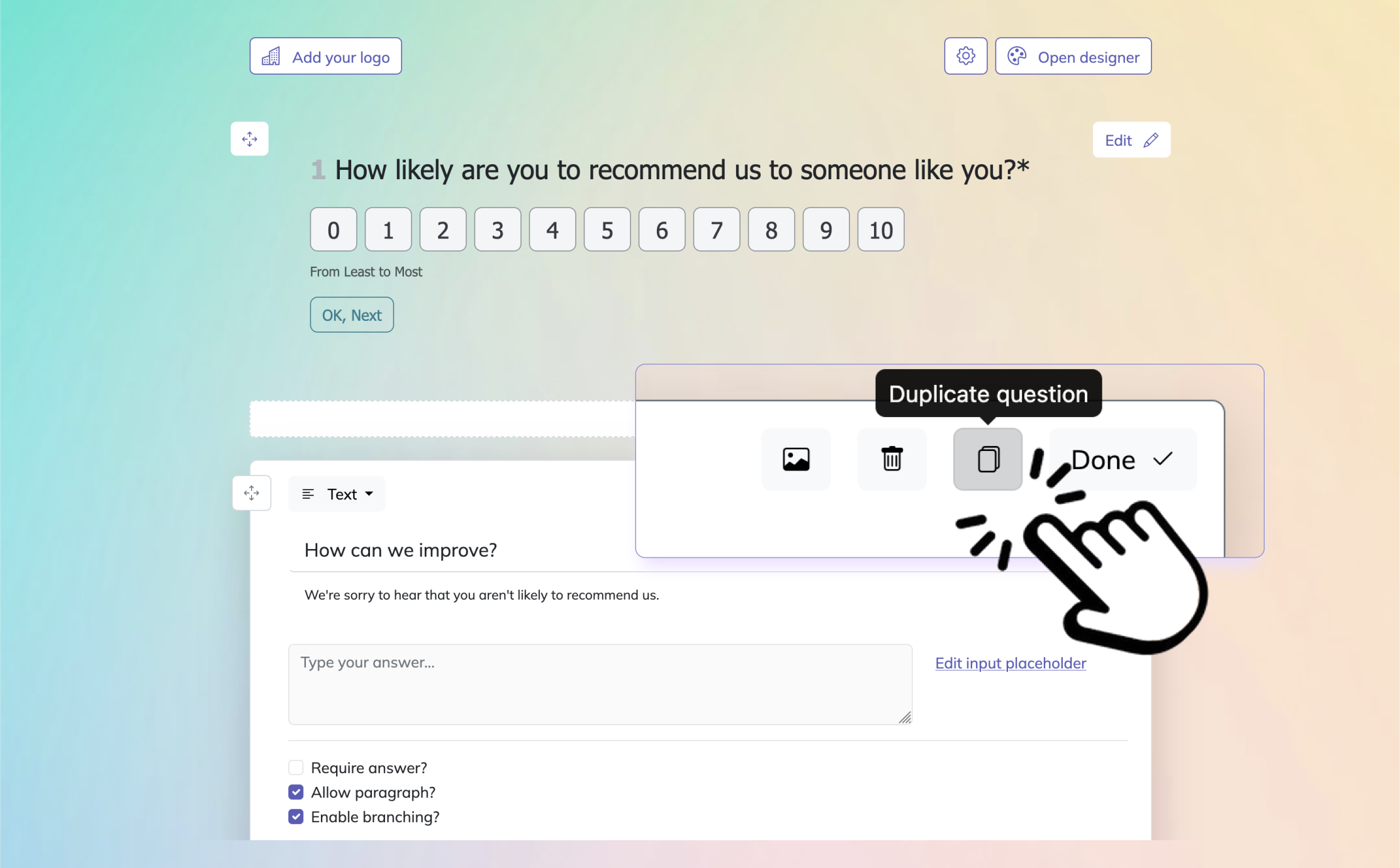
Click Add Question to include the items you need. For body image surveys, use Scale questions for ratings, Choice questions for multiple-choice answers, and Text questions for open comments. You can mark important questions as required, add helpful descriptions, and use branching if you want to show follow-up questions based on earlier answers.Publish survey
Review your survey in Preview mode to make sure everything looks right. Then click Publish to create a shareable link. You can send that link to respondents, or embed the survey on your website if needed.
Emotional Impact and Self-Esteem Body Image Questions
Where feelings and self-worth intersect
Why & When to Use
This part of a body image survey is useful when you need to understand how body image affects mood, self-worth, anxiety, shame, and confidence.
These body image questions work especially well for counseling intake, mental health programs, youth support initiatives, and classroom or workshop body image discussion questions.
Here’s the thing: not every appearance concern carries the same emotional weight. Some responses point to occasional frustration, while others suggest body image may be acting like a full-time backseat driver in a person’s daily life.
That is why these questions to ask about body image can be so helpful in more supportive settings. They give you a clearer view of whether the issue is brief, situational, and mild, or more persistent and emotionally draining.
For better results, keep the wording gentle and practical:
Use trauma-aware, nonjudgmental phrasing so people feel safe answering honestly.
Add support-resource language when the body image questionnaire is used in sensitive settings.
Ask about both recent moments and ongoing patterns to separate temporary feelings from lasting stress.
Treat responses as signals for possible follow-up, not as a diagnosis.
Plus, this kind of body survey can help you spot when extra support may be worth offering.
Sample questions
How often do social media posts make you feel dissatisfied with your body?
How frequently do you compare your appearance to influencers, celebrities, or peers online?
To what extent do edited or filtered images affect your expectations of your own body?
How often do you feel better or worse about your body after using social media?
How likely are you to change your eating, exercise, or appearance habits after seeing body-related content online?
Systematic reviews find heavier social media use is linked to greater body dissatisfaction and lower self-esteem in adolescents and young adults (PubMed)
Social Media and Comparison-Based Body Image Survey Questions
How online scroll habits shape offline self-image
Why & When to Use
This part of a body image survey helps you understand how social media, influencers, celebrities, peers, and digital image culture shape the way people see their bodies.
These body image questions are especially useful for teens and young adults, brand research, school wellness programs, and studies that explore body positivity questions alongside comparison habits.
Here’s the thing: online content can lift people up or send them into a comparison spiral faster than a phone battery hits 1%.
That is why these questions to ask about body image are so useful when you want to uncover how often someone is exposed to appearance-focused content, how strongly they compare themselves, and whether unrealistic beauty standards are affecting expectations.
For stronger results, keep the survey practical and specific:
Segment by platform when relevant, since Instagram, TikTok, YouTube, and Snapchat can shape body image in different ways.
Ask about both negative and positive effects so your body survey captures pressure, inspiration, confidence, and relief.
Measure exposure frequency before impact, because seeing body-related content often is not the same as being affected by it.
Use age-appropriate wording for younger groups so the body image questionnaire feels clear, safe, and easy to answer.
On top of that, these questions about body image can make your body image scale questionnaire far more useful when studying comparison patterns in digital spaces.
Sample questions
How often does concern about your body influence what or how much you eat?
How frequently do you exercise primarily to change the way your body looks?
How often do you avoid certain clothes because of how you feel about your body?
How likely are you to cancel plans or avoid activities due to appearance concerns?
How often do you check, monitor, or criticize specific parts of your body?
Eating, Exercise, and Behavior-Related Questions About Body Image
How body image quietly shapes everyday choices
Why & When to Use
This part of a body image survey looks at whether body image concerns affect daily habits like eating, exercise, clothing choices, grooming, and avoiding certain situations.
These body image questions work well in health education, fitness settings, college wellness programs, and preventive screening where you want to spot patterns early, not play armchair therapist.
Here’s the thing: the goal of these questions to ask about body image is not to diagnose disordered behavior.
It is to identify behavior patterns that may be linked to stress, shame, pressure, or discomfort around appearance.
To make your body image questionnaire more useful, keep the wording simple, respectful, and easy to answer.
Avoid overly clinical language unless your article or survey is written for healthcare or research professionals.
Use behavior frequency scales like never, rarely, sometimes, often, and very often.
Separate health-motivated behaviors from appearance-motivated behaviors so your data is clearer.
Add brief privacy context so respondents know their answers are confidential and can answer more honestly.
Plus, these questions about body image can reveal whether body concerns are changing what people do each day, which is often where the real story lives.
On top of that, a well-written body survey helps you measure behavior without making people feel like they are being inspected under a microscope.
Sample questions
How often do you appreciate your body for what it allows you to do?
To what extent do you feel respect for your body regardless of how it looks?
How confident are you in resisting pressure to meet unrealistic appearance standards?
How often do you challenge negative thoughts about your body?
How supported do you feel by the people around you in developing a healthier body image?
Research supports using brief validated measures like the 7-item Functionality Appreciation Scale to assess positive body image beyond appearance concerns (PubMed).
Body Positivity, Acceptance, and Resilience Questions
Strength-based body image questions that track progress, not just problems
Why & When to Use
This part of a body image survey focuses on strengths, not just struggles.
It measures self-acceptance, body appreciation, functionality, self-compassion, and resilience when appearance pressure shows up uninvited like a party guest who forgot to leave.
These body image questions are especially useful for body positivity campaigns, coaching programs, school workshops, DEI wellness initiatives, and post-intervention check-ins.
Plus, they work well when you want your body image questionnaire to show growth over time instead of only highlighting risk or dissatisfaction.
Here’s the thing: body positivity is not exactly the same as body satisfaction.
A person may still have hard days and yet show stronger respect for their body, better coping skills, and more resistance to unrealistic standards.
That is why these questions to ask about body image help balance more deficit-focused items in a broader body survey or body image scale questionnaire.
To make this section more useful, keep the tone positive, clear, and grounded in real life.
Include items about body functionality and self-compassion, not just appearance.
Use these questions about body image before and after workshops, coaching, or wellness programs to measure change.
Positive framing can improve response engagement and make people more willing to answer honestly.
Avoid treating body positivity as identical to loving every aspect of appearance at all times.
Sample questions
How much do your cultural or family expectations influence how you feel about your body?
To what extent do your peers or social groups affect your body image?
How well do common beauty standards reflect people who look like you?
Have recent life events changed how you feel about your body?
In which settings do you feel most aware of or concerned about your appearance?
Demographic, Cultural, and Contextual Body Image Questionnaire Items
Context makes your body image survey results far more useful
Why & When to Use
This part of a body image survey helps you understand not just what people feel, but why those feelings may differ.
Body image does not happen in a vacuum, because culture, identity, environment, and life stage all shape how a person answers body image questions.
These questions to ask about body image are especially helpful in research studies, inclusive programming, healthcare outreach, and any body image scale questionnaire that needs clear segmentation.
Plus, contextual items can uncover meaningful patterns across age, gender identity, ethnicity, disability status, sport participation, and major life changes.
That makes your body image questionnaire more accurate and a lot less likely to treat everyone like they were printed from the same template.
Here’s the thing: demographic and contextual questions should be useful, respectful, and intentional.
Use inclusive response options and always include opt-out choices for sensitive demographic questions.
Only ask for context you actually plan to analyze in your body survey.
When asking about settings, include examples like school, work, the gym, healthcare spaces, and online environments.
Keep wording culturally sensitive and avoid assumptions about family structure, identity, ability, or appearance norms.
On top of that, these questions about body image can reveal where support is most needed and which groups may be overlooked.
Sample questions
What should you decide before turning sample body image questions into a full survey?
How can you make body image questions feel neutral and respectful?
Why does a timeframe matter in a body image survey?
What should you avoid if your body image questionnaire covers sensitive topics?
How do you keep a body survey useful without making it exhausting?
Best Practices for Writing and Using Body Image Survey Questions
Good survey design keeps your body image survey clear, kind, and actually useful
Why & When to Use
This section helps you design a body image survey or body image questionnaire that is ethical, clear, useful, and respectful.
It is especially important if you want to adapt sample body image questions into a real survey for research, education, healthcare, coaching, or group programs.
Here’s the thing: strong questions to ask about body image do more than gather answers.
They reduce confusion, lower discomfort, and give you results you can actually trust.
Use these best practices when building a new body image scale questionnaire, revising a body survey, or reviewing questions about body image for tone and clarity.
Dos
Define the survey goal before choosing question types.
Use neutral, non-shaming language in every item.
Include a clear timeframe when asking about feelings or behaviors, like "in the past two weeks."
Mix scaled questions with one or two open-ended prompts.
Pilot test your body image questionnaire for clarity and emotional sensitivity.
Protect anonymity and explain how responses will be used.
Tailor wording for age, culture, and setting.
Don'ts
Don’t assume everyone wants body positivity language. Some people prefer body neutrality, and that is perfectly fine.
Don’t ask leading questions that push negative or positive answers.
Don’t overuse triggering terms or vivid examples. This is a survey, not a jump scare.
Don’t collect sensitive demographic data without a clear reason.
Don’t treat a body image questionnaire like a clinical diagnosis tool.
Don’t make the survey so long that response quality drops.
Don’t skip support resources in high-sensitivity settings.
Sample questions
Which themes in your body image survey show the strongest patterns: perception, emotion, behavior, comparison, or resilience?
Are certain groups in your body survey reporting higher concern levels by age, setting, or exposure?
What warning signs appear in the body image questions, and what protective factors appear too?
How do baseline and follow-up results differ after a lesson, workshop, or support program?
What do the scores say, and what do open-text answers add that numbers alone miss?
How to Analyze Body Image Survey Responses
Smart analysis turns a body image survey from a pile of answers into useful next steps
Why & When to Use
Collecting responses is only half the job.
A body image survey becomes valuable when you can interpret patterns, spot risk areas, and find opportunities for support, education, or program improvement.
This section is especially useful for educators, researchers, wellness teams, and anyone using a body survey to guide real decisions.
Here’s the thing: good analysis helps you move past "interesting" and into "actionable."
If your body image questionnaire is going to shape resources, training, or intervention plans, you need a simple way to read what the data is actually saying.
What to Review
Start by grouping body image questions into themes so your results are easier to understand.
Perception, such as how people view their appearance
Emotion, such as shame, pride, stress, or comfort
Behavior, such as checking, avoiding, dieting, or self-care
Comparison, especially social or peer comparison patterns
Resilience, including coping skills, self-acceptance, or support
Plus, look for trends across age group, setting, or exposure level, like social media use or participation in a program.
On top of that, flag both concern signals and protective factors, because not every useful finding is a red flag waving in your face.
Compare baseline and follow-up results if you ran an intervention.
Finally, combine score patterns with open-text comments, because numbers are helpful, but comments often tell you where the real story lives.
Sample questions
Based on your body image survey, which issue needs attention first: social comparison, low self-esteem, appearance pressure, or avoidance behaviors?
What support action fits the findings best right now: workshops, counseling referrals, peer support, content changes, or policy updates?
How can you share body image questionnaire results clearly while protecting privacy and keeping responses anonymous?
What measurable next step will show progress after these body image questions uncover a concern?
When should you repeat the body survey so you can track whether your response actually helped?
Turning Body Image Insights Into Action
Good data earns its keep when you use it
Why & When to Use
This is where the article should land the plane and actually help you do something useful with what you learned.
The best body image survey results should lead to better support, clearer communication, smarter education, and stronger program design.
Here’s the thing: collecting thoughtful body image questions is great, but action is the part that changes lives.
If your findings show stress around comparison, appearance worries, or withdrawal behaviors, start with the biggest pain points first instead of trying to fix everything in one heroic Tuesday.
Use your results to guide practical next steps like:
workshops on media literacy or self-image
counseling referrals for higher-risk responses
peer support spaces or guided group discussion
content strategy changes in school, wellness, or brand messaging
policy updates around bullying, appearance comments, or inclusion
Plus, share findings carefully with stakeholders in a way that protects anonymity and avoids turning people into spreadsheets with feelings.
Set measurable next steps, choose follow-up dates, and run another body image survey at regular intervals to track change.
On top of that, remember the big takeaway: strong questions to ask about body image matter most when they lead to supportive action, not just a nice-looking chart.
Related Health Survey Surveys
32 Health Care Satisfaction Survey Questions
Explore 25 health care satisfaction survey questions with practical sample questions to improve p...
31 Body Image Survey Questions
Explore 25 body image survey questions with sample prompts to assess confidence, self-perception,...
29 Domestic Violence Survey Questions
Explore 25 domestic violence survey questions with sample prompts, insights, and survey tips to b...