32 Health Care Satisfaction Survey Questions
Explore 25 health care satisfaction survey questions with practical sample questions to improve patient feedback, service quality, and care insights.
If you want better care, happier patients, and smoother operations, health care satisfaction survey questions do a lot of heavy lifting. They help you measure patient experience, improve care quality, support retention and compliance, and spot what needs fixing before it turns into a waiting-room horror story. Plus, this guide walks you through practical healthcare survey questions and clinic surveys you can use in hospitals, clinics, private practices, and medical offices, including patient experience survey questions, a health care survey questionnaire, a medical office patient satisfaction survey, and each useful patient satisfaction example, all powered by an online survey maker.
Sample questions
How satisfied were you with your overall experience at our practice or facility?
How easy was it to get the care or service you needed?
Did you feel respected and treated with courtesy throughout your visit?
How clearly did our team communicate what to expect during your care?
How likely are you to recommend our clinic, medical office, or hospital to others?
Overall Patient Experience Surveys
A big-picture view of the full patient journey
Why & When to Use
Overall patient experience surveys are the broadest type of healthcare survey questions, because they measure how your patient felt about the full visit from start to finish.
They work best after completed appointments, annual check-ins, hospital discharge, or any multi-step care episode where you want the whole story, not just one tiny chapter.
Here’s the thing, this format fits almost anywhere.
Hospitals
Specialty clinics
Primary care groups
Medical office patient satisfaction survey programs
If you are choosing between narrow clinic surveys and broader patient experience survey questions, use this type when you want to understand the entire care journey, not just scheduling, billing, or bedside manner alone.
Plus, these questions make a strong patient satisfaction example for general use because they are easy to repeat over time and compare across teams.
For best results, mix rating-scale questions with one or two open-ended prompts so you get both measurable trends and real patient comments. Numbers show the pattern, and comments tell you where the shoe pinches.
On top of that, use this health care survey questionnaire as a baseline for benchmarking patient satisfaction over time.
You can also segment results by:
Location
Provider
Visit type
That makes your healthcare satisfaction survey far more useful than a one-score snapshot.
Sample questions
How easy was it to schedule your appointment?
Were appointment times available within a reasonable timeframe?
How satisfied were you with the helpfulness of the scheduling staff?
Did you receive clear information about your appointment date, time, and preparation needs?
How convenient was the process for rescheduling or canceling if needed?
AHRQ’s CAHPS Clinician & Group Survey identifies core overall patient-experience domains including access, provider communication, care coordination, and staff interactions for benchmarking satisfaction over time. Source

Create a health care satisfaction survey in HeySurvey in 3 easy steps
Create a new survey
Start by opening a health care satisfaction survey template using the button below, or choose an empty sheet if you want to build from scratch. If you’re new to HeySurvey, you can begin without an account and explore the online survey tool first. Once your survey opens, give it a clear internal name so you can find it later.Add questions
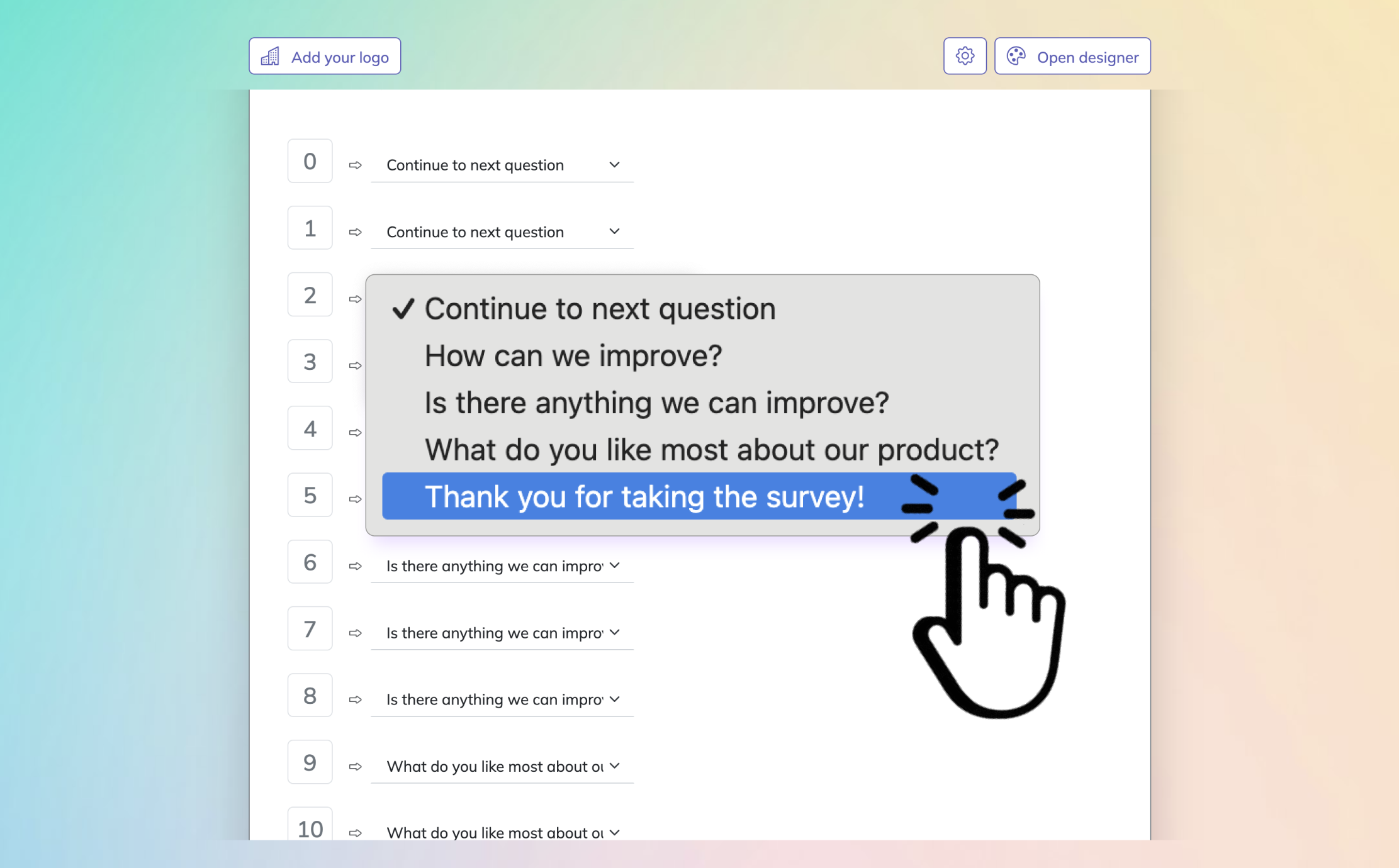
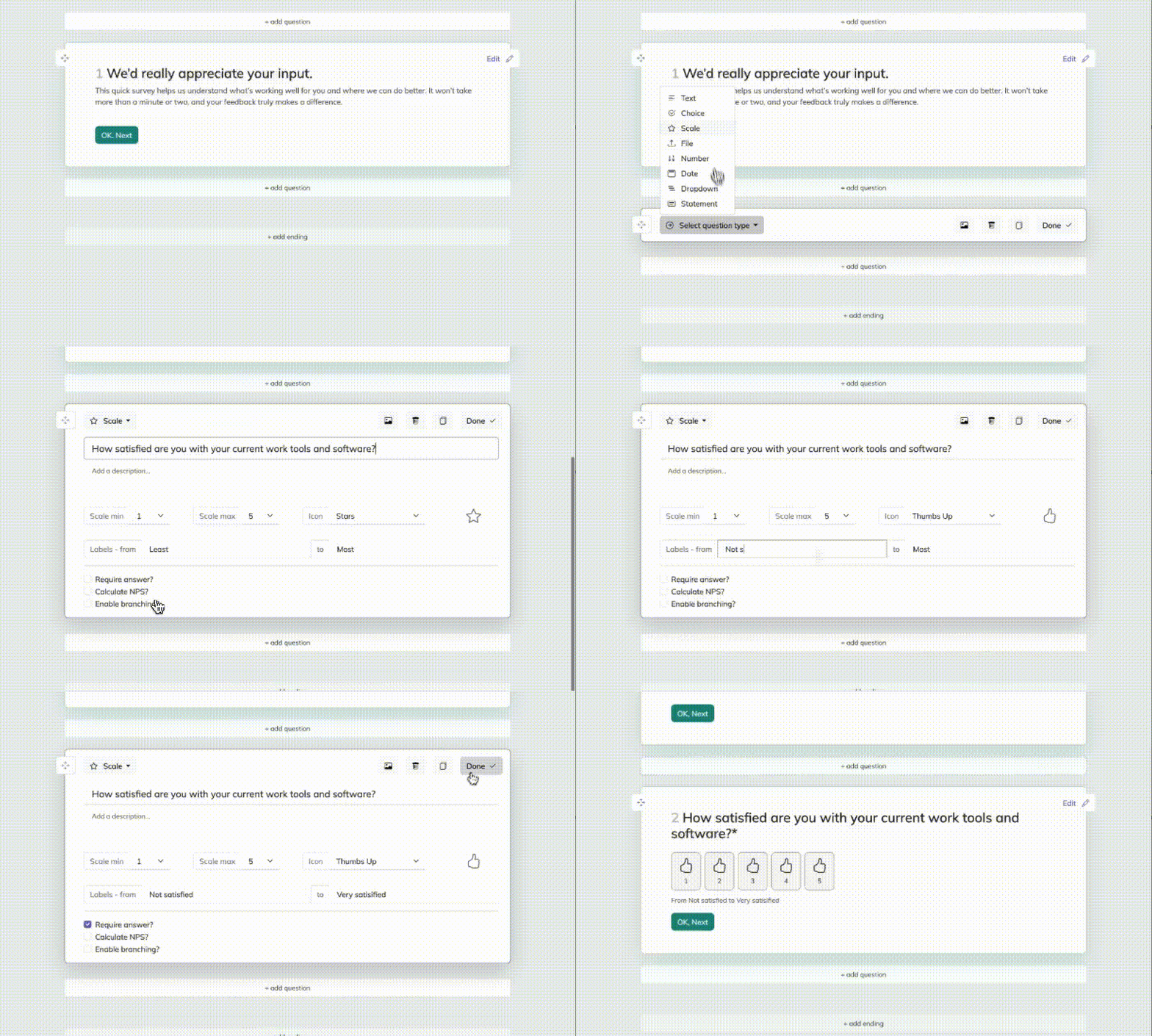
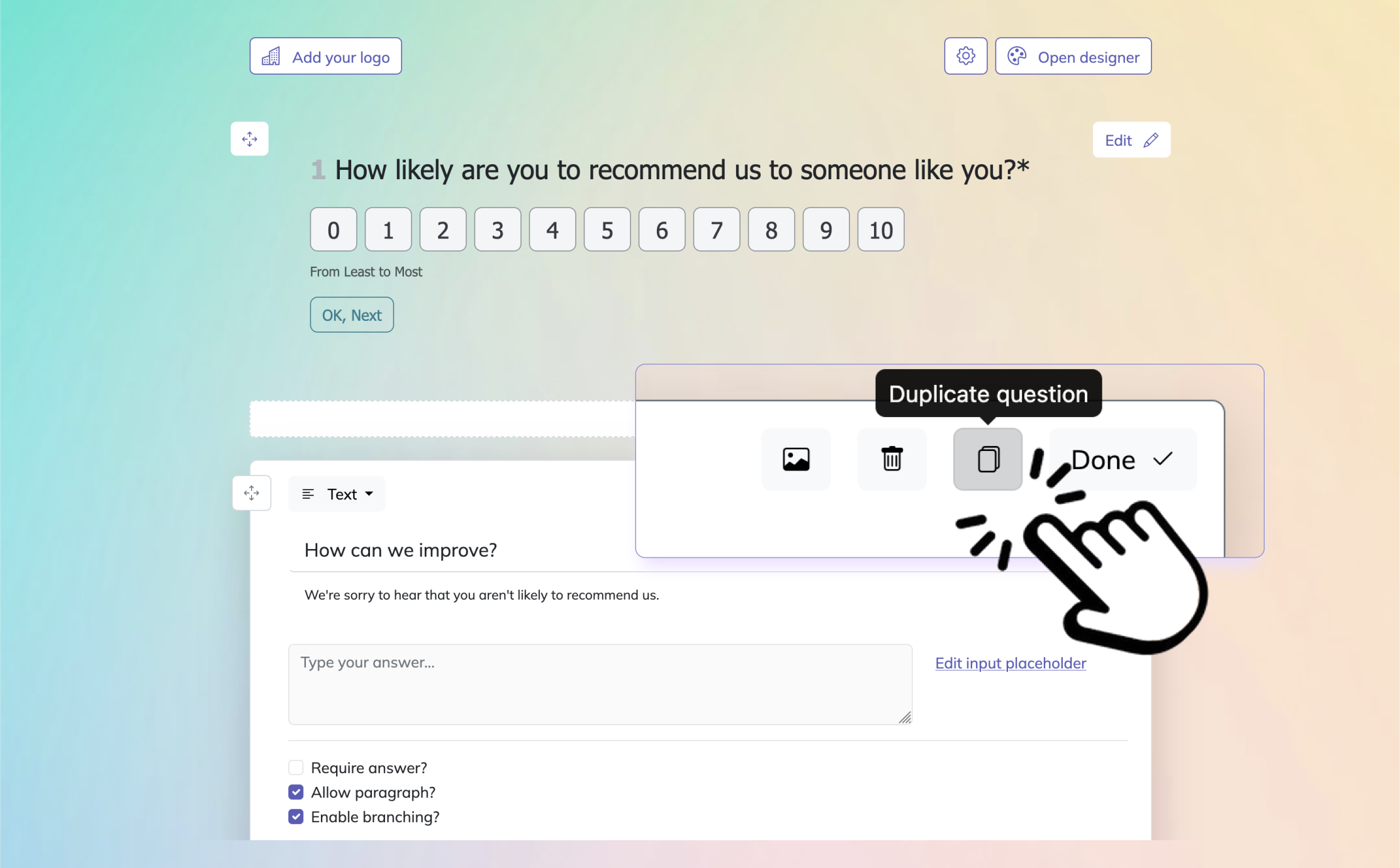
Click Add Question to include the most useful health care satisfaction survey questions. For example, use Scale or NPS questions to measure overall satisfaction, Choice questions for visit type or service area, and Text questions for comments and suggestions. Mark important questions as required if you want to prevent skipped answers.Publish your survey
Review your survey in Preview to make sure everything looks right, then click Publish to create a shareable link. After publishing, you can send the link to patients, embed the survey on your website, or collect responses from multiple devices.
Appointment Scheduling and Access Surveys
Your first impression starts before the waiting room
Why & When to Use
Appointment scheduling and access surveys focus on what happens before the visit even begins, which makes them some of the most practical healthcare survey questions you can use.
If patients struggle to book care, find an open slot, or understand next steps, frustration starts early and often sticks around like glitter.
These clinic surveys work especially well for urgent care centers, high-volume primary care practices, and teams that want to improve access without guessing.
Use them when you want to reduce patient drop-off, no-shows, scheduling complaints, or those not-so-fun first impressions that begin on the phone or in the portal.
A smart health care survey questionnaire here should evaluate more than appointment availability alone.
Phone scheduling experience
Online booking flow
Front-desk coordination
Referral coordination
Rescheduling and cancellation steps
Here’s the thing, speed matters, but clarity matters too.
If a patient gets an appointment quickly but receives confusing details, your health care satisfaction survey may still reveal friction that hurts trust and follow-through.
Plus, review feedback across phone, portal, and front-desk workflows to spot where patients get stuck.
On top of that, connect these patient experience survey questions to leakage, conversion, and no-show metrics so your clinic surveys can improve both patient experience and operational efficiency.
Sample questions
How satisfied were you with the friendliness and professionalism of the front-desk staff?
How easy was the check-in process?
How reasonable was your wait time before being seen?
Were you kept informed about any delays during your visit?
How comfortable, clean, and organized was the waiting area?
AHRQ’s validated CAHPS surveys identify timely appointments, quick care, and office wait times as core patient-experience measures strongly associated with access satisfaction in healthcare surveys (source).
Front Desk, Check-In, and Waiting Room Surveys
Arrival moments shape the whole visit fast
Why & When to Use
Front desk, check-in, and waiting room healthcare survey questions measure the first impression patients get when they arrive, and that impression can color everything that happens next.
If the welcome feels warm and the process feels smooth, your scores usually benefit too, because nobody wants their care experience to begin with a line and a mystery.
These clinic surveys are especially useful in any medical office patient satisfaction survey or healthcare satisfaction survey program where wait times, staff tone, and intake flow influence overall ratings.
They also work well for both in-person practices and outpatient clinic surveys, since arrival friction is not picky about setting.
Use this type of patient satisfaction example when you want to improve front-desk professionalism, speed up check-in, and make the waiting area feel more comfortable and organized.
A smart health care survey questionnaire here should look at more than raw timing alone.
Staff courtesy and professionalism
Check-in clarity and ease
Perceived wait time versus actual wait time
Delay communication
Waiting room cleanliness, comfort, and flow
Plus, include one open-ended follow-up question about avoidable delays so patients can tell you what went sideways.
On top of that, use the results from these patient experience survey questions to improve staffing, signage, and queue management, which is why this area shows up so often in health care satisfaction survey questions and clinic surveys.
Sample questions
Did your provider listen carefully to your concerns?
Did your provider explain your condition or treatment in a way you could understand?
Did you feel involved in decisions about your care?
Did your provider show empathy and concern for your well-being?
How confident did you feel in your provider’s knowledge and recommendations?
Provider Communication and Bedside Manner Surveys
Clear, caring communication turns treatment plans into follow-through
Why & When to Use
This is one of the most important patient experience survey questions categories because provider communication shapes trust, comfort, and whether patients actually follow the plan once they leave.
If people feel rushed, confused, or unheard, even solid care can land with a thud.
Use these healthcare survey questions after consultations, exams, treatment-planning visits, and follow-up appointments, when the details of communication and bedside manner are still fresh.
These clinic surveys help you evaluate empathy, listening, clarity, and shared decision-making, which are core ingredients in a strong patient satisfaction example and a useful health care survey questionnaire.
They work well across physicians, nurse practitioners, specialists, and nursing staff, so you can compare communication patterns without lumping every role into one giant soup.
To make results easier to act on, keep the scoring prompts in plain language.
Use simple scales like “very clear” to “not clear at all”
Separate communication feedback from clinical outcome feedback
Analyze responses by provider role and specialty
Add one optional comment box for details behind low scores
Plus, this approach helps your medical office patient satisfaction survey capture what patients actually remember most.
On top of that, these health care satisfaction survey questions also match search intent for examples of clinic surveys, healthcare satisfaction survey formats, and strong patient satisfaction example content.
Sample questions
Did you clearly understand the treatment plan or next steps after your visit?
Were medication instructions explained in a way you could follow?
Did you know who to contact if you had questions after your appointment?
How well were referrals, tests, or follow-up care coordinated?
Did you leave your visit feeling prepared to manage your care at home?
AHRQ’s CAHPS Clinician & Group Survey includes validated provider-communication measures, including clear explanations and medication instructions, to assess patient experience consistently across ambulatory settings (source).
Treatment, Instructions, and Care Coordination Surveys
When patients know what to do next, better outcomes get a lot less mysterious
Why & When to Use
These healthcare survey questions focus on what happens after the appointment, which is where good intentions either turn into action or wander off without a map.
They help you measure whether patients understood treatment plans, medication steps, referrals, follow-up timing, and how care is coordinated between teams.
Use these clinic surveys after diagnosis conversations, discharge, specialist referrals, procedures, and chronic care visits, when next steps matter just as much as the visit itself.
Here’s the thing, this type of health care survey questionnaire is perfect for spotting breakdowns that can hurt adherence, delay care, or create avoidable confusion.
They are especially useful in multi-provider systems, hospitals, and specialty care settings where handoffs can get messy fast.
A strong patient satisfaction example in this category connects understanding with follow-through, because if instructions are fuzzy, compliance usually is too.
To make your healthcare satisfaction survey more useful, include practical questions like these:
Ask one question about written instructions or after-visit summaries
Separate medication clarity from referral coordination
Use responses to reduce avoidable callbacks and missed follow-ups
Review patterns by department, provider type, or care pathway
Plus, these patient experience survey questions work well for continuity of care, which makes them a smart fit for health care satisfaction survey questions and any medical office patient satisfaction survey that wants more than surface-level feedback.
Sample questions
How clean did you find the exam rooms, waiting areas, and restrooms?
Did you feel safe and comfortable during your visit?
How satisfied were you with the privacy provided during registration, examination, and discussion of your care?
Were infection prevention and cleanliness practices clearly visible to you?
How would you rate the overall comfort of the facility environment?
Facility Cleanliness, Comfort, and Safety Perception Surveys
A clean, calm space quietly tells patients your care is probably organized too
Why & When to Use
These healthcare survey questions focus on the environment patients see, feel, and judge almost instantly, and yes, the waiting room is absolutely making first impressions before your staff says hello.
In hospitals, clinics, outpatient centers, and medical offices, cleanliness, comfort, privacy, and visible safety standards all shape trust in a big way.
Use these clinic surveys when you want to assess sanitation, seating comfort, noise, privacy at check-in, restroom conditions, and whether safety practices look active instead of hidden backstage.
Here’s the thing, this survey type supports both patient reassurance and operational accountability, which makes it useful for frontline service and behind-the-scenes fixes.
A strong patient satisfaction example in this area helps you improve reputation, service quality, and patient confidence without guessing what felt off.
To make your health care survey questionnaire more useful, keep these tips in play:
Separate cleanliness from comfort and privacy so your data does not blur together
Use comments to spot recurring concerns tied to specific rooms, floors, or locations
Connect findings to housekeeping, maintenance, and safety training follow-up
Include these patient experience survey questions in health surveys examples centered on environment, trust, and visible care quality
Plus, these health care satisfaction survey questions fit nicely into any medical office patient satisfaction survey or broader healthcare satisfaction survey.
Sample questions
Were the healthcare survey questions in this survey easy to understand and answer?
Did this clinic survey feel short enough to complete without frustration?
Which part of your experience should we ask more about next time?
Did any question feel confusing, repetitive, or unrelated to your visit?
What is one improvement that would make this medical office patient satisfaction survey more useful?
Best Practices for Writing and Using Health Care Satisfaction Survey Questions
Good survey writing makes feedback easier to trust, compare, and actually use
Why & When to Use
Here’s the thing, strong healthcare survey questions do not just collect opinions. They help you learn what happened, why it mattered, and what to fix first.
Use broad healthcare satisfaction survey questions when you want a big-picture read on overall care, loyalty, and general patient sentiment. Use focused clinic surveys when you need detail on access, communication, care coordination, wait times, or one specific department.
Keep these dos in your back pocket:
Keep each question short, clear, and about one topic only
Use neutral wording so you do not accidentally nudge answers
Mix ratings with one or two open-ended prompts for context
Send the survey soon after the visit while memories are still fresh
Segment results by provider, visit type, department, and location
Protect privacy and remind patients their feedback matters
Track trends over time, because one survey is a snapshot, not the whole movie
On top of that, aim for about 5 to 12 questions for most patient experience survey questions sets. Make the format mobile-friendly and easy to answer, because thumb-friendly beats abandoned halfway every time.
Avoid these common mistakes:
Asking too many questions
Combining multiple issues in one item
Using jargon in a health care survey questionnaire
Collecting feedback with no review plan
Ignoring repeated negative themes
Comparing departments unfairly without context
Plus, a smart patient satisfaction example starts with choosing questions based on your exact goal.
Sample questions
Which areas of the patient experience received the lowest satisfaction scores?
Which negative comments appear most often across responses?
Which issues are affecting the most patients or highest-value services?
What changes can be implemented quickly versus those requiring longer-term planning?
How will we measure whether improvements actually raised patient satisfaction?
How to Turn Patient Survey Insights Into Action
The real win is turning feedback into fixes your patients can actually feel
Why & When to Use
Here’s the thing, collecting healthcare survey questions and clinic surveys only matters if the results lead to measurable improvement. This is the bridge between feedback and better patient outcomes, stronger loyalty, and smoother day-to-day operations.
After each survey cycle, use a simple review process so your healthcare satisfaction survey data does not just sit there looking busy. Spreadsheets do not heal frustration by themselves, sadly.
Start by grouping responses into clear themes:
Access
Communication
Wait time
Care coordination
Billing or front-desk experience
Plus, prioritize what to fix based on:
Frequency, or how often the issue appears
Severity, or how much it harms the patient experience
Business impact, especially for high-value services or repeat visits
On top of that, turn patterns from patient experience survey questions into action plans with an owner, a deadline, and a follow-up metric. That could mean improving scheduling scripts, reducing check-in bottlenecks, or retraining staff on communication.
Close the loop internally by sharing findings with teams, and externally with patients when appropriate. The best health care survey questionnaire, medical office patient satisfaction survey, or patient satisfaction example is the one that leads to visible change.
Turning Survey Insights Into Action
The real win starts after the survey closes
Why & When to Use
Collecting feedback is only useful if your team actually does something with it.
This final step turns clinic surveys, health care satisfaction surveys, and other health surveys questions into practical improvements patients can feel, not just charts that sit in a folder looking busy.
Here’s the thing, the best health product survey or health satisfaction survey does more than collect opinions.
It helps you spot patterns, choose what matters most, and make visible changes that build trust.
Use this action-focused approach when you want to move from raw responses to smarter decisions across providers, departments, and visit types.
On top of that, break results down when appropriate by:
provider
department
visit type
patient demographic group
That helps you see whether the same issue shows up everywhere or only in specific parts of the patient experience.
A simple framework keeps the process grounded:
collect
categorize
prioritize
improve
follow up
repeat
Plus, close the loop by telling patients and staff what changed because of the feedback.
If your sample survey questions for doctors reveal confusion, delays, or gaps in routines, fix the issue, share the update, and measure again because guessing is expensive and patients can absolutely tell.
Done well, clinic surveys lead to better care, stronger loyalty, and quality outcomes that improve over time.
Related Health Survey Surveys
31 Body Image Survey Questions
Explore 25 body image survey questions with sample prompts to assess confidence, self-perception,...
29 Domestic Violence Survey Questions
Explore 25 domestic violence survey questions with sample prompts, insights, and survey tips to b...
29 Eating Disorder Survey Questions
Explore 25 eating disorder survey questions with sample prompts to better understand symptoms, be...