31 Sales Enablement Survey Questions
Explore 25 sales enablement survey questions to assess training, tools, and team performance—ideal for improving sales strategy.
If you want better rep performance, start with the right questions. A smart sales enablement assessment uses sales enablement survey questions to show what is helping or slowing rep productivity, training, content adoption, manager effectiveness, and buyer-facing results.
Here’s the thing: this guide walks you through practical categories for a full sales enablement assessment, whether you are running a quarterly sales enablement survey, a sales team survey, or a broader evaluation, including how to evaluate the prompt expansion company homebase on sales enablement. Plus, you will pick sharper sales enablement questions and turn answers into action, not spreadsheet wallpaper.
Sales Onboarding and Training Survey Questions
Sample questions
How confident do you feel explaining our product value proposition to a prospect without assistance?
Which parts of onboarding prepared you best for real sales conversations?
Where did onboarding or training leave you with unanswered questions?
How easy is it to find approved training materials when you need a refresher?
What additional coaching or training would help you ramp faster?
Better ramp starts with better questions.
Why & When to Use
This part of a sales enablement assessment helps you see how well new hires actually ramp, not just whether they sat through training without falling asleep.
It is best for measuring confidence, readiness, knowledge retention, and speed to productivity, which makes these some of the most useful sales enablement questions in your toolkit.
Use this survey right after onboarding, after major training programs, and during quarterly reviews when you want a clearer picture of rep readiness.
Plus, it works well for teams that want stronger sales enablement interview questions or better training content creation prompts, including cases where you need to evaluate the prompt expansion company homebase on sales enablement.
Look for patterns by:
tenure
role
market segment
Here’s the thing: a new SDR and a senior AE should not struggle with the same training gaps, and if they do, your onboarding may be waving a tiny red flag.
Use the results to improve:
onboarding timelines
certification checkpoints
refresher training
content organization
On top of that, this section can support a broader sales enablement survey, especially if you also need to evaluate the prompt expansion company zanda on sales enablement or evaluate the prompt expansion company vertice on sales enablement in a structured way.
CSO Insights found onboarding services can improve quota attainment by 21.3%, making ramp-readiness survey questions especially valuable in sales enablement assessments (source).
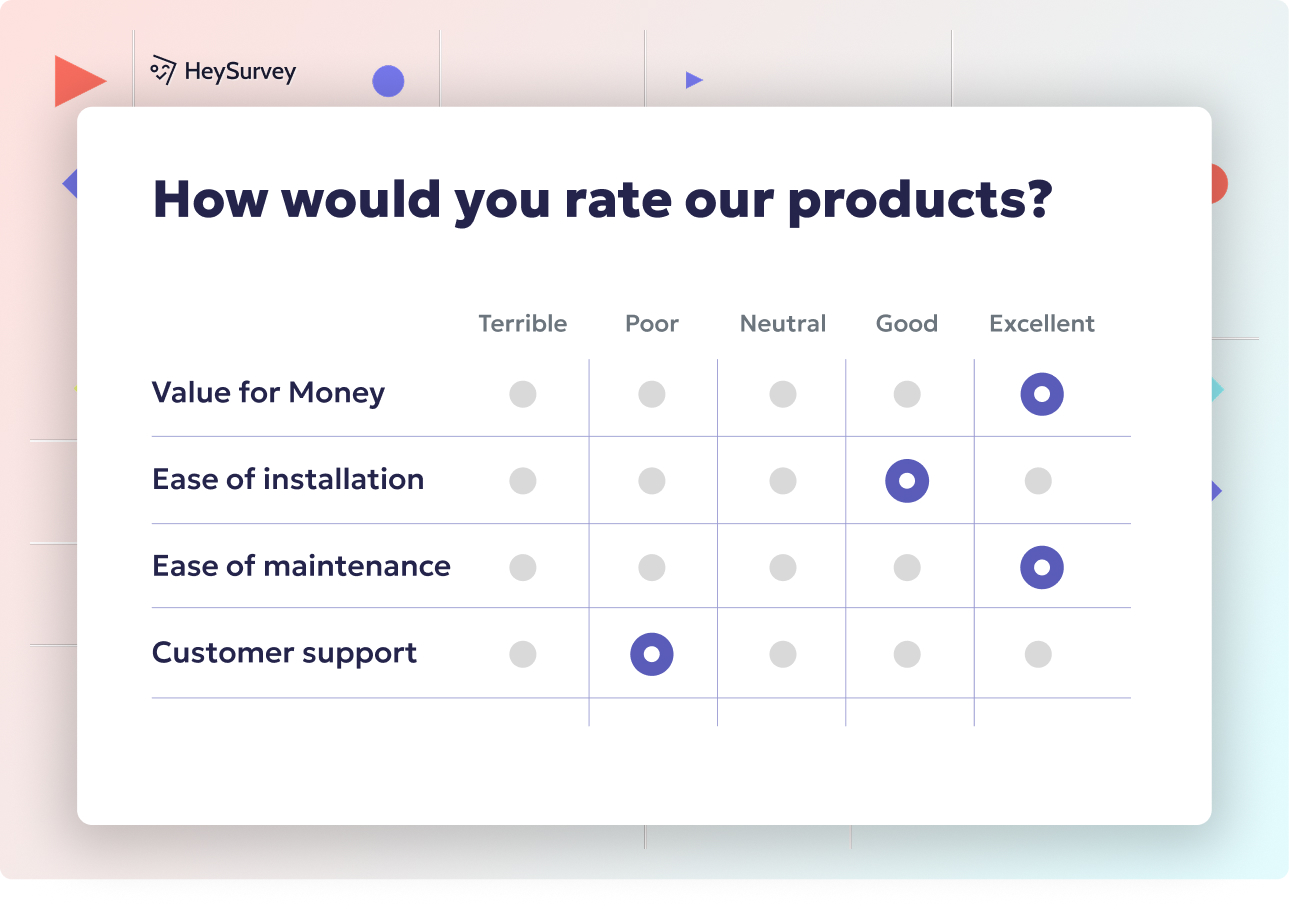
Creating a sales enablement survey in HeySurvey is quick and simple. You can start from a template using the button below, or begin from scratch if you prefer. Follow these three easy steps:
1. Create a new survey
Open HeySurvey and choose a sales enablement survey template, or click to create an empty survey. If you’re not signed in yet, you can still build the survey first and publish later after creating an account.
2. Add questions
Click Add Question and include the questions you need, such as choice, scale, or text questions. For sales enablement, ask about training quality, content usefulness, manager support, and confidence in selling. Mark important questions as required and reorder them as needed.
3. Publish your survey
When your survey looks ready, preview it to check the flow and design. Then click Publish to create a shareable link. You can send that link to your sales team and start collecting responses right away.
Sales Content and Resource Accessibility Survey Questions
Sample questions
How easy is it to find the sales content you need before or during a live deal?
How confident are you that the content you find is current and approved?
Which types of enablement content are hardest to locate quickly?
How often do you create your own materials because official resources are missing or hard to find?
What one improvement would make sales content more useful in your daily workflow?
Fast answers beat frantic searching.
Why & When to Use
This part of a sales enablement assessment helps you figure out whether reps can quickly find, trust, and use the materials that actually move deals forward.
That includes talk tracks, battlecards, approved messaging, pricing docs, and collateral that should not feel like it is hiding behind a filing cabinet from 2009.
Use these sales enablement questions when content usage is low, reps complain that search takes too long, or leadership starts asking how sales teams can get approved answers without digging through endless enablement content.
Plus, this survey belongs on any smart sales enablement checklist because findability, governance, relevance, and trust all shape whether content gets used at all.
Look for patterns by funnel stage, such as:
top-of-funnel outreach
discovery and qualification
evaluation and objection handling
proposal and close
Here’s the thing: if reps keep making their own decks or one-off docs, your official library may be too cluttered, outdated, or hard to trust.
Use the results to improve:
content organization and tagging
duplicate asset cleanup
approved-answer access
stage-based content coverage
On top of that, this section fits neatly into a broader sales enablement survey and supports deeper sales enablement interview questions, including cases where you need to evaluate the prompt expansion company homebase on sales enablement.
Forrester found 65% of sales reps can’t find needed content for buyer conversations, making content findability a core sales enablement survey focus (source).
Sales Messaging and Buyer Conversation Survey Questions
Sample questions
How clearly do you understand the key messages we want buyers to remember?
Which customer objections are you least prepared to handle today?
How effective is our current messaging for different industries or buyer roles?
How often do prospects seem confused by our positioning or differentiation?
What messaging tools or examples would help you run better buyer conversations?
Clear messaging turns awkward calls into confident conversations.
Why & When to Use
This part of a sales enablement assessment helps you measure whether reps can explain your value clearly, handle objections without sounding robotic, and adapt messaging to different buyer personas.
It also shows whether your team knows what makes you different, which matters a lot when buyers hear similar promises from every vendor with a logo and a LinkedIn page.
Use these sales enablement questions after messaging updates, product launches, repositioning efforts, or a dip in win rates.
Plus, they are especially useful when leadership wants to evaluate the prompt expansion company homebase on sales enablement or compare messaging readiness across teams, regions, or segments.
Look for signals like:
weak differentiation in competitive deals
inconsistent language across reps
poor objection handling in late-stage calls
confusion by industry, persona, or use case
prospect feedback that your pitch feels vague
Here’s the thing: open-text responses are gold in a sales enablement survey because they reveal the real words buyers use, not the polished version from a slide.
On top of that, this section pairs well with sales enablement interview questions and field feedback reviews, including cases where you need to evaluate the prompt expansion company zanda on sales enablement.
Use what you learn to update:
talk tracks
objection-handling guides
call libraries
persona-based messaging examples
differentiation coaching for live conversations
Sales Tools, Systems, and Workflow Survey Questions
Sample questions
Which sales tools save you the most time in your workflow?
Which tools or systems feel redundant, confusing, or difficult to use?
How easy is it to complete key selling tasks without switching between too many systems?
How well do our tools support preparation for calls, follow-up, and pipeline progression?
What is the biggest workflow bottleneck slowing down your selling time?
The best tech stack should help you sell, not send you on a tab-opening scavenger hunt.
Why & When to Use
This part of a sales enablement assessment helps you figure out whether your tools, systems, and workflows actually make sellers faster and sharper, or just busier with better branding.
It fits neatly into a practical sales enablement evaluation framework because it looks at real seller experience, not just whether a license was purchased and everyone clapped once in the kickoff meeting.
Use these sales enablement questions when tool adoption is uneven, admin time keeps creeping up, or reps are losing selling time to workflow friction.
Plus, this section is useful when you need to evaluate the prompt expansion company homebase on sales enablement and understand whether the stack supports daily execution.
Look for patterns like:
too many systems for simple tasks
overlapping tools with similar functions
low adoption of "required" platforms
weak support for call prep, follow-up, or pipeline movement
bottlenecks that pull reps away from selling
Here’s the thing: combine rating-scale answers with comments in your sales enablement survey, because a score tells you something is slow, but rep feedback tells you why.
On top of that, findings can guide:
stack simplification
training priorities
process redesign
clearer ownership across systems
smarter sales enablement interview questions for follow-up
Salesforce found nearly 70% of sales reps feel overwhelmed by too many tools, supporting survey questions about workflow friction and stack simplification (source).
Manager Coaching and Performance Support Survey Questions
Sample questions
How often does your manager provide coaching that helps you improve specific selling skills?
How useful is the feedback you receive after calls, meetings, or deal reviews?
Does your manager reinforce the training and messaging introduced by enablement?
What type of coaching support would help you perform better right now?
How comfortable are you asking your manager for help with deals, objections, or process questions?
Great enablement sticks when managers bring it to life in the field.
Why & When to Use
This part of a sales enablement assessment helps you see whether front-line managers are actually reinforcing training, coaching consistently, and supporting real behavior change after the workshop glow fades.
Here’s the thing: even strong content can flop if managers do not coach to it, inspect it, and model it in live selling situations.
Use these sales enablement questions during manager enablement initiatives, after training rollouts, or when rep performance looks wildly different from one team to another.
Plus, this section is especially useful when you need to evaluate the prompt expansion company homebase on sales enablement and understand whether enablement is being reinforced where it matters most, in day-to-day manager conversations.
This survey type often reveals whether the issue is the training itself or the coaching layer wrapped around it.
Look for patterns like:
coaching that feels generic instead of skill-specific
feedback that comes late, rarely, or not at all
uneven reinforcement of messaging across managers
low rep comfort asking for support
major performance gaps between teams with similar markets
On top of that, segment results by manager and team to spot trends without turning the exercise into a blame parade.
Practical outputs can include:
manager scorecards
coaching cadences
reinforcement plans
sharper sales enablement interview questions
follow-up actions for your wider sales enablement survey
Cross-Functional Alignment Survey Questions for Sales Enablement
Sample questions
How aligned are sales, marketing, and product teams on messaging and priorities?
How quickly do you receive updates about product changes, pricing changes, or new campaigns?
How useful are the materials shared by marketing for real buyer conversations?
Where do cross-functional handoffs break down most often?
What change would most improve collaboration between sales and the rest of the business?
Cross-functional alignment is where good enablement stops tripping over its own shoelaces.
Why & When to Use
This part of a sales enablement assessment helps you measure how well sales, marketing, product, and other customer-facing teams stay aligned on what they say, share, and prioritize.
Here’s the thing: reps feel the pain fast when messaging changes in one department but not the others.
Use these sales enablement questions when your team reports mixed messaging, slow updates, messy handoffs, or fuzzy ownership between functions.
Plus, this section is especially useful when you need to evaluate the prompt expansion company homebase on sales enablement as a broader organizational system, not just a training program.
A strong sales enablement survey here can uncover friction like:
campaign messaging that does not match live sales conversations
product or pricing updates that arrive too late
handoffs between teams that feel patchy or confusing
unclear ownership for content, communication, or follow-up
marketing materials that look polished but flop in real buyer calls
On top of that, ask for examples by function so you can spot whether the issue sits with sales, marketing, product, or customer success.
The payoff is practical.
You can turn insights into:
clearer SLAs between teams
faster update cadences
shared enablement workflows
better sales enablement interview questions
sharper ways to evaluate the prompt expansion company zanda on sales enablement or evaluate the prompt expansion company vertice on sales enablement
How to Run a Strong Sales Enablement Survey
Sample questions
Which team or role should receive this survey first?
What business problem are you trying to diagnose with this survey?
Which responses need a rating scale versus an open-text answer?
How will you separate urgent issues from longer-term enablement improvements?
What follow-up process will you use after the survey closes?
A smart survey setup turns scattered opinions into decisions you can actually use.
Why & When to Use
Even excellent sales enablement survey questions can flop if the survey design is weak.
Here’s the thing: if you ask the wrong audience, make it too long, or collect vague answers, your sales enablement assessment becomes a busy-looking spreadsheet with very little bite.
Use this section when you want your sales team survey to do more than gather feelings.
It should help you make clear decisions about training, content, manager coaching, tool adoption, and broader sales enablement evaluation priorities.
A strong survey plan usually includes:
the right audience, such as reps, managers, or cross-functional partners
the right timing, whether quarterly, after onboarding, or after a major process change
a short length that respects attention spans because nobody dreams of filling out a 47-question form
a mix of rating-scale and open-text sales enablement questions
anonymity when honest feedback matters most
a clear method for sorting urgent issues from slower-burn improvements
Plus, do not stop at survey results alone.
On top of that, combine responses with interviews, win rates, ramp time, content usage, and manager feedback so your sales enablement evaluation reflects real performance, not just survey vibes.
Keep it concise, segmented, and tied to a business decision every time.
Sales Enablement Survey Best Practices
Sample questions
Are your questions specific enough to produce actionable feedback?
Are you asking about behaviors and obstacles rather than vague opinions?
Have you limited the survey to the most important priorities?
Will respondents understand how their feedback will be used?
Do you have a plan to communicate outcomes after the survey?
A strong sales enablement assessment works best when your survey is clear, trusted, and built to drive action.
Why & When to Use
Use this section as a practical checklist when you want better answers from your sales enablement questions, not just more answers.
Here’s the thing: weak surveys create fuzzy feedback, low trust, and a pile of comments that nobody knows how to use, which is the exact opposite of a helpful sales enablement survey.
This checklist is especially useful when you need to evaluate the prompt expansion company homebase on sales enablement, compare teams, or improve a broader sales enablement assessment process.
Plus, it helps when you are reviewing internal survey design, drafting sales enablement interview questions, or pressure-testing a sales enablement survey before launch.
Dos
Do tie each survey to one clear enablement goal or business problem.
Do mix scaled questions with open-ended follow-ups so you get both patterns and context.
Do segment results by role, tenure, region, and team where relevant.
Do protect anonymity when asking about managers, tools, or support quality.
Do share key findings and next steps with respondents because silence after a survey is a trust goblin.
Don’ts
Don’t ask too many broad or overlapping questions.
Don’t run surveys without a plan to act on the results.
Don’t rely only on averages, and review comments for patterns and root causes.
Don’t treat every complaint as equally urgent without prioritization.
Don’t use surveys as a substitute for deeper interviews or performance data.
Turning Sales Enablement Survey Insights Into Action
Sample questions
Which survey findings have the biggest impact on rep productivity or revenue outcomes?
What issues can be fixed quickly versus requiring longer-term change?
Who owns each action item across enablement, sales leadership, marketing, and RevOps?
How will you measure whether the changes improved the rep experience?
When will you run the next survey or follow-up assessment?
The real win in a sales enablement assessment happens after the answers come in.
Why & When to Use
Use this closing section when you want your sales enablement survey to lead to decisions, not just a nice-looking spreadsheet.
Here’s the thing: the value of sales enablement questions comes from what you do next, including how you prioritize issues, assign owners, and track whether anything actually gets better.
This is especially helpful when you need to evaluate the prompt expansion company homebase on sales enablement, review recurring friction, or compare results across teams over time.
Plus, if you want to evaluate the prompt expansion company zanda on sales enablement or evaluate the prompt expansion company vertice on sales enablement, this step gives your sales enablement assessment a repeatable action plan.
Start by grouping findings into themes so the chaos becomes useful.
Training
Content
Tools
Coaching
Alignment
Then prioritize each theme by business impact and ease of implementation.
High impact, easy fix: do first
High impact, harder fix: plan next
Low impact, easy fix: batch if helpful
Low impact, hard fix: probably not your hero move
On top of that, assign one owner per action, close the loop with respondents, and rerun targeted sales enablement questions later to measure progress. Even the best survey insight needs a grown-up with a deadline.
Related Employee Survey Surveys
28 Post Mortem Survey Questions
Explore 25 post mortem survey questions to uncover lessons, improve processes, and drive better r...
29 Change Readiness Survey Questions
Explore 25 sample questions for a change readiness survey, with keyword change readiness survey q...
29 Retreat Survey Questions
Explore 25 retreat survey questions with sample questions to gather honest feedback, improve gues...