29 Manager Effectiveness Survey Questions PDF
Explore 25 manager effectiveness survey questions in a practical PDF guide to help you assess leadership, communication, team support, and areas for improvement.
A manager effectiveness survey gives your employees a structured way to share feedback on their direct manager, without turning the process into a guessing game.
If you’re searching for a “manager effectiveness survey questions PDF,” you want a practical manager feedback questionnaire you can save or print.
Here, you’ll find six survey modules you can combine into one questionnaire or use separately with an online survey maker. These employee survey questions about management cover different aspects of leadership, helping you choose manager feedback questions that turn everyday experiences into useful conversations.
1. Communication and Clarity: Manager Feedback Survey Questions
Sample questions
My manager clearly explains what is expected of me.
My manager communicates changes that affect my work in a timely manner.
My manager explains how my work contributes to team goals.
My manager listens carefully when I raise questions or concerns.
What could your manager do to communicate more effectively?
These employee survey questions about management focus on your manager’s communication, not your own communication skills.
In your manager feedback questionnaire, ask respondents to consider the past three months. Use a five-point agreement scale, from “Strongly disagree” to “Strongly agree,” for the first four items, plus “Not applicable / Not enough experience to answer.”
Keep the final, open-ended question optional. Useful feedback shouldn’t require an essay marathon.
Plus, separate two different communication gaps:
Unclear expectations suggest your manager needs to clarify responsibilities, priorities, or what success looks like.
Insufficient updates suggest your manager needs to share changes sooner or more consistently.
Why & When to Use
Use these manager feedback questions after reorganizations, leadership changes, or recurring confusion about priorities.
Your manager feedback survey can reveal inconsistent communication, but avoid assuming every gap starts with the manager. Check whether shifting decisions, unclear ownership, or delayed information elsewhere also contribute. For more ideas, see these change readiness survey questions.
Gallup found 38% engagement among German employees strongly agreeing their manager helps set priorities, versus 4% among those disagreeing (source).
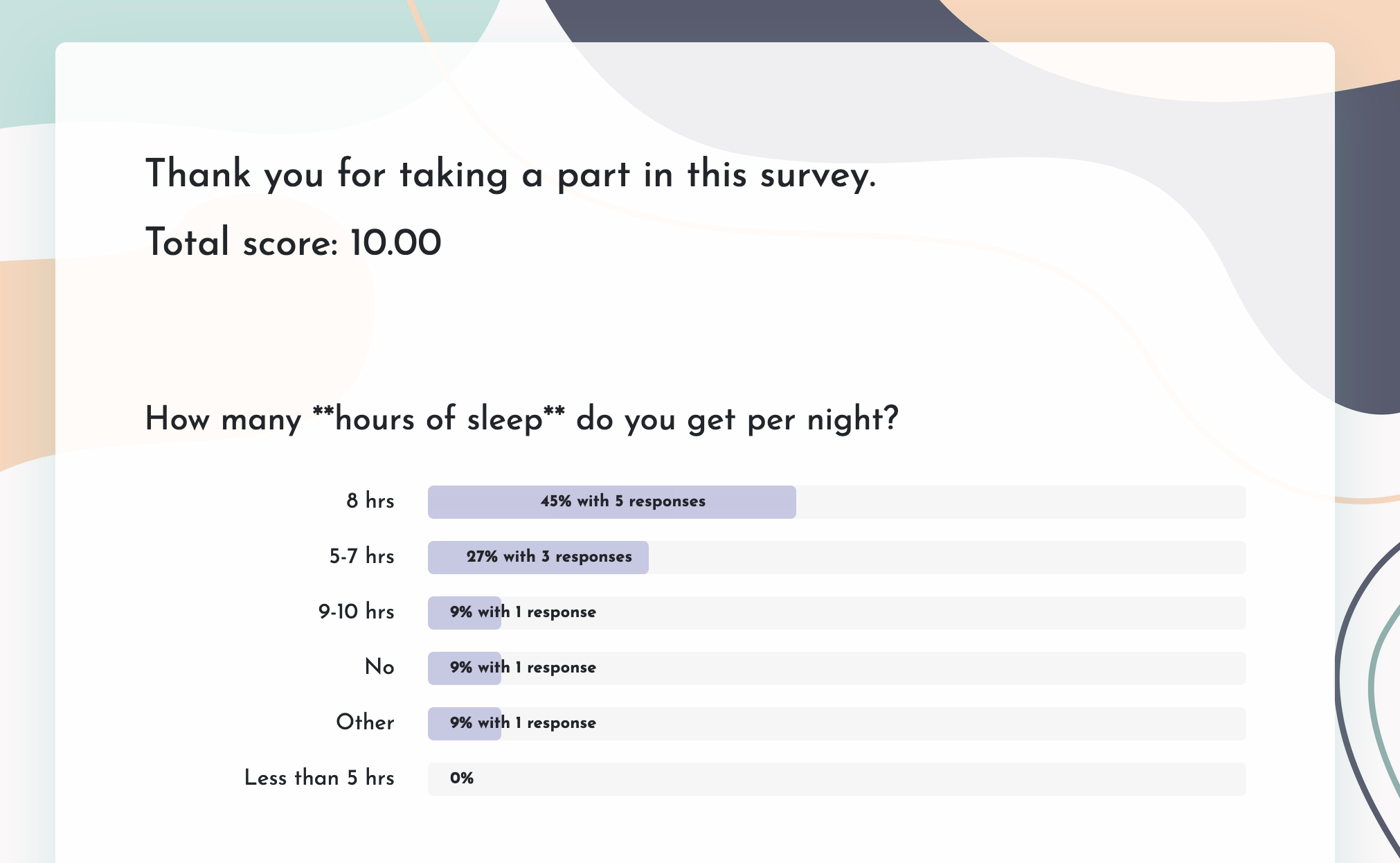
How to create a manager effectiveness survey
1. Create a new survey
Click the button below to open the manager effectiveness survey template. You can start without an account and edit the survey in HeySurvey’s editor, an online survey tool. Rename it if you like, and adjust the questions to suit your team and goals.
2. Add or edit questions
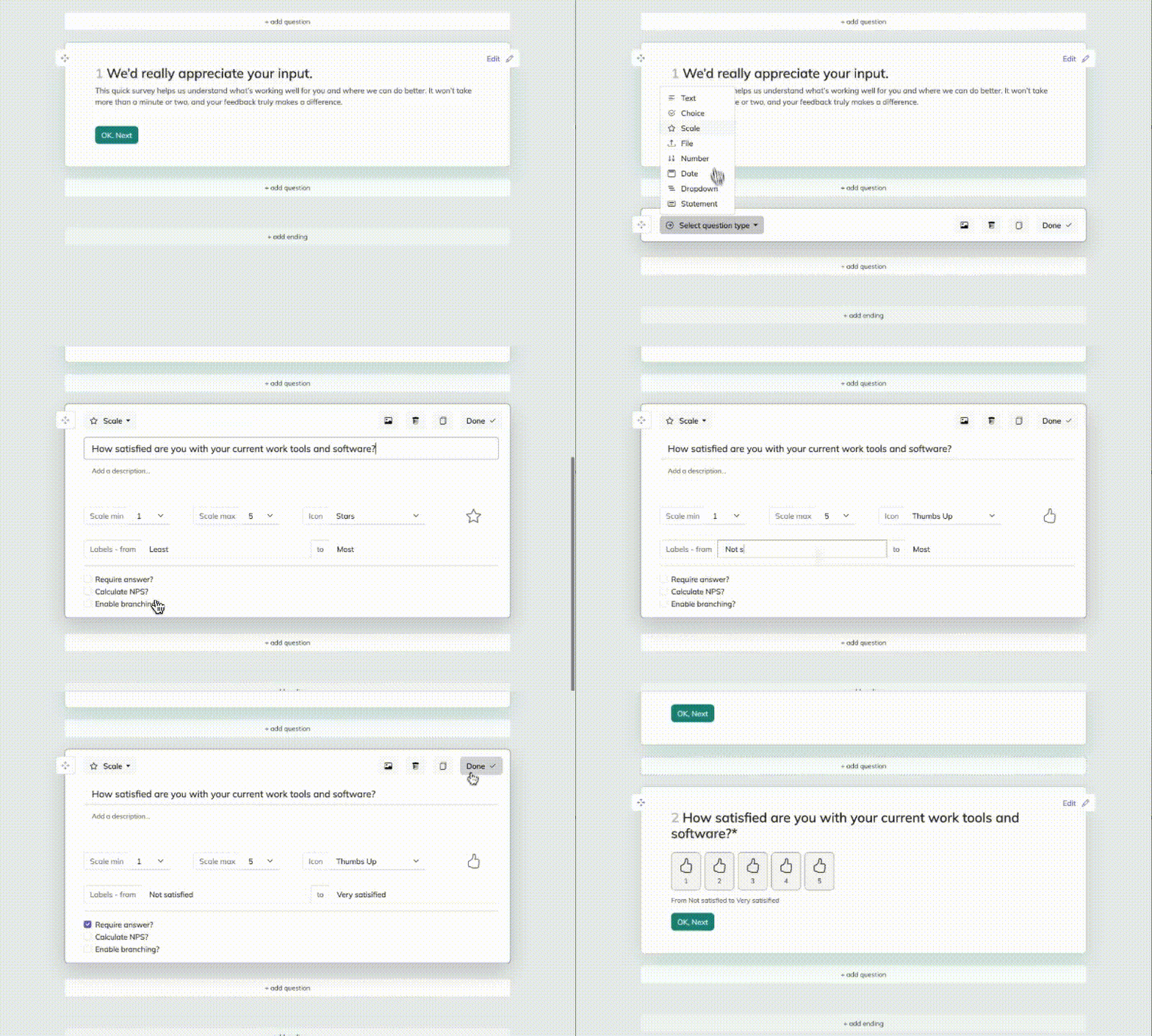
Review the template questions and click any one to change its wording, answer options, or settings. To add another question, select Add Question. Choose a question type that fits the feedback you need—for example, a scale for rating communication or a text question for suggestions. Mark important questions as required. You can also customize the survey’s colors and layout in the Designer Sidebar. Use Preview to check how it looks to respondents.
3. Publish your survey
When your survey is ready, click Publish. You’ll need a HeySurvey account to publish and view responses. After publishing, copy the shareable link and send it to respondents. You can review feedback in the Results page and export responses when needed.
2. Coaching and Career Development: Employee Feedback Questions for Managers
Sample questions
My manager gives me feedback that helps me improve my work.
My manager discusses my development goals with me.
My manager helps me identify opportunities to build relevant skills.
My manager follows up on development commitments we agree on.
What is one change your manager could make to better support your development?
These employee survey questions about management focus on coaching behaviors, not promotion outcomes. Your manager feedback questionnaire should assess support your manager can provide, rather than advancement decisions they may not control.
Use the same five-point agreement scale, from “Strongly disagree” to “Strongly agree,” with a three-month reference period. Include “Not applicable / Not enough experience to answer,” and keep the final question optional.
Plus, keep two distinctions in mind:
Development opportunities include stretch assignments, mentoring, and knowledge sharing, not just formal training.
Feedback frequency is different from usefulness. If employees report frequent feedback but low usefulness, that suggests a coaching-quality issue: more feedback isn’t automatically better feedback.
Why & When to Use
Use these manager feedback questions before development planning, after introducing regular one-to-ones, or when employees report limited growth opportunities.
Your manager feedback questionnaire can help you identify specific coaching habits to improve, such as making feedback actionable, discussing goals, or following through on commitments.
Gallup found that 80% of employees who reported receiving meaningful feedback in the previous week were fully engaged (source). For broader project reviews, see these post mortem survey questions.
3. Trust and Psychological Safety: Supervisor Feedback Survey Questions
Sample questions
I feel comfortable asking my manager for help.
I can respectfully disagree with my manager without fear of negative consequences.
My manager responds constructively when I report a mistake.
My manager follows through on commitments made to the team.
What could your manager do to make it easier to speak up?
These employee survey questions about management measure employees’ perceptions of trust and safety. Your supervisor feedback survey should invite honest feedback, not put anyone in the hot seat.
Use a five-point agreement scale, from “Strongly disagree” to “Strongly agree,” with a three-month reference period. Include “Not applicable / Not enough experience to answer,” and make the open-text question optional.
Plus, set clear expectations for your manager feedback questionnaire:
Describe confidentiality accurately, including who can access responses; never call identifiable responses anonymous.
Warn that open-text comments may reveal someone’s identity through details or examples.
Explain that surveys do not replace established channels for reporting harassment, discrimination, or urgent safety concerns.
Why & When to Use
Use these manager feedback questions when employees hesitate to raise issues, following leadership transitions, or during regular team-health reviews.
Low trust scores call for careful follow-up and visible improvements, not pressure on employees to explain or defend their answers.

4. Fairness and Recognition: Employee Survey Questions to Evaluate Management
Sample questions
My manager applies performance expectations consistently across the team.
My manager distributes work fairly, considering responsibilities and capacity.
My manager recognizes my contributions appropriately.
My manager treats me with respect.
What could your manager do to improve fairness or recognition on this team?
These employee survey questions about management help you separate fair treatment from meaningful recognition. They belong together in your manager feedback questionnaire, but they are not interchangeable.
Use a five-point agreement scale, from “Strongly disagree” to “Strongly agree,” covering the past three months. Include “Not applicable / Not enough experience to answer,” and keep the open-text question optional.
Here’s the thing: fairness does not mean everyone gets identical assignments or rewards. Equal slices are great for pizza, but workloads need more context.
Ask employees about their own experiences, not coworkers’ private circumstances.
Keep recognition separate from compensation, which your manager may not fully control.
Why & When to Use
Use these manager feedback questions after responsibility changes, during recognition-program reviews, or when employees report inconsistent treatment.
Low fairness scores can point you toward clearer work-allocation criteria. Strong fairness but weak recognition scores suggest a different priority: more consistent, specific acknowledgment of contributions.
Employees strongly agreeing recognition was fair were six times as likely to strongly agree their organization was fair to everyone (Gallup).
5. Workload and Decision-Making: Manager Survey Questions for Employees
Sample questions
My manager helps me prioritize when demands compete.
My manager addresses workload concerns that I raise.
My manager makes decisions within a timeframe that allows work to progress.
My manager gives me appropriate autonomy to carry out my responsibilities.
What is one obstacle your manager could help remove?
These employee survey questions about management focus on observable behaviors, not broad judgments like “My manager is efficient.” Add them to your manager feedback questionnaire to explore where work gets stuck.
Use a five-point agreement scale, from “Strongly disagree” to “Strongly agree,” covering the past three months. Include “Not applicable / Not enough experience to answer,” and keep the open-text question optional.
Here’s the thing: a packed calendar is not a prioritization strategy.
Separate manager-controlled barriers, such as unclear assignments, from organization-wide staffing or budget constraints.
Treat autonomy as appropriate decision-making freedom with support available, not being left alone to figure everything out.
Why & When to Use
Use these manager feedback questions during heavy workloads, shifting priorities, delayed decisions, or concerns about micromanagement.
Low prioritization scores may call for clearer trade-offs about what can wait, rather than more status meetings. Plus, this module can help you identify practical barriers and choose a focused improvement, such as clearer decision ownership or agreed response times.
6. Overall Manager Effectiveness: Short Manager Feedback Survey
Sample questions
Overall, my manager helps me do my best work.
My manager provides the support I need to succeed in my role.
My manager demonstrates the behaviors expected of leaders in this organization.
What should your manager continue doing?
What is the most important thing your manager should change?
Use these employee survey questions about management as a short standalone survey or overall summary module alongside the earlier five modules.
For the first three manager feedback questions, use a five-point agreement scale from “Strongly disagree” to “Strongly agree,” plus “Not applicable / Not enough experience to answer.” Ask employees to consider the past three months, and make written responses optional.
Omit or adapt the leadership-behaviors question if your organization has not clearly defined those expectations.
When assembling your manager feedback questionnaire, select relevant earlier questions rather than repeating everything. Your survey does not need a director’s cut.
For a PDF-ready version, use this plain-text order: survey purpose, reference period, confidentiality statement, response scale, selected questions, and optional comments.
These are adaptable manager feedback survey examples, not a validated assessment instrument.
Why & When to Use
Use this manager feedback survey for a lightweight pulse or a consistent overall measure alongside detailed modules.
Overall ratings reveal broad sentiment. Plus, the earlier modules help you identify specific behaviors to change.

7. Best Practices for a Manager Effectiveness Survey Questionnaire
Sample questions
My direct manager clearly explains what takes priority.
My direct manager provides useful feedback on my work.
Your employee survey questions about management need clear rules before clear results. Build your manager feedback questionnaire around these practices, not a kitchen-sink collection of questions.
Dos
State the purpose, such as manager development or team improvement, and disclose any other intended uses.
Tell employees to evaluate their direct manager, and select only manager feedback questions relevant to your purpose.
Keep agreement options in the same order, include a separate “Not applicable” option, and use a consistent reference period across rounds.
Establish confidentiality rules and an appropriate minimum reporting threshold before collecting responses.
Use plain language and an accessible, printable, PDF-friendly format. Test whether each question is understandable and measures one idea.
Don’ts
Avoid leading or double-barreled wording. Split “supportive and fair” into separate questions.
Don’t promise anonymity without safeguards: small teams and identifying comments can reveal respondents.
Don’t require written explanations or personal details.
Don’t score missing or “Not applicable” responses as neutral; exclude them from calculations and report response counts.
Avoid rankings across different questions, scales, or team conditions.
Never base employment decisions solely on survey scores; consider context and other evidence.
Don’t collect feedback without explaining when findings and next steps will follow.
Why & When to Use
Use these checks before launching or repeating your manager feedback survey. Plus, they help you interpret responses responsibly and plan useful follow-through.
8. Turn Manager Survey Feedback Into a Practical Action Plan
Sample questions
Does your manager clarify which tasks can wait when priorities compete?
Does your manager follow through on agreed improvements?
Your employee survey questions about management need visible follow-through, not a permanent home in a spreadsheet.
Review and Interpret the Results
Check response counts and distributions before averages, then identify recurring strengths and improvement themes across related manager feedback questions.
Consider workload changes and team transitions without dismissing feedback, and summarize comments without identifying details.
Choose Actions and Assign Ownership
Choose one or two priority behaviors from your manager feedback questionnaire, rather than tackling everything.
If prioritization scores are low, introduce weekly priority reviews with explicit decisions about which tasks will be deferred.
Record each action, owner, deadline, and evidence of improvement, such as clearer employee ratings on priorities.
Separate changes your manager can make directly from issues requiring organizational support.
Close the Feedback Loop
Share what you heard, what will change, and what cannot change immediately.
Plus, repeat the same priority manager feedback questions after employees have had enough time to experience changes.
Compare results cautiously if team composition or response rates have shifted.
Why & When to Use
Use this process after each manager feedback survey to turn findings into accountable next steps.
Your manager effectiveness survey PDF is a starting point; its value comes from visible, sustained improvements in management behavior.
Turning Survey Results Into Manager Improvement Plans
Sample questions
Which two or three survey findings require immediate action?
What recurring themes appear across ratings and comments?
Which issues can the manager address personally, and which require organizational support?
What specific behavior changes should the manager commit to in the next 30 to 90 days?
How will progress be measured and communicated back to employees?
The real win starts when survey data turns into visible action.
Why & When to Use
Use this section after every survey cycle to turn employee survey questions about management into actual improvement, not just another folder full of charts.
Here’s the thing: the value of a manager feedback questionnaire, manager feedback questions, or manager feedback survey does not come from collecting responses.
It comes from what you do next.
This is the final bridge between manager feedback survey answers and measurable leadership improvement, and that bridge needs more than good intentions and a nervous team meeting.
Start by summarizing results into three buckets:
Strengths the manager should keep doing
Risks that could hurt trust, clarity, or team performance
Priorities that deserve action first
Plus, separate what the manager can fix personally from what needs organizational support, like training, clearer processes, or help from leadership.
Then keep the plan simple and visible.
Share 2 to 3 action commitments with the team
Set behavior goals for the next 30 to 90 days
Schedule a follow-up pulse survey to measure progress
Report back on what changed
On top of that, strong manager feedback survey questions only build trust when employees see real follow-through.
Otherwise, your manager feedback survey becomes a very expensive suggestion box with trust issues.
Related Employee Survey Surveys
31 Post Mortem Survey Questions for Better Project Reviews
Explore 25 post mortem survey questions to uncover what worked, what didn’t, and how to improve f...
31 Change Readiness Survey Questions for Better Insights
Explore 25 change readiness survey questions to assess employee support, identify resistance, and...
29 Retreat Survey Questions
Explore 25 retreat survey questions with sample questions to gather honest feedback, improve gues...