29 Lunch and Learn Survey Questions Template
Explore a lunch and learn survey questions template with 24 sample questions to improve feedback, engagement, and event planning.
A lunch and learn survey is a simple way to find out what your team wants, what worked, and what to improve before, during, and after a session, whether you are building a lunch and learn proposal or refining the theory and practice of lunch. Plus, this guide gives you a practical lunch and learn survey questions template you can adapt for planning, promotion, delivery, and follow-up, with ideas pulled from a lunch and learn checklist, lunch and learn template, lunch and learn examples, and even smart lunch and learn survey questions that save you from guesswork and mystery sandwich vibes, all with help from an online survey tool.
Pre-Event Interest and Topic Selection Survey
Sample questions
Which lunch and learn topics would you be most interested in attending this quarter?
What skills or challenges would you like future lunch and learn sessions to address?
How relevant do you find the proposed topic to your current role?
Would you prefer expert-led sessions, peer-led sessions, or panel discussions?
How likely are you to attend a lunch and learn on this topic?
Why & When to Use
Use this survey to remove the guesswork early.
A pre-event interest survey helps you validate demand before you spend time building a full lunch and learn proposal, booking a speaker, or shaping your lunch and learn checklist.
It works best when you are selecting speakers, choosing quarterly themes, or deciding which ideas deserve a spot in the theory and practice of lunch at your company.
Here’s the thing, people show up when the topic actually matters to them. When your survey connects employee interest with business goals, you get stronger attendance and fewer shrug-worthy sessions.
To make your survey useful, mix multiple-choice and open-ended questions.
Multiple-choice questions help you spot patterns fast.
Open-ended questions show you what people really want, in their own words.
Together, they give your lunch and learn proposal more substance and your lunch and learn template more direction.
Plus, group topic ideas into clear clusters so people can respond quickly.
Leadership
Wellness
Productivity
Compliance
Technical skills
On top of that, you can compare interest levels against company priorities to choose smarter topics. Think of it as matching curiosity with strategy, which is much more effective than picking a topic because someone said, “Sure, that sounds nice.”
Sample questions
Which day of the week works best for attending a lunch and learn?
What session length do you prefer: 30, 45, or 60 minutes?
Would you rather attend in person, virtually, or in a hybrid format?
What time of day is most convenient for you for a lunch and learn session?
What common scheduling barriers might prevent you from attending?
Pre-event surveys that ask about topic preferences, format, and attendance barriers help organizers create more relevant events and improve participation (Source)
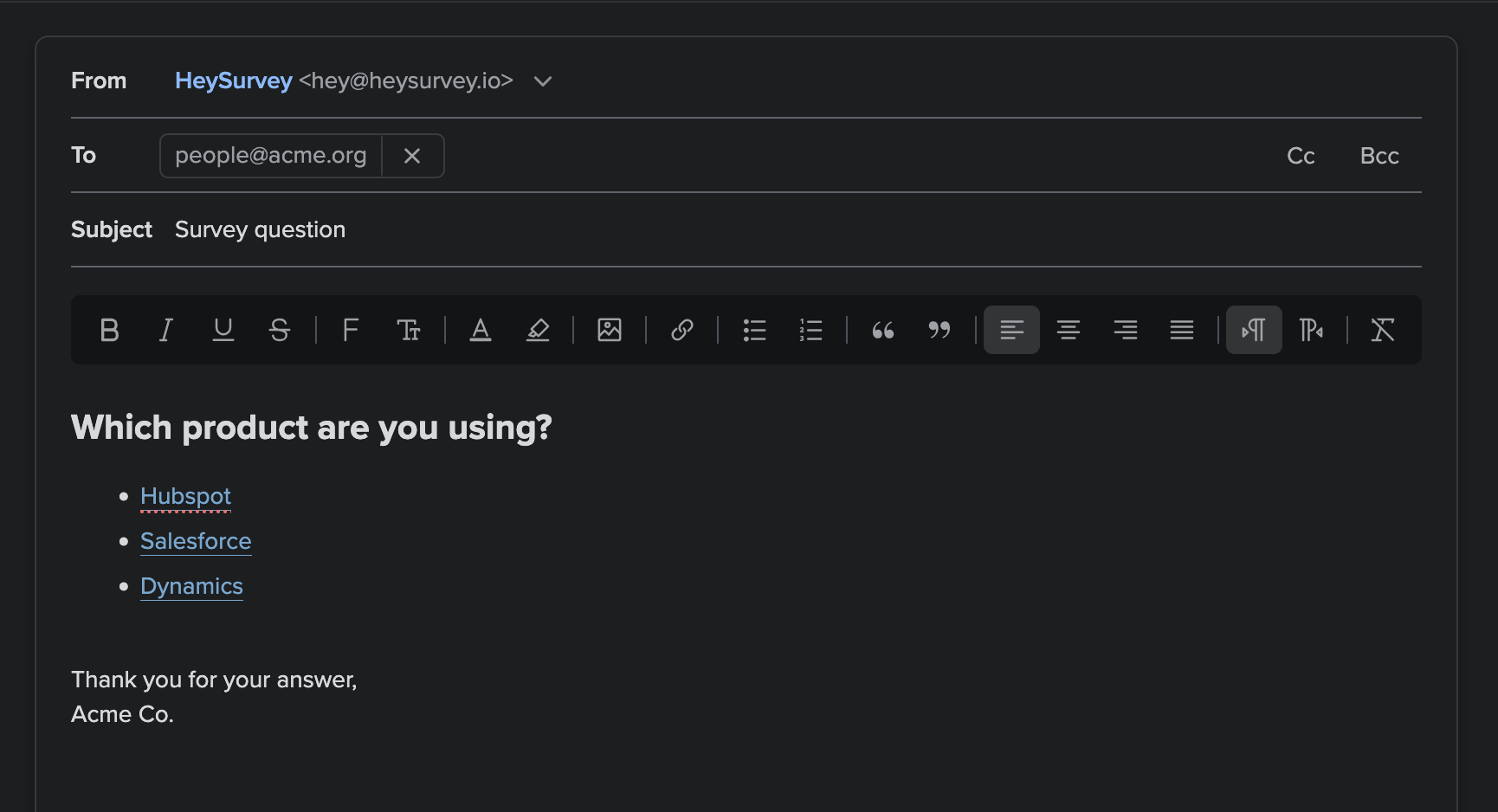
Create a lunch and learn survey in HeySurvey in 3 easy steps
1. Create a new survey
Start by opening a lunch and learn survey questions template using the button below, or begin with a blank survey if you prefer. HeySurvey works in your browser, so you can start without an account. In the survey editor, give your survey a clear name so you can find it later.
2. Add questions
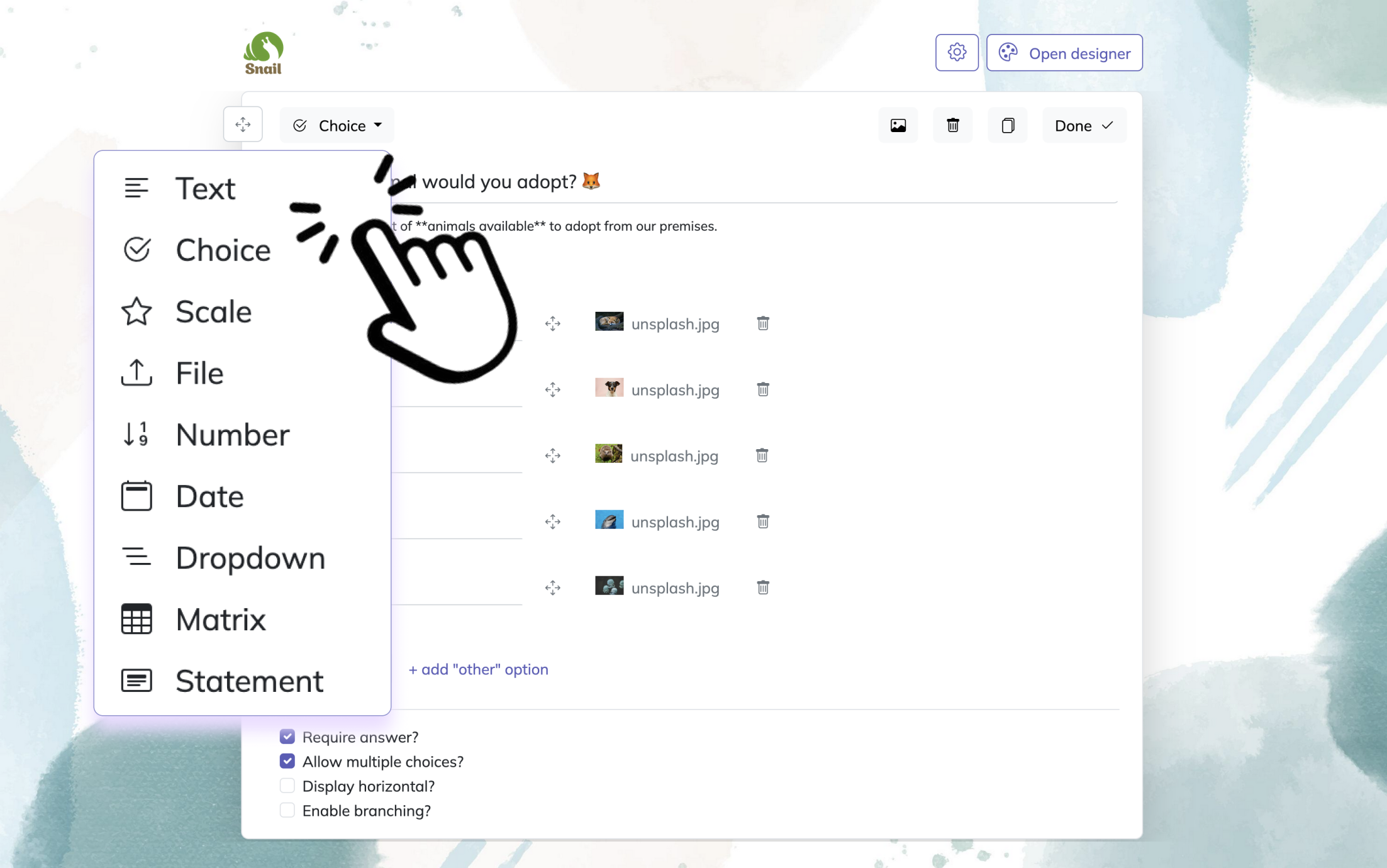
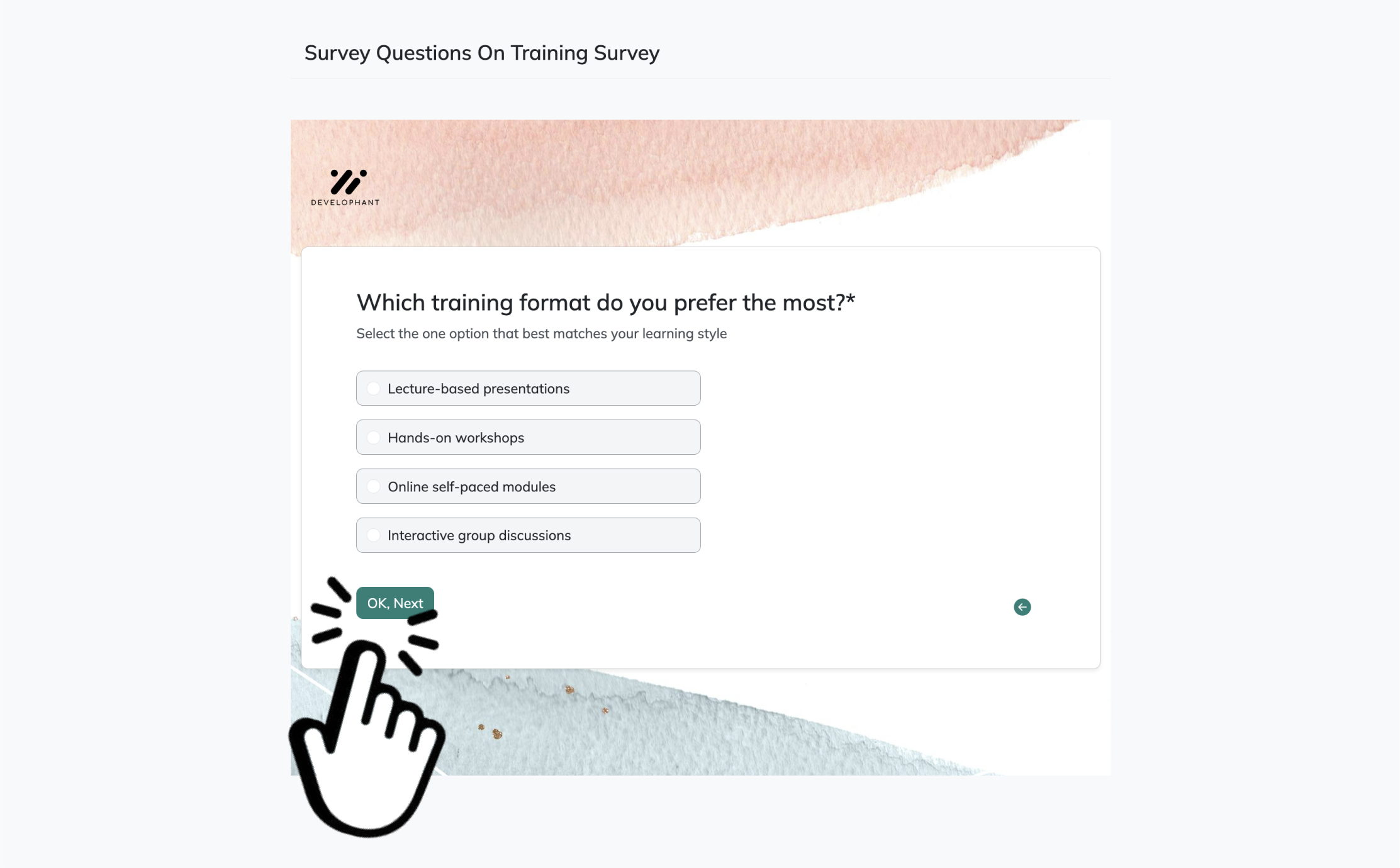
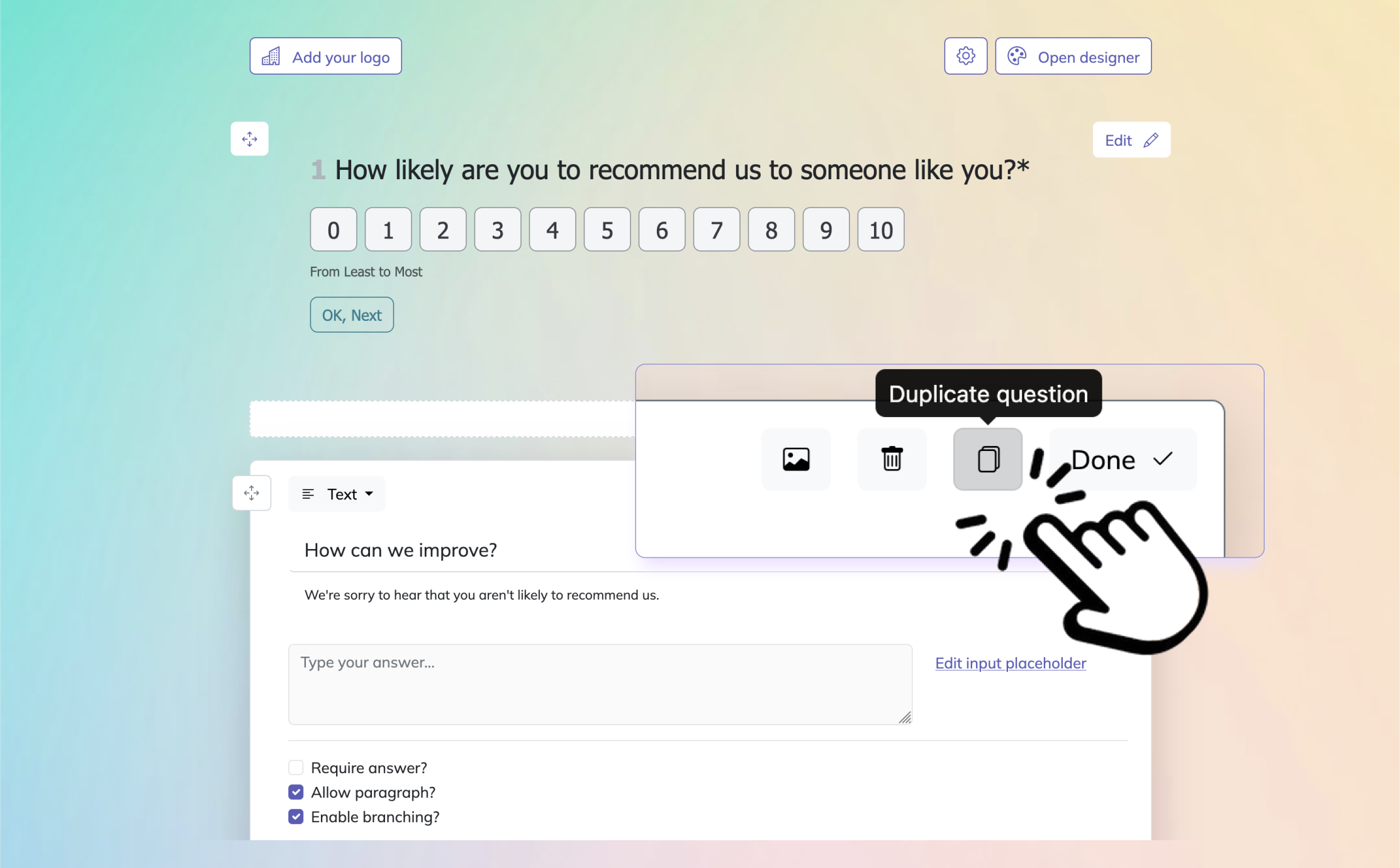
Click Add Question to include the questions you want to ask. For a lunch and learn survey, you might use choice questions, scale questions, or a short text question for open feedback. You can mark important questions as required, add descriptions, and reorder questions anytime. If needed, use a statement question to add a short introduction or thank-you message.
3. Publish survey
When your survey is ready, click Preview to check how it looks, then press Publish to create a shareable link. After publishing, you can send the survey to attendees and later review all responses in HeySurvey.
Scheduling and Format Preference Survey
Why & When to Use
Use this survey to lock in logistics people will actually say yes to.
Once you have confirmed interest, this is the moment to fine-tune the details before you finalize your lunch and learn proposal or update your lunch and learn checklist.
This survey helps you identify the best day, time, session length, and delivery format, so your event fits real schedules instead of idealized ones. Here's the thing, even the theory and practice of lunch falls apart if your session starts when half the team is stuck in another meeting.
It is especially useful for hybrid teams and cross-functional audiences, where preferences can vary wildly between departments, offices, and time zones.
Keep the survey short and operational.
Ask only what helps you make scheduling decisions fast.
Focus on room capacity, time zones, lunch delivery timing, and format preferences.
Include one question about barriers so you can catch conflicts early.
Plus, convenience matters almost as much as content quality when it comes to attendance. A brilliant topic can still flop if lunch arrives late, the room is full, or your virtual crowd logs in during a calendar traffic jam.
On top of that, this type of survey gives your lunch and learn template and lunch and learn examples a more realistic structure, which makes planning smoother and turnout stronger.
Sample questions
Do you plan to attend this lunch and learn session?
If yes, how confident are you that you will be able to attend?
Will you need any dietary accommodations for the lunch portion?
Would you like a calendar reminder before the event?
If you cannot attend live, would you like access to a recording or summary?
OECD reports 48% of adults facing training barriers cite work or family time constraints as the main reason, supporting short scheduling-focused lunch-and-learn surveys (source).
Registration and Attendance Commitment Survey
Why & When to Use
Use this survey to turn interest into a realistic headcount.
This part of your lunch and learn proposal helps you estimate actual turnout, meal counts, and resource needs before the big day. Plus, it keeps your lunch and learn checklist grounded in reality instead of hopeful guesswork.
Use it during sign-up or RSVP collection, when people are close enough to commit but before catering and room plans are locked. Here's the thing, "sounds fun" and "I will actually show up" are not always the same sentence.
A good attendance survey improves planning accuracy and helps reduce no-shows.
It also gives you useful data for budgeting and catering, especially when you ask about dietary needs, reminder preferences, and live versus recording access.
Keep the questions simple and action-focused.
Confirm attendance intent, not just general interest.
Ask confidence-to-attend so you can spot soft RSVPs early.
Include dietary accommodations to support lunch orders accurately.
Segment responses by department, role, or location if that affects seating, shipping, or hybrid setup.
Feed results directly into your lunch and learn template so planning stays tidy and repeatable.
On top of that, this survey supports the theory and practice of lunch by helping you match food, space, and follow-up content to real demand. It also gives your lunch and learn examples a smarter planning workflow, with fewer wasted sandwiches and fewer empty chairs.
Sample questions
How satisfied were you with today’s lunch and learn session overall?
How clear and engaging was the presenter?
How useful was the content for your work or professional development?
Did the session length feel too short, too long, or about right?
What was the most valuable part of the session?
Session Feedback and Presenter Evaluation Survey
Why & When to Use
This is your core post mortem survey questions post-event reality check.
Use this survey right after the session, when reactions are still fresh and nobody has mentally replaced your presentation with their next meeting or leftover cookies. It is one of the most useful parts of a strong lunch and learn proposal because it shows what actually landed.
This survey helps you evaluate session quality, presenter effectiveness, and whether the content felt worth the lunch hour. Plus, it gives you practical insight you can plug straight into your lunch and learn checklist for future planning.
Here’s the thing, the best feedback mixes quick ratings with open comments.
Rating-scale questions help you measure patterns fast, while open-ended responses explain why people felt that way and what should change next. That balance makes your lunch and learn template more useful and keeps feedback from turning into vague shrugging.
Focus on both the presenter and the overall session design.
Use rating scales to measure satisfaction, clarity, usefulness, and pacing.
Add open comments to uncover specific wins, gaps, and ideas for improvement.
Balance presenter feedback with broader questions about format, timing, and relevance.
Look for actionable themes in your lunch and learn examples, like “more case studies,” “shorter Q&A,” or “better slides.”
On top of that, this approach supports the theory and practice of lunch by improving future topics, speakers, and facilitation with feedback you can actually use.
A customizable post-session survey combining rating scales with presenter-specific open-ended questions significantly increased feedback volume, specificity, and actionability in grand rounds evaluations (PubMed).
Learning Retention and Knowledge Gain Survey
Sample questions
How much did your understanding of the topic improve after this session?
Which key takeaway from the session do you remember most clearly?
How confident do you feel applying what you learned?
Which part of the topic would you like explained further in a future session?
Did the session meet your learning expectations?
Why & When to Use
This survey shows whether people actually learned, not just nodded politely while chewing.
Use this after educational, technical, compliance, or skills-based sessions where your goal goes beyond good vibes and full stomachs. A smart lunch and learn proposal should show how you will measure learning, and this is where that promise gets real.
Here’s the thing, enjoyment and learning are not the same.
Someone can love the speaker, like the snacks, and still leave without remembering a useful thing. That is why this survey belongs on your lunch and learn checklist when you need clearer proof of knowledge gain and stronger ROI than satisfaction scores alone.
Keep the format simple and practical.
Ask for self-ratings on understanding before and after the session.
Use short open-ended questions to capture key takeaways in attendees’ own words.
Include confidence-based prompts to see whether people feel ready to apply what they learned.
Save formal testing for cases where accuracy really matters, like compliance or technical training.
Plus, simple self-assessment is usually more useful than turning your lunch and learn template into a surprise pop quiz. In the theory and practice of lunch, the sweet spot is combining relaxed social time with learning that actually sticks.
Application, Behavior Change, and Follow-Up Survey
Sample questions
Have you applied anything from the lunch and learn since attending?
What action have you taken as a result of the session?
What barriers have made it difficult to apply what you learned?
Would a follow-up resource, discussion, or workshop help reinforce the topic?
What future lunch and learn topics would build on this session?
Why & When to Use
This survey tells you whether the session changed what people do, not just what they thought in the moment.
Use it 2 to 4 weeks after the event, when attendees have had enough time to try the ideas in real life. That delay matters because behavior change rarely shows up before the coffee wears off.
Here’s the thing, immediate feedback is great for reactions, but delayed feedback is where practical impact shows itself. If your lunch and learn proposal promises real-world value, this is one of the best ways to prove it.
This survey is especially useful for:
Managers who want to see whether training is showing up in day-to-day work
HR and L&D teams tracking outcomes across programs
Internal trainers improving future sessions with better evidence
On top of that, the results can sharpen your lunch and learn checklist for next time.
Spot which ideas people actually use
Identify blockers that need support
Decide whether to create follow-up assets
Helpful follow-up assets can include summaries, job aids, discussion prompts, or manager check-ins. In the theory and practice of lunch, reinforcement is often the difference between a nice session and one that actually sticks.
Plus, these responses can inspire smarter lunch and learn examples, stronger planning, and more useful next-step content.
Lunch and Learn Survey Template Structure
Sample questions
What is the main goal of this lunch and learn session?
Which survey stage are you collecting feedback for: before, during, immediately after, or follow-up?
Which audience group is this survey intended for?
What decision will this survey help you make?
Which question type best fits the insight you need: rating scale, multiple choice, or open-ended?
Why & When to Use
A reusable lunch and learn survey template saves you time and keeps your questions purposeful.
Readers often do not just want ideas. You usually want a lunch and learn survey questions framework you can grab, tweak, and use before your tab count hits double digits.
Here’s the thing, this section works as the bridge between inspiration and execution. After reviewing question banks, a practical lunch and learn template helps you turn good intentions into a real survey without staring at a blank page like it owes you money.
A smart template should be modular, not rigid. The best lunch and learn checklist leaves room to swap questions based on your goal, audience, and timing.
Keep the structure simple:
Goal
Audience
Survey timing
5 to 10 questions
Action plan for using the results
On top of that, tailor the template to fit the session type. The theory and practice of lunch works better when your format matches the context, whether you are building surveys for HR, sales, onboarding, leadership, or wellness topics.
Keep surveys concise and decision-focused.
Ask only what supports a clear next step
Use the right format for the insight you need
Cut any question that is merely "nice to know"
Plus, this approach makes your lunch and learn proposal stronger and gives you cleaner lunch and learn examples for future sessions.
Best Practices for Writing and Using Lunch and Learn Surveys
Sample questions
Is each question tied to a specific decision you need to make?
Can respondents answer this question quickly and clearly?
Are you collecting feedback at the right stage of the lunch and learn process?
Does the survey mix measurable ratings with useful open-ended feedback?
Have you limited the survey to the most important questions only?
Why & When to Use
A great lunch and learn proposal can still flop if your survey is too long, too vague, or sent at the wrong time.
Here’s the thing, even strong lunch and learn survey questions need good execution. This section gives you the operational side of the lunch and learn checklist so your feedback is actually useful, not just a polite pile of shrug emojis.
When you apply the theory and practice of lunch well, response quality goes up. Plus, your results become easier to compare, explain, and use in future lunch and learn examples.
Use these dos:
Do align every question with a defined purpose.
Do keep surveys brief and easy to complete.
Do use plain language and specific answer choices.
Do compare results across sessions to spot trends.
Do close the loop by sharing what changed because of feedback.
And avoid these traps:
Don’t ask generic questions that lead to vague answers.
Don’t cram planning, feedback, and ROI into one lunch and learn template.
Don’t wait too long to send post-event surveys.
Don’t ignore low response rates or biased samples.
Don’t collect feedback if you have no plan to act on it.
On top of that, timing matters a lot. A smart lunch and learn checklist helps you ask the right questions at the right stage, while the coffee is still emotionally available.
How to Turn Lunch and Learn Survey Insights Into Action
Sample questions
What recurring themes appear across survey responses?
Which improvements would have the biggest impact on future attendance or learning outcomes?
Which topics should be repeated, expanded, or retired?
What feedback should be shared with presenters, managers, or leadership?
How will you measure whether changes improve the next lunch and learn?
Why & When to Use
Survey insights are only valuable when you turn them into better decisions.
Here’s the thing, a lunch and learn proposal does not end when the session wraps. The real value shows up when you use feedback to improve topics, sharpen facilitation, and make the next event more useful for everyone.
This final section is your wrap-up for analysis, prioritization, and continuous improvement. When you apply the theory and practice of lunch with follow-through, your lunch and learn checklist becomes more than a planning tool. It becomes a learning loop.
A simple framework keeps this easy:
Collect feedback consistently.
Review responses for patterns, gaps, and standout ideas.
Prioritize changes based on impact and effort.
Implement the strongest improvements in the next session.
Measure results to see what actually worked.
Plus, this is where lunch and learn survey questions start paying rent. You can use findings to update your lunch and learn template, improve future lunch and learn examples, and make smarter decisions about what to repeat or retire.
On top of that, build a repeatable lunch and learn checklist from what you learn each time. The best lunch and learn examples usually are not born perfect. They are edited, tested, and improved with real employee feedback.
Related Employee Survey Surveys
28 Post Mortem Survey Questions
Explore 25 post mortem survey questions to uncover lessons, improve processes, and drive better r...
29 Change Readiness Survey Questions
Explore 25 sample questions for a change readiness survey, with keyword change readiness survey q...
29 Retreat Survey Questions
Explore 25 retreat survey questions with sample questions to gather honest feedback, improve gues...