27 Leading Questions Examples for Survey Questions
Explore 25 sample questions with keyword-leading questions examples, survey questions, and practical examples for better research insight.
You’ve probably seen survey questions that nudge people toward a certain answer, even when they look innocent. Those are leading questions, and people search for examples because they’re common, tricky, and surprisingly easy to write by accident.
Here’s the thing, they can be useful when you want to test tone or persuade. But in most survey research, they need careful handling so your data does not wander off wearing clown shoes.
In this article, you’ll see leading questions examples survey questions by use case, where they show up, and how to rewrite them when accuracy matters.
Sample questions
How satisfied are you with our excellent customer service?
Don’t you agree our new pricing is more affordable than competitors’ options?
How much did our helpful support team improve your experience?
Why do you prefer our updated app design?
Most customers love our fast checkout process—how would you rate it?
What Are Leading Questions in Surveys?
A leading question in a survey is one that nudges you toward a preferred answer through wording, assumptions, emotion, or framing. It quietly points your respondent in one direction, which is great for persuasion and not so great for clean data.
Here’s the thing, the push can be obvious or sneaky.
Obvious: “How satisfied are you with our amazing new feature?”
Subtle: “How useful was our new feature?”
Even more subtle: “What did you like most about our new feature?”
That last one already assumes the person liked it, which is a neat trick and a research problem.
Leading questions are close cousins to other question-writing issues, but they are not the same.
Loaded questions contain built-in assumptions, like “Why did you stop using our service?”
Double-barreled questions ask two things at once, like “Was the app fast and easy to use?”
Biased answer choices skew the response options, even if the question itself looks neutral.
Why & When to Use
This section gives you the basics before you jump into examples by survey type. Plus, once you understand how leading wording works, you can spot bias in customer, employee, market research, and event surveys faster than a free donut disappears.
In survey design, “use” usually means recognize and correct. On top of that, readers usually want both examples and practical guidance so they can rewrite questions when accuracy actually matters.
Sample questions
How satisfied were you with our friendly and knowledgeable support team?
What did you like most about our smooth checkout experience?
How well did our high-quality product meet your expectations?
Would you recommend our trusted brand to friends and family?
How impressed were you by our quick delivery service?
Pew Research Center says poorly worded or leading survey questions can skew results, underscoring the need for clear, neutral wording in questionnaires (source).
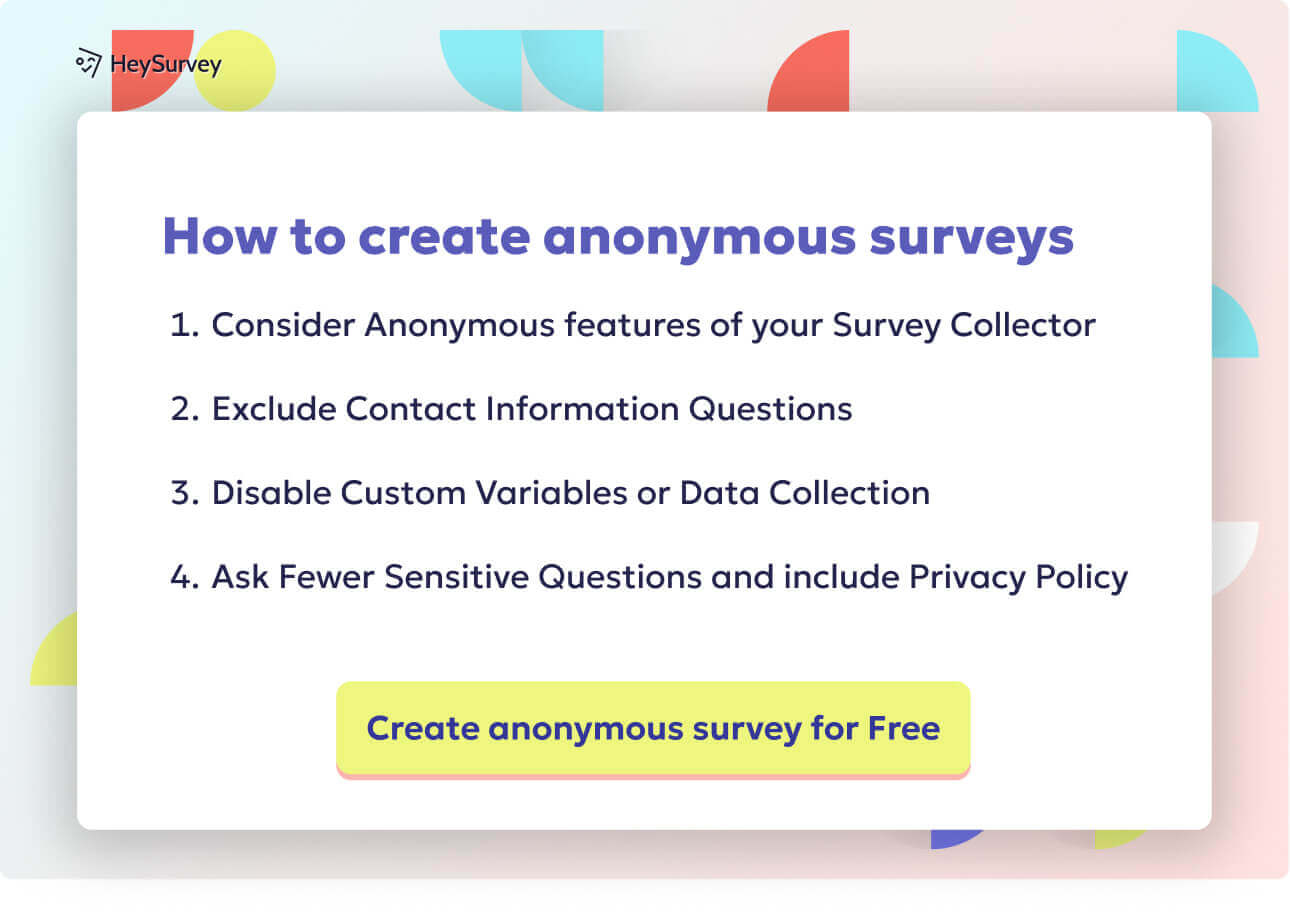
Create a survey in HeySurvey in 3 easy steps
Create a new survey
Start by opening a template from the button below, or choose an empty sheet if you want to build from scratch. Give your survey a clear name in the editor so you can find it later. If you want, you can also add your logo and adjust basic settings before moving on.Add questions
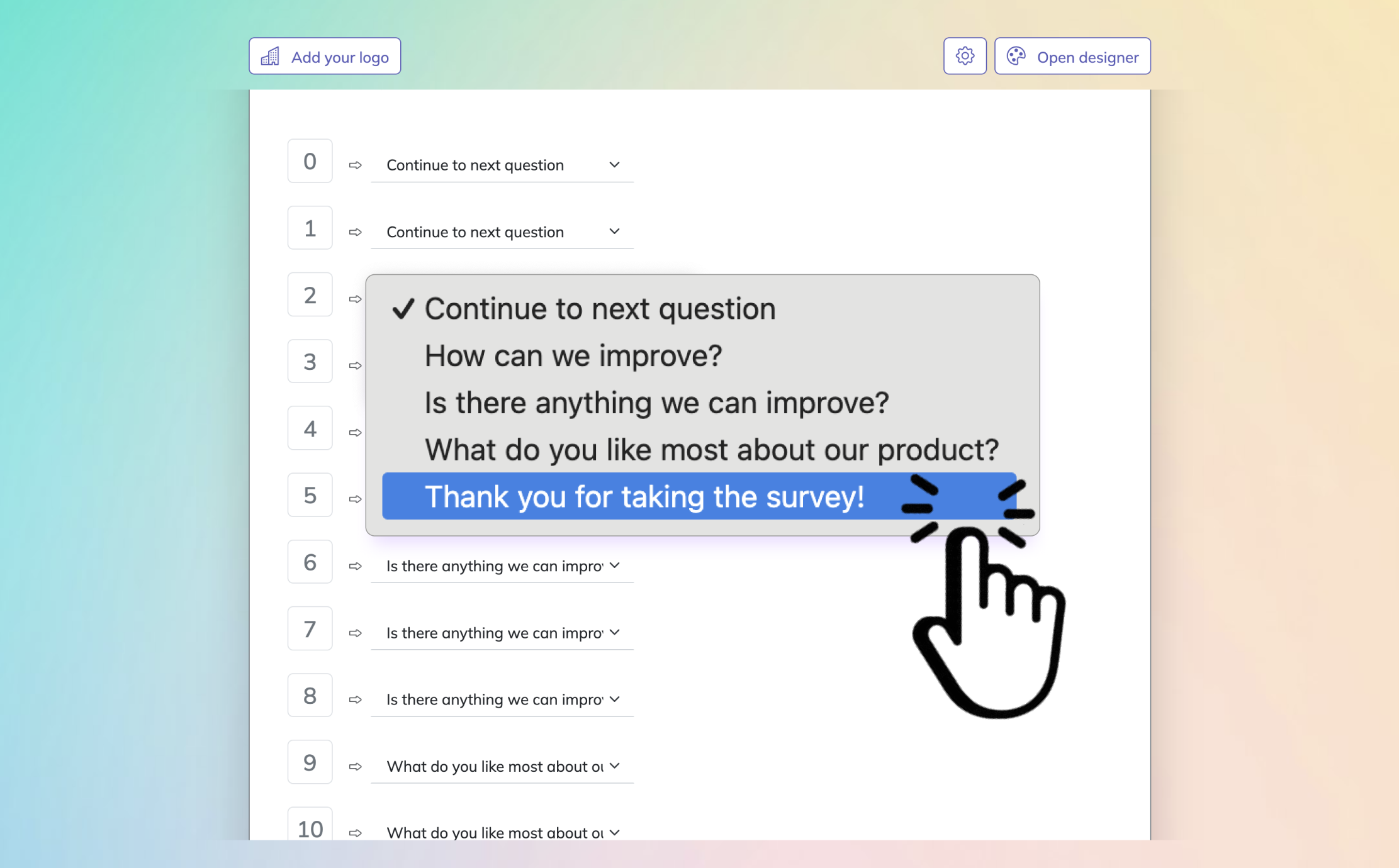
Click Add Question to include your survey items. For a survey about leading questions, use Choice or Text questions and write them in a neutral, simple way. You can add as many questions as needed, mark important ones as required, and reorder them by dragging. If helpful, add descriptions to guide respondents.Publish survey
When your questions are ready, click Preview to check how the survey looks and works. Make any final changes, then click Publish to create a shareable link. Your survey is now ready to send to respondents and collect answers.
Leading Questions Examples for Customer Satisfaction Surveys
Customer satisfaction surveys are prime territory for leading questions because, let’s be honest, brands often want applause and data at the same time. Small praise words can tilt big responses.
Words like “friendly,” “knowledgeable,” “smooth,” “high-quality,” “trusted,” “quick,” and “impressed” do more than describe. They gently steer you toward saying something positive before you have fully answered.
Here’s the thing, customer feedback also happens right after an interaction or purchase, which makes people more emotional and more influenced by what just happened. If the delivery arrived today or support solved one urgent issue, that recency can color the whole response.
These examples show up all the time in:
CSAT surveys after support chats
NPS follow-up questions
post-purchase surveys
service feedback forms
checkout and delivery reviews
Plus, some questions lead by assuming satisfaction even when they sound harmless. “What did you like most...” skips past whether you liked anything at all, which is a bit like handing your data rose-colored glasses.
A more neutral approach is usually simple:
swap praise words for plain language
ask whether the experience met expectations before asking why
include room for positive, negative, or mixed feedback
Why & When to Use
Use this section when you want to spot bias in customer surveys before it sneaks into your results. On top of that, it helps when you are writing CSAT, NPS follow-ups, service feedback, or post-purchase questions and want honest answers instead of politely nudged ones.
Sample questions
How useful is our new dashboard for managing your work more efficiently?
How much easier has our latest feature made your daily tasks?
What do you love most about the improved navigation menu?
How intuitive was our redesigned onboarding process?
Why is our new reporting tool better than the old version?
Research consistently shows that even small wording changes can significantly bias survey responses, so neutral phrasing improves data quality in customer satisfaction questions (source).
Leading Questions Examples for Product Feedback Surveys
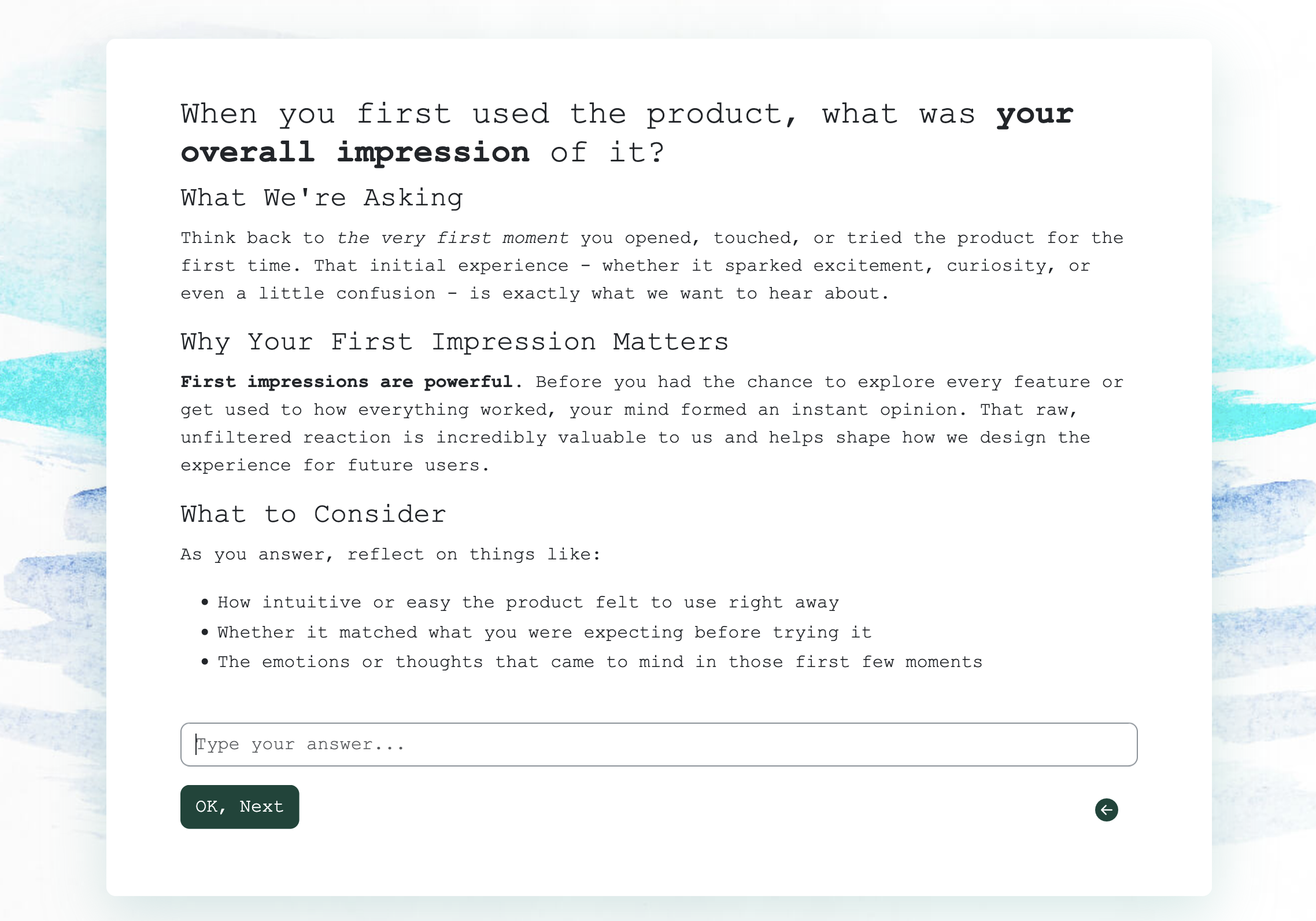
Product feedback surveys can get biased fast because teams are often excited about the thing they just built. Excited product language can quietly fake validation.
Questions about features, onboarding, updates, and usability often sneak in assumptions before you even answer. If a question says a dashboard is “useful,” a feature made tasks “easier,” or onboarding was “intuitive,” it is already nudging you toward a gold star.
Here’s the thing, that creates risky data for product teams. A leading question can make a beta test look stronger than it is, hide friction in a SaaS onboarding flow, or make a physical product review sound more positive than the real experience.
You will see this kind of wording in:
beta testing surveys
app update feedback forms
SaaS onboarding questionnaires
feature launch surveys
physical product review requests
Plus, some product questions skip straight to benefits without checking for problems first, which is a bit like reviewing a ladder before seeing if it wobbles.
A better approach is to:
ask what problems, confusion, or friction the user noticed first
use plain wording for feature and usability questions
ask about benefits only after you confirm the experience was actually positive
Why & When to Use
Use this section when you are reviewing product surveys tied to feature launches, redesigns, onboarding, or update feedback. On top of that, it helps when you want honest insight about usability problems, not just comforting answers that make a release look smarter than it was.
Sample questions
How appealing is our affordable premium plan compared with overpriced competitor options?
Would you be interested in a safer, smarter alternative to your current provider?
How strongly do you agree that our brand offers the best value in the market?
Why would you choose our product over less reliable competitors?
How likely are you to buy a product that saves time and eliminates common frustrations?
Leading Questions Examples for Market Research Surveys
Market research surveys need clean, unbiased feedback because the answers often shape pricing, positioning, brand perception, and purchase intent. Biased market research can send big decisions in the wrong direction.
If your question calls your plan "affordable premium," labels competitors as overpriced or unreliable, or assumes your product is safer and smarter, you are steering the response before the person even thinks. Here's the thing, that kind of wording can make weak positioning look strong and fuzzy demand look real.
This shows up all the time in:
concept testing surveys
ad testing questionnaires
pricing research studies
purchase behavior surveys
brand preference research
Plus, leading language is especially risky when you are comparing your brand to competitors or testing value claims. If benefit framing is too aggressive, you may end up measuring reaction to flattering wording instead of true interest, which is a fancy way to let your survey wear a sales hat.
A better approach is to:
compare brands with neutral wording
test value without using loaded claims like "best" or "smartest"
ask about purchase intent without assuming the product solves every annoyance
balance brand preference questions so people can respond positively, negatively, or somewhere in the messy middle
Why & When to Use
Use this section when reviewing surveys tied to pricing strategy, brand positioning, concept testing, ad testing, or purchase intent research. On top of that, it helps when you want business decisions based on honest market signals, not answers gently nudged into place.
Sample questions
How supported do you feel by our excellent leadership team?
How effective has our fair and transparent promotion process been for you?
Why do you value our inclusive and collaborative workplace culture?
How well does your manager help you succeed every day?
How proud are you to work for a company that truly listens to employees?
Pew Research Center notes that slight changes in survey question wording can significantly affect responses, underscoring why leading questions bias market research results (source).
Leading Questions Examples for Employee Engagement Surveys
Internal surveys can get biased fast when leadership wants reassuring feedback about culture, managers, policies, or morale. Employee feedback only works when people feel safe enough to be honest.
If a question describes leadership as excellent, promotions as fair, or the culture as inclusive before employees answer, it quietly pushes them toward agreement. Here's the thing, when people already feel watched, judged, or unsure how anonymous a survey really is, even cheerful wording can distort responses.
This is especially common in:
employee engagement surveys
DEI and belonging surveys
manager feedback questionnaires
workplace satisfaction surveys
culture and retention check-ins
Plus, positive-sounding bias does more than skew results. It can weaken psychological safety, make employees trust the process less, and leave you with polished answers that hide real problems, which is about as useful as a coffee mug with a hole in it.
A better approach is to:
use neutral wording for leadership, culture, and policy questions
avoid assuming employees feel supported, heard, included, or proud
remind people when responses are anonymous and how feedback will be used
give balanced response options that allow criticism, uncertainty, or mixed experiences
Why & When to Use
Use this section when reviewing employee engagement, DEI, manager feedback, workplace satisfaction, or internal culture surveys. On top of that, it is especially helpful when you want honest feedback in anonymous survey settings and do not want upbeat wording to quietly chip away at trust.
Sample questions
How valuable was our expert speaker’s presentation?
What did you enjoy most about our well-organized event?
How helpful were the practical takeaways from today’s session?
How satisfied were you with our smooth registration process?
Why would you attend one of our high-impact events again?
Leading Questions Examples for Event Feedback Surveys
Event organizers usually want feedback on sessions, speakers, logistics, and the overall attendee experience. Great event feedback comes from neutral questions, not applause baked into the wording.
Here's the thing, right after a conference, webinar, workshop, trade show, or training session, people are often still riding the energy of the event. Pair that with flattering phrases like "engaging speaker," "valuable session," or "well-organized event," and you can nudge people toward nicer answers than they would give on a cooler head.
This shows up a lot in feedback forms for:
conferences
webinars
workshops
trade shows
training sessions
Plus, biased wording does more than make results look shinier. It can hide weak sessions, confusing logistics, or speakers that missed the mark, which is a bit like giving every sandwich five stars because you were hungry.
A better approach is to:
describe the speaker, session, or event without praise built into the question
ask about logistics like registration, timing, and venue in neutral language
invite both positive feedback and constructive criticism
leave room for mixed reactions instead of pushing satisfaction
Why & When to Use
Use this section when reviewing post-event surveys for sessions, speakers, logistics, and attendee experience. On top of that, it is especially useful after high-energy events where excitement can mix with polished wording and quietly skew the feedback you need most.
Sample questions
Do you support the common-sense policy that will protect local families?
How concerned are you about the harmful effects of this proposal?
Why do responsible voters favor this reform?
Should the government stop wasting money on ineffective programs?
How strongly do you agree that this measure is a fair solution for everyone?
Leading Questions Examples for Political and Opinion Surveys
Political and opinion surveys need extra care because small wording choices can steer big opinions.
Here's the thing, when a question touches politics, public values, or social issues, people do not just hear the topic. They also react to the emotional framing, the assumptions inside the question, and the identity signals wrapped around it.
That is why this section is useful when reviewing:
polling
advocacy surveys
nonprofit campaigns
public sentiment questionnaires
A leading political question often pushes people with patriotic wording, fear-based wording, or moral framing. Phrases like "protect local families," "harmful effects," "responsible voters," or "fair solution" make one answer sound smarter, safer, or more ethical before the person even responds.
Plus, these questions can shape what people feel comfortable admitting in the moment. That means you may end up measuring pressure, not true opinion, which is not exactly a gold medal for accuracy.
Watch for questions that:
assume the proposal is good or bad before asking
suggest that decent, informed, or caring people choose one side
use fear, pride, fairness, or guilt to guide the answer
frame disagreement as selfish, foolish, or uncaring
Why & When to Use
Use this section when evaluating surveys about elections, policy, public attitudes, or social issues. On top of that, it helps you spot when strong language is quietly shaping belief expression instead of simply measuring what people actually think.
Sample questions
How satisfied are you with the customer support you received?
How would you describe your experience with our checkout process?
What, if anything, was difficult about using this feature?
How likely are you to recommend this product to others?
Which of the following best describes your opinion of the event?
Best Practices for Writing Survey Questions Without Unwanted Bias
Neutral wording gets you truer answers.
After reviewing examples, you need a practical way to catch and fix leading language before it slips into your survey. Here's the thing, this section is your working checklist whether you create surveys for research, marketing, content, UX, or customer feedback.
Good survey writing is less about sounding clever and more about sounding clean. If your question nudges people even a little, your data can wobble like a shopping cart with one bad wheel.
Use these dos when drafting and reviewing questions:
use neutral adjectives, or skip adjectives altogether
ask about one idea at a time
offer balanced response options
test the survey with a small sample before launch
include open-ended questions to catch nuance and contradictions
Watch out for these common mistakes:
assuming the experience was positive in the question itself
comparing your brand to "worse" competitors inside the question
stacking emotional or persuasive wording into feedback requests
forcing agreement with phrases like "don't you agree" or "most people"
making one answer choice sound smarter or more reasonable than the others
Why & When to Use
Use this section when you're writing a first draft, reviewing someone else's survey, or running a pilot test before launch. Plus, it helps you prevent bias early, which is much easier than explaining weird results later.
Sample questions
Which survey questions in your current form might be nudging people toward a certain answer?
How would your results change if you rewrote your top questions in more neutral language?
Which customer, employee, or product decisions depend most on trustworthy survey data?
What is one high-impact question you can audit before your next survey goes live?
How can you use these examples as a final checklist before sending a survey?
How to Turn Survey Insights Into Action
Accurate feedback beats flattering feedback every time.
Leading questions examples in survey questions do more than help you spot bias. Here's the thing, they also show you how to improve data quality so your results reflect what people actually think, not what your wording quietly suggested.
When you ask cleaner questions, you get more trustworthy insight across the board. That means better customer feedback, more honest employee input, sharper product research, and market data you can actually use without squinting at it and hoping for the best.
Use these examples as a practical review checklist before any survey goes out:
audit your current surveys for loaded, emotional, or assumption-filled wording
flag questions that make one answer feel more correct than the others
rewrite the highest-impact questions first, especially ones tied to big decisions
test neutrally phrased versions with a small group before launch
compare results and use the cleaner data to guide your next move
Why & When to Use
Use this approach when you are about to launch a survey, refresh an old one, or troubleshoot results that feel suspiciously too positive. Plus, it works as a smart final pass before hitting send, because the goal is not praise on paper, it is honest insight you can actually act on.
Related Surveys
29 Social Media Survey Questions
Explore 25 social media survey questions with practical sample prompts to help gather insights on...
31 Job Satisfaction Survey Questions
Explore **25 job satisfaction survey questions** with sample prompts to improve employee feedback...
29 Quantitative Survey Questions Guide
Explore 25 quantitative survey questions with sample questions, examples, and tips to build effec...