29 HCAHPS Survey Questions
Explore 25 sample HCahps survey questions with clear insights, examples, and guidance to understand patient experience and survey scoring.
Ever wonder how hospitals measure what your experience actually felt like? HCAHPS questions are the survey questions patients answer after care, and they matter because they shape patient experience scores, hospital reputation, and even reimbursement.
Here’s the thing: if you’ve searched for hcaps questions, you’re not alone. This guide breaks the main HCAHPS question types into practical categories, so you can explain them clearly, write about them confidently, and skip the jargon swamp.
HCAHPS Communication With Nurses Questions
Sample questions
During this hospital stay, how often did nurses treat you with courtesy and respect?
During this hospital stay, how often did nurses listen carefully to you?
During this hospital stay, how often did nurses explain things in a way you could understand?
During this hospital stay, how often did you feel comfortable asking nurses questions about your care?
During this hospital stay, how often did nurses follow up after you shared a concern?
Why & When to Use
Nurse communication shapes patient trust fast.
This group of HCAHPS questions measures how consistently nurses communicate with you in a clear, respectful, and timely way.
If you are writing about hcaps questions, this category deserves extra attention because nurse interactions often color the whole hospital experience, for better or worse.
Here’s the thing: patients usually remember the human moments most. A warm explanation can calm fears, while a rushed answer can stick like gum on a shoe.
Hospitals often review this area after low patient satisfaction scores, complaints about slow responses, or care-transition issues that left patients confused about what came next.
Plus, strong performance here can lift overall HCAHPS results because nurse communication is one of the biggest drivers of how patients rate their stay.
Key behaviors that influence responses include:
purposeful rounding
bedside manner
active listening
clear explanations
timely follow-up after concerns
On top of that, these hcaps questions connect directly to patient trust, safety, and perceived quality of care.
When nurses listen well and explain care clearly, patients are more likely to speak up, ask questions, and understand instructions.
That means this section is useful when you want to show how everyday communication habits affect both patient experience scores and real-world care outcomes.
Research on HCAHPS shows nurse communication is strongly positively associated with patients’ overall hospital ratings and likelihood to recommend the hospital (source).
Create your HCAHPS survey in 3 easy steps
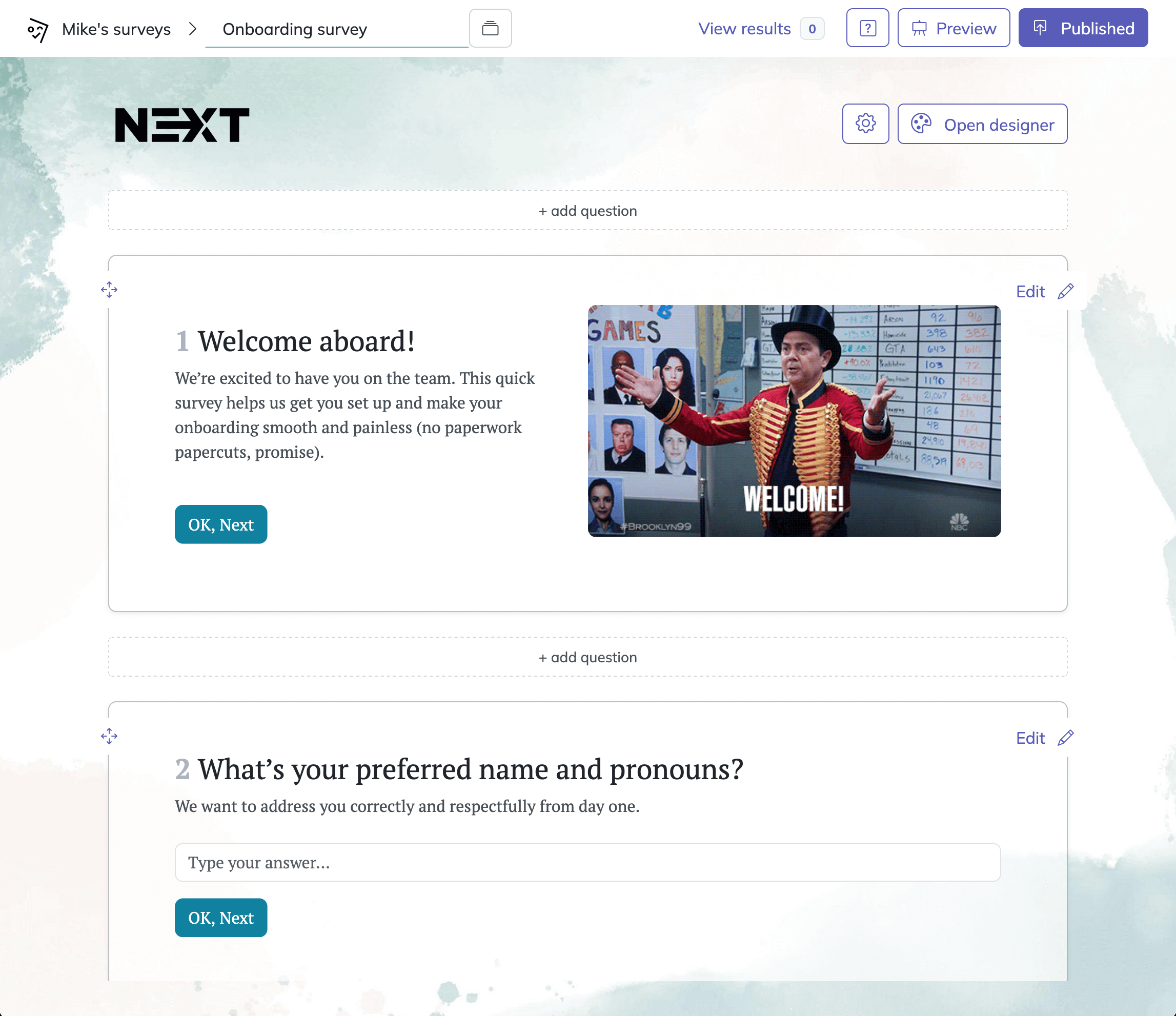
1. Create a new survey
Start by opening an HCAHPS template using the button below, or choose a blank survey if you want to build it yourself. HeySurvey lets you begin without an account, so you can try it right away. Once the survey opens, give it a clear name and adjust the basic settings if needed.
2. Add questions
Click Add Question to insert your HCAHPS survey items. Use Choice questions for multiple-choice answers, and Scale questions for rating-style items when appropriate. Add each question one by one, mark required questions to prevent skips, and use short descriptions if you want to make the wording clearer for respondents.
3. Publish survey
When your HCAHPS survey is ready, click Preview to check how it looks and works. If everything is correct, hit Publish to create a shareable link. You can then send the survey to patients or embed it on your website.
HCAHPS Communication With Doctors Questions
Sample questions
During this hospital stay, how often did doctors treat you with courtesy and respect?
During this hospital stay, how often did doctors listen carefully to you?
During this hospital stay, how often did doctors explain things in a way you could understand?
During this hospital stay, how often did doctors answer your questions clearly?
During this hospital stay, how often did doctors include you in decisions about your care?
Why & When to Use
Clear doctor communication builds confidence quickly.
This set of hcaps questions focuses on how well physicians communicate with you through clarity, empathy, and responsiveness.
Here’s the thing: patients may not remember every medical term, but they absolutely remember whether a doctor made them feel informed or left them blinking like a confused Wi-Fi router.
Organizations use these hcaps questions when patients report confusion about diagnoses, treatment plans, medications, or what happens next after discharge.
Plus, this category helps you separate doctor communication from nurse communication without pretending one matters more than the other.
Doctors often shape how you understand the big clinical picture, while nurses usually influence day-to-day support and follow-through.
Important themes to highlight include:
plain language instead of heavy medical jargon
active listening during patient conversations
clear answers to care and treatment questions
shared decision-making that includes patient preferences
respectful, reassuring bedside communication
On top of that, patients often judge clinical competence through communication quality, even when they cannot directly evaluate medical skill.
That is why these hcaps questions are useful when you want to show how physician communication affects trust, understanding, and the overall patient experience.
HCAHPS research shows better doctor communication scores are positively correlated with higher overall hospital ratings and stronger care-transition experiences (source).
HCAHPS Staff Responsiveness Questions
Sample questions
During this hospital stay, after you pressed the call button, how often did you get help as soon as you wanted?
During this hospital stay, how often did you get help getting to the bathroom or using a bedpan as soon as you wanted?
During this hospital stay, how often did staff respond promptly when you requested assistance?
During this hospital stay, how often did you feel your non-medical needs were handled quickly?
During this hospital stay, how often were your requests acknowledged even if immediate help was delayed?
Why & When to Use
Fast help feels like safe help.
These hcaps questions measure how quickly you get support after asking for assistance, which sounds simple but carries a lot of weight in patient experience.
Here’s the thing: when people press the call button, they are usually not doing it for fun like it is a hotel concierge challenge.
This group of hcaps questions is especially useful when hospitals want to understand call-button complaints, delayed assistance, or general frustration with support staff.
Plus, responsiveness strongly shapes perceived safety, because waiting too long for help can make patients feel ignored, vulnerable, or physically at risk.
Delays with toileting, mobility, or pain-related requests often leave a lasting impression, even when clinical care is otherwise solid.
That is why these hcaps questions help you uncover the moments where speed, acknowledgment, and follow-through matter most.
Key points to discuss include:
how response time affects comfort, dignity, and trust
why bathroom and mobility delays often drive negative feedback
how quick acknowledgment can soften frustration when help is not immediate
where workflow bottlenecks slow staff down
how staffing patterns influence responsiveness across shifts
On top of that, this section works well when you want writers to connect operational problems with what patients actually feel at the bedside.
HCAHPS Pain Management and Comfort Questions
Sample questions
During this hospital stay, how often was your pain well controlled?
During this hospital stay, how often did staff do everything they could to help you with pain?
During this hospital stay, how often did staff explain options for managing your pain or discomfort?
During this hospital stay, how often did staff check whether pain relief methods were working?
During this hospital stay, how often did you feel physically comfortable during your care?
Why & When to Use
Comfort is more than a pain score.
These hcaps questions help you evaluate whether patients felt their pain or physical discomfort was addressed appropriately during care.
Here’s the thing: strong clinical treatment does not always feel strong to a patient if nobody explains what relief options exist or checks whether they actually helped.
This category is especially useful when you are writing about symptom relief, physical comfort, and communication around care choices.
Plus, many hospitals now frame these hcaps questions more broadly, looking beyond pain ratings alone to include positioning, rest, nausea, and general physical ease.
That matters because expectation-setting shapes responses more than many teams realize, and no, patients are not grading telepathy.
When staff explain what relief is possible, what may take time, and what follow-up will look like, patients often feel more supported even before symptoms fully improve.
Key points to discuss include:
how pain management connects to overall comfort, not just numeric pain scores
why clear explanations about relief options improve patient confidence
how follow-up checks show patients that comfort concerns were taken seriously
where expectation-setting helps reduce frustration or confusion
why documenting communication about relief options and results supports better care stories
On top of that, these hcaps questions work well when you want to connect bedside communication with how patients remember comfort, compassion, and responsiveness.
As of January 1, 2025, the Adult HCAHPS survey reports 11 patient-experience measures and no longer includes a pain-management composite (source)
HCAHPS Medication Communication Questions
Sample questions
During this hospital stay, were you given any medicine you had not taken before?
Before giving you any new medicine, how often did staff tell you what the medicine was for?
Before giving you any new medicine, how often did staff describe possible side effects in a way you could understand?
During this hospital stay, how often did staff answer your questions about medicines clearly?
Before discharge, how often did you feel confident you understood how to take your medicines safely?
Why & When to Use
Medication clarity builds safer care.
These hcaps questions measure how well staff helped patients understand new medicines, possible side effects, and how to use medications safely.
Here’s the thing: a prescription only helps if the patient knows what it does, when to take it, and what could go sideways.
This section is especially useful when you are writing about medication adherence, patient confusion, discharge mistakes, or avoidable readmissions.
Plus, hcaps questions in this category reveal whether education felt clear and usable, not just whether instructions were technically given.
That distinction matters because a rushed explanation can vanish from memory faster than hospital ice cream.
Practical points to cover include:
why simple, plain-language medication explanations improve understanding
how teach-back methods help confirm that patients truly know what the medicine is for and how to take it
why side effect discussions support safer use at home
how medication education can reduce confusion, errors, and readmission risk
where these hcaps questions connect naturally with discharge planning and patient confidence
On top of that, you can use this section to show how strong medication communication supports safety long after the hospital stay ends.
HCAHPS Discharge Information and Care Transition Questions
Sample questions
During this hospital stay, did staff talk with you about whether you would have the help you needed after leaving the hospital?
During this hospital stay, did you get information in writing about symptoms or health problems to look out for after you left the hospital?
Before discharge, how clearly did staff explain what you were responsible for in managing your health?
Before discharge, how well did staff explain follow-up appointments and next steps?
After leaving the hospital, how confident did you feel about caring for yourself at home?
Why & When to Use
A smooth discharge sets recovery up to win.
These hcaps questions focus on how well patients are prepared to leave the hospital and handle recovery once they are back home.
Here’s the thing: discharge is not the finish line if the patient walks out unsure what to do next.
Use this section when you are writing about readmissions, follow-up care, post-discharge confusion, or continuity of care across settings.
Plus, hcaps questions in this category help show whether instructions felt clear, practical, and realistic for everyday life at home.
That matters because even excellent treatment can lose its shine if the handoff home feels like assembling furniture with one missing page.
Practical points to cover include:
why clear discharge instructions help patients understand medications, activity limits, and daily care responsibilities
how written warning signs and symptom guidance help patients know when to call for help
why follow-up plans and appointment explanations reduce confusion after leaving the hospital
how discharge quality can strongly shape overall survey impressions and patient trust
where these hcaps questions connect with care transitions, home support, family involvement, and patient self-management
On top of that, this section works well when you want to highlight how better discharge communication can support safer recovery and fewer avoidable returns to the hospital.
How to Use HCAHPS Survey Questions to Improve Results
Sample questions
Which HCAHPS survey questions consistently score lowest across units?
What patient comments best explain poor scores in nurse or doctor communication?
Are response trends different for discharge, medication, or responsiveness topics?
Which improvements could most quickly raise patient satisfaction and trust?
How will your team measure whether changes actually improve future survey results?
Why & When to Use
Better results come from patterns, not panic.
This section helps you move from collecting hcaps questions to actually using them to improve patient experience in a smart, focused way.
Here’s the thing: asking hcaps questions is only step one, but acting on what patients keep telling you is where the real progress starts.
Use this section when you want to explain how hospitals can spot recurring issues, prioritize fixes, and avoid chasing every single comment like it is the hospital version of a fire drill.
Practical ways to frame the analysis include:
grouping hcaps questions results by department, shift, unit, or stage of the patient journey
comparing topics like discharge, medications, responsiveness, and communication to see where problems cluster
looking for trends over time instead of overreacting to one rough week or one spicy comment card
pairing quantitative scores with qualitative patient feedback so the numbers have a human voice behind them
identifying which changes are most likely to lift trust, satisfaction, and future survey performance
Plus, this section works well when you want readers to understand that better scores usually come from steady improvement habits, not guesswork.
On top of that, hcaps questions become far more useful when your team measures whether each change actually improves later survey results.
Best Practices for Writing and Using HCAHPS Survey Questions
Sample questions
What makes HCAHPS survey questions easier for patients to understand and answer accurately?
How can you tell whether a question is focused on one issue instead of several at once?
When should hospitals use HCAHPS-style examples for coaching or quality improvement?
What mistakes make patient survey questions confusing, misleading, or less useful?
How should you explain the difference between official HCAHPS items and internal survey questions?
Why & When to Use
Good survey writing makes patient feedback far more useful.
If you are writing about hcaps questions, this section helps you show readers what strong question design looks like and where teams often go sideways.
Here’s the thing: better wording can improve clarity, but it cannot magically fix patient experience by itself, sadly, because even great phrasing is not a fairy godmother.
Use these dos and don’ts when you want to explain how hospitals create cleaner feedback, better analysis, and more practical next steps.
Dos
Do use clear, patient-friendly wording that reflects real hospital moments, like communication, discharge, or responsiveness.
Do keep each question focused on one idea so patients are not guessing which part they are answering.
Do align custom examples with official HCAHPS-style language when appropriate, especially if you want more consistent interpretation.
Do explain whether a question supports quality improvement, staff coaching, or broader patient experience analysis.
Do show how hospitals interpret responses, spot patterns, and dig into root causes behind low scores.
Don’ts
Don’t combine multiple ideas into one item, because that makes answers messy and hard to trust.
Don’t claim better wording alone will raise scores if the care experience itself stays the same.
Don’t confuse official HCAHPS questions with internal satisfaction items.
Don’t use jargon patients may not understand.
Don’t treat hcaps questions as the correct term. If mentioned, present it only as a common search variation.
Turning HCAHPS Survey Insights Into Action
Sample questions
What is the single biggest patient experience issue your survey results reveal?
Which team owns the first improvement step for that issue?
What process change can be implemented within the next 30 days?
How will staff know whether patient perception is improving?
When will survey feedback be reviewed again to refine the action plan?
Why & When to Use
Survey insights only matter when you actually do something with them.
This closing section should help you turn HCAHPS results, including searches for hcaps questions, into practical next steps that improve the patient experience instead of creating one more lonely spreadsheet.
Here’s the thing: collecting data feels productive, but action is where the magic happens, and thankfully it requires more checklists than wizardry.
Use this approach when you want readers to move from scores and comments to clear priorities, named owners, and progress they can actually measure.
Start by spotting repeat problem themes, such as nurse communication, discharge confusion, or slow response times.
Then assign ownership fast, because when everyone owns it, nobody really owns it, which is not exactly a winning strategy.
Focus on small, doable fixes first so teams can build momentum and see results without waiting six months.
Create communication scripts for common patient questions.
Use discharge checklists to reduce confusion at the end of care.
Improve response workflows so call lights and requests are handled faster.
Set review dates to check trends, adjust tactics, and keep improvements moving.
Plus, remind readers that the value of HCAHPS survey questions and even commonly searched hcaps questions comes from consistent follow-through, not data collection alone.
Related Surveys
29 Social Media Survey Questions
Explore 25 social media survey questions with practical sample prompts to help gather insights on...
31 Job Satisfaction Survey Questions
Explore **25 job satisfaction survey questions** with sample prompts to improve employee feedback...
29 Quantitative Survey Questions Guide
Explore 25 quantitative survey questions with sample questions, examples, and tips to build effec...