31 Exercise Survey Questions
Explore 25 exercise survey questions with sample questions to gather insights on fitness habits, motivation, and workout preferences.
If you want better answers about how people move, feel, and improve, the right fitness survey questions make all the difference. Exercise survey questions are prompts used in a fitness questionnaire or physical health survey to understand habits, goals, limits, and progress across gyms, schools, coaching, healthcare, and wellness programs.
In this guide, you’ll see the main sections to include in a fitness survey or physical fitness survey, when to use each one, sample questions about physical activity, and how to turn health and fitness questions into smart, practical changes.
Exercise Habits and Frequency Survey Questions
Sample questions
How many days per week do you typically exercise or engage in purposeful physical activity?
On average, how long is each workout or activity session?
What types of exercise do you do most often, such as walking, strength training, running, cycling, yoga, or sports?
At what intensity do you usually exercise: light, moderate, or vigorous?
Do you follow a regular workout schedule, or is your exercise routine inconsistent?
This section gives you a clean baseline for real-world activity.
Why & When to Use
This part of a physical health survey helps you measure what people are actually doing right now, not what they hope they did after a motivational playlist kicks in.
Use it in a fitness questionnaire when you need a starting point for comparison later, especially in onboarding forms, gym check-ins, school wellness programs, annual physical health survey workflows, and employee fitness survey projects.
Here’s the thing: a strong fitness survey separates frequency, duration, type, and intensity so your results are specific enough to act on.
For example, someone who exercises 5 days a week may still have short or low-intensity sessions, which tells a very different story in a physical fitness survey.
Plus, clear timeframes make your data much more useful.
Try wording questions around periods like:
In the past 7 days
In the past 30 days
During a typical week
On top of that, these questions about physical activity help you spot habits, consistency gaps, and routine patterns fast.
That makes this section especially useful when your fitness questionnaire template needs benchmark data you can revisit later to track progress, behavior change, or program impact.
Validated physical activity surveys like WHO’s GPAQ measure exercise through frequency, duration, and intensity across a typical week, supporting precise baseline habit assessment. Source

How to create an exercise survey in HeySurvey
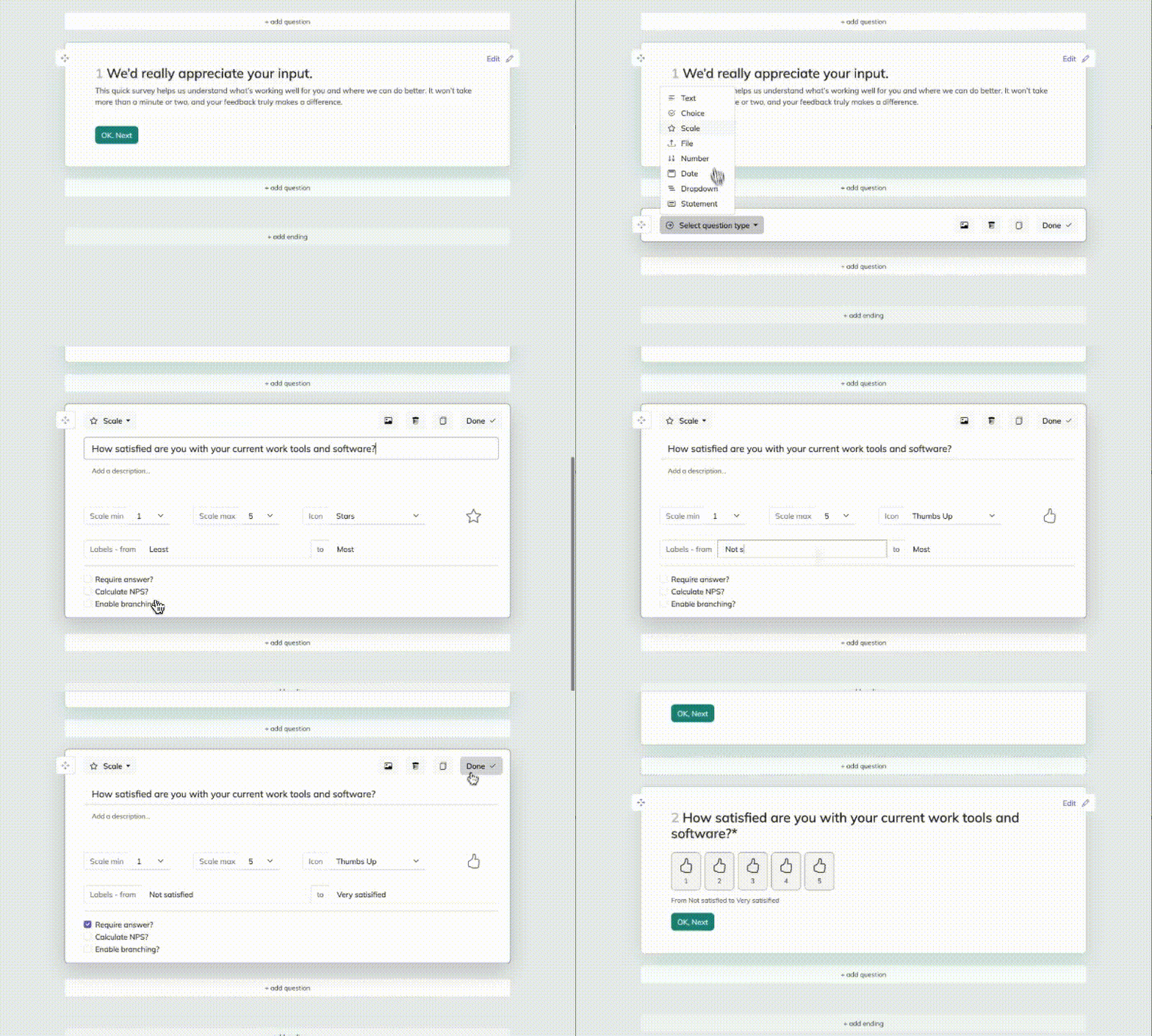
Create a new survey
Start by opening a template with the button below, or choose an empty survey if you want to build it from scratch. Give your survey a clear name, such as “Exercise Survey,” so you can easily find it later. If you need an online survey tool, HeySurvey makes it easy to get started.Add questions
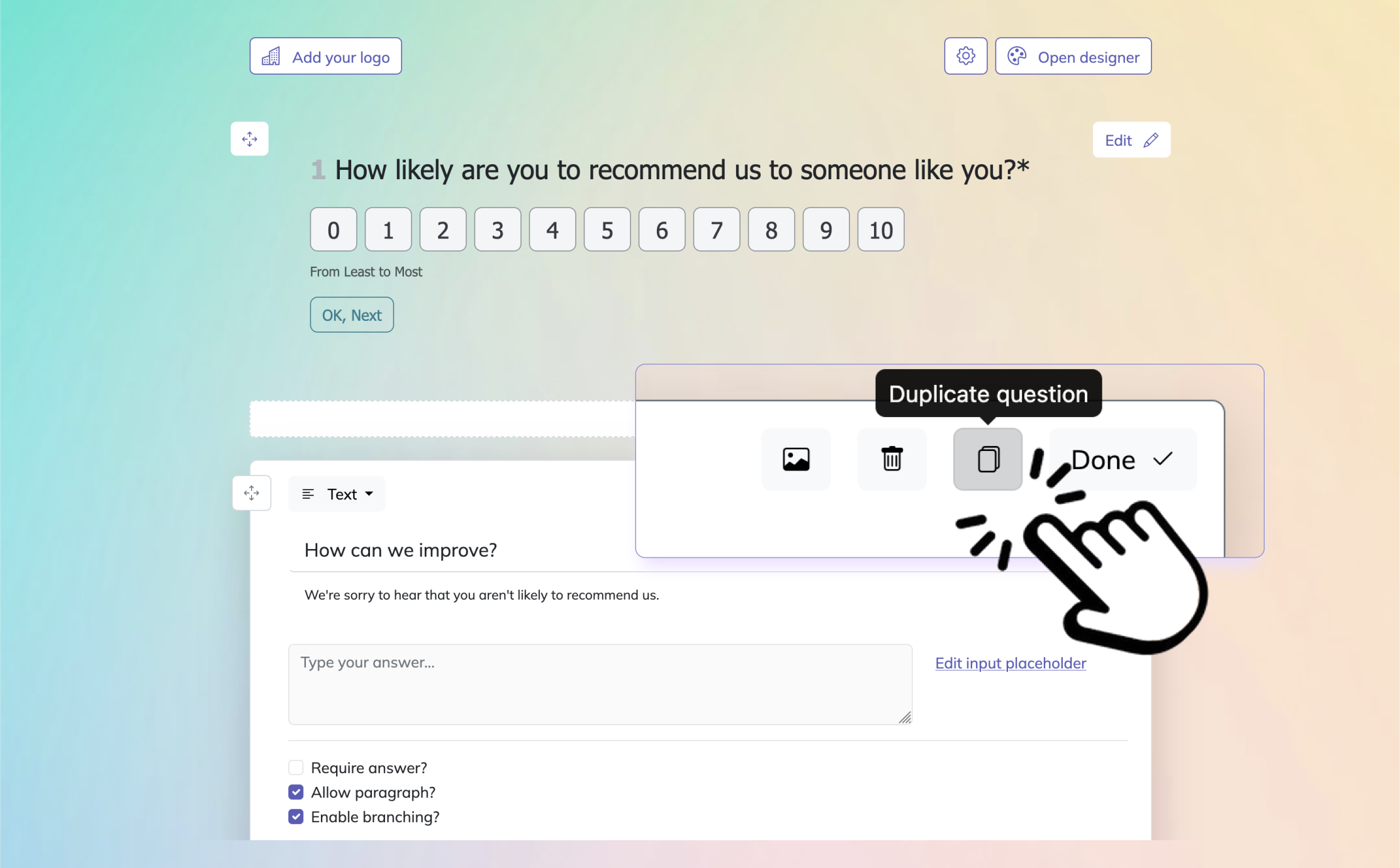
Click Add Question to include the questions you need. For an exercise survey, use Choice questions for activities, Scale questions for frequency or effort, and Text questions for short comments. You can also mark important questions as required so respondents answer them before continuing.Publish your survey
When your questions are ready, click Preview to check how the survey looks. Make any final changes, then click Publish to get your shareable link. You can send the link to participants and start collecting responses right away.
Physical Activity and Lifestyle Survey Questions
Sample questions
How much time do you spend sitting during a typical day?
How often do you walk or bike for transportation or daily errands?
How many steps do you average on a typical day, if you track them?
Do you participate in any recreational physical activities outside structured exercise?
How physically active would you describe your lifestyle overall?
This section shows how much you move when you are not technically "working out."
Why & When to Use
This part of a physical health survey helps you understand total daily movement, not just gym sessions or planned exercise.
That matters because a fitness questionnaire should capture the full picture, including walking, commuting, standing at work, housework, caregiving, and all the other ways life sneakily turns into activity.
Here’s the thing: someone may skip formal workouts but still be active overall.
On the flip side, a person can complete a 30-minute workout and still spend most of the day sitting, which makes sedentary behavior an important metric in any fitness questionnaire template.
Use this section when you want better questions about physical activity for:
Workplace wellness programs
Public health research
School or university studies
Broad physical fitness survey projects
General health and fitness questions in a physical health survey
Plus, this section helps you separate exercise from lifestyle movement.
That makes your fitness questionnaire more useful when you need to spot patterns in active commuting, desk time, recreation, or daily habits without forcing everyone into the "fitness person" box.
On top of that, if you are building a fitness questionnaire template, these questions help you catch the quiet stuff that counts, because steps, chores, and standing hours absolutely add up.
WHO’s GPAQ supports exercise surveys by measuring work, transport, leisure activity, and sitting time, giving a fuller picture than workout-only questions (source).
Fitness Goals and Motivation Survey Questions
Sample questions
What is your main reason for exercising right now?
Which fitness goals are most important to you over the next 3 to 6 months?
How motivated do you currently feel to stay physically active?
What usually motivates you most to work out: health, appearance, energy, mood, social support, or performance?
How confident are you that you can stick to your current fitness plan?
This part of your fitness questionnaire reveals what people want and what keeps them going.
Why & When to Use
Use this section in a physical health survey when you want to understand the "why" behind someone’s habits, not just the habits themselves.
A strong fitness survey should uncover whether your respondents care most about weight management, strength, endurance, stress relief, confidence, or overall health.
Here’s the thing: goals and motivation are not always the same.
Someone might want better health long term but feel motivated short term by mood, appearance, or finally fitting into those jeans that have been giving them side-eye.
This makes the section especially useful in a fitness questionnaire template for:
Personal trainers
Fitness apps
Gyms
Wellness coaching programs
Broader physical fitness survey projects
Plus, these questions help you spot intrinsic motivation, like energy or wellbeing, versus extrinsic motivation, like looks or performance.
That insight helps you segment audiences by intent, personalize recommendations, and improve retention because your messaging fits what people actually care about.
On top of that, a good physical health survey or fitness questionnaire should let people choose multiple answers and include an open-ended "other" option.
That way, your health and fitness questions capture real-world goals instead of squeezing everyone into one neat little dumbbell-shaped box.
Exercise Preferences and Program Feedback Questions
Sample questions
Which types of workouts or activities do you enjoy most?
Do you prefer to exercise at home, outdoors, in a gym, or in a group setting?
What time of day are you most likely to work out?
How satisfied are you with the exercise programs or fitness options currently available to you?
What changes would make your exercise experience more enjoyable or effective?
This part of your fitness survey helps you learn what people actually like doing, not just what they say they should do.
Why & When to Use
Use this section in a physical health survey when you want to understand workout preferences, class formats, and training environments.
It works especially well for gyms, fitness studios, school programs, community centers, online fitness brands, and anyone improving a fitness questionnaire or fitness questionnaire template.
Here’s the thing: people stick with exercise longer when they enjoy the format.
If your fitness survey shows that respondents prefer short home workouts over long gym sessions, that insight can help reduce dropout rates before motivation does its dramatic disappearing act.
This section is also useful when you need to decide:
What activities to offer more of
Which programs need changes
What formats are underperforming
What content to create next
What services may be ready to retire
Plus, pair satisfaction ratings with an open-ended follow-up question in your physical fitness survey.
That combination gives you both the score and the story, which is far more useful than a lonely number.
On top of that, these questions about physical activity support smarter service improvement, better content planning, and stronger nutrition survey questions overall.
Systematic reviews indicate exercise preferences and enjoyment are central to physical activity participation and long-term adherence, supporting preference-focused survey questions (source).
Exercise Barriers and Challenges Survey Questions
Sample questions
What are the biggest barriers that prevent you from exercising regularly?
How often do you skip planned workouts because of time constraints?
Do physical discomfort, injury concerns, or health conditions limit your ability to exercise?
How difficult is it for you to access safe, convenient places to be physically active?
What kind of support would help you exercise more consistently?
A smart physical health survey does not shame people for struggling. It helps you uncover what is getting in the way.
Why & When to Use
Use this section in a physical health survey when you want to understand what blocks consistent activity, whether that is time, cost, pain, low confidence, childcare, motivation, or access.
It is especially useful in a fitness questionnaire, employee wellness project, or public health fitness survey when participation looks low but the reason is still a mystery.
Here’s the thing: asking about barriers is often more useful than simply asking why someone does not work out.
A good fitness survey gives people room to answer honestly without sounding judged, because nobody opens up faster when a question feels like a pop quiz from a disappointed gym teacher.
For easier analysis, group responses into practical categories like:
Time and scheduling
Cost and resources
Pain, injury, or health concerns
Access to facilities or safe spaces
Motivation, confidence, or support
On top of that, this structure makes your physical fitness survey easier to review and act on later.
If you learn that most people are not avoiding exercise by choice, but because life keeps body-checking their plans, you can build more realistic support.
That is what makes these questions about physical activity so valuable in a fitness questionnaire template or broader health and fitness questions set.
Health Status and Physical Wellness Survey Questions
Sample questions
How would you rate your current physical health overall?
How often do you feel energetic enough to complete daily activities and exercise?
Do you have any health conditions or physical limitations that affect your activity level?
How well do you typically recover after exercise?
Has your level of physical activity improved, stayed the same, or declined over the past 6 months?
A well-built physical health survey gives your exercise data context, so you can see the person behind the workout pattern.
Why & When to Use
Use this section when you want to connect exercise habits with bigger signals like energy, recovery, and overall physical wellness.
It fits naturally into a physical health survey, a fitness questionnaire, or a broader set of health and fitness questions.
Plus, it works especially well for wellness programs, coaching intake forms, and lifestyle assessments where you want a fuller picture, not just step counts and gym frequency.
Here’s the thing: a fitness survey becomes much more useful when you understand how someone feels physically, because low activity might reflect low energy, slow recovery, or health limits rather than low motivation.
These questions help contextualize results in a physical fitness survey without drifting into medical diagnosis, which keeps the section practical and respectful.
When writing a fitness questionnaire template, use wording that feels safe and optional for personal topics, such as:
Prefer not to say
Not sure
None that currently affect my activity
I would rather discuss this separately
On top of that, sensitive wording helps people answer honestly, and honest answers are the gold stars of any fitness questionnaire.
Exercise Survey Questions for Seniors
Sample questions
How often do you participate in light physical activities such as walking, stretching, or gentle exercise?
Do you feel confident exercising without losing balance or becoming overly fatigued?
Which activities feel safest and most enjoyable for you?
Do you need any support, instruction, or modifications to stay active comfortably?
Has regular physical activity helped you with mobility, energy, or independence?
A thoughtful physical health survey helps you understand how older adults stay active safely, comfortably, and confidently.
Why & When to Use
Use this section when you are creating a physical health survey, fitness questionnaire, or fitness survey for older adults and want to learn about mobility, independence, comfort, and safety.
It works well for senior centers, healthcare providers, community wellness programs, and anyone searching for practical activity survey questions for seniors.
Here’s the thing: a good fitness survey for seniors should not assume everyone wants the same routine, because one person may love walking groups while another prefers chair exercises and gentle balance work.
These questions about physical activity help you tailor programs around low-impact movement, flexibility, confidence, and social connection, which is often where the magic happens.
Plus, this section can reveal common barriers that shape participation, such as:
Transportation challenges
Accessibility needs
Fear of falling
Need for clear instruction or modifications
Preference for familiar, social, or low-pressure activities
On top of that, respectful wording makes your physical fitness survey feel inclusive and supportive, not pushy.
A strong fitness questionnaire template should give people room to share what feels safe, enjoyable, and realistic for their day-to-day life, because comfort matters and knees tend to have opinions.
Best Practices for Writing and Using Exercise Survey Questions
Sample questions
Are your questions specific enough to measure actual exercise behavior?
Does each question use a clear timeframe such as weekly or monthly activity?
Are you mixing open-ended and closed-ended questions appropriately?
Could any question feel judgmental, confusing, or too personal?
Will the answers you collect directly support a decision or action?
A smart physical health survey gives you cleaner answers, better decisions, and far fewer shrug-worthy results.
Why & When to Use
Use this section when you want your physical health survey, fitness questionnaire, or fitness survey to produce useful data instead of vague guesses.
It works for nearly any physical fitness survey, questions about physical activity set, or health and fitness questions list where you need clear responses you can actually use.
Here's the thing: even great topics can fall flat if your wording is fuzzy, too long, or a little accidentally judgey.
A strong fitness questionnaire template helps you measure real behavior, spot patterns, and improve programs, content, coaching, or workplace wellness efforts.
Plus, these best practices help you avoid common survey trouble like:
Confusing wording
Unclear timeframes
Double-barreled questions
Irrelevant data collection
Repetitive questions that make people click randomly just to escape
Use these dos when building your fitness survey:
Do use simple, specific wording.
Do define timeframes clearly.
Do ask one idea per question.
Do include answer choices that reflect real behavior patterns.
Do keep the survey length appropriate to the audience.
Do pilot test the questionnaire before wide use.
And avoid these don'ts:
Don’t use vague terms like “regularly” without defining them.
Don’t combine multiple behaviors in one question.
Don’t assume everyone can perform the same types of exercise.
Don’t ask sensitive health questions unless necessary.
Don’t collect data you have no plan to use.
Don’t overload the survey with repetitive questions.
How to Turn Exercise Survey Insights Into Action
Sample questions
Which survey results point to the biggest opportunity for improvement?
What patterns appear across frequency, motivation, and barriers?
Which respondent groups need different exercise options or support?
What one or two changes can you implement first based on the data?
How will you measure whether those changes improve participation or outcomes?
A great physical health survey only starts the job. The real magic happens when you use the answers to make better moves.
Why & When to Use
Use this final step when your physical health survey, fitness questionnaire, or fitness survey is complete and you need to turn responses into real decisions.
Here's the thing: collecting data is helpful, but acting on it is where your physical fitness survey earns its keep.
Start by grouping answers into simple themes so patterns are easy to spot.
Low activity
High interest
Low confidence
Access barriers
Scheduling problems
Motivation gaps
Then look for the biggest trends across your questions about physical activity, not just one response at a time.
For example, if people want to exercise but say timing is the problem, your first fix may be scheduling, not motivation. Tiny clue, big payoff.
Plus, prioritize quick wins first so your fitness questionnaire leads to changes people actually notice.
Offer more beginner-friendly options
Adjust class or program times
Improve communication and reminders
Create support for specific groups
Simplify next steps for getting started
On top of that, run a follow-up fitness survey later to measure progress and refine your plan.
Good health and fitness questions lead to smarter choices, stronger engagement, and better outcomes you can actually see.
Related Health Survey Surveys
31 Health Care Satisfaction Survey Questions
Explore 25 health care satisfaction survey questions with sample examples to improve patient feed...
31 Body Image Survey Questions
Explore 25 body image survey questions with sample prompts to assess confidence, self-perception,...
29 Domestic Violence Survey Questions
Explore 25 domestic violence survey questions with sample prompts, insights, and survey tips to b...