31 Brand Lift Survey Questions
Explore 25 brand lift survey questions to measure ad impact, audience recall, and perception with clear sample questions for smarter insights.
If you want sharper campaigns, brand survey questions can show you what your marketing actually changed. Brand lift surveys are research tools that measure shifts in awareness, recall, consideration, favorability, intent, and perception, whether you are building a brand recall survey or a full brand recall survey questionnaire, especially when using an online survey tool.
Here’s the thing: this guide will walk you through the most useful brand recall survey questions, when to use each type, sample prompts, and how to turn answers into smart campaign decisions. Plus, no fluffy guesswork, just practical brand awareness questions and brand research questions you can actually use.
Sample questions
When you think of [product category], which brands come to mind first?
Before today, had you heard of [Brand]?
Which of the following brands have you heard of? [Include competitor list]
How familiar are you with [Brand]?
Where have you recently seen or heard about [Brand]?
Brand Awareness Survey Questions
Brand awareness questions help you see whether people know your brand exists at all.
Why & When to Use
If your goal is reach, not just clicks, this is where brand survey questions earn their keep. Brand awareness survey questions measure whether people recognize your name, notice your presence, and connect you to a category before deeper metrics like recall or preference kick in.
Here’s the thing: aided and unaided awareness do different jobs. Unaided questions ask people to name brands from memory, which is great for a brand recall survey questionnaire, while aided questions show your brand name and ask whether people recognize it.
Use unaided prompts when you want a cleaner read on true mental availability. Use aided prompts when you want to measure recognition, especially in crowded categories where memory alone can be a tough crowd.
These surveys work best for:
upper-funnel campaigns
new market launches
category expansion
sponsorships
brand visibility measurement
Plus, they fit nicely with searches like questionnaire brand awareness, brand visibility questionnaire, and brand awareness questionnaire. In many cases, awareness is the first checkpoint in a brand lift study example, because if people do not know you exist, the rest of the funnel is basically trying to bake a cake with no flour.
On top of that, keep questions neutral and avoid repeating your brand too often. Segment results by audience, geography, and campaign exposure so your brand recall survey questions tell you who noticed you, not just whether anyone did.
Sample questions
In the past 7 days, which brands have you seen advertised in [category]?
Do you remember seeing an ad for [Brand] recently?
Where do you recall seeing or hearing about [Brand]?
What message, product, or image do you remember from the [Brand] ad?
Which of these brands do you remember seeing in ads recently? [Include competitors and decoys]
Brand lift surveys typically measure awareness through both unaided recall and aided recognition, helping distinguish true mental availability from simple brand recognition. Source
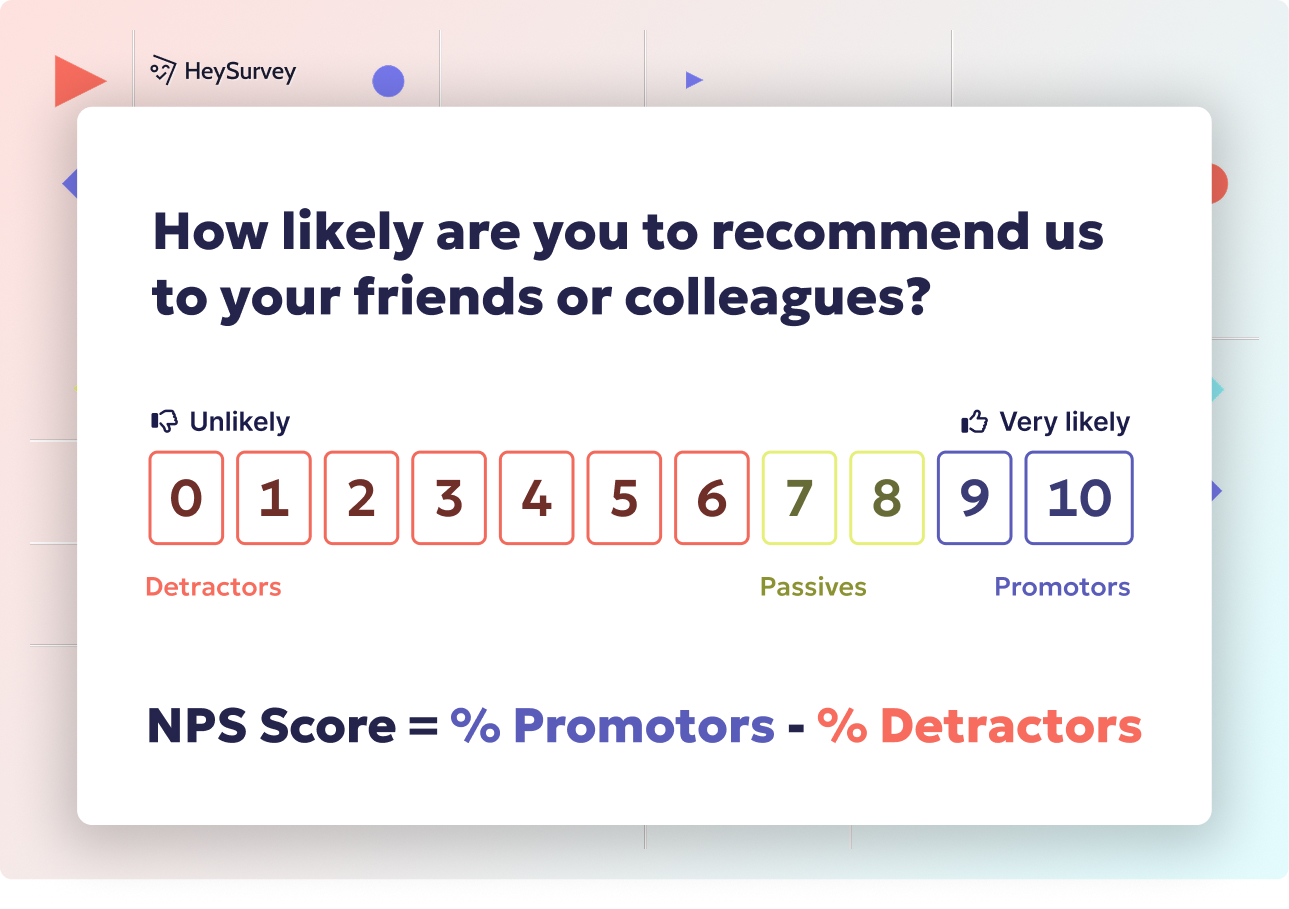
Creating a brand lift survey in HeySurvey is quick and easy. You can start from a ready-made template with the button below, or build your survey from scratch using our online survey tool.
1. Create a new survey
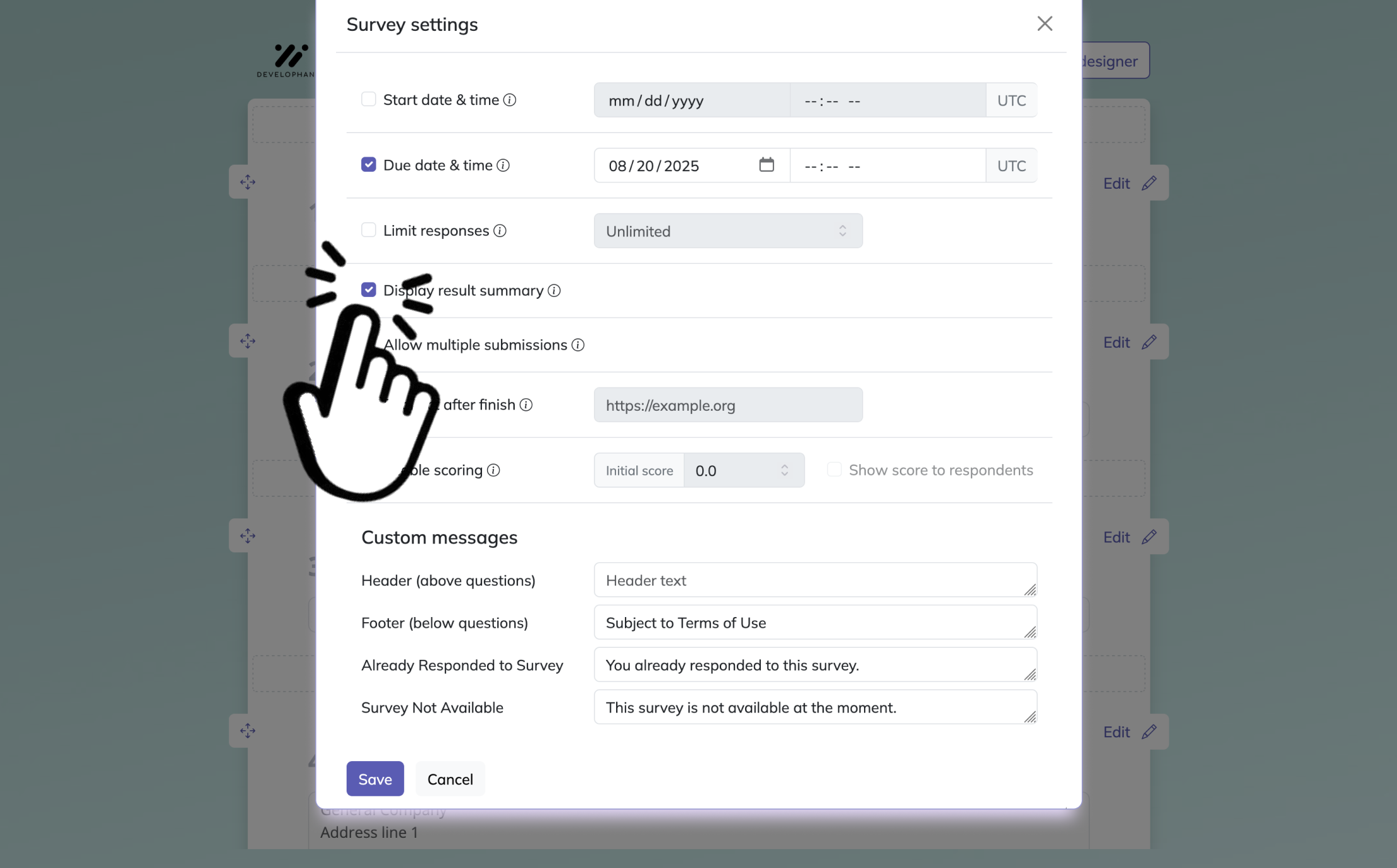
Open HeySurvey and choose Empty Sheet for a blank survey or a Template to save time. Give your survey a clear name so you can find it later. If you want, you can also add your logo and adjust basic settings like survey dates or a redirect link.
2. Add questions
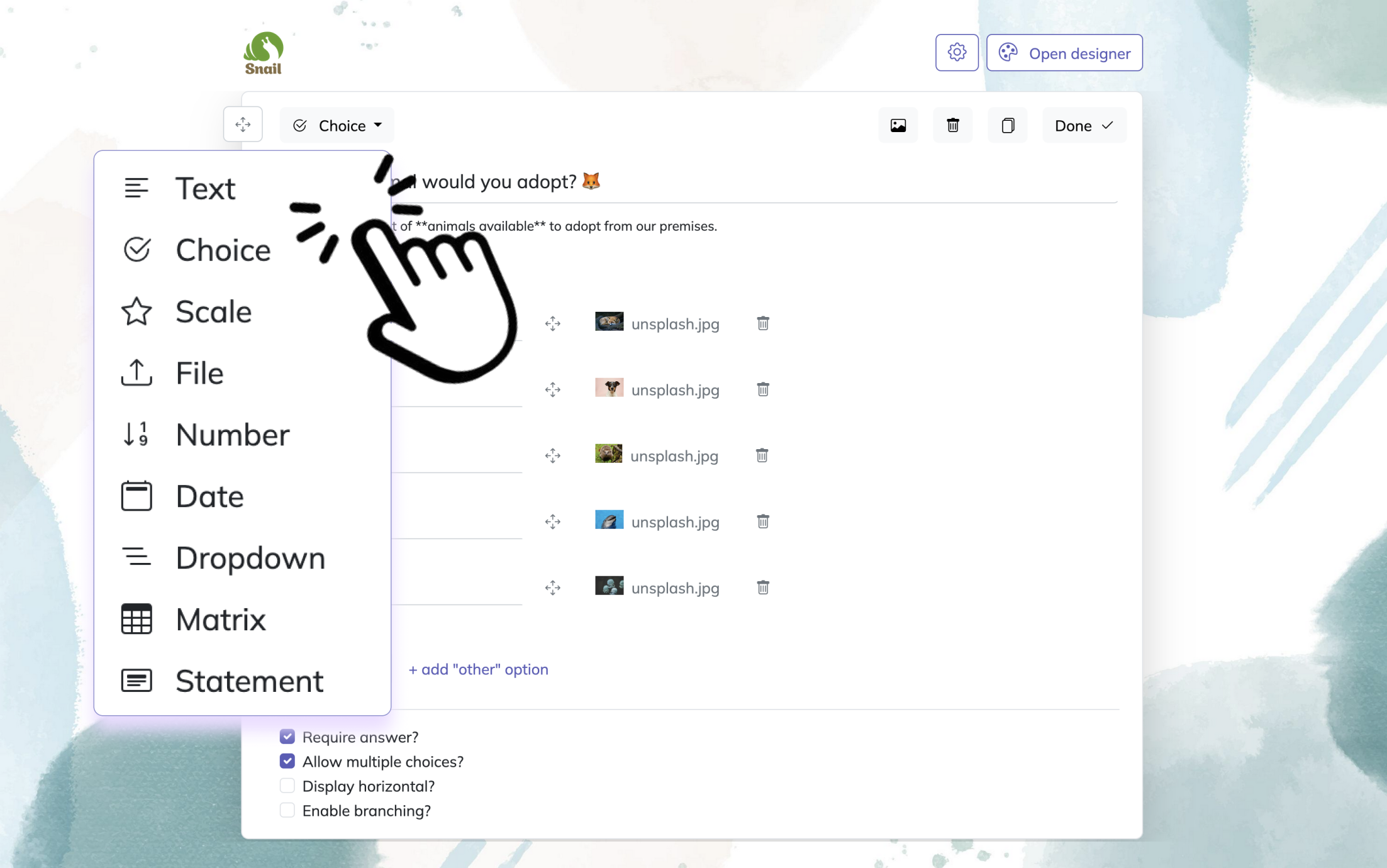
Click Add Question and choose the best question type for brand lift research, such as Choice, Scale, NPS, or Text. Ask simple questions about awareness, consideration, ad recall, or purchase intent. You can mark questions as required, add answer options, and organize them in the order that makes sense for your audience.
3. Publish survey
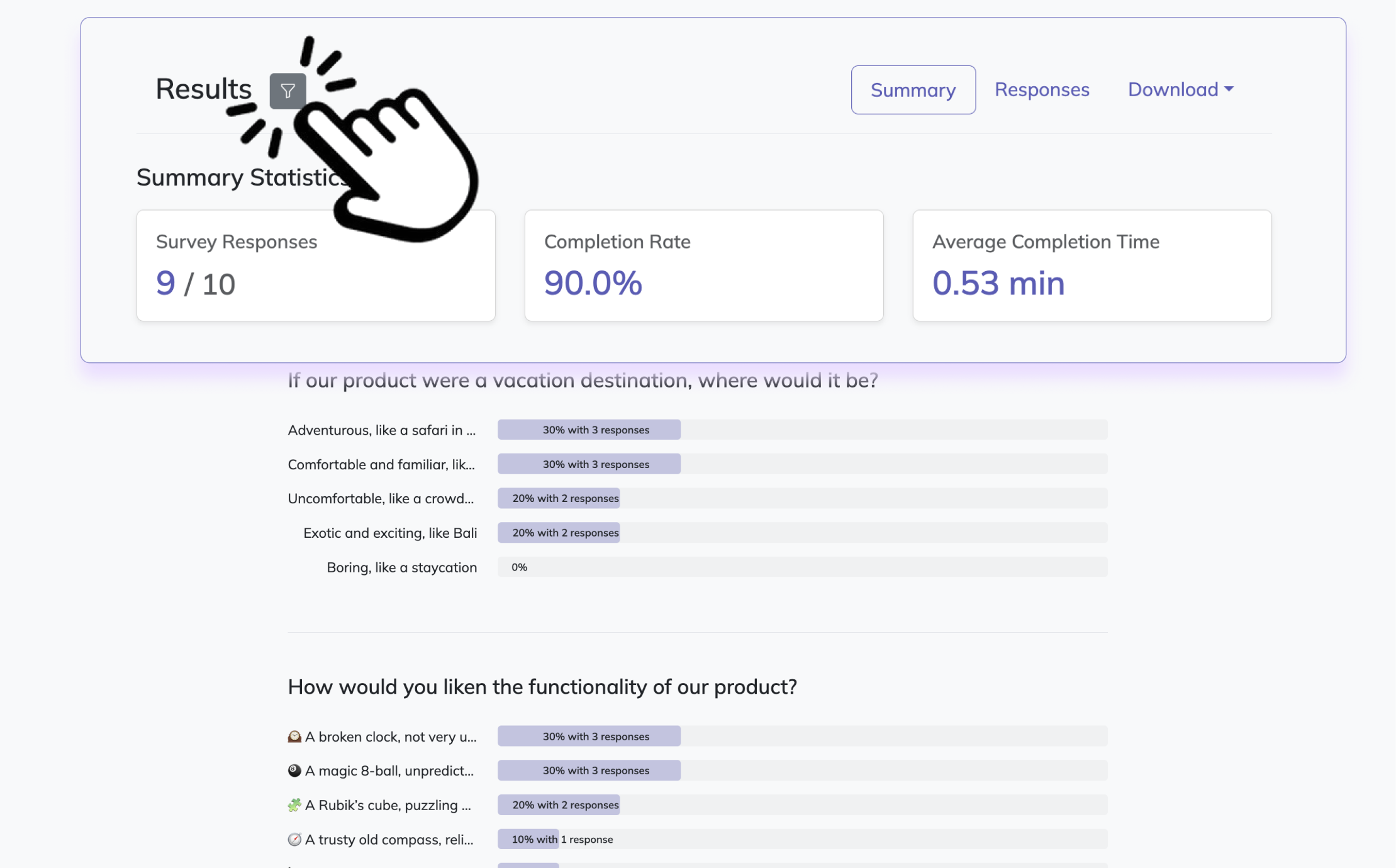
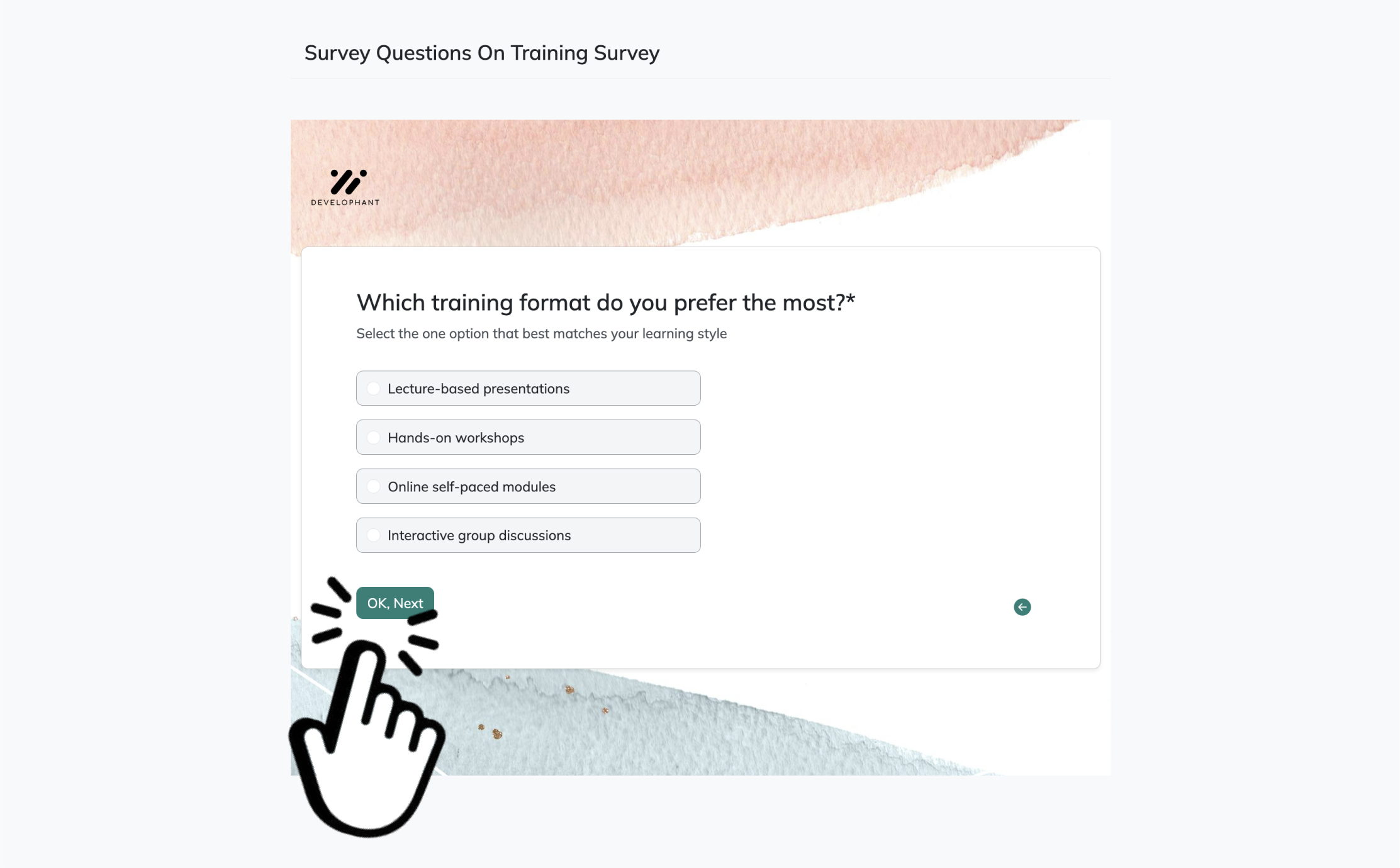
Preview your survey to check everything, then click Publish when you’re ready. HeySurvey will create a shareable link you can send to your audience. After responses come in, you can review the results in the survey dashboard.
Brand Recall Survey Questions
Brand recall survey questions show whether your brand actually stuck in someone’s mind after they had a chance to see it.
Why & When to Use
A brand recall survey measures memory after exposure, not just recognition in the moment. That makes a brand recall survey questionnaire especially useful when you want to know if your campaign was remembered later, not merely glanced at and forgotten like last week’s leftovers.
Here’s the thing: ad recall and general brand perception survey questions are close cousins, but they are not identical. General brand recall asks whether people remember your brand in the category, while ad recall asks whether they remember seeing a specific ad, message, product, or visual.
Use a tight time window, such as the past 7 days, so your memory with a timestamp is cleaner and easier to compare. On top of that, open-ended brand recall survey questions usually reveal stronger memory signals than multiple choice alone, because people have to pull the answer from their own heads.
These surveys are especially useful after:
video campaigns
social campaigns
display campaigns
creator partnerships
YouTube campaigns, including youtube brand lift study questions
TikTok campaigns, including tiktok brand lift study questions
Plus, balance unprompted and prompted brand survey questions in the same study. Include competitors, decoy brands, and ideally a control group too, so false positives do not crash the party and make your brand lift study example look stronger than it really is.
Sample questions
How likely are you to consider [Brand] the next time you shop for [category]?
Which brands would you consider purchasing from in this category?
How seriously would you evaluate [Brand] compared with other options?
How relevant is [Brand] to your current needs?
If you were choosing today, how likely is [Brand] to make your shortlist?
Brand lift studies isolate ad recall, awareness, and consideration by comparing one-question survey responses from exposed and randomized control groups after ad exposure (Google Ads Help).
Brand Consideration Survey Questions
Brand consideration is where awareness turns into a real maybe, which is much more exciting than a forgettable nod.
Why & When to Use
Brand consideration sits right between awareness and conversion. It tells you whether your brand made it onto the shopper’s shortlist, which is a much stronger commercial signal than simple visibility from brand awareness questions or a basic brand visibility questionnaire.
Here’s the thing: people can know your brand exists and still never seriously think about buying it. That is why brand survey questions focused on consideration are so useful when you want to see whether marketing moved your brand closer to purchase, not just closer to recognition.
Use this section for mid-funnel campaigns, product launches, retargeting, and comparison-heavy categories where people weigh options before buying. It also fits readers looking for general brand survey questions, brand research questions, or even a brand lift study example that goes beyond top-level recall.
Consideration works especially well for:
high-consideration purchases like software, finance, travel, or appliances
categories with lots of side-by-side comparison
campaigns designed to move shoppers from interest to action
testing exposed vs unexposed groups to isolate lift
Plus, match your wording to the real purchase cycle. A brand recall survey or brand recall survey questionnaire asks what people remember, but consideration questions ask whether your brand is actually in the running, which is where things start paying rent.
Sample questions
What is your overall opinion of [Brand]?
Which words best describe [Brand]?
How strongly do you agree that [Brand] is trustworthy?
How would you rate [Brand] compared with other brands in the category?
How well does [Brand] fit your lifestyle or needs?
Brand Favorability and Perception Survey Questions
Brand favorability shows you how people feel about your brand, not just whether they remember seeing it once while half-looking at their phone.
Why & When to Use
Favorability questions help you measure sentiment, trust, and perceived fit. While a brand recall survey or brand recall survey questionnaire tells you whether your name stuck, these brand perception survey questions reveal whether that memory is warm, flat, or working against you.
Use this section when your campaign is trying to improve trust, quality perception, relevance, innovation, value, or emotional connection. Plus, it fits neatly into broader brand research questions and brand survey test projects where you want to understand perception shifts, not just awareness.
Here’s the thing: strong brands usually win on both logic and feeling. That means your brand survey questions should cover rational attributes like quality and value, as well as emotional ones like trust, identity, and connection.
For cleaner analysis, keep your scales consistent across the full set of brand awareness questions, brand preference survey questions, or favorability items.
Focus on 3 to 5 attributes that match your campaign message, instead of testing everything under the sun.
trust and credibility
quality and value
innovation and uniqueness
relevance to lifestyle or needs
On top of that, sentiment shifts are a common output in any solid brand lift study example, especially when you want to show movement beyond simple recall.
Sample questions
Which brand would be your first choice in this category?
If prices were similar, which brand would you prefer?
Which brand feels like the best fit for you?
Compared with other brands, how likely are you to choose [Brand]?
Which of these brands do you trust most to deliver what you need?
Google Brand Lift includes a templated Favorability survey question to measure campaign-driven shifts in brand sentiment beyond awareness alone (source).
Brand Preference Survey Questions
Brand preference shows whether people would actually pick you, not just recognize your logo like an old classmate in the grocery store.
Why & When to Use
Brand preference survey questions help you measure choice, not just familiarity. A brand recall survey or brand recall survey questionnaire tells you whether people remember your brand, while preference tells you whether that memory is strong enough to beat the competition.
Use these brand survey questions in competitive categories where several known brands are already in play. They work especially well when your audience is aware of multiple options and you want to see which brand is most likely to win the short list.
Here’s the thing: consideration means people might include you, but preference means they would choose you over others. That difference matters a lot when you are trying to connect brand awareness questions to real buying intent.
For stronger results, include key competitors directly in the answer choices.
first-choice brand
preferred brand at equal price
best personal fit
likelihood to choose [Brand] over others
most trusted brand for the need
Plus, preference lift can signal movement closer to conversion, which is why it often appears alongside a brand lift study example. On top of that, be careful in low-involvement or low-frequency categories, where stated preference may sound confident but predict less than you would hope.
Sample questions
How likely are you to purchase [Brand] in the next [time period]?
How likely are you to try [Brand] the next time you need [category]?
After seeing information about [Brand], how interested are you in learning more?
How likely are you to switch from your current brand to [Brand]?
How likely are you to recommend [Brand] to someone else?
Purchase Intent Survey Questions
Purchase intent helps you connect brand survey questions to the moment where interest starts acting like revenue.
Why & When to Use
Purchase intent tells you whether exposure to your brand increased the chance that someone will buy, subscribe, book, or give you a try. While a brand recall survey or brand recall survey questionnaire measures memory, intent shows whether that memory is moving closer to action.
These brand survey questions work best for lower-funnel campaigns, promotional pushes, product launches, and remarketing efforts. Plus, they give performance marketers a useful bridge between softer brand awareness questions and harder business outcomes.
Here’s the thing: intent questions work better when the timeframe feels realistic. Asking about purchase "in the next 12 months" can get mushy fast, while a tighter window gives you cleaner signals and fewer fantasy-cart answers.
Use purchase intent items to measure:
likelihood to buy soon
readiness to try the brand
interest after exposure
willingness to switch
confidence to recommend
On top of that, adapt the wording to fit your model. For SaaS or apps, "subscribe" or "start a trial" may fit better, while services or B2B brands may need "book a demo," "request a quote," or "contact sales."
Intent is directional, not destiny, so pair it with conversion data whenever possible. Recommendation intent can also act as a handy proxy for confidence and advocacy in a brand visibility questionnaire or brand recall survey questions set.
Sample questions
Have you heard of [Brand] before today?
Which brands have you heard of in [category]?
How likely are you to consider [Brand] in the next 30 days?
What do you remember most about the ad you saw recently?
Which statement best matches your opinion of [Brand]?
Brand Lift Survey Design Best Practices
Better survey design turns brand survey questions into answers you can actually trust.
Why & When to Use
This is the part that helps you write stronger brand survey questions, sharpen a brand recall survey, and avoid results that look fancy but fall apart on contact. A well-built brand recall survey questionnaire improves reliability, makes campaign comparisons cleaner, and helps you make smarter budget calls.
Here’s the thing: even good brand awareness questions can mislead you if wording is fuzzy, timing is off, or the audience setup is sloppy. That is how perfectly decent data sneaks off wearing a fake mustache.
Use these design best practices when you want clearer readouts from a brand lift study example, a brand recall survey questions set, or a broader brand visibility questionnaire.
Dos
Match each question to the campaign objective.
Keep wording neutral, simple, and easy to scan.
Use a mix of open-ended and closed-ended questions.
Compare exposed and control audiences.
Keep the survey short to reduce drop-off.
Randomize answer options where appropriate.
Define category, timeframe, and audience segments clearly.
Don’ts
Ask double-barreled questions.
Cram too many metrics into one survey.
Use jargon people may not understand.
Force awareness questions after repeated brand exposure.
Ignore sample quality, platform bias, or survey timing.
Treat tiny lifts as meaningful without checking significance and context.
Plus, the best brand preference survey questions and brand recall survey setups are not just well written. They are well timed, tightly scoped, and built to answer one decision at a time.
Sample questions
Which metric showed the strongest lift among exposed audiences?
Did aided and unaided awareness move differently?
Which audience segments showed the largest increase in recall or consideration?
Which message or creative element was most often remembered?
Where did survey responses conflict with campaign goals or conversion data?
How to Analyze Brand Lift Survey Results
Great analysis turns brand survey questions into decisions, not just dashboards.
Why & When to Use
Asking smart brand survey questions is only half the job. The real value comes from analyzing your brand recall survey or brand recall survey questionnaire in a way that shows what actually changed, for whom, and by how much.
Use this when you need to interpret results from awareness, recall, favorability, preference, and intent studies. Plus, it is especially helpful if you are reviewing a brand lift study example and wondering how the nice-looking chart became a useful conclusion.
Start with the basics: absolute lift is the simple point difference, like 20% to 26% for a 6-point gain. Relative lift shows the percentage increase compared to where you started, so that same change is a 30% increase.
Then break findings down so your brand awareness questions and brand recall survey questions tell a fuller story:
Audience segment
Creative or message
Platform or channel
Frequency of exposure
Geography
On top of that, compare results against pre-campaign baselines and relevant benchmarks. A brand visibility questionnaire or brand preference survey questions set means more when you know whether the movement is normal, strong, or surprisingly sleepy.
Here’s the thing: look for statistically meaningful patterns, but do not overclaim tiny shifts. Good analysis helps you spot real signal without giving coincidence a little business suit.
Sample questions
Which campaign message should you scale based on recall and favorability results?
Which audience needs more awareness before you push conversion offers?
Which channel delivered the strongest lift at the lowest cost?
What objections or perception gaps surfaced in open-ended responses?
What should you test next to improve brand lift in the next campaign?
Turn Brand Lift Survey Insights Into Action
The best brand survey questions earn their keep when they change what you do next.
Why & When to Use
This is where measurement stops being a report and starts becoming a plan. Your brand recall survey, brand recall survey questionnaire, and other brand survey questions should help you make smarter calls on creative, targeting, channel mix, landing pages, and budget allocation.
Here’s the thing: different goals need different inputs. If you care about awareness, your brand awareness questions and brand recall survey questions should guide one set of actions, while brand preference survey questions may point you toward a totally different next step.
Use a simple framework to keep things practical:
Measure what changed.
Compare results across audiences, messages, and channels.
Diagnose what helped or hurt performance.
Optimize creative, media, and funnel experience.
Retest with an improved brand recall survey questionnaire.
Plus, turn every finding into a next-step move.
High recall but low favorability? Adjust the message.
Strong lift in one segment? Increase spend there.
Weak channel performance? Rework placement or cut it.
Confusing open-ended feedback? Tighten the landing page promise.
On top of that, build a repeatable process instead of treating each brand visibility questionnaire or brand lift study example like a one-hit wonder. The smartest teams keep learning, refining, and testing because good brand recall survey questions should spark your next win, not just your next slide.
Related Brand Survey Surveys
31 Brand Positioning Survey Questions
Explore 25 brand positioning survey questions with sample answers to sharpen strategy, compare pe...
29 Ad Testing Survey Questions
Explore 25 ad testing survey questions with sample prompts to refine ad performance, gather insig...
31 Rebranding Survey Questions
Explore 25 sample rebranding survey questions to guide your brand refresh, gather feedback, and s...