31 Rebranding Survey Questions
Explore 25 sample rebranding survey questions to refine your brand strategy, gather customer insights, and guide a successful rebrand.
Thinking about a rebrand? The right questions save expensive guesswork. Rebranding questions are the survey prompts you use before, during, and after a brand update to test names, messaging, visuals, and gut reactions before your logo runs off wearing the wrong outfit. In this guide, you’ll find the most useful brand name survey questions, brand identity survey questions, brand survey questions, and internal branding survey questions, plus sample rebranding questions, best practices, and simple ways to turn feedback into smart decisions. If you need an online survey tool, it can help you gather feedback quickly and clearly.
Customer Perception Rebranding Survey Questions
Sample questions
What three words best describe our brand today?
How clearly do you understand what our company offers?
How well does our current brand reflect the quality of our products or services?
What, if anything, feels outdated or inconsistent about our brand?
How likely are you to trust a company with branding like ours?
Customer perception shows you what your brand is actually saying, not what you hope it says.
Why & When to Use
These rebranding questions help you measure how current customers see your brand right now, before you start changing logos, messaging, positioning, or the full customer experience.
Use this set of brand survey questions before any major shift, especially if you are updating your name, visuals, voice, website, or market position.
Here’s the thing: customers often notice confusion, friction, or outdated signals long before your team does, which is annoying but also very useful.
This type of feedback helps you uncover:
brand strengths customers already value
confusion points around what you offer
trust signals that support buying decisions
emotional associations tied to your current identity
gaps between your intended image and actual perception
Plus, mix qualitative prompts with rating-scale brand perception survey questions so you get both texture and trend data.
For example, open-ended brand name survey questions can reveal tone and perception, while scaled rebranding questions can show whether trust, clarity, and relevance are strong or slipping.
On top of that, segment responses by customer type, tenure, or purchase history.
That way, your brand positioning survey questions show whether loyal customers, new buyers, or high-value accounts see you differently, because not all confusion wears the same hat.
Nielsen Norman Group found tone-of-voice changes measurably affect perceived brand trustworthiness, friendliness, and desirability, supporting rebranding surveys that test perception and trust questions (source)
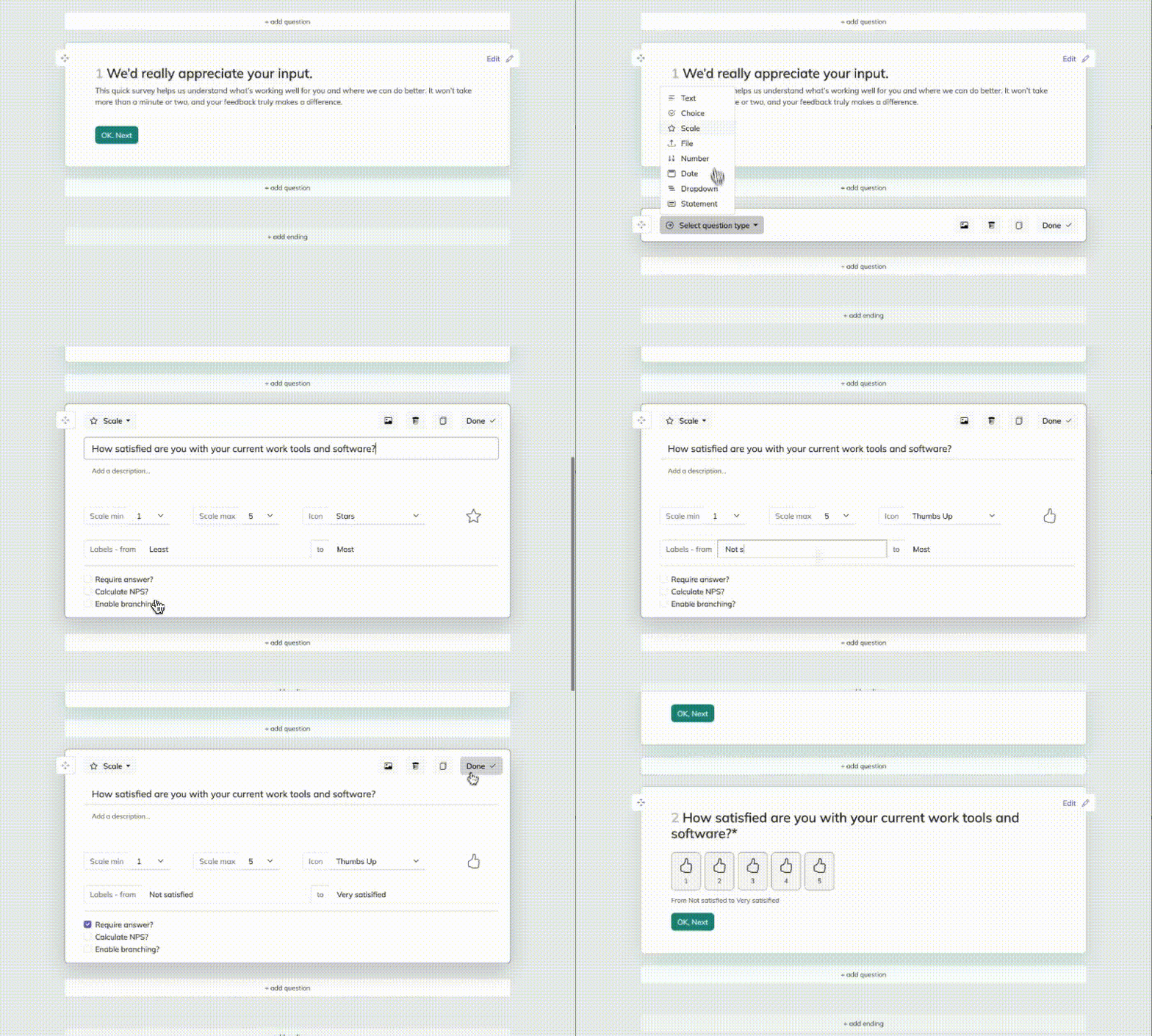
How to create a rebranding survey in HeySurvey
1. Create a new survey
Start by clicking the button below this guide to open a rebranding template, or begin with an empty sheet if you want full control. You can use HeySurvey without an account, but you’ll need one later to publish and view responses. Give your survey a clear internal name, then open the editor to add your branding, logo, and basic settings.
2. Add questions
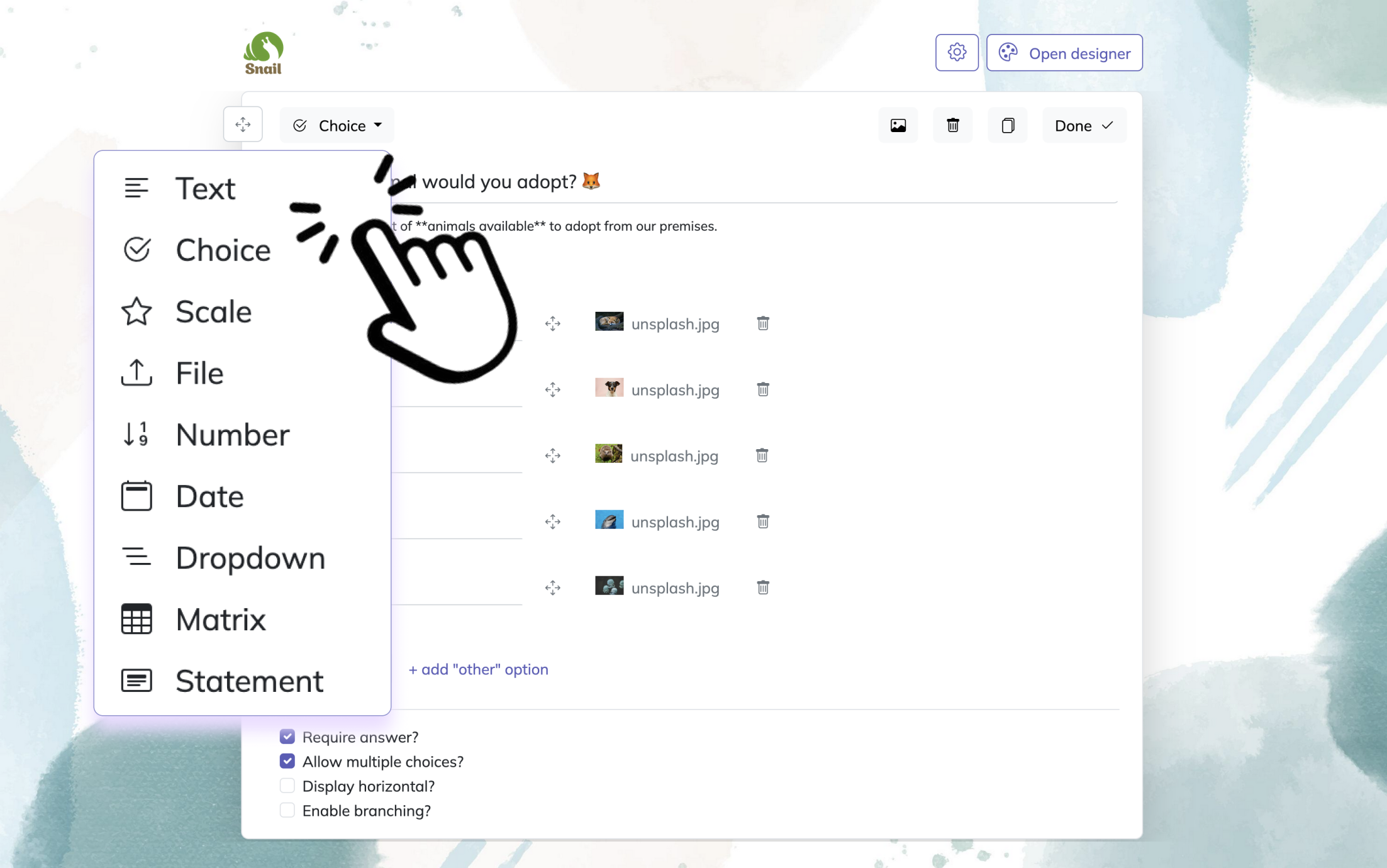
Click Add Question and build your rebranding survey with simple question types like Choice, Scale, Matrix, or Text. Ask what people think about your new name, logo, colors, messaging, and overall brand direction. You can also use ranking questions to compare options, or add follow-up questions with branching to learn why respondents prefer one version over another.
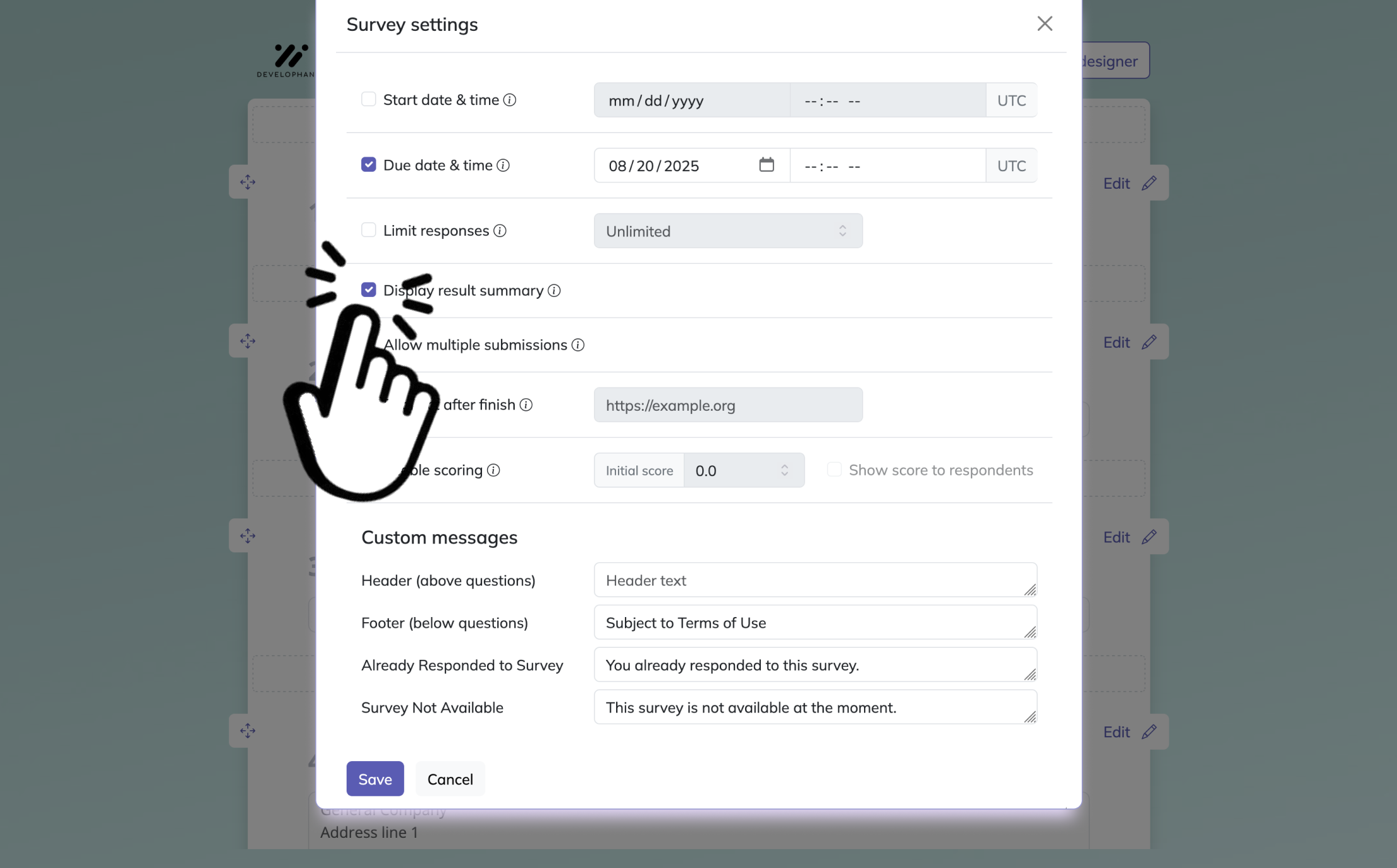
3. Publish survey
When your questions are ready, preview the survey to check the flow and design. Then click Publish to create a shareable link. After publishing, you can send the survey to your audience, collect responses, and review results in the online survey tool page.
Brand Identity Survey Questions
Sample questions
Which of these brand personality traits best fits our brand?
How well do our visual elements match the experience you expect from us?
What emotions do you associate with our brand identity?
Which parts of our current brand feel most memorable?
Does our brand feel more modern, trustworthy, premium, approachable, or something else?
Brand identity survey questions help you test the face, voice, and vibe of your brand before you make big rebrand moves.
Why & When to Use
Brand identity survey questions are designed to measure how people react to your visual identity, messaging style, tone of voice, values, and overall personality.
That means this kind of brand identity survey looks at how your brand feels, not just where it sits in the market.
Here’s the thing: brand identity and brand positioning are related, but they are not the same.
Brand identity covers what people see and experience, while brand positioning focuses on how your brand is understood against competitors.
Use these brand identity survey questions while testing possible rebrand directions, not only after launch when the paint is already dry.
Plus, comparing reactions to your current identity versus proposed concepts helps you spot what to keep, what to refresh, and what might confuse people.
A strong set of brand name survey questions and rebranding questions can help you evaluate:
visual identity across logo, color palette, typography, and design style
consistency across website, emails, packaging, social content, and sales materials
emotional response, including trust, excitement, warmth, or indifference
recognition and memorability across current and proposed brand directions
On top of that, these insights pair nicely with brand positioning survey questions, because a pretty brand that says nothing useful is still doing cardio without results.
Research shows tone of voice significantly predicts trustworthiness and willingness to recommend, making identity-testing survey questions critical during rebranding decisions (source).
Brand Positioning Survey Questions
Sample questions
What makes our brand different from other options you’ve considered?
Which customer needs do you believe our brand serves best?
How strongly do you associate our brand with value, quality, innovation, or expertise?
If you had to compare our brand to a competitor, what stands out most?
How well does our messaging explain why someone should choose us?
Brand positioning survey questions show you where your brand stands in people’s minds, especially when competitors are all shouting into the same room.
Why & When to Use
Brand positioning survey questions help you understand how your audience sees your company relative to competitors, not just in isolation.
That matters because a rebrand can look polished and still miss the mark if people do not understand why you are meaningfully different.
Use these brand positioning survey questions when your rebrand includes a new market position, a revised value proposition, or a move into a broader or more competitive category.
Plus, they are especially useful when audience expectations are changing, your product category is maturing, or your buyers have become more informed and harder to impress.
Strong brand positioning survey questions examples help you test whether your new strategy feels distinctive, relevant, and credible.
Here’s the thing: if your message says “we do everything for everyone,” your positioning may need a friendly intervention.
A smart mix of brand survey questions, rebranding questions, and even a brand name questionnaire can help you spot where your brand is over-positioned, under-positioned, or simply unclear.
Look closely at feedback around:
differentiation from competitors
relevance to customer needs and priorities
credibility of claims around quality, value, innovation, or expertise
clarity of messaging across markets, segments, and product categories
Brand Name Survey Questions
Sample questions
What is your first impression of this brand name?
How easy is this name to remember after seeing it once?
What kind of company or product would you expect from a brand with this name?
Does this name feel credible and relevant to what we offer?
Are there any confusing, negative, or misleading associations with this name?
Brand name survey questions help you figure out whether a name actually works in the wild, not just in a conference room full of confident nodding.
Why & When to Use
Brand name survey questions are especially useful when you are considering renaming a company, product, service, or sub-brand as part of a rebrand.
Use them early, before the new name shows up in design files, packaging, legal reviews, and fifty Slack threads you did not ask for.
A solid brand name questionnaire helps you test performance, not just preference.
Here’s the thing: people inside your business may love a name because it sounds clever, but your audience needs to understand it, remember it, and trust it.
That is why a strong brand name survey should measure clarity, memorability, fit, and any unintended associations.
On top of that, good rebranding questions should also test pronunciation, recall, and category fit, because a name that looks great on a mood board can still flop in real life.
When reviewing feedback, look for patterns around:
first impressions and emotional reaction
ease of pronunciation and recall
relevance to your offer and industry
credibility, distinctiveness, and memorability
confusing, negative, or misleading associations
Plus, do not rely on internal opinions alone when evaluating names.
Brand identity survey questions and brand survey questions can support the process, but brand name survey questions are what help you catch expensive naming mistakes before they become very polished problems.
Qualtrics recommends validating rebrand names with survey criteria like trustworthiness, appeal, and purchase consideration before launch to avoid costly naming mistakes (source)
Internal Branding Survey Questions for Employees
Sample questions
How well do you understand the reasons behind the rebrand?
How confident do you feel explaining the new brand to customers or prospects?
Which parts of the new brand strategy feel clearest or most confusing?
Do you believe the rebrand reflects our company culture and values?
What support or resources would help you represent the new brand more effectively?
Internal branding survey questions show you whether your team is truly on board, or just smiling politely in the launch meeting.
Why & When to Use
An internal branding survey helps you measure employee understanding, buy-in, and confidence before your rebrand meets the real world.
Here’s the thing: if your team is unclear, hesitant, or unconvinced, your brand consistency and customer experience will wobble fast.
Use internal branding survey questions at three key moments: before rollout, during the internal launch, and after the external implementation.
That timing helps you spot confusion early, track morale during change, and see whether training actually worked.
A smart internal brand survey also helps uncover resistance, message gaps, and support needs across the business.
Plus, strong brand survey questions for employees can reveal whether the rebrand strengthens your employer brand too, not just your customer-facing message.
When reviewing responses, break them down by:
department
location
customer-facing role
leadership level
tenure at the company
On top of that, look for patterns around alignment, confidence, culture fit, and training needs.
Employer branding survey questions can add useful context here, because employees who believe in the brand are much more likely to represent it clearly, consistently, and without sounding like they swallowed a brochure.
Post-Rebrand Feedback Survey Questions
Sample questions
Have you noticed any recent changes to our brand? If so, what stood out?
How clear is our new brand message compared with our previous one?
What is your overall impression of our updated brand?
Has the rebrand changed how likely you are to consider, buy from, or recommend us?
What part of the new brand feels strongest, and what still needs improvement?
Post-rebrand survey questions help you see whether your new brand is turning heads, building trust, and nudging real behavior.
Why & When to Use
Post-launch feedback is where your brand name survey questions, brand identity survey questions, and rebranding questions stop being theory and start becoming proof.
Here’s the thing: a rebrand can look gorgeous in a deck and still confuse real people five minutes later.
Use these brand survey questions soon after launch to capture first reactions from customers, prospects, and employees.
Then run them again after people have had enough exposure to notice patterns, compare experiences, and form stronger opinions.
That second wave matters because early feedback shows reaction, while later feedback shows whether awareness, clarity, preference, trust, and behavior are actually shifting.
This is also the sweet spot where your rebranding feedback tool becomes a strategic lens, not just a comment catcher.
When you review responses, separate feedback into:
visual identity
brand messaging
perceived trust
purchase or recommendation intent
overall brand preference
Plus, compare results against any pre-launch benchmarks if you have them.
On top of that, strong brand positioning survey questions can help you tell whether people simply noticed the change or truly understand what your brand now stands for, which is a much better outcome than "I liked the new logo color."
How to Choose the Right Rebranding Survey Questions
Sample questions
What decision are we trying to make with this survey?
Which audience should answer these questions: customers, prospects, employees, or partners?
Are we testing the current brand, proposed concepts, or post-launch performance?
Do we need qualitative feedback, quantitative benchmarking, or both?
What specific action will we take based on the responses?
The best rebranding questions are the ones tied to one clear decision, not a giant wish list.
Why & When to Use
Not every company needs every type of brand name survey questions or brand identity survey questions set.
Here’s the thing: the right mix depends on what actually changed.
If you are renaming the business, your brand name questionnaire should focus on clarity, memorability, fit, and trust.
If you are repositioning, lean harder into brand positioning survey questions that test relevance, differentiation, and audience appeal.
For a visual refresh, keep your brand survey questions centered on recognition, consistency, and first impression.
For bigger shifts, match the survey to the scenario:
renaming for a new market
repositioning against competitors
merger or acquisition alignment
audience expansion into a new segment
employer brand updates through an internal branding survey
Plus, try to give each survey one main job.
A survey about everything usually teaches you... not much, except that people get tired fast.
Question overload lowers completion rates and muddies the feedback, especially when your rebranding feedback tool mixes concept testing, launch reactions, and internal alignment in one go.
On top of that, decide early whether you need open comments, score-based benchmarks, or both.
That simple choice helps you build sharper rebranding questions and pick a survey structure that leads to action, not just interesting noise.
Best Practices for Rebranding Surveys
Sample questions
Are these brand name survey questions tied to a real decision we need to make?
Are we balancing score-based brand identity survey questions with open comments?
Have we separated customer feedback from employee or internal branding survey feedback?
Are any rebranding questions leading respondents toward the answer we want?
Do we know how we will analyze and use the feedback before launching the survey?
Why & When to Use
The best rebranding survey is focused, neutral, and built for action.
Here’s the thing: "best" brand name survey questions depend on your rebrand objective and your audience.
If you are testing a new name, your brand name questionnaire should focus on clarity, fit, trust, and memorability.
If you are refining positioning, use brand positioning survey questions that show whether the message feels relevant and distinct.
For stronger results, follow a few practical dos:
Align every question with a real branding decision.
Mix closed-ended brand survey questions with open comments.
Keep wording neutral, segment audiences, and benchmark current perception before testing new ideas.
Include employees when the rebrand changes culture, hiring, or employer brand experience.
Plus, avoid the usual traps:
Do not ask vague questions like "What do you think?" when "How clearly does this brand name explain what we offer?" gives you usable data.
Do not combine ideas in one item, like clarity and trust in the same question.
Do not test too many concepts at once, rely only on internal opinions, or confuse liking something with remembering it.
On top of that, keep surveys reasonably short, time them around real decision points, and use a solid sample.
A fancy rebranding feedback tool cannot rescue weak questions. Even the prettiest dashboard cannot perform CPR on biased feedback.
Turning Rebranding Survey Insights Into Action
Sample questions
Which findings appear consistently across different audience groups?
What feedback points signal a serious brand clarity or trust issue?
Which suggested changes align with our strategic positioning goals?
What can we fix immediately, and what requires longer-term brand work?
How will we measure whether post-survey changes improved brand perception?
Why & When to Use
Good feedback earns its keep when it changes what you do next.
Here’s the thing: brand name survey questions, brand identity survey questions, and rebranding questions only matter if they lead to smarter decisions.
This is the step where survey results stop being interesting and start being useful.
Use it when you need to connect survey feedback to brand strategy, naming, messaging, design updates, employee training, and launch improvements.
Plus, do not prioritize ideas just because lots of people mentioned them.
A comment that reveals a major trust or clarity problem may matter more than 50 mild preferences about a logo color. Popular does not always mean important. Sometimes the loudest feedback is just wearing tap shoes.
To turn responses into action, group your findings into clear themes:
Identity
Positioning
Naming
Internal adoption
Launch performance
Then prioritize based on business impact, strategic fit, and effort required.
On top of that, separate quick fixes from deeper brand work so your team can move now without losing sight of bigger changes.
A strong brand name questionnaire or internal branding survey should help you reduce guesswork, sharpen decisions, and improve how confidently your rebrand moves into the real world.
Best Practices: Dos and Don’ts for Rebranding Questionnaires
High-impact branded surveys are simple for you when you use a clear playbook.
Here’s the thing: You get better rebranding insights when your questions feel precise, relatable, and tailored to the people you are asking. You want your survey to feel light but still strategic, so you can collect strong data without putting your audience to sleep.
Use smart structure to keep your survey clear and honest.
Segment your audience by role, familiarity, and experience level
Blend closed questions with open “why” prompts
Always pilot-test before full rollout
Keep rating scales and answer options consistent throughout
Follow up with interviews for richer insights
On top of that, you also want to steer clear of a few common traps that quietly wreck survey results.
Avoid sneaky bias so your data actually tells you the truth.
Don’t lead respondents with wishful wording
Don’t bury them in jargon (keep it simple)
Don’t ignore employees, because internal buy-in is gold
Don’t skip competitor context on critical “against” questions
Don’t rely on just one survey wave, since pulse checks really matter
An insightful branded survey template should work like a living tool that you can adjust as your brand and audience evolve. Keep it sharp, relevant, and people-friendly, and your next rebrand will land with the right impact instead of a confused shrug.
Use your questionnaire as a conversation starter, not just a data grab.
Big brands win when your rebranding survey questions spark authentic conversations that people actually want to answer. When you craft your brand identity survey questions well, you turn raw opinions into breakthrough insights that shape clearer decisions.
The right branding questionnaire for customers and employees can turn skeptics into superfans and help you dodge every pitfall along the rebranding road. Keep asking, keep listening, and keep your pulse on what matters most to the people who live with your brand every day.
Related Brand Survey Surveys
31 Brand Positioning Survey Questions
Explore 25 brand positioning survey questions with sample answers to sharpen strategy, compare pe...
29 Ad Testing Survey Questions
Explore 25 ad testing survey questions with sample prompts to refine ad performance, gather insig...
31 Brand Image Survey Questions
Explore 25 brand image survey questions with sample answers to measure perception, improve brandi...