31 Brand Image Survey Questions
Explore 25 brand image survey questions with sample answers, insights, and practical tips to measure perception and strengthen your brand strategy.
Your customers might like your product and still misunderstand your brand. A brand image questionnaire helps you measure how people see you, while a customer satisfaction survey only shows how happy they felt after buying.
Here’s the thing, the right brand identity survey or brand perception survey template depends on your goal. This guide will help you choose smart brand image survey questions for awareness, perception, identity fit, reputation, loyalty, and competitive positioning, with practical ideas tied to common brand perception survey questions and brand research questions and answers.
Sample questions
When you think of [product category], which brands come to mind first?
Before today, had you heard of [brand name]?
How familiar are you with [brand name]?
Where have you recently seen or heard about [brand name]?
Which of the following brands have you heard of?
Brand Awareness Survey Questions
Awareness is your starting line
Why & When to Use
A brand awareness survey shows how familiar people are with your brand before you dig into deeper topics like perception, preference, or loyalty.
That makes it a smart first step in a brand perception survey questions brand identity survey, especially if you are entering a new market, rolling out a rebrand, tracking campaign reach, or benchmarking against competitors.
Here’s the thing, awareness is not the same as reputation. Your brand perception survey template or brand image questionnaire can tell you how people feel, but awareness questions tell you whether they know you exist in the first place.
You will usually measure two types of awareness:
Unaided awareness, where people name brands from memory without prompts
Aided awareness, where people choose recognized brands from a list
Plus, using both gives you a clearer read on mental availability. If nobody recalls you unprompted, your brand may still need more visibility, not just better messaging.
Common response formats for this type of brand image survey questionnaire include:
Open-ended questions for recall
Multiple choice for recognition
Rating scales for familiarity
On top of that, this survey type fits search intent around brand research questions and answers because it gives you practical baseline data. Just remember, awareness alone will not tell you if your image is strong, weak, lovable, or slightly forgettable like that one actor from that one ad.
Sample questions
Which three words best describe [brand name]?
How would you rate your overall perception of [brand name]?
What feelings or emotions do you associate with [brand name]?
Compared with similar brands, how positively do you view [brand name]?
What is the first thing that comes to mind when you think about [brand name]?
Brand awareness research should combine unaided recall and aided recognition questions, with unaided measures often indicating stronger brand strength and purchase behavior (Source).
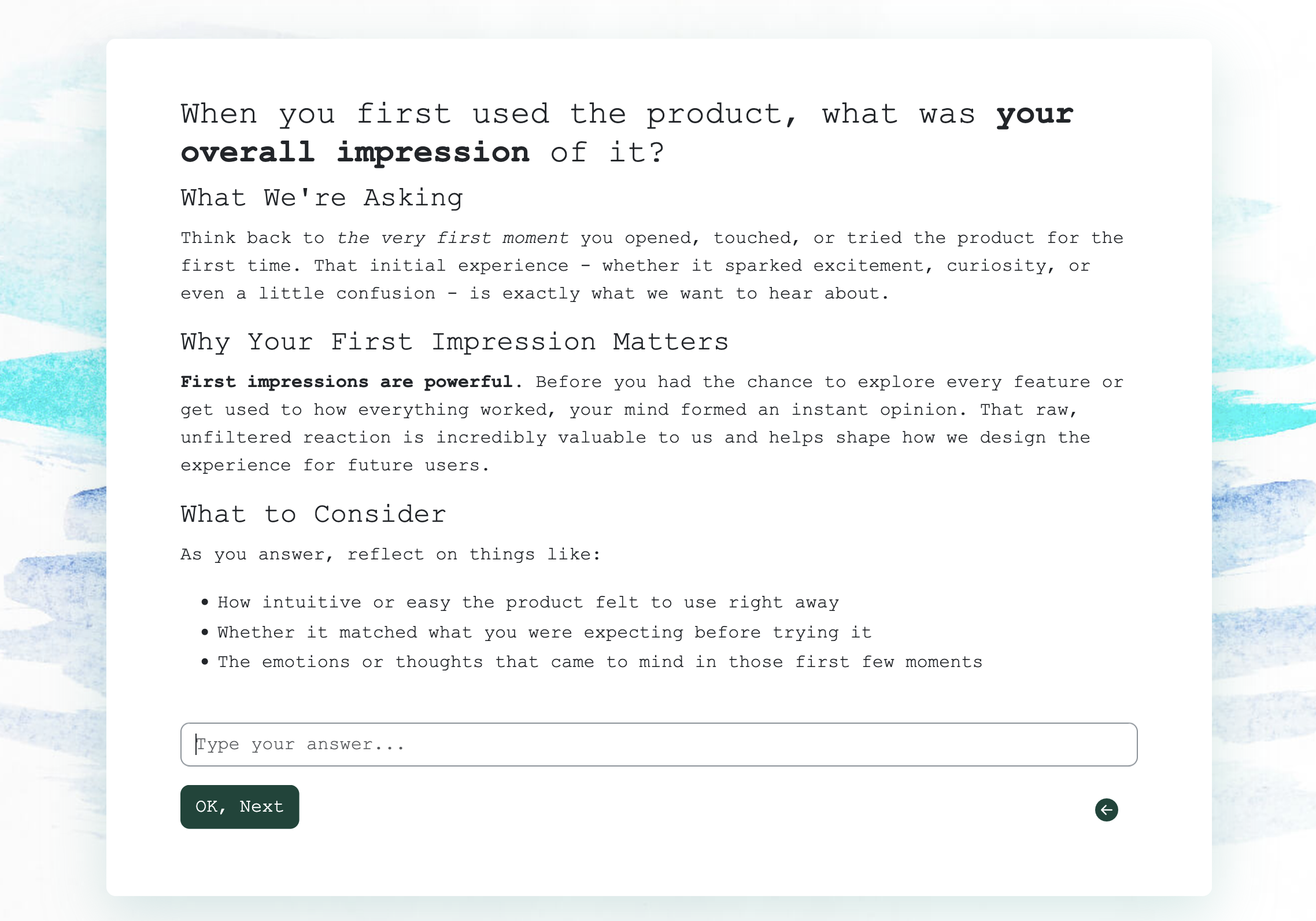
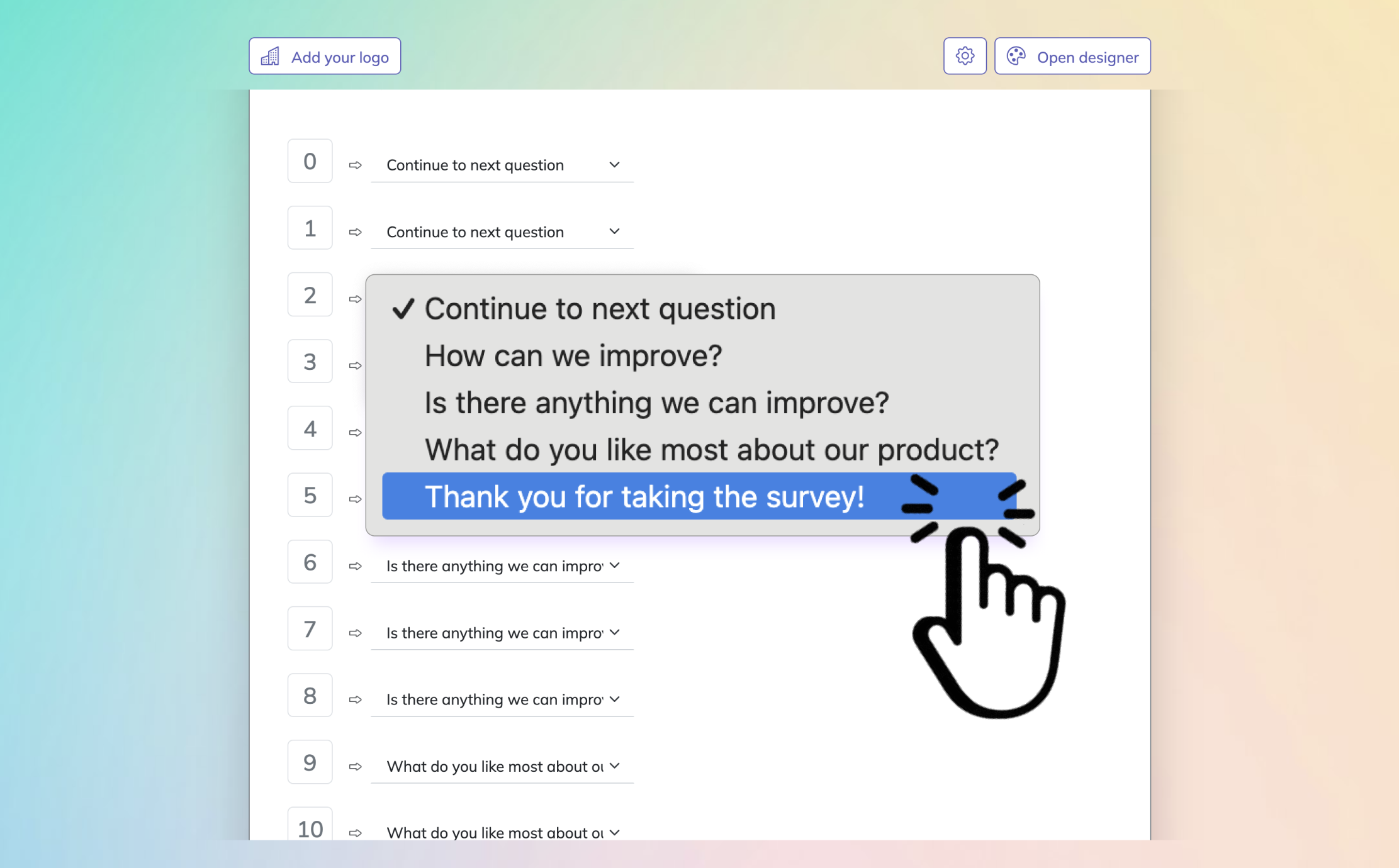
How to create a brand image survey in HeySurvey
1. Create a new survey
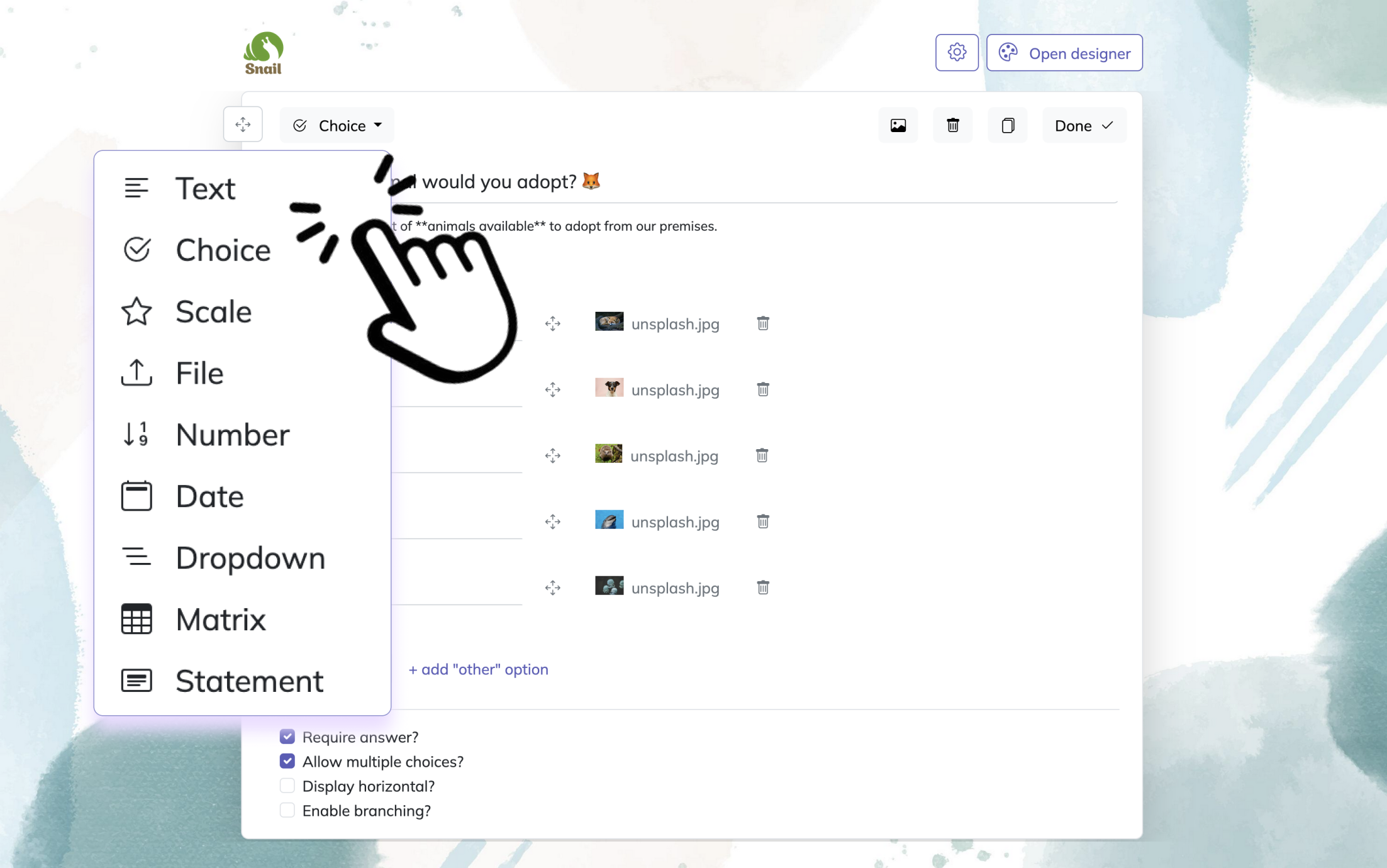
Start by opening a brand image survey template from the button below, or create a survey from scratch. If you are new to HeySurvey, this is the easiest way to begin. You can edit the survey name, add your logo, and adjust the basic settings before you start asking questions. Choose a clean layout so respondents can move through the survey easily.
2. Add questions
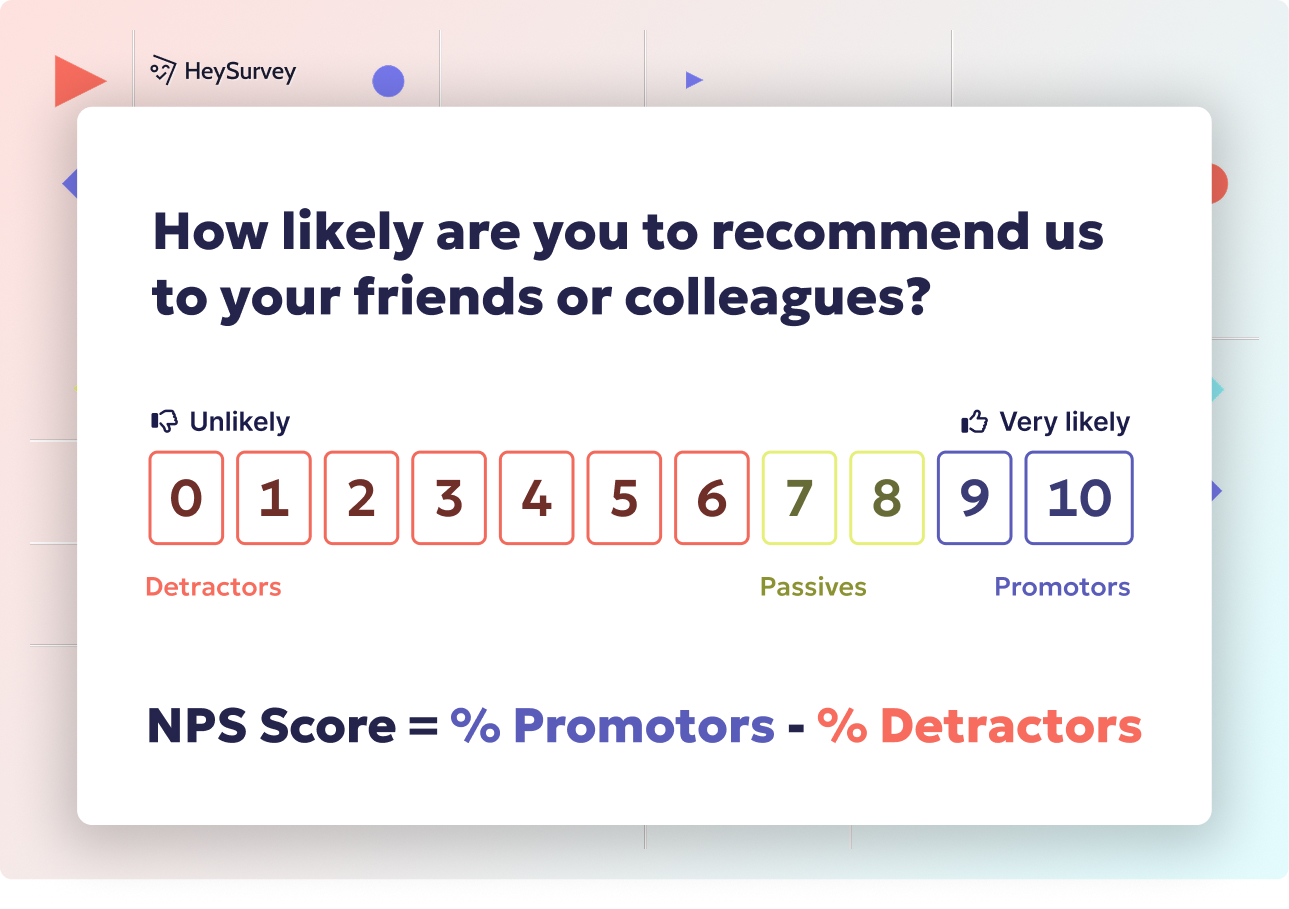
Click Add Question and include questions that measure how people see your brand. Use Choice questions for brand association, Scale questions for ratings, NPS for loyalty, and Text questions for open feedback. You can also add images, reorder answers, and mark important questions as required. Keep the wording simple and focused on brand recognition, trust, quality, and uniqueness.
3. Publish the survey
Preview your survey first to check the flow and design. When everything looks right, click Publish to create a shareable link. You can then send it to your audience and start collecting responses.
Brand Perception Survey Questions
Perception is where your brand story meets real life
Why & When to Use
A brand perception survey looks at how people actually see your brand, which makes it a core part of any brand perception survey template.
While awareness tells you whether people know you, this section shows what they think, feel, and assume once your name is in the room.
Use these brand perception survey questions when you want to evaluate emotional associations, perceived strengths, weaknesses, and market positioning.
Plus, this type of brand image survey helps you spot the gap between the brand you meant to build and the one people carry around in their heads.
The best results usually come from mixing attribute-based ratings with open-text responses.
That means you should pair scaled questions like overall perception or competitor comparisons with prompts that let people describe your brand in their own words.
A strong brand image questionnaire in this area can help you organize feedback into themes like:
Quality
Trust
Innovation
Value
Personality
Here’s the thing, numbers show patterns, but open comments explain the why. On top of that, customers will often say the quiet part out loud, which is wildly useful and occasionally a little humbling.
If you are building a broader brand identity survey, this section gives you the insight needed to shape messaging, positioning, and customer experience with a lot less guesswork.
Sample questions
How well does [brand name] represent the following traits: innovative, trustworthy, premium, friendly, sustainable?
Which brand values do you believe [brand name] stands for?
How consistent does [brand name] feel across its website, ads, social media, and customer experience?
What type of customer do you think [brand name] is designed for?
How clearly does [brand name] communicate what it stands for?
Research on brand image measurement shows combining attribute ratings with open-ended questions yields richer, more diagnostic insights than scaled items alone (source).
Brand Identity Alignment Survey Questions
This is where your intended brand meets your actual brand reality
Why & When to Use
A brand identity survey helps you check whether the identity your team designed is the same one your audience actually sees.
That is the big difference between identity and image.
Brand identity is what you mean to project, while brand image questionnaire results reveal what people actually pick up from your messaging, visuals, and experience.
Use this section after a rebrand, a messaging update, a visual identity change, or a positioning refresh.
Plus, it is especially useful when you want to validate internal strategy with outside feedback, because your brand deck might be crystal clear in-house while customers are out there getting a completely different vibe. Awkward, but fixable.
A solid brand perception survey template often includes identity alignment questions because consistency across touchpoints is one of the fastest ways to spot a disconnect.
Pay close attention to whether people describe the same traits and values you define in your internal guidelines.
This kind of brand image survey can help you evaluate:
Brand trait alignment
Value recognition
Cross-channel consistency
Audience fit
Clarity of positioning
On top of that, comparing responses against your internal brand standards gives you a practical way to diagnose where the gap starts, whether that is your website, ads, social content, or customer experience.
Sample questions
How much do you trust [brand name]?
How would you rate [brand name]’s reputation compared with competitors?
How confident are you that [brand name] acts in customers’ best interests?
If you heard news about [brand name], how likely would you be to believe it is credible?
What concerns, if any, do you have about [brand name]?
Brand Reputation Survey Questions
Trust is earned slowly and judged surprisingly fast
Why & When to Use
Brand reputation survey questions help you measure how people see your trustworthiness, credibility, public standing, and potential risk signals.
Here’s the thing, a polished message can look great on paper, but your reputation lives in people’s minds, review tabs, and group chats.
Use this section after a PR issue, service failure, leadership change, ratings decline, or broader industry controversy.
On top of that, it fits naturally into research for brand reputation survey questions, corporate image surveys, and even a broader brand perception survey template when you need to understand whether confidence in your brand is rising or wobbling.
A smart brand identity survey or brand image questionnaire may tell you what people associate with your brand, but reputation questions reveal whether they actually trust you.
That distinction matters because reputation often lags behind real operational improvements, so even if your team fixed the problem, public opinion may still be stuck in last season.
This type of brand image survey works best when you include:
Trust ratings
Competitor reputation comparisons
Credibility checks
Open-ended concern questions
Customer versus non-customer response splits
Plus, segmenting customer and non-customer answers helps you see whether direct experience improves perception, or whether outsiders are still side-eyeing your brand a little.
Sample questions
How likely are you to choose [brand name] over a similar competitor?
How unique do you consider [brand name] compared with other brands in this category?
How likely are you to pay more for [brand name] than for a similar alternative?
How strongly do you feel connected to [brand name]?
How likely are you to recommend [brand name] to others?
Research shows brand experience increases willingness to pay a premium through brand credibility and perceived uniqueness, supporting survey questions on preference, uniqueness, pricing, and recommendation (source).
Brand Equity Survey Questions
Brand equity is what makes people pick you even when the spreadsheet says they do not have to
Why & When to Use
Brand equity survey questions help you measure the extra value your brand adds beyond features, convenience, or price.
Here’s the thing, two products can look nearly identical, but one still wins because people trust it more, feel more connected to it, or simply like the name better.
That is the heart of brand equity, and a strong brand identity survey, brand perception survey template, or brand image questionnaire can help you spot it clearly.
Use this section when you want to assess loyalty, preference, differentiation, and willingness to choose your brand over alternatives.
On top of that, these questions are especially useful when you are making pricing, positioning, messaging, or category expansion decisions.
A practical brand equity survey questions set usually blends a few core signals:
Brand preference over similar options
Perceived uniqueness in the market
Willingness to pay a premium
Emotional connection to the brand
Recommendation intent
Plus, brand equity is not just about awareness alone.
It combines awareness, perceived quality, loyalty, and differentiation, which means your brand image survey or brand image survey questionnaire should look at both what people know and what they are willing to do.
If respondents prefer you, recommend you, and would even pay more, that is not luck.
That is equity doing the heavy lifting, like a tiny brand bodyguard for your margins.
Sample questions
How well has your experience with [brand name] matched your expectations?
How likely are you to buy from [brand name] again?
How consistent has [brand name] been across your interactions with it?
What has [brand name] done especially well in your experience?
What would most improve your perception of [brand name]?
Brand Experience and Loyalty Survey Questions
Customer experience shapes brand image long after the ad stops talking
Why & When to Use
Brand experience and loyalty questions help you connect what people actually live through with how they see your brand over time.
Here’s the thing, a polished logo cannot save a messy checkout, late delivery, or support experience that feels like a scavenger hunt.
This section belongs in a strong brand identity survey, brand perception survey template, or brand image questionnaire when you want more than surface-level opinions.
It is especially useful for retention analysis, post-purchase feedback, customer journey reviews, and repeat-purchase strategy.
Plus, if you want a fuller brand image questionnaire survey, this is where the real story shows up.
Customer experience is one of the biggest drivers of brand image, so your brand image survey or brand perception survey questions should connect loyalty feedback to specific touchpoints such as:
Purchase and checkout
Onboarding and first use
Delivery or fulfillment
Customer support and issue resolution
Repeat buying or renewal
On top of that, the best brand image questionnaire mixes rating-scale questions with open comments.
Scale questions show patterns fast, while open responses explain why people stay loyal, drift away, or quietly disappear like socks in the laundry.
If you want sharper brand equity survey questions too, this section gives you the lived context behind repeat behavior.
Sample questions
What is the main goal of this brand image survey: awareness, perception, reputation, equity, or loyalty?
Who should answer this survey: current customers, past customers, prospects, or the general market?
What specific brand decision will this survey inform?
Which customer segments are most important to compare?
What action will we take if the responses reveal a problem?
How to Choose the Right Brand Image Survey Questions
The best survey starts with the decision you need to make
Why & When to Use
Not every business needs every survey type at once, and that is good news for your budget, your team, and the poor soul reading a 47-question form.
Here’s the thing, the right brand identity survey, brand perception survey template, or brand image questionnaire depends on what you are trying to learn right now.
Use this section as a planning tool before you write the actual questionnaire.
It helps you build a practical brand perception survey template or brand image survey template based on audience, timing, and the business choice sitting on your desk.
Plus, matching question types to funnel stage keeps your survey useful instead of random.
Use awareness-focused questions for prospects or the general market
Use perception or reputation questions for broader audience sentiment
Use loyalty or brand equity survey questions for current or past customers
Use benchmark-friendly questions when you need to compare segments or track change over time
On top of that, keep survey length tight and make sure each question is relevant to the person answering.
A smart brand image survey questionnaire should help you compare the right segments, spot issues early, and know what action comes next.
If your brand imagery questionnaire cannot guide a real decision, it is just a very polite worksheet.
Sample questions
Are your brand identity survey questions neutral, clear, and focused on one idea at a time?
Does your brand perception survey template include a mix of rating, multiple-choice, and open-ended questions?
Are you surveying the right people for the insight you want, not just the easiest people to reach?
Can you benchmark results over time and compare them with competitors if needed?
Do you have a clear plan to analyze responses and act on what you learn?
Best Practices for Writing and Running a Brand Image Survey
A strong brand image questionnaire should be easy to answer, easy to measure, and actually useful
Why & When to Use
Here’s the thing, even a great idea can flop if your brand identity survey is confusing, biased, or aimed at the wrong audience.
Use these best practices when you are building a brand perception survey template, refining a brand image questionnaire, or trying to turn messy feedback into clean decisions.
A smart brand image survey questionnaire is not just measurable. It is actionable too, which is a fancy way of saying it should help you do something on Monday.
Dos
Keep questions neutral, simple, and limited to one idea each
Mix rating-scale, multiple-choice, and open-ended formats for better depth
Match the audience to the goal, since market perception and customer experience are not the same thing
Benchmark results over time so trends do not play hide-and-seek
Add competitor context when it helps explain your position
Keep the survey short enough to finish without response fatigue
Don’ts
Do not combine multiple ideas into one question
Do not use leading wording in brand perception survey questions
Do not rely only on existing customers if you want broader brand image survey insight
Do not stack too many similar rating questions in a row
Do not ignore open-ended comments that explain the scores
Do not collect data without a plan to analyze, report, and act on it
Sample questions
Which perception gaps have the biggest business impact?
Which customer segments show the weakest brand perception?
What themes appear most often in open-ended feedback?
Which brand traits should be reinforced in messaging and campaigns?
What changes should be prioritized in the next 30, 60, and 90 days?
Turn Brand Image Survey Insights Into Action
Your brand identity survey becomes valuable when it changes what you do next
Why & When to Use
Here’s the thing, a brand image questionnaire is not the finish line. It is the handoff to smarter branding, sharper messaging, better customer experience, and stronger reputation management.
Use this step right after you complete a brand perception survey template and review the data.
Plus, this is where your brand image survey stops being a nice report and starts earning its keep.
Start by sorting findings by impact and effort, because not every issue deserves a full fire drill.
High impact and easy to fix should move first
High impact but harder changes may need planning and owners
Low impact items can wait unless they support a bigger goal
Then turn patterns into action across the business.
Update messaging if your brand perception survey questions show confusion about what you offer
Improve service if open-ended comments point to repeat frustration
Adjust positioning if key segments connect with the wrong traits
Test new campaigns if your brand imagery questionnaire reveals weak or outdated associations
On top of that, build a simple 30, 60, and 90 day plan so insights do not vanish into a slide deck graveyard.
The best brand image survey questions, brand equity survey questions, and brand perception survey template items are the ones tied to clear decisions, owners, and follow-up action.
Related Brand Survey Surveys
31 Brand Positioning Survey Questions
Explore 25 brand positioning survey questions with sample answers to sharpen strategy, compare pe...
29 Ad Testing Survey Questions
Explore 25 ad testing survey questions with sample prompts to refine ad performance, gather insig...
31 Rebranding Survey Questions
Explore 25 sample rebranding survey questions to guide your brand refresh, gather feedback, and s...