31 Website Survey Questions for Better Insights
Explore 25 website survey questions to improve UX, boost engagement, and gather feedback with practical sample questions for better insights.
Website survey questions are the simple prompts you use to learn what visitors really think about your site, from design and content to functionality and conversion paths. Done well, survey questions for website design turn guesses into clear next steps, which is a lot cheaper than mind reading.
In this guide, you’ll explore the main types of web survey questions, when to use each one, sample website usability questions, and how to turn answers into smarter updates. Plus, you’ll see how a strong website survey questionnaire supports survey questions for website evaluation and better website survey questions for feedback, all using an online survey tool.
Sample questions
How easy was it to find the information you were looking for on our website?
How clear and intuitive was the navigation menu?
Did you encounter any confusion while completing your task today?
How easy was it to use our website on your device?
What is one thing that would make this website easier to use?
Website Usability Survey Questions
Good usability feedback shows you where people glide and where they get stuck.
Why & When to Use
Website usability questions help you learn whether your site feels easy to navigate, clear to understand, and simple to use. If visitors cannot find pricing, book a demo, or read support content without friction, your design is doing a little too much interpretive dance.
Use these survey questions for website design when you want insight into real user behavior, not just pageview charts. They work especially well after a redesign, during UX audits, right after someone completes a task, or when bounce rates and drop-off points start climbing.
Plus, this section speaks directly to search intent around website usability questions, website survey questions about usability, and even a website usability survey template. Short, context-based web survey questions usually get better answers because people remember what just happened.
A smart mix of rating-scale and open-ended web survey questions gives you both patterns and detail.
Use rating questions to measure ease, clarity, and confidence.
Use open-ended questions to uncover confusion points in plain language.
Ask about specific tasks like finding pricing, starting checkout, or locating help content.
Include mobile experience, page clarity, and website functionality questions, not just desktop navigation.
On top of that, these website survey questions about usability fit neatly into broader survey questions for website evaluation.
Sample questions
How visually appealing do you find our website?
Does the design of this website feel trustworthy and professional?
How easy is it to scan the page and find key information?
Do the colors, images, and layout match your expectations of our brand?
What would you change about the website’s design?
The two-item UMUX-LITE provides a quick, reliable website usability measure and correlates strongly with the SUS, reducing survey burden while preserving validity (source).
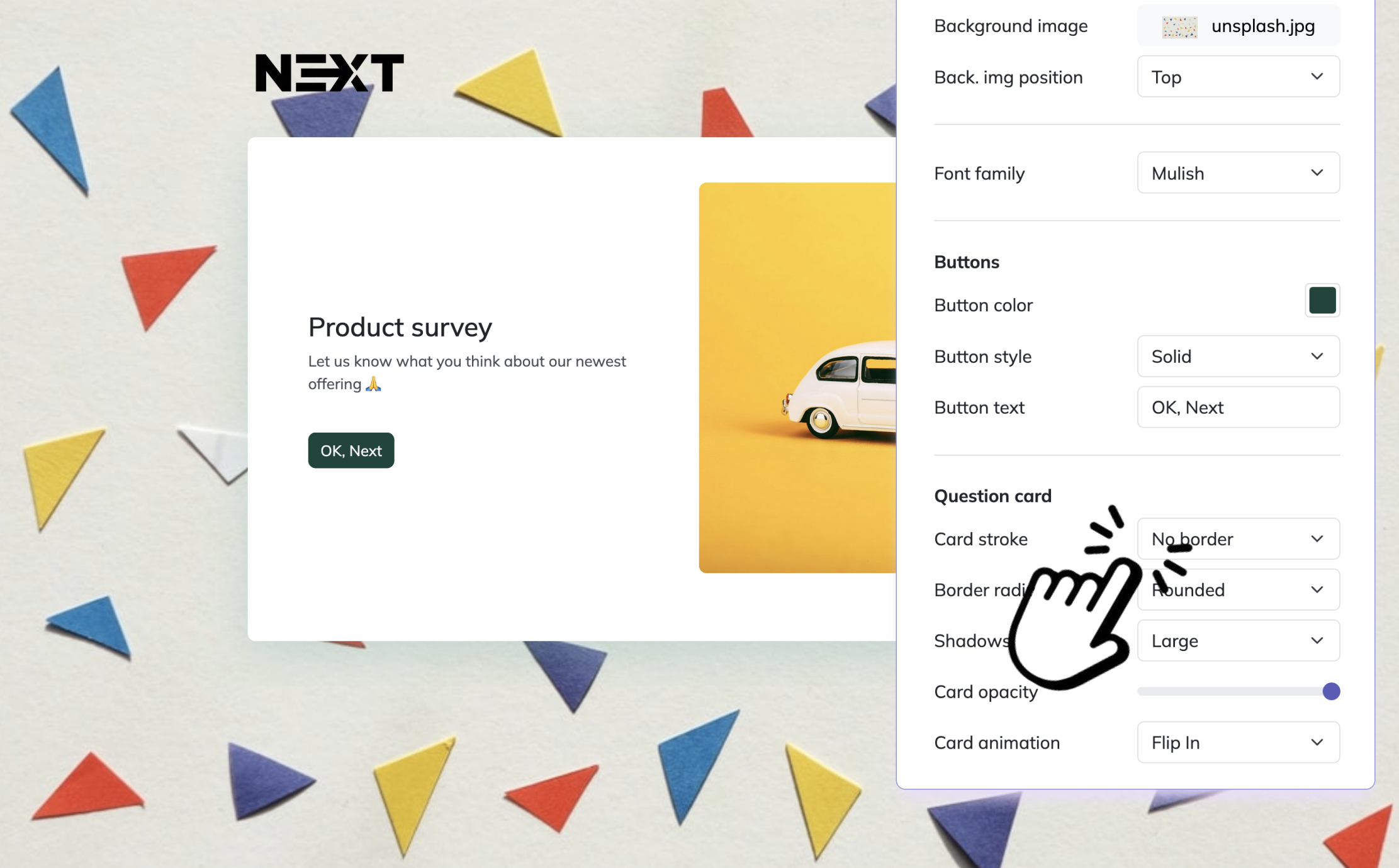
How to create a website survey in HeySurvey
1. Create a new survey
Start by opening a website survey template using the button below, or choose to begin from scratch with an empty survey. HeySurvey works in your browser, so you can start without an account. Once the editor opens, you can rename your survey and adjust basic settings for your website survey, such as the start and end date or the redirect URL after submission.
2. Add questions
Click Add Question to build your survey. For website survey questions, you can use text, choice, scale, NPS, dropdown, or other question types depending on what you want to learn from visitors. Add your question text, optional descriptions, and mark important questions as required. You can also customize answer choices, add images, or use branching to show follow-up questions based on earlier responses.
3. Publish survey
When your survey is ready, preview it to check the flow and appearance. Then click Publish to generate a shareable link or embed code for your website. After publishing, your survey is live and ready to collect responses from visitors.
Website Design Survey Questions
Strong design feedback helps you see whether your pages look polished, feel on-brand, and guide attention where it matters.
Why & When to Use
Website design survey questions help you measure visual appeal, clarity, brand perception, and how well the layout supports action. In plain English, they tell you whether people think your site looks sharp or like it got dressed in a hurry.
Use these survey questions for website design when you want feedback on more than function alone. They are especially useful for redesign validation, homepage testing, landing page updates, and brand refreshes where first impressions can make or break trust.
Here’s the thing, web design survey questions work best when you separate visual preference from usability performance. A page can look beautiful and still make people hunt for the CTA like it is playing hide-and-seek.
To get better answers, anchor your web survey questions to a specific page or visit goal, such as signing up, booking a demo, or making a purchase. On top of that, design feedback becomes much more useful when you connect it to business outcomes.
Focus your website design survey questions on details like:
trust signals such as reviews, badges, and polished branding
readability, including font size, contrast, and spacing
whitespace and content hierarchy so key information stands out
layout choices that support sign-ups, clicks, or purchases
Plus, avoid vague prompts and ask about what the visitor actually saw and tried to do. That makes your survey questions for website design far more actionable.
Sample questions
Did all the website features you used work as expected?
How satisfied were you with the website’s search, filters, or navigation tools?
Did you experience any broken links, errors, or slow-loading elements?
How easy was it to complete your task using our forms or tools?
Which website feature needs the most improvement?
Research shows users form stable first impressions of a website in about 50 milliseconds, making design-focused survey questions critical for measuring trust and appeal (source).
Website Functionality Survey Questions
Smart website functionality survey questions help you catch friction before it quietly wrecks conversions.
Why & When to Use
Website functionality survey questions help you measure whether forms, search, filters, checkout steps, and other interactive tools work the way people expect. In other words, they show you if your site is helpful or if one button somewhere is staging a tiny rebellion.
Use these survey questions for website evaluation when you launch new features, roll out technical updates, or notice drop-offs in forms, checkout, or on-site search. Plus, they are especially useful when analytics show abandonment but do not explain what actually went wrong.
Here’s the thing, the best survey questions for website design are not always about looks alone. Website usability questions and website functionality survey questions should also focus on real tasks people try to complete.
Ask your web survey questions around actions like:
submitting a contact form
using site search
applying product filters
completing a checkout
using calculators, booking tools, or account features
On top of that, include both problem-detection and severity questions. Ask whether something failed, then ask how much that issue blocked the person from finishing the task.
Open-text follow-ups are especially useful because they can uncover bugs, confusing behavior, or broken steps that web design survey questions and analytics alone may miss.
Sample questions
Did this page provide the information you needed?
How clear and understandable was the content on this website?
Was any important information missing from this page?
How relevant was this content to your reason for visiting?
What topics would you like us to cover or explain better?
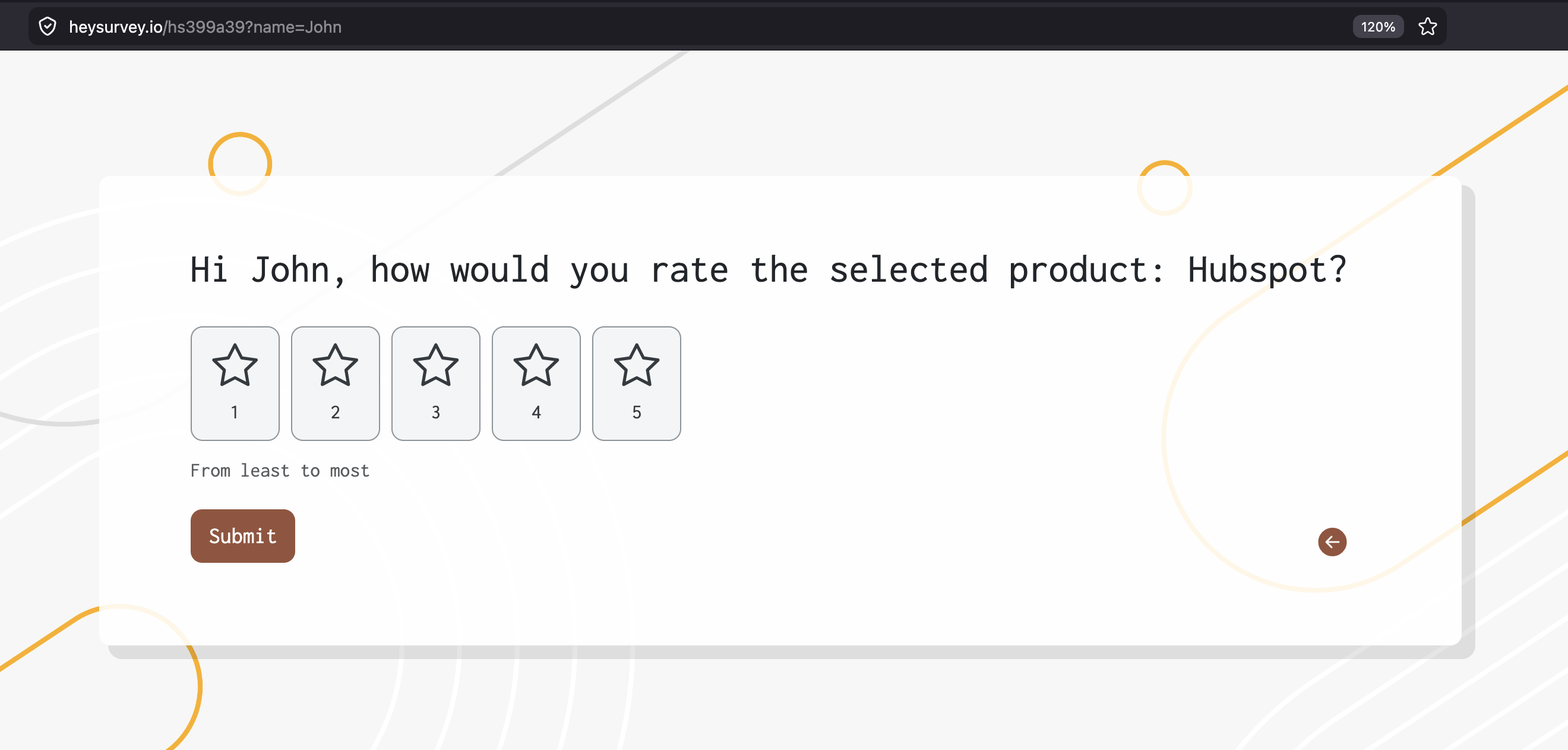
Website Content Feedback Survey Questions
Great survey questions for website design do not stop at layout, because your content has to do some heavy lifting too.
Why & When to Use
Content-focused website survey questions about usability help you measure clarity, usefulness, relevance, and completeness. They show you whether people found answers fast or left your page still squinting at the screen.
Use these website survey questions for feedback on service pages, product pages, blog posts, resource hubs, and FAQ sections. Plus, they work especially well when you want a questionnaire about website content that reveals what visitors understand, what they miss, and what they still need.
Here’s the thing, informational pages and conversion pages should not be judged the same way. A blog post should be useful, readable, and complete, while a sales or service page should also make the next step feel obvious.
Your web survey questions can help you evaluate content based on:
readability and clarity
depth and completeness
relevance to visitor intent
accuracy and trustworthiness
clear next steps and internal links
On top of that, blog survey questions are gold for publishers who want to spot topic gaps, weak explanations, and future article ideas. Use these survey questions for website evaluation to guide content strategy, SEO updates, and internal linking improvements, because guessing what content works is a little like throwing spaghetti at your sitemap.
Sample questions
Overall, how satisfied are you with your experience on our website today?
How well did our website meet your needs?
How likely are you to return to this website in the future?
How likely are you to recommend this website to others?
What was the most frustrating part of your experience today?
Research on the Website Evaluation Questionnaire found informational website surveys should assess content, navigation, search, functionality, look-and-feel, and performance to diagnose usability problems (source).
Customer Satisfaction and Experience Survey Questions
These survey questions for website design help you measure the full vibe of the visit, not just whether a button looked pretty.
Why & When to Use
Customer satisfaction surveys measure overall visitor sentiment after someone interacts with your site. In plain English, they tell you how people felt about the experience once the job was done.
Use these website usability questions after support interactions, purchases, account updates, bookings, or other completed sessions. Plus, they are a smart addition to broader website survey questionnaire planning because they act like a quick pulse check for the full experience.
Here’s the thing, strong web survey questions in this category should cover more than a single satisfaction score. You want a mix that captures CSAT, recommendation intent, return intent, and emotional friction so you can see both the score and the story behind it.
These website survey questions about usability are especially helpful when you want to evaluate:
overall satisfaction with the visit
whether the website met visitor needs
likelihood to return or recommend
moments of confusion, friction, or frustration
differences by page type, traffic source, or device
On top of that, survey questions for website evaluation work best when you balance ratings with open text feedback. Numbers help you benchmark, but comments explain why mobile users are annoyed while desktop users are breezing through like caffeinated penguins.
Sample questions
What nearly stopped you from completing this action today?
Was there any information missing before you decided to sign up or buy?
How confident did you feel taking the next step on this page?
What is the main reason you did not complete your purchase or form submission?
What would have made this process easier or more convincing?
Conversion and Goal-Completion Survey Questions
These survey questions for website design help you uncover why people convert, hesitate, or quietly vanish like a sock in the dryer.
Why & When to Use
Conversion-focused web survey questions show you why visitors do or do not take important actions like signing up, requesting a quote, booking a demo, or making a purchase.
Use these website usability questions on checkout pages, lead forms, pricing pages, demo pages, and exit moments where hesitation tends to show up fast. Plus, they work especially well when your analytics tell you where people drop off, but not why they bailed.
Here’s the thing, strong survey questions for website evaluation should speak to one goal per page. That keeps your web page survey feedback specific, clean, and actually useful.
You should ask both people who completed the action and people who abandoned it. Completed conversions reveal what built confidence, while abandoned ones expose friction, objections, or missing details.
These web survey questions are especially helpful when you want to explore:
trust concerns before taking action
pricing clarity and hidden-fee anxiety
unanswered questions or missing information
hesitation caused by forms, checkout steps, or weak messaging
decision-stage friction on high-intent pages
On top of that, a solid web survey example in this category uses simple wording tied to the exact action on the page. That way, your survey questions for website design turn into fixes you can actually make, not just another pile of “interesting feedback.”
Sample questions
Is this survey focused on one clear goal, like usability, content clarity, or conversion?
Does each question relate to the exact page, task, or visitor moment?
Are you giving people a quick way to rate their experience and a space to explain why?
Have you limited the survey to only the questions you truly need?
Can you segment responses by device, page type, or visitor intent before drawing conclusions?
Best Practices for Writing and Using Website Survey Questions
The best survey questions for website design feel relevant in the moment, not copied and pasted from a dusty template.
Why & When to Use
When you write web survey questions well, you get sharper answers and fewer shrug emojis in human form.
Here’s the thing, strong survey questions for website evaluation start with one primary objective. If you want to learn about usability, ask website usability questions. If you want to learn about conversion friction, use website functionality survey questions or design-focused prompts tied to that action.
Good survey timing matters just as much as wording. Ask too early and people lack context, ask too late and they forget what annoyed them two clicks ago.
For better response quality, follow these dos:
Keep questions short, plain, and tied to a specific page, task, or goal.
Mix closed-ended and open-ended web survey questions.
Ask at the right moment in the journey.
Limit the number of questions to reduce fatigue.
Segment feedback by device, traffic source, page type, or intent.
And avoid these common mistakes:
Asking generic website survey questions about usability across every page.
Combining multiple ideas in one question.
Leading people toward a preferred answer.
Using ratings only, with no room to explain.
Plus, wording matters more than you think. A weak question like “Did you like the website?” is too broad. A stronger version is “What, if anything, made this product page hard to use on mobile?” That is how web design survey questions become useful, not just polite.
Sample questions
Which survey responses point to the biggest barriers in the user journey?
What issues appear repeatedly across multiple responses?
Which feedback themes are affecting conversions, engagement, or satisfaction most?
What quick fixes can be implemented immediately?
What larger website improvements should be prioritized for testing next?
How to Turn Website Survey Insights Into Action
Great survey questions for website design only pay off when you turn feedback into fixes people can actually feel.
Why & When to Use
Collecting responses is just step one. The real value of survey questions for website design shows up when you use them to improve UX, content, layout, trust, and conversions in measurable ways.
Here’s the thing, this is the bridge between raw comments and smarter decisions. It works for any web survey questions you collect, whether they come from homepage polls, checkout feedback, blog survey questions, or website survey questions about usability.
Start by grouping feedback into clear themes so patterns are easy to spot.
Navigation problems
Trust concerns
Missing or unclear content
Broken functionality
Design friction on mobile or desktop
Plus, do not treat every comment like a five-alarm fire. Prioritize issues based on impact, frequency, and ease of implementation, so you fix what matters most first.
To make website usability questions and website functionality survey questions more useful, pair them with evidence from other tools.
Analytics to find drop-off points
Heatmaps to spot hesitation or rage clicks
Conversion data to measure business impact
Session recordings to add context
On top of that, close the loop. Test your updates, watch satisfaction and conversion metrics, and see whether your survey questions for website evaluation lead to better outcomes, not just a longer to-do list.
Best Practices: Dos and Don’ts for High-Converting Website Surveys
Crafting high-converting surveys is all about empathy, simplicity, and smart timing. When you do it right, you create surveys users actually enjoy answering and you keep the data honest and actionable.
Do keep surveys short, with no more than 3 usability testing questions for on-page.
Do limit post-purchase or follow-up surveys to 7 questions so users do not burn out.
Do trigger questions at user-centric moments, like after a scroll, right before a bounce, or after a task is complete.
Do A/B test everything, from wording to placement and even incentives, so you can maximize response rates.
Don’t ask leading or double-barreled usability survey questions, and keep every question neutral and direct.
Don’t take over the full mobile screen, since slide-ups or bottom sheets will feel much more friendly.
Do segment responses, such as new vs. returning users or mobile vs. desktop, so you can act on real differences.
Don’t ignore open-ended responses, and instead tag, group, and prioritize this goldmine in your project backlog.
Smart usability questions give you actionable insights, higher conversion, and happier visitors. Plus, when you help users feel heard, they help you build a better site.
Website survey questions are the secret ingredient for every modern UX team. On top of that, when you experiment with different types of questions, you learn what to fix, how to grow, and what makes users stick around, so get curious, get creative, and let your users guide the way.
Related UX Survey Surveys
31 Survey Questions About Website
Explore 25 survey questions about website usability, with sample questions to improve insights, b...
29 Software User Experience Survey Questions
Explore 25 sample software user experience survey questions to improve feedback, uncover insights...
29 UX Survey Questions Example
Explore 25 ux survey questions example ideas to improve user research, gain insights, and create ...