28 Survey Demographic Questions
Explore 25 sample survey demographic questions with keyword insights, designed to help identify audience traits, improve targeting, and guide research.
Want better survey results without making people roll their eyes? Demographic questions turn responses into usable insight by helping you segment audiences, spot patterns, personalize outreach, and make smarter decisions.
Here’s the thing, good survey demographic questions are not there to collect random extra data or fill awkward blank space. They should support a clear research goal, whether you need demographic examples for surveys, a stronger profession survey question, or cleaner data you can actually use without needing a detective board.
Sample questions
What demographic examples for surveys help you understand who your respondents are?
How do survey demographic questions improve analysis and decision-making?
When should you include a profession survey question in your form?
Which demographic questions are useful, and which ones just feel nosy?
What Are Survey Demographic Questions and Why They Matter
Survey demographic questions help you turn opinions into patterns you can actually use.
Survey demographic questions are the questions that describe who your respondents are, not just what they think. They often cover age, gender, income, education, occupation, household size, family status, or location.
Here’s the thing, collecting answers is easy, but understanding whose answers you collected is where the magic starts. That is why demographic examples for surveys matter so much when you want insight instead of a giant spreadsheet that stares back at you.
When you add the right demographic questions, you can compare results across groups and spot trends more clearly. Plus, a well-placed profession survey question can help you see how job roles shape needs, buying habits, or opinions.
This kind of data helps you:
run cross-tab analysis by group
identify differences in behavior or preferences
tailor products, services, messaging, or programs
make decisions with more confidence
On top of that, good demographic profiling should feel relevant, not invasive. If a question does not support your survey goal, it probably does not need to be there because nobody enjoys a survey that acts like a suspicious aunt at Thanksgiving.
Not every survey needs every category.
Why & When to Use
Use demographic questions when they help explain responses or support segmentation. In the next sections, you’ll see the most common survey demographic question types and when each one makes sense.
Sample questions
What is your age?
Which age range do you fall into?
Are you under 18 years old?
Which generation do you identify with most closely?
What year were you born?
Pew Research Center advises asking demographic questions only when they support analysis or eligibility, since unnecessary personal questions can reduce survey quality and respondent comfort (source).
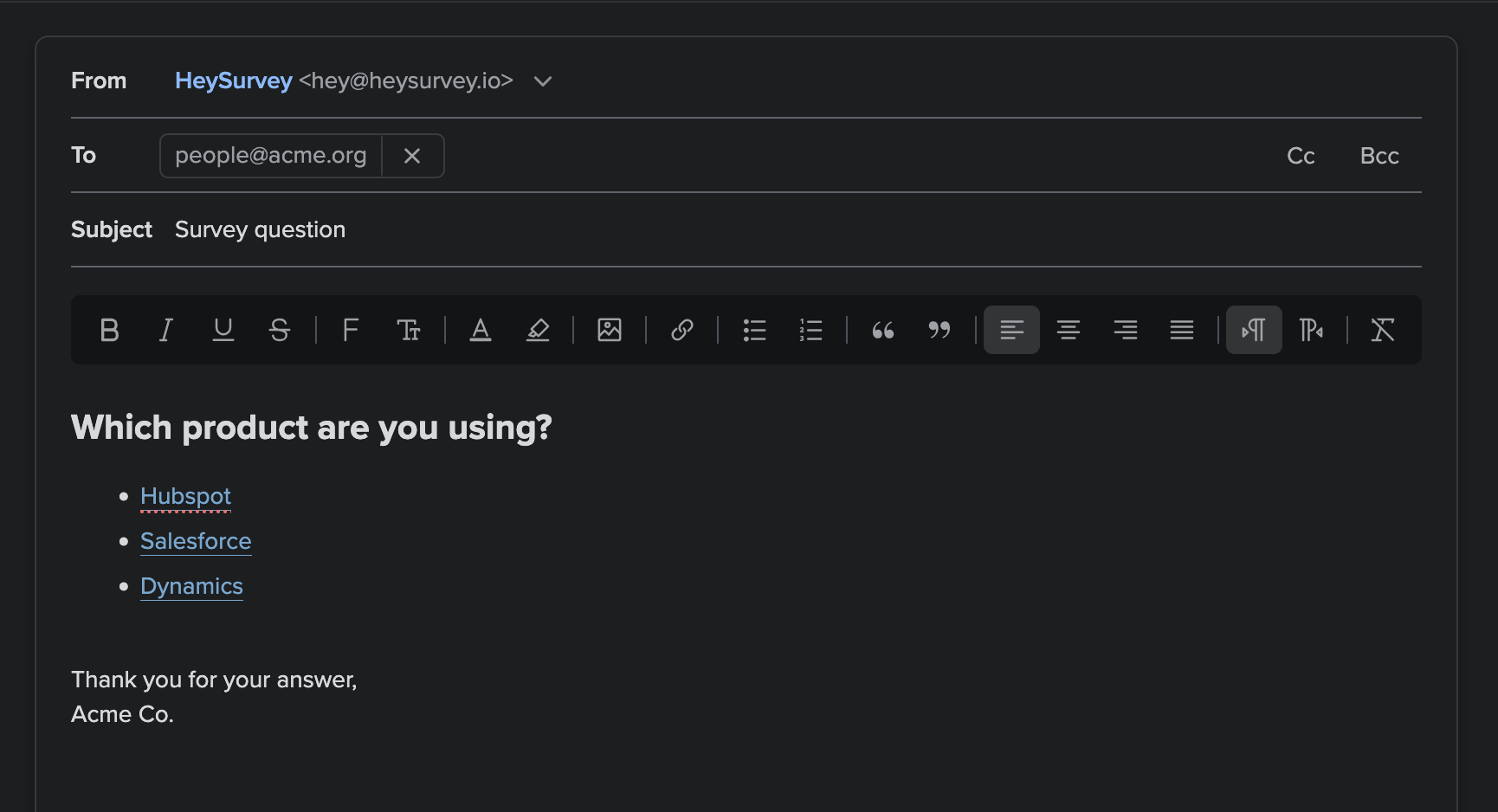
Here’s how to create a demographic survey in HeySurvey:
1. Create a new survey
Open HeySurvey and start with a blank survey or choose a template. If you’re unsure where to begin, click the template button below these instructions to get a head start. Give your survey a clear internal name so you can find it later. You can also adjust basic settings now, such as language, layout, and branding.
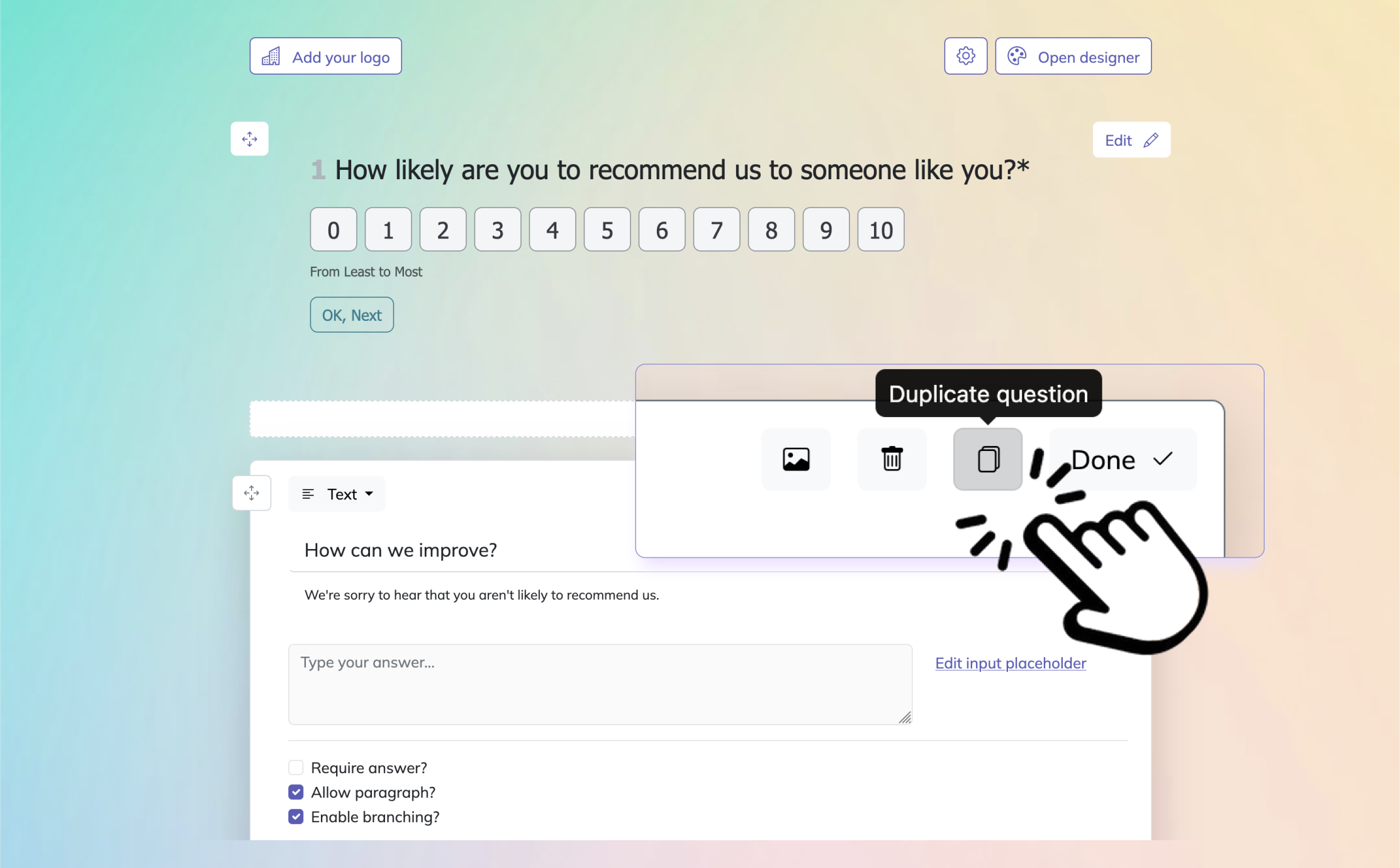
2. Add questions
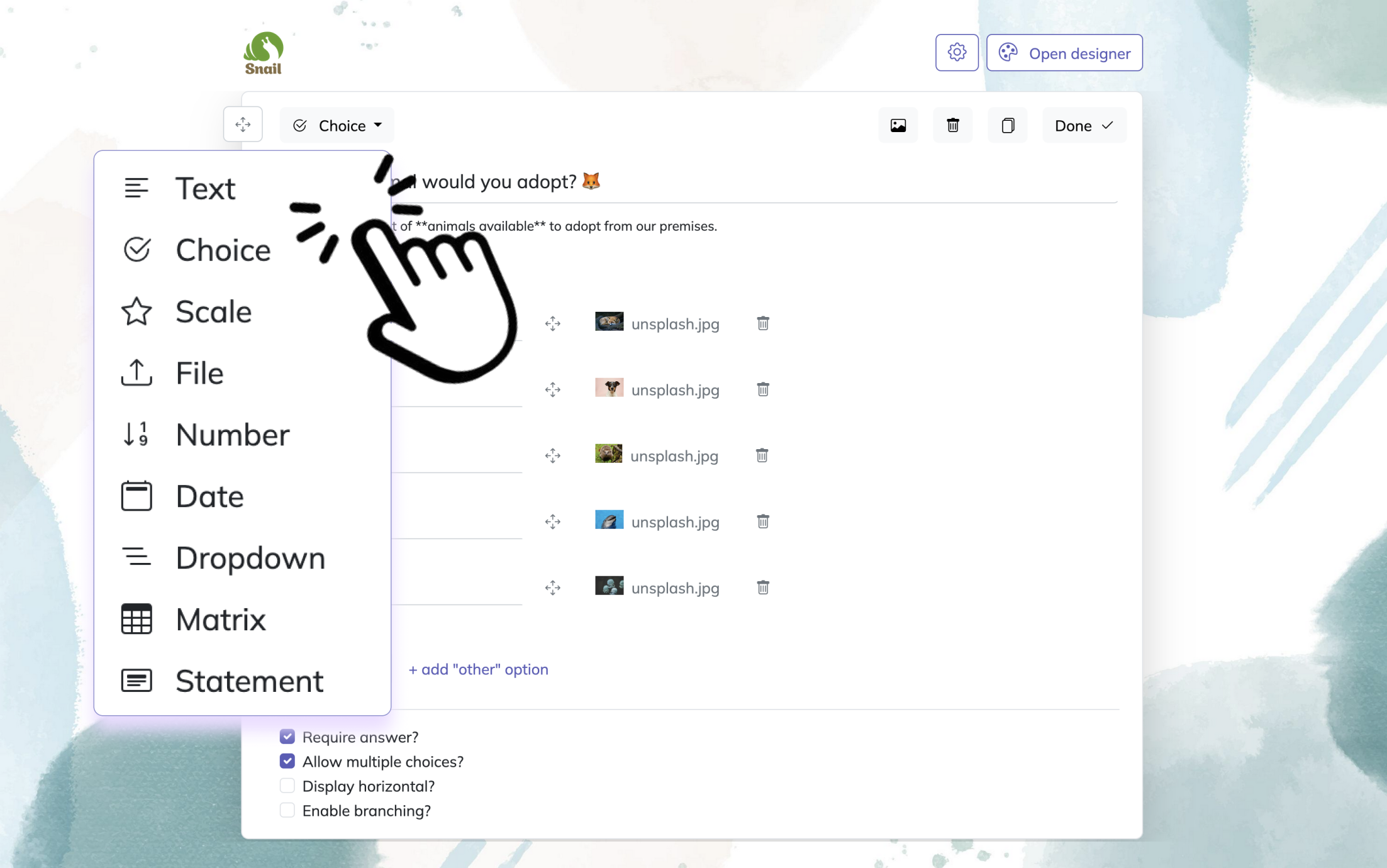
Click Add Question and build your demographic survey with simple question types like Text, Number, Dropdown, Choice, or Date. Common demographic questions include age, gender, country, education level, and employment status. Mark questions as required if you want every response completed. You can also add an Other option when needed and reorder questions by dragging them.
3. Publish survey
Preview your survey to check that everything looks right. When you’re ready, click Publish to create a shareable link with our online survey maker. Send the link to your audience, or embed the survey on your website if needed.
Age Demographic Questions
Age demographic questions are one of the simplest ways to spot meaningful differences in survey responses.
Age is one of the most useful demographic examples for surveys because people’s needs, habits, and decisions often change by life stage. A teen, a new parent, and a retiree usually do not answer the same way, and that is exactly the point.
Why & When to Use
Use age questions when responses may vary by generation, buying behavior, eligibility rules, or everyday needs. They are especially useful in market research, employee feedback, healthcare intake, education studies, and customer surveys where segmentation matters.
Here’s the thing, you do not always need exact age. If privacy matters more or the topic feels sensitive, age ranges are usually the better choice because they feel less intrusive and still give you strong reporting data.
Use exact age when precision really matters, such as detailed analysis, age-based qualification, or trend tracking over time. On top of that, asking for birth year can be a handy middle ground if you want flexibility without making respondents do mental math like it is pop quiz day.
A few practical tips:
Use age ranges for privacy-sensitive audiences.
Make ranges mutually exclusive and fully inclusive, such as 18 to 24, 25 to 34, and 35 to 44.
Choose exact age only when your analysis truly needs it.
Take extra legal and ethical care when surveying minors, especially when consent or eligibility rules apply.
Age questions work best when they are clearly relevant and easy to answer. Plus, like any strong profession survey question or demographic item, they should earn their spot.
Sample questions
What is your gender?
Which of the following best describes your gender identity?
What sex were you assigned at birth?
Do you identify as non-binary, transgender, or another gender identity?
Do you prefer not to say?
Pew Research says asking birth year, rather than exact birth date, is typically less intrusive while still capturing age for representativeness and analysis (source).
Gender and Sex Survey Questions
Respectful wording makes gender and sex questions far more useful and far more answerable.
These are important demographic examples for surveys when gender-related differences may shape experiences, preferences, access, or outcomes. They are especially useful in healthcare, workplace studies, DEI research, education, and customer experience projects.
Why & When to Use
Use these questions only when the answers will help you understand results, improve services, or spot meaningful patterns. Here’s the thing, if the data will just sit in a spreadsheet looking busy, you probably do not need to ask.
When relevant, separate gender identity from sex assigned at birth because they are not always the same thing. That distinction matters most in healthcare, inclusion work, and any research where identity or biological context could affect outcomes.
A few practical tips can keep your profession survey question set and broader survey cleaner and more inclusive:
Offer inclusive response options, not just male and female.
Add a self-describe option where appropriate.
Include “prefer not to say” when the topic may feel sensitive or optional.
Match the wording to your audience and survey purpose.
Ask only if you will use the information in a meaningful way.
Plus, clear and respectful phrasing helps people answer honestly without feeling boxed in. On top of that, a well-written question here does more for data quality than ten fancy charts later.
Sample questions
Which race or races do you identify with?
Are you of Hispanic, Latino, or Spanish origin?
What is your ethnic background?
Which cultural or national background do you most identify with?
What language do you primarily speak at home?
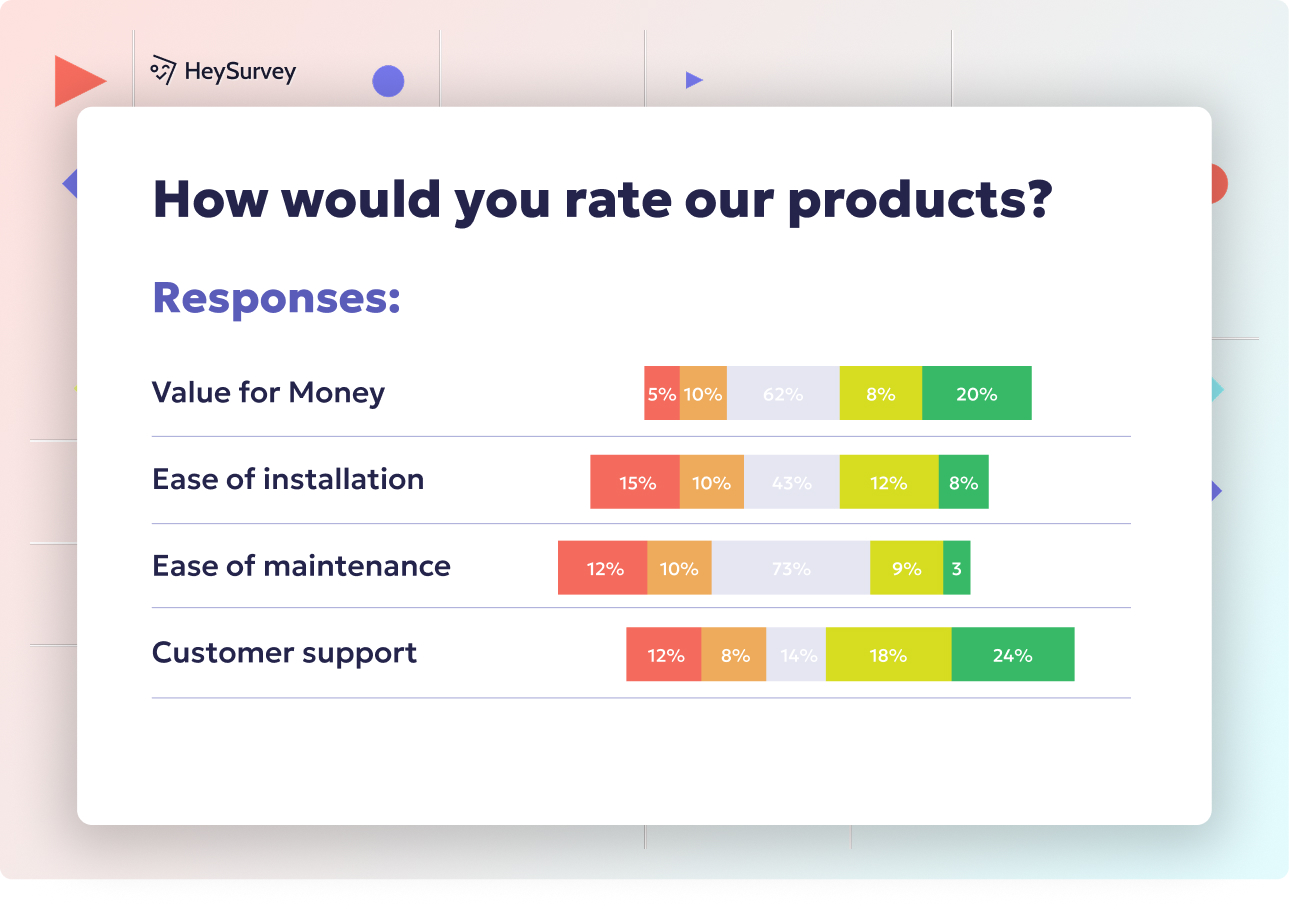
Race, Ethnicity, and Cultural Background Questions
Thoughtful wording turns sensitive questions into useful demographic examples for surveys.
These questions help you understand representation, disparities, inclusion, cultural preferences, and community-specific outcomes. They are especially valuable in healthcare, education, public sector, nonprofit, and DEI work where lived experience can shape outcomes in real ways.
Why & When to Use
Use these questions when you need clearer insight into who you are serving and whether different groups are having different experiences. Here's the thing, if you ask carelessly, you can muddy the data faster than coffee spills on a white shirt.
Race, ethnicity, and cultural background are not always the same, so your survey may need separate questions for each. Plus, a profession survey question set often sits alongside broader demographic examples for surveys, and this is one area where precision really pays off.
Keep your wording practical, respectful, and tailored to your audience:
Allow multiple selections when people may identify with more than one race or background.
Separate race and ethnicity if both are relevant to your research goals.
Localize answer choices based on the country, region, or community you are surveying.
Explain why you are collecting the information and how it will be used.
Use respectful, current terminology instead of outdated labels.
On top of that, transparent use of the data helps people feel more comfortable answering honestly. When people trust the question, your results usually get smarter too.
Sample questions
What is the highest level of education you have completed?
Are you currently enrolled in school, college, or university?
What field of study did you specialize in?
Do you hold any professional certifications or licenses?
Which best describes your current student status?
Census research found combined race/ethnicity questions with multiple detailed checkboxes improve response quality and reduce missing data in demographic surveys (source)
Education Level Questions
Education questions help you connect answers to knowledge, training, and real-world decision patterns.
These are strong demographic examples for surveys when education, qualifications, or learning background may shape how someone understands a topic. They are especially useful in employment studies, market research, training evaluation, and social research where a profession survey question might not tell you the full story on its own.
Why & When to Use
Use education level questions when you want to interpret awareness, confidence, preferences, or decision-making with more context. Here's the thing, two people can give the same answer for very different reasons, and education background often explains the plot twist.
In many surveys, education level is more helpful than asking several overlapping qualification questions. Plus, if specialized knowledge matters, adding one field-of-study or profession survey question can give you just enough extra detail without turning your survey into a college application.
Keep this section practical and easy to answer:
Use standardized education categories so responses are easier to compare and analyze.
Ask about field of study only when subject-matter background could affect results.
Include certifications or licenses if professional training matters to the survey topic.
Avoid long, overly detailed answer lists that confuse people or slow completion.
Choose one clear education question first, since it often covers more ground than multiple overlapping qualification questions.
Sample questions
What is your current employment status?
What is your profession?
Which industry do you work in?
What is your job title or role?
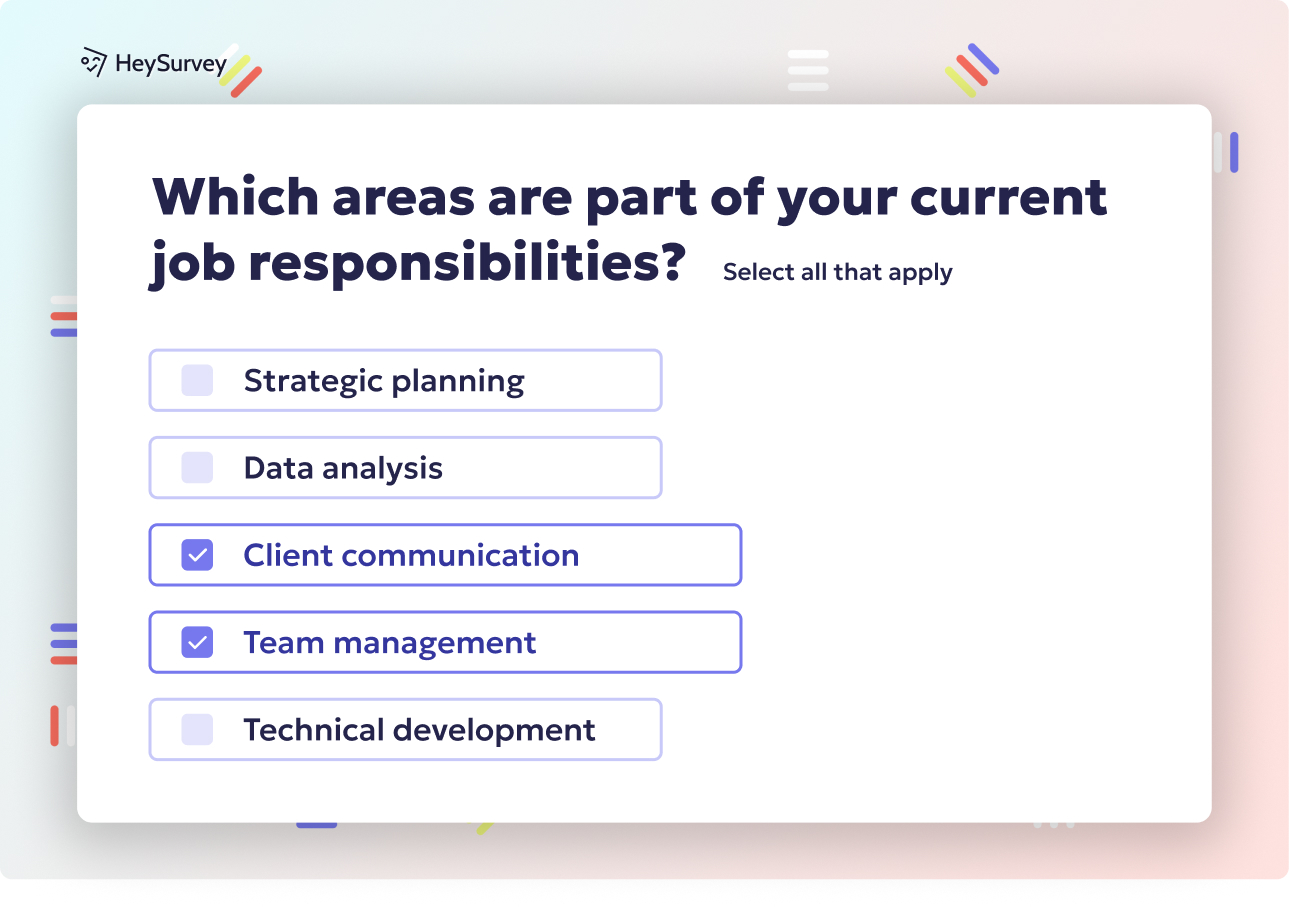
Are you self-employed, employed full-time, employed part-time, unemployed, retired, or a student?
Employment, Profession, and Occupation Questions
Work-related questions reveal how people’s daily roles shape what they need, buy, and believe.
These are some of the most useful demographic examples for surveys when you want to spot patterns tied to income source, work environment, expertise, or routine behavior. Plus, if you are trying to write a solid profession survey question, this is the section where it belongs, front and center.
Why & When to Use
Use employment questions when work background could influence opinions, pain points, or purchasing decisions. They are especially helpful in B2B surveys, workforce studies, customer persona research, and economic research where job context is not just helpful, it is the whole sandwich.
Here’s the thing, these terms are related, but they are not identical:
Profession usually means a trained field, like nurse, accountant, or engineer.
Occupation is broader and covers the kind of work a person does.
Industry refers to the sector, like healthcare, retail, or construction.
Job title means the specific role, such as Store Manager or UX Designer.
If analysis speed matters, use broad answer categories instead of fully open-ended text fields.
On top of that, employment status alone is often enough when you only need a quick segmentation layer.
This is also one of the best places to add demographic examples for surveys tied to work, especially if a profession survey question helps explain behavior better than age or education alone.
Sample questions
What is your annual household income range?
How many people live in your household?
What is your current marital status?
Do you have children or dependents living with you?
Which best describes your housing situation?
Income, Household, and Marital Status Questions
These demographic examples for surveys help you connect life setup with real-world choices.
When spending power, financial access, caregiving responsibilities, or life stage could shape answers, this group matters a lot. Plus, if you want sharper segmentation without turning your survey into a tax form, this is a smart place to start.
A good profession survey question tells you about work, but income, household, and marital details show what life looks like after the laptop closes. That context is especially useful in consumer research, housing, financial services, healthcare access, and social impact surveys.
Why & When to Use
Use these questions selectively because they are more personal than many other demographic examples for surveys. Here’s the thing, people are much more likely to answer honestly when the reason feels relevant and the wording feels respectful.
A few practical rules make this section work better:
Use income ranges instead of asking for exact amounts.
Place sensitive questions near the end of the survey.
Include a "prefer not to say" option for highly personal items.
Ask about household size because it can be more actionable than marital status when you need to understand shared costs, caregiving, or buying decisions.
Use housing situation to add context around stability, access, or lifestyle.
On top of that, marital status can still help when relationship structure directly affects the topic, but it is not always the main character.
Sample questions
Does each demographic question in this survey support a specific analysis goal?
Are the response options clear, respectful, and easy to answer?
Should this question use one answer, multiple answers, or a "prefer not to say" option?
Would grouped ranges work better than asking for exact personal details?
Are the demographic questions placed later in the survey to improve respondent comfort?
Best Practices for Writing Survey Demographic Questions
Great demographic examples for surveys are useful, respectful, and never nosy just for sport.
Here’s the thing, strong demographic examples for surveys do not start with "What can we ask?" but with "What do we truly need?" If a profession survey question or any other item will not help your analysis, reporting, or decisions, it probably does not belong.
Why & When to Use
Use these best practices any time you are writing, reviewing, or cleaning up demographic examples for surveys. Plus, they matter even more when trust, anonymity, and completion rates are on the line, which is basically always.
Keep your approach simple and intentional:
Tie every question to a clear analysis goal.
Use neutral, plain language that feels respectful.
Keep answer choices mutually exclusive when only one response should be selected.
Allow multiple selections when identity is not singular.
Include "prefer not to say" when the topic is sensitive.
Place more sensitive items later so you do not scare people off in minute one.
Test wording for clarity, inclusivity, and regional relevance.
Just as important, avoid common mistakes:
Do not collect data just because it is standard.
Do not ask for exact details when ranges are enough.
Do not mix distinct concepts unless there is a clear reason.
Do not use inconsistent response formats across sections.
Do not forget to explain data use, privacy, or anonymity expectations.
On top of that, balance inclusivity with clean reporting so your survey is welcoming and your spreadsheet does not cry later.
Sample questions
Which demographic examples for surveys are truly needed for analysis, and which are just nice to know?
Is this profession survey question specific enough to group answers in a useful way?
Have you included inclusive response options without making the list confusing?
Are any demographic questions mandatory when they could be optional instead?
Are you collecting sensitive details that your team will not actually use?
Common Mistakes to Avoid With Demographic Questions
Smart demographic examples for surveys collect what you need, not every detail under the sun.
Here’s the thing, weak demographic design does not just look clunky on paper. It can quietly hurt completion rates, reduce trust, and leave you with messy data that is harder to segment and even harder to believe.
Why & When to Use
Use this checklist when reviewing any demographic examples for surveys, especially if you are adding a profession survey question or other personal items. Plus, it helps you catch problems before respondents start abandoning the form like it just asked for their blood type and favorite tax document.
Common mistakes usually look like this:
Asking demographics that are interesting but not tied to any reporting goal.
Using vague categories that make answers hard to compare.
Skipping inclusive options, which can force inaccurate responses.
Making every demographic item required, even when it is sensitive.
Collecting more personal data than the survey actually needs.
A simple test is to separate "nice to know" from "need to know." If a question will not shape analysis, segmentation, or action, cut it.
On top of that, review each item from two angles:
Respondent view: Is this clear, respectful, and easy to answer?
Analyst view: Will these answers be usable in reporting?
Better question design leads to stronger insights, cleaner segmentation, and data you can actually trust.
Sample questions
How can you use demographic examples for surveys to find real differences between audience groups?
What should you compare after adding a profession survey question to your results?
How do demographic insights help improve messaging, services, or outreach?
Which subgroup differences matter enough to change a business decision?
How can you turn survey demographics into smarter next-step research?
How to Turn Survey Demographic Insights Into Action
Good demographic examples for surveys should lead to decisions, not just decorative charts.
Here’s the thing, collecting demographic data is only useful if you actually do something with it. A profession survey question, age range, education item, or household question should help you spot patterns you can act on, not just fill a report with percentages that sit there looking busy.
Why & When to Use
Use demographic results when you want to segment audiences, compare subgroup responses, and understand who is having a better or worse experience. Plus, this is where demographic examples for surveys stop being background details and start becoming strategy.
Look at outcomes across groups such as:
Age
Profession
Education level
Household context
Then ask a better question than "What percent picked each answer?" Try asking where the meaningful differences are.
For example, you might find that younger respondents prefer one message, parents need different support, or one profession survey question reveals a group with lower satisfaction. That gives you a reason to refine messaging, improve services, prioritize underserved groups, or plan follow-up research.
On top of that, do not stop at description alone.
Compare subgroup results side by side.
Look for gaps big enough to influence action.
Use findings to guide campaigns, product changes, or support resources.
The practical takeaway is simple: ask only the demographic questions that support decisions, then use those answers to make your decisions smarter.
Related Surveys
29 Social Media Survey Questions
Explore 25 social media survey questions with practical sample prompts to help gather insights on...
31 Job Satisfaction Survey Questions
Explore **25 job satisfaction survey questions** with sample prompts to improve employee feedback...
29 Quantitative Survey Questions Guide
Explore 25 quantitative survey questions with sample questions, examples, and tips to build effec...