31 Student Satisfaction Survey Questions
Explore 25 student satisfaction survey questions with examples, tips, and templates to improve feedback, engagement, and results.
Student satisfaction surveys are simple tools that help you learn what students really think about teaching, support, campus life, and the full learning experience.
The right questions reveal the real story.
When you use smart student satisfaction survey questions, you can spot what is working, fix what is not, and make better decisions for schools, colleges, universities, and training programs. Plus, if you are looking for practical education survey questions examples, you are in exactly the right place, because guessing is brave, but data is better, especially when you use the right online survey tool.
Sample questions
How satisfied are you with the overall quality of instruction in your courses?
Do your classes help you understand the subject matter clearly?
How manageable is your coursework and assignment load?
How often do class activities keep you engaged in learning?
To what extent do your courses meet your academic expectations?
Academic Experience Survey Questions
This is where the learning experience gets real.
Why & When to Use
Academic experience surveys help you measure how students feel about course content, workload, classroom engagement, and learning outcomes, which makes them some of the most useful education survey questions examples you can use.
Here’s the thing, if you want to understand student satisfaction, start with the core educational experience first because it usually has the biggest impact on how students feel about a school or program.
These surveys work especially well at key checkpoints, including mid-term, end-of-term, after major curriculum changes, or during program quality reviews.
Plus, they help you catch issues while there is still time to improve the student experience, instead of discovering problems after the semester has already done its dramatic little finale.
When building this type of survey, keep your wording simple, clear, and specific so students know exactly what each question is asking.
It also helps to combine question types so you get both measurable data and useful detail.
Use rating-scale questions to track patterns and compare results over time.
Add one or two open-ended questions to uncover context behind the scores.
Review results by course, department, or grade level to spot strengths and trouble areas faster.
On top of that, strong academic experience surveys give you practical education survey questions examples that can guide better teaching, smarter planning, and more confident decisions.
Sample questions
How clearly do your instructors explain course material?
How approachable are your teachers or professors when you need help?
Do instructors provide helpful and timely feedback on assignments?
How fair and consistent are instructors in grading student work?
How well do instructors encourage participation and questions in class?
Research shows student satisfaction is strongly linked to perceived fairness in grading procedures and instructor–student interactions, supporting survey questions on both areas (source).
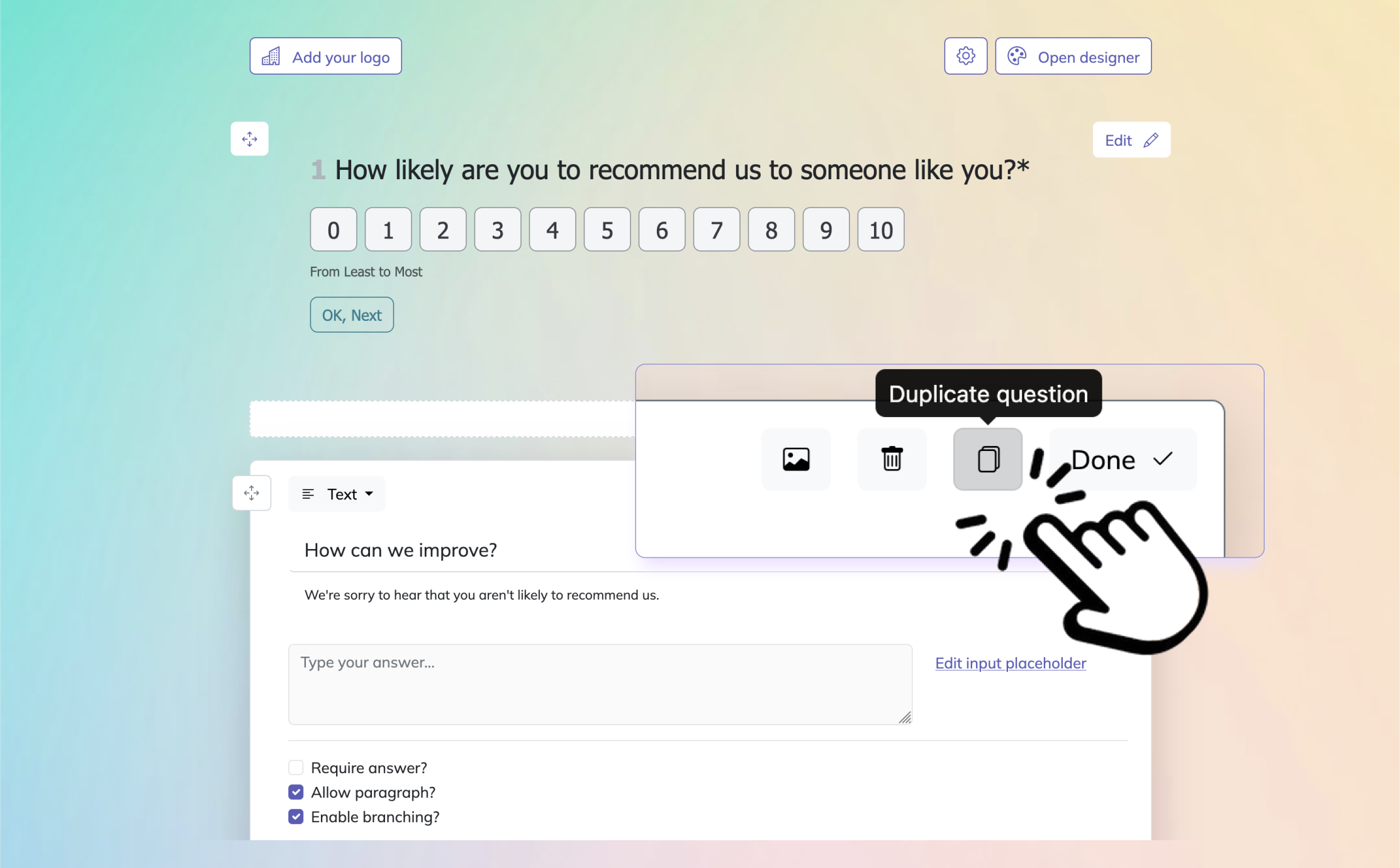
To create a student satisfaction survey in HeySurvey, start by opening a template from the button below or choosing a new survey from the online survey tool editor.
1. Create a new survey
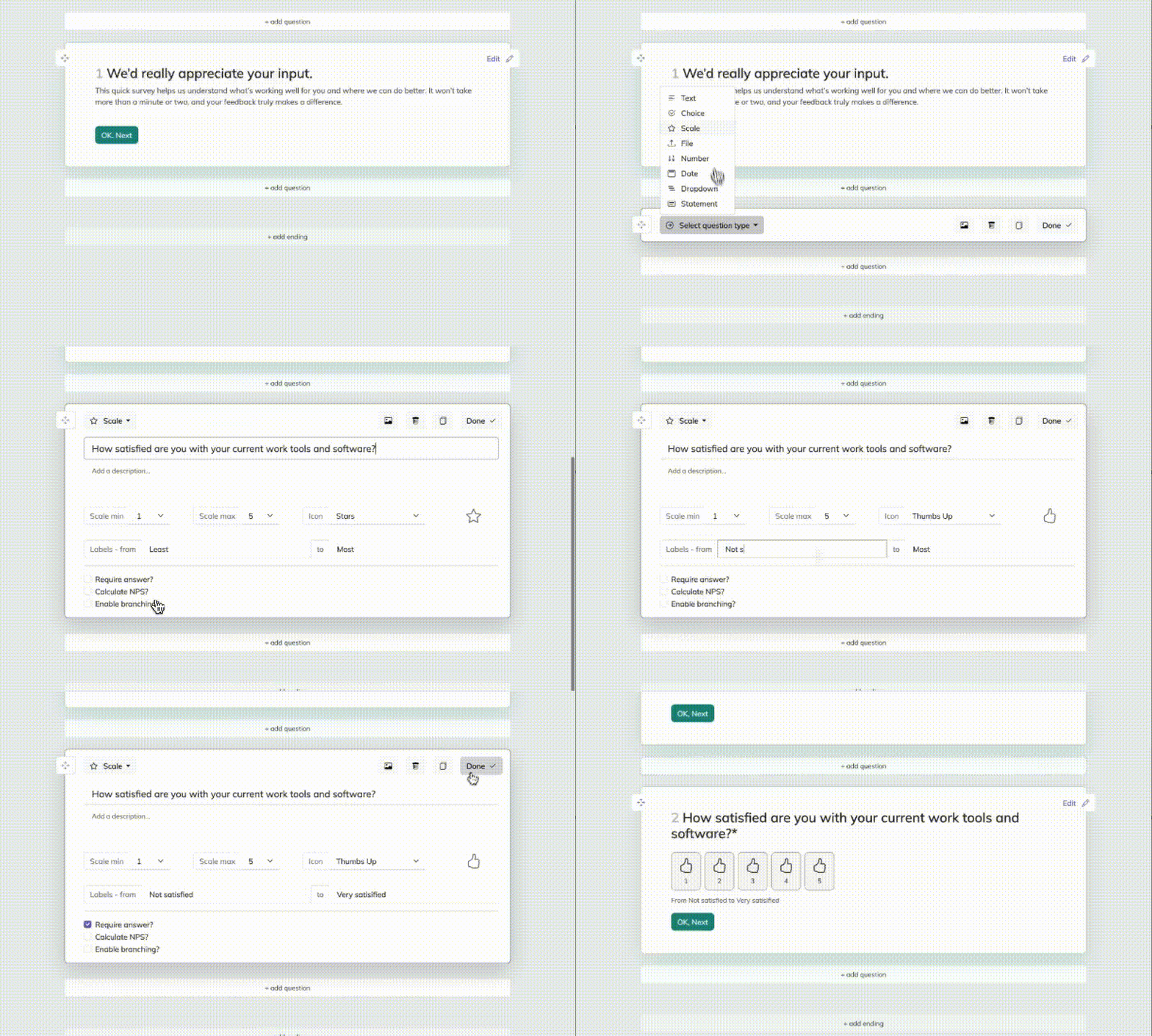
Select a pre-built template for student feedback, or start from an empty sheet if you want full control. Give your survey a clear name, then open the survey settings to add your logo, choose the layout, and set up a progress bar if needed.
2. Add questions
Click Add Question and include the questions that matter most to students. Use Scale questions for ratings like course quality, Choice questions for multiple-choice feedback, and Text questions for open comments. Mark important questions as required and reorder them so the survey feels smooth and easy to complete.
3. Publish survey
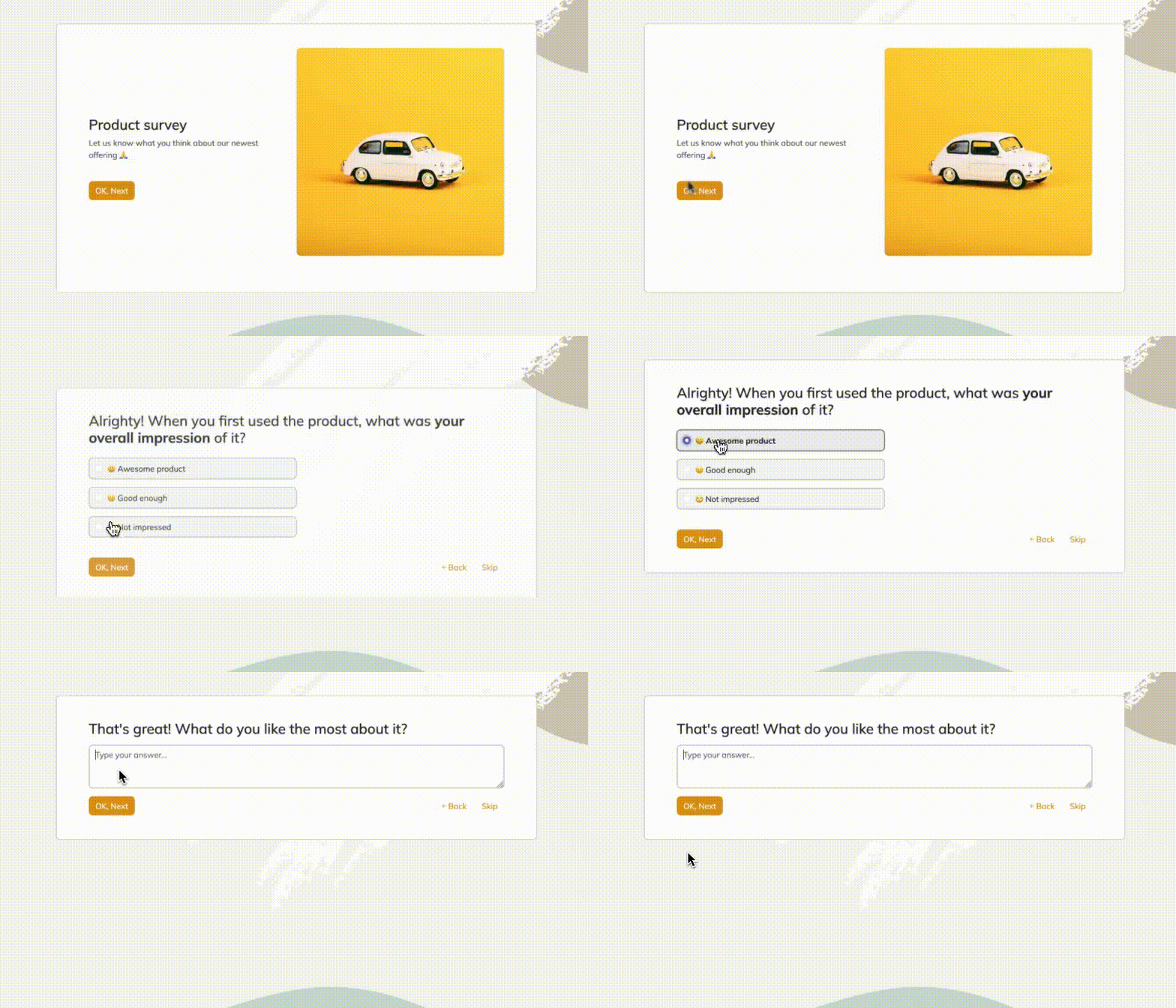
Preview your survey to check how it looks on desktop and mobile. When everything is ready, click Publish to get your shareable link. You can now send it to students by email, post it in a portal, or embed it on your website.
Teaching and Faculty Feedback Survey Questions
Great teaching can lift a whole learning experience.
Why & When to Use
This category focuses on instructor effectiveness, communication, accessibility, and fairness, which makes it one of the most practical sets of education survey questions examples for schools, colleges, and training programs.
Here’s the thing, students often connect their entire experience to the people teaching them, so strong teacher-student interaction can have a big effect on both satisfaction and retention.
You can use these education survey questions examples during course evaluations, faculty reviews, or after instructional training initiatives when you want to see what is improving and what still needs work.
Plus, this feedback is most useful when questions stay focused on what instructors actually do, not just how much students liked the class vibe.
To get better data, keep wording neutral so students respond to the experience instead of being nudged toward a positive or negative answer.
Anonymous responses also matter because people are usually more honest when they do not feel like their grade is sitting in the corner listening.
On top of that, separate instructor behavior from course design so your results are easier to act on.
Ask about teaching clarity, feedback, fairness, and availability in distinct questions.
Avoid loaded wording that makes one answer sound more correct.
Keep surveys anonymous when possible to encourage candid faculty feedback.
Split questions about the instructor from questions about curriculum, pacing, or materials.
Sample questions
How satisfied are you with the academic advising available to you?
How helpful are tutoring or learning support services when you need them?
How easy is it to access counseling or wellbeing support?
How satisfied are you with career guidance or internship support?
How responsive are student services when you ask for help?
Validated research shows students’ satisfaction with academic advising is significantly driven by advisors’ empathy and quality of information resources (ScienceDirect).
Student Support Services Survey Questions
Strong support services can quietly make student success much easier.
Why & When to Use
This category measures how students feel about academic advising, tutoring, counseling, career support, disability services, and everyday administrative help, which makes it a valuable part of any set of education survey questions examples.
Here’s the thing, support services often shape the student experience far beyond the classroom, even when they are not the first thing people think to mention.
You can use these education survey questions examples each term, during annual reviews, or when service usage is low and you want to understand what is getting in the way.
Plus, low usage does not always mean students do not need help. Sometimes it just means the support is hiding a little too well.
When writing questions, make sure you ask about awareness as well as quality, because students cannot rate a service they did not know existed.
On top of that, include questions about ease of access and wait times so you can spot practical friction before it turns into frustration.
This feedback connects closely to retention and student success, since fast and useful support can help students stay enrolled, solve problems sooner, and feel less lost in the shuffle.
Ask whether students know these services exist, not just whether they liked them.
Include questions about access, wait times, and responsiveness.
Review results alongside retention, persistence, and student success data.
Cover multiple support areas separately so weak spots are easier to find.
Sample questions
How safe do you feel on campus or in your learning environment?
How satisfied are you with campus facilities such as libraries, study areas, or common spaces?
Do you feel welcomed and included in the student community?
How satisfied are you with student clubs, activities, or events?
To what extent does your school support a positive and respectful campus culture?
Campus Environment and Student Life Survey Questions
A welcoming campus experience can boost learning just as much as a great class can.
Why & When to Use
This category looks at campus culture, safety, inclusivity, facilities, student clubs, events, and overall sense of belonging, making it an important part of strong education survey questions examples.
Here’s the thing, students do not experience school only through lectures and assignments.
They also experience it through the spaces they use, the people around them, and whether they feel like they belong there in the first place.
You can use these education survey questions examples during semester reviews, annual student experience surveys, or after updates to campus policies, activities, or shared spaces.
Plus, satisfaction is often shaped by both the academic environment and the social one, so this section helps you see the full picture instead of just the classroom slice.
It is especially useful to ask about belonging and inclusion directly, because students may enjoy classes while still feeling disconnected from the wider community.
For online learners, adjust wording so questions reflect virtual spaces, digital events, and connection with peers, because community can live on screens too, even if pajamas are part of the culture.
Results from this area can help schools improve:
Campus facilities and shared spaces
Student engagement and event planning
Inclusion and belonging initiatives
Safety communication and community standards
On top of that, these insights can show where student life feels energizing and where it needs a little more spark.
Sample questions
How easy is it to use your school’s online learning platform?
How reliable are the digital tools and systems used for your courses?
How satisfied are you with the quality of online class materials and resources?
How well do online classes support interaction with instructors and classmates?
When technical problems occur, how satisfied are you with the support you receive?
Research shows supportive campus environments increase student satisfaction both directly and indirectly by strengthening students’ sense of belonging (source).
Online Learning and Technology Survey Questions
Great digital learning should feel smooth, not like a scavenger hunt for the right button.
Why & When to Use
This category is especially useful for online, hybrid, and technology-supported learning, which makes it a smart addition to your collection of education survey questions examples.
Here’s the thing, even strong teaching can get overshadowed fast when students cannot log in, find materials, join discussions, or get help when tech decides to be dramatic.
You can use these education survey questions examples after virtual terms, LMS changes, digital tool rollouts, or when remote learning programs expand.
Plus, this section helps you separate teaching quality from technology problems, which is a big deal when course feedback starts sounding messy.
If a student is unhappy, you need to know whether the issue came from the instructor, the platform, or the support process.
That distinction makes your survey results far more useful, especially in digital learning settings where one glitch can steal the spotlight.
Make sure your survey includes both usability and support-focused questions, so you can spot problems from more than one angle.
Results from this area can help schools improve:
LMS navigation and ease of use
Reliability of digital tools and course systems
Quality of online materials and learning resources
Interaction in online classes
Technical support speed and effectiveness
On top of that, these education survey questions examples can reveal whether your tech stack is helping learning or quietly sabotaging it.
Sample questions
Overall, how satisfied are you with your experience at this institution?
How likely are you to recommend this school, college, or university to other students?
To what extent has your experience met your expectations?
How supported do you feel in reaching your educational goals here?
If you could choose again, would you still enroll at this institution?
Overall Student Satisfaction Survey Questions
These questions give you the big-picture mood check on the full student experience.
Why & When to Use
This section is one of the most useful parts of any collection of education survey questions examples because it captures broad student sentiment in a simple, trackable way.
Instead of zooming in on one class, service, or campus feature, you get a summary view of how students feel about the institution as a whole.
That makes these education survey questions examples ideal for annual institutional surveys, program reviews, accreditation preparation, and strategic planning.
Here’s the thing, broad satisfaction questions are great for benchmarking, but they should not work alone like a solo act with too much confidence.
They work best as summary indicators that sit alongside more detailed category-specific surveys, so you can connect overall sentiment to what is actually driving it.
Use this section to track trends over time and spot whether student experience is improving, slipping, or staying stuck in neutral.
Plus, broad questions become much more useful when you follow them with comment boxes that let students explain their ratings in their own words.
You should also cross-reference overall satisfaction with results from academics, student support, and campus life to find the real story behind the score.
These questions can help you measure:
overall student happiness and loyalty
expectation versus reality
sense of support and belonging
long-term experience trends
institution-wide strengths and weak spots
Sample questions
Is each question focused on one clear topic only?
Are the response options consistent and easy for students to understand?
Does the survey include a mix of scaled and open-ended questions?
Is the survey short enough to complete without fatigue?
Are you asking questions you are actually prepared to act on?
Best Practices for Writing and Using Student Satisfaction Surveys
Good survey design turns feedback into something you can actually use.
Why & When to Use
This part of your guide matters because even strong education survey questions examples can flop if the survey is badly timed, too long, or awkwardly structured.
Here’s the thing, a smart survey is not just about what you ask, but how, when, and why you ask it.
Use these best practices before you send anything out, so you collect honest, useful, and actionable feedback instead of shallow answers that just sit in a spreadsheet looking important.
Plus, well-built student satisfaction survey questions make it easier for students to respond quickly and truthfully without needing detective skills to decode what you meant.
A simple way to frame this section is with clear Dos and Don’ts.
Do:
Keep questions short, specific, and neutral.
Group questions by topic so the survey feels easier to complete.
Protect anonymity when possible.
Survey students at relevant moments in their journey.
Test the survey before full distribution.
Don’t:
Ask leading or emotionally loaded questions.
Make the survey too long.
Combine multiple ideas into one question.
Collect feedback without reviewing it and responding to it.
Ignore differences between in-person and online student experiences.
On top of that, only ask what you are prepared to act on, unless your long-term strategy is collecting dust politely.
Sample questions
Which survey results point to the biggest barriers to student satisfaction?
What recurring themes appear in open-ended responses?
Which issues can be improved quickly, and which require long-term planning?
How will you share survey findings with students, staff, and leadership?
When will you run the next survey to measure improvement?
How to Turn Student Survey Feedback Into Action
The best feedback only counts if you actually do something with it.
Why & When to Use
Collecting responses is only step one, and that is where many teams accidentally stop.
Here’s the thing, the real value of education survey questions examples shows up when you analyze patterns, choose priorities, communicate clearly, and follow up so students can see what changed.
This section works best as your action-focused wrap-up because it helps you move from insight to improvement without letting useful feedback disappear into a folder named “final-final-v2.”
To make survey feedback useful, focus on a simple action process:
Prioritize issues by impact and frequency.
Separate quick wins from long-term fixes.
Assign an owner to each improvement area.
Set timelines for action and review.
Plan a follow-up survey to measure progress.
Plus, sharing results matters just as much as reviewing them.
A simple “you said, we did” update helps students trust the process and makes future surveys more likely to get thoughtful responses.
On top of that, visible changes are the goal.
The strongest student satisfaction survey questions should lead to better decisions, a stronger student experience, and higher retention because students can clearly recognize that their feedback shaped real improvements.
Turning Student Satisfaction Survey Results Into Action
Sample questions
Which issues appear most often across survey responses?
Which satisfaction gaps have the biggest impact on student success or retention?
What quick wins can be addressed immediately?
Which teams or departments should own each improvement area?
How will students be updated on the changes made from their feedback?
Feedback only matters when you turn it into visible improvement.
Why & When to Use
Use this section when your survey is done and you are ready to move from collecting opinions to making decisions that students can actually feel.
Here’s the thing: a student satisfaction survey is not the finish line.
It is the starting point for smarter priorities, clearer ownership, and better student experiences.
Plus, this is where your data earns its keep by helping you focus on what matters most, instead of chasing every squeaky wheel like a shopping cart with one bad tire.
Start by looking for issues that show up often and affect key outcomes like success, retention, or belonging.
Then sort findings by what is both high-impact and high-frequency, because those are usually your best first moves.
Fix quick wins fast when the solution is simple, visible, and low effort.
Assign each improvement area to a clear team or department.
Set review timelines so progress does not drift into the land of "someday."
Measure whether satisfaction improves after changes are made.
Share a "you said, we did" summary so students can see their feedback led somewhere real.
On top of that, close the loop regularly.
When students see action, trust grows, participation improves, and future survey results become far more useful.
Related Surveys
29 Social Media Survey Questions
Explore 25 social media survey questions with practical sample prompts to help gather insights on...
31 Job Satisfaction Survey Questions
Explore **25 job satisfaction survey questions** with sample prompts to improve employee feedback...
29 Quantitative Survey Questions Guide
Explore 25 quantitative survey questions with sample questions, examples, and tips to build effec...