29 Retrospective Survey Questions
Explore 25 retrospective survey questions with sample questions, tips, and examples to improve feedback, reflection, and data insights.
Retrospective survey questions are the prompts you use after a project, sprint, meeting, training, or event to learn what worked, what flopped, and what to improve next time.
Better questions, better team improvements
In this guide, you’ll find practical help choosing the right survey format, asking sharper questions, and turning feedback into real progress instead of a document nobody opens again. Plus, if you’re looking for retrospective survey examples, post-project survey questions, sprint retrospective questions, or team feedback surveys, you’re in the right place. If you need an online survey tool, you’re in the right place.
What Are Retrospective Survey Questions?
Sample questions
What helped you do your best work during this project?
What slowed you down or made the work harder than it needed to be?
Which part of the process should we repeat next time?
What is one change that would make the biggest difference in the next round?
Did you feel comfortable raising concerns during the work? Why or why not?
Retrospective questions help you learn, not just rate.
A retrospective survey is not the same thing as a general satisfaction survey or a performance review.
Satisfaction surveys ask whether people liked the experience, and performance reviews focus on how an individual performed.
Retrospective survey questions are different because they help you look back at a specific piece of work and figure out what actually happened.
Here’s the thing, the best questions do more than collect opinions.
They uncover patterns, blockers, wins, and the next opportunities worth acting on before the same problems show up again like uninvited party guests.
Why & When to Use
Use retrospective surveys when you want useful lessons after a sprint, project, workshop, training, team process, or customer-facing workflow.
They work best when you keep a few basics in place:
Keep the survey short enough that people will actually finish it.
Mix quantitative questions with open-ended ones so you get both signals and stories.
Match the question style to the setting, whether that is a sprint, project, workshop, team health check, or service process.
Create psychological safety so people feel safe being honest, not polished.
Plus, when people trust the process, you get feedback you can actually use.
Research shows team psychological safety predicts learning behavior, making retrospective questions about speaking up especially valuable for actionable improvement (source)
Create a retrospective survey in HeySurvey
1. Create a new survey
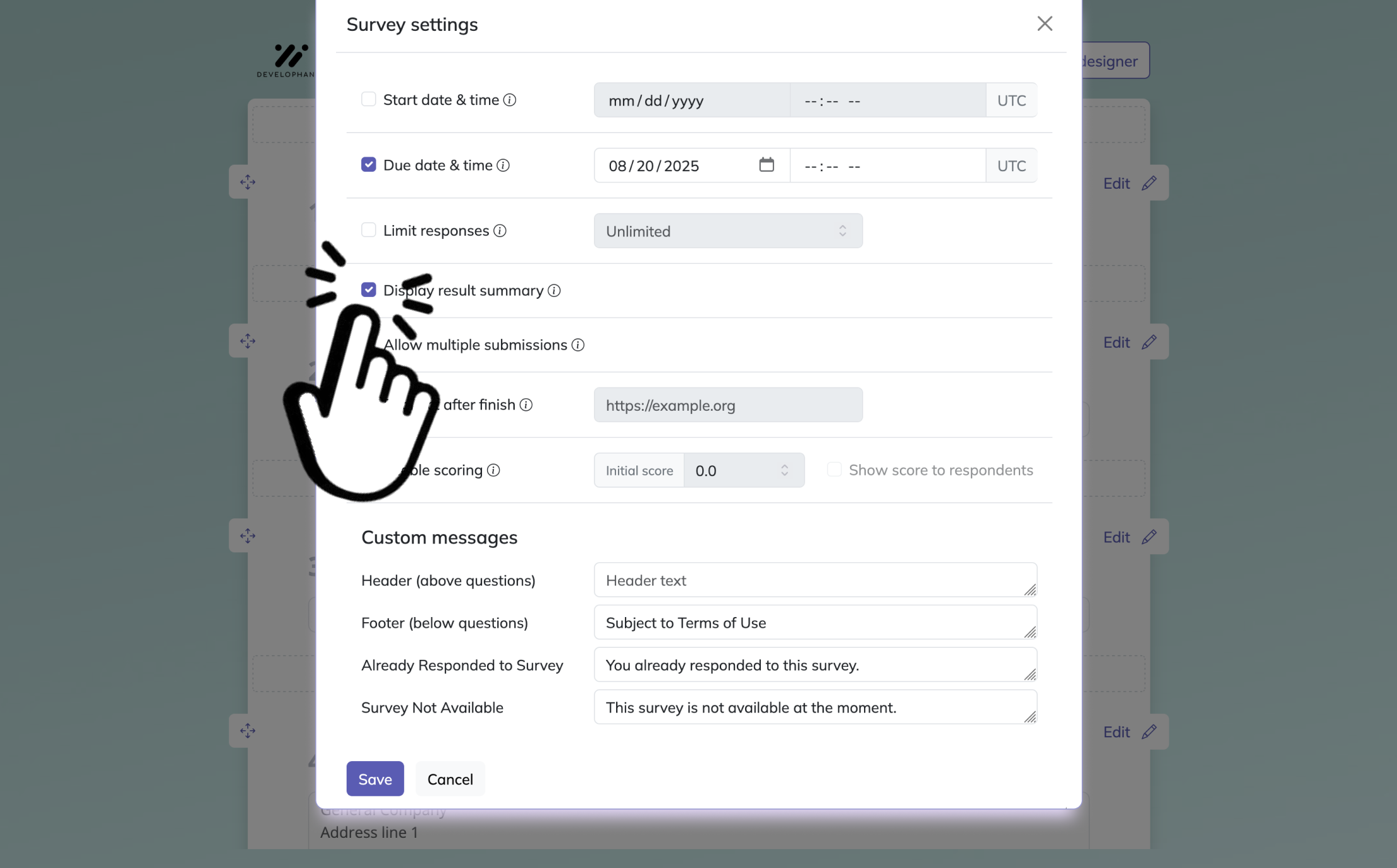
Start by opening a template with the button below, or choose an empty sheet if you want to build from scratch. You can use HeySurvey, an online survey tool, without an account at first, but you’ll need one to publish and collect responses. Give your survey a clear name in the editor so it’s easy to find later.
2. Add questions
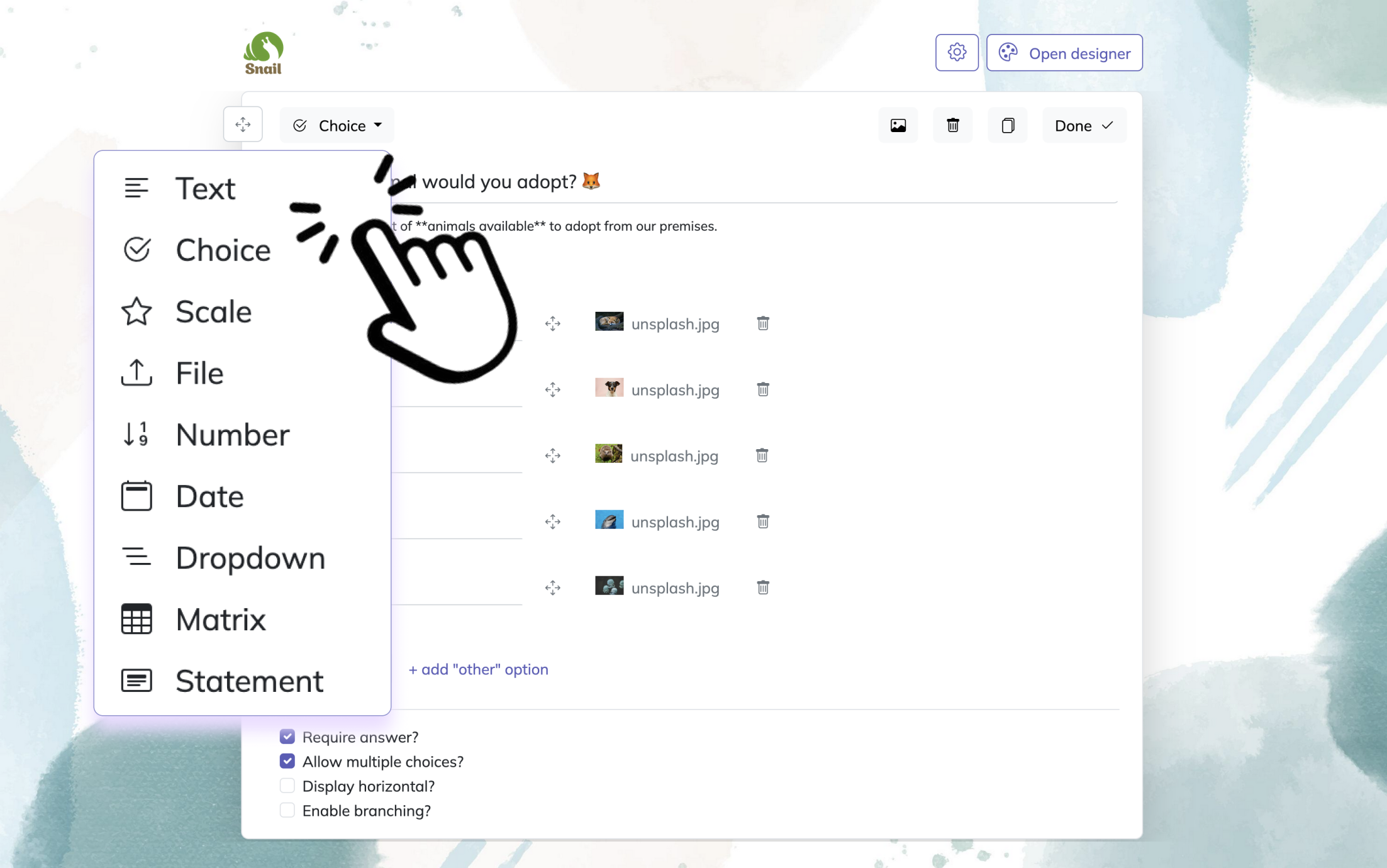
Click Add Question and choose the best format for retrospective questions. Use Choice, Scale, or Text questions to ask respondents to look back on a project, event, or period of time. You can mark questions as required, add descriptions, and use branching if you want follow-up questions based on earlier answers.
3. Publish survey
When your survey is ready, preview it to check the flow and wording. Then click Publish to generate a shareable link. You can send it to respondents, embed it on a website, or share it by email.
Team Retrospective Survey Questions
Sample questions
How effectively did our team work together during this period?
What helped the team perform at its best?
What communication challenges slowed us down?
Where did you feel blocked or unsupported?
What is one change that would most improve team collaboration next time?
Team retrospectives turn vague tension into useful next steps.
When you want to understand how your team is really doing, these questions give you more than surface-level reactions.
They help you spot what is working, where collaboration gets sticky, and what your team needs to do better next time.
Here’s the thing, people do not always say the important stuff out loud in meetings.
A survey gives quieter team members space to be honest without needing to fight for airtime like it is open mic night.
Why & When to Use
Use team retrospective survey questions for recurring check-ins, monthly reviews, department collaboration reviews, and broader team health assessments.
They are especially useful when you want a clearer read on morale, communication quality, collaboration friction, and support needs.
Plus, they work well across different team setups:
Remote teams that need better visibility into communication gaps.
Hybrid teams where misalignment can hide between meetings.
Cross-functional teams that depend on smoother handoffs and clearer ownership.
On top of that, these surveys help surface issues people may not raise live.
They also work especially well before a team retrospective meeting, because the responses give you real themes to discuss instead of awkward silence and random guesswork.
If you want better conversations and smarter follow-up, this is a very solid place to start.
Research on agile teams shows retrospectives improve performance indirectly by strengthening team reflexivity and psychological safety, which support learning and collaboration (source).
Sprint Retrospective Survey Questions
Sample questions
What went well in this sprint that we should repeat?
What slowed down progress or created unnecessary rework?
Were sprint goals realistic and clearly understood?
Which blockers had the biggest impact on delivery?
What one process improvement should we prioritize for the next sprint?
Sprint retrospectives help you fix the process while the details are still fresh.
If your team works in Agile sprints, short delivery cycles, or other fast-moving project windows, these questions help you learn quickly instead of repeating the same mess in the next round.
They are especially useful for spotting workflow bottlenecks, planning misses, scope creep, and small process issues that somehow grow legs by Friday.
Here’s the thing, a good sprint survey should stay locked on the sprint itself.
You want feedback tied to what actually happened in that timeframe, not a grand review of everything since the dawn of Jira.
Why & When to Use
Use sprint retrospective survey questions right after a sprint ends, while the work, blockers, and handoff headaches are still easy to remember.
They work best when you want to improve both delivery outcomes and the team experience, because shipping faster is great, but not if everyone feels like a toasted bagel.
Keep the survey focused and practical:
Ask about the specific sprint, not general team history.
Balance results with experience, including clarity, workload, and collaboration.
Encourage details about blockers, dependencies, rework, and handoff issues.
Plus, these questions make it easier to separate one-off problems from patterns that need real process changes.
On top of that, they give you clearer input for the next sprint planning session, which is where better habits actually start paying off.
Project Retrospective Survey Questions
Sample questions
How clear were the project goals, scope, and success criteria?
What decisions or actions contributed most to project success?
What risks or issues should have been addressed earlier?
How effective was communication among stakeholders throughout the project?
What should we do differently in the next similar project?
Project retrospectives turn finished work into smarter future work.
When a project, launch, implementation, or major milestone wraps up, this is your chance to look back before everyone runs off to the next shiny priority.
These questions help you evaluate the full picture, including planning, execution, stakeholder alignment, resourcing, and outcomes, without turning the review into a dramatic courtroom scene.
Here’s the thing, project retrospectives work best when the experience is still fresh but the pressure is finally off.
That makes it easier for you to collect honest feedback about what worked, what slipped, and what should never be repeated with a straight face.
Why & When to Use
Use project retrospective survey questions at the end of major work, especially when you want to capture lessons learned before the team shifts focus.
They are useful across marketing, product, operations, IT, and client service projects, so you do not need a special project species to use them.
Keep the review balanced with both strategic and operational questions:
Ask about planning, priorities, communication, and decision-making.
Include execution details like timelines, handoffs, risks, and resourcing.
Review stakeholder alignment along with final outcomes and lessons for next time.
Plus, this kind of survey helps you spot patterns across projects, which is where small fixes start becoming real improvements.
Root cause analysis in software project retrospectives improved outcomes by enabling deeper analysis of important problems and generating actionable lessons learned (Springer study).
Meeting Retrospective Survey Questions
Sample questions
Was the purpose of the meeting clear before it started?
Did the meeting stay focused on the most important topics?
Did you have enough opportunity to contribute?
What part of the meeting was most valuable?
How could this meeting be improved for next time?
Meeting retrospectives help you turn “another meeting” into something actually useful.
If your team runs recurring meetings, workshops, planning sessions, offsites, or leadership reviews, this survey helps you figure out what is working and what is quietly wasting everyone’s calendar.
Here’s the thing, people usually know when a meeting feels helpful, confusing, bloated, or about three agenda items too long.
A short retrospective gives you a fast way to improve meeting effectiveness, participation, clarity, and follow-through without creating a whole second meeting to discuss the first one. That would be a bold choice.
Why & When to Use
Use meeting retrospective survey questions after recurring sessions when you want better structure, better engagement, and clearer outcomes next time.
They are especially helpful if your team has too many meetings, low participation, or a nagging suspicion that some meetings could have been an email.
Keep these surveys extremely short so people will actually complete them:
Ask whether the meeting purpose was clear and the agenda stayed focused.
Check if people had enough space to contribute and be heard.
Identify which parts felt most useful and which felt unnecessary.
Look for signs that the meeting is redundant, poorly structured, or missing clear follow-up.
Plus, when you review responses over time, you can make small adjustments that lead to shorter, sharper, more useful meetings.
Training and Workshop Retrospective Survey Questions
Sample questions
How relevant was the training or workshop to your work?
Which part of the session was most useful or actionable?
What content was unclear, too basic, or too advanced?
How confident do you feel applying what you learned?
What should be improved before the next session?
Great training should not just sound smart, it should help you do something better on Monday.
Use these questions after onboarding sessions, internal training, webinars, workshops, and skill-building programs when you want to know whether the session actually landed.
Here’s the thing, a training session can be polished, energetic, and full of nice slides, yet still leave people wondering what exactly they should do with any of it.
That is why your survey should go beyond “Did you like it?” and dig into relevance, clarity, engagement, and real-world usefulness.
Why & When to Use
Training and workshop retrospective survey questions help you measure whether people learned something useful, not just whether they enjoyed the session.
They work best when you want to improve learning transfer, participant confidence, and the overall quality of the experience.
Focus your questions on practical takeaways like these:
Ask whether the content felt relevant to people’s actual work.
Identify which parts were most useful, actionable, or worth repeating.
Find out what was confusing, too basic, or a little too advanced for the group.
Check whether participants feel ready to apply what they learned in real situations.
Use feedback to improve facilitators, materials, pacing, structure, and delivery format.
Plus, when you collect this feedback consistently, you can turn decent training into genuinely useful training instead of a calendar event with snacks.
Event and Client Process Retrospective Survey Questions
Sample questions
How would you rate your overall experience with the process or event?
What aspect of the experience worked especially well?
Where did you encounter confusion, delays, or frustration?
Did the process meet your expectations and goals? Why or why not?
What is the most important improvement we should make next time?
A smooth process feels effortless to your audience, even when your team is juggling flaming bowling pins behind the scenes.
You can use these questions after events, client onboarding, service delivery cycles, campaigns, or any customer-facing process where experience matters just as much as outcomes.
Here’s the thing, people usually remember the moments where things felt easy, confusing, helpful, or oddly slow, and that feedback is gold if you want to improve the next round.
These questions are especially useful for agencies, consultants, service teams, and event organizers who need to understand not just whether something got done, but how it felt while it was happening.
Why & When to Use
Event and client process retrospective survey questions help you uncover experience quality, friction points, expectation gaps, and practical improvement opportunities.
They work best when you want a clearer view of how your process landed from the client or attendee perspective, not just whether the final result was acceptable.
Focus your survey on areas like these:
Ask about process clarity so you can spot where instructions, timelines, or next steps felt fuzzy.
Check responsiveness to see whether communication felt timely, helpful, and reassuring.
Measure perceived value so you know whether the experience felt worth the time, money, or effort.
Look for friction points such as delays, confusion, handoff issues, or unnecessary complexity.
Include open-ended questions so people can share unexpected feedback themes you did not think to ask about.
Plus, this kind of feedback helps you fix the invisible stuff that quietly shapes whether people come back, refer you, or politely vanish into the internet mist.
Best Practices for Writing Retrospective Survey Questions
Sample questions
Did the questions feel clear and specific to the project, event, or time period you just completed?
Which question gave you the easiest opportunity to share useful feedback?
Were any questions confusing, repetitive, or too broad to answer well?
Did the survey feel short enough to complete thoughtfully?
Would you have answered differently if your responses were anonymous?
Great retrospective questions make it easy for people to be honest, specific, and actually helpful.
When you write a retrospective survey, your goal is not to sound clever. It is to get feedback you can use without needing a decoder ring.
Here’s the thing, the best surveys are usually short, focused, and timed well. Aim for about 5 to 10 questions, and send them while details are still fresh, but after people have had enough distance to judge what really worked.
Why & When to Use
Use these best practices when you want feedback that leads to better decisions, not just a spreadsheet full of polite shrugs.
Named responses work well when trust is high and follow-up matters. Anonymous responses make more sense when feedback may feel sensitive, candid, or a little spicy.
Dos
Ask clear, specific questions tied to a defined timeframe.
Use neutral wording that does not steer people toward an answer.
Combine rating questions with open-text follow-ups for context.
Group questions by theme like goals, process, blockers, communication, outcomes, and improvements.
Keep only the most decision-useful questions.
Protect anonymity when honest feedback may otherwise get filtered.
Don'ts
Do not ask vague questions like “Any feedback?” without context.
Do not cram too many topics into one survey.
Do not use blame-heavy or emotionally loaded wording.
Do not ask questions your team will not act on.
Do not ignore patterns once responses come in.
Do not rely on scores alone without reading the comments behind them.
How to Analyze Retrospective Survey Responses
Sample questions
Which themes show up most often in the responses?
Are people pointing to the same blocker, or is it mostly a one-off complaint?
Which issues can you fix quickly, and which ones need a bigger process change?
What comments best represent the biggest patterns in the feedback?
Are the same problems showing up across different teams, projects, or time periods?
Good analysis turns a pile of comments into clear next steps.
When you review retrospective survey responses, start by grouping answers into simple themes. Common buckets include wins, blockers, communication issues, tools, timeline problems, and support needs.
Here’s the thing, you do not need detective music and a corkboard wall. You just need a repeatable way to spot what keeps coming up.
Why & When to Use
Use this approach when you want feedback to lead to action instead of becoming a dramatic document no one opens again.
Plus, analysis matters most when you have a mix of ratings and written comments, or when you are comparing feedback across teams, projects, or time periods.
A practical review process often looks like this:
Group similar responses into themes.
Compare recurring comments instead of overreacting to one unusually strong opinion.
Look for patterns that repeat across multiple teams or project cycles.
Separate quick fixes, like unclear meeting notes, from structural issues, like broken handoff processes.
Prioritize problems based on both impact and frequency.
Pull a few representative comments that clearly illustrate each major theme.
On top of that, always ask what deserves action now versus later. If five people mention the same pain point, that is a signal. If one person hates the font, well, your survey probably survived.

Turn Retrospective Survey Insights Into Action
Sample questions
Which top survey findings should you turn into action items first?
Who owns each improvement, and when should it be done?
How will you measure whether the change actually helped?
What key takeaways should you share back with participants?
Which themes should you revisit in the next retrospective survey to track progress?
Insight only matters if you turn it into visible follow-through.
Once you know the biggest themes, convert them into a short action list. Keep it simple: each item should have an owner, a deadline, and a clear sign that tells you whether things improved.
Here’s the thing, you do not need a heroic 27-point rescue plan. You need a few high-impact changes that people can actually finish before the next retrospective rolls around.
Why & When to Use
Use this step when you want retrospective survey questions to do more than collect thoughtful complaints in a spreadsheet. The real value shows up when feedback leads to better habits, smoother teamwork, and fewer repeat issues.
A practical action plan should include:
The top 2 to 5 findings that matter most right now.
One owner for each action item, so accountability stays clear.
A realistic deadline for each change.
A simple success measure, like fewer delays, clearer handoffs, or better team ratings next time.
A short summary shared back with participants to build trust and show their input mattered.
Plus, revisit the same themes in your next retrospective survey. That helps you measure progress, spot what changed, and prove that consistent follow-through is what makes retrospective feedback useful, not just the act of collecting it.
Related Surveys
29 Social Media Survey Questions
Explore 25 social media survey questions with practical sample prompts to help gather insights on...
31 Job Satisfaction Survey Questions
Explore **25 job satisfaction survey questions** with sample prompts to improve employee feedback...
29 Quantitative Survey Questions Guide
Explore 25 quantitative survey questions with sample questions, examples, and tips to build effec...