28 Ratio Scales Survey Questions Examples
Explore 25 keyword ratio scales survey questions examples with practical sample questions, clear wording, and useful insights for better surveys.
If you want survey data you can actually measure, compare, and act on, ratio scales are your friend. Ratio scale questions turn opinions into numbers you can really use.
In surveys, they use equal intervals and a true zero, so you can say someone spent twice as much or responded half as often. Unlike nominal, ordinal, or interval scales, ratio scales survey questions examples give you cleaner benchmarking, sharper analysis, and more useful insights, and this guide will show you examples of ratio scale questions without the stats headache.
Sample questions
How many times did you visit our store in the last 30 days?
How many minutes did it take you to complete your order?
How much did you spend on office supplies last month?
How many miles do you travel to work each week?
What Are Ratio Scale Survey Questions?
Ratio scale questions measure things you can count, compare, and calculate with confidence.
In plain English, ratio scale survey questions ask for numeric answers where zero means none, the gaps between numbers are equal, and the numbers can be compared as real multiples.
Here’s the thing, that gives you three defining features that make examples of ratio scale questions so useful:
True zero: 0 means the thing did not happen, like 0 purchases or 0 minutes.
Equal intervals: The jump from 1 to 2 is the same size as the jump from 10 to 11.
Meaningful ratios: 20 minutes really is twice as long as 10 minutes, which is where the math starts pulling its weight.
That is why examples of ratio scale questions often focus on measurable facts instead of fuzzy opinions.
You will usually see ratio scales used for things like:
Time
Frequency
Quantity
Spending
Distance
Counts
Plus, ratio scales make later analysis much easier.
You can segment customers by purchase amount, track changes over time, compare groups cleanly, and run stronger statistical analysis without forcing your data to wear shoes that do not fit.
Sample questions
How many minutes did you wait before speaking with a support representative?
How many hours per week do you spend using our platform?
How many days did it take you to complete your onboarding process?
How many minutes does your average commute to work take?
How many hours did you spend researching products before making your purchase?
Ratio-scale survey questions capture measurable quantities with a true zero and equal intervals, enabling meaningful comparisons for variables like time, counts, age, and income. Source
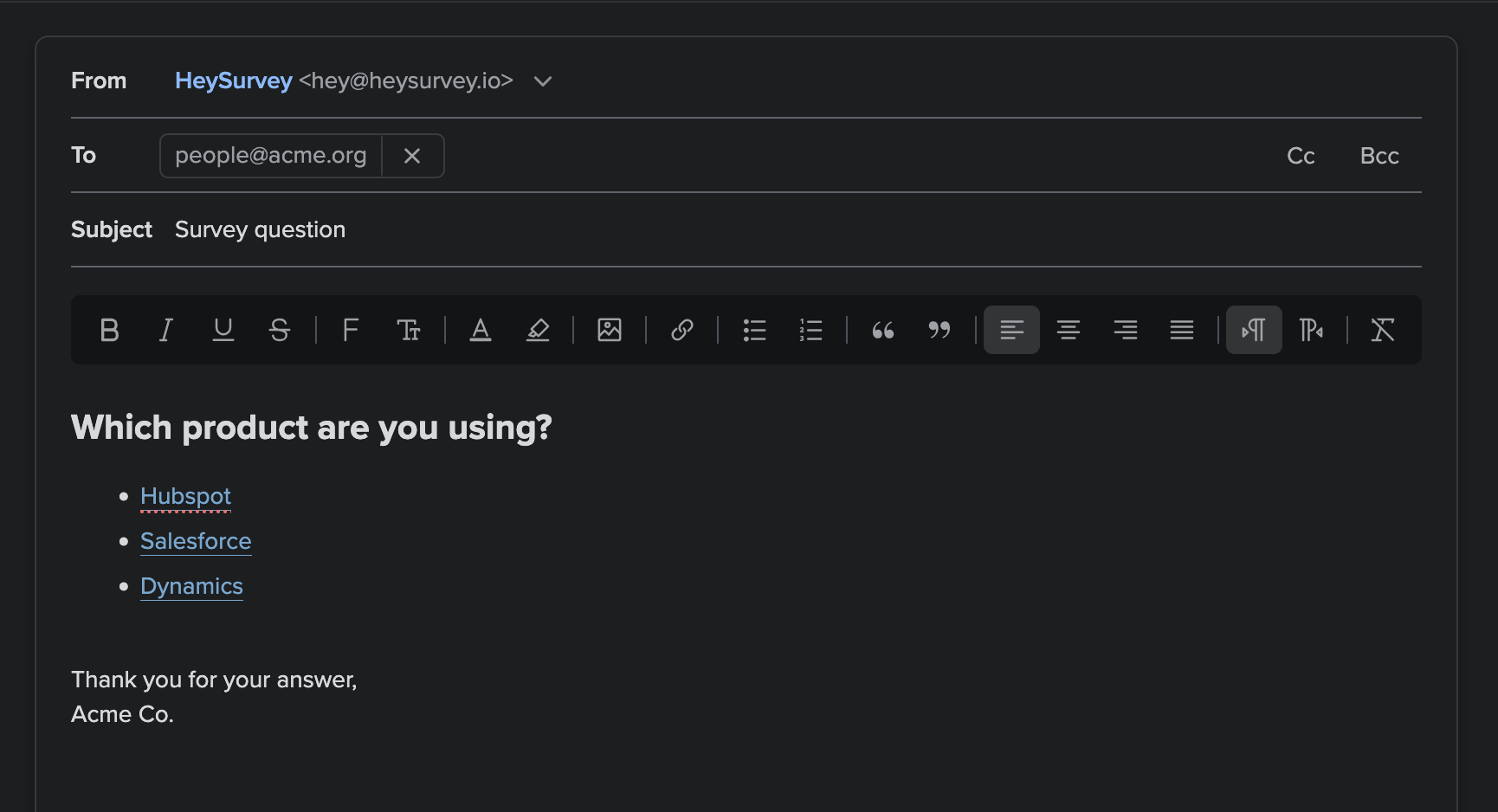
Creating a ratio scales survey in HeySurvey is quick and easy. You can start from a template with the button below, or build it from scratch.
1. Create a new survey
Open HeySurvey and choose New Survey or a ready-made template. If you want a faster start, pick a template that matches your survey topic, then open it in the editor. You can update the survey name anytime.
2. Add questions
Click Add Question and choose the best question type for ratio scale examples, such as Scale, NPS, Emoji Rating, or Number. Write a clear question, set the scale range, and add labels for the low and high ends if needed. You can also make the question required and customize the design to match your brand.
3. Publish survey
Preview your survey to check the flow and wording. When everything looks right, click Publish to create your shareable link. Your survey is now ready to send to respondents and collect answers.
Time-Based Ratio Scale Questions
Time-based examples of ratio scale questions help you measure real behavior with clean, precise numbers.
When you want to measure duration, wait time, time spent, or time to completion, time-based examples of ratio scale questions are a smart pick.
Here’s the thing, time has a true zero, equal intervals, and easy comparisons, which makes it perfect for ratio data.
If one person waited 20 minutes and another waited 10, you can confidently say the first wait was twice as long, not just “more.” Math loves that, and honestly, your spreadsheet will too.
Why & When to Use
Use these questions when you need precise data for:
Customer experience, like support wait times or checkout speed
Employee productivity, like task completion time
App or platform usage, like hours per week
Service delivery, like installation or response times
Research studies that track time-to-completion
Plus, they work best when you clearly define the time frame respondents should think about.
A few practical rules make your questions much stronger:
Specify units clearly, such as minutes, hours, days, or weeks
Avoid vague wording like “How long is a while?”
Use reasonable validation ranges to catch odd entries
Match the recall period to what people can realistically remember
On top of that, clear time-based examples of ratio scale questions give you sharper insights and fewer guessy answers.
Sample questions
How many times have you purchased from our store in the past 30 days?
How many workouts do you complete in a typical week?
How many customer service tickets did you submit in the last 6 months?
How many times do you log in to the app each week?
How many online courses have you completed in the past year?
Ratio-scale survey questions measuring time or frequency are analytically strong because they have equal intervals and a true zero, enabling valid ratio comparisons like “twice as long” (Source).
Frequency-Based Ratio Scale Questions
Examples of ratio scale questions about frequency help you count real behavior, not vague vibes.
When you want to measure how often something happens, frequency-based examples of ratio scale questions give you hard numbers you can actually use.
Here’s the thing, these questions work best when the behavior is counted over a clear period like daily, weekly, monthly, or yearly.
That time anchor matters a lot.
Without it, “How often?” gets fuzzy fast, and fuzzy data is about as useful as a chocolate stopwatch.
Why & When to Use
Use frequency questions when you need to track patterns such as:
Purchase habits
App or platform engagement
Class or event attendance
Support interactions
Product or service usage over time
Plus, they help you separate heavy, moderate, and light users with much more confidence.
If one customer logs in 20 times a week and another logs in twice, you are not guessing who is more engaged.
A few practical tips make these examples of ratio scale questions much stronger:
Always include a specific time frame
Ask for counts instead of labels like “often” or “sometimes”
Make sure the behavior is something people can realistically remember
Use grouped ranges if exact counts may be too hard to recall
On top of that, frequency-based questions make comparison, segmentation, and trend analysis much easier.
Sample questions
How many cups of coffee do you drink per day?
How many devices in your household connect to the internet?
How many units of this product do you typically purchase each month?
How many projects are you currently managing?
How many books did you read in the last 12 months?
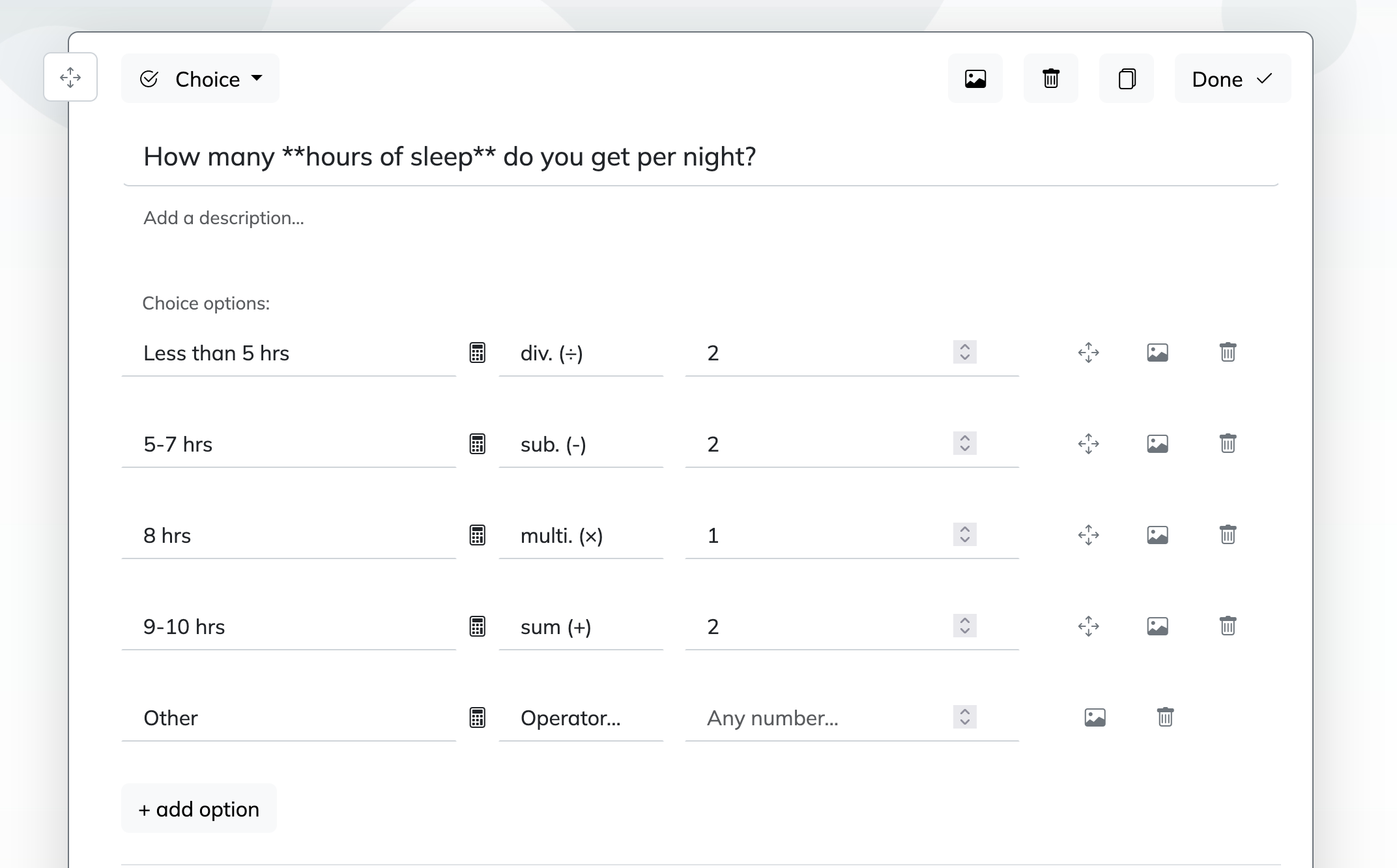
Quantity and Volume Ratio Scale Questions
Examples of ratio scale questions about quantity are some of the clearest tools you can use.
When you need to measure how much someone owns, consumes, produces, or uses, quantity-based examples of ratio scale questions give you direct, practical numbers.
Here’s the thing, these questions are beautifully simple because zero actually means zero.
If someone owns 0 devices of a certain type or buys 0 units in a month, that answer is still complete and meaningful, which makes analysis much cleaner.
Why & When to Use
Use these examples of ratio scale questions when you want to measure things like:
Household inventory
Product consumption
Monthly purchasing volume
Workload across teams or roles
Resource planning and demand forecasting
Plus, quantity data helps you compare usage intensity without relying on guesswork.
If one person buys 2 units a month and another buys 20, you can quickly spot very different needs, habits, or planning risks.
A few smart tweaks make these examples of ratio scale questions even stronger:
Use one clear unit at a time
Do not combine multiple variables in one question
State whether you want an estimate or an exact count
Keep the quantity realistic for the audience and situation
On top of that, this kind of data helps you forecast demand, plan inventory, and understand who your power users really are.
Sample questions
How much did you spend on groceries last week?
What is your average monthly budget for software tools?
How much did you pay for your most recent subscription renewal?
How much revenue did your business generate last quarter?
What is your household’s monthly income before taxes?
Ratio-scale survey questions use a true zero and equal intervals, making examples like income, age, and time statistically meaningful for comparing quantities. Source
Spending and Income Ratio Scale Questions
Examples of ratio scale questions about money help you measure real financial behavior, not fuzzy guesses.
When you need costs, budgets, revenue, personal spending, or household income, these examples of ratio scale questions give you hard numbers you can compare cleanly.
Here’s the thing, money works well as ratio data because zero is meaningful.
If someone spent $0 on groceries in a week or earned $0 in a period, that answer still carries clear analytical value, which makes these examples of ratio scale questions especially useful for pricing studies, budgeting analysis, and customer segmentation.
Why & When to Use
Use these examples of ratio scale questions when you want to study:
Market research and price sensitivity
Personal or household budgeting patterns
Business revenue performance
Customer segmentation by spending level
Economic profiling in surveys or applications
Plus, financial questions can feel personal, so trust matters a lot.
Let people know responses are confidential, explain why you are asking, and consider optional or range-based answers when exact numbers may feel too spicy for comfort.
A few practical tips make these examples of ratio scale questions stronger:
Specify the currency and time period clearly
Use exact-entry or range-based options based on audience comfort
Avoid stacking several financial questions at the very start
Keep wording neutral so you do not nudge answers
On top of that, if you ask about spending and income carefully, you usually get better completion rates and more honest data.
Sample questions
How many miles do you travel to work each day?
How much does the package you shipped weigh in pounds?
How many kilometers is your usual delivery route?
What is your height in centimeters?
How many square feet is your office space?
Distance and Physical Measurement Ratio Scale Questions
Examples of ratio scale questions about distance and size give you clean, measurable data you can actually use.
When you ask about travel distance, height, weight, office size, or route length, you get numbers with a true zero and clear intervals.
That makes these examples of ratio scale questions especially handy when you need objective comparisons instead of vague answers like “pretty far” or “kind of heavy,” which, bless them, are not exactly spreadsheet-friendly.
These questions work well across logistics, transportation research, health surveys, retail, and field operations.
Plus, they help you plan routes, compare workloads, estimate capacity, and spot patterns without guesswork sneaking into the room.
Why & When to Use
Use these examples of ratio scale questions when you want to measure:
Physical dimensions like height, weight, or square footage
Travel and delivery distances
Shipping and package measurements
Operational needs across locations or teams
Standardized inputs for analysis and forecasting
Here’s the thing, physical measurements are often some of the strongest ratio data you can collect.
A zero value usually means none of the thing exists, which makes comparisons more meaningful and easier to analyze.
A few practical tips will keep your survey sharp:
State the unit clearly, such as miles, kilometers, pounds, centimeters, or square feet
Avoid mixing measurement systems in one survey unless there is a strong reason
Localize for international audiences when regional preferences differ
Keep in mind that consistent units make reporting much easier later
On top of that, if you handle units carefully, your data stays tidy and your analysis avoids a surprise math workout.
Sample questions
How many people live in your household?
How many employees work at your company?
How many children under 18 live in your home?
How many support agents are on your team?
How many locations does your business operate?
Count-Based Demographic and Operational Ratio Scale Questions
Examples of ratio scale questions about counts help you turn everyday facts into data you can sort, compare, and actually use.
These examples of ratio scale questions focus on number-based realities, not opinions.
You are asking for concrete counts tied to households, teams, staffing, and business operations, which makes the answers easy to group and analyze.
Here’s the thing, count-based questions show up all the time in screening and segmentation surveys because they give you structured data with a true zero.
If someone has zero children in the home or zero business locations, that answer still means something specific, which is exactly what good ratio data should do.
Plus, these examples of ratio scale questions are practical for demographic profiling, staffing analysis, household composition, and business diagnostics.
They are simple on the surface, but they quietly do a lot of heavy lifting, like the intern who somehow knows where every file is.
Why & When to Use
Use these examples of ratio scale questions when you want to measure:
Household size and composition
Team or company headcount
Number of children, agents, or locations
Segments based on operational scale or respondent situation
Comparable facts without relying on personal opinions
A few smart tips make these questions stronger:
Define who counts, such as full-time employees only or all workers
Clarify whether part-time, temporary, or shared members should be included
Use count questions strategically for screening and segmentation
Avoid asking for numbers respondents are unlikely to know exactly
Sample questions
Is this ratio scale question clear enough: "How many hours did you exercise last week?"
What is wrong with asking, "How often do you shop online a lot?"
When should you use dollars instead of a satisfaction score in a survey question?
How do you make examples of ratio scale questions easier for respondents to answer accurately?
What is the best way to add a time frame to a ratio scale survey question?
Best Practices for Writing Ratio Scale Survey Questions
Strong examples of ratio scale questions are specific, measurable, and easy for people to answer without guessing.
Here’s the thing, good ratio questions make analysis easier later because you collect clean numbers from the start.
If your wording is fuzzy, your data gets fuzzy too, and no spreadsheet can perform magic tricks.
Why & When to Use
Use these best practices when you want examples of ratio scale questions that produce reliable, usable data.
They are especially helpful when you are measuring behavior, spending, distance, usage, time, or frequency with a true zero.
Dos
Use exact units like hours, dollars, miles, items, or visits
Add a recall period when needed, such as "in the past 30 days"
Make sure zero is a valid answer
Check that respondents can realistically know the number
Keep wording neutral and tightly focused
Match the question to the analysis you want to run
Quick fix examples:
Weak: "How long do you wait regularly?"
Better: "How many minutes did you wait for service during your most recent visit?"Weak: "How much do you spend?"
Better: "How many dollars did you spend on groceries last week?"
Don’ts
Do not confuse examples of ratio scale questions with 1 to 5 rating scales
Do not use vague words like "a lot," "regularly," or "long"
Do not combine two measures in one question
Do not leave out units or time frames
Do not force exact numbers when estimates or ranges fit better
Do not ask sensitive money questions without brief context or reassurance
Sample questions
How can examples of ratio scale questions help you spot high-value customer segments?
What should you do when ratio scale survey responses show extreme outliers?
How can you use ratio data to improve staffing or inventory decisions?
When is the median more useful than the average for examples of ratio scale questions?
How do before-and-after comparisons turn survey numbers into business action?
How to Turn Ratio Scale Survey Insights Into Action
Well-built examples of ratio scale questions give you numbers you can actually use, not just admire in a chart for five seconds.
Here’s the thing, once you collect ratio data, you can move from opinions to action fast.
You can use responses to find patterns, spot outliers, compare groups, and track changes over time.
Why & When to Use
Use this approach when you want survey results to guide real decisions, not just fill a dashboard.
Examples of ratio scale questions are especially useful when you need benchmarks, averages, medians, forecasts, or before-and-after comparisons tied to behavior, spending, time, or quantity.
A few practical ways to act on the findings:
Improve customer wait times by identifying locations or time periods with the highest average delays
Refine pricing and offers by comparing how much different customer groups spend
Segment users by usage frequency so you can tailor onboarding, upgrades, or retention campaigns
Allocate staff or inventory based on measured demand across days, products, or regions
Personalize campaigns using spending totals, order quantities, or visit counts
Plus, ratio data helps you choose the right summary.
Use averages for broad benchmarks
Use medians when a few giant values distort the picture
Use trends and before-and-after comparisons to measure whether a change actually worked
On top of that, examples of ratio scale questions give you decision-ready evidence.
When your questions are written well, your survey stops being a guess machine and starts acting like a business tool.
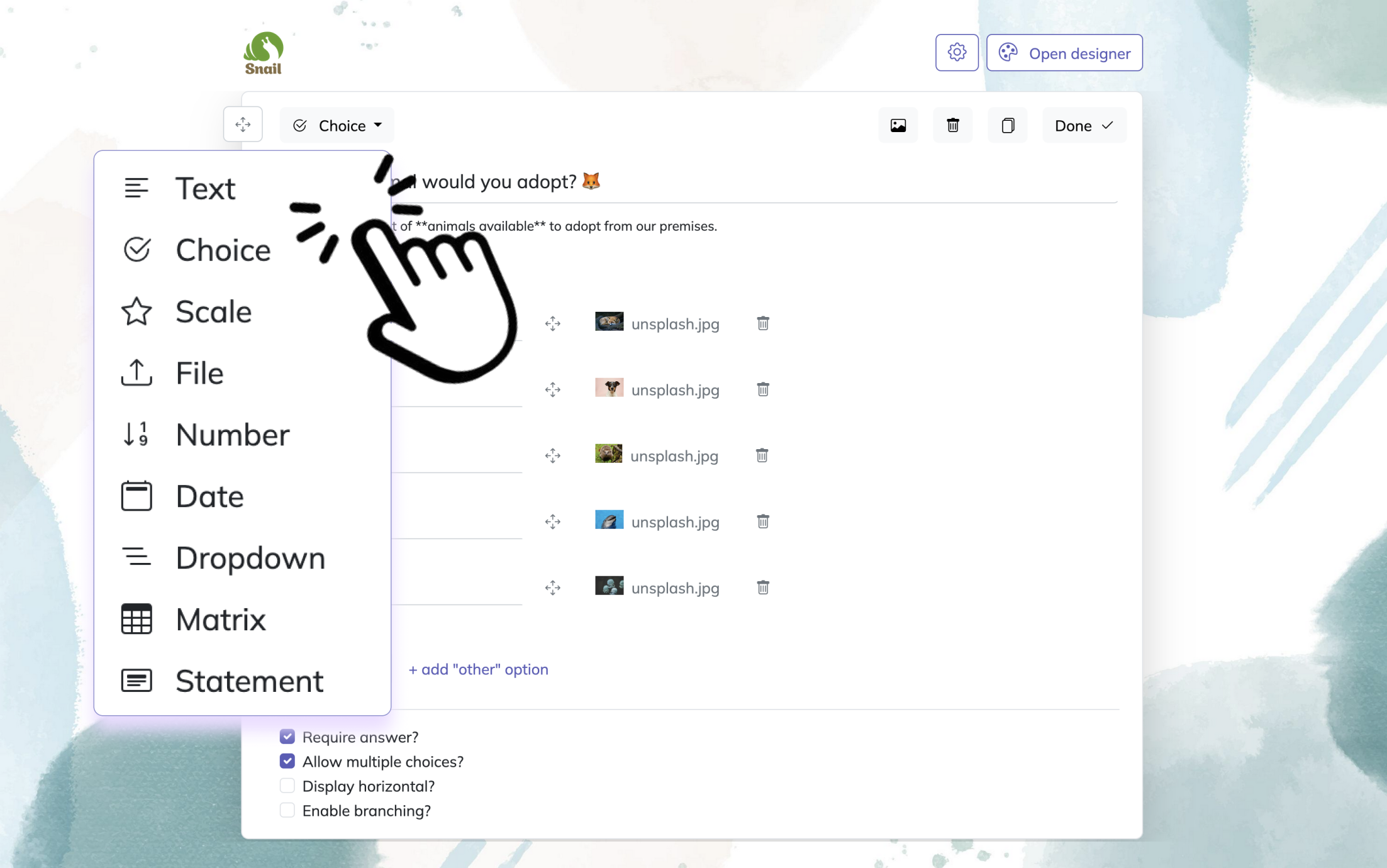
Turning Ratio Scale Survey Insights Into Action
Sample questions
How can you turn ratio scale survey responses into decisions your team can actually use?
What should you measure after collecting ratio scale data besides the average?
How do you compare ratio scale results across customer groups, teams, or regions?
Why should you pair ratio questions with satisfaction or NPS-style feedback?
When are ratio scale questions the best choice for survey research?
From raw numbers to real-world moves
Why & When to Use
This section helps you turn plain number-based responses into practical next steps instead of letting them sit in a spreadsheet looking busy.
Here’s the thing: ratio data gets powerful when you stop treating it like trivia and start using it to guide decisions.
After collection, break results into meaningful groups so patterns show up faster.
segment by customer type, job role, subscription plan, department, or region
track averages, medians, ranges, and outliers
compare current results against past surveys to spot movement over time
pair numeric answers with satisfaction or NPS-style feedback for added context
A raw count becomes useful when it leads to action.
In product teams, that might mean shortening onboarding if new users need too many days to get started.
In customer experience, it could mean reducing wait times if support cases take longer than expected.
On top of that, HR teams can adjust staffing, healthcare teams can improve response times, and education teams can reshape support if students spend too many hours struggling alone.
Plus, outliers matter because one weird number can signal a broken process, not just a quirky respondent.
The takeaway is simple: use ratio scale survey questions when you need measurable behaviors, quantities, and outcomes you can compare, track, and improve.
Related Surveys
29 Social Media Survey Questions
Explore 25 social media survey questions with practical sample prompts to help gather insights on...
31 Job Satisfaction Survey Questions
Explore **25 job satisfaction survey questions** with sample prompts to improve employee feedback...
29 Quantitative Survey Questions Guide
Explore 25 quantitative survey questions with sample questions, examples, and tips to build effec...