28 Qualitative Research Survey Questions Examples
Explore 25 qualitative research survey questions examples for deeper insights, uncovering customer opinions, behaviors, and motivations.
Want answers that sound like real people, not checkbox robots? Qualitative research survey questions are open-ended prompts that help you uncover opinions, motivations, experiences, and the exact words people use. Plus, this guide gives you practical sample qualitative survey questions, a qualitative survey questions sample, and examples of qualitative research survey questions you can adapt for customer research, product feedback, employee experience, brand perception, and market exploration. Think of it as your shortcut to smarter questions, minus the academic fog.
Customer Experience Survey Questions
Sample questions
Can you describe your overall experience with our product or service in your own words?
What stood out most to you during your interaction with our business?
What, if anything, made the experience easier or more difficult than you expected?
At what point did you feel most satisfied or most frustrated, and why?
If you could change one part of the experience, what would it be and why?
These questions capture the full customer journey.
Why & When to Use
Customer experience surveys work best when you want to understand how people talk about what happened before, during, and after using your product or service.
That makes them perfect for post-purchase feedback, service improvement, retention analysis, onboarding reviews, and customer journey mapping.
Here’s the thing: the best sample qualitative survey questions do more than collect opinions. They reveal emotion, friction points, unmet expectations, and the exact words customers use when something feels smooth, confusing, delightful, or painfully clunky.
A strong qualitative survey questions sample also helps you spot patterns across different stages of the experience, not just the final outcome. Plus, that gives you richer examples of qualitative research survey questions you can reuse across teams.
When you ask these questions, encourage people to share specifics like:
key moments they remember most
emotions they felt at different points
what they expected going in
what actually happened in the end
On top of that, asking for details helps you move beyond vague answers like “it was good” or “kind of annoying,” which is helpful because those answers have all the nutritional value of plain ice. If you need examples of research questions in qualitative studies, this format is a smart place to start.
Open-ended customer experience questions such as “in what areas could we do better?” elicit richer, more specific qualitative insights in respondents’ own words (Qualtrics).
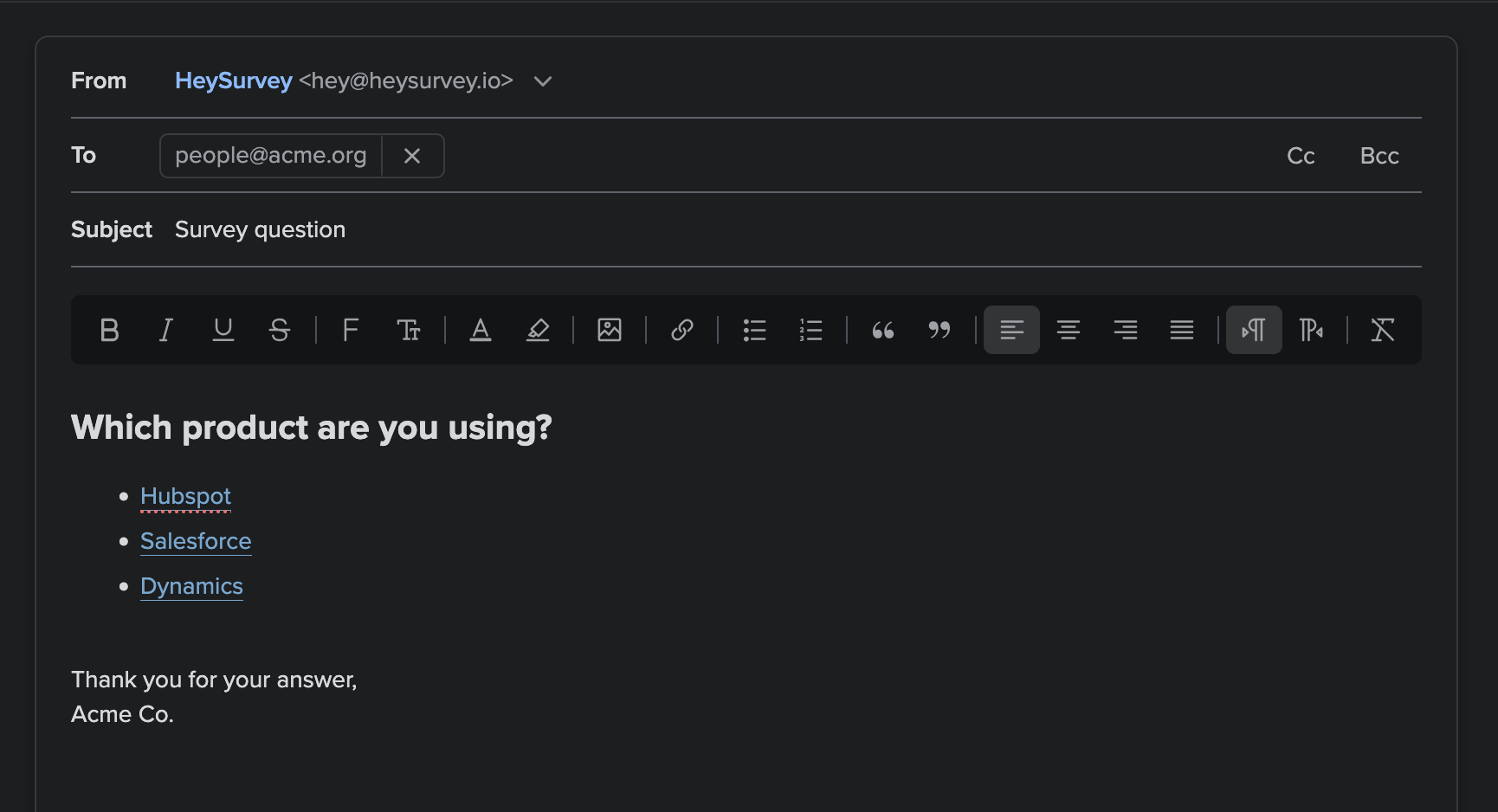
How to create a qualitative research survey in HeySurvey
1. Create a new survey
Start by opening HeySurvey, the online survey maker, and choosing a template with the button below, or begin with a blank survey if you prefer. Give your survey a clear internal name so you can find it later. If needed, add your logo and adjust the basic settings before you begin.
2. Add questions
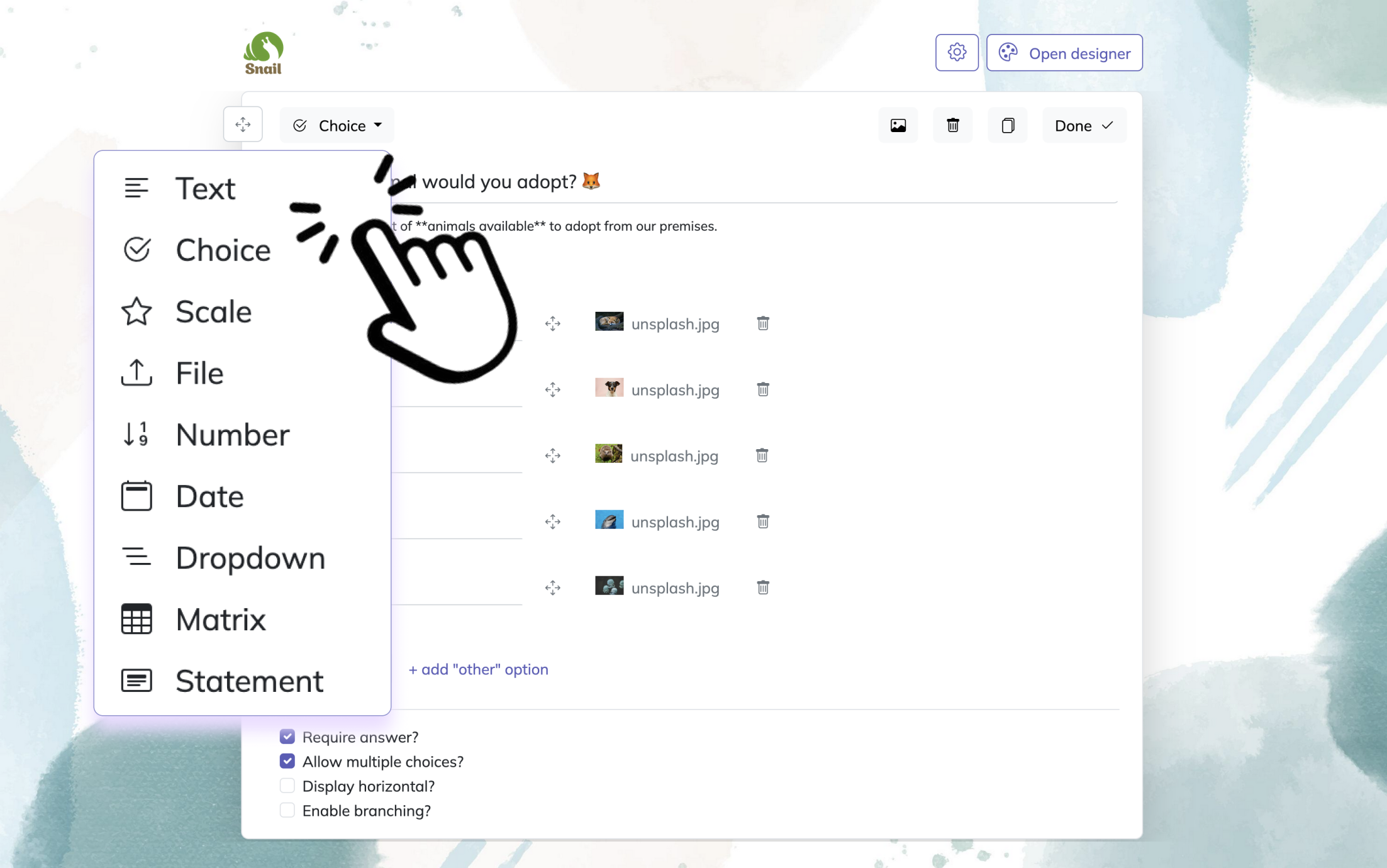
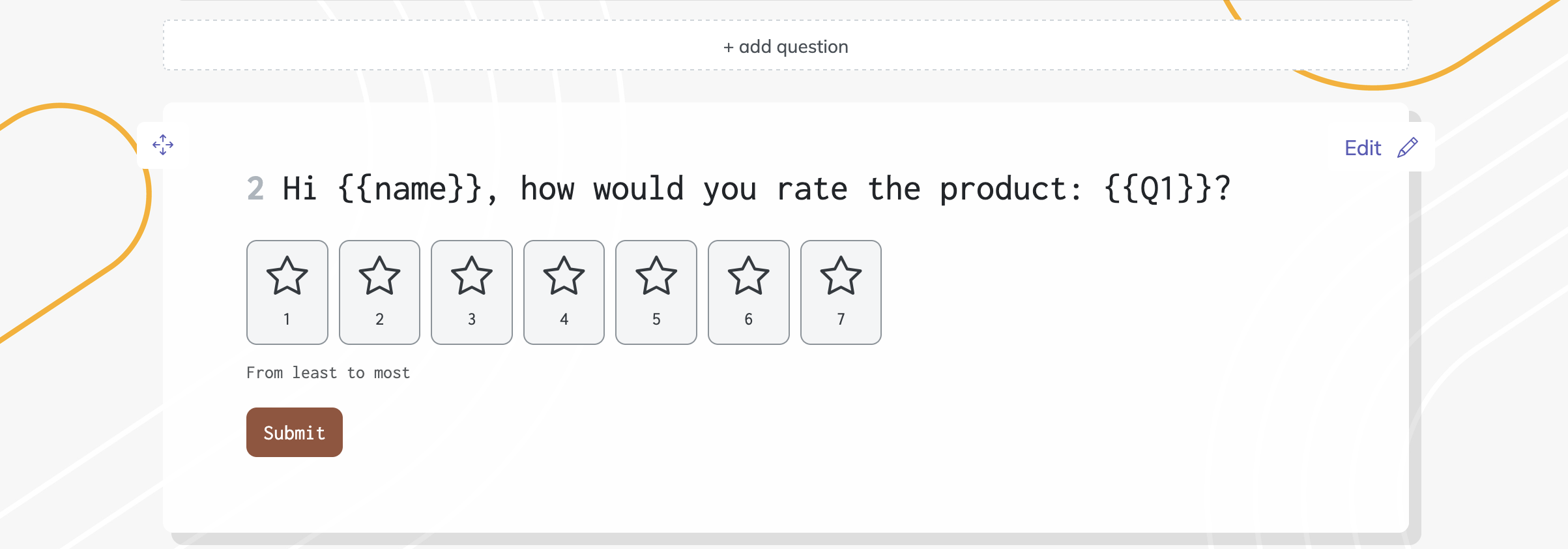
Click Add Question and choose question types that work well for qualitative research, such as Text for open-ended answers, Choice for screening questions, or Scale for quick ratings. Use simple, neutral wording and keep questions focused on one topic. You can mark questions as required and add follow-up questions if you want deeper responses.
3. Publish survey
When your questions are ready, click Preview to check how the survey looks and works. Make any final edits, then click Publish to create a shareable link. After publishing, you can send the survey to respondents and start collecting qualitative feedback.
Product Feedback Survey Questions
Sample questions
How do you currently use this product in your daily work or life?
Which feature has been most useful to you, and what makes it valuable?
What has been confusing, frustrating, or difficult while using the product?
Were there any features or capabilities you expected but could not find?
If you could improve one aspect of the product, what would you change first?
These questions show how your product fits into real life.
Why & When to Use
Product feedback surveys help you understand how people actually experience your features, usability, value, and product gaps in the wild.
That makes them especially useful for beta testing, feature validation, post-launch feedback, churn analysis, and roadmap planning.
Here’s the thing: the best sample qualitative survey questions uncover what users do, not just what they rate. A number can tell you something feels off, but a qualitative survey questions sample shows you where the confusion starts and why it keeps showing up.
Product-focused examples of qualitative research survey questions are also great at surfacing unexpected use cases, workarounds, and pain points that rating scales completely miss. Plus, that gives you clearer direction for what to fix, improve, or build next.
When you review responses, look for repeated themes such as:
features people rely on most
moments where users get stuck
missing capabilities users expected
surprising ways people use the product
product changes mentioned again and again
On top of that, comparing patterns across answers helps you prioritize improvements based on real demand, not just whoever shouted loudest in the last meeting. If you need an example of qualitative questionnaire questions, this set is a strong starting point.
Open-ended product feedback questions reveal respondents’ own words, surfacing context, frustrations, and unexpected ideas that closed-ended questions often miss (SurveyMonkey).
Market Research Survey Questions
Sample questions
What problem were you trying to solve when you began looking for a solution like this?
What options did you consider before making a decision?
What mattered most to you when comparing different solutions?
What nearly stopped you from choosing a product or service in this category?
How would you describe an ideal solution for your needs?
These questions help you see how people choose, compare, and commit.
Why & When to Use
Market research surveys help you understand what your audience wants before they buy, what triggers them to start searching, and what alternatives they weigh along the way.
That makes this one of the most practical areas for using sample qualitative survey questions, because the answers can directly shape business strategy instead of just filling a nice-looking report.
Use this qualitative survey questions sample when you are:
entering a new market
testing demand for a new offer
refining your positioning
learning how people compare you to competitors
identifying what different customer groups care about most
Here’s the thing: strong examples of qualitative research survey questions do more than uncover opinions. They show you decision-making behavior, buying friction, and the language people naturally use when describing their needs.
Plus, that insight helps you sharpen messaging, improve offer design, and segment your audience based on real priorities rather than hunches and heroic guesswork.
If several people mention the same fear, comparison point, or must-have feature, pay attention.
That pattern can tell you what to emphasize in marketing, what objections to address earlier, and where your product fits best in the market. If you want an example of qualitative questionnaire questions that pulls double duty, this section is a smart little workhorse.
Brand Perception Survey Questions
Sample questions
What words or phrases come to mind when you think about our brand?
How would you describe our brand to someone who has never heard of it?
What makes our brand feel different from others in the same space?
What kind of person or business do you think our brand is best suited for?
Has your perception of our brand changed over time? If so, how?
Brand perception lives in the words people choose when nobody is handing them a script.
Why & When to Use
Brand perception surveys help you understand how people actually describe your company, what they associate with it, and where it stands apart from competitors.
That is exactly why sample qualitative survey questions work so well here, because raw wording tells you far more than a neat little rating scale ever could.
Use this qualitative survey questions sample when you are:
planning a rebrand
reviewing an awareness campaign
analyzing reputation shifts
testing brand messaging
comparing how different audiences see you
Here’s the thing: the best examples of qualitative research survey questions uncover not just what people think, but how they say it.
Those specific words can shape your brand voice, sharpen headlines, and tighten your positioning so it sounds more like your audience and less like a meeting room whiteboard.
On top of that, this is a strong example of qualitative questionnaire questions for branding and perception studies because it reveals emotional tone, trust signals, and audience fit in one place.
If people keep describing your brand with the same words, that is gold.
It shows you what to lean into, what to fix, and whether your message is landing or doing a dramatic cartwheel in the wrong direction.
Research shows open-ended qualitative survey questions capture the “why” behind attitudes in participants’ own words, revealing nuanced brand perceptions closed-ended items often miss (SAGE, 2026).
Employee Feedback Survey Questions
Sample questions
How would you describe your experience working here so far?
What helps you do your best work, and what gets in the way?
How supported do you feel by your manager or team, and why?
What aspects of the workplace culture feel strongest to you?
If you could improve one thing about the employee experience, what would it be?
Employee feedback gets most useful when people can explain the why, not just click a box and move on.
Why & When to Use
Qualitative employee surveys help you understand morale, communication, management effectiveness, and workplace culture in a way numbers alone simply cannot.
That is why sample qualitative survey questions are especially useful for employee feedback, because open-ended responses often reveal issues that are too nuanced for multiple-choice surveys.
Use this qualitative survey questions sample when you are:
running engagement surveys
reviewing onboarding experiences
collecting exit feedback
assessing leadership effectiveness
managing organizational change
Here’s the thing: some of the best examples of qualitative research survey questions give employees room to describe what feels motivating, frustrating, unclear, or unsupported in their own words.
Plus, those answers can spotlight patterns in trust, workload, team dynamics, and communication gaps before they turn into bigger headaches.
This section also works well as an example of qualitative questionnaire questions for internal research because it helps you uncover context, not just sentiment.
To get more honest answers, make confidentiality clear, create psychological safety, and keep your wording neutral.
If people think a survey feels like a trap, your data will suddenly become very polite and not very helpful.
User Needs and Motivation Survey Questions
Sample questions
What goal were you trying to accomplish when you started looking for a solution?
Why was solving this problem important to you at this time?
What challenges were you facing before you found a solution?
What would success have looked like for you in that situation?
What concerns or hesitations did you have before taking action?
This is where you stop guessing and start hearing what actually drives people.
Why & When to Use
User needs and motivation surveys help you uncover the goals, frustrations, timing, and real-life context behind decisions and behavior.
That makes this one of the strongest sections for anyone searching for sample qualitative survey questions that go beyond surface feedback and get into what truly moves people.
Use this qualitative survey questions sample when you are:
building customer personas
mapping user journeys
shaping a new offer
planning content strategy
improving service design
Here’s the thing: strong examples of qualitative research survey questions do more than collect opinions.
They reveal what people wanted, what stood in their way, and what nearly stopped them from acting.
Plus, this kind of insight is gold for audience research, sharper messaging, and conversion-focused copywriting because you can mirror the language people already use in their heads.
That is exactly why sample qualitative survey questions like these are so useful when you want to understand not just what users did, but why they did it.
On top of that, a qualitative survey questions sample like this can double as an example of qualitative questionnaire questions for teams working on positioning, funnels, and customer experience.
If you want better answers, ask about specific moments instead of vague opinions.
Memory loves details, and vague questions tend to wander off without shoes.
Best Practices for Writing Qualitative Research Survey Questions
Sample questions
What happened that led you to feel this way?
Can you describe that experience in more detail?
What was most important to you in that moment?
What did you expect would happen, and what actually happened?
What would you want us to understand about your experience?
Good qualitative questions open doors, not trap doors.
Why & When to Use
Even great research topics can flop if your questions are vague, leading, too broad, or just plain hard to answer.
That is why this section matters so much if you are building sample qualitative survey questions, a qualitative survey questions sample, or even examples of qualitative research survey questions for different industries.
Here’s the thing: better wording gets better stories.
Use these prompts as flexible follow-up questions when you want richer detail, clearer meaning, and fewer one-word answers that sit there like unhelpful potatoes.
A strong example of qualitative questionnaire questions should feel open, neutral, and easy to answer.
Plus, the best examples of research questions in qualitative studies usually focus on real moments, not abstract opinions floating in space.
Keep these dos and don’ts in mind:
Do use open-ended questions that invite explanation.
Do keep each question focused on one idea at a time.
Do use neutral wording that does not suggest a preferred answer.
Do ask about specific experiences, moments, or decisions.
Do limit the total number of open-ended questions to reduce fatigue.
Don’t ask leading questions such as “What did you love most?”
Don’t combine multiple questions into one.
Don’t use jargon, internal terms, or vague wording.
Don’t ask questions people cannot realistically remember.
Don’t collect more open-ended data than you can review and use.
On top of that, align every question with a clear research objective, because more answers are not better if they do not help you make a decision.
Common Mistakes to Avoid with Qualitative Survey Questions
Sample questions
Can you walk us through what happened from the beginning?
What part of this question felt unclear or difficult to answer?
Is there anything important about your experience that this survey has not asked?
Which part of your decision was hardest to describe, and why?
If you could rewrite one survey question to make it clearer, what would you change?
Small question mistakes can create very big research headaches.
Why & When to Use
Knowing strong sample qualitative survey questions is helpful, but knowing why surveys fail is where your results really level up.
This matters when you are building a qualitative survey questions sample, reviewing examples of qualitative research survey questions, or trying to fix messy feedback before it multiplies like laundry.
Here’s the thing: weak surveys usually do not fail because people have nothing to say.
They fail because the wording is fuzzy, the order feels awkward, the phrasing pushes people toward an answer, or the survey collects far more open-ended data than you can actually analyze.
Use this section when you want better response quality, clearer stories, and fewer answers that make you squint and say, "Well... that is technically words."
Watch for these common problems:
Questions that are too broad, so people do not know where to start.
Double-barreled questions that ask two things at once.
Biased wording that nudges respondents toward a preferred response.
Poor sequencing that jumps around and breaks the flow.
Too many open-ended prompts, which creates analysis overload fast.
On top of that, these sample qualitative survey questions help you spot confusion directly by asking people where your survey felt unclear, incomplete, or hard to answer.
That makes them useful not just as research questions, but as editing tools for stronger examples of research questions in qualitative studies and any example of qualitative questionnaire questions you want to improve.
How to Turn Qualitative Survey Insights Into Action
Sample questions
What themes appear repeatedly across responses?
Which problems are mentioned most often and with the strongest emotion?
What exact phrases do respondents use to describe their needs or frustrations?
Which insights point to quick improvements versus long-term strategy changes?
What is the next action we should take based on what respondents told us?
Insights only matter when you use them.
Why & When to Use
Collecting sample qualitative survey questions is a smart start, but the real value shows up when you turn comments into decisions you can actually make.
This is where your qualitative survey questions sample stops being interesting and starts being useful.
Use this section when you have a pile of open-ended responses and need to turn them into next steps for marketing, product, service, or operations.
Here’s the thing: you do not need fancy research vocabulary to do this well, just a clear way to spot patterns without drowning in sticky notes and spreadsheets.
Start by grouping similar answers into themes so recurring ideas rise to the top.
Then look for the issues people mention often, especially the ones with strong feeling behind them, because emotion usually points to friction that matters.
As you review examples of qualitative research survey questions, pay close attention to the exact words respondents use.
Those phrases can improve your messaging, shape product updates, and sharpen support materials better than polished internal guesses.
A simple action flow helps:
Group responses by theme.
Prioritize repeated problems and needs.
Pull out memorable customer wording.
Separate quick fixes from bigger strategic changes.
Choose one clear next action and assign it.
Plus, that is how an example of qualitative questionnaire questions becomes a plan, not just a very thoughtful document collecting digital dust.
Related Surveys
29 Social Media Survey Questions
Explore 25 social media survey questions with practical sample prompts to help gather insights on...
31 Job Satisfaction Survey Questions
Explore **25 job satisfaction survey questions** with sample prompts to improve employee feedback...
29 Quantitative Survey Questions Guide
Explore 25 quantitative survey questions with sample questions, examples, and tips to build effec...