29 Provider Satisfaction Survey Questions
Explore 25 provider satisfaction survey questions with sample wording to build clear, effective feedback surveys for healthcare providers.
A provider satisfaction survey helps you measure how providers experience your organization, spot friction points, and improve retention, care quality, and day-to-day efficiency before small issues turn into full-blown headaches. This guide walks you through survey types, when to use each one, and practical service provider survey questions you can adapt for healthcare, vendor, and specialty settings. Plus, if your team needs niche versions like wound care patient satisfaction survey questions, the core provider satisfaction and provider survey design rules still stay surprisingly consistent, whether you build them with an online survey tool.
Sample questions
How satisfied are you with your overall experience as a provider within this organization?
How likely are you to recommend this organization to another provider seeking a practice opportunity?
To what extent do you feel supported in delivering high-quality care or service?
How satisfied are you with your day-to-day work environment?
What is the one change that would most improve your provider experience here?
Overall Provider Experience Survey
A strong provider satisfaction survey starts with the big picture.
If you want a clear read on overall provider satisfaction, this is the section to build first.
An overall provider experience survey gives you a broad, organization-level view across hospitals, clinics, health systems, payer networks, and other service environments. Here's the thing, it helps you catch patterns early, before smaller frustrations grow teeth.
Why & When to Use
Use this provider satisfaction survey as a recurring pulse check to benchmark sentiment over time. It works best quarterly, biannually, or annually when leadership wants a reliable baseline for retention, engagement, and planning.
Plus, this format helps you spot high-level trends before diving into narrower service provider survey questions about workflow, communication, support, or compensation. Think of it as your survey's home base, not the whole house.
For best results, keep it concise and mix rating-scale questions with one or two open-ended prompts.
Rating scales make trend tracking and benchmarking easier.
Open-ended responses reveal the why behind the score.
Shorter surveys usually improve response rates because nobody wants a 47-minute "quick check-in."
On top of that, this type of provider survey can support specialty adaptations later. If you eventually need niche versions, even topics like wound care patient satisfaction survey questions often still benefit from the same simple foundation.
Sample questions
How satisfied are you with the efficiency of current clinical or service workflows?
How manageable is your documentation and administrative workload?
How often do administrative tasks interfere with your ability to focus on patient or client needs?
How satisfied are you with scheduling, staffing, and resource allocation?
Which workflow step causes the most unnecessary delay or frustration?
Physicians who spend more time on clerical tasks report lower professional satisfaction and higher burnout, making workload questions essential in provider satisfaction surveys (PubMed).
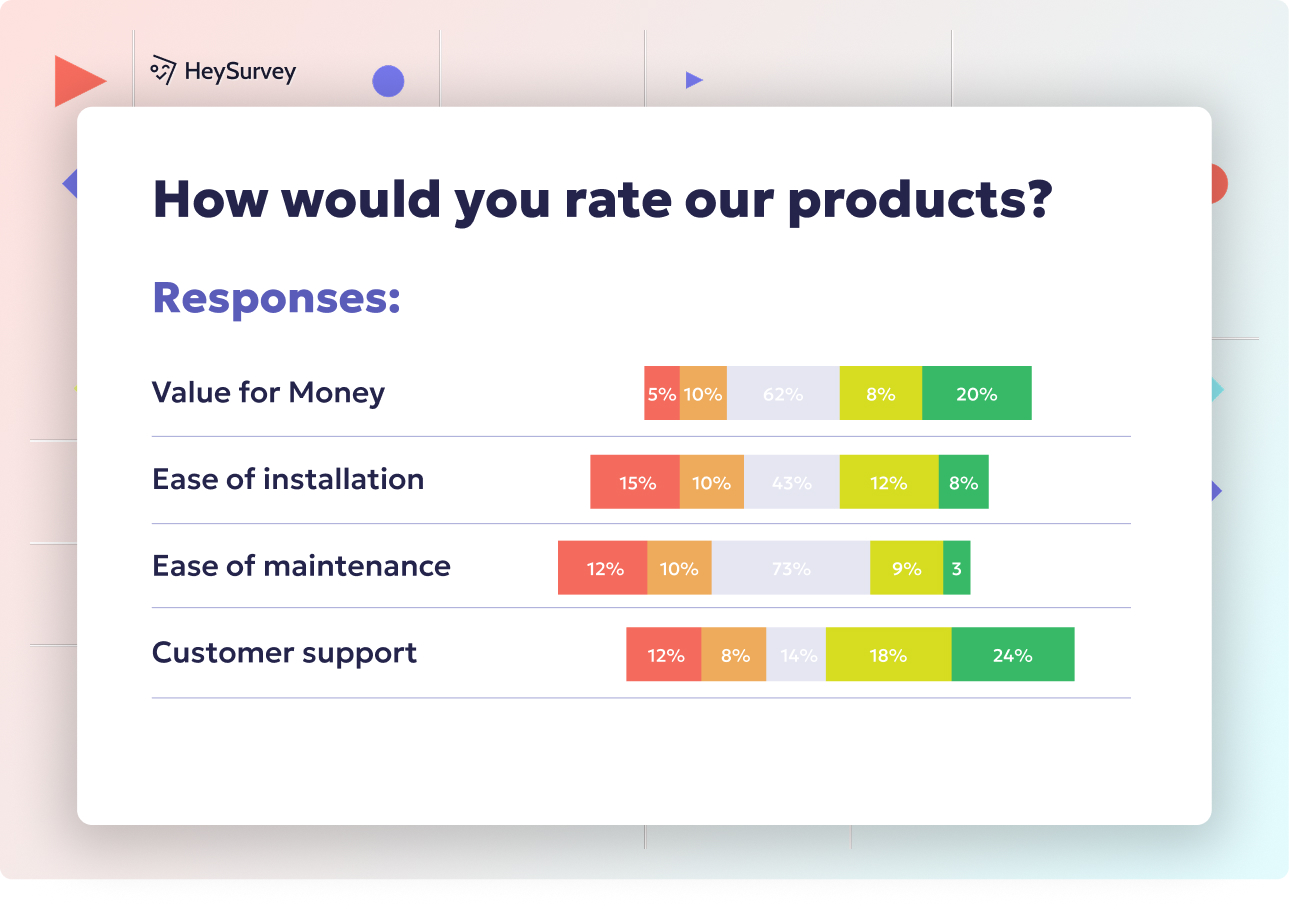
How to create a provider satisfaction survey in HeySurvey
1. Create a new survey
Open HeySurvey and start with a blank survey or choose a provider satisfaction survey template using the button below this guide. If you’re new to HeySurvey, you can explore the editor before signing up. Once the survey opens, give it a clear name so you can find it later.
2. Add questions
Click Add Question and build your survey with simple question types like Scale, NPS, Choice, or Text. For example, ask how satisfied patients are with care, how likely they are to recommend the provider, and what could be improved. Mark important questions as required and reorder them by dragging. You can also add a short introduction or instructions with a Statement question.
3. Publish survey
Review your survey with Preview to make sure everything looks right. When you’re ready, click Publish to create a shareable link. Send that link to respondents, or embed the survey on your website if needed.
Clinical Workflow and Administrative Burden Survey
This provider satisfaction survey section helps you find the friction points that quietly drain time, energy, and goodwill.
If overall provider satisfaction tells you how people feel, this section shows you why they feel that way during the workday.
A smart provider satisfaction survey should separate clinical workload from administrative burden, because caring for patients is one thing and wrestling a copier, a portal, and three approval steps is quite another.
Why & When to Use
Use these service provider survey questions when providers are flagging burnout, delays, or daily frustration tied to non-clinical tasks. Plus, this section is especially useful after EHR updates, staffing shortages, policy changes, or workflow redesigns.
It helps you isolate the practical blockers that affect productivity, pace, and patient care. On top of that, it gives you feedback you can actually turn into process improvement projects instead of vague hand-wringing.
Focus questions around the most common pain points providers deal with, such as:
Charting and documentation time
Prior authorizations and approvals
Scheduling gaps or staffing shortages
Handoffs between teams
Duplicative forms, systems, or data entry
Here's the thing, the best provider survey sections do more than measure provider satisfaction. They uncover which workflow fixes will save time, reduce frustration, and make the day feel a little less like obstacle-course cardio.
Sample questions
How satisfied are you with communication from leadership about important decisions and changes?
Do you feel your feedback is heard and acted upon by managers or organizational leaders?
How clearly are expectations, goals, and policies communicated to providers?
How comfortable do you feel raising concerns without fear of negative consequences?
What could leadership do differently to better support providers?
Research shows increased clinical documentation and administrative burden are associated with lower physician job satisfaction and higher burnout. Source
Leadership, Communication, and Organizational Support Survey
This provider satisfaction survey section shows whether leadership is building trust or quietly draining it.
A strong provider satisfaction survey should measure more than policies on paper. You want to know if providers feel heard, informed, respected, and backed up when real-world pressure hits.
This part of your provider survey helps uncover how communication actually lands day to day. Plus, it reveals whether leaders follow through, stay visible, and create a workplace where people can speak honestly without feeling like they just stepped onto thin ice.
Why & When to Use
Use these service provider survey questions when morale is shaky, turnover risk is rising, or provider satisfaction seems tied to weak communication from management. On top of that, this section is especially useful during mergers, restructuring, policy changes, or fast growth when confusion can spread faster than office coffee gossip.
For honest answers, confidentiality matters a lot. If providers think feedback might be traced back to them, your provider satisfaction results may look polite but tell you almost nothing.
Focus this section on signals such as:
Trust in leadership
Transparency around decisions
Responsiveness to provider concerns
Psychological safety when raising issues
Follow-through after feedback
Here's the thing, the best service provider survey questions do not just ask whether communication exists. They show whether leaders are visible, clear, and supportive enough to turn provider satisfaction into real confidence.
Sample questions
How satisfied are you with your compensation relative to your responsibilities and workload?
How satisfied are you with the benefits available to providers in this organization?
Do you feel your contributions are recognized in meaningful ways?
How satisfied are you with opportunities for professional development and continuing education?
What additional support would help you grow or remain with this organization long term?

Compensation, Recognition, and Professional Growth Survey
This provider satisfaction survey section helps you see whether providers feel rewarded, appreciated, and able to grow without hitting a career ceiling.
Compensation matters, of course, but it is only one piece of provider satisfaction. A strong provider satisfaction survey should also look at benefits, recognition, learning opportunities, and whether people can picture a future with your organization.
Here’s the thing, even fair pay can lose its shine if providers feel invisible or stuck. On top of that, recognition and growth often shape provider satisfaction just as much as salary, which is why these service provider survey questions should cover both financial and non-financial factors.
Why & When to Use
Use this section when retention, recruitment, or morale are high on your priority list. Plus, it is especially useful during compensation reviews, role redesigns, expansion, or performance cycle changes when expectations and emotions can both run a little hotter than the break room microwave.
Keep wording neutral so your provider survey does not sound defensive or leading. That makes it easier to collect honest feedback about pay, benefits, and advancement without putting people on edge.
Focus this part of your provider satisfaction survey on areas such as:
Satisfaction with compensation and benefits
Feeling recognized for contributions
Access to professional development
Confidence in long-term career opportunities
Support needed to stay and grow
If you also use wound care patient satisfaction survey questions elsewhere, keep this section separate and provider-focused so the feedback stays clean and actionable.
Sample questions
Do you have the resources needed to deliver high-quality care or service consistently?
How satisfied are you with the availability of clinical tools, equipment, or support systems?
How often do staffing or resource limitations affect the quality of care or service you provide?
How satisfied are you with coordination across teams involved in patient or client support?
What resource gap most affects your ability to perform at your best?
Physicians who perceived their compensation as fair reported greater professional satisfaction and lower intent to leave practice, supporting pay-fairness items in provider surveys (source).
Patient Care Quality and Resource Support Survey
This provider satisfaction survey section helps you understand whether providers have the staffing, tools, time, and systems needed to deliver consistently strong care or service.
Provider satisfaction is closely tied to quality outcomes. If people lack equipment, support staff, or clear coordination, even great providers can end up doing heroic work with one hand tied behind their back.
Here’s the thing, service provider survey questions in this area can reveal operational problems long before they show up in patient complaints or performance dashboards. Plus, when you measure provider satisfaction here, you get a clearer picture of what supports safe, reliable, high-quality care.
Why & When to Use
Use this section when quality metrics, patient experience, or service consistency start slipping. On top of that, it works well for clinical teams, specialty practices, and service organizations that rely on strong operational support behind the scenes.
A smart provider survey can help you connect provider satisfaction with outcomes like safety, coordination, and follow-through. Focus your provider satisfaction survey on practical issues such as:
Equipment and clinical tool availability
Support staff coverage and staffing gaps
Time available for patient or client needs
Coordination across teams and departments
System reliability and workflow support
If you use wound care patient satisfaction survey questions elsewhere, they can complement this section nicely. Provider feedback shows what staff need to do the job well, while patient feedback shows whether that support is actually felt on the receiving end.
Sample questions
How well do current workflows support the unique needs of your specialty or service line?
Are the training, tools, and protocols for your department adequate for safe and efficient service delivery?
How satisfied are you with collaboration between your specialty team and other departments?
What specialty-specific obstacle most affects provider satisfaction in your area?
What one change would most improve provider satisfaction for your service line?
Specialty or Service-Line Provider Survey
A smart provider satisfaction survey gets much better when it fits the real world your teams actually work in.
Not every department runs into the same headaches, so your provider satisfaction survey should not treat wound care, surgery, home health, urgent care, behavioral health, and non-clinical service teams like they all share one clipboard.
Here’s the thing, strong service provider survey questions reflect the day-to-day reality of each group. That means using language, workflows, and examples that match the specialty or service line instead of forcing a one-size-fits-all format that fits nobody particularly well.
Plus, tailored provider survey questions help you uncover issues that broad provider satisfaction results can hint at, but not fully explain. It is a bit like hearing "something is wrong" and finally getting the street address.
Why & When to Use
Use this section when different provider groups face clearly different pressures, tools, staffing models, or coordination demands. On top of that, it is especially useful when a broader provider satisfaction survey shows department-specific trouble spots.
Keep your specialty questions practical and adaptable:
Adjust terminology for medical, allied health, vendor, or non-clinical provider environments
Include specialty-specific workflows, protocols, and collaboration needs
Keep questions aligned with your broader provider satisfaction framework for easy comparison
Pair this with wound care patient satisfaction survey questions when you want both provider and patient-side insight
Sample questions
What part of this provider satisfaction survey felt most clear and easy to answer?
Which service provider survey questions felt confusing, too broad, or hard to answer accurately?
Did the survey length feel appropriate for your schedule?
Were you comfortable giving honest feedback based on the level of anonymity provided?
What action would make future provider satisfaction surveys more useful to you?
Best Practices for Writing and Running a Provider Satisfaction Survey
A great provider satisfaction survey is short, clear, and built to lead to action.
Here’s the thing, strong service provider survey questions do not try to measure everything at once. They focus on the few topics you can actually review, understand, and improve before your next survey cycle.
Keep your wording plain, your scales consistent, and your format easy to finish on a busy day. If a question makes people reread it twice, it is probably doing cardio instead of real work.
Why & When to Use
Use this framework for any provider survey, whether you are measuring onboarding, communication, workload, leadership, or overall provider satisfaction. Plus, it helps you improve response quality and avoid the classic mistakes that turn useful feedback into mush.
A smart setup usually includes:
Keep surveys concise and focused
Mix scale-based items with open-ended provider survey questions
Protect anonymity for sensitive topics
Segment results by role, specialty, or tenure when sample size allows
Tell people what actions will follow the survey
Just as important, avoid common traps:
Do not ask vague or double-barreled questions
Do not cram every topic into one provider satisfaction survey
Do not launch without a review and action plan
Do not ignore low response rates, survey fatigue, or context between groups
On top of that, pilot test first, choose a steady cadence, and review comments for patterns, not just dramatic one-offs.
Sample questions
Which survey findings indicate the most urgent provider pain points?
Which issues affect the largest number of providers or create the biggest operational risk?
What actions can leadership take in the next 30, 60, and 90 days?
How will progress be communicated back to providers?
Which metrics should be tracked to confirm whether changes improved provider satisfaction?
How to Turn Provider Survey Insights Into Action
The real win starts after the provider satisfaction survey closes.
Here’s the thing, collecting feedback is only half the job. If your provider satisfaction survey results sit in a slide deck forever, providers will notice, and not in a fun way.
Start by sorting findings based on impact and feasibility. Focus first on the issues that affect the most people, create the biggest operational drag, or pose the highest risk to provider satisfaction.
Why & When to Use
Use this step after every provider survey cycle. It is especially important if you want stronger trust, better participation next time, and visible proof that service provider survey questions lead to real change.
A practical action plan should include:
Prioritized issues based on urgency, reach, and effort
Clear owners for each fix or improvement area
30, 60, and 90 day timelines
Success metrics tied to provider satisfaction
Regular updates shared back with providers
Plus, close the loop clearly and often. Tell people what you heard, what you are changing, and what will take longer, because mystery is great for novels, not management.
On top of that, repeat the provider satisfaction survey on a steady cadence to measure progress. You can also compare trends across departments, and even adapt lessons from a provider survey or wound care patient satisfaction survey questions when communication, access, or workflow themes overlap.
Turning Provider Satisfaction Survey Insights Into Action
Sample questions
What are the top three issues providers want addressed first?
Who is responsible for each follow-up action?
What timeline will be used to implement improvements?
How will progress be communicated back to providers?
When will the organization run the next survey to measure change?
The real win with service provider survey questions happens when feedback turns into visible change.
Why & When to Use
This is the final step, and honestly, it is the part providers notice most.
After you review service provider survey questions and spot the biggest issues, you need to turn those insights into measurable improvements that people can actually see and feel.
Here’s the thing, this section is the bridge between survey insight and better provider retention, stronger engagement, and higher service quality.
Closing the feedback loop matters because providers are far more likely to trust the process when they see that their input led to action, not just another meeting and a lonely slide deck.
Build a simple action plan for the priorities revealed in your service provider survey questions, and make sure every item includes:
A clear issue to solve
One accountable owner
A realistic deadline
A success metric
A plan to update providers on progress
Plus, communicate early and often.
Even a short update helps providers see what is changing now, what is coming later, and why some fixes may take more time.
On top of that, schedule the next round of service provider survey questions so you can measure progress and adjust as needed.
The best service provider survey questions do more than collect opinions.
They build trust, improve operations, and create a culture of continuous improvement that keeps getting smarter.
Related Employee Survey Surveys
28 Post Mortem Survey Questions
Explore 25 post mortem survey questions to uncover lessons, improve processes, and drive better r...
31 Change Readiness Survey Questions for Better Insights
Explore 25 change readiness survey questions to assess employee support, identify resistance, and...
29 Retreat Survey Questions
Explore 25 retreat survey questions with sample questions to gather honest feedback, improve gues...