32 Pre Event Survey Questions to Ask Before Your Event
Explore 25 pre event survey questions to plan better events, gain attendee insights, and improve responses with practical sample question ideas.
Before your event even starts, pre event survey questions can tell you what your audience wants, expects, and will actually show up for. That means smarter planning, better engagement, and stronger event ROI, which is a fancy way of saying fewer guesses and more wins.
Here’s the thing, this guide walks you through survey ideas for in-person, hybrid, and pre virtual event survey questions, so you can plan with confidence instead of crossed fingers. Plus, you’ll find examples of pre event survey questions throughout.
Goal and Outcome-Focused Pre Event Survey Questions
Sample questions
What is your main goal for attending this event?
Which outcomes would make this event valuable for you?
What topics or challenges do you most want this event to address?
Are you attending primarily to learn, network, discover solutions, or gain inspiration?
What would make this event a success from your perspective?
Start with attendee goals
Why & When to Use
Use this type of survey at the very beginning, before you lock in your agenda, event format, or success metrics.
Here’s the thing, goal-based answers show you why people want to attend and what they hope to walk away with, which makes your planning a lot less like throwing darts in the dark.
These pre virtual event survey questions work especially well for conferences, webinars, workshops, networking events, fundraisers, and internal company events.
Plus, they help you turn vague interest into practical direction for your event positioning, marketing message, and session themes.
When you review responses, group them by attendee segment so patterns pop faster.
For example:
first-time attendees may want beginner-friendly learning
sponsors may care more about visibility and lead generation
team members at internal events may want alignment, training, or motivation
On top of that, using a mix of multiple-choice and one open-ended question gives you the best of both worlds.
You get clean data that is easy to sort, plus richer comments that explain the "why" behind the clicks.
If you need examples of pre event survey questions, this category is one of the smartest places to begin because it helps shape almost everything else.
In short, strong pre virtual event survey questions help you build an event people actually wanted, which is a neat trick for something you have not hosted yet.
Research shows conference attendance is primarily motivated by activities/opportunities, networking, education benefits, convenience, and products/deals, supporting goal-focused pre-event surveys that identify attendee priorities early (source).
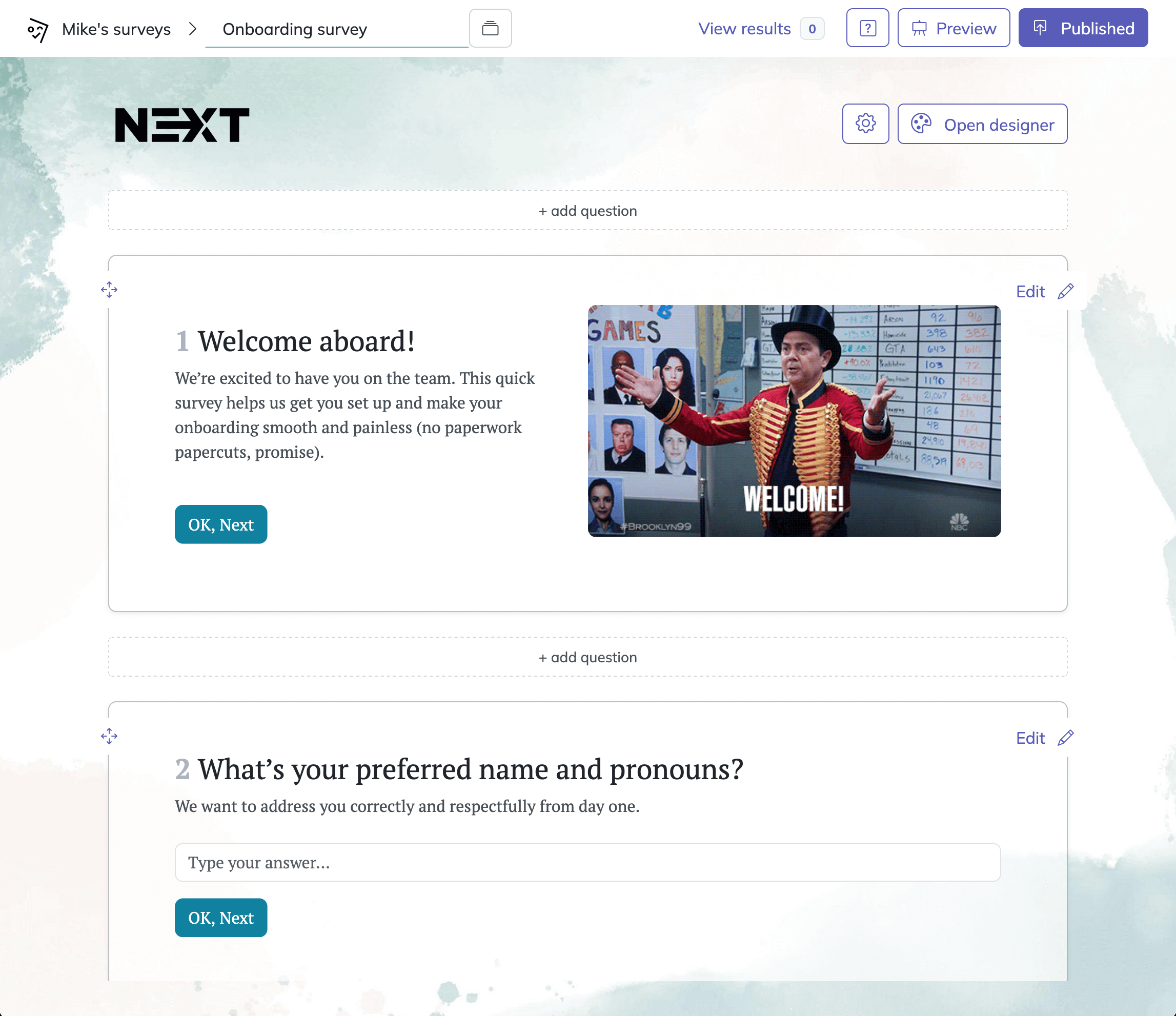
Create a pre-event survey in HeySurvey
1. Create a new survey
Start by opening a template with the button below, or create a survey from scratch. In the Survey Editor, give your survey a clear internal name, such as “Pre-Event Survey.” If needed, add your logo and adjust the basic settings, like start date or survey availability, before you continue. If you're using an online survey maker, this step helps you get organized quickly.
2. Add questions
Click Add Question to build your survey. For a pre-event survey, useful questions include text fields for names or expectations, choice questions for event interests, scale questions for satisfaction or confidence, and date questions if you need scheduling details. Mark important questions as required so respondents don’t skip them. You can also add short descriptions to make each question easier to understand.
3. Publish survey
When your survey looks ready, click Preview to check it first. Make any final changes, then choose Publish to create your shareable survey link. You can now send it to attendees before the event starts.
Audience Demographics and Attendee Profile Questions
Sample questions
Which best describes your job title or role?
What industry do you work in?
How many years of experience do you have in this field?
What is the size of your organization?
Are you a first-time attendee or have you attended similar events before?
Know exactly who you are planning for
Why & When to Use
Use these pre virtual event survey questions after you know someone plans to attend, but before you start making personalization choices.
Here’s the thing, once registration intent is clear, attendee profile data helps you shape content that actually fits the people showing up, not some imaginary crowd you invented over coffee.
These examples of pre event survey questions help you understand experience level, industry background, company size, and event familiarity.
Plus, that makes it easier to adjust pacing, choose better examples, and create smarter networking paths.
For example, this information can help you:
group beginners and advanced attendees more effectively
tailor session content to specific industries or roles
build sponsor packages around real audience segments
improve attendee journeys from sign-up to follow-up
On top of that, this category is especially useful when sponsors want clearer targeting and your team wants cleaner segmentation for marketing and planning.
Keep these pre virtual event survey questions short and practical so you do not send people running for the exit before question six.
Also, be thoughtful with privacy.
Only ask for details you will actually use, make sensitive questions optional when needed, and phrase everything in a way that feels respectful, clear, and easy to answer.
A review of 120 event segmentation studies found attendee profiling is crucial for effective event marketing and management, supporting pre-event demographic surveys (source).
Content and Agenda Planning Survey Questions
Sample questions
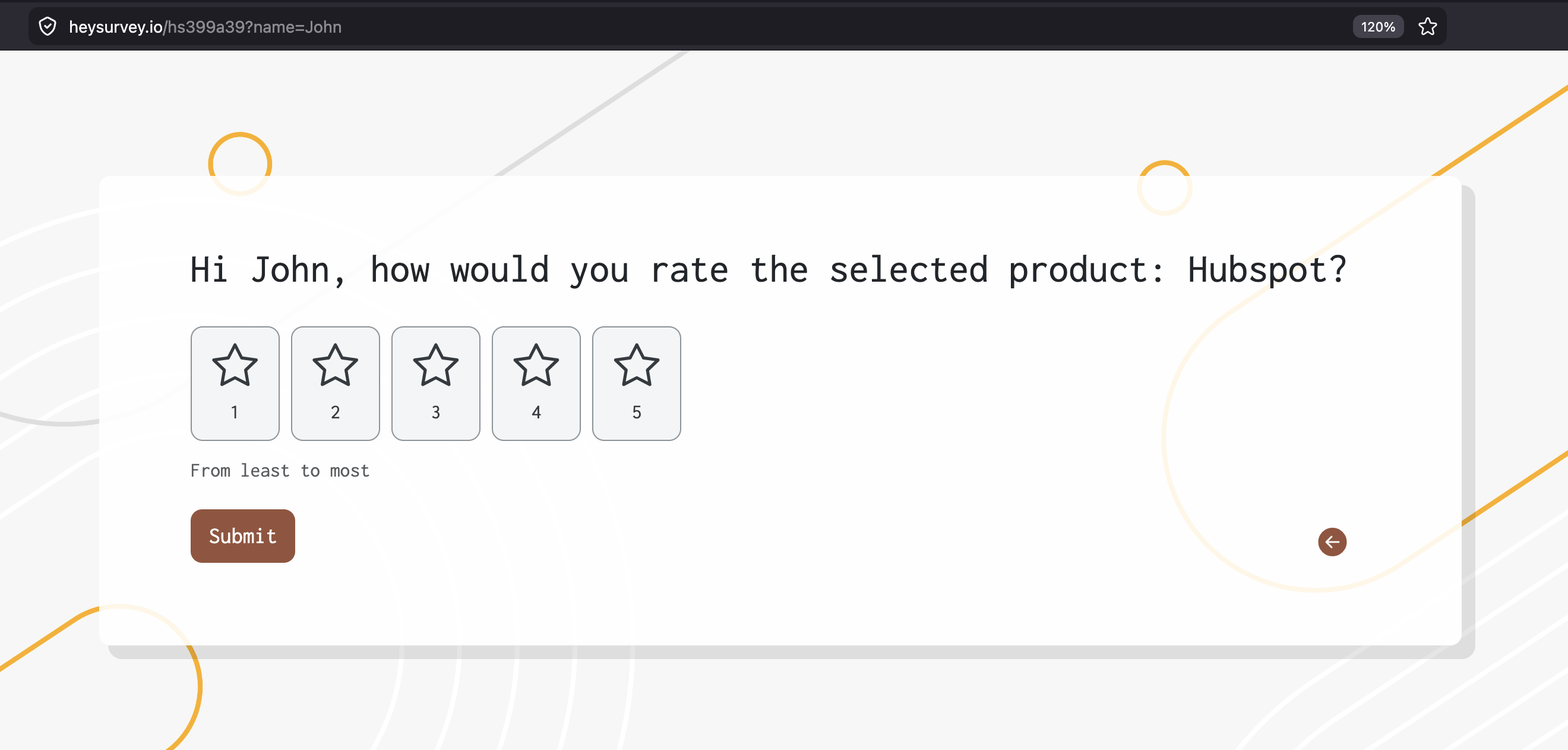
Which topics are you most interested in for this event?
Which session format do you prefer: keynote, panel, workshop, Q&A, or roundtable?
Are there any specific speakers or types of experts you would like to hear from?
What is your preferred session length?
Which of these proposed agenda tracks is most relevant to you?
Plan an agenda people actually want to attend
Why & When to Use
Use these pre virtual event survey questions when you are building or refining the agenda, choosing speakers, shaping breakout topics, or mapping workshop tracks.
Here’s the thing, guessing what people want is a great way to create a session nobody clicks on.
These examples of pre event survey questions help you validate demand before you lock in programming, which means fewer low-interest sessions and a stronger event lineup.
Plus, they are especially useful for multi-session events, educational events, and niche industry events where topic relevance can make or break attendance.
When you review responses, look for patterns instead of obsessing over one flashy idea.
For example, you can use the data to:
spot high-demand themes that deserve a main session or full track
compare interest across formats like workshops, panels, and Q&A sessions
identify which proposed agenda tracks have the strongest pull
shape content around attendee demand while still supporting event goals
On top of that, ranking questions and select-all-that-apply formats work especially well for content planning because they show both priority and range.
Also, keep it realistic.
Balance what attendees want with your event goals, speaker availability, and production limits, because even the perfect wishlist still has to fit in the calendar.
Event Logistics and Scheduling Questions
Sample questions
Which event date or time option works best for you?
What location factors are most important to you when attending an event?
Do you have any dietary requirements or accessibility needs?
How far are you willing to travel to attend?
What is your preferred way to receive event updates and reminders?
Make it easy for people to show up and feel looked after
Why & When to Use
Use these pre virtual event survey questions before you lock in timing, venue details, travel support, meal planning, and your reminder schedule.
Here’s the thing, even a brilliant event can lose people if the logistics feel like a puzzle with missing pieces.
These examples of pre event survey questions help you remove friction early, which can improve attendance rates, boost comfort, and make the whole experience feel smoother from signup to check-in.
Plus, they work well for in-person events and hybrid events, especially when you need to balance convenience, access, and communication preferences.
When you review responses, focus on patterns that affect turnout and attendee comfort, like timing conflicts, travel limits, and update preferences.
For example, you can use the answers to:
choose the date or time with the least resistance
prioritize venue features like parking, transit access, or nearby hotels
plan meals and accommodations with less guesswork
time reminders based on how people prefer to hear from you
allocate staff, signage, and on-site resources where they matter most
On top of that, accessibility and dietary questions should be optional but very easy to answer.
That gives you useful planning data without making the survey feel like paperwork in disguise.
Research on conference planning found that travel distance and proximity to major metro areas were among the strongest predictors of attendance. Source
Networking and Engagement Preference Questions
Sample questions
What type of networking opportunities are you most interested in?
Would you like to participate in small group discussions or roundtables?
Are you open to being matched with attendees who share similar interests?
What topics would you most like to discuss with other attendees?
Do you prefer structured networking or informal networking time?
Help people connect in ways that actually feel natural
Why & When to Use
Use these pre virtual event survey questions when your event includes networking, breakout sessions, community-building, or sponsor conversations.
They are especially useful before professional association events, masterminds, B2B gatherings, and community-led experiences where the connections can matter just as much as the content.
Here’s the thing, not everyone wants to network the same way, and forcing everyone into one format is a bit like handing out the same shoe size at the door.
These examples of pre event survey questions help you learn how attendees want to interact before the event begins, so you can build networking moments that feel more useful and less awkward.
When you review responses, connect networking preferences to attendee goals, industries, roles, and professional interests.
That helps you create better interaction formats, stronger matchmaking, and conversations people actually want to have.
You can use the answers to:
plan roundtables, speed networking, or casual mixer sessions
group attendees by shared interests, goals, or discussion topics
improve sponsor conversations by matching people with relevant solutions
offer both structured and informal networking options
shape introductions around clear consent and privacy preferences
Plus, if you ask about attendee matching or introductions, make it clear how information will be used and let people opt in.
On top of that, a little privacy clarity goes a long way, and usually gets better participation too.
Pre Virtual Event Survey Questions for Online and Hybrid Events
Sample questions
Have you attended a virtual event like this before?
What device will you most likely use to join the event?
What virtual features are most valuable to you: live chat, polls, breakout rooms, Q&A, or on-demand replay?
How long are you comfortable staying engaged in one online session?
Do you have any concerns about accessing the virtual event platform?
Make the online experience smoother before anyone clicks join
Why & When to Use
Use these pre virtual event survey questions for webinars, virtual summits, online workshops, and hybrid events where the digital experience can make or break the day.
They work best before you lock in session formats, engagement tactics, and platform details.
Here’s the thing, online attention spans do not behave like in-person attention spans.
Someone who will happily sit in a ballroom for 45 minutes might start eyeing their inbox after 12 minutes on a laptop, because Wi-Fi, notifications, and snack proximity are very persuasive.
These examples of pre event survey questions help you understand tech comfort, device preferences, participation expectations, and the online features people actually want to use.
That gives you better clues for how to design the event so it feels easier to join and more enjoyable to stay in.
You can use responses to:
plan session length and break timing around realistic online engagement
choose features like chat, polls, breakout rooms, Q&A, and replay access
spot attendees who may need extra tech support before the event starts
improve hybrid delivery for both in-room and remote participants
decide whether on-demand replay should be part of your content plan
Plus, these pre virtual event survey questions can save you from building fancy virtual extras nobody uses, which is always a nice little win.
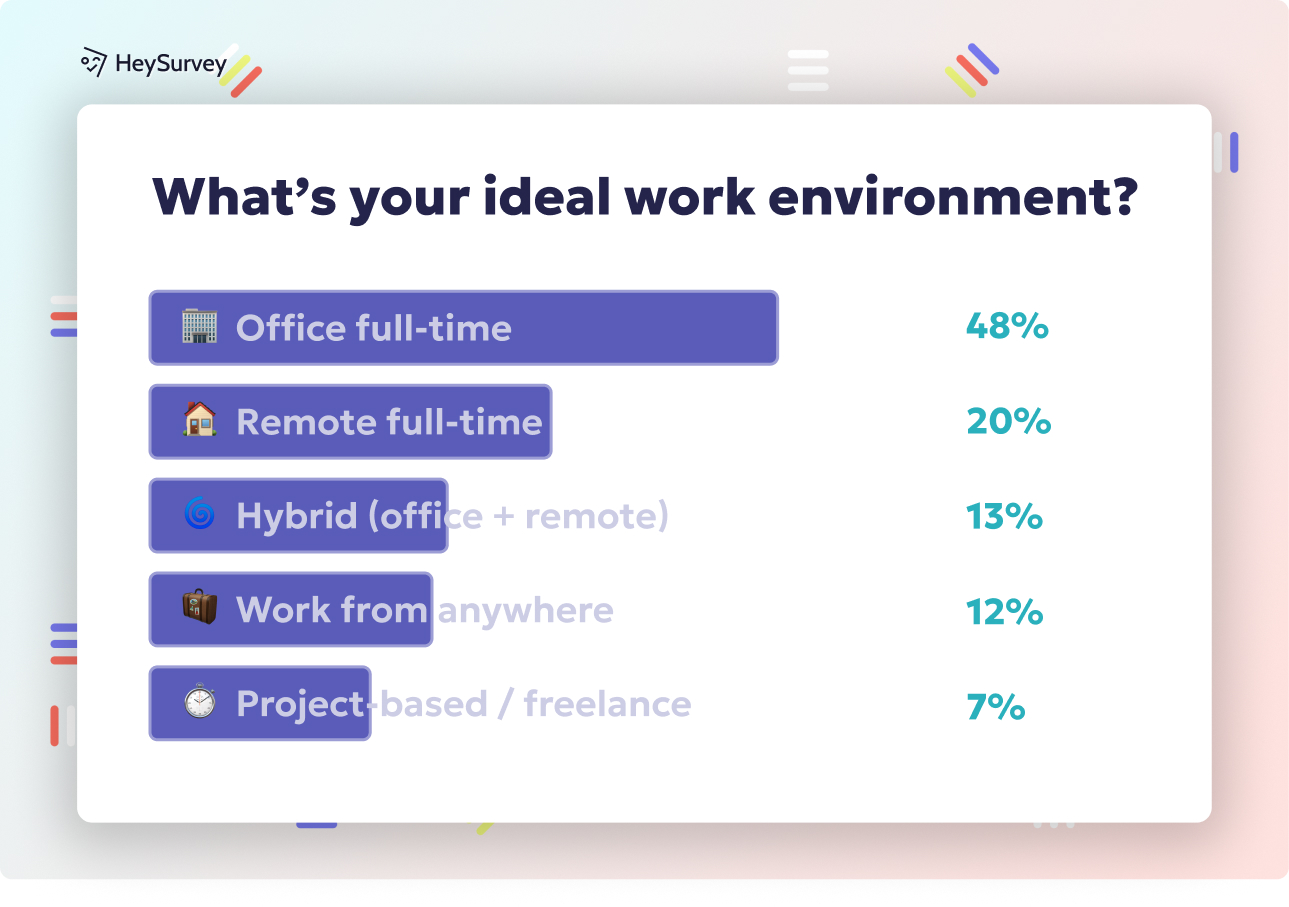
How to Choose the Right Pre Event Survey Questions
Sample questions
What decisions do we need this survey to inform?
Which attendee details are essential versus simply nice to know?
What is the shortest survey we can send while still collecting useful data?
Which responses will help us personalize the attendee experience most?
Are we asking any questions that we will not use later?
Build a shorter survey that actually earns answers
Why & When to Use
Use this section when you want to choose smarter pre virtual event survey questions without turning your form into a tiny side quest.
It works best after reviewing different examples of pre event survey questions, because the goal here is not to ask more, but to ask what matters most.
Here’s the thing, a focused survey usually beats a long one.
If attendees open your survey and feel like they need snacks and a calendar block, you have probably asked too much.
The best pre virtual event survey questions should connect directly to decisions you still need to make, such as session format, timing, content topics, networking setup, or support needs.
On top of that, good examples of pre event survey questions are meant to be adapted, not copied blindly.
What works for a small workshop may be useless for a large conference, and what helps three months out may be irrelevant three days before launch.
Use a simple filter before adding any question:
Will this answer change a planning decision?
Will this help personalize the attendee experience?
Can we realistically act on the response?
Is this essential for this event type, audience size, and timeline?
If we collect it, will we actually use it later?
Plus, when in doubt, trim one more question. Your response rate will usually thank you.
Best Practices for Writing and Sending Pre Event Surveys
Sample questions
Is each question clear, specific, and easy to answer?
Does the survey take less than a few minutes to complete?
Are we using a balanced mix of closed and open-ended questions?
Have we removed leading, repetitive, or unnecessary questions?
Are we sending the survey at a time when attendees can still influence planning?
Better questions get better answers
Why & When to Use
Use this section when you want your pre virtual event survey questions to do more than just sit in a spreadsheet looking important.
It is especially useful if you are building a survey for the first time, or if past examples of pre event survey questions gave you data but not many helpful decisions.
Here’s the thing, strong surveys are not only about what you ask.
They are also about how clearly you ask it, when you send it, and whether people can finish it without feeling like they accidentally signed up for homework.
Use these dos and don’ts to improve response quality, completion rates, and the usefulness of your survey data.
Dos
Do keep the survey short and focused on decisions that matter.
Do use simple language and stick to one topic per question.
Do explain why attendees should complete the survey and how their input will help shape the event.
Do send pre virtual event survey questions early enough to act on the answers.
Do test the survey flow before sending it out.
Do segment audiences when different attendee groups need different questions.
Don’ts
Don’t ask for information you already collected during registration.
Don’t overload the survey with too many open-ended questions.
Don’t use vague, biased, or double-barreled wording.
Don’t collect sensitive personal information unless it is truly necessary.
Don’t send examples of pre event survey questions so late that feedback cannot influence planning.
Don’t ignore the results after collecting them, because that is where the real value lives.
Turning Pre Event Survey Insights Into Action
Sample questions
Which survey insights should influence the agenda first?
What attendee segments need different messaging or experiences?
Which logistics issues should be addressed immediately?
What common expectations should be reflected in event marketing and reminders?
How will we measure whether acting on survey feedback improved the event?
Insight is only useful when you actually use it
Why & When to Use
Use this final section when you want to turn pre virtual event survey questions into real decisions, not just a neat pile of responses.
It works best as your wrap-up because it reminds you why collecting attendee input early matters so much in the first place.
Here’s the thing, the best examples of pre event survey questions do not stop at data collection.
They help you spot patterns, choose what matters most, and make changes before your event goes live and your inbox starts sweating.
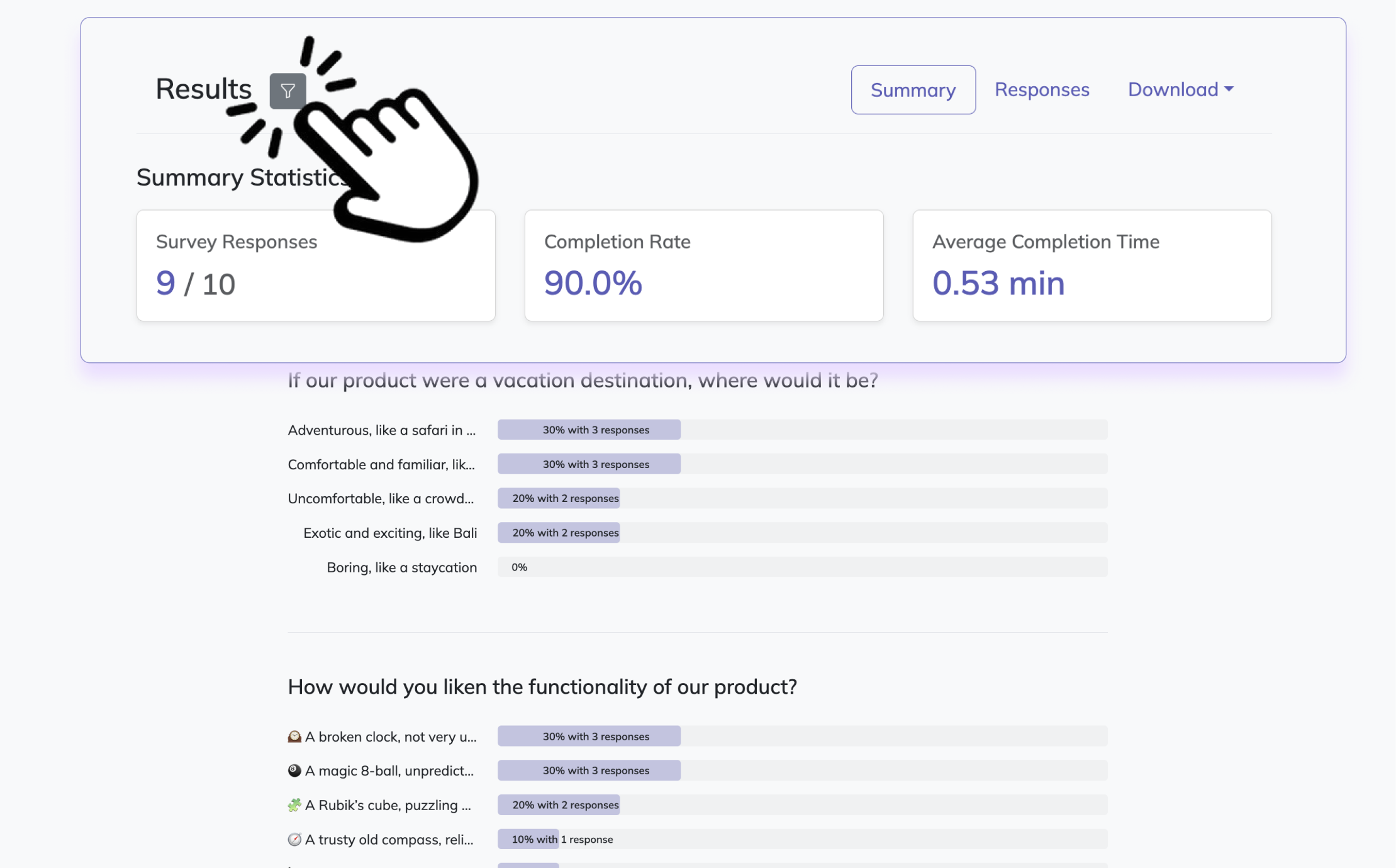
Start by grouping responses into themes like agenda interests, tech concerns, networking preferences, and communication needs.
Then look for repeated answers, strong trends by attendee segment, and issues that could affect the event experience fast.
Use your findings to guide action like this:
Update the agenda based on the topics attendees care about most.
Adjust messaging for different audience groups so reminders feel more relevant.
Fix logistics issues early, especially around timing, access, and platform support.
Improve networking formats if attendees want more structure or flexibility.
Fine-tune virtual event elements like session length, break timing, or live Q&A.
Plus, decide how you will measure success afterward, such as attendance rates, engagement, satisfaction scores, or post-event feedback.
When you act on pre virtual event survey questions, you set up a smoother event, happier attendees, and stronger results after the final session ends.
Related Surveys
29 Social Media Survey Questions
Explore 25 social media survey questions with practical sample prompts to help gather insights on...
31 Job Satisfaction Survey Questions
Explore **25 job satisfaction survey questions** with sample prompts to improve employee feedback...
29 Quantitative Survey Questions Guide
Explore 25 quantitative survey questions with sample questions, examples, and tips to build effec...