31 Patient Experience Survey Questions
Explore 25 patient experience survey questions with examples, tips, and insights to improve feedback and patient satisfaction.
Patient experience survey questions ask about what actually happened during care, like how easy it was to get an appointment or whether instructions were clear. That makes them different from broader satisfaction measures, which focus more on how you felt overall.
Better questions lead to better care.
Healthcare teams use different surveys at different moments: access, visits, communication, discharge, and ongoing care. Plus, this article will walk you through the most useful survey categories, sample questions, and how to turn answers into improvements instead of letting them collect digital dust, whether you're using an online survey tool or another method.
Appointment Scheduling and Access Surveys
Sample questions
How easy was it to schedule your appointment?
How satisfied were you with the time it took to get an appointment?
Did our staff clearly explain available appointment options?
How helpful was our team when answering your scheduling questions?
Did you experience any difficulties with phone, online, or referral-based scheduling?
Access sets the tone early.
Why & When to Use
Appointment scheduling and access surveys help you measure the patient experience before care even starts.
Here is the thing: if booking feels clunky, slow, or confusing, that first impression can stick around longer than anyone wants.
Use this survey type after key access moments, including:
online booking
phone scheduling
referral intake
attempts to secure same-day or urgent appointments
These surveys are especially useful for spotting friction points that quietly frustrate patients, such as:
long hold times
confusing patient portals
limited appointment availability
unclear referral steps
poor follow-up on next steps
On top of that, they help you evaluate whether staff were helpful, whether options were explained clearly, and whether wait times felt reasonable.
This matters for primary care, specialty clinics, dental practices, and hospitals alike, because access problems do not care what sign is on the building.
Plus, the best surveys mix quick rating-scale questions with one open-ended follow-up, so you learn both what went wrong and why.
If patients keep saying, "I could not get through," that is not just feedback. It is your scheduling system waving a tiny red flag.
AHRQ’s CAHPS Clinician & Group survey identifies timely urgent and routine appointments as core patient-experience measures for access-focused survey questions (source)
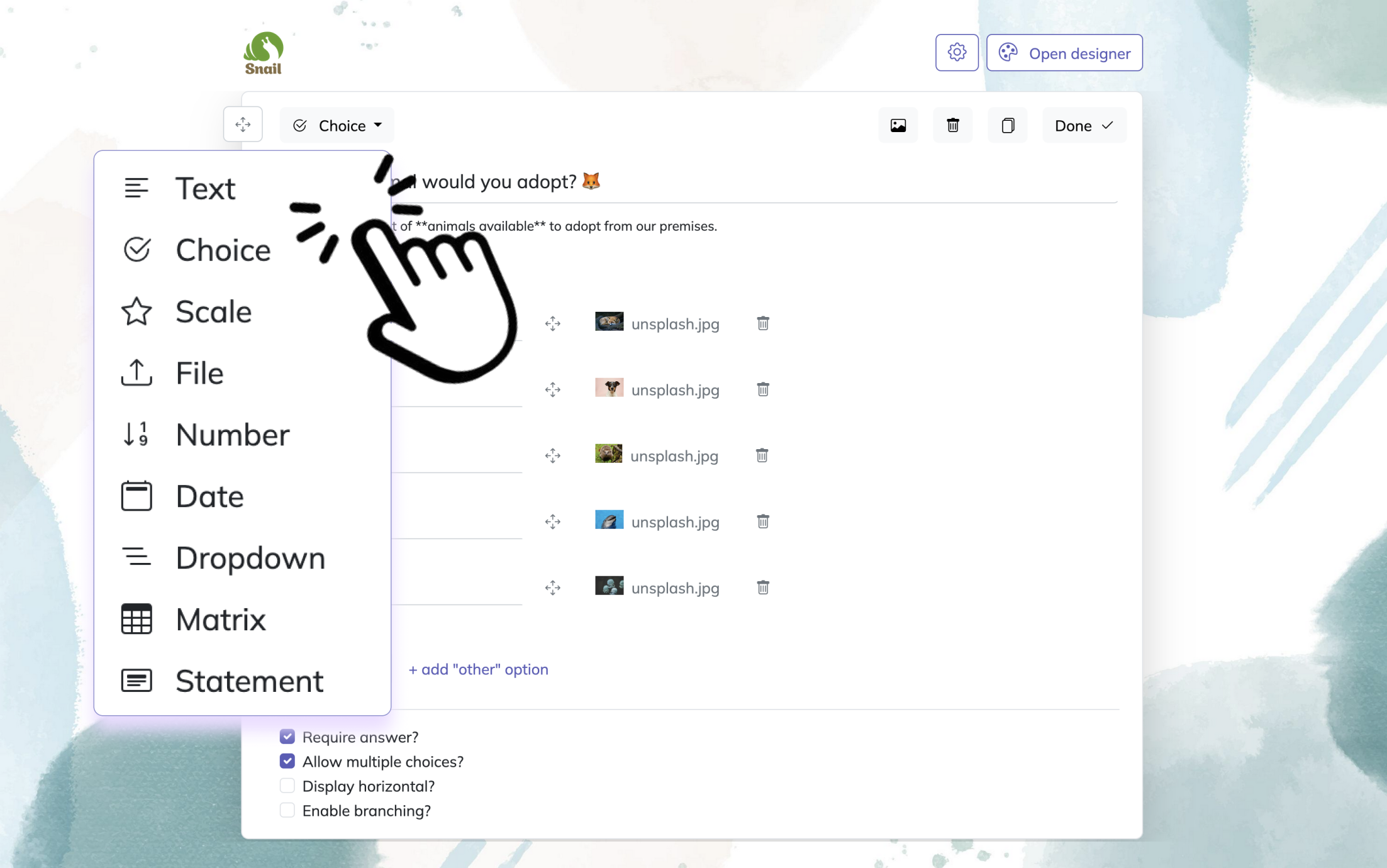
Creating a patient experience survey in HeySurvey is quick and simple, even if you’re new to the platform. You can start from a template using the button below, or build your survey from scratch with our online survey tool.
Step 1: Create a new survey
Open HeySurvey and choose a patient experience survey template, or start with an empty survey. Give it a clear name, then adjust basic settings like your logo, survey dates, and whether the survey should be one question per page.
Step 2: Add questions
Click Add Question to include the items you want to measure. For patient experience, use Scale, NPS, Choice, or Text questions. Ask about wait times, staff courtesy, clarity of instructions, ease of booking, and overall satisfaction. Mark important questions as required if needed.
Step 3: Publish survey
Preview your survey to check the flow and wording. When everything looks right, click Publish to generate a shareable link. You can then send it to patients by email or add it to your website.
Check-In and Front Desk Experience Surveys
Sample questions
How welcoming and professional was the front desk staff?
How easy was the check-in process?
Were registration forms and instructions clear?
How satisfied were you with the time you waited before being seen?
Did you feel respected and acknowledged upon arrival?
First impressions do a lot of heavy lifting.
Why & When to Use
Check-in and front desk experience surveys help you understand what patients experience the moment they walk through the door.
Here is the thing: before any clinical care begins, patients are already forming opinions about your organization based on how they are greeted, guided, and kept informed.
These surveys assess the arrival experience, including:
paperwork and registration steps
wait time perception
front desk professionalism
clarity of forms and instructions
communication about delays
Use them immediately after the visit, or within 24 hours, while the details are still fresh and the emotional tone of the visit has not faded.
Plus, these surveys do more than measure how long someone waited.
They help you uncover how the wait felt, which is often where frustration really lives.
For example, a 15-minute wait can feel manageable with updates, but five silent minutes can feel like a mini eternity in lobby years.
On top of that, this survey type can reveal issues such as:
unclear signage
repetitive paperwork
rushed or dismissive greetings
poor communication about next steps
lack of acknowledgment upon arrival
They are especially useful for in-person visits, imaging centers, urgent care, and outpatient clinics, where front-desk interactions can shape trust, comfort, and patient confidence right from the start.
AHRQ’s CG-CAHPS research-based survey includes validated front-desk measures, asking whether clerks and receptionists were helpful, courteous, and respectful to patients. Source
In-Visit Patient Experience Surveys
Sample questions
Did your provider listen carefully to your concerns?
Did you feel your provider spent enough time with you?
How clearly did your provider explain your condition or treatment options?
Did you feel involved in decisions about your care?
Overall, how would you rate your experience during the visit?
Feeling heard can be just as important as feeling helped.
Why & When to Use
In-visit patient experience surveys focus on the heart of the appointment, meaning the clinical encounter itself and the overall quality of the visit.
They work best after office visits, consultations, urgent care visits, and specialist appointments, when the details of the interaction are still fresh in your patient's mind.
Here is the thing: patient experience is not just about whether everyone was nice.
It is also about whether your patient felt listened to, respected, informed, comfortable, and confident about what happens next.
These surveys should help you evaluate:
provider attentiveness
time spent during the visit
clarity of explanations
comfort and respect throughout the encounter
confidence in care decisions
support staff contributions during the visit
Plus, this survey type gives you a clearer picture of how both clinicians and support staff shape the experience, from rooming and communication to follow-up instructions.
That matters because a great diagnosis explanation can still lose points if the handoff feels messy or confusing.
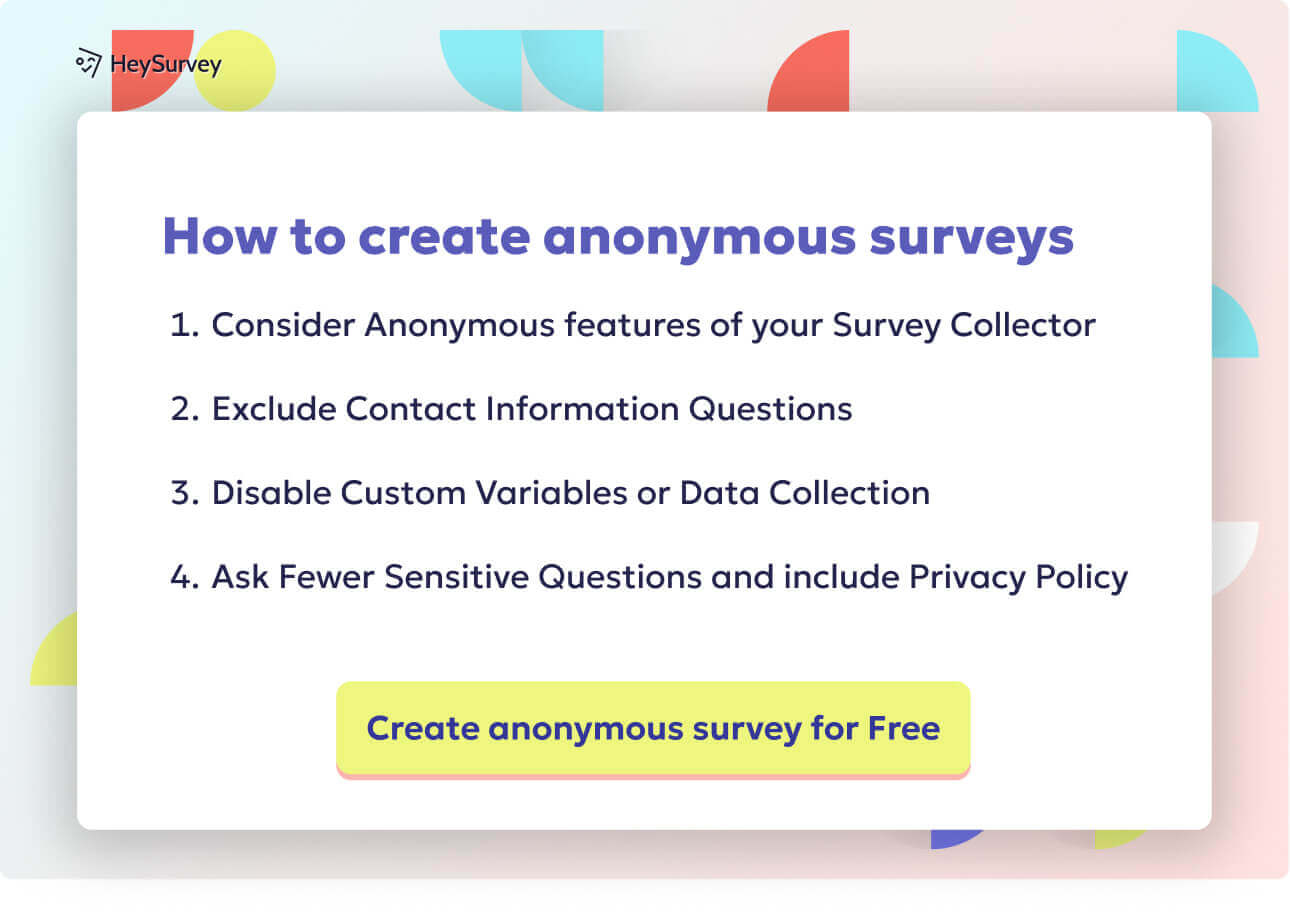
On top of that, it is smart to include an optional open-text question like, “What could we have done better today?”
Sometimes the most useful insight is hiding in one honest comment, and yes, that tiny comment can be the plot twist.
Communication and Staff Interaction Surveys
Sample questions
Did our staff communicate with you in a clear and understandable way?
Did you feel treated with courtesy and respect by all team members?
Were your questions answered fully and in a timely manner?
Did staff explain what would happen next in your care process?
Did you feel comfortable asking questions or expressing concerns?
Clear communication builds trust faster than any waiting room coffee ever could.
Why & When to Use
Communication and staff interaction surveys help you zoom in on how your team speaks, listens, explains, and responds across the full patient journey.
That includes providers, nurses, medical assistants, front desk staff, and anyone else a patient meets along the way.
Here’s the thing: even strong clinical care can feel shaky if communication is confusing, rushed, or inconsistent.
That is why these surveys are especially useful when you want to improve bedside manner, strengthen care coordination, or create a more consistent experience across your team.
They are a great fit for multi-provider practices, larger clinics, and hospital departments where patients interact with several people in one visit.
These surveys can help you assess:
plain-language communication
empathy and emotional tone
interpreter or language access needs
consistency across staff roles
clarity about next steps and follow-up
responsiveness to patient questions and concerns
Plus, communication is one of the biggest drivers of trust, treatment adherence, and long-term patient loyalty.
On top of that, the results can reveal patterns tied to specific teams, shifts, or care settings, which makes improvement a lot less guessy and a lot more useful.
If patients keep saying, “I was not sure what happened next,” your survey just handed you a very fixable clue.
Better patient-provider communication is linked to improved treatment adherence, with poor communication associated with a 19% higher nonadherence risk (source).
Discharge and Follow-Up Experience Surveys
Sample questions
Were your discharge instructions easy to understand?
Did you clearly understand your medications, side effects, or dosage instructions?
Did you know what symptoms or problems should prompt you to seek help?
Were follow-up appointments or next steps clearly explained?
After leaving, did you feel prepared to manage your care at home?
A smooth discharge can save patients from a very stressful game of “what do I do now?”
Why & When to Use
Discharge and follow-up experience surveys help you measure how well patients understand what to do after treatment, hospitalization, surgery, or a procedure.
They focus on the moment patients leave your care, when clear instructions matter most and memory tends to get a little wobbly.
Here’s the thing: weak discharge communication can lead to confusion, missed medications, avoidable complications, and readmissions.
That risk can be even higher for older adults, patients with chronic conditions, and anyone managing multiple medications or home care steps.
These surveys are especially useful after discharge from:
hospitals
surgery centers
emergency departments
outpatient procedure settings
A strong survey in this area should reflect the full handoff experience, not just the paperwork.
That includes whether patients received written instructions, heard a clear verbal explanation, had a caregiver involved when needed, and got follow-up outreach after leaving.
These surveys can help you assess:
medication understanding and dosage clarity
awareness of warning signs and when to seek help
follow-up appointment clarity
confidence managing care at home
caregiver readiness and support
post-discharge phone calls or check-ins
Plus, when patients leave feeling prepared, you reduce medication mistakes and make recovery feel far less like assembling furniture without instructions.
Telehealth Patient Experience Surveys
Sample questions
How easy was it to join your telehealth appointment?
Did the audio or video quality affect your visit?
Did your provider communicate clearly during the virtual appointment?
Did you feel your concerns were addressed as effectively as they would be in person?
Would you use our telehealth services again?
Great virtual care should feel convenient, clear, and not like a surprise battle with your Wi-Fi.
Why & When to Use
Telehealth patient experience surveys help you understand how well your virtual care actually works for patients, not just whether the appointment happened.
They measure convenience, technology usability, communication quality, and overall visit effectiveness across digital care settings.
These surveys are especially useful after:
video visits
phone consultations
remote follow-up appointments
behavioral health sessions
Here’s the thing: patients often judge virtual care a little differently than in-person care.
They still expect empathy, clarity, and helpful treatment, but they also notice login trouble, technical delays, privacy concerns, and whether the platform feels easy or frustrating.
A strong telehealth survey should explore more than provider performance alone.
It should also uncover whether patients could access the right device, felt comfortable using the technology, and had enough digital know-how to complete the visit without needing a mini IT degree.
These surveys can help you assess:
ease of joining the visit
audio and video reliability
communication clarity during the appointment
privacy and comfort during the session
device accessibility and digital literacy barriers
whether the visit type was appropriate for virtual care
Plus, this feedback can guide workflow improvements, tech support, platform fixes, and smarter decisions about which visits belong on screen and which really need the exam room.
Best Practices for Writing and Using Patient Experience Survey Questions
Sample questions
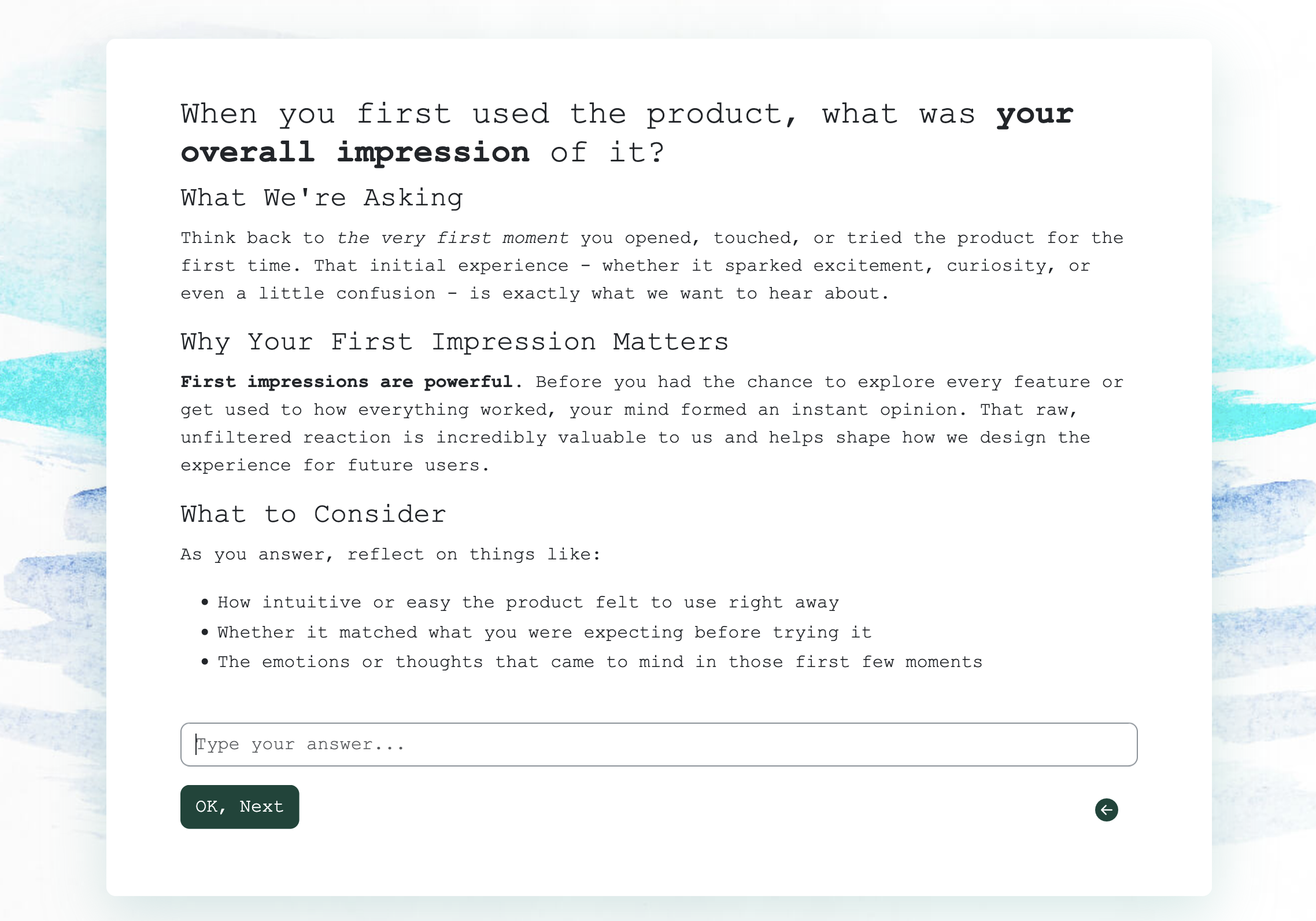
Are our survey questions clear, simple, and free of medical jargon?
Are we asking about experiences patients can accurately recall?
Does our survey capture both quantitative ratings and qualitative feedback?
Are we sending surveys soon enough after the care experience?
Are we using results to improve patient care rather than simply collect data?
The best survey is not the longest one. It is the one patients actually finish and your team actually uses.
Why & When to Use
Best practices matter anytime you create or refine patient experience surveys, whether you send them by text, email, phone, paper, or through the patient portal.
Here’s the thing: a great survey balances three goals at once, which are response rate, question quality, and feedback you can actually use.
If your survey is too long, too vague, or too late, patients may skip it or give fuzzy answers.
Plus, if the questions are strong but nobody reviews the results, you are basically collecting dust with better formatting.
Use these best practices when launching a new survey, updating old questions, comparing locations, or trying to improve care after specific visit types.
A smart approach includes a few simple dos and don’ts:
Do keep surveys concise and focused on one care experience at a time.
Do use neutral wording and include at least one open-ended question.
Do segment results by provider, location, service line, or visit type.
Do protect privacy and explain how patient feedback will be used.
Don’t ask repetitive, vague, or double-barreled questions.
Don’t rely only on overall satisfaction scores.
Don’t wait too long after the visit to send the survey.
Don’t collect feedback without a plan to review it and improve care.
Common Mistakes to Avoid in Patient Experience Surveys
Sample questions
Did any survey question feel confusing or difficult to answer?
Were there questions that did not apply to your experience?
Did the survey feel too long?
Were you able to answer honestly based on your actual experience?
Is there an important part of your experience we failed to ask about?
Small survey mistakes can quietly wreck useful feedback.
Why & When to Use
Use this section when you want to avoid the kind of survey errors that lead to weak responses, messy data, or feedback your team cannot confidently act on.
It is especially helpful if you are building a patient experience survey from scratch or swapping out a generic template that feels about as personal as a waiting room clipboard.
Here’s the thing: this section is about practical pitfalls, not theory.
The biggest mistakes are usually simple, but expensive in terms of insight.
Watch out for problems like these:
Biased wording that pushes patients toward a certain answer.
Surveys that are too long and ask more than patients want to give.
Sending surveys too late, when details are fuzzy or forgotten.
Asking too many irrelevant questions that do not match the visit type.
Failing to segment results by demographic group, provider, location, or service line.
Skipping pilot testing before full launch.
Never reviewing or updating questions after the survey goes live.
Plus, irrelevant or confusing questions can lower completion rates fast.
On top of that, if you do not test and refresh your survey regularly, even a good survey can go stale like break room coffee.
Turning Patient Experience Survey Insights Into Action
Sample questions
Which parts of the patient journey receive the lowest experience scores?
What recurring complaints appear in open-ended feedback?
Which issues can be fixed quickly, and which require long-term process changes?
How will we share survey findings with staff and leadership?
How will we measure whether changes actually improved the patient experience?
Good feedback only matters when you actually do something with it.
Why & When to Use
Use this section as the action-focused finish to your patient experience survey strategy.
It works especially well for practice leaders, administrators, and patient experience teams who want to turn raw feedback into clear next steps instead of letting it sit in a dashboard looking busy.
Here’s the thing: collecting responses is only the beginning.
The real value shows up when you analyze trends, spot patterns, and make improvements patients can actually feel.
Start by prioritizing issues based on:
How often the problem appears.
How much it affects the patient experience.
How realistic it is to fix with your current team, budget, and workflow.
Plus, survey insights should connect to real operational changes, not vague good intentions.
That can include updates to staff training, scheduling, communication, handoffs, follow-up processes, or staffing coverage.
On top of that, close the loop with both staff and patients.
Share findings with leadership and frontline teams, explain what is changing, and measure whether those changes improve future scores, comments, and retention.
A quick win builds momentum, while bigger fixes need a plan and patience.
End with this idea: better patient experience survey questions lead to better decisions, better care, and a stronger reputation, which is a pretty nice return for a few well-asked questions.
Related Surveys
29 Social Media Survey Questions
Explore 25 social media survey questions with practical sample prompts to help gather insights on...
31 Job Satisfaction Survey Questions
Explore **25 job satisfaction survey questions** with sample prompts to improve employee feedback...
29 Quantitative Survey Questions Guide
Explore 25 quantitative survey questions with sample questions, examples, and tips to build effec...