29 Marriage Survey Questions to Ask Couples
Discover 25 marriage survey questions to explore relationship insights, strengthen communication, and better understand your partner’s needs.
Marriage survey questions are prompts that help you gather honest feedback about communication, intimacy, expectations, and long-term satisfaction, whether you are building a questionnaire on marriage for couples, counselors, researchers, or organizations.
Plus, this guide walks you through practical categories for a marriage survey, a marriage questionnaire for couples, and a marriage satisfaction survey, so you can ask better questions and get clearer answers using an online survey tool.
Some readers may also need a marital status survey question or marital status questionnaire, but here the focus is marriage quality and dynamics, not just checking a box and calling it romance.
Marriage Satisfaction Survey Questions
Sample questions
How satisfied are you with your marriage overall at this stage of life?
Do you feel appreciated and valued by your spouse on a regular basis?
How well does your marriage currently meet your emotional needs?
How hopeful do you feel about the future of your marriage?
What is one area of your marriage that most needs improvement right now?
A clear snapshot beats a vague gut feeling.
Why & When to Use
This section works beautifully for a marriage satisfaction survey, annual relationship check-ins, premarital counseling follow-up, therapy intake, or a self-guided review when you want a big-picture read on how things are really going.
Here’s the thing, a strong questionnaire on marriage should help you spot overall happiness, emotional fulfillment, unmet needs, and shifts in satisfaction over time without turning every conversation into a dramatic season finale.
This kind of marriage survey questionnaire is especially useful when you want a high-level view before digging into specific problems, and it can sit alongside a marital status question or marital status survey question if your form also needs basic demographic information.
To make your questionnaire on marriage more useful, mix rating-scale questions with open-ended ones.
Use scales for trend tracking, such as rating satisfaction from 1 to 10.
Use open-ended prompts to uncover why someone answered that way.
Repeat the same marriage survey or marriage questionnaire items monthly, quarterly, or annually to spot patterns.
Avoid vague wording like “Are you happy?” and add context such as emotional support, affection, or teamwork.
Compare answers privately first, then discuss patterns together so the conversation starts with insight, not instant debate.
More satisfied spouses consistently showed more positive, less negative, and more effective communication, supporting communication-focused marriage survey questions (source).
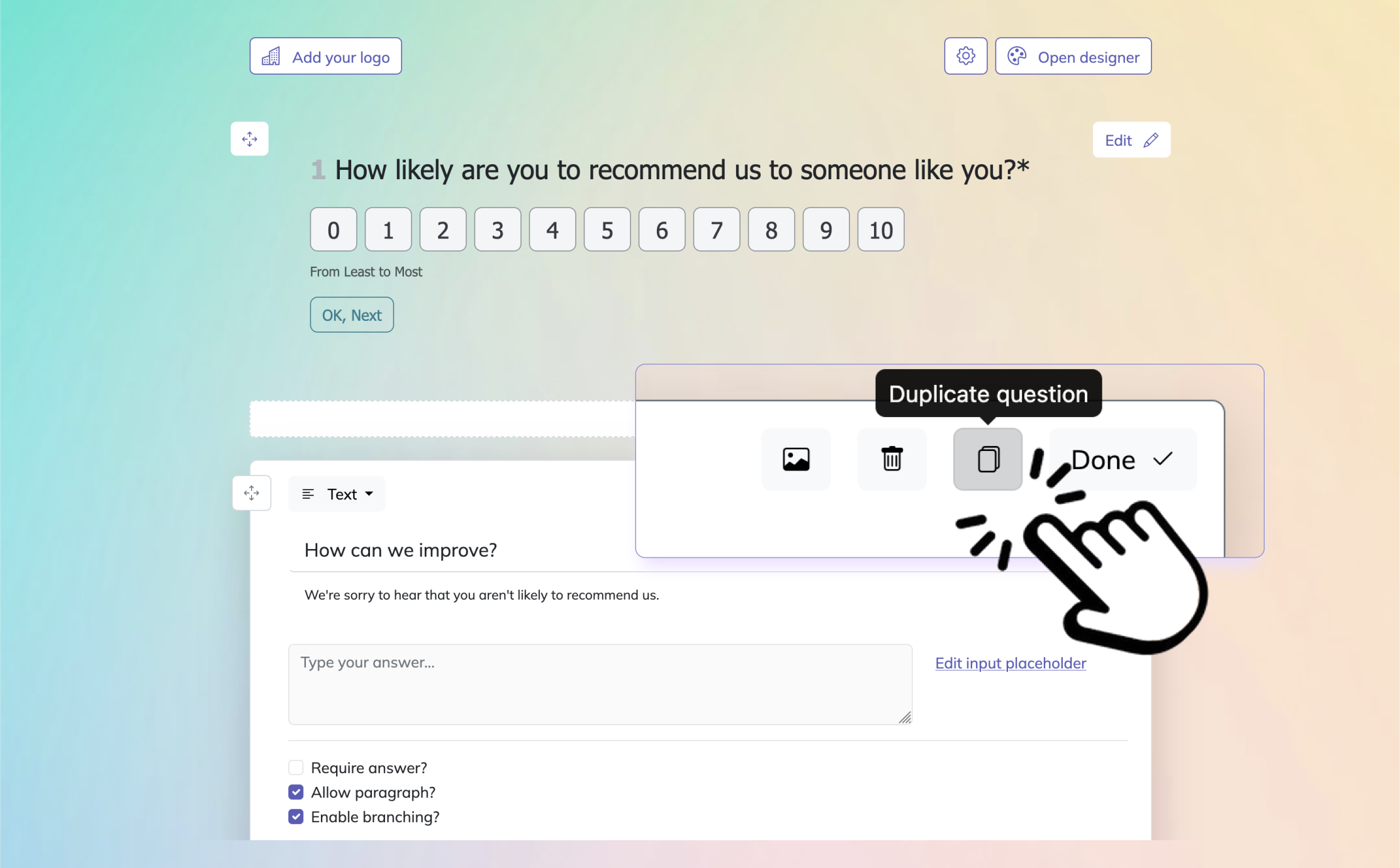
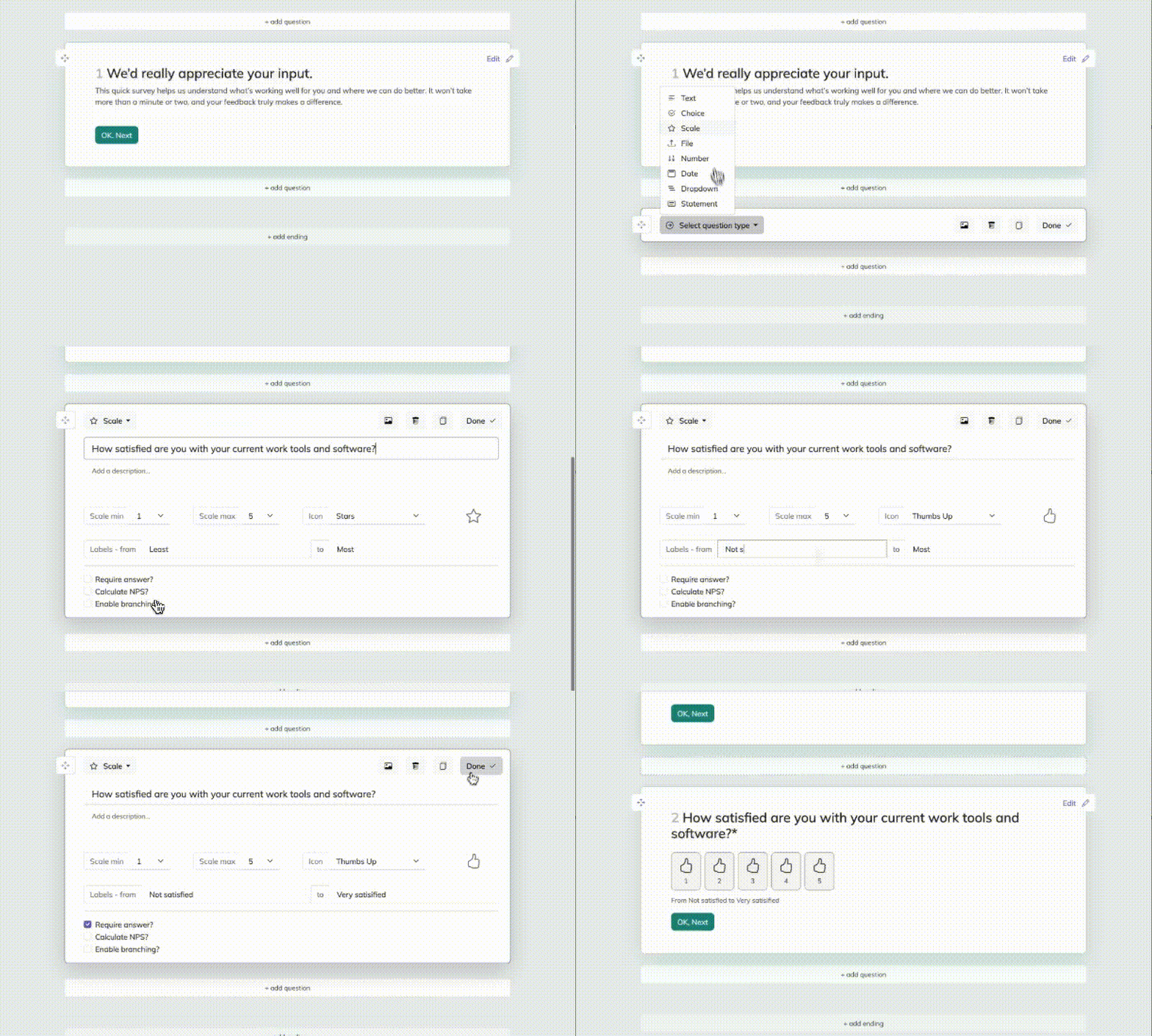
How to create a marriage survey in HeySurvey
1. Create a new survey
Start by opening a marriage survey template from the button below, or choose an empty sheet if you want to build it from scratch. HeySurvey works right in your browser, so you can begin without an account. Once the survey opens, give it a clear internal name, such as “Marriage Survey,” so it is easy to find later.
2. Add questions
Click Add Question to include the questions you need. For a marriage survey, you might use Choice questions for multiple options, Scale questions for rating satisfaction, and Text questions for open-ended feedback. You can mark questions as required, reorder them, and add a description if needed. Keep the wording simple and friendly so respondents can answer quickly.
3. Publish survey
When your questions are ready, preview the survey to check the flow and design. Then click Publish to create a shareable link. If you have an account, you can also view responses later and update the survey anytime.
Communication in Marriage Survey Questions
Sample questions
Do you feel your spouse listens to you without interrupting or becoming defensive?
How comfortable are you bringing up difficult topics with your spouse?
When disagreements happen, how often do the two of you resolve them respectfully?
Do you feel understood after important conversations with your spouse?
What communication habit would you most like to improve in your marriage?
Good communication questions uncover what the argument is really about.
Why & When to Use
Communication-focused questions are a must when you keep seeing misunderstandings, repeat arguments, emotional distance, or trouble talking about money, parenting, or intimacy.
Plus, this section fits beautifully in a marriage questionnaire for couples, conflict-resolution workshops, and counselor-led relationship assessments where the goal is to understand patterns, not just collect polite nods.
Here’s the thing, communication quality often shapes the results of a broader marriage survey more than couples expect, so this part can add real depth alongside a marital status question, questionnaire on marriage, or marital status survey question.
To make this marital status questionnaire or marriage questionnaire more useful, separate questions about how often something happens from questions about how well it happens.
Ask frequency questions like how often discussions turn into arguments.
Ask quality questions like whether both people feel heard, respected, and understood.
Include both everyday communication and conflict communication in your marriage survey.
Use neutral wording such as “How do disagreements usually unfold?” instead of blame-heavy phrasing.
Consider anonymous completion for sensitive topics, because honesty sometimes shows up faster when no one is watching the pen.
Higher marital satisfaction is consistently linked with more positive, less negative, and more effective spousal communication in survey-based relationship research. Source
Conflict Resolution and Problem-Solving Questions
Sample questions
How often do small disagreements escalate into larger arguments?
After a conflict, how effectively do you and your spouse repair the relationship?
Do you feel conflicts in your marriage get resolved or simply postponed?
How fair do you believe decision-making is during disagreements?
What topic creates the most unresolved tension in your marriage?
Conflict questions show you whether problems get solved or just change outfits and come back tomorrow.
Why & When to Use
This part of a marriage survey helps you spot recurring tension points, argument patterns, repair attempts, and the stress triggers that keep showing up like uninvited guests.
It is especially useful when a couple feels stuck in the same disagreement loop and every talk somehow ends up back at the exact same sore spot.
Plus, this section works as a natural extension of a questionnaire on marriage for counseling, coaching, or self-reflection, because it goes beyond a basic marital status question and digs into how the relationship handles pressure.
A strong marital status survey question can tell you whether someone is married, but conflict questions reveal what married life actually feels like day to day.
When building a marital status questionnaire or marriage questionnaire, make sure you ask about patterns, not just one bad Tuesday.
Separate healthy conflict from destructive conflict by asking whether disagreements stay respectful, focused, and productive.
Include timing, tone, and follow-up, such as when arguments happen, how they sound, and whether repair happens afterward.
Look for repeated themes, because answers in this marriage questionnaire for couples may point to deeper issues tied to intimacy, finances, or trust.
Use these questions in any questionnaire on marriage when you want honest insight, not just checkbox harmony.
Intimacy and Emotional Connection Questions
Sample questions
How emotionally connected do you feel to your spouse right now?
Do you feel safe being vulnerable and honest with your spouse?
How satisfied are you with the level of affection in your marriage?
Do you and your spouse make enough intentional time for closeness and intimacy?
What would help you feel more connected to your spouse?
These questions help you measure the quiet glue of marriage, not just the label on the jar.
Why & When to Use
This part of a questionnaire on marriage explores emotional closeness, affection, trust, vulnerability, and physical intimacy, which are often the first areas to shift when life gets loud.
Some readers specifically look for an intimacy survey for married couples, and here's the thing, this section fits that need while still working smoothly inside a broader marital status survey question set.
These questions are especially useful when couples say they feel more like roommates than partners, notice affection fading, or want to reconnect after stress, parenting, burnout, or a major life transition.
A basic marital status question may tell you whether someone is married, but this section shows how connected that marriage feels from the inside.
When writing this part of a marital status questionnaire, keep the language respectful, inclusive, and nonjudgmental, because nobody opens up when a marriage survey sounds like an interrogation lamp just switched on.
Balance emotional intimacy questions with physical intimacy questions so your marriage questionnaire captures the full picture.
Be sensitive about privacy and consent, especially if the marriage questionnaire for couples will be shared, reviewed, or discussed with others.
Keep the focus on clarity, trust, and comfort, not sensational wording or awkward phrasing.
Use this section when your marital status survey question set needs depth, warmth, and real-world honesty.
In a 13-year longitudinal study, better downregulation of negative emotion during marital conflict predicted higher marital satisfaction over time (source).
Finances, Roles, and Daily Partnership Questions
Sample questions
How satisfied are you with how financial decisions are handled in your marriage?
Do you believe household responsibilities are divided fairly between you and your spouse?
How aligned are you and your spouse on short-term and long-term financial goals?
How supported do you feel in managing daily responsibilities such as work, home, or parenting?
What practical responsibility causes the most tension in your marriage?
This section helps you spot the everyday pressure points that can quietly shake a marriage.
Why & When to Use
Many marriages feel stress around money, chores, parenting, time, and expectations about who handles what, and that is exactly where this part of a questionnaire on marriage earns its keep.
A simple marital status question can tell you whether someone is married, but it cannot show whether daily life feels like teamwork or a tug-of-war with laundry baskets.
This section helps a marriage questionnaire uncover practical friction that affects satisfaction, stability, and the overall tone of the relationship.
Plus, practical stress has a sneaky way of showing up everywhere, so it often shapes results in a marriage satisfaction survey even when couples think the problem is "just stress."
This category works well for newlyweds, long-term couples, and researchers studying household dynamics in a marriage survey or marital status survey question set.
When building this part of a marital status questionnaire, keep the wording clear and neutral.
Cover money, chores, time, mental load, and parenting separately when needed.
Avoid assumptions about gender roles in any marriage questionnaire for couples.
Define "fairness" carefully, because fair and equal are not always twins.
Use this section when your marital status survey question needs more real-life detail and fewer rosy guesses.
Trust, Commitment, and Future Planning Questions
Sample questions
How strongly do you trust your spouse to be honest with you?
Do you feel secure in your spouse’s commitment to the marriage?
How aligned are you and your spouse on your long-term future together?
When your spouse makes a promise, how confident are you that they will follow through?
What would strengthen trust or commitment in your marriage right now?
This section helps you measure how safe, steady, and future-ready the relationship really feels.
Why & When to Use
Trust and commitment questions help you look beyond a basic marital status question and understand whether a marriage feels secure, reliable, honest, and grounded in loyalty.
That makes this part of a questionnaire on marriage especially useful when you want more than surface-level data from a marital status survey question set.
Here's the thing, couples can feel satisfied in some areas and still struggle with trust, so you should keep trust separate from overall happiness in a marriage survey.
Plus, this section works well after a breach of trust, during major life changes, or before counseling sessions focused on repair and rebuilding.
It also belongs in both personal marriage review questions and formal marriage survey questionnaire design, because confidence in the future matters whether you are reflecting privately or collecting research data.
When writing this part of a marital status questionnaire, keep it clear, neutral, and a little emotionally roomy.
Separate trust from satisfaction, because those scores do not always hold hands.
Include both present-state and future-focused prompts in your marriage questionnaire.
Use neutral wording for sensitive issues so people answer honestly.
Remember that trust often overlaps with communication, intimacy, and conflict patterns in a marriage questionnaire for couples.
Marital Status and Relationship Classification Questions
Sample questions
What is your current marital status?
Which option best describes your current relationship status?
Are you currently married, separated, divorced, widowed, or never married?
Has your marital status changed within the past 12 months?
Do you currently live with a spouse or long-term partner?
This section is your go-to when you need a simple marital status question, not a full relationship deep dive.
Why & When to Use
This section is built for readers who specifically need a marital status question, a marital status survey question, a relationship status survey question, or a clear marital status questionnaire item.
These questions are most useful in demographic forms, research studies, workplace paperwork, healthcare intake, event registration, and broad surveys where marriage is just one data point, not the whole story.
Here's the thing, this is different from a questionnaire on marriage that explores communication, trust, or satisfaction.
If you only need to classify someone’s legal or current relationship category, a simple marital status survey question usually does the job just fine.
Plus, if you want to understand relationship quality, conflict, or happiness, you will need a fuller marriage survey or marriage questionnaire instead.
When writing this part of a marital status questionnaire, keep the wording clean, inclusive, and easy to answer because nobody wants to solve a tax form riddle before coffee.
Use simple classification questions when marriage is only one variable among many.
Include inclusive answer choices and define terms clearly if legal status and relationship status may differ.
Explain the difference between legal marital status and current relationship status when relevant.
Save deeper marriage satisfaction survey topics for a separate marriage questionnaire or marital status questionnaire follow-up section.
Best Practices for Writing and Using Marriage Survey Questions
Sample questions
Are your questions specific enough to produce actionable answers?
Have you avoided leading or loaded wording that pushes respondents toward one answer?
Does each question focus on only one issue at a time?
Are you using a response format that matches the kind of insight you need?
Have you created a safe and private setting for honest responses?
Better survey design gets you better truth.
Why & When to Use
This section helps you build a stronger marriage survey, whether you need a simple marriage questionnaire for couples or a more formal questionnaire on marriage for counseling, coaching, HR demographics, or academic research.
Here's the thing, a well-written marital status survey question or marriage questionnaire improves clarity, honesty, usefulness, and response rates, which is a pretty nice upgrade for a few smarter words.
If your marital status questionnaire feels vague, repetitive, or awkward, your results will be too.
Use these best practices when writing anything from a single marital status question to a full marriage satisfaction survey.
Do:
Use simple, neutral language.
Mix quantitative and qualitative questions.
Group questions by theme.
Respect privacy and emotional sensitivity.
Test your questionnaire on marriage before using it widely.
Don’t:
Ask double-barreled questions.
Use judgmental, blaming, or manipulative wording.
Make every question negative.
Overwhelm people with too many repetitive items.
Collect sensitive relationship information without explaining why.
Plus, keep your marriage questionnaire for couples at a reasonable length, choose a frequency that fits the goal, consider anonymity, and plan a follow-up conversation so the answers do not just sit there looking important.
How to Turn Marriage Survey Insights Into Action
Sample questions
Which survey responses point to the most urgent issue in the marriage?
Where do both spouses agree that improvement is needed?
Which answers reveal strengths the couple should protect and build on?
What one action step can be taken in the next 7 days based on the survey results?
When should the couple repeat the survey to measure progress?
Good answers are only half the job.
Why & When to Use
A marriage survey, marital status survey question, or full questionnaire on marriage only helps if you actually do something with the results.
This final step helps you move from raw answers to practical next steps, whether you are using a marriage questionnaire for couples, reviewing marriage review questions, or planning recurring relationship check-ins.
Here’s the thing, you do not need to fix everything at once because that is a great way to make progress run away and hide.
Start by identifying 1 to 3 priority themes from your marriage survey or marital status questionnaire.
Look for the lowest-scoring areas.
Compare each spouse’s answers to spot shared concerns and blind spots.
Highlight strengths that are worth protecting, not just problems that need attention.
Then turn each weak area into something specific.
A communication issue can become a weekly check-in.
A trust concern can become an honest conversation goal.
A conflict pattern can become a counseling or coaching topic.
Plus, if answers show repeated pain, shutdown, or major disagreement, outside support may be the smartest next move.
On top of that, repeat the questionnaire on marriage after a set period, such as 30 or 60 days, so you can measure progress instead of guessing.
The best marriage survey questions, marital status question prompts, and marriage satisfaction survey tools lead to honest reflection, constructive dialogue, and real improvement.
Next Steps That Actually Help
The right survey at the right time can change the conversation.
Marriage surveys are not magic, but they are genuinely useful. A pre-marriage tool can uncover expectations before vows, a newlywed survey can catch early friction, a marriage satisfaction survey can track long-term health, and focused check-ins on intimacy, conflict, parenting, or a marital status survey question can serve very different but equally practical purposes.
Choose the survey type that fits your current stage, keep the wording clear, and revisit the questions as life changes. Plus, if your answers reveal repeated pain points, use that insight to guide a real conversation, a counseling session, or your next version of the survey. If you want to keep the momentum going, download a free template pack or book a counseling session using your preferred resource.
Related Health Survey Surveys
31 Health Care Satisfaction Survey Questions
Explore 25 health care satisfaction survey questions with sample examples to improve patient feed...
31 Body Image Survey Questions
Explore 25 body image survey questions with sample prompts to assess confidence, self-perception,...
29 Domestic Violence Survey Questions
Explore 25 domestic violence survey questions with sample prompts, insights, and survey tips to b...