29 Marketing Survey Questions
Discover 25 marketing survey questions with sample answers to boost insights, improve strategy, and learn what customers really think.
Good marketing starts with better questions, and the right survey can save you from expensive guessing. Marketing survey questions help you understand customers, test ideas, measure performance, and improve campaigns without crossing your fingers and hoping for magic. In this guide, you’ll find practical marketing survey questionnaire sample ideas, advertising survey examples, and brand positioning survey questions examples you can adapt fast. Plus, everything is organized by survey goal, so you can quickly find the marketing questionnaire questions, seo marketing sample survey questions, or online survey tool example marketing survey formats that fit your needs.
Customer Demographic and Audience Research Survey Questions
Sample questions
Which of the following best describes your age group?
What is your current job role or industry?
How often do you purchase products or services in this category?
What factors matter most to you when choosing a brand in this market?
Where do you usually discover new products like this?
Know who you are actually talking to
Why & When to Use
You use this survey type to figure out who your audience is, how different segments compare, and which groups are most valuable to your business.
It works best before launching campaigns, entering a new market, refining customer personas, or checking whether your targeting assumptions are actually right. Sometimes your “ideal audience” looks great on a slide and totally different in real life. Humbling, yes. Useful, absolutely.
Here’s the thing, demographic data alone will not tell you enough. The strongest marketing survey questionnaire sample includes demographic, behavioral, and preference-based answers so you can build smarter segments instead of vague labels.
For example, two people in the same age group may buy for completely different reasons. That is why strong marketing questionnaire questions should connect basic profile details with buying habits, brand preferences, and discovery channels.
Use this section as a foundation for an example marketing survey focused on audience profiling, especially if you need seo marketing sample survey questions or brand positioning survey questions examples that support sharper targeting.
To keep your data clean and easy to use:
Make answer choices mutually exclusive so people fit one clear option.
Keep wording simple so responses are faster to analyze.
Combine profile questions with motivation and behavior questions for better segmentation.
Plus, this approach makes your marketing survey question set far more useful than a spreadsheet full of birthdays and job titles.
Pew Research Center finds closed-ended survey questions work best when response options are exhaustive and mutually exclusive, improving clarity and data quality (source).
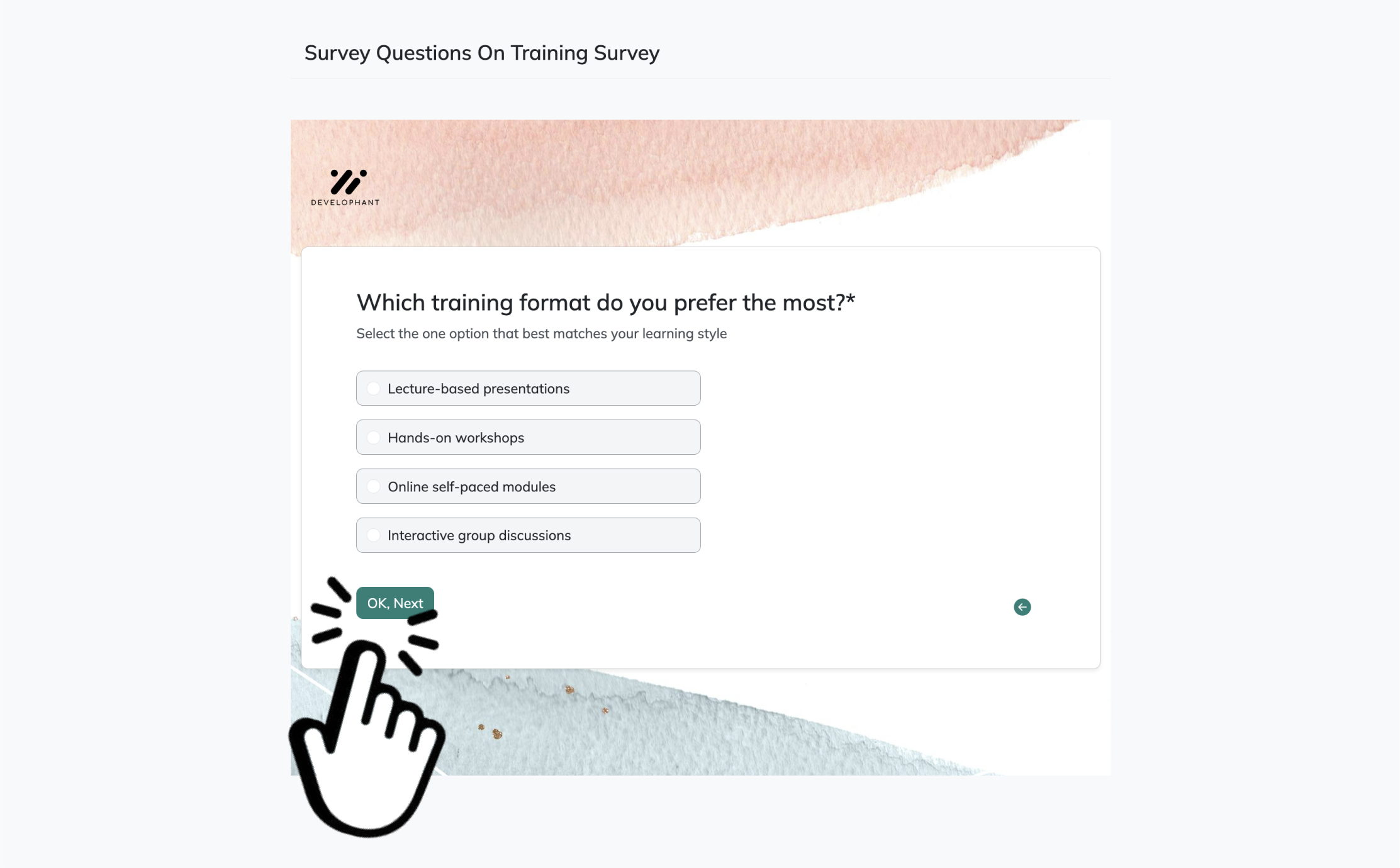
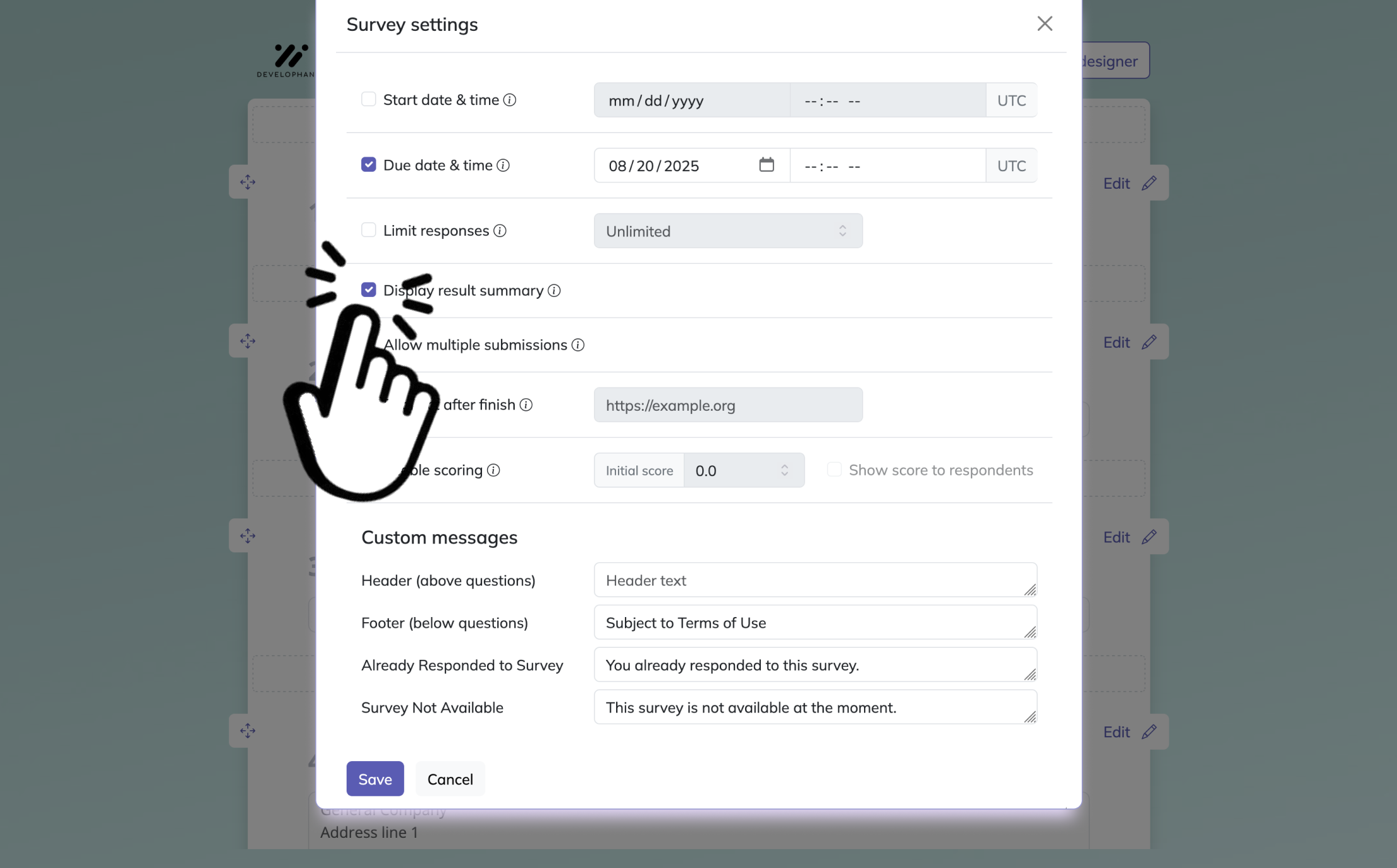
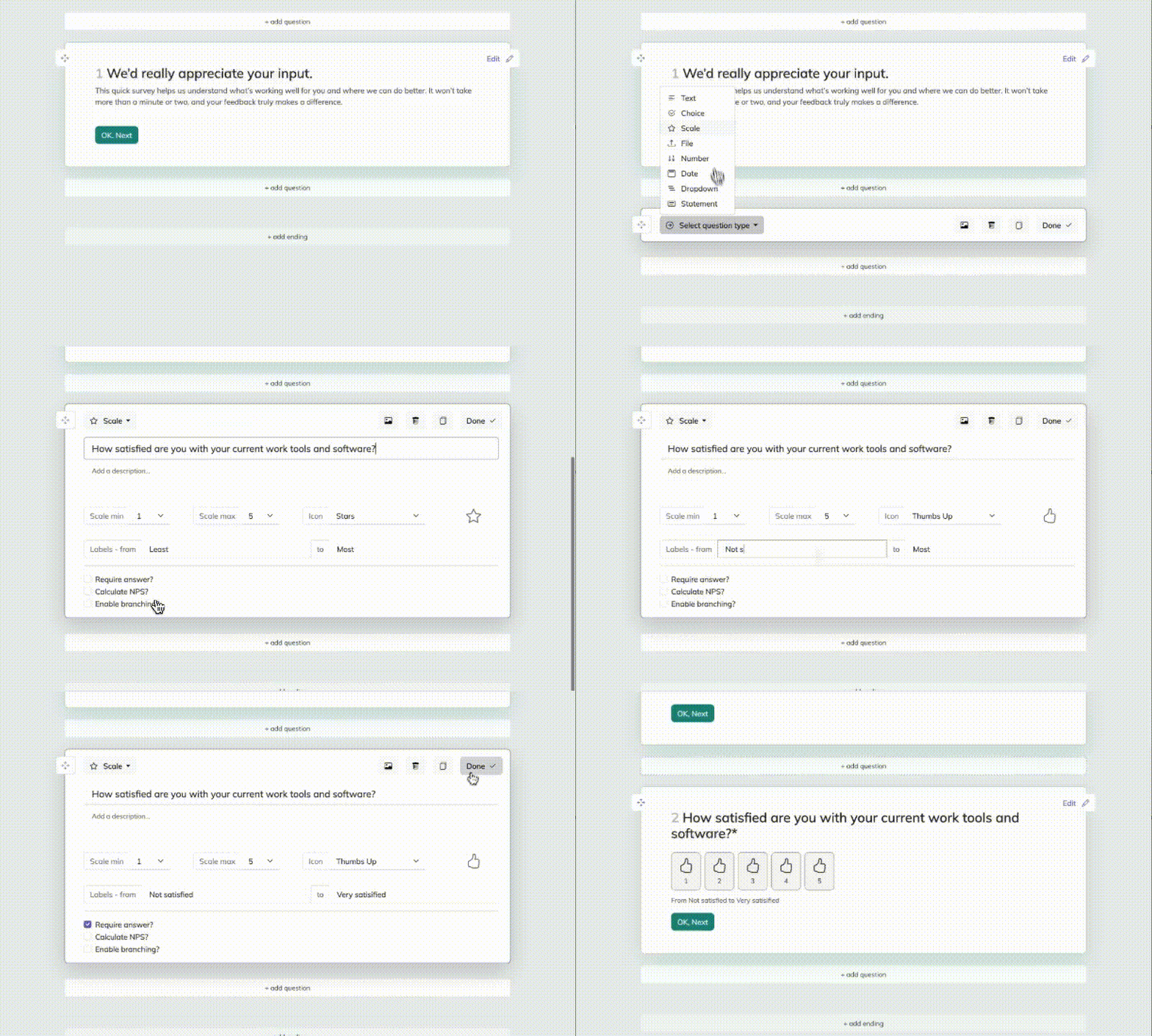
How to create a marketing survey in HeySurvey
Create a new survey
Start by opening a marketing survey template with the button below, or begin with a blank survey if you want full control. HeySurvey works without an account for building, so you can explore the editor right away. Give your survey a clear name and set any basic options you need before moving on.Add questions
Click Add Question to include the best marketing survey questions for your goal. Use Choice questions for preferences, Scale or NPS for satisfaction and loyalty, and Text questions for open feedback. You can mark important questions as required, add your branding, and reorder questions anytime.Publish your survey
When your survey looks ready, preview it to check the flow and wording. Then click Publish to create a shareable link. If needed, you can also embed the survey on your website or send it directly to respondents.
Brand Awareness and Recall Survey Questions
Sample questions
Before today, had you heard of our brand?
Which brands come to mind first when you think about this product category?
Where have you seen or heard about our brand recently?
How familiar are you with our brand?
Which of these brands have you heard of or seen before?
See whether your brand is actually sticking
Why & When to Use
This section helps you measure whether people know your brand, recognize it, and remember it next to competitors. In a strong marketing survey questionnaire sample, these questions show if your brand is visible at all, not just whether your ads are shouting into the void.
Here’s the thing, there are two different signals to watch. Unaided recall asks people to name brands from memory, while aided awareness checks whether they recognize your brand from a list, and both matter in smart brand positioning survey questions examples.
Use this set before and after big campaigns, sponsorships, product launches, or any awareness push. Plus, it is one of the most useful advertising survey examples for tracking top-of-funnel performance without guessing based on vibes alone.
Awareness data can also tell you whether ad spend is building true visibility or just increasing frequency among people who already know you. That makes this a very practical example marketing survey section for spotting wasted reach.
To make the results more useful:
Separate aided awareness from unaided recall so you can see the difference between recognition and memory.
Compare responses across channels, regions, and audience segments.
Track changes over time to see whether visibility is growing after campaigns.
Pair these with seo marketing sample survey questions if you want to connect brand lift with discovery sources.
On top of that, these marketing survey samples help you see whether your name is entering the conversation, which is usually the first win before clicks, leads, and sales show up.
Research shows aided, spontaneous, and top-of-mind awareness are closely related but nonlinear, so surveys should measure both recall and recognition separately (source).
Brand Perception and Positioning Survey Questions
Sample questions
Which three words best describe our brand?
How does our brand compare with competitors on quality, value, or innovation?
What makes our brand different from other options you know?
What type of customer do you think our brand is best suited for?
How strongly do you agree that our brand delivers on its promises?
Find out what your brand means in people’s minds
Why & When to Use
These questions help you uncover how customers actually describe your brand, what they associate it with, and whether your messaging matches the position you want in the market. In a strong marketing survey questionnaire sample, this is where you stop assuming and start listening.
Here’s the thing, your brand positioning lives in your audience’s head, not just in your slide deck. That is why brand positioning survey questions examples are so useful when your message sounds polished internally but lands like plain oatmeal externally.
Use this section after a rebrand, a messaging update, a big competitor move, or anytime your differentiation feels fuzzy. Plus, these are some of the most practical seo marketing sample survey questions to pair with brand research when you want to connect search visibility with brand meaning.
Perception gaps can reveal serious messaging problems. If you say "innovative" and customers say "cheap," you have a positioning plot twist on your hands.
To make this section more useful:
Mix scaled and open-ended questions so you get both measurable trends and real customer language.
Compare brand perception with competitor benchmarks to spot where your positioning is strong or slipping.
Look for repeated words and themes that can improve website copy, ads, and broader marketing questionnaire questions.
Use these marketing survey samples to align your intended positioning with how people truly talk about your brand.
Customer Satisfaction and Experience Survey Questions
Sample questions
How satisfied are you with your overall experience with our brand?
How easy was it to find the information or product you needed?
How satisfied are you with the quality of our product or service?
Did our brand meet your expectations?
What is one thing we could improve about your experience?
Measure the moments that keep customers coming back
Why & When to Use
Customer satisfaction surveys help you understand how people feel about your product, service, support, buying journey, and overall experience with your brand. In a solid marketing survey questionnaire sample, this section shows whether your customer experience is building loyalty or quietly pushing people toward the exit.
Use these marketing questionnaire questions after a purchase, after a support conversation, at renewal time, or as part of regular account health check-ins. Plus, they work well in both small feedback loops and broader marketing survey samples when you want a clearer view of satisfaction over time.
Here’s the thing, happy customers do not always stay, but unhappy customers usually leave clues first. That is why seo marketing sample survey questions and customer experience checks matter so much for retention, loyalty, and repeat purchase strategy.
A strong example marketing survey often includes a mix of question types, such as:
Satisfaction ratings to measure overall sentiment
Effort score questions to see how easy the experience felt
Expectation-based questions to learn whether you delivered what people hoped for
Open-ended follow-ups to uncover what needs fixing fast
On top of that, it helps to separate transactional surveys from relationship surveys.
Transactional surveys measure a specific moment, like a purchase or support ticket
Relationship surveys track how customers feel about your brand overall
Use the results to spot churn risk, improve weak touchpoints, and find opportunities to turn a decent experience into a repeat-buying habit.
Bain found 60%–80% of customers who defected had said they were satisfied, showing satisfaction questions alone often miss churn risk (source).
Product, Pricing, and Purchase Intent Survey Questions
Sample questions
How likely are you to purchase this product or service in the next 30 days?
What would make you more likely to buy from us?
How would you rate the value of our product relative to its price?
At what price would this product feel too expensive to consider?
Which feature or benefit is most important when deciding whether to buy?
Turn buying hesitation into revenue clues
Why & When to Use
This section helps you validate demand, test pricing perception, uncover objections, and estimate conversion potential before you start guessing with your budget. In a practical marketing survey questionnaire sample, these questions connect feedback directly to revenue decisions, which is a lot nicer than relying on vibes alone.
Use this set before a launch, during product development, after pricing changes, or when cart abandonment and low conversions need explaining. Plus, seo marketing sample survey questions like these can help you see whether the issue is price, positioning, product fit, or plain old confusion.
A smart example marketing survey gives you a better read on willingness-to-pay, perceived value, and the friction stopping people from buying. On top of that, strong brand positioning survey questions examples often pair purchase intent with pricing and feature priorities so you can see what actually moves someone toward checkout.
Helpful ways to use this feedback include:
Adjust pricing without nudging respondents toward the answer you want
Discover objections that weaken conversion
Build better offers, bundles, or feature packages
Refine messaging around the value buyers care about most
Improve positioning using real marketing survey question insights instead of assumptions
Here’s the thing, if people love the product but hate the price, your offer may need a tune-up, not a funeral.
Advertising and Campaign Effectiveness Survey Questions
Sample questions
Do you remember seeing our recent advertisement or promotion?
What message do you remember most from the ad?
How appealing did you find the ad creative?
Did this campaign make you more interested in our brand or offer?
Where did you encounter this campaign content?
Measure what your campaign actually made people remember
Why & When to Use
This type of marketing survey questionnaire sample helps you figure out whether your campaign landed or just floated by like a balloon at the wrong party. It measures ad recall, message clarity, emotional response, channel effectiveness, and whether the campaign increased interest or purchase intent.
Use these questions during campaign testing, right after a launch, or when you are comparing creative concepts across platforms. Plus, advertising survey examples like these help you separate what people thought about the ad itself from where they actually saw it.
Here’s the thing, strong recall usually tells you more than vanity metrics ever will. A click is nice, but remembering the message is what gives your campaign legs.
You can use seo marketing sample survey questions here too, especially when you want to understand discovery through search content. Instead of drifting into technical SEO, ask whether someone found your brand through helpful articles, landing pages, or branded search.
Helpful ways to use this feedback include:
Measure message recall before judging campaign success
Compare creative appeal across multiple ad concepts
Track which channels drove awareness or interest
Separate creative feedback from media placement performance
Improve future marketing questionnaire questions using real response patterns
On top of that, brand positioning survey questions examples fit nicely here when you want to know whether the campaign reinforced how you want your brand to be perceived.
Best Practices for Writing and Using Marketing Survey Questions
Sample questions
How can I improve a marketing survey questionnaire sample before sending it out?
What makes seo marketing sample survey questions easier to answer and analyze?
Which brand positioning survey questions examples give clearer feedback?
How long should an example marketing survey be before people drop off?
What are the biggest mistakes to avoid in marketing questionnaire questions?
Better survey design gets you better answers, faster
Why & When to Use
If you want a marketing survey questionnaire sample people will actually finish, good design is everything. Here’s the thing, cleaner surveys improve response quality, make analysis easier, and give you more useful seo marketing sample survey questions and brand positioning survey questions examples readers can put to work right away.
Use these best practices any time you create an example marketing survey for customers, leads, subscribers, or internal audiences. Plus, they are especially handy when you are refining marketing survey samples for mobile users, different lifecycle stages, or campaign-specific feedback.
Dos
Start with one clear goal per survey.
Group questions by topic so the flow feels natural.
Use simple, neutral wording.
Mix rating questions with a few open text responses.
Keep it short, usually 5 to 10 minutes max.
Test with a small audience first.
Segment responses by source, audience type, or funnel stage.
Use consistent scales so trends are easier to compare.
Don'ts
Don’t ask double-barreled questions like: "Was our website helpful and easy to use?"
Don’t overstuff the survey with essay questions. Nobody wakes up hoping for homework.
Don’t lead people with wording like: "How amazing was your experience?"
Don’t collect personal data you do not need.
Don’t ignore mobile readability, timing, or follow-up plans.
Weak phrasing: "Why do you love our content?"
Strong phrasing: "How useful was our content for your needs?"
On top of that, the best advertising survey examples and marketing survey question sets are targeted, well-timed, and built to drive action, not just collect dust in a spreadsheet.
How to Turn Marketing Survey Insights Into Action
Sample questions
How do I prioritize results from a marketing survey questionnaire sample?
Which seo marketing sample survey questions help improve campaigns fastest?
How can brand positioning survey questions examples shape better messaging?
What should I do after collecting answers in an example marketing survey?
How often should I repeat marketing survey samples to track changes?
Great survey data only matters when you actually use it
Why & When to Use
Once your marketing survey questionnaire sample starts bringing in responses, your next job is turning opinions into decisions. Here's the thing, the smartest seo marketing sample survey questions and brand positioning survey questions examples are not just for collecting feedback, they help you spot what to fix, what to improve, and what to double down on.
Use this approach when you want survey results to influence real marketing moves instead of becoming decorative spreadsheet wallpaper. Plus, it works especially well when your marketing questionnaire questions uncover recurring issues around messaging, pricing, channel performance, or customer experience.
Prioritize Findings by Business Impact
Sort responses into clear themes first, then rank each one by:
How often it appears
How much revenue or conversion impact it may have
How easy it is to implement
Common high-impact themes often include messaging confusion, product gaps, pricing friction, and channel opportunities.
Translate Responses Into Marketing Decisions
Turn patterns into action across your funnel, such as:
Sharpening audience targeting
Rewriting landing page copy
Testing stronger offers
Improving retention emails
Refining customer experience
For example, advertising survey examples may show low ad recall, which tells you to refresh creative, while customer wording in brand positioning survey questions examples can improve headlines and value props.
Build a Continuous Feedback Loop
Repeat your example marketing survey at key intervals and compare trends over time. On top of that, connect survey findings with analytics, CRM data, and conversion results to confirm what is really happening.
The best marketing survey question strategy is simple: ask better, learn faster, act sooner. That is how marketing survey samples start pulling their weight.
Turning Survey Insights Into Marketing Action
Sample questions
Which survey insight should be acted on first based on business impact?
What messaging should be updated based on customer language?
Which audience segment needs a different campaign or offer?
What friction point can be tested or fixed immediately?
How will we measure whether the change improved results?
This is where survey data stops being interesting and starts being useful.
Why & When to Use
This is the closing roadmap.
Here’s the thing, survey research creates ROI when you turn insights into decisions that change what your marketing says, where it shows up, and how your customer experience feels.
Use this step after analysis, during planning cycles, and anytime you need to prioritize tests, updates, or bigger strategic shifts.
Start by choosing actions with the strongest business impact, not just the most dramatic comments.
That means focusing on what can improve conversions, retention, positioning, or customer trust first.
Turn findings into specific updates across channels, such as:
Rewriting ad copy using customer language
Tightening landing page headlines around real objections
Refreshing email messaging for different audience segments
Improving product pages where buyers feel uncertain
Fixing retention campaign friction points that cause drop-off
Plus, balance quick wins with longer-term changes.
A form fix this week and a positioning update next quarter can both be smart moves, and yes, both count as progress.
On top of that, give every action an owner, a timeline, and a success metric.
If nobody owns it, it becomes a very fancy spreadsheet.
The best marketing survey questions are the ones that lead to better decisions, not just more data.
Related Surveys
29 Social Media Survey Questions
Explore 25 social media survey questions with practical sample prompts to help gather insights on...
31 Job Satisfaction Survey Questions
Explore **25 job satisfaction survey questions** with sample prompts to improve employee feedback...
29 Quantitative Survey Questions Guide
Explore 25 quantitative survey questions with sample questions, examples, and tips to build effec...