31 Logo Testing Survey Questions for Effective Feedback
Explore 25 logo testing survey questions to measure brand recognition, appeal, and clarity, and learn how to choose a logo that resonates with your audience.
Your logo might look sharp, but does it say the right thing? Logo testing survey questions help you discover what a design communicates, beyond “I like it.”
Here’s the thing: a questionnaire for logo design gathers requirements before design begins, while a logo testing survey evaluates proposed or existing logos.
You’ll find ready-to-use logo design questions for six survey types, learn when each is useful, and see how to turn audience feedback into design decisions. Plus, you’ll know when you need a logo questionnaire rather than another round of “make it pop” with an online survey maker.
1. First-Impression Logo Testing Survey Questions
Sample questions
“What are the first three words that come to mind when you see this logo?” Open-ended.
“What type of company, product, or service would you expect this logo to represent?” Open-ended.
“What, if anything, stands out to you about this logo?” Open-ended.
“How visually appealing do you find this logo?” Five-point scale from “Not at all appealing” to “Extremely appealing.”
Your questionnaire for logo design helps define what you want to communicate; these logo design questions check what people actually see.
Ask for unprompted first impressions before sharing your brand story or intended positioning. Your logo should speak before you hand it a script.
Keep the initial viewing time, image size, and background consistent across respondents.
Evaluate visual appeal separately from communication: a beautiful logo can still suggest the wrong industry.
Group recurring words and associations into themes instead of cherry-picking memorable comments.
Plus, keep your logo questionnaire neutral so respondents can share unexpected reactions, not just confirm your hopes.
Why & When to Use
Use these questions early in concept development, before detailed evaluation or polishing a favorite design.
You’ll uncover immediate associations and unexpected interpretations, helping you check whether the logo creates your intended first impression before exploring specific design details with brand image survey questions.
Across six studies, descriptive logos improved brand evaluations and purchase intentions by increasing processing ease and perceived authenticity (source).
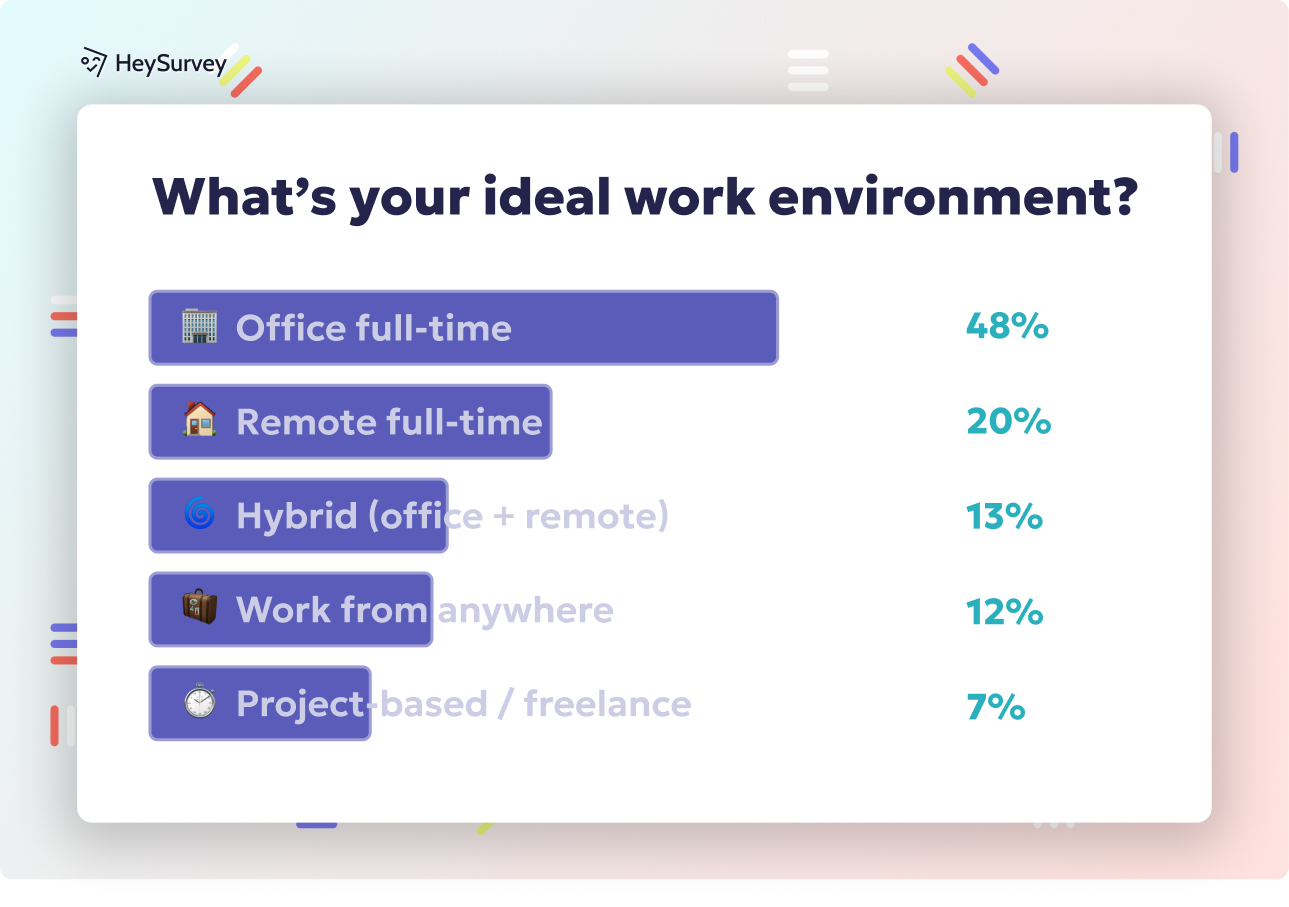
Create a logo testing survey with HeySurvey
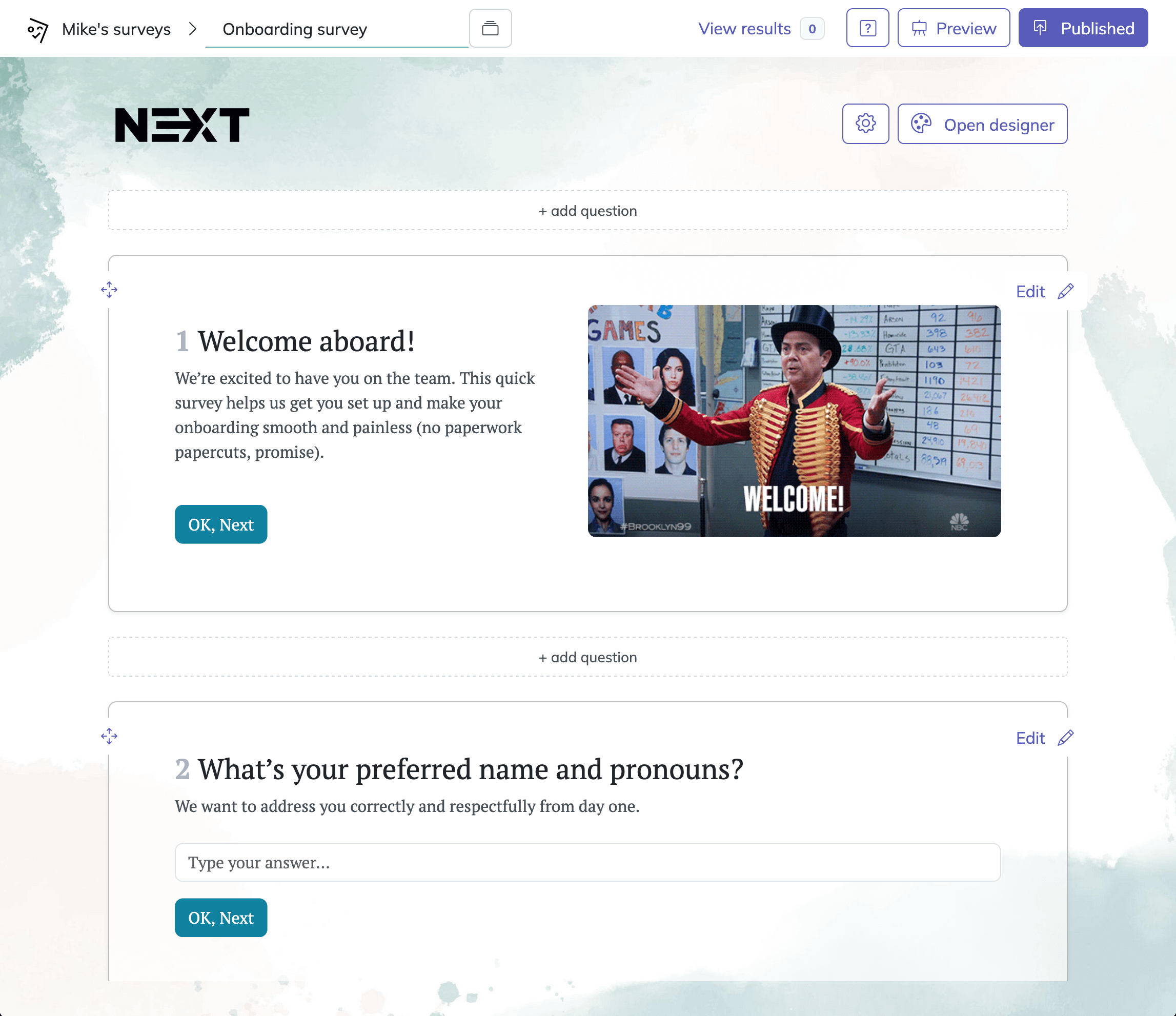
1. Create a new survey
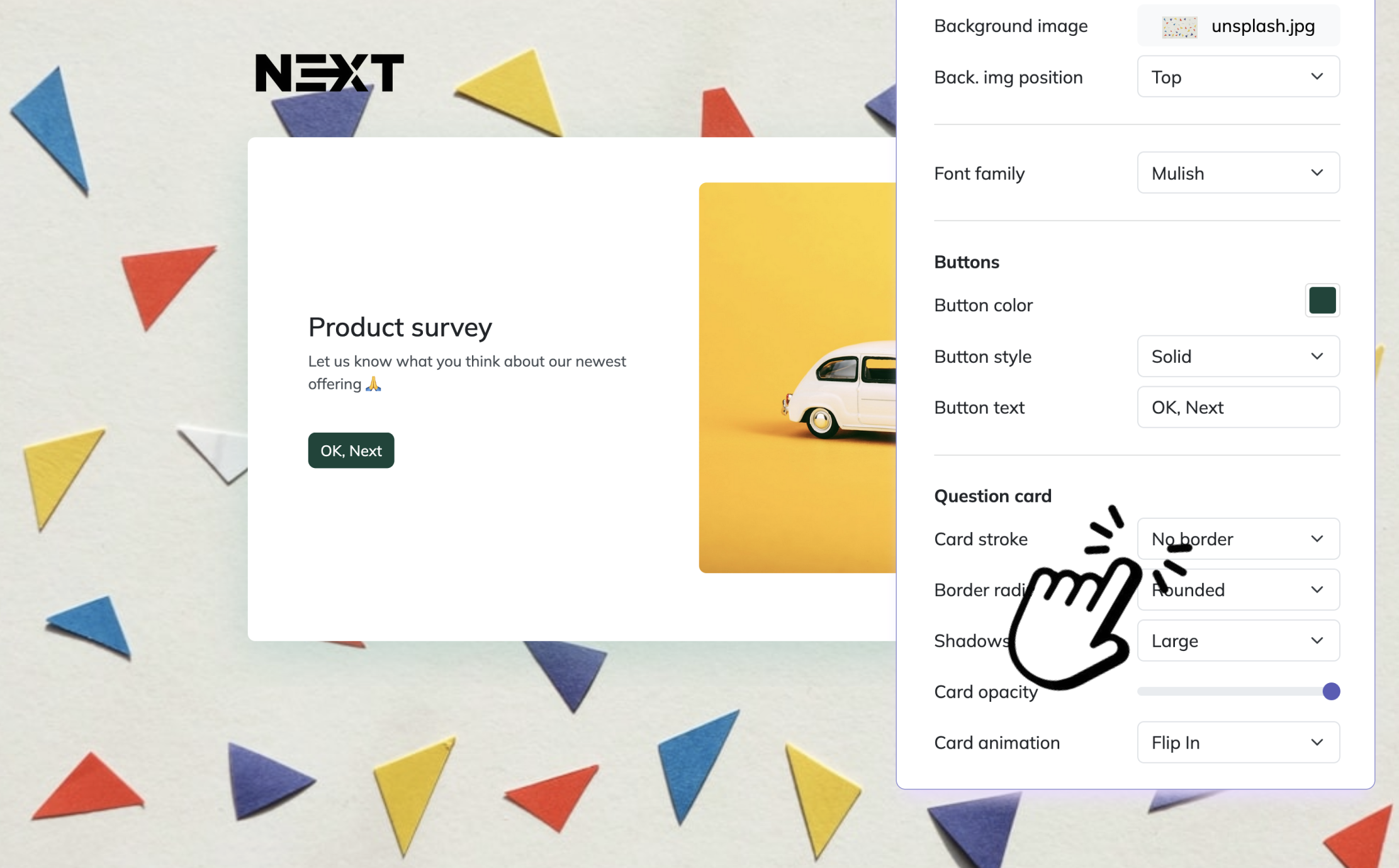
Click the template button below these instructions to open a ready-made logo testing survey. You can start without an account. In the editor, rename the survey and adjust its design to match your brand.
2. Add and edit questions
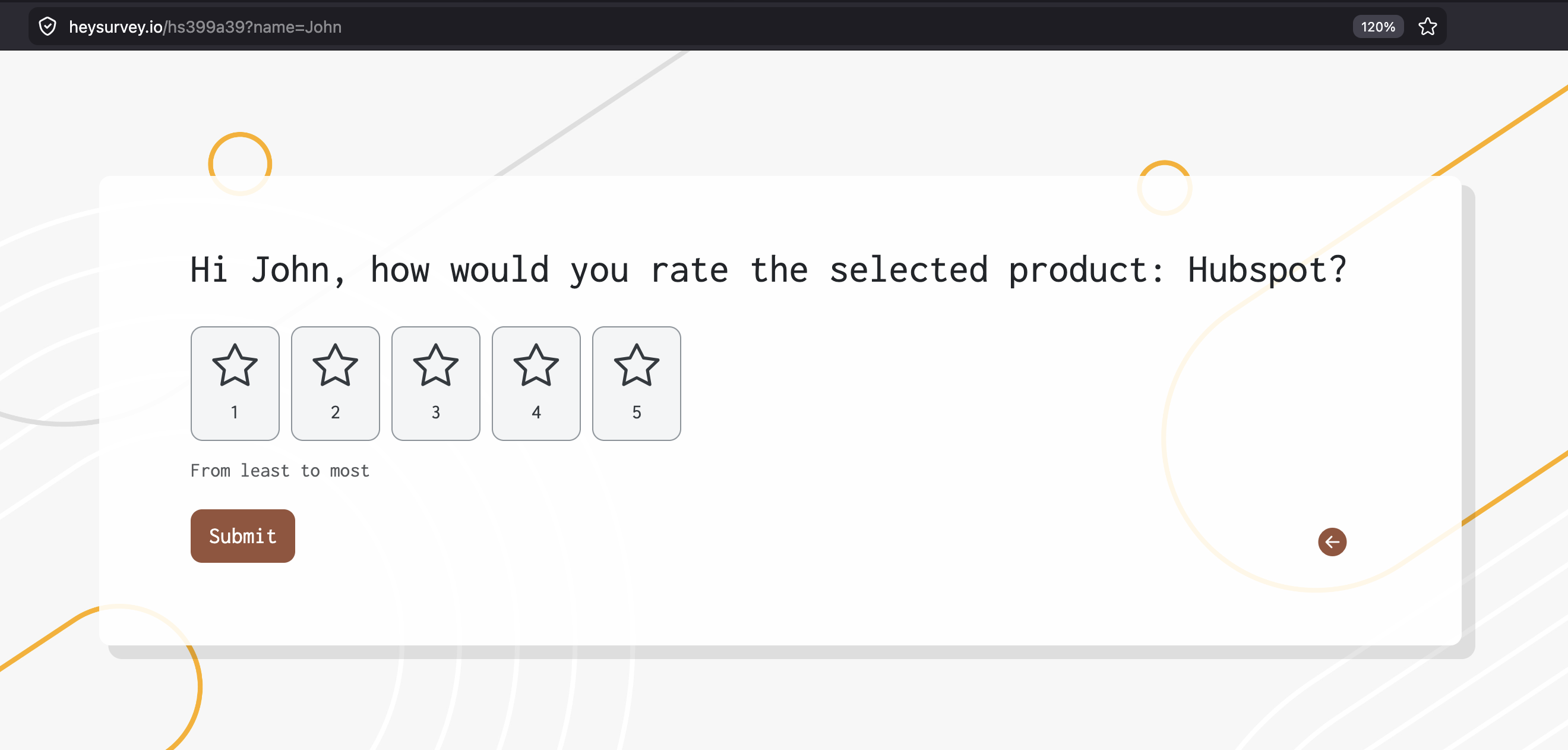
Review the template questions and tailor them to your test. Ask respondents which logo they prefer, what the design makes them think of, and how well it fits your brand. Use Choice questions for selecting a logo, Scale questions to rate qualities like appeal or readability, and Text questions for open-ended feedback. To show logo options, add images to choice options or questions. Preview the survey to check that everything looks right.
3. Publish your survey
When you’re ready, click Publish. You’ll need a HeySurvey account to publish and view responses. Copy the shareable link and send it to your target audience. Once responses come in, open the Results page to review answers and compare feedback on your logo designs. Create your next survey with an online survey maker.
2. Logo Clarity and Brand Name Readability Survey Questions
Sample questions
“What name, if any, can you read in this logo?” Open-ended; include “I can’t tell.”
“How easy or difficult is it to read the lettering?” Five-point scale from “Very difficult” to “Very easy”; include “Not applicable.”
“What do you think the symbol or graphic represents?” Open-ended; include “Not sure.”
“Which parts of the logo, if any, are difficult to understand?” Open-ended.
Your questionnaire for logo design should distinguish accurate reading from perceived ease. Someone might find lettering easy to read but confidently report the wrong name.
These logo design questions help you spot that gap before your wordmark becomes an accidental spelling bee.
Evaluate the symbol and wordmark separately when your logo includes both.
Test relevant small-size uses, such as profile icons, while keeping other design variables consistent.
Check monochrome versions separately rather than changing color, size, and layout together.
Plus, keep your logo questionnaire focused on how the name appears visually. Broader brand image survey questions assess the name itself, including its meaning and appeal.
Why & When to Use
Use this logo design questionnaire for stylized lettering, abstract symbols, unfamiliar names, or simplified versions.
Prioritize these checks before approving your design for everyday brand applications.
Two experiments found that changing logos’ font or letter case slowed responses in brand-name recognition and semantic categorization tasks (study).
3. Brand Fit and Brand Image Survey Questions
Sample questions
“Based only on this logo, how would you describe the brand’s personality?” Open-ended.
“How well does this logo fit the following description of the brand?” Five-point scale from “Not at all well” to “Extremely well.”
“To what extent does this logo suggest each of these qualities: [selected brand attributes]?” Rate each attribute separately.
“What, if anything, feels inconsistent between this logo and the brand description?” Open-ended.
Your questionnaire for logo design should capture unaided impressions first, before you reveal the brand description or target attributes.
Otherwise, your logo questionnaire risks feeding respondents their lines, and this isn’t a school play.
Use a short, factual brand description without praising the logo or suggesting the “right” response.
Select attributes tied to your positioning strategy, such as approachable, dependable, or innovative.
Keep attribute ratings separate so you can spot specific strengths and mismatches.
Plus, these logo design questions measure perceptions prompted by the logo, not your overall brand reputation.
Why & When to Use
Use these brand image survey questions when your design needs to express specific positioning or support a rebrand.
Compare unaided descriptions and attribute ratings with your intended personality to identify where audience interpretation misses your goals.
4. Logo Distinctiveness and Competitor Confusion Survey Questions
Sample questions
“Does this logo remind you of any other brands? If so, which ones?” Open-ended.
“How distinctive does this logo feel compared with logos in this category?” Five-point scale from “Not at all distinctive” to “Extremely distinctive.”
“How easy or difficult is it to distinguish this logo from the other logos in this group?” Five-point scale from “Very difficult” to “Very easy.”
“Which elements, if any, make this logo feel different from others in the category?” Open-ended.
Your questionnaire for logo design should capture unaided similarity first, before competitor examples steer respondents toward particular brands.
You want their first impressions, not a round of “spot the lookalike.”
Ask the open-ended resemblance question before showing competing logos in your logo questionnaire.
Choose relevant category competitors and display every logo at comparable sizes, on consistent backgrounds.
Separate familiar category cues from resemblance that makes respondents mistake one brand for another.
Plus, these brand perception survey questions explore audience perceptions: logo testing market research does not replace trademark clearance or legal review.
Why & When to Use
Use these questions in crowded categories or when your proposed design uses common symbols, colors, or layouts.
Look for category relevance without sacrificing recognizable differentiation, so your logo feels appropriate without being mistaken for a competitor.
Research testing 1,281 brand elements across 19 countries found logos offer strong uniqueness potential, while colors face greater competitive sharing (source).
5. Logo Memorability and Recognition Survey Questions
Sample questions
“Without looking back, describe the logo you saw earlier.” Open-ended, after a consistent delay.
“What brand name, if any, do you remember from the logo?” Open-ended.
“Which of these logos, if any, did you see earlier?” Recognition question with plausible alternatives and “None of these.”
“How confident are you in your recognition answer?” Five-point scale from “Not at all confident” to “Extremely confident.”
Your questionnaire for logo design should distinguish unaided recall from aided recognition and report them separately.
Recall checks what people retrieve without clues; recognition checks what they identify when shown options.
Give everyone the same delay or unrelated questions between viewing the logo and answering memory questions.
Ask recall questions before showing recognition options in your logo questionnaire. No sneaking memory a cheat sheet.
Define correct and partially correct recall before analyzing responses, including which visual details or brand-name variations count.
Plus, asking “How memorable is this logo?” captures an opinion, not evidence of actual memory.
Why & When to Use
Use these logo design questions when your audience needs to recognize your brand across repeated encounters or after brief exposures.
Here’s the thing: a short survey delay measures short-term recall, not long-term brand memory, so keep your conclusions within that limit.
6. Comparative Logo Preference Survey Questions
Sample questions
“Which logo option, if any, do you prefer overall?” Single choice; include “No preference.”
“What is the main reason for your choice?” Open-ended.
“How well does each logo communicate [priority brand attribute]?” Use the same rating scale for every option.
“Which logo best fits the brand description?” Single choice; include “None of these.”
Your questionnaire for logo design should separate preference from strategic fit and clarity, rather than combine them into one score.
Have people assess each concept independently before your logo questionnaire asks for a side-by-side preference. Give every contender its solo moment before the logo talent show begins.
Randomize presentation order and use neutral labels such as Option A and Option B.
Keep size, background, and supporting context comparable so your logo design questions measure the concepts, not presentation differences.
Test major concept differences first. When comparing refinements, change one variable at a time so you can identify what influenced responses.
Why & When to Use
Use these logo design questions to narrow a shortlist after concepts meet basic readability and brand-fit requirements.
Here’s the thing: the most popular logo may feel attractive without communicating your priority brand attribute. Your logo design questionnaire should help you weigh overall preference alongside strategic fit and clarity, not crown a winner on popularity alone.
7. Logo Testing Survey Methodology: Build a Reliable Questionnaire
Sample questions
“What is your first impression of this logo?” Open-ended; ask before providing brand context.
“How clearly does this logo communicate [brand attribute]?” Use a consistent rating scale with a “Not sure” option.
“Have you purchased from this brand before?” Ask near the end to identify existing customers.
Define the decision and recruit the right audience
Build your questionnaire for logo design around one clear decision: screening concepts, selecting a finalist, evaluating a redesign, or validating refinements.
Recruit intended customers, not just employees, designers, or friends. Your group chat deserves a night off.
For rebrands, analyze existing and prospective customers separately because familiarity can influence reactions.
Choose sample size around decision stakes, required precision, and planned segment comparisons, not a universal minimum.
Structure the logo questionnaire
Keep your logo questionnaire focused rather than collecting every possible question.
Order logo design questions from unaided impressions to specific ratings, comparisons, and respondent profiling.
Showing one concept per respondent limits comparison effects but requires more respondents; showing several enables direct comparisons but introduces order effects.
Keep scales consistent, offer uncertainty options where appropriate, and pilot for ambiguity.
Record exposure conditions and known limitations so you can interpret findings responsibly.
Why & When to Use
Use this logo testing survey methodology before launching research. A focused questionnaire for logo design helps you gather evidence suited to your decision without asking respondents to become honorary designers.
8. Logo Testing Survey Best Practices: Dos and Don’ts
Sample questions
What does this logo communicate to you?
How trustworthy does this logo feel, and what influenced your rating?
Your questionnaire for logo design should uncover reactions, not steer them. Keep your logo questionnaire focused: you’re gathering evidence, not campaigning for your favorite sketch.
Dos
Do use neutral wording: Ask “What does this logo communicate?” rather than suggesting it looks modern or innovative.
Do measure one idea at a time: Give professionalism, trustworthiness, and appeal separate logo design questions.
Do combine ratings with explanations: Ask what drove each score so you understand the reasoning.
Do set success criteria in advance: Define must-haves, including readable lettering and low competitor confusion.
Do review meaningful audience segments: Interpret differences only when subgroup sizes support useful conclusions.
Don’ts
Don’t rely only on “Do you like it?” Preference alone does not establish effectiveness.
Don’t reveal intended meaning too early: Capture spontaneous reactions first.
Don’t change several variables and assume you know which caused the result.
Don’t declare a narrow numerical lead a clear winner without considering uncertainty.
Don’t treat stated preference or purchase intent as proof of sales impact.
Why & When to Use
Use these checks before launching your logo design questionnaire and when reviewing results. Plus, revisit them when stakeholders turn small score differences into big claims.
9. Turn Logo Survey Insights Into Design Decisions
Sample questions
What, if anything, makes the lettering difficult to read?
Which parts of this logo fit the brand description, and which feel out of place?
Your questionnaire for logo design should help you choose your next move, not just crown the most popular sketch.
Summarize findings against the original objectives
Build a scorecard from your logo questionnaire, keeping each dimension separate before applying any weighting you agreed on before testing.
Score clarity, brand fit, distinctiveness, recall, and preference against your original objectives.
Pair numerical results with recurring comment themes and representative responses, not just memorable quotes.
Separate broad agreement from audience-segment differences, and flag uncertainty your results cannot resolve.
Decide what to keep, revise, and retest
Translate answers to your logo design questions into specific design actions.
Simplify lettering when readability suffers, and revise symbols that suggest the wrong meaning.
Preserve distinctive elements that support your objectives, even when another option wins on preference.
Fix failures on essential criteria before polishing subjective appeal, then retest meaningful revisions under comparable conditions.
Why & When to Use
Use this process after your logo design questionnaire closes and before approving revisions.
Plus, keep the scorecard handy during stakeholder reviews: effective logo testing questions support informed decisions, not design by committee or a popularity contest with better fonts.
Related Brand Survey Surveys
31 Brand Positioning Survey Questions for Better Insights
Explore 25 brand positioning survey questions to uncover how customers perceive your brand, under...
31 Ad Testing Survey Questions for Effective Campaigns
Explore 25 ad testing survey questions to evaluate creative, messaging, and audience response, an...
31 Rebranding Survey Questions
Explore 25 sample rebranding survey questions to refine your brand strategy, gather customer insi...