29 How to Write Survey Questions
Learn how to write survey questions with 24 sample questions, clear tips, and examples to improve response quality and survey results.
Good survey questions are clear, unbiased, specific, and easy to answer. If a question makes people pause, guess, or overthink, your data can wobble like a shopping cart with one bad wheel.
In this guide, you’ll learn how to write survey questions by type, when to use each one, sample questions you can borrow, and best practices for getting reliable responses. Plus, the goal is simple: better data, so you can make better decisions with an online survey tool.
How to Write Customer Satisfaction Survey Questions
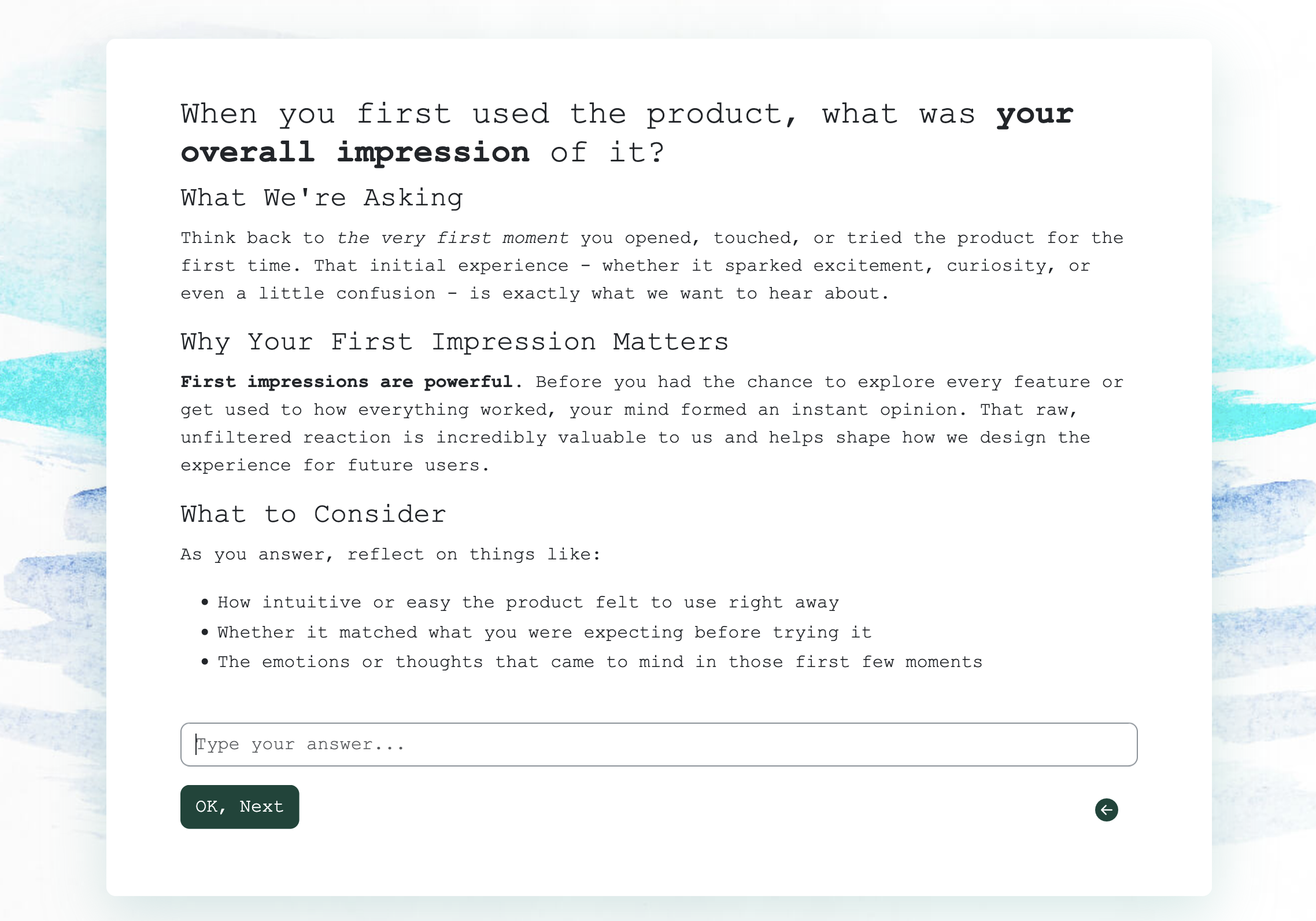
Sample questions
How satisfied were you with your overall experience?
How satisfied were you with the speed of service you received?
How satisfied were you with the quality of the product you purchased?
How well did our service meet your expectations?
What is the main reason for your satisfaction rating?
Specific questions get better answers.
Why & When to Use
You’ll use customer satisfaction questions when you want to measure how people felt after a purchase, support interaction, onboarding, or service experience.
They work best when you want to track sentiment over time and spot friction points in the customer journey before they turn into bigger problems.
Here’s the thing: general satisfaction is not the same as satisfaction with one specific touchpoint.
If you ask about the full experience, you learn how the customer feels overall.
If you ask about a single moment, like a delivery, support chat, or setup call, you learn exactly where things went smoothly or sideways.
Keep the time frame tight and clear so people know what experience they’re rating.
“After your recent order”
“During your last support chat”
“After your onboarding session”
On top of that, pair rating-scale questions with one open-ended follow-up so you get both measurable data and useful detail.
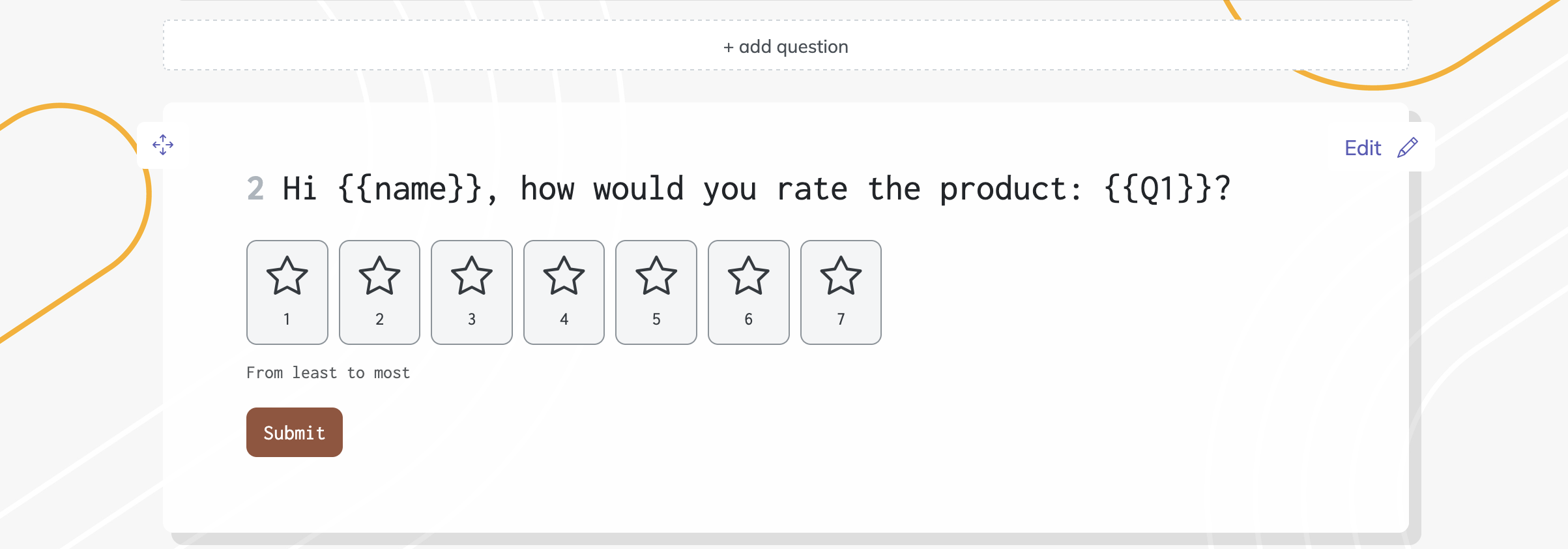
Use numerical scales when you want easy trend reporting across time, teams, or locations.
Use verbal scales when you want the question to feel more natural, like “very satisfied” to “very dissatisfied.”
Avoid vague wording like “How did we do?” because it’s fuzzy, and fuzzy questions are basically data’s kryptonite.
Customer satisfaction surveys yield more actionable data when questions are short, clear, and specific, with a rating item followed by an open-ended reason question (source).
Create your survey in 3 easy steps
Create a new survey
Start by opening a template with the button below, or choose a blank survey if you want to build everything yourself. HeySurvey works in your browser, so you can begin right away without an account. You can always rename the survey later in the editor.Add your questions
Click Add Question to insert your survey items. For a survey about writing survey questions, use clear wording and keep each question focused on one topic. HeySurvey lets you add text, choice, scale, dropdown, and other question types. You can mark questions as required, add answer options, and preview how everything will look to respondents.Publish your survey
When your survey is ready, click Preview to check it, then Publish to make it live. After publishing, you’ll get a shareable link you can send to others. If needed, you can come back later to edit the survey before sharing it again.
How to Write Customer Feedback Survey Questions
Sample questions
What did you like most about your experience?
What was the biggest challenge you faced while using our product?
What could we improve to better meet your needs?
Was anything confusing or frustrating during your experience?
What feature, service, or change would make the biggest difference for you?
Feedback questions uncover the why behind the score.
Why & When to Use
You’ll use customer feedback questions when you want detailed opinions, suggestions, and pain points, not just a rating.
They’re especially useful for product improvements, service changes, website updates, and post-project reviews where you need insight you can actually act on.
Here’s the thing: a score tells you what happened, but feedback helps you understand why it happened.
These questions often work best alongside closed-ended questions, because the ratings give you context and the open responses give you the story.
Keep each question focused on one topic at a time so people know exactly what to answer.
If you ask about the product, support, pricing, and website all at once, you’ll get messy responses that are harder to use. Basically, your data comes back looking like it packed in a hurry.
Use prompts that are concise and specific, so people can give useful detail without writing a novel.
Ask about one moment, feature, or problem at a time
Focus on areas tied to real business decisions
Avoid broad prompts like “Any feedback?” because they usually invite vague answers
Plus, prioritize questions connected to changes you could realistically make, since the best feedback is the kind you can actually use.
Research consistently shows survey items should address one idea at a time, since double-barreled questions make responses harder to interpret accurately (source).
How to Write Market Research Survey Questions
Sample questions
Which of the following factors matters most when choosing a product like this?
How often do you purchase products in this category?
Where do you usually research options before buying?
Which brands do you currently consider for this type of purchase?
What would make you more likely to switch to a new provider?
Market research questions help you understand how people choose, compare, and buy.
Why & When to Use
You’ll use market research survey questions when you want to understand audience preferences, buying habits, brand awareness, and the factors that shape decisions.
They’re especially useful before launching a product, entering a new market, testing pricing, or refining your messaging so it actually lands with the right people.
Here’s the thing: if your wording nudges people toward a preferred answer, your data gets wobbly fast.
Keep your language neutral so respondents tell you what they really think, not what your question accidentally suggested.
Plus, segment responses by attributes that matter, so the results become more useful instead of one big mixed bag.
Group people by age, industry, usage level, or purchase frequency
Compare responses across segments to spot patterns in needs and behavior
Use those patterns to shape offers, positioning, and priorities
On top of that, make answer choices mutually exclusive whenever possible so people can clearly pick the option that fits best.
Only add “Other” when it gives genuine value, not just because it feels polite to invite the whole class.
And never lead respondents toward your brand or a preferred outcome, because good market research is about learning, not fishing for compliments.
How to Write Employee Engagement Survey Questions
Sample questions
I feel valued for the work I do.
I have the tools and resources I need to do my job well.
Communication from leadership is clear and timely.
I see opportunities for growth within the organization.
What is one thing the company could do to improve your experience at work?
Employee engagement questions work best when people feel safe enough to answer honestly.
Why & When to Use
You’ll use employee engagement survey questions to measure morale, motivation, recognition, communication, and overall workplace culture.
They’re especially useful for regular pulse surveys, annual engagement reviews, retention analysis, and management feedback, because they help you spot issues before they turn into resignation letters with suspiciously cheerful sign-offs.
Here’s the thing: these surveys are sensitive, so psychological safety matters just as much as question quality.
If employees worry their answers can be traced back to them, they’ll play it safe, and safe answers rarely tell you what you actually need to know.
Plus, anonymity can dramatically improve answer quality, especially when you’re asking about leadership, workload, trust, or fairness.
Statement-based Likert items are often more effective than direct questions because they’re faster to answer and easier to compare over time.
Use statements when you want measurable trends, such as agreement with support, communication, or growth opportunities
Use open-ended questions when you want context, examples, or ideas for improvement
Avoid double-barreled items like asking whether leadership is “clear and supportive” in one question
Balance topics across culture, management, workload, and development so your results are not one-sided
On top of that, keep wording simple, specific, and neutral so employees can answer with confidence instead of decoding corporate crossword clues.
Pew Research Center warns that double-barreled questions are difficult to answer and often produce results that are hard to interpret (source).
How to Write Event Survey Questions
Sample questions
How satisfied were you with the event overall?
How relevant was the event content to your needs?
How would you rate the speakers or presenters?
Was the event well organized and easy to follow?
What topic would you most like us to cover in a future event?
The best event survey questions tell you what worked, what flopped, and what to fix before the next round of coffee and name tags.
Why & When to Use
You’ll use event survey questions after webinars, conferences, workshops, trainings, and in-person events when you want clear feedback on the full attendee experience.
They work best for evaluating content quality, speaker effectiveness, logistics, and whether the event actually helped people learn, connect, or take action.
Here’s the thing: timing matters a lot.
Send the survey soon after the event while details are still fresh, because waiting too long can turn useful feedback into vague polite mush.
Plus, your questions should match the event’s goals, not just measure whether people had a nice time.
A fun event is great, but if the training was confusing or the webinar missed your audience’s needs, that matters more than a five-star snack table.
Separate content feedback from operational feedback so you know whether the issue was the material, the delivery, or the logistics
Ask about outcomes too, such as what attendees learned, what they plan to apply, or whether the event met its purpose
Keep post-event surveys short so more people finish them
Include one open-ended question to capture ideas for future topics or improvements
On top of that, short and focused surveys usually get better response rates and better insight.
How to Write Product Feedback Survey Questions
Sample questions
How easy was it to use this feature for the first time?
Which feature do you find most valuable and why?
What, if anything, prevented you from completing your task?
How well does the product solve the problem you need it to solve?
What improvement would have the biggest impact on your experience?
Great product feedback questions help you see what users did, where they got stuck, and what is actually worth improving first.
Why & When to Use
You’ll use product feedback survey questions when you want to understand usability, feature value, adoption barriers, and improvement opportunities without playing guessing games.
They work especially well after onboarding, feature launches, free trials, renewals, or key usage milestones, when users have enough real experience to give useful answers.
Here’s the thing: product questions should reflect the user’s journey stage.
A brand-new user can tell you whether setup felt easy, while a long-term customer can tell you whether the product delivers ongoing value, which is a very different kind of truth.
Plus, target questions based on what people actually used.
Do not ask someone to rate a feature they never touched, unless you enjoy collecting beautifully useless data.
Ask about specific features or workflows instead of the product in general
Separate usability questions from value questions so you learn both how the product feels and whether it solves the right problem
Survey users based on their actual actions, such as trial users, new adopters, or heavy users
Match questions to the moment, like onboarding for ease of use or renewal for long-term impact
On top of that, the sharper your targeting, the more honest and actionable your feedback becomes.
Survey Question Best Practices: Dos and Don'ts
Sample questions
In the past 30 days, how satisfied were you with the checkout process?
Which of these reasons best explains why you contacted support?
How easy was it to find the information you needed today?
What is one thing we could improve about your experience?
Which price range best matches what you expected to pay?
Good survey questions make it easy for you to get clear answers without making respondents do mental gymnastics.
Why & When to Use
Use these best practices whenever you’re writing, reviewing, or cleaning up a survey.
Here’s the thing: even strong goals can be wrecked by fuzzy wording, messy answer choices, or a survey that feels like homework on a tiny phone screen.
Dos
Use simple, familiar language.
Ask one thing at a time.
Keep the time frame specific, like “in the last 7 days.”
Match the format to the insight you need, such as scales for ratings and open text for nuance.
Keep scales consistent throughout the survey where possible.
Offer balanced, complete answer choices.
Test questions for clarity before sending.
Don'ts
Avoid leading, loaded, or overly absolute wording like “always” and “never.”
Do not combine topics, like price and quality, in one question.
Do not use jargon, acronyms, vague labels, or overlapping ranges.
Do not make every question open-ended.
Do not force people into inaccurate choices or inconsistent scales.
Do not ask questions that will not inform a real decision.
Do not make sensitive questions feel abrupt or nosy.
Plus, your survey should flow naturally: start easy, group similar topics, and end with optional open feedback.
On top of that, keep it short, readable on mobile, and low effort, because tired respondents are basically part-time chaos goblins.
How to Choose the Right Survey Question Type
Sample questions
How satisfied are you with your overall experience today?
Which of these features would you most want us to add next?
What nearly stopped you from completing your purchase?
Please rank these benefits from most important to least important.
Did you find what you came here for today?
The right question type helps you get useful answers without making your respondents work way too hard.
Why & When to Use
Good survey design starts with your real goal.
If you want to measure satisfaction, collect ideas, validate demand, or diagnose a problem, the format you choose shapes the quality of what you learn.
Here’s the thing: question type affects answer quality, completion rate, and how easy your results are to analyze later.
Plus, the best choice depends on who you’re asking, when you’re asking, and what action you plan to take after the answers come in.
You do not need every question format in every survey.
In fact, using fewer question types, and fewer questions overall, usually makes your survey easier to finish and your data easier to trust.
Practical Notes
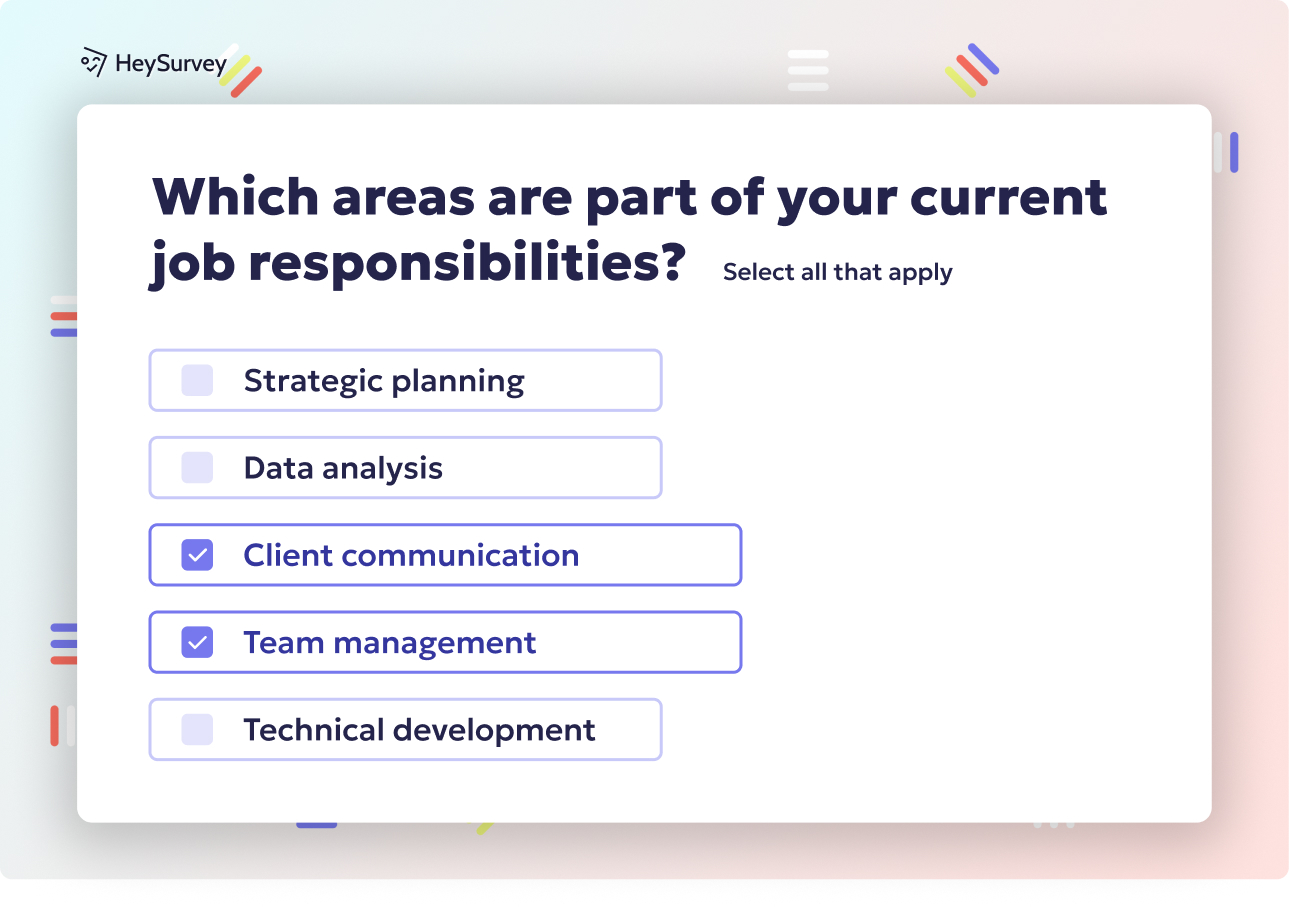
Use open-ended questions when you want ideas, explanations, or language straight from your audience.
Use multiple choice when you know the likely answers and want clean, fast analysis.
Use rating scales to measure satisfaction, agreement, effort, or likelihood in a consistent way.
Use ranking when you need to understand priorities, not just preferences.
Use yes/no questions for simple checks, qualifiers, or fast branching logic.
On top of that, choose the fewest questions needed to answer your core objective.
A smart survey reduces friction, respects your audience’s time, and gives you data you can actually use, which is a lot sexier than a giant spreadsheet full of shrugs.
Turning Survey Insights Into Action
Sample questions
Which feedback themes show up most often across responses?
Are certain customer segments reporting different problems or priorities?
Which issue has the biggest business impact and the fastest path to improvement?
Who owns the next step after this survey is reviewed?
How will you measure whether the change actually worked?
Great survey work is not finished when answers come in. It starts paying off when you turn patterns into decisions.
Why & When to Use
Once responses are collected, your job shifts from asking to interpreting.
Here’s the thing: learning how to write survey questions only creates value if the answers help you decide what to fix, improve, or double down on.
Start by grouping similar responses into themes.
Then look for trends, compare segments, and spot where different groups are telling you very different stories, which is often where the gold is hiding.
Plus, every survey should connect to three things:
a decision
an owner
a follow-up action
That simple trio keeps feedback from becoming a sad little spreadsheet that nobody opens again.
From Responses to Decisions
Prioritize what to act on by weighing:
how often the issue appears
how much business impact it has
how easy it is to implement
On top of that, share findings with stakeholders in plain language, not research jargon.
Close the loop by acknowledging feedback, making visible changes, and measuring results over time.
The practical takeaway is simple: write better survey questions, collect better answers, and act on what people tell you.
Turn Survey Insights Into Action
Sample questions
Which survey findings connect most directly to the goal you started with?
How do responses differ by customer type, team, location, or experience level?
What patterns show up across ratings, rankings, and written comments?
Which issues are both common and important enough to act on first?
What change can you test now, and how will you measure whether it worked?
Good survey data only matters if you actually do something with it.
Once responses roll in, your job is not to admire the spreadsheet like it is modern art.
Here’s the thing, the best next step is to reconnect your findings to your original objective.
If your survey aimed to improve onboarding, for example, focus on insights that explain where people get stuck, confused, or drop off.
Plus, segment your results so you can spot differences that averages hide.
Compare groups like new vs. returning customers.
Break out responses by role, location, plan type, or experience level.
Review ratings, rankings, and open-text comments together for recurring themes.
Then prioritize what to tackle first.
A simple filter works well:
Frequency: How often does this issue appear?
Impact: How much does it affect satisfaction, retention, or performance?
Feasibility: How realistic is it to fix soon?
On top of that, share findings in plain language, not jargon soup.
Turn your top insights into clear actions like process changes, experiments, updated messaging, or product fixes.
Why & When to Use
Use this approach after every survey, especially when you need decisions, not just interesting charts.
Plus, follow up with another survey later to see whether your changes actually worked, because guessing is fun for game night, not strategy.
Related Surveys
29 Social Media Survey Questions
Explore 25 social media survey questions with practical sample prompts to help gather insights on...
31 Job Satisfaction Survey Questions
Explore **25 job satisfaction survey questions** with sample prompts to improve employee feedback...
29 Quantitative Survey Questions Guide
Explore 25 quantitative survey questions with sample questions, examples, and tips to build effec...