29 Healthcare Employee Satisfaction Survey Questions
Explore 25 healthcare employee satisfaction survey questions to improve staff feedback, workplace morale, and retention in healthcare.
When you want better care outcomes, start by listening to your team. A healthcare employee satisfaction survey helps hospitals, clinics, physician groups, long-term care, and nursing home teams spot what supports morale, retention, patient experience, and day-to-day stability.
The right questions change everything.
Here’s the thing: strong healthcare employee satisfaction survey questions turn an employee engagement healthcare survey into real insight, not checkbox confetti. In this guide, you’ll see the most useful survey categories, sample questions, best practices, and how to act on results to improve hospital staff satisfaction with an online survey maker.
Sample questions
How satisfied are you with your day-to-day work responsibilities?
Do you clearly understand what is expected of you in your role?
Do you feel your work makes a meaningful contribution to patient care or organizational success?
How manageable is your workload during a typical shift or workweek?
How likely are you to recommend this organization as a good place to work?
Job Satisfaction and Day-to-Day Work Experience
Daily work experience is your baseline signal.
Why & When to Use
This section is the backbone of any healthcare employee satisfaction survey because it shows how your team feels about the work right in front of them every day.
It helps you measure role clarity, workload, and whether people feel their effort matters, which makes it essential in an employee engagement healthcare survey and just as useful for tracking hospital staff satisfaction.
Here’s the thing: job satisfaction is not exactly the same as engagement.
Satisfaction tells you whether people feel okay, supported, and clear on what they do, while engagement shows whether they feel energized enough to go the extra mile.
Use this section when you want a clean read on everyday experience, especially if operations have shifted and everyone suddenly feels like they are juggling flaming stethoscopes.
It fits several settings well:
hospitals focused on hospital staff satisfaction
outpatient clinics and physician practices
long-term care and any nursing home employee satisfaction survey
Plus, it works best in:
annual survey cycles for trend tracking
quarterly pulse checks for faster feedback
post-change surveys after staffing, scheduling, or workflow updates
turnover spikes or morale dips
On top of that, use a consistent rating scale so your employee satisfaction survey healthcare data is easy to benchmark over time.
Add one open-ended follow-up too, such as: “What would most improve your day-to-day experience?”
Sample questions
Do you feel informed about important organizational decisions that affect your work?
How confident are you in your immediate supervisor’s leadership?
Do leaders listen to staff concerns and respond appropriately?
Do you trust senior leadership to make decisions in the best interest of employees and patients?
How comfortable do you feel sharing honest feedback with management?
In a 2022 U.S. survey of 900 nurses, higher work engagement was linked to higher job satisfaction and lower intent to leave. Source
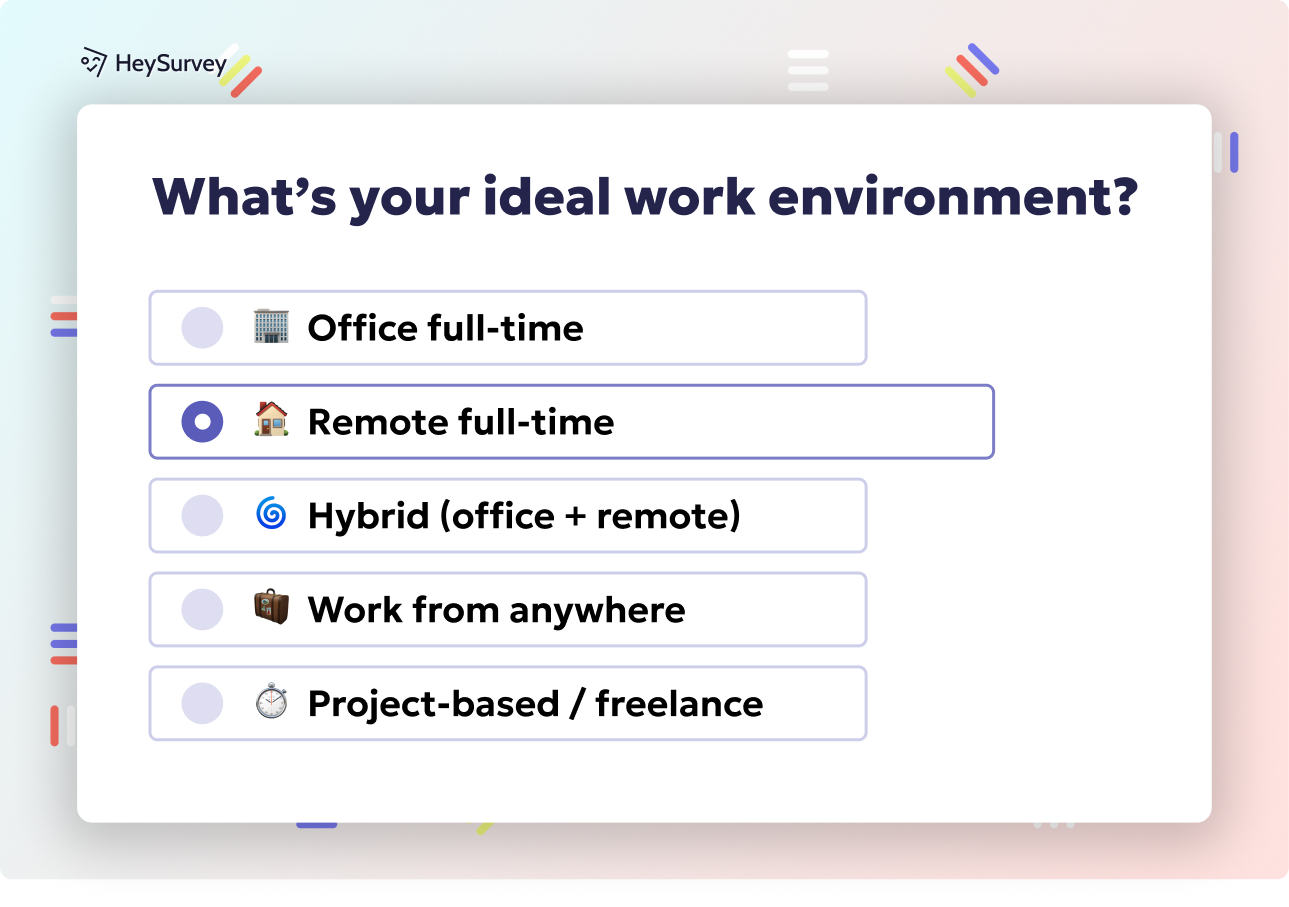
How to create a healthcare employee satisfaction survey in HeySurvey
Create a new survey
Start by opening a healthcare employee satisfaction survey template using the button below, or begin from an empty sheet. Give your survey a clear name, then choose the layout that works best for your team. For employee feedback, one question per page is often the easiest option because it keeps the survey simple and focused.Add questions
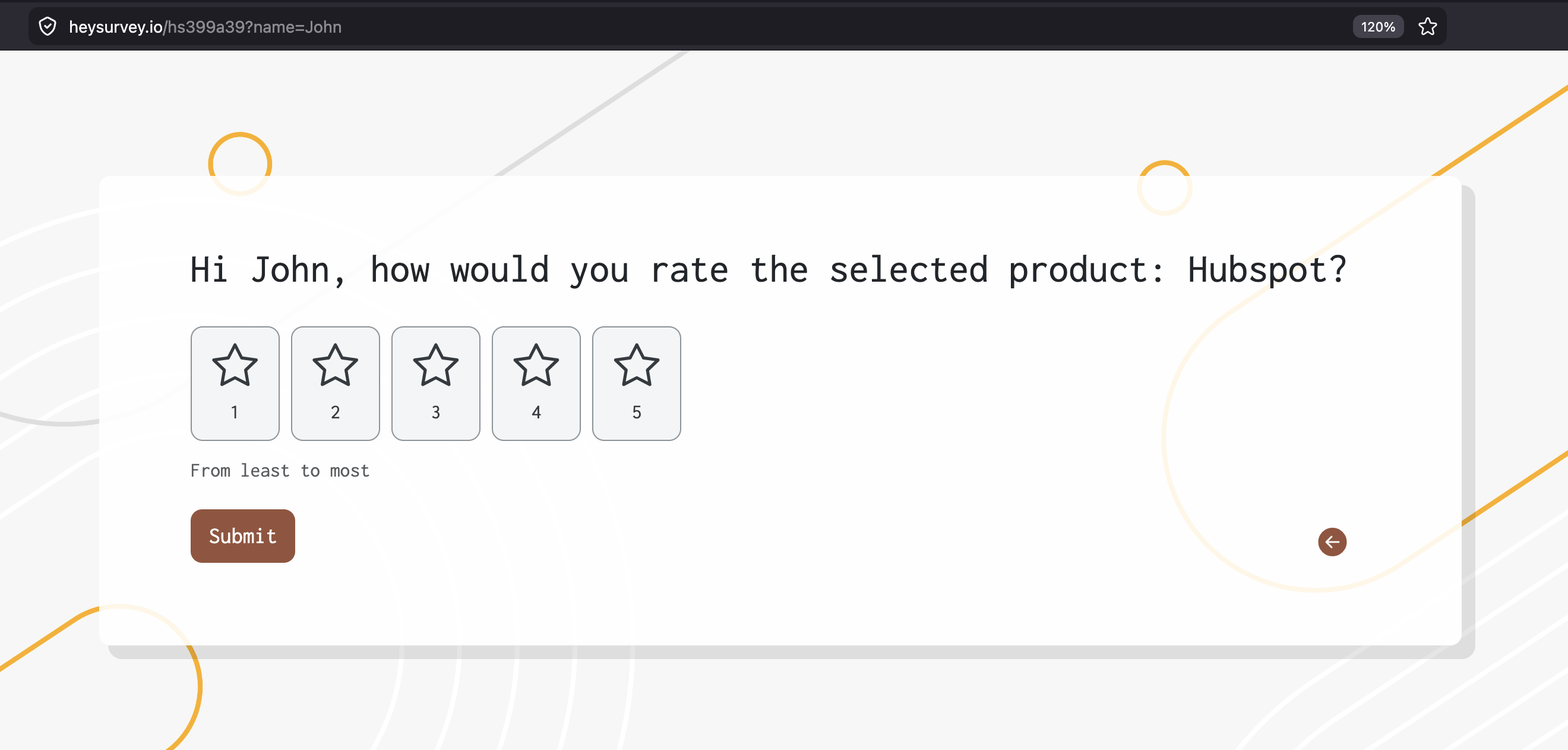
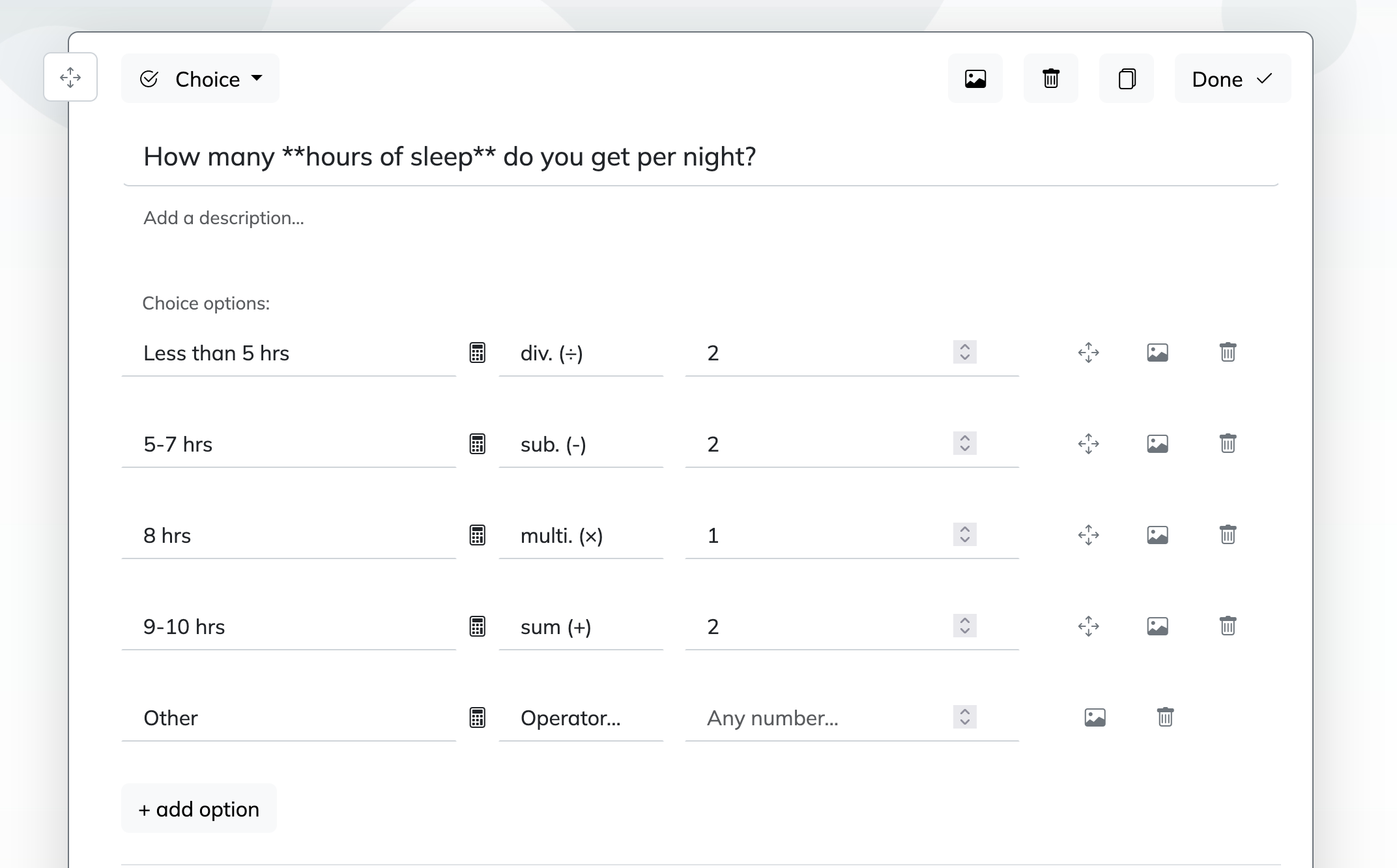
Click Add Question and include a mix of Scale, Choice, and Text questions. Ask about workload, management support, communication, scheduling, safety, and overall job satisfaction. You can mark important questions as required, add answer options, and use branching if you want to show follow-up questions based on a response.Publish your survey
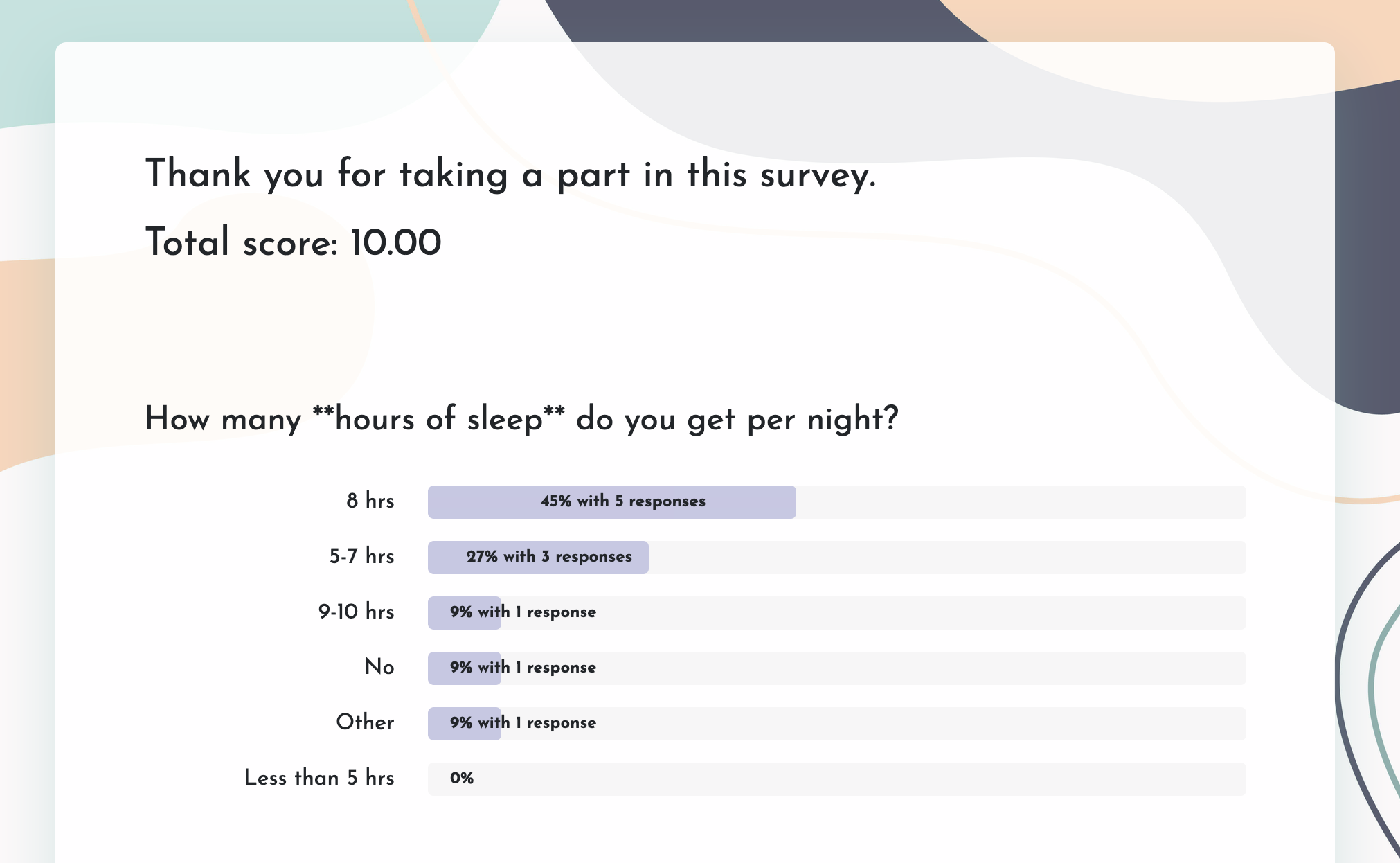
Review your questions, check the design, and preview the survey before launch. When everything looks right, click Publish to get a shareable link. You can then send it to employees by email or embed it on an internal page.
Leadership, Communication, and Trust
Trust in leadership shapes what people say and what they stay for.
Why & When to Use
Leadership quality has a huge effect on any employee engagement healthcare survey, especially when your team works in high-pressure settings where fast decisions, clear direction, and steady support really matter.
In a strong employee engagement healthcare survey, people usually rate leaders based on what they see day to day, not what is written in a town hall slide deck.
Here’s the thing: poor communication often shows up before turnover and burnout start flashing warning lights, like the dashboard on a very tired ambulance.
Use this section when your organization is dealing with:
leadership changes
mergers or acquisitions
policy shifts
morale concerns
communication breakdowns across departments
On top of that, measure trust at two levels in your healthcare employee satisfaction survey: direct managers and executive leadership.
Do not lump them together, because a team may love its supervisor and still feel unsure about senior decisions.
This section is especially useful for tracking hospital staff satisfaction when you want to know whether people feel heard, respected, and safe being honest.
Plus, anonymity matters.
Anonymous responses make your healthcare employee satisfaction survey questions more reliable, especially when asking whether staff trust leadership or feel comfortable speaking up.
That makes this section a smart fit for any healthcare employee satisfaction survey or broader review of hospital staff satisfaction.
Sample questions
Do you believe staffing levels are adequate for safe, high-quality care?
How reasonable is your workload during most shifts?
How satisfied are you with scheduling fairness and flexibility?
How often does short staffing negatively affect your ability to do your job well?
Do you have the time, tools, and support needed to complete your work effectively?
AHRQ’s Medical Office Survey found Work Pressure and Pace scored lowest at 50% positive, highlighting staffing/workload as a key healthcare employee satisfaction concern (source).
Staffing Levels, Workload, and Scheduling
Staffing pressure is where morale, safety, and retention all bump into each other.
Why & When to Use
This section is a must-have in any employee engagement healthcare survey because staffing strain does not stay quietly in the background.
It shows up in burnout, patient safety risks, and people updating their resumes during lunch.
Here’s the thing: when staffing levels feel too thin, your healthcare employee satisfaction survey stops being just about opinions and starts revealing operational problems that need attention fast.
Use this section in settings where coverage and patient ratios are constant pressure points, including:
hospitals
urgent care centers
home health teams
long-term care communities
nursing homes
On top of that, add this section whenever overtime, absenteeism, or vacancy rates start climbing.
That makes it especially valuable for a healthcare employee engagement survey, a hospital staff satisfaction review, or a nursing home employee satisfaction survey.
Plus, connect responses to real workforce metrics so your employee engagement survey healthcare results tell a fuller story.
Look at patterns alongside:
staffing levels
overtime hours
absenteeism rates
open roles
shift coverage gaps
Clinical and non-clinical teams may need slightly different wording, since a nurse, scheduler, and transport aide do not experience workload in quite the same way.
That said, this section fits beautifully into hospital staff satisfaction tracking and healthcare employee satisfaction survey questions alike.
Sample questions
Do team members in your department treat each other with respect?
How well do staff collaborate across roles, units, or departments?
Do you feel safe speaking up about concerns, mistakes, or ideas?
How supported do you feel by your coworkers during busy or stressful periods?
Does the workplace culture reflect the organization’s stated values?
Teamwork, Culture, and Psychological Safety
Healthy culture makes hard days feel manageable, not miserable.
Why & When to Use
In any employee engagement healthcare survey, teamwork matters because your staff experience is shaped by the people around you every single shift.
If departments do not communicate well, or if roles clash instead of coordinate, hospital staff satisfaction can slide fast.
Here’s the thing: healthcare staff satisfaction depends heavily on collaboration across departments, shifts, and disciplines.
A great unit culture can lift people up, while a tense one can drain energy faster than a call light chorus at 6 a.m.
Psychological safety simply means people feel safe speaking up without fear of blame, embarrassment, or payback.
That makes this section especially useful in a healthcare employee satisfaction survey when you want to understand trust, respect, and whether employees feel heard.
Use it when your organization is focused on:
patient safety culture
interdisciplinary care improvement
employee engagement healthcare survey goals
reducing conflict or silos
improving morale after change
On top of that, include this section when you notice incivility, tension between teams, or low morale.
Review results by department, because culture often varies wildly within the same organization.
Plus, teamwork scores in an employee satisfaction survey healthcare often influence both engagement and patient care quality, so this section earns its spot in any strong healthcare employee engagement survey.
Sample questions
Do you feel recognized for the work you do?
How satisfied are you with opportunities for professional growth and development?
Do you believe high performance is fairly acknowledged in your organization?
Do you have access to training that helps you succeed in your current role?
Can you see a clear career path for yourself within this organization?
In a 10,627-worker health system survey, psychological safety showed strong measurement reliability and was linked to speaking-up culture in healthcare settings (PubMed).
Recognition, Growth, and Career Development
When people feel seen, they are far more likely to stay.
Why & When to Use
This section helps you measure whether employees feel valued, supported, and able to picture a future with your organization.
In an employee engagement healthcare survey, that matters a lot because feeling invisible at work is rarely a recipe for loyalty.
Here’s the thing: recognition is not the same as compensation.
Pay matters, of course, but recognition speaks to whether someone feels their effort, skill, and consistency actually get noticed.
That makes this a smart section for any healthcare employee satisfaction survey, especially when retention of nurses, aides, technicians, or support staff is becoming a headache.
Use it when your organization wants to understand whether hospital staff satisfaction is being shaped by limited growth, weak recognition, or unclear career paths.
Recognition can be formal or informal, and both count.
formal awards or performance programs
shout-outs from managers or peers
training and certification support
promotion pathways and internal mobility
Plus, this section is a core part of a strong healthcare employee engagement survey when your goal is to reduce avoidable turnover before your best people start updating their resumes at lunch.
On top of that, segment results by tenure.
Newer employees may need onboarding, training, and encouragement, while long-term staff may care more about advancement, skill growth, and whether high performance is fairly acknowledged.
Sample questions
How satisfied are you with your overall compensation relative to your responsibilities?
How satisfied are you with the benefits offered by the organization?
Do you feel the organization supports your physical and mental well-being?
Do you have access to resources that help you manage stress and avoid burnout?
How sustainable does your current work-life balance feel?
Compensation, Benefits, and Well-Being Support
Pay matters, but so does whether your job feels livable.
Why & When to Use
This section helps you understand how pay, benefits, and support resources shape results in an employee engagement healthcare survey or healthcare employee satisfaction survey.
Here’s the thing: compensation is rarely the only issue, but it is almost never a small one either.
If people feel underpaid, overstretched, or unsupported, hospital staff satisfaction can dip fast, and morale can follow right behind it like an uninvited guest.
Use this section during benefits reviews, labor market pressure, recruitment challenges, or burnout recovery efforts.
Plus, it fits especially well when you want to evaluate your total rewards package, including base pay, insurance, paid time off, mental health support, and work-life sustainability.
A strong employee satisfaction survey healthcare section should look beyond salary alone.
overall compensation perceptions
benefits value and usability
EAP access and wellness resources
burnout support and stress management tools
scheduling flexibility and time-off options
On top of that, expect strong emotional responses to compensation questions.
That is normal, so pair survey feedback with market benchmarking where possible to see whether concerns reflect perception, real pay gaps, or both.
This section also works well in a healthcare employee engagement survey when you want to uncover whether burnout, benefit frustration, or shaky work-life balance is quietly driving turnover.
Sample questions
Which workforce challenge are you trying to understand: turnover, burnout, morale, communication, or staffing?
Which employee groups need tailored questions based on role or care setting?
Are your questions specific enough to lead to action?
Are you using a survey length that employees can realistically complete?
Do your questions balance trend tracking with current organizational priorities?
How to Choose the Right Healthcare Employee Satisfaction Survey Questions
The best survey questions fit your people, not just a template.
Why & When to Use
Not every healthcare employee satisfaction survey should look the same, because your setting, workforce mix, and goals shape what you actually need to ask.
Here’s the thing: a hospital, specialty clinic, behavioral health group, and nursing home employee satisfaction survey can all need different wording, even when the big themes overlap.
This guidance works well if you are building or refining an employee engagement healthcare survey for hospitals, ambulatory groups, long-term care teams, behavioral health providers, or specialty practices.
Plus, it is especially useful if you are searching for a healthcare employee satisfaction survey template or a practical hospital staff satisfaction solution that does more than create a pretty chart.
A smart question set should help you learn something useful, not just collect polite shrugging.
Keep core benchmark questions the same each survey cycle so you can track trends over time.
Customize a smaller set of questions to match current priorities like staffing pressure, burnout, or communication gaps.
Tweak wording by role for nurses, physicians, allied health, administrative staff, and long-term care teams.
Keep the survey short enough to finish without requiring a snack break and a calendar invite.
On top of that, the strongest healthcare employee engagement survey questions are clear, relevant, and tied to decisions you are actually prepared to make.
Sample questions
Is your employee engagement healthcare survey short enough for a nurse, tech, or front-desk team member to finish during a real workweek?
Are your healthcare employee satisfaction survey questions clear, neutral, and specific enough to avoid guesswork?
Will you protect anonymity and explain confidentiality before staff open the survey?
Are you ready to act on the hospital staff satisfaction issues your survey might uncover?
Have you planned follow-up pulse surveys after major changes or improvement efforts?
Best Practices for Healthcare Employee Satisfaction Surveys
Good surveys are short, clear, safe, and followed by real action.
Why & When to Use
If you want an employee engagement healthcare survey that people actually complete, keep it practical and respectful of clinical reality.
Here’s the thing: healthcare employees are busy, and a bloated healthcare employee satisfaction survey can lose attention fast.
Dos
Use these habits to make your healthcare employee engagement survey more useful:
Keep surveys concise so busy teams can finish them without adding stress.
Use clear, neutral wording and test questions with a small internal group before launch.
Protect anonymity and explain confidentiality upfront in plain language.
Mix rating-scale items with a few targeted open-ended questions.
Segment results by department, role, shift, and location when sample size allows.
Repeat key questions over time so hospital staff satisfaction trends are easy to track.
Share results promptly and explain what will happen next.
Plus, timing matters more than many teams realize.
Avoid peak census periods, major transitions, and chaotic holiday staffing windows.
Choose launch dates that work across day, evening, and night shifts.
Don’ts
Avoid these common mistakes in any employee satisfaction survey healthcare process:
Don’t ask about issues leaders will not address.
Don’t cram every possible topic into one survey.
Don’t use vague terms without context.
Don’t hide low-scoring departments behind decent averages.
Don’t survey too often without visible follow-up, or people will smell the “checkbox energy.”
Don’t risk privacy when reporting results.
Don’t treat the survey as a one-time exercise.
On top of that, pulse surveys work well after major initiatives to check whether improvements are actually landing.
Sample questions
Are you reviewing scores, comments, and trend lines together before deciding what your employee engagement healthcare survey results mean?
Have you narrowed your healthcare employee satisfaction survey findings to 2 or 3 issues that will make the biggest difference first?
Who owns each action item, and when will staff see progress updates?
Are you linking hospital staff satisfaction survey results to retention, burnout, patient experience, and culture goals?
Will you re-survey later to confirm whether changes actually worked?
Turning Survey Results Into Action and Better Retention
Survey results only matter when people can see what changed because they spoke up.
Why & When to Use
Use this approach when your employee engagement healthcare survey is complete and you need a smart, calm plan instead of a giant spreadsheet-induced panic.
Here’s the thing: one low score alone rarely tells the full story, and one spicy comment should not run the whole strategy.
Read your healthcare employee satisfaction survey results as a set.
Compare numeric scores with written comments.
Look at trend data across time, not just one survey cycle.
Check differences by role, shift, department, and location when possible.
Use patterns, not isolated reactions, to guide decisions.
Plus, do not try to fix everything at once.
Pick 2 or 3 high-impact issues that affect hospital staff satisfaction, retention, and day-to-day stress the most.
A simple action framework for any healthcare employee engagement survey looks like this:
Share key findings with staff.
Identify root causes behind weak scores.
Assign accountable leaders.
Set realistic timelines.
Communicate progress often.
Re-survey to measure change.
On top of that, connect employee satisfaction survey healthcare insights to bigger goals like lower turnover, less burnout, better patient experience, and a healthier culture.
The real power of healthcare employee satisfaction survey questions is not in collecting answers.
It is in using those answers to improve the employee experience in visible, measurable ways.
Related Employee Survey Surveys
28 Post Mortem Survey Questions
Explore 25 post mortem survey questions to uncover lessons, improve processes, and drive better r...
29 Change Readiness Survey Questions
Explore 25 sample questions for a change readiness survey, with keyword change readiness survey q...
29 Retreat Survey Questions
Explore 25 retreat survey questions with sample questions to gather honest feedback, improve gues...