31 Good Survey Questions
Discover 25 good survey questions with sample examples to improve response quality, analyze feedback, and create better surveys fast.
Good survey questions are clear, unbiased, specific, and built to help you make a real decision, not just collect a pile of maybe-useful answers.
Great survey questions examples
In this guide, you’ll learn how to write better survey questions for applications, smarter web survey questions, and question ideas for a survey that people will actually finish. Plus, you’ll see great survey questions examples, common survey questions and responses, and simple ways to turn feedback into improvements instead of letting it nap in a spreadsheet with an online survey tool.
Sample questions
How satisfied were you with your overall experience today?
How well did our product or service meet your expectations?
What was the main reason for your rating?
How easy was it to get the help or information you needed?
What is one thing we could improve to serve you better?
1. Customer Satisfaction Survey Questions
A simple pulse check that actually helps you improve
Why & When to Use
Customer satisfaction survey questions help you measure how people feel after a purchase, support interaction, onboarding moment, or service experience.
They work best when the experience is still fresh, like right after checkout, after delivery, after customer service, or at key points in the customer journey.
Here’s the thing, these survey questions for applications are often the starting point for smarter survey improvement questions because they reveal broad friction points before those issues grow legs and run around your business.
If you use web survey questions on thank-you pages, in follow-up emails, or inside your product, you can quickly spot whether the problem is the product, the process, or the support team.
For cleaner insights, keep your structure simple and consistent:
Use the same rating scale across similar questions so responses are easy to compare.
Add one open-ended follow-up after a score question to learn the reason behind the number.
Separate satisfaction with the product, service, and support so your data survey questions do not blur into one fuzzy answer.
Plus, this format gives you some of the great survey questions examples you can reuse across email, app, and blog survey questions without reinventing the wheel every Tuesday.
Sample questions
On a scale from 0 to 10, how likely are you to recommend us to a friend or colleague?
What is the primary reason for your score?
What nearly stopped you from giving a higher rating?
Which feature or benefit do you value most?
What would make you more likely to recommend us in the future?
Research shows 5–7 point Likert-type scales produce more reliable survey responses than 2–3 point scales when designing good survey questions (source).
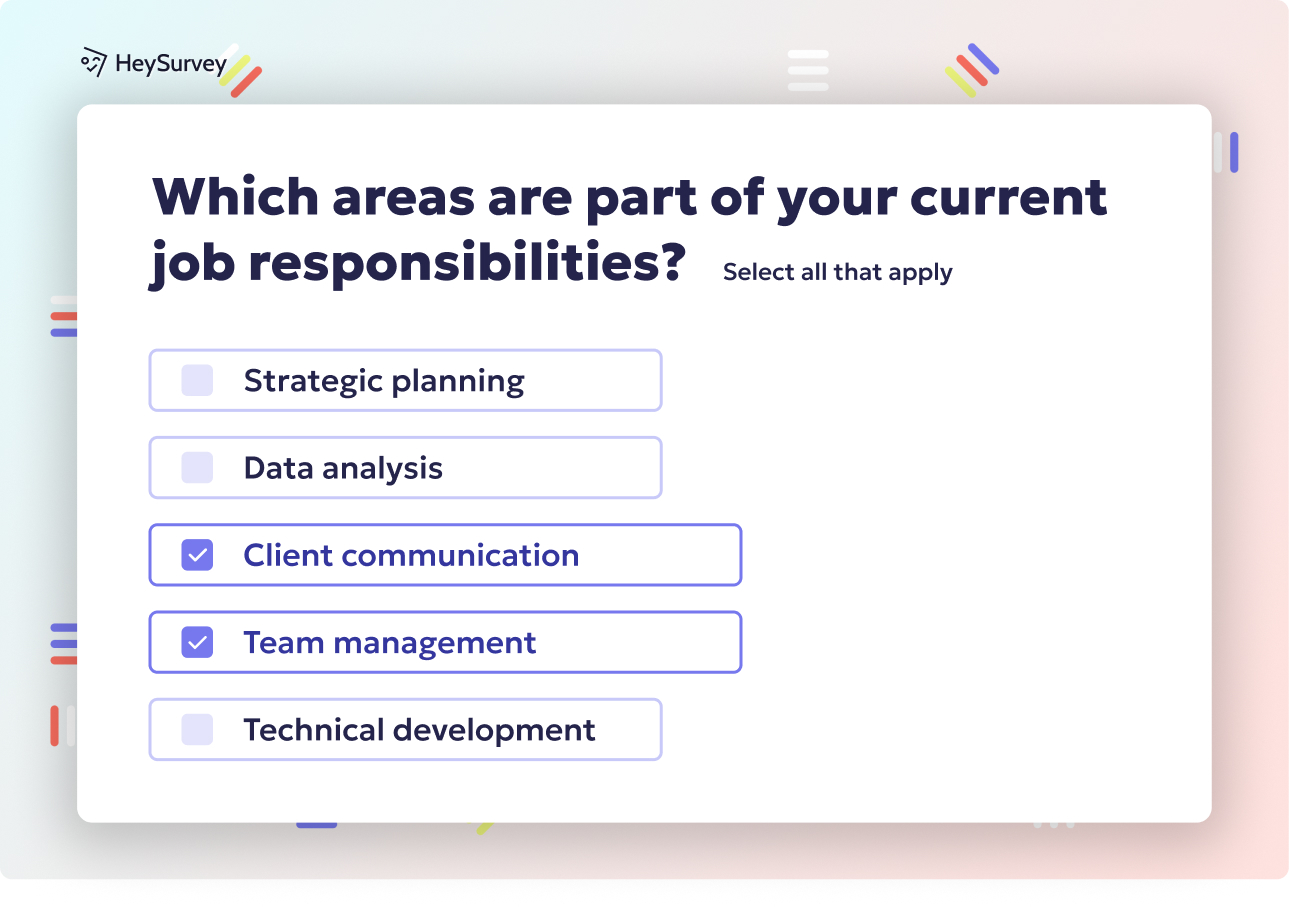
Creating a survey with HeySurvey for good survey questions is quick and easy.
1. Create a new survey
Start by opening a template with the button below this guide, or choose an empty survey if you want to build from scratch. HeySurvey lets you begin without an account, so you can explore first and publish later. Once the editor opens, you can rename your survey and adjust the basic settings if needed.
2. Add questions
Click Add Question to insert your survey items. For good survey questions, use clear wording and choose the right type: Text for open answers, Choice for multiple options, Scale for ratings, or NPS for loyalty feedback. You can mark questions as required, add descriptions, and reorder them easily. Keep questions short, specific, and focused on one topic at a time.
3. Publish survey
When everything looks right, click Preview to check the flow, then Publish to create your shareable link. If you have an account, you can also view responses later and update settings anytime.
2. Net Promoter Score (NPS) Survey Questions
A fast loyalty check with surprisingly sharp insight
Why & When to Use
Net Promoter Score, or NPS, measures customer loyalty by asking how likely someone is to recommend you to others.
It is one of the most common survey questions and responses frameworks because it is simple, familiar, and easy to track over time.
These survey questions for applications work best when you want to measure the strength of an ongoing relationship, not just a one-time interaction.
Use them for quarterly customer health checks, after onboarding, or after a meaningful milestone like a successful launch, renewal, or first big win.
Here’s the thing, NPS becomes much more useful when you understand the score groups in plain English:
Promoters are people who score 9 or 10 and are happy enough to cheer you on from the rooftops.
Passives score 7 or 8 and are satisfied, but not quite writing you a love song.
Detractors score from 0 to 6 and are more likely to feel disappointed or frustrated.
Plus, keep your web survey questions tight.
Ask the NPS question first, then add just a few follow-ups so people do not bail halfway through.
On top of that, segment replies by customer type, plan, or journey stage so your data survey questions lead to action, not just pretty charts.
This is also one of the great survey questions examples to reuse across email, in-app prompts, and even hotjar survey questions.
Sample questions
How easy was it to complete your task today?
Did you run into any problems while trying to finish this process?
At what step did the experience become confusing or frustrating?
How much time did this process take compared with what you expected?
What could we change to make this easier next time?
Bain research found a single NPS question—“How likely are you to recommend us?”—reliably indicates customer loyalty across most industries. Source
3. Customer Effort Survey Questions
Small friction points can cause big drop-offs
Why & When to Use
Customer effort surveys help you understand how easy or difficult it was for someone to finish a specific task.
That makes them some of the most useful survey questions for applications when your goal is to remove friction, not just collect polite opinions.
Here’s the thing, “easy” often predicts retention better than “satisfied” because people come back to products that do not make them wrestle a checkout form like it owes them money.
These web survey questions work best right after a user completes a task, while the experience is still fresh and the annoying bits are easy to remember.
Use them for moments like:
checkout flows
returns
onboarding steps
support resolution
booking flows
account management tasks
Plus, they are especially effective as on-site or in-app web survey questions, where companies want to spot confusion fast and fix it before it spreads.
Keep your focus on one workflow at a time so the feedback stays specific, useful, and easier to act on.
On top of that, these are great survey questions examples for teams using hotjar survey questions or other on-page tools to catch friction in real time.
If you want cleaner insights, ask right after the task ends and keep the survey short.
That way, your data survey questions point to one clear fix instead of a messy pile of maybe-problems.
Sample questions
What brought you to this page today?
Were you able to find the information you were looking for?
What, if anything, is stopping you from taking the next step?
Which part of this page was most helpful?
What question do you still have after visiting this page?
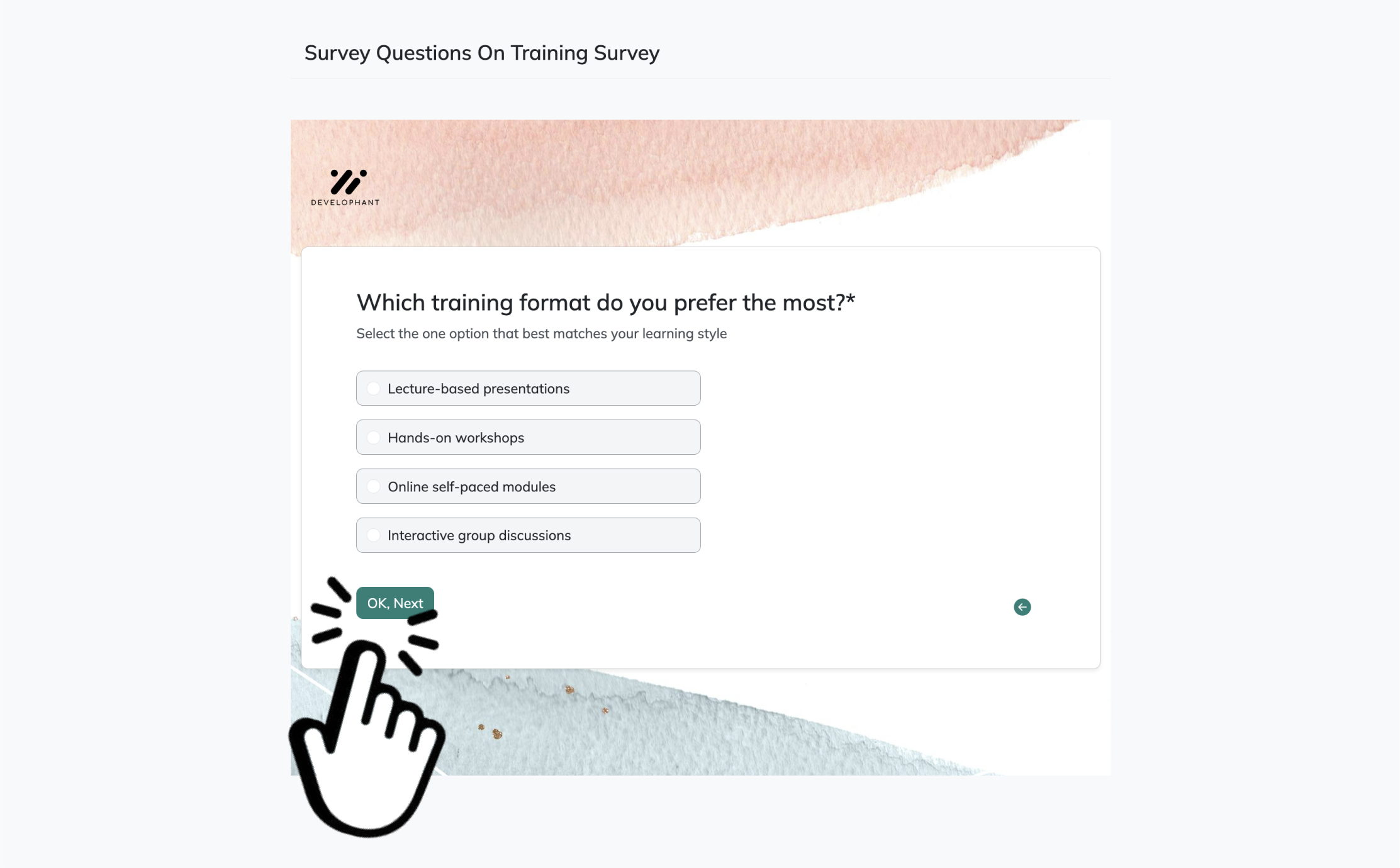
4. Website and Web Experience Survey Questions
The best website feedback shows you what your analytics cannot
Why & When to Use
Website surveys help you understand visitor intent, spot usability issues, uncover content gaps, and catch conversion blockers before they quietly tank results.
That is why these survey questions for applications work so well on websites too, because they reveal what people wanted, what they found, and where they got stuck.
Use these web survey questions when you want clearer feedback on pages like:
homepages
pricing pages
landing pages
product pages
blog posts
exit-intent popups
Here’s the thing, a homepage visitor and a blog reader are not looking for the same thing, so your questions should match the page intent.
For example, pricing pages can surface hesitation, landing pages can reveal missing proof, and blog survey questions can show what readers still want to learn next.
Plus, hotjar survey questions are popular here for a reason, because short on-page prompts can capture feedback while the experience is still fresh.
Keep those surveys tight, targeted, and timed carefully so you do not pop up like an overeager store clerk.
On top of that, the words visitors use in responses can become gold for SEO copy, FAQs, headings, and conversion messaging.
That makes this section one of the great survey questions examples categories if you want better content and better clicks at the same time.
Sample questions
Which feature do you use most often, and why?
Which feature has been the hardest to use or understand?
What problem were you hoping our product would solve for you?
What feature or improvement would have the biggest impact for you?
If you could change one thing about the product, what would it be?
Research shows open-ended questions yield richer website feedback but higher nonresponse, so use them sparingly and make them specific and easy to answer (source).
5. Product Feedback Survey Questions
Good product feedback helps you fix the real problem, not just polish the buttons
Why & When to Use
Product feedback surveys help you uncover adoption barriers, unmet needs, and opportunities to improve features people actually care about.
That makes them some of the most useful survey questions for applications, especially when you want to know why users stall, leave, or only use half the product.
Use these web survey questions after key moments like:
the end of a free trial
onboarding completion
a new feature launch
repeated support requests
heavy usage from power users
Here’s the thing, feature requests are helpful, but root problems are better.
If someone asks for a new button, shortcut, or dashboard, the real issue might be confusion, missing context, or a workflow that feels like assembling furniture without the instructions.
Plus, product teams get sharper insight when they combine feedback with data survey questions and actual usage behavior.
That means you can compare what users say with what they do, which is where many great survey questions examples start turning into smart decisions.
On top of that, group responses by user role, pricing plan, or use case so patterns are easier to spot.
Include both rating questions and open text prompts too, because common survey questions and responses give you trends, while written answers tell you why those trends exist.
Sample questions
How supported do you feel in your role right now?
Do you have the tools and information you need to do your job well?
How clear are expectations from your manager or team lead?
What is one obstacle making your work harder than it should be?
What change would most improve your experience at work?
6. Employee and Internal Feedback Survey Questions
The best internal surveys help you hear the truth before frustration turns into fallout
Why & When to Use
Employee surveys help you measure engagement, communication quality, training effectiveness, and overall workplace sentiment without relying on guesswork.
They are especially useful survey questions for applications used by HR, operations, and people managers who want better visibility into what teams actually need.
Use these web survey questions at moments like:
onboarding check-ins
quick pulse surveys
manager feedback cycles
training reviews
project retrospectives
Here’s the thing, vague morale questions rarely tell you much.
If you ask only "How happy are you?" you may get polite answers and very little direction, which is about as useful as a coffee machine with no coffee.
Instead, mix how do you feel survey questions with more specific assessment survey questions about support, clarity, tools, and blockers.
That gives you stronger common survey questions and responses, plus more actionable patterns by team or role.
On top of that, protect anonymity whenever possible so people feel safe being honest.
You can still follow up by department, seniority, or function, but keep groups broad enough to protect privacy.
Many great survey questions examples work best when paired with a plan to respond, because asking employees for feedback and then vanishing is not exactly the best survey ever.
Sample questions
Is this question focused on one clear idea?
Could a first-time reader understand this wording in seconds?
Does this question help you make a real decision, or is it just interesting?
Are the answer choices balanced, complete, and easy to compare?
Would this question still make sense if you saw it out of context?
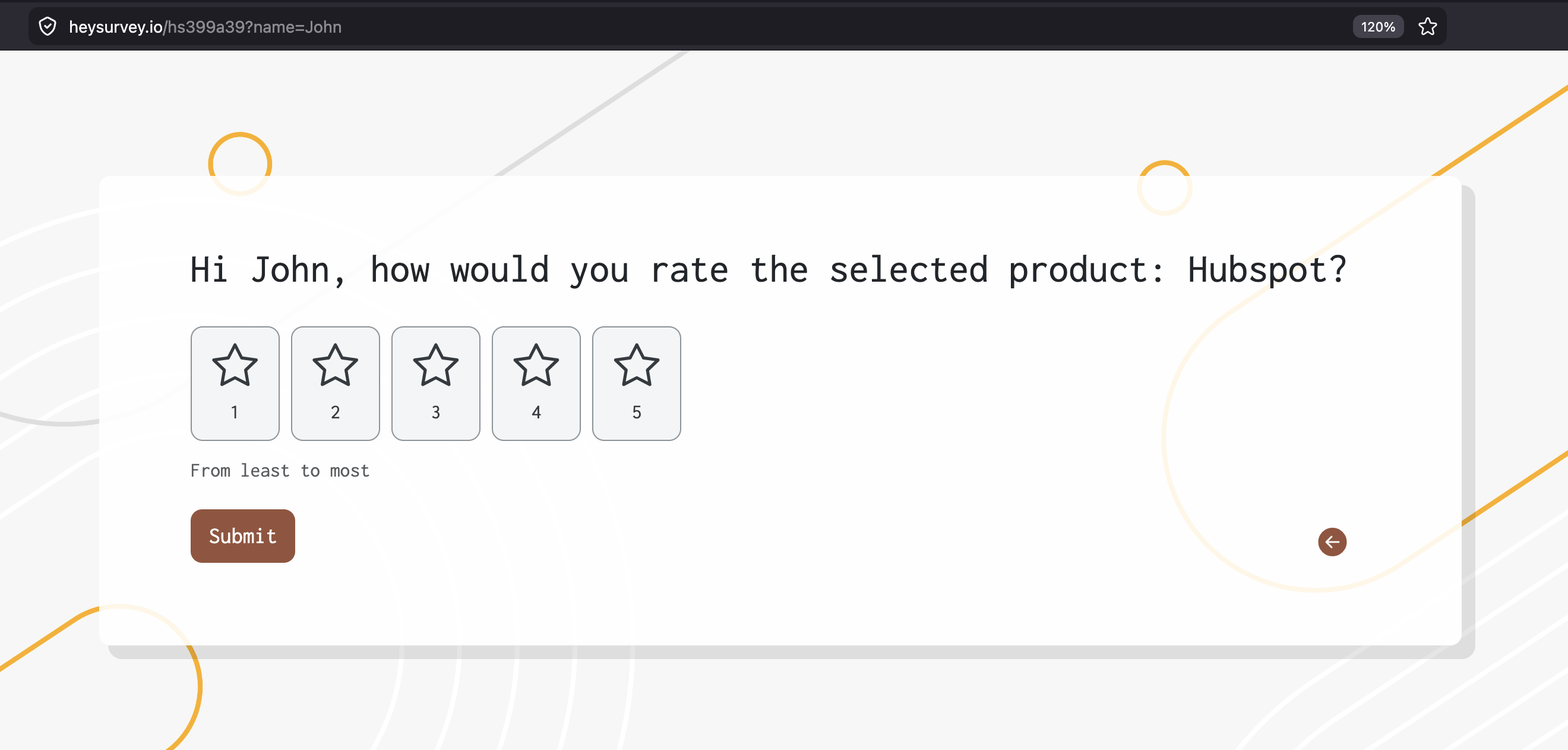
7. Best Practices for Writing Good Survey Questions
Good survey writing makes answers easier to trust and easier to use
Why & When to Use
If you want better survey questions for applications, better wording is where the magic starts.
Strong web survey questions help you collect cleaner data, reduce drop-off, and turn feedback into decisions instead of a messy pile of "interesting thoughts."
Use these best practices any time you are writing customer feedback forms, onboarding check-ins, hotjar survey questions, blog survey questions, or data survey questions.
Here’s the thing, a question can sound fine and still produce fuzzy answers.
A weak version like "How satisfied are you with our pricing and support?" bundles two topics together, while a stronger version asks about pricing and support separately.
Keep your survey tight based on context:
Use 1 to 3 questions for on-site or in-product surveys.
Use slightly longer surveys for email when the topic matters and expectations are clear.
Make every question earn its spot.
Plus, use simple, neutral wording and match format to purpose.
Ratings work well for benchmarking, while open text works better for discovery and richer common survey questions and responses.
Before sending, review for bias, order effects, and missing answer choices.
Many great survey questions examples are not clever at all, which is good news because your survey is not auditioning for Broadway.
Sample questions
What motivated you to apply for this opportunity?
How confident do you feel in completing the required tasks or skills?
Which part of the application or assessment process was least clear?
What additional support or information would improve your experience?
What is the most important change we should make to improve this process?
8. Survey Questions by Use Case: Applications, Assessments, and Improvement
The right survey questions for applications help you learn more than a resume ever could
Why & When to Use
Some readers are not looking for general customer feedback at all.
You may need survey questions for applications, assessment survey questions, or survey improvement questions that help you qualify people, measure readiness, and fix clunky steps before they scare off good candidates.
Here’s the thing, these surveys have a different job.
Instead of measuring satisfaction alone, they help you understand motivation, confidence, clarity, preparedness, and where the process needs work.
That makes this section a practical extension of the core survey frameworks above, especially if you are designing web survey questions for hiring, training, onboarding, or evaluation.
Application surveys should feel more focused and respectful than customer surveys.
You are not asking for casual opinions here, you are learning whether someone is aligned, ready, and supported enough to move forward.
Use assessment questions when you want to measure things like:
confidence in completing tasks
understanding of instructions
readiness before training or evaluation
learning progress after a program
On top of that, keep improvement questions tied to one stage only.
For example, ask about the application, onboarding, or assessment step separately so responses stay actionable instead of turning into one giant shrug in spreadsheet form.
Sample questions
Which feedback theme appears most often across responses?
Which issue has the biggest impact on satisfaction, conversion, or retention?
Which customer segment is reporting the biggest problem?
What change can we test first based on this feedback?
How will we communicate improvements back to respondents or stakeholders?
9. Turn Survey Insights Into Action
The best survey ever is useless if the answers just sit in a spreadsheet collecting digital dust
Why & When to Use
Great survey questions examples only become valuable when you turn responses into decisions.
Here’s the thing, whether you are using web survey questions, survey questions for applications, or blog survey questions, the real win comes from what you do next.
This final step is the bridge between collecting feedback and creating measurable improvement.
If someone is searching for the best survey ever, they usually do not just want better wording, they want better results.
Start by grouping responses into clear buckets so patterns jump out faster.
Theme or topic
Urgency or severity
Business impact
Customer segment
Plus, do not chase only the loudest complaint.
Look for the issue that affects satisfaction, conversion, retention, or completion rates the most, because common survey questions and responses can hide very different business consequences.
A smart next move is to balance quick wins with longer-term fixes.
Test one simple change first
Plan one strategic improvement next
Track results after both changes
On top of that, close the loop.
Tell customers, users, employees, or applicants what changed because of their feedback, including hotjar survey questions or other data survey questions, because people are far more likely to respond again when they know you actually listened.
Related Surveys
29 Social Media Survey Questions
Explore 25 social media survey questions with practical sample prompts to help gather insights on...
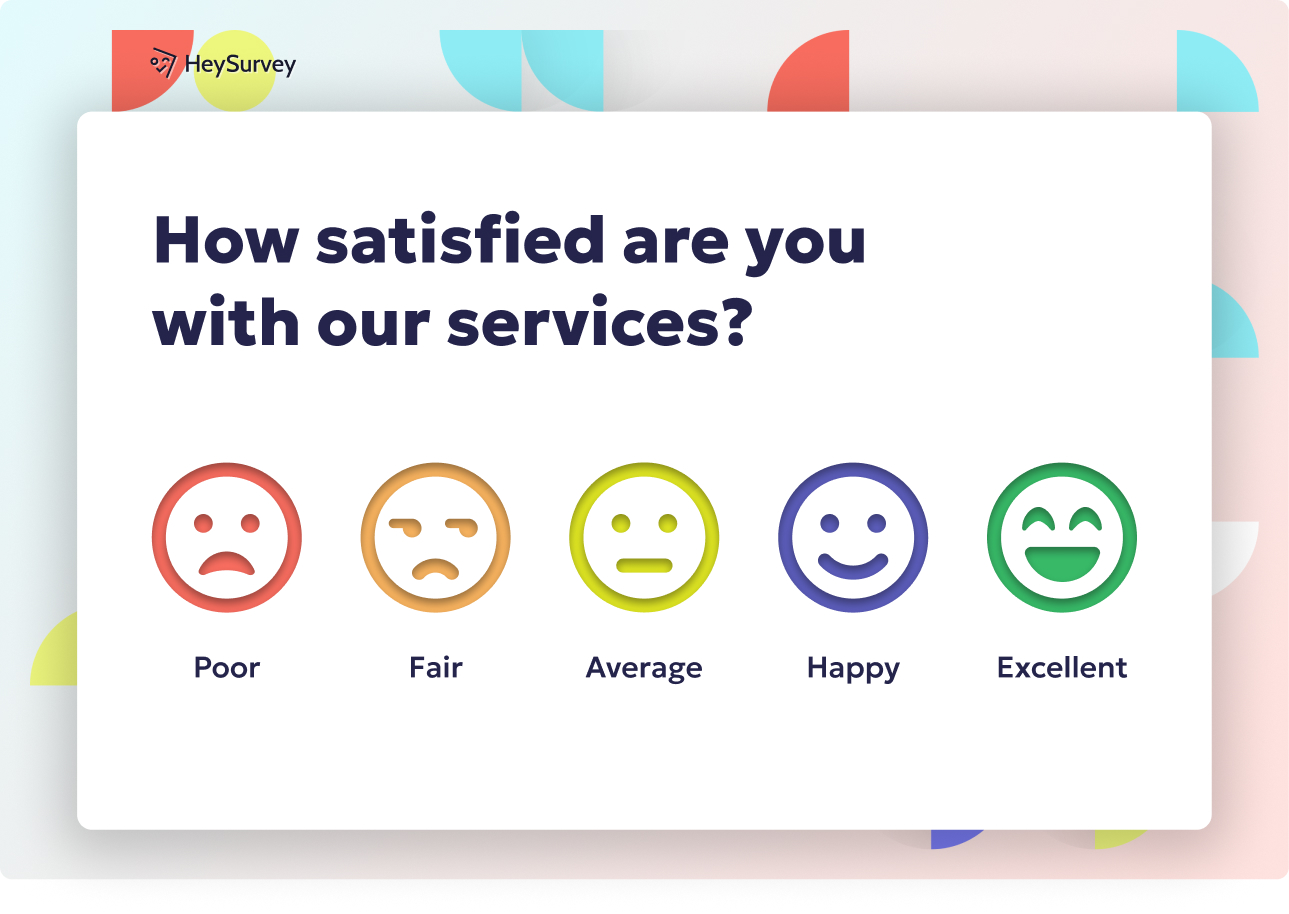
31 Job Satisfaction Survey Questions
Explore **25 job satisfaction survey questions** with sample prompts to improve employee feedback...
29 Quantitative Survey Questions Guide
Explore 25 quantitative survey questions with sample questions, examples, and tips to build effec...