31 Fun Survey Questions to Ask Anyone
Explore 25 fun survey questions with sample prompts, creative ideas, and examples to inspire engaging surveys for any audience.
Fun survey questions are light, engaging prompts that make people more likely to respond, stick with your survey, and share real personality, preferences, and sentiment. Fun questions can do serious work.
Here’s the thing: fun does not mean pointless. In this article, you’ll discover the best types of fun survey questions, when to use them, example questions to borrow, and how to turn playful answers into useful insights, because nobody wants a survey that feels like homework. If you’re building one with an online survey tool, these questions can help keep it enjoyable without losing value.
Icebreaker Survey Questions
Sample questions
What’s one word your friends would use to describe you?
If your week had a theme song, what would it be?
What’s your go-to comfort food after a long day?
Which superpower would you choose if you could have one for a day?
Are you more of a morning person, night owl, or permanently tired?
A warm-up question can open the whole conversation.
Why & When to Use
Icebreaker survey questions work best right at the beginning of your survey, event feedback form, employee pulse check, classroom questionnaire, or community poll.
They help people settle in fast, lower that “ugh, homework” feeling, and make respondents more willing to keep going when longer or more serious questions show up.
Here’s the thing: when the first question feels easy, your survey feels easier too. That small win matters more than you might think.
Icebreakers are especially useful in:
onboarding surveys
team-building surveys
webinar polls
customer welcome surveys
social media engagement surveys
Keep these questions brief and low-pressure, so people can answer without overthinking. Plus, the best ones feel playful without getting weirdly personal.
A smart setup is to place 1 to 3 icebreaker questions before the deeper stuff. That way, you build momentum before asking for detailed opinions, ratings, or feedback.
On top of that, mix formats to keep the experience fresh:
use multiple-choice for quick wins
use open-ended questions for personality and color
keep humor inclusive, simple, and easy to understand
If a question makes someone pause too long, it is probably trying too hard. Cute is good, but confusing is a party foul.
SurveyMonkey analysis of 25,000+ surveys found starting with an easy multiple-choice question increased completion rates versus open-ended first questions (source).
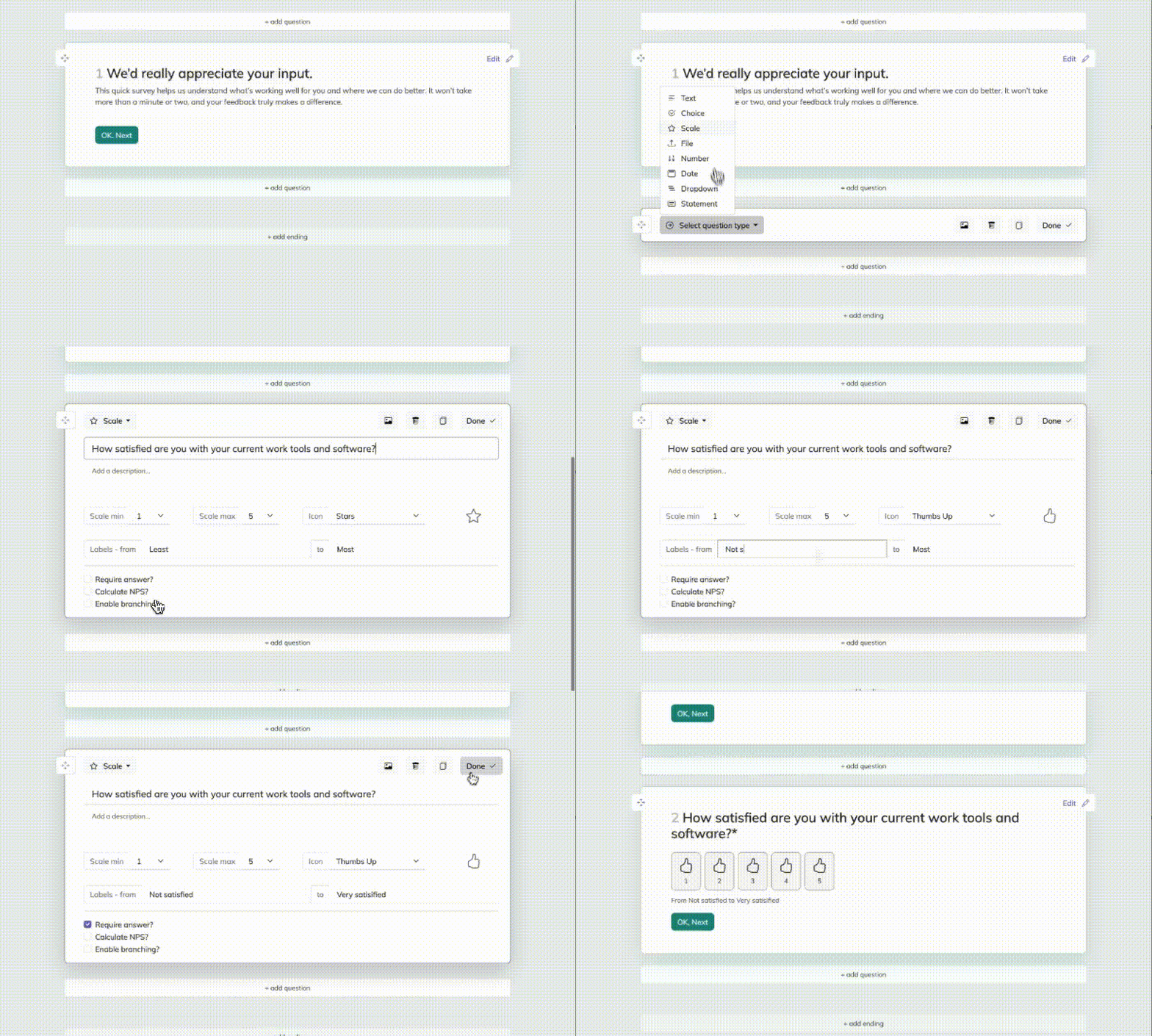
Create a new survey
Open HeySurvey and start with a template or an empty survey. For a fun survey questions survey, a template is a great shortcut because you can begin with a ready-made structure and edit it to fit your topic. If you do not have an account yet, you can still create the survey first and publish later after signing in.Add questions
Click Add Question and choose question types that make the survey playful and easy to answer, such as Choice, Emoji Rating, Scale, or Text. Mix quick multiple-choice questions with a few open-ended ones to keep it light and engaging. You can also add images, use fun answer options, and mark questions as required if needed.Publish survey
When your survey looks good, click Preview to check it, then press Publish to make it live. HeySurvey, an online survey maker, will give you a shareable link so you can send the fun survey questions survey to your audience right away.
Personality Survey Questions
Sample questions
When tackling a big project, are you a planner, improviser, or procrastinator?
Which describes you best: extrovert, introvert, or ambivert?
If you joined a trivia team, what role would you play?
Do you prefer detailed instructions or figuring things out as you go?
What kind of vacation fits your personality best: adventure, relaxation, culture, or staycation?
Personality questions help you learn how people tick without making it feel like a job interview.
Why & When to Use
Personality survey questions are great when you want to understand how people think, choose, and interact without sounding stiff or overly formal.
They work especially well for audience segmentation, team engagement, classroom activities, member communities, and brand interaction campaigns.
Plus, they can reveal preferences, communication styles, and personal tendencies in a way that feels light, useful, and surprisingly fun. Basically, you get real insight without everyone feeling like they accidentally walked into therapy.
These questions are especially effective in:
employee engagement surveys
user research surveys
fun internal newsletters
community member profiles
content personalization campaigns
Here’s the thing: the best personality questions use balanced, nonjudgmental answer choices, so no option sounds like the "good" one.
Avoid labels that feel clinical, diagnostic, or too intense for the setting. You want people to recognize themselves, not defend themselves.
On top of that, personality responses become much more valuable when you use them to group people into useful audience segments.
That can help you:
personalize content or offers
shape team-building activities
improve communication styles
spot shared preferences across groups
When answers lead to action, your survey stops being just interesting and starts being useful.
Balanced, nonjudgmental survey answer choices reduce response bias and produce more accurate data than unbalanced wording in web surveys (source).
Preference Survey Questions
Sample questions
Which type of content do you enjoy most: videos, blogs, podcasts, or infographics?
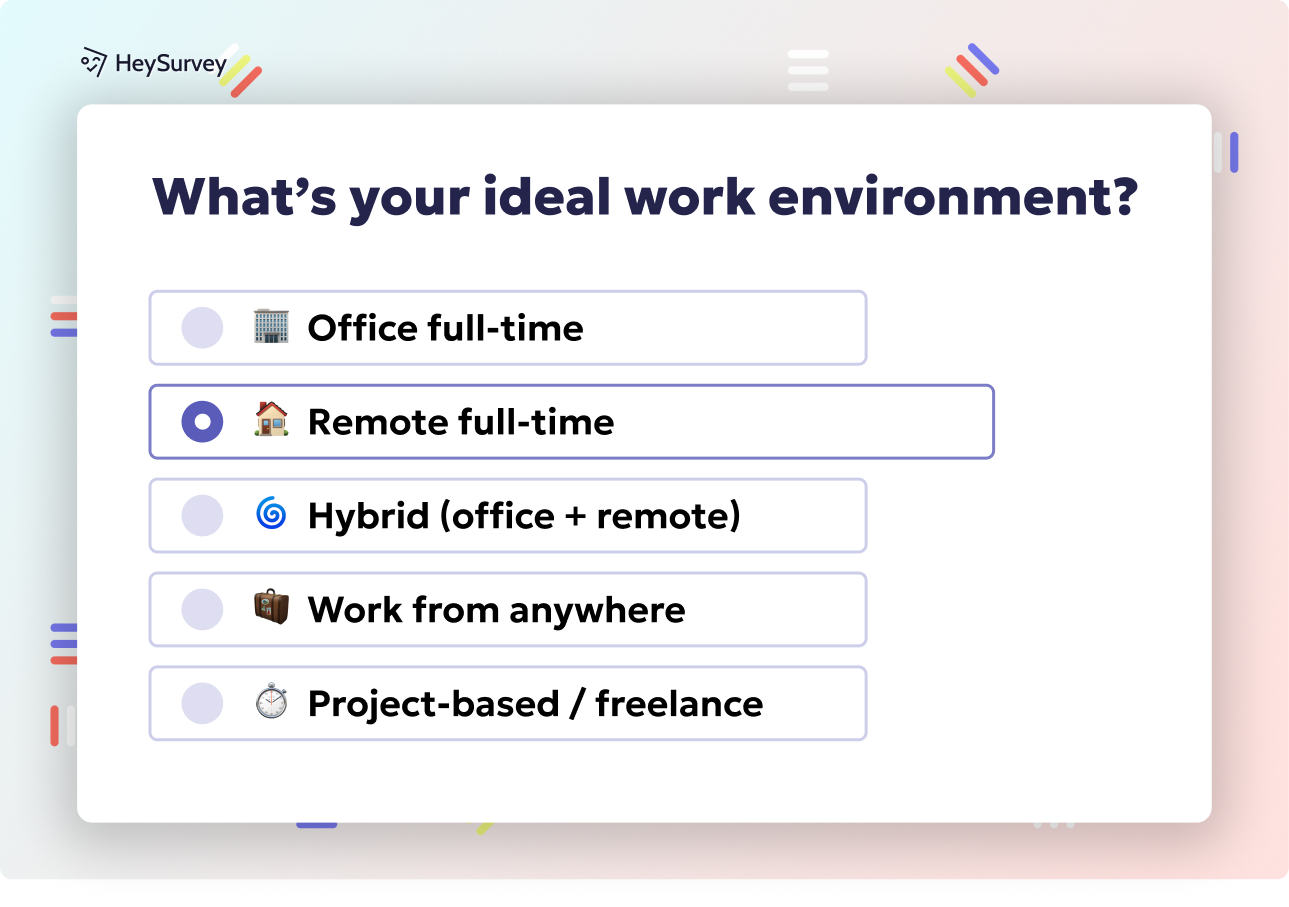
What’s your ideal work setup: at home, in-office, hybrid, or from a beach somewhere?
Which reward would motivate you most: gift card, extra time off, public recognition, or team lunch?
What kind of event would you be most excited to attend?
Which app could you not live without for a week?
Preference questions uncover what people like, choose, and come back to, without making your survey feel heavy.
Why & When to Use
Preference survey questions help you spot likes, dislikes, habits, and everyday choices in a way that feels easy to answer and genuinely useful.
They work especially well when you want practical insight without turning the survey into a spreadsheet with feelings.
These questions are ideal for:
product research
customer feedback surveys
employee culture surveys
event planning
content strategy
Plus, they give you answers you can actually use, whether you are shaping a new feature, planning a campaign, choosing team perks, or deciding what kind of programming people will care about.
Here’s the thing: preference questions sit nicely between playful and business-focused goals, which makes them incredibly handy when you want both engagement and direction.
To make them work well:
use clear answer categories that reflect real choices
keep the number of options limited
avoid vague or overlapping answers
make sure each option feels relevant to the audience
On top of that, strong preference questions stay quick, simple, and relatable, because nobody wants to spend five minutes ranking snack flavors like it is a board meeting.
When you keep the choices realistic, the results become much easier to turn into smart decisions.
This-or-That Survey Questions
Sample questions
Coffee or tea?
Movies at home or movie theater?
Text message or phone call?
Sweet snacks or salty snacks?
Summer vacation or winter holiday?
This-or-that questions make choosing feel easy, fast, and weirdly fun, which is great news for your completion rate.
Why & When to Use
This-or-that survey questions work because they ask for one quick choice and keep people moving.
Here’s the thing: when someone can answer in two seconds, they are much more likely to keep going instead of abandoning your survey for snacks and scrolling.
These questions are a smart fit when fast engagement matters more than deep nuance.
They work especially well in:
social polls
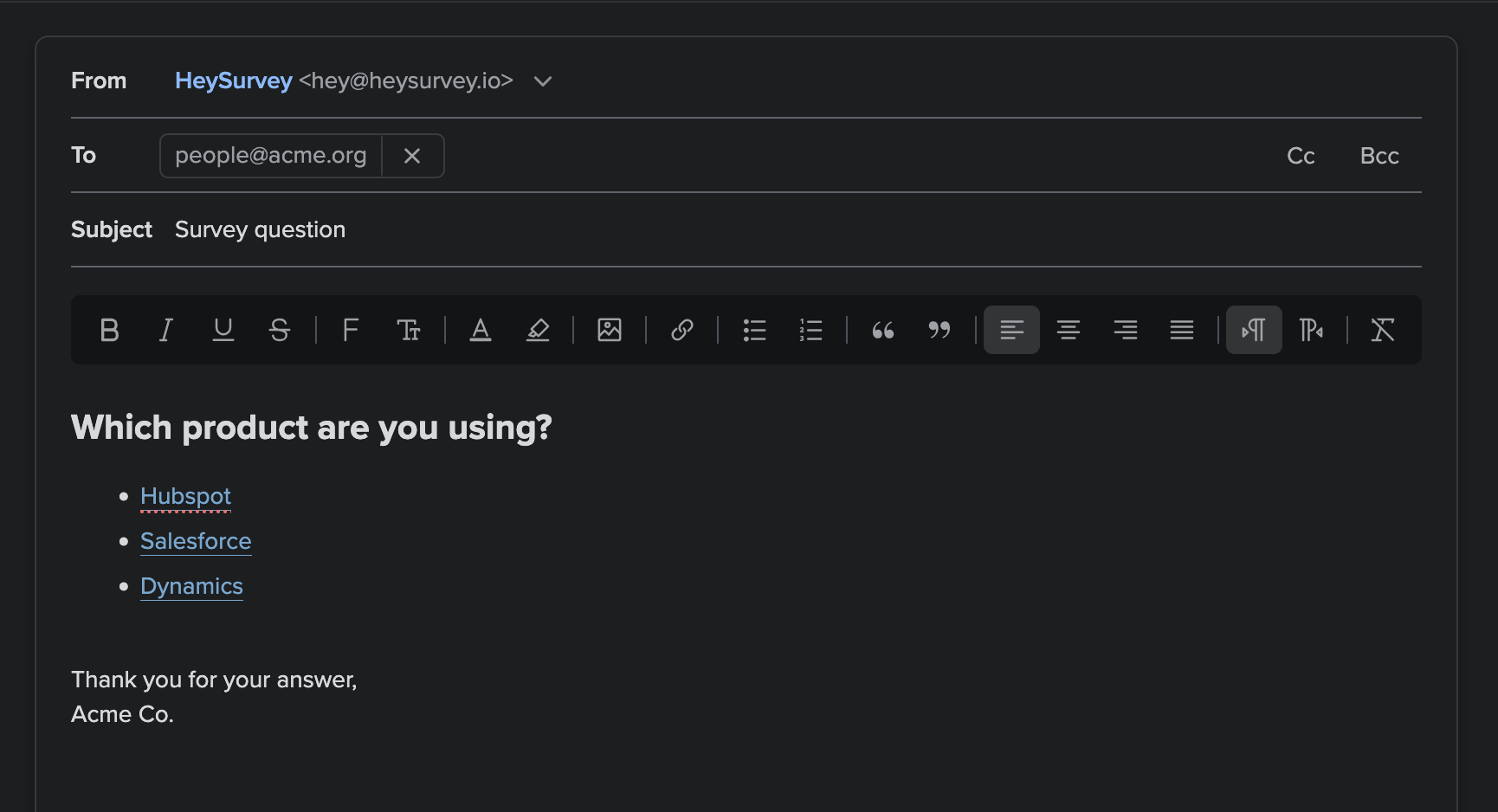
email surveys
employee engagement check-ins
classroom games
audience participation campaigns
Plus, they are perfect for the early part of a survey, where a few easy either-or questions can build momentum and help people settle in.
They are also very easy to analyze, since the answers are clean, simple, and easy to group without needing a decoding team.
On top of that, this format does have one small catch: it can oversimplify more complex opinions.
If you need richer feedback, pair the question with a short optional follow-up like:
Why did you choose that option?
Is there a situation where you would pick the other one?
That way, you get the speed of quick clicks and the bonus of extra context when it matters.
Research shows simpler binary answer formats can improve survey speed and reduce perceived complexity, supporting quick this-or-that questions for engagement (ScienceDirect).
Hypothetical and Creative Survey Questions
Sample questions
If you could instantly master one skill, what would it be?
If you could have dinner with any fictional character, who would you pick?
If your job title could be anything fun, what would it be?
If you were launching a new ice cream flavor, what would you name it?
If you could relive one decade, which would you choose?
Hypothetical questions invite people to imagine, laugh, and reveal what really matters to them without making the survey feel like homework.
Why & When to Use
Hypothetical and creative survey questions pull people out of autopilot and into imagination, which is exactly where memorable answers tend to show up.
Here's the thing: when you ask someone to picture a fun scenario, you often get more emotion, personality, and honesty than you would from a flat factual prompt.
These questions work especially well for:
team-building activities
classroom surveys
community engagement projects
brand campaigns
employee culture initiatives
Plus, they can reveal values, aspirations, and decision-making patterns in a format that feels playful instead of stiff.
They are especially useful when you want open-ended responses that people actually enjoy writing, and they also tend to create highly shareable content. People love a good imaginary ice cream flavor more than they probably should.
On top of that, keep the fun connected to your goal.
If your survey is about workplace culture, a playful job-title question fits nicely, while a random fantasy question may feel cute but off-track.
When answers really shine, you can reuse them in culture recaps, testimonials, or content themes, as long as permission is clear.
Fun Demographic and Lifestyle Survey Questions
Sample questions
Which best describes your weekend: relaxing, catching up, socializing, or running errands?
What part of the day are you most productive?
How do you usually discover new brands, shows, or trends?
Which best describes your current life stage?
What’s one hobby you wish you had more time for?
Fun demographic and lifestyle questions help you learn useful audience details without making people feel like they are filling out a tax form.
Why & When to Use
Fun demographic and lifestyle survey questions give you context about how people live, spend time, and make choices, but in a way that feels friendly instead of overly personal.
That makes them especially useful when you want better audience profiling without sounding stiff, nosy, or weirdly intense.
These questions work well for:
audience profiling
customer segmentation
student surveys
employee spotlights
community-building surveys
Here’s the thing: the goal is not to dig into private details just because you can.
The goal is to understand routines, habits, and lifestyle patterns so you can group responses more intelligently and communicate more effectively.
Plus, it helps to keep these questions respectful and optional when needed, especially if a topic might feel personal.
Avoid sensitive demographic questions unless they clearly support the survey’s purpose.
On top of that, use broad ranges or flexible categories instead of asking for invasive specifics.
For example, “current life stage” often works better than asking for details people may not want to spell out.
You can also pair lifestyle answers with preference data to build smarter segments.
That combo helps you understand not just who people are, but how they actually move through daily life, which is where the good stuff usually hides.
Best Practices for Writing Fun Survey Questions
Sample questions
Is this question quick to answer without making people stop and think too hard?
Does this question sound like something our audience would actually enjoy reading?
Are the answer choices clear, distinct, and fair?
Does this fun question support the goal of the survey?
Would this question still work well on a phone screen?
Fun works best when it still does a job.
Why & When to Use
Fun survey questions should boost energy, not derail the mission.
Here’s the thing: the sweet spot is where engagement and research quality work together, like unlikely best friends who somehow crush every group project.
Use these best practices when you want better completion rates, stronger data, and a smoother experience from first question to last.
Dos
Keep questions short, clear, and easy to answer fast.
Match the tone to your audience, whether they are customers, employees, students, event attendees, or online followers.
Mix formats like multiple choice, ratings, and a few open-ended prompts.
Place fun questions strategically so they refresh attention without interrupting key sections.
Test for clarity, inclusivity, bias, and mobile-friendly wording.
Make sure every playful question still supports a real research goal.
Don’ts
Don’t lean on sarcasm, inside jokes, or humor that leaves people out.
Don’t ask personal or awkward questions just to be “funny.”
Don’t overload the survey with too many write-in responses.
Don’t use overlapping, leading, or biased answer choices.
Don’t let playful questions crowd out the data you truly need.
Don’t forget attention span, survey flow, question order, or overall length.
Plus, when your questions feel easy and purposeful, people are more likely to finish and answer honestly.
How to Choose the Right Fun Survey Questions for Your Goal
Sample questions
Are you using this question to warm people up, or to learn something specific?
Does this fun question help with engagement, feedback, segmentation, or idea generation?
Will this question be easy for this audience to answer quickly?
Does it fit the length and tone of the rest of the survey?
Have you picked only the most useful fun questions instead of tossing in extras like confetti?
The best fun question is the one that earns its spot.
Why & When to Use
Fun survey questions work best when they match your actual goal, not just your mood.
Here’s the thing: a playful question can boost responses, reveal preferences, spark ideas, or help you group people by interests, but only if you choose the right type.
Use this approach when you want a survey that feels enjoyable and still pulls useful insights.
A simple way to choose:
Use icebreakers to start strong and make people comfortable.
Use preference questions to guide product, content, or event decisions.
Use this-or-that questions for fast participation and easy clicks.
Use personality questions when you want light segmentation.
Use hypothetical questions to unlock creativity, culture, or team bonding.
Use lifestyle questions to understand your audience’s habits and context.
Plus, keep it tight.
Choose the 5 to 10 fun questions that matter most, adjust complexity based on how long the survey is and how well people know you, and blend playful questions with core research questions for balance.
On top of that, your survey stays useful instead of turning into a party balloon with a clipboard.
Turn Survey Insights Into Action
Sample questions
What patterns showed up again and again in the responses?
Which answers were most common for different audience groups?
Were there any surprising comments worth sharing with your team?
What is one clear action you can take based on these results?
How will you use these insights to improve the next survey or experience?
Fun answers are only useful when you actually do something with them.
Why & When to Use
Fun survey questions are not just there to make people smile for 12 seconds and click next.
Here’s the thing: their real value shows up when you turn responses into decisions that improve what you do next.
Start by reviewing patterns across the full set of answers, then break responses into segments like new customers, repeat buyers, team roles, or event attendees.
On top of that, look for standout comments that reveal emotion, frustration, excitement, or unexpected ideas, because one clever response can sometimes point to a very real opportunity.
A simple action plan helps:
Use repeated preferences to improve your content strategy.
Use product-related responses to refine features, offers, or messaging.
Use event feedback to shape themes, formats, or timing.
Use employee responses to strengthen morale, recognition, or team connection.
Use personal preferences to tailor communication and make outreach feel more relevant.
Plus, connect every insight to a next step, an owner, and a timeline.
That is how you keep fun questions from becoming trivia night with extra tabs open.
The best fun survey questions do two jobs at once: they create a better experience for the person answering, and they give you better data to act on.
Related Surveys
29 Social Media Survey Questions
Explore 25 social media survey questions with practical sample prompts to help gather insights on...
31 Job Satisfaction Survey Questions
Explore **25 job satisfaction survey questions** with sample prompts to improve employee feedback...
29 Quantitative Survey Questions Guide
Explore 25 quantitative survey questions with sample questions, examples, and tips to build effec...