29 Focus Group Survey Questions
Explore 25 keyword focus group survey questions with sample prompts, tips, and insights for better research, feedback, and survey planning.
Focus group survey questions are structured prompts that help you collect clear, comparable feedback, while open discussion prompts invite freer conversation and surprise insights. The right questions reveal why people think, feel, and choose the way they do, not just what they say.
Whether you need website focus group questions, advertising focus group questions, engagement questions for focus groups, or internal communications focus group questions, smart question design helps you uncover attitudes, motivations, preferences, and decision drivers. Plus, you’ll get practical question categories, focus group survey questions examples, and simple ways to turn answers into action instead of letting them nap in a spreadsheet.
Participant Background and Screening Questions
Sample questions
How familiar are you with our company, product, or service?
How often do you use products or services like this?
Which of the following best describes your role, needs, or experience level?
What was the main reason you agreed to participate in this discussion?
Have you interacted with our brand, website, or communications in the past 6 months?
A few smart screening questions can save you from a lot of messy, shrug-worthy feedback later.
Why & When to Use
Participant background and screening questions belong at the start of your survey or discussion guide.
They help you confirm fit, organize responses by segment, and make the rest of your focus group survey questions examples much more useful.
These are especially handy when you’re building website focus group questions, planning internal communications focus group questions, or running early-stage customer or employee research.
Here’s the thing, screening questions improve data quality because they show whether someone actually matches the audience you want to hear from.
They also help you spot patterns across groups, like how new users answer differently from loyal customers or how managers react compared with frontline staff.
Keep this section brief, neutral, and tightly tied to your study goal.
Ask only what helps you qualify participants or interpret later answers.
Skip unnecessary demographic questions unless they directly affect the research.
Use responses to compare themes across participant segments.
Match the wording to your objective, whether you need engagement questions for focus groups or broader focus group survey questions.
Plus, this is not the place for a full life story.
A few targeted questions will do the job nicely, without making participants feel like they’re filling out paperwork at the world’s least exciting party.
Clear, targeted screening that specifies participant characteristics is recognized as best practice for improving focus group recruitment quality and reporting rigor (PMC).
Create a focus group survey in HeySurvey
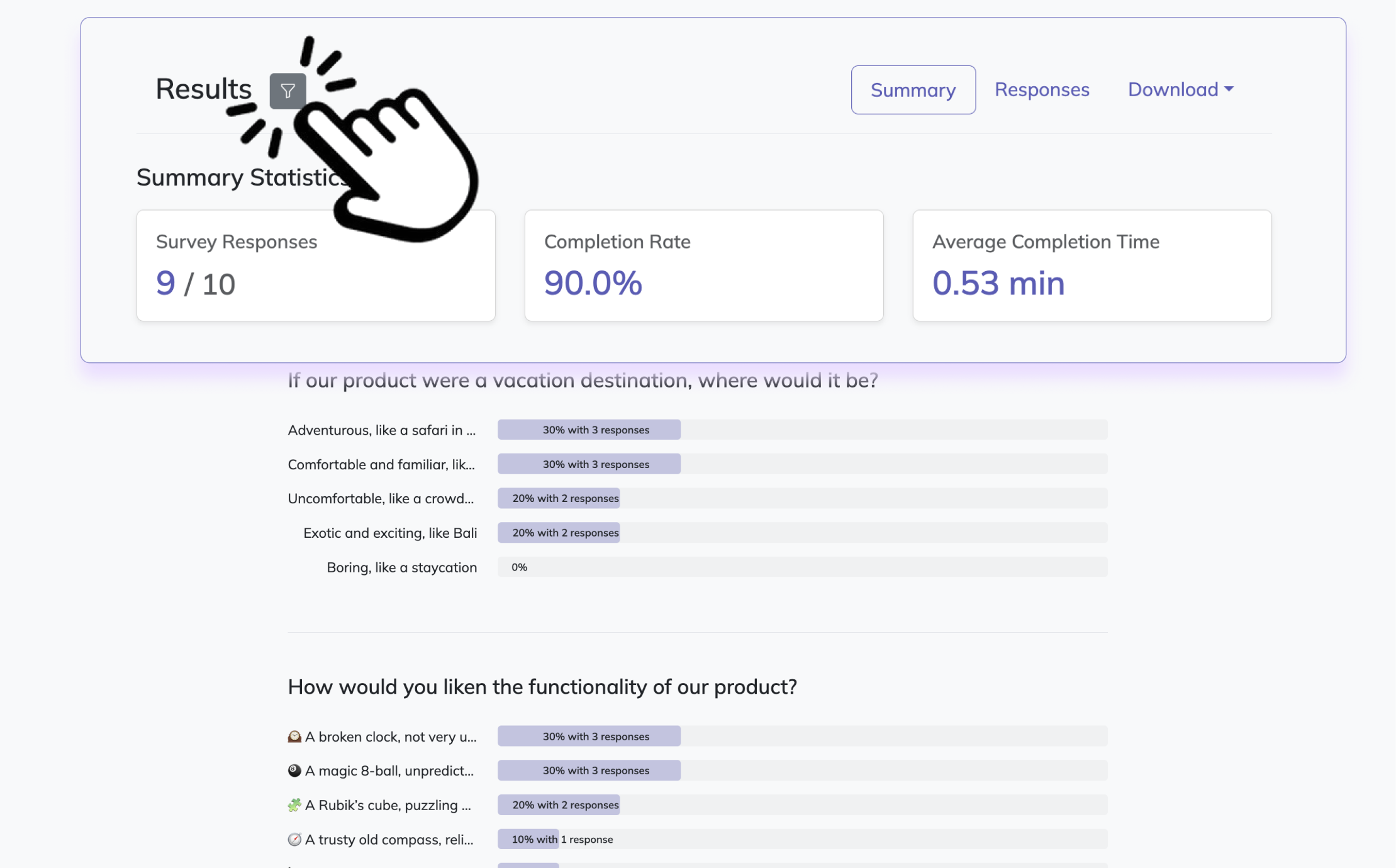
1. Create a new survey
Open HeySurvey and start with a template or an empty survey. If you’re new, a template is the fastest way to begin. You can open it with the button below these instructions and then rename the survey in the editor.
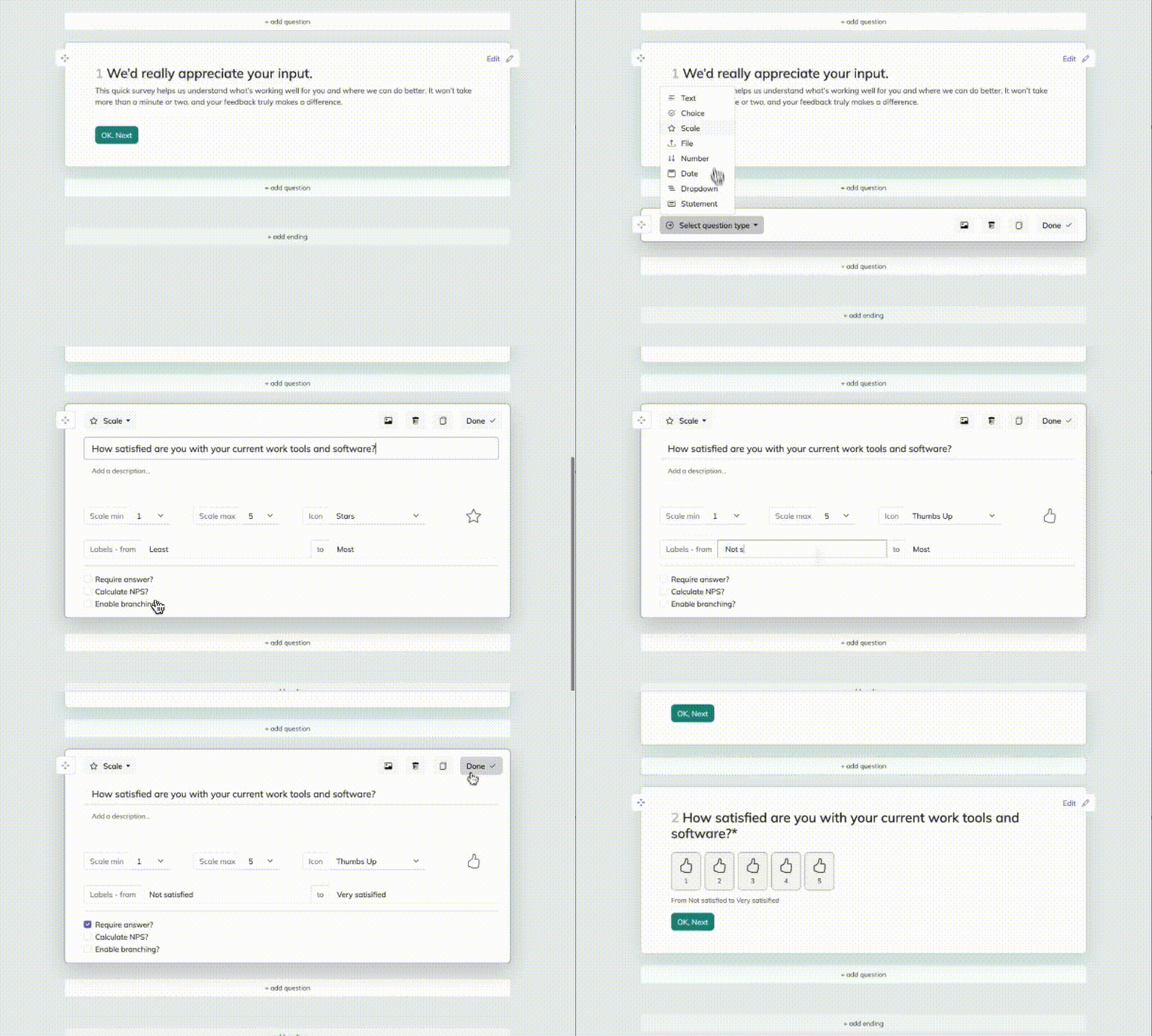
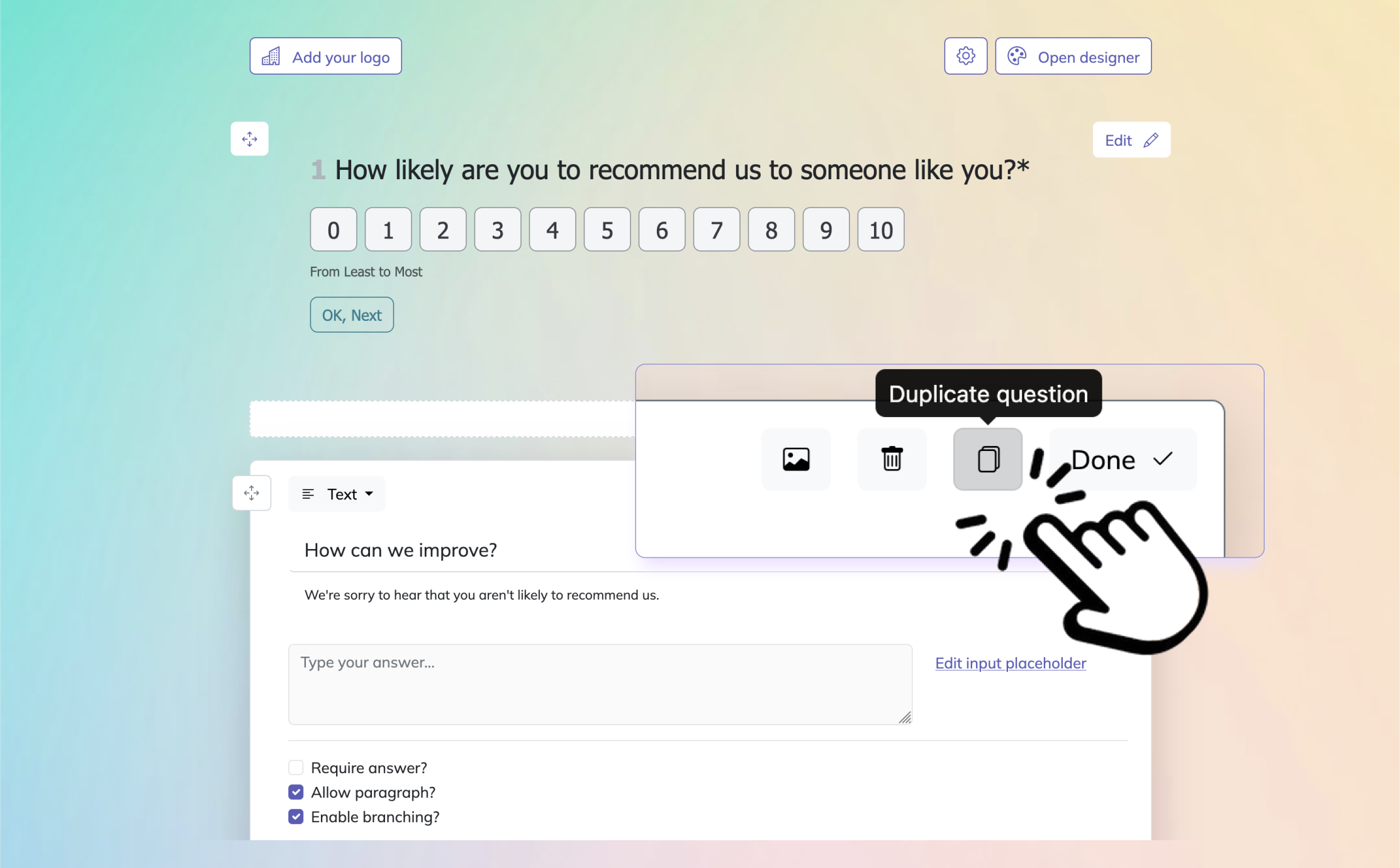
2. Add questions
Click Add Question and choose the question types that fit your focus group survey. Use Text questions for open feedback, Choice or Scale questions for quick opinions, and Ranking questions to compare preferences. You can mark important questions as required, add descriptions, and reorder questions anytime.
3. Publish survey
When your questions are ready, click Preview to check the survey flow. If everything looks good, click Publish to create a shareable link. You can then send it to your focus group participants and collect responses right away.
Awareness and First-Impression Questions
Sample questions
When you first hear about this product, service, or message, what comes to mind?
What is your immediate reaction to this brand, concept, or webpage?
What do you think this company is trying to offer or communicate?
What stands out to you first, and why?
Based on your first impression, how likely would you be to learn more?
First impressions are fast, honest, and wildly useful when you want the reaction before the overthinking starts.
Why & When to Use
Awareness and first-impression prompts help you understand what people already know, assume, or feel before the deeper conversation begins.
That makes them especially useful in website focus group questions, advertising focus group questions, and focus group survey questions examples built around brand perception or message clarity.
Here’s the thing, your best insights often show up in the first few seconds.
A quick reaction can reveal emotional cues, confusion, interest, or skepticism that people might smooth over later once they have more context.
Use these engagement questions for focus groups when testing:
ad concepts and campaign messaging
homepages, landing pages, or product pages
brand statements, taglines, or internal announcements
early creative directions before final decisions are made
Plus, this section works best when you capture unfiltered reactions before showing extra details or explanations.
Keep the wording neutral so you do not accidentally push participants toward praise or criticism, because even a tiny nudge can make your focus group survey questions less reliable.
On top of that, these questions are great for web pages and messaging tests because they show what grabs attention first, and what gets ignored like salad at a pizza party.
Research shows website users form first-impression judgments in as little as 50 milliseconds, so early focus group questions can capture crucial unfiltered reactions. Source
Experience and Behavior Questions
Sample questions
Walk us through the last time you used a product or service like this.
What steps do you usually take before making a decision in this category?
What has your experience with our website, product, or communication been like so far?
Where do you usually encounter problems, delays, or confusion?
What factors most influence whether you continue, return, or disengage?
Behavior beats guesswork when you want the truth about what people actually do, not what they think sounds smart.
Why & When to Use
Experience and behavior prompts help you uncover real actions, habits, and past experiences instead of assumptions, predictions, or polished opinions.
That makes them especially useful in website focus group questions, engagement questions for focus groups, and focus group survey questions examples built around usability, retention, and real-world decision-making.
Here’s the thing, behavior-based answers are often more reliable than hypothetical ones because people can describe what already happened, step by step, without needing to invent a perfect version of themselves.
Use these questions when you want to explore:
recent customer journeys and decision paths
friction points, confusion, delays, or drop-off moments
repeat behavior, return visits, or disengagement triggers
employee reactions in internal communications focus group questions
product, website, or messaging experiences that shape satisfaction
Plus, keep the focus on recent and concrete examples whenever possible.
Ask about the last time, the most recent interaction, or what happened before and after a key moment, because that is where the useful detail lives.
On top of that, these prompts work beautifully in focus group survey questions and focus group survey questions examples tied to usability and engagement.
You are not chasing theories here, you are following footprints, and footprints are much better at telling you where people actually wandered off.
Attitudes, Motivations, and Engagement Questions
Sample questions
What motivates you to pay attention to or engage with this topic, brand, or message?
What makes something in this category feel useful, trustworthy, or relevant to you?
What causes you to lose interest or ignore communication like this?
How well does this product, website, or message reflect your needs or priorities?
What would make you more likely to engage in the future?
Motivation reveals the "why" behind attention, trust, loyalty, and that all-important moment when someone decides not to scroll away.
Why & When to Use
These website focus group questions help you move beyond what people do and into why they do it, which is where the gold usually hides.
They are especially strong as engagement questions for focus groups, employee studies, brand loyalty analysis, and internal communications focus group questions.
Here’s the thing, behavior tells you what happened, but attitude and motivation explain the engine under the hood.
Use these focus group survey questions examples when you want to understand:
emotional triggers that spark attention or connection
practical value that makes a message feel worth engaging with
trust signals that increase credibility
relevance factors that shape loyalty, retention, or disengagement
communication gaps that weaken employee or customer engagement
Plus, these focus group survey questions work best when you follow up and ask why, what specifically, and what changed.
That light probing helps participants explain emotional triggers, practical value, trust, and relevance without turning their answers into vague mush.
On top of that, this question type is especially useful when you are improving communication effectiveness, boosting employee engagement, or figuring out why customers stick around or quietly vanish like socks in a dryer.
Focus group best practice is to use open-ended, probing questions to uncover why people think or feel as they do, especially around trust and relevance (SAMHSA).
Product, Website, and Usability Feedback Questions
Sample questions
What was easy or difficult about navigating this website or experience?
Which part of the page, feature, or process felt most helpful?
Where did you feel confused, uncertain, or stuck?
What information was missing when you were trying to complete your task?
If you could improve one part of this experience, what would it be?
Good usability questions uncover where people glide through an experience and where they hit the digital furniture.
Why & When to Use
Use these website focus group questions when you want to see how people actually interact with a product, feature, page, portal, or full digital experience.
They are especially useful for website focus group questions, product improvement research, and focus group survey questions examples centered on usability.
Here's the thing, asking only what people like gives you preferences, but asking where they struggled gives you fixes.
That matters because the best engagement questions for focus groups often reveal confusion, clarity issues, ease of use, and decision barriers all at once.
Use these focus group survey questions when you want to understand:
where users get stuck while trying to find information
what helps them compare options or make a decision
which page elements feel clear, useful, or reassuring
what content is missing when they try to complete an action
how the experience performs across websites, apps, portals, intranets, and self-service tools
Plus, tie each question to a real user goal like finding pricing, locating a policy, submitting a form, or finishing checkout.
On top of that, these focus group survey questions examples work best when you probe for obstacles, not just opinions, because friction is where improvement ideas usually hide.
Message, Campaign, and Advertising Questions
Sample questions
What do you think this ad, message, or communication is trying to say?
Which words, phrases, or visuals feel most memorable?
What feels convincing, unclear, or untrustworthy about this message?
How well does this communication speak to your needs or concerns?
What would make this message more relevant or persuasive?
Strong message testing shows you not just what people notice, but what actually lands.
Why & When to Use
Use these website focus group questions when you need to test how clearly a message comes across and whether it feels persuasive, credible, and emotionally relevant.
They are especially useful for advertising focus group questions, campaign development, email messaging, brand positioning, and internal communications focus group questions.
Here's the thing, a message can sound smart in the conference room and still flop in the wild.
That is why the best engagement questions for focus groups examine both comprehension and reaction, because if people misunderstand the message, ignore it, or feel nothing at all, the creative is doing a very impressive disappearing act.
Use these focus group survey questions examples to explore:
whether people understand the main point quickly
which words, visuals, or claims stick in memory
what feels believable, vague, pushy, or off-tone
how well the message fits audience needs, concerns, and expectations
whether the communication works across ads, emails, internal announcements, and brand messaging
Plus, these focus group survey questions help you evaluate clarity, tone, trust, recall, and audience fit in one discussion.
On top of that, responses often reveal whether messaging is being misunderstood, skimmed past, or landing with all the emotional energy of plain toast.
Best Practices for Writing and Asking Focus Group Survey Questions
Sample questions
Is each question directly tied to a research goal?
Is the wording neutral and easy to understand?
Does the question ask about one idea at a time?
Will the answer provide actionable insight rather than vague opinion?
Is the question appropriate for the participant’s level of knowledge or experience?
Good focus group questions do not just sound smart, they help you collect usable answers.
Why & When to Use
Use this section as your pre-launch checklist before you write website focus group questions, engagement questions for focus groups, or any focus group survey questions examples for customers, employees, or ad testing.
Here's the thing, even one poorly written question can send your research off course faster than a shopping cart with one wonky wheel.
This framework is especially useful when you are building customer research, employee feedback sessions, website studies, advertising focus group questions, or internal communications focus group questions.
Plus, it helps you avoid biased wording, confusing prompts, and fluffy answers that sound interesting but give you nothing you can actually use.
Keep these best practices in mind:
Do use simple, neutral language.
Do ask open-ended questions that invite explanation.
Do organize questions from easy topics into deeper ones.
Do tailor focus group survey questions to the audience and setting.
Do leave room for unexpected insights.
And just as important:
Don’t ask leading or loaded questions.
Don’t combine multiple questions into one.
Don’t rely too heavily on yes/no wording.
Don’t use jargon participants may not understand.
Don’t ask questions that cannot influence a decision.
On top of that, avoid common mistakes like asking hypothetical questions too early or collecting broad opinions without context.
How to Analyze Focus Group Survey Responses
Sample questions
Which themes came up repeatedly across participants?
Where did participants strongly agree or disagree?
What specific pain points, needs, or motivations were mentioned most often?
Which comments relate directly to business goals such as conversion, engagement, retention, or clarity?
What follow-up research or testing is needed based on these responses?
Great analysis turns messy feedback into clear next steps.
Why & When to Use
Use this section after you have collected website focus group questions, engagement questions for focus groups, or other focus group survey questions examples and need to figure out what actually matters.
Here’s the thing, analysis is not about making a pretty summary deck and calling it a day.
It is about connecting comments to decisions you can make for your website, campaign, customer journey, or internal messaging.
A smart way to review focus group survey questions is to sort responses into simple themes, such as:
confusion
trust
relevance
motivation
barriers
Plus, look for repeated patterns, not just the loudest quote in the room.
If screening data is available, compare responses by segment so you can see whether new customers, loyal users, employees, or specific audience groups reacted differently.
That step is especially useful when reviewing advertising focus group questions or internal communications focus group questions, where one group may love a message and another may shrug like it just got assigned homework.
On top of that, separate isolated opinions from recurring feedback.
If one person mentions a problem, note it.
If five people mention it, that is a signal.
When you analyze website focus group questions this way, your findings stay tied to business goals like conversion, engagement, retention, and clarity.
Turn Focus Group Insights Into Action
Sample questions
What is the single most important insight from the group?
Which issue should be prioritized based on impact and frequency?
What quick wins can be implemented immediately?
What changes should be tested before a broader rollout?
How will success be measured after changes are made?
Insight is only useful when you turn it into action.
Why & When to Use
Use this final section when you are ready to move from focus group survey questions examples to real-world improvements.
It is the bridge between collecting website focus group questions, reviewing engagement questions for focus groups, and making smarter decisions that actually change results.
Here’s the thing, great research should not sit in a notes doc gathering digital dust.
It should help you decide what to fix first, what to test next, and what to leave alone for now.
A simple way to prioritize focus group survey questions findings is to weigh each issue by:
business impact
user frustration
frequency of mention
ease of implementation
Plus, turn feedback into actions your team can actually do.
That might mean revising messaging, simplifying website navigation, improving internal communications, or sharpening ad creative based on advertising focus group questions.
On top of that, avoid vague next steps like “improve the experience,” because that is how good insights go on an accidental vacation.
Assign owners, deadlines, and success metrics for each change.
When you treat website focus group questions and other focus group survey questions as decision tools, you give the research a job to do.
That is when feedback becomes measurable progress, not just an interesting conversation.
Related Surveys
29 Social Media Survey Questions
Explore 25 social media survey questions with practical sample prompts to help gather insights on...
31 Job Satisfaction Survey Questions
Explore **25 job satisfaction survey questions** with sample prompts to improve employee feedback...
29 Quantitative Survey Questions Guide
Explore 25 quantitative survey questions with sample questions, examples, and tips to build effec...