31 Exit Survey Questions to Ask Employees
Explore 25 exit survey questions with sample wording, examples, and best practices to improve feedback, retention, and customer insights.
Losing a customer without knowing why is like getting ghosted by your own business. Exit survey questions help you learn why customers, clients, users, or subscribers leave, so you can spot patterns and fix what is not working.
In this guide, you will see different types of client exit survey questions, when to use exit survey questions for customers, practical exit surveys samples, and what to do with the feedback once it lands in your lap. If you need a simple online survey maker, it can help you build these surveys quickly.
Sample questions
What made you decide to leave at this time?
Which part of your experience fell short of expectations?
Was price, product fit, service, or timing the main reason for leaving?
What could we have done differently to keep your business?
What Are Exit Survey Questions and Why They Matter
Client exit survey questions give you the story behind the goodbye.
Exit survey questions are short prompts you send when a customer, client, subscriber, or user leaves. In practice, client exit survey questions help you learn why someone cancels, stops buying, downgrades, or walks away from your service.
They show up in lots of places, too. SaaS brands use exit survey questions for customers during cancellation, ecommerce stores use them after returns or inactivity, and service businesses use them when a contract ends.
Here’s the thing, exit survey questions are not the same as general satisfaction surveys. Satisfaction surveys measure how people feel overall, while cancellation forms simply process the exit, but exit surveys samples are built to uncover the reason behind the decision.
That matters because the feedback can point to real business fixes, not just vague vibes. You get quantitative feedback from ratings and multiple-choice answers, plus qualitative feedback from open-ended responses where customers tell you what actually went wrong.
Use that insight to spot issues like:
rising churn trends
pricing friction
weak onboarding
product mismatch
service gaps
missing features
Plus, the best exit survey questions for customers are short, timely, and tailored to the reason they are leaving. If your survey feels like homework, people will vanish faster than free office snacks.
Sample questions
What is the main reason you decided to cancel today?
Which factor influenced your decision the most: price, product fit, customer support, ease of use, or something else?
Did our product or service meet your expectations before you decided to leave?
What could we have changed to make you stay?
How likely would you be to return in the future if your main issue were resolved?
Research shows shorter questionnaires generally achieve higher response rates, supporting brief exit survey questions to improve completion and feedback quality (PubMed).
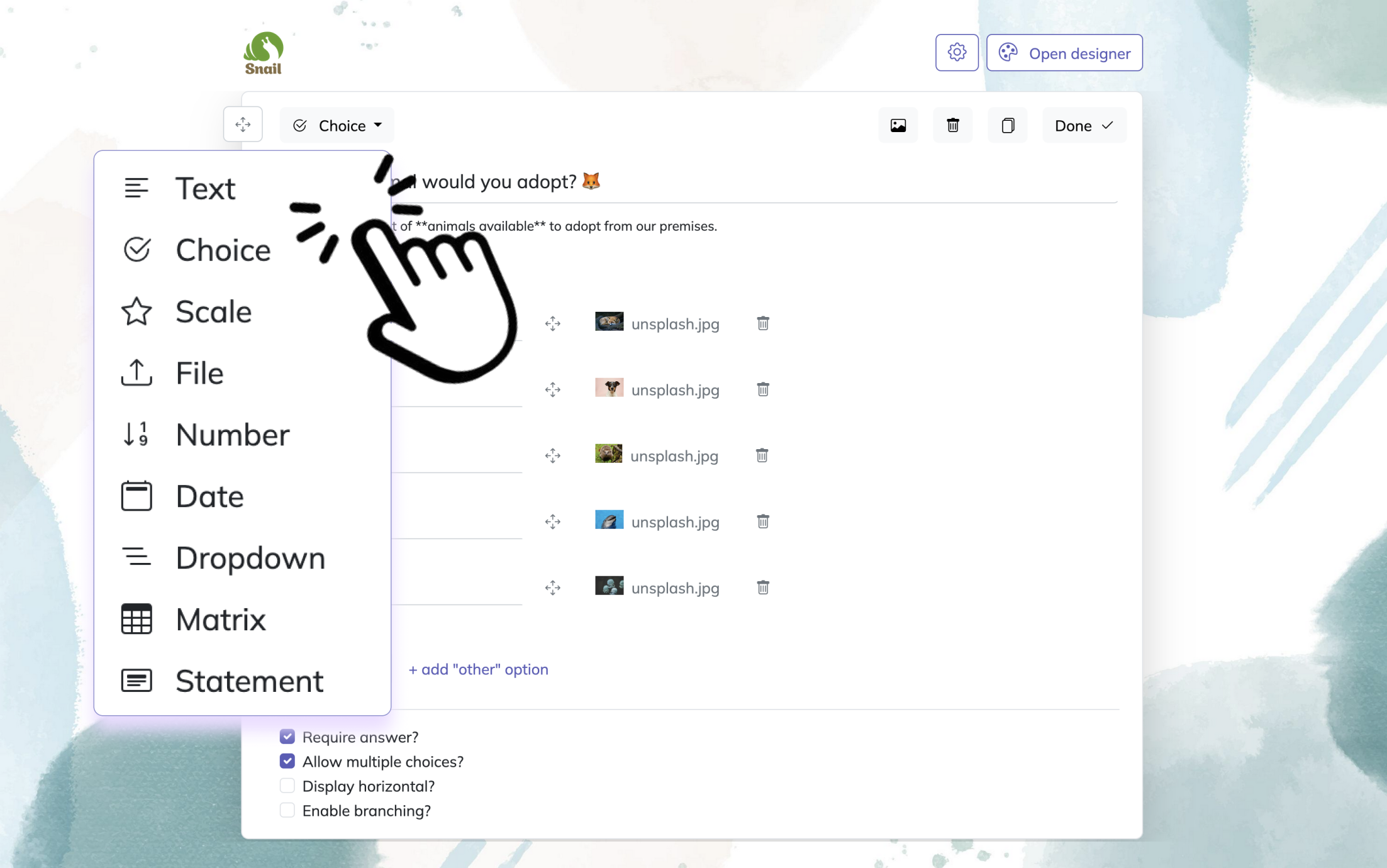
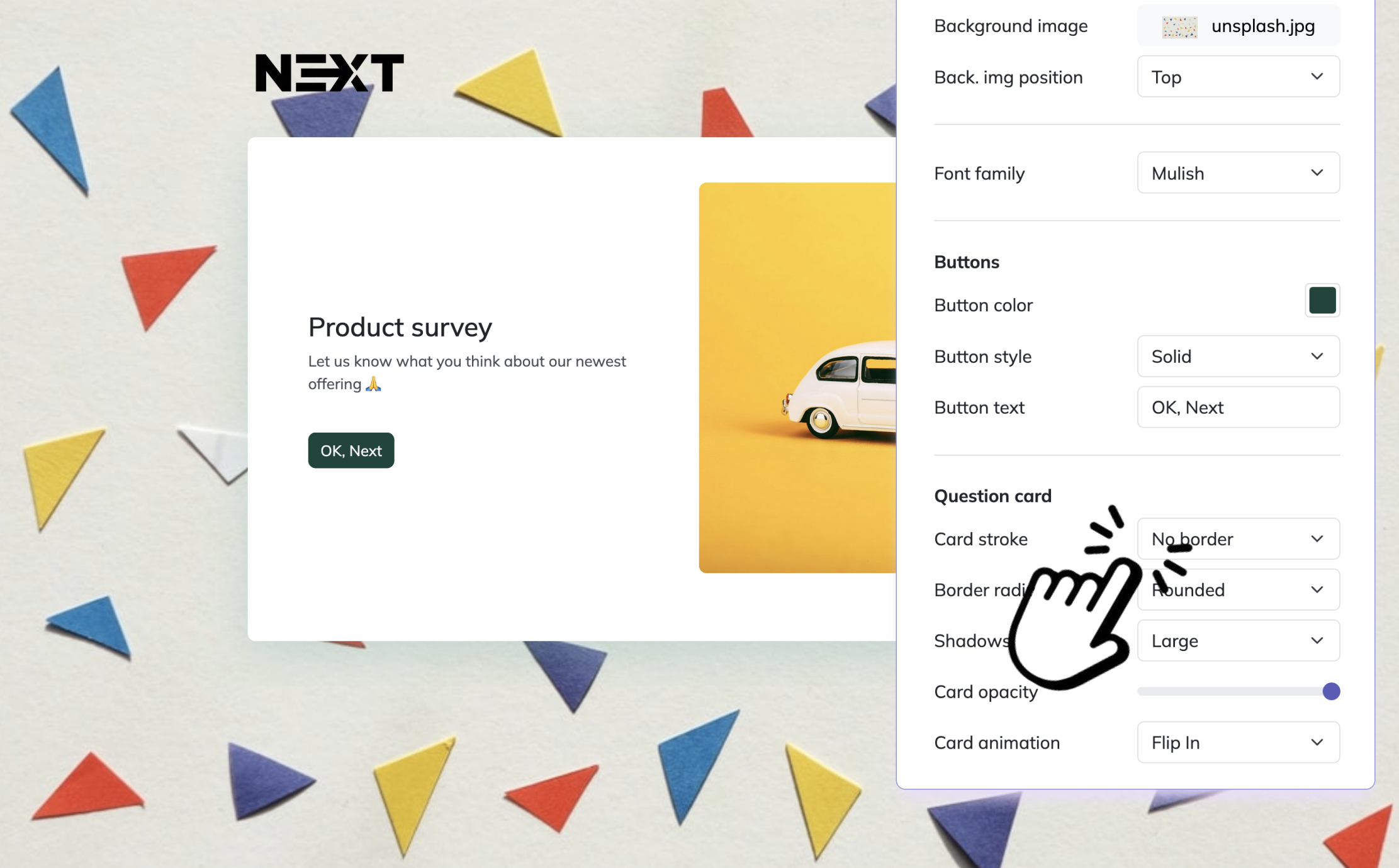
Creating an exit survey in HeySurvey is quick and easy. If you’re new to the platform, you can begin from a template using the button below, or start from scratch and customize it to fit your needs with our online survey maker.
1. Create a new survey
Open HeySurvey and choose a pre-built template for exit surveys, or click to start a new survey from an empty sheet. You can name your survey right away in the editor so it’s easy to find later.
2. Add questions
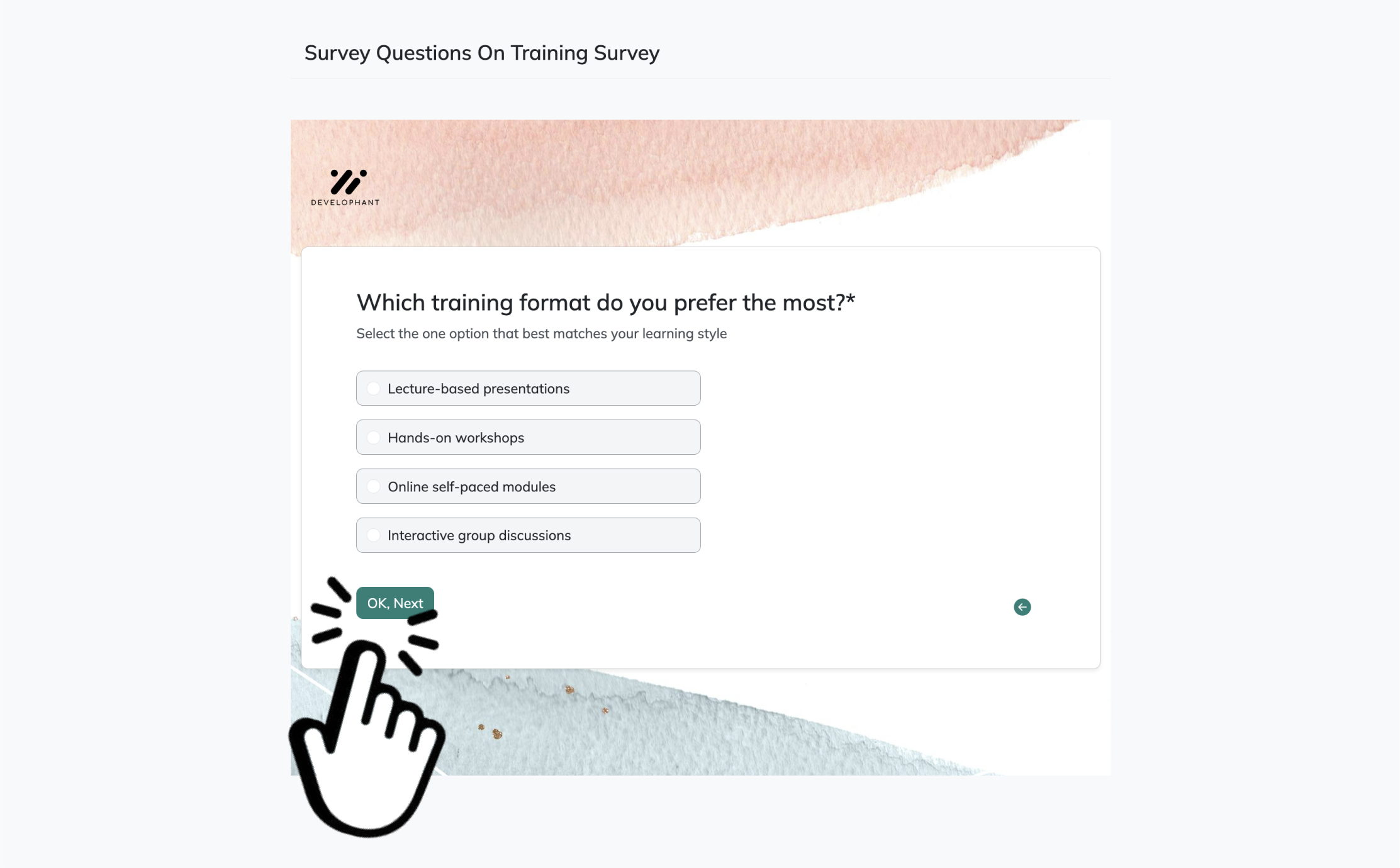
Click Add Question and choose the question types that match your exit survey. For example, use Choice for multiple-choice feedback, Scale or NPS for satisfaction, and Text for open comments. Mark important questions as required if needed.
3. Publish your survey
Preview your survey to check the flow and wording. When everything looks right, click Publish to create a shareable link. You can then send the survey to respondents and start collecting exit feedback.
Cancellation Exit Survey Questions
This is your clearest churn moment, so ask while the reason is still fresh.
Why & When to Use
Use these client exit survey questions when someone actively cancels a subscription, membership, contract, or recurring service. This is one of the best moments to collect honest feedback because the customer is not thinking about leaving someday, they are leaving right now.
Here’s the thing, timing does a lot of heavy lifting. The strongest exit survey questions for customers appear directly in the cancellation flow or immediately after, while the experience is still fresh and the reason is easy to explain.
These surveys are especially useful for:
SaaS products
subscription businesses
coaching programs
agencies with recurring retainers
membership-based services
Plus, this is where you can spot immediate churn drivers fast. Your client exit survey questions can reveal whether people are leaving because of price, low usage, poor support, missing features, weak onboarding, or a product fit issue.
Keep the survey short and focused. A smart format is one multiple-choice question to identify the main reason, followed by one open-ended question that lets the customer explain the story in their own words.
On top of that, cancellation survey moments are high-intent, which makes them gold for learning. Good exit surveys samples here help you fix retention leaks before more customers slip out the side door like socks escaping the dryer.
Sample questions
What is the primary reason you no longer purchase from us?
Did you choose an alternative provider or competitor? If yes, what influenced that decision?
How would you rate the value you received for the price you paid?
Was there any part of your experience that disappointed you or failed to meet expectations?
What could we improve to earn your business back?
In a 275-customer banking churn study, price dissatisfaction was the dominant cancellation reason, highlighting pricing as a critical exit-survey question area (Springer study).
Customer Churn Exit Survey Questions
Passive churn can be quiet, but the lessons it leaves behind are loud.
Why & When to Use
Use these client exit survey questions when a customer has stopped buying, gone inactive, or failed to renew without giving much explanation. Unlike an active cancellation, where someone clearly says they are leaving, passive churn happens more quietly, which means you need to do a little smart detective work.
Here’s the thing, this is where well-timed exit survey questions for customers really help. Send the survey shortly after churn is detected so the experience is still fresh and the customer can actually remember what went wrong without mentally filing you under "ancient history."
These surveys work especially well for:
ecommerce brands
B2B companies
service providers
subscription businesses with low-engagement churn
teams tracking lost customers over time
Good exit surveys samples can help you uncover patterns that are easy to miss when you only look at revenue reports. You may find recurring issues around customer experience, perceived value, product quality, poor follow-up, or customers switching to a competitor that felt like a better fit.
Plus, this type of feedback is useful because it shows you why customers drift away, not just why they slam the door. That gives you a better shot at improving retention, win-back campaigns, and the overall experience before more customers vanish into the void like missing Tupperware lids.
Sample questions
What was the main reason our engagement ended?
How satisfied were you with our communication and responsiveness throughout the project?
Did our work deliver the outcomes or value you expected?
Was there anything we could have done differently to better support your goals?
Would you consider working with us again or recommending us to others? Why or why not?
Client Exit Survey Questions
Not every goodbye is bad news, but every exit can teach you something useful.
Why & When to Use
Use these client exit survey questions when a relationship wraps up after a project, retainer, consulting engagement, or agency contract. They fit especially well when you want honest feedback without making the final interaction feel awkward, dramatic, or like a surprise courtroom scene.
Here’s the thing, not every departure means the client was unhappy. Sometimes the budget changes, priorities shift internally, or the work simply ends because you did the job and the finish line was the finish line.
That is why well-written exit survey questions for customers and clients should stay professional, neutral, and easy to answer. You want clarity, not defensiveness, and you definitely want to keep the door open for referrals, repeat work, or a future partnership.
These surveys are especially useful for:
freelancers
agencies
consultants
coaches
B2B service firms
Good exit surveys samples can help you spot patterns around communication, deliverables, responsiveness, strategy fit, and perceived ROI. Plus, when you review responses over time, you can see whether clients are leaving because of execution issues or because life happened and calendars, budgets, and businesses did their usual little chaos dance.
On top of that, thoughtful client exit survey questions help you improve your process while showing clients you care about the relationship, even at the end.
Sample questions
What made you stop using our product?
Was there a feature you needed but could not find or use effectively?
How easy or difficult was it to get value from the product?
Did you experience any recurring issues, bugs, or frustrations?
What one improvement would have made the biggest difference in your experience?
Customer defection is “one of the most illuminating measures in business,” making exit surveys valuable for identifying root causes and improving retention. Harvard Business Review
Product Experience Exit Survey Questions
When users leave your product, they are often pointing straight at the fix.
Why & When to Use
Use these client exit survey questions when users stop logging in, uninstall your app, downgrade their plan, or walk away from a free trial. They work especially well for SaaS companies, mobile apps, digital products, and account-based platforms where behavior tells part of the story, but feedback fills in the blanks.
Here’s the thing, this section is about the product experience itself. You are not digging into account management or relationship issues here. You are trying to learn what happened inside the product, like confusing onboarding, missing features, clunky workflows, or that one bug that kept showing up like it paid rent.
These exit survey questions for customers help you diagnose:
usability issues
feature gaps
onboarding friction
recurring bugs
product-market fit concerns
Plus, your best insights usually come from segmentation. Trial users, new users, long-term users, and power users often leave for very different reasons, so lumping them together can blur what actually needs attention.
Strong exit surveys samples also help you prioritize roadmap decisions and UX improvements with more confidence. On top of that, they give your team a clearer view of whether users are leaving because they never reached value, hit friction too early, or simply outgrew the product.
Sample questions
To what extent did price influence your decision to leave?
Did you feel the value you received justified the cost?
Was there a pricing plan or option that would have better matched your needs?
Were you leaving because of budget constraints or because the product or service did not feel worth the price?
What would have made our offer feel more valuable to you?
Pricing and Value Exit Survey Questions
Price complaints usually reveal a value story, not just a money story.
Why & When to Use
Use these client exit survey questions when customers leave because of cost concerns, budget pressure, or shaky return on investment. They are especially useful for subscription businesses, premium services, software plans, and any offer with tiered pricing where choosing the right fit can feel a bit like picking cereal in a giant grocery aisle.
Here’s the thing, not every price objection means your offer is too expensive. Sometimes the issue is unclear value, the wrong plan, poor packaging, or features that did not match what the customer actually needed.
These exit survey questions for customers help you separate a few very different problems:
true budget constraints
weak value perception
mismatched pricing tiers
poor plan design
missing retention opportunities
Plus, follow-up questions matter a lot here. Ask whether the customer’s budget changed, whether usage dropped, or whether the service simply did not feel worth the cost, because those answers point to very different fixes.
Strong exit surveys samples in this category can improve pricing strategy, packaging, and retention offers. On top of that, they help you spot whether people are leaving because the plan was too big, too limited, or just not framed in a way that made the value click.
Sample questions
Did any customer support or service issue contribute to your decision to leave?
How satisfied were you with the speed and quality of our responses?
Did you feel your concerns were understood and resolved effectively?
Was there a specific interaction that negatively affected your experience?
What should our team improve to provide better service in the future?
Customer Support and Service Exit Survey Questions
Service complaints often point to a broken process, not just one bad interaction.
Why & When to Use
Use these client exit survey questions when customers leave because of poor service, unresolved problems, slow replies, or inconsistent communication. They work especially well for support-heavy businesses, agencies, ecommerce brands, and SaaS companies with account managers, onboarding teams, or help desks.
Here’s the thing, service-related churn is not always about one employee having a rough Tuesday. In many cases, the real issue is a system problem like unclear ownership, delayed follow-up, weak handoffs, or support that feels robotic when customers need actual help.
These exit survey questions for customers help you uncover where the experience broke down:
slow response times
weak empathy or poor communication
lack of expertise or clarity
unresolved issues
inconsistent service across touchpoints
Plus, the best exit surveys samples do not stop at general frustration. Tie feedback to specific moments like onboarding, live chat, email support, account reviews, or returns, so you can see exactly where trust started to wobble.
Keep your tone calm and fact-finding, not defensive. On top of that, ask about both speed and resolution, because a fast answer that fixes nothing is basically customer support cosplay.
Sample questions
Was this survey quick and easy to complete?
Did the answer choices reflect your actual reason for leaving?
Did you feel comfortable sharing honest feedback?
Was there any question that felt unclear or unnecessary?
Is there anything else you would like us to know before you go?
Exit Survey Best Practices
Great survey design turns client exit survey questions into feedback you can actually use.
Why & When to Use
Use this section as your go-to framework for building better client exit survey questions, no matter your industry. The goal is simple: make your exit survey questions for customers easy to answer, honest to complete, and useful enough to guide real changes.
Here’s the thing, even strong questions can flop if the survey is too long, badly timed, or weirdly worded. Good exit surveys samples are not just about what you ask, but how and when you ask it.
Keep these best practices in play:
Keep surveys short and focused.
Ask as close to the exit moment as possible.
Use clear answer choices plus one open-ended question.
Segment feedback by customer type, plan, tenure, or exit reason.
Review trends regularly, not just one spicy comment at a time.
And just as important, avoid the usual traps:
Asking too many questions.
Using leading or defensive wording.
Forcing people to explain every answer.
Listening only to your loudest customers.
Collecting feedback with no plan to act on it.
Plus, if your survey feels like homework, completion rates will vanish faster than free office snacks. Keep it clean, respectful, and action-focused so your client exit survey questions lead to decisions, not dusty spreadsheets.
Sample questions
What kind of exit survey works best for this type of customer?
How many questions should I include in a cancellation survey?
Should a client offboarding survey sound different from an ecommerce exit survey?
What answer formats make exit survey questions for customers easier to complete?
How can I use exit surveys samples without copying them word for word?
Exit Surveys Samples and Templates by Use Case
The best exit surveys samples match the relationship, not just the reason for leaving.
Why & When to Use
Use this section when you want to shape exit surveys samples for different audiences without creating a giant, clunky template library. Here’s the thing, the right format depends on how much the customer invested, how long they stayed, and how much detail you actually need.
For low-friction exits, stick with 3 to 5 client exit survey questions. For higher-value relationships, like long-term clients or managed accounts, 5 to 7 exit survey questions for customers usually gives you better context without turning the survey into a side quest.
A smart format often includes:
Multiple choice for the main exit reason.
Rating scale questions to measure experience or satisfaction.
One open comment field for anything you did not see coming.
You can frame exit surveys samples by use case like this:
SaaS cancellation survey: Focus on pricing, missing features, usability, and competitor switch reasons.
Ecommerce customer churn survey: Ask about product quality, shipping, support, value, or purchase frequency.
Client offboarding survey: Go deeper on communication, results, process, and overall partnership fit.
Membership or subscription cancellation survey: Cover usage, affordability, perceived value, and renewal intent.
Plus, tone matters more than people think. Keep ecommerce surveys fast and simple, while client offboarding can be a little more thoughtful and detailed.
Sample questions
How do I group client exit survey questions into patterns I can actually use?
Which exit survey questions for customers point to the biggest retention problems?
How do I decide what feedback to fix first?
Who should review exit survey feedback inside the company?
How can I tell if changes based on exit surveys samples are actually working?
How to Turn Exit Survey Feedback Into Retention Wins
Great feedback only matters if you turn it into action.
Why & When to Use
Use this section when you already have responses from client exit survey questions and want to turn them into smarter retention moves. Here’s the thing, raw answers are helpful, but patterns are where the gold is.
Start by sorting feedback into clear themes pulled from your exit survey questions for customers.
Price or budget concerns
Product fit or missing features
Service quality or support issues
Competitor pull
Internal changes on the customer side
Once you spot the themes, prioritize them using three filters that keep you from fixing the squeaky wheel instead of the broken door.
How often the issue appears
How much revenue it affects
How easy or fast it is to fix
Plus, do not let feedback live in one lonely spreadsheet. Share insights from your exit surveys samples across product, marketing, support, sales, and customer success so each team can act on the part they own.
Then track what changes over time.
Churn rate
Win-back rate
Support ticket volume or resolution trends
Customer lifetime value
On top of that, review results monthly or quarterly so you can see whether improvements are sticking. The best client exit survey questions do more than explain why customers leave. They help you build a better experience that gives future customers a reason to stay, which is a lot nicer than begging them back later.
Related Surveys
29 Social Media Survey Questions
Explore 25 social media survey questions with practical sample prompts to help gather insights on...
31 Job Satisfaction Survey Questions
Explore **25 job satisfaction survey questions** with sample prompts to improve employee feedback...
29 Quantitative Survey Questions Guide
Explore 25 quantitative survey questions with sample questions, examples, and tips to build effec...