29 Event Survey Questions to Boost Attendee Feedback
Explore 25 event survey questions with sample answers and tips to improve feedback, measure success, and plan better events.
Good events feel great. Smart event survey questions show you why, so you can measure attendee satisfaction, prove ROI, and plan your next event with more confidence and fewer guessy vibes.
Whether you need event questionnaire questions, virtual event survey questions, or eventbrite survey questions, the goal is the same: get clear, useful feedback with an online survey tool. Plus, you’ll see the main types of post-event and in-event surveys, along with simple best practices for writing questions people will actually answer.
Sample questions
How satisfied were you with the event overall?
What was your main reason for attending this event?
Which part of the event did you find most valuable?
What did you enjoy least about the event?
How likely are you to attend one of our future events?
Post-Event Feedback Survey Questions
Post-event surveys give you the clearest big-picture view of what worked, what wobbled, and what to improve next time.
Why & When to Use
Post-event surveys are the classic choice when you want overall impressions after everything wraps up. If you are searching broadly for eventbrite survey questions, event survey questions, or event questionnaire questions, this is usually the best place to start.
The sweet spot is sending your survey within 24 to 48 hours after the event. Here's the thing: wait too long and details get fuzzy fast, like leftovers in the back of the fridge.
These surveys work especially well when you want to measure satisfaction, understand attendee motivation, and spot the strongest and weakest parts of the experience. Plus, they help you connect feedback directly to your event goals instead of collecting random opinions that sound nice but go nowhere.
A strong post-event mix usually includes:
Rating-scale questions to measure satisfaction and compare results over time
Open-ended questions to uncover context, surprises, and ideas you did not think to ask about
A short, focused format that respects your attendees' time and boosts completion rates
On top of that, the best virtual event survey questions and in-person event questionnaire questions stay tightly tied to what success meant for your event. If a question will not help you make a decision later, it probably does not deserve a spot.
Sample questions
How would you rate the event registration process?
How satisfied were you with the venue, platform, or overall event environment?
How would you rate the quality of the speakers or presenters?
Did the event meet your expectations?
How likely are you to recommend this event to others?
Sending post-event surveys within 24–48 hours captures fresher, more reliable attendee feedback before details fade, improving response quality for event evaluation (Source).
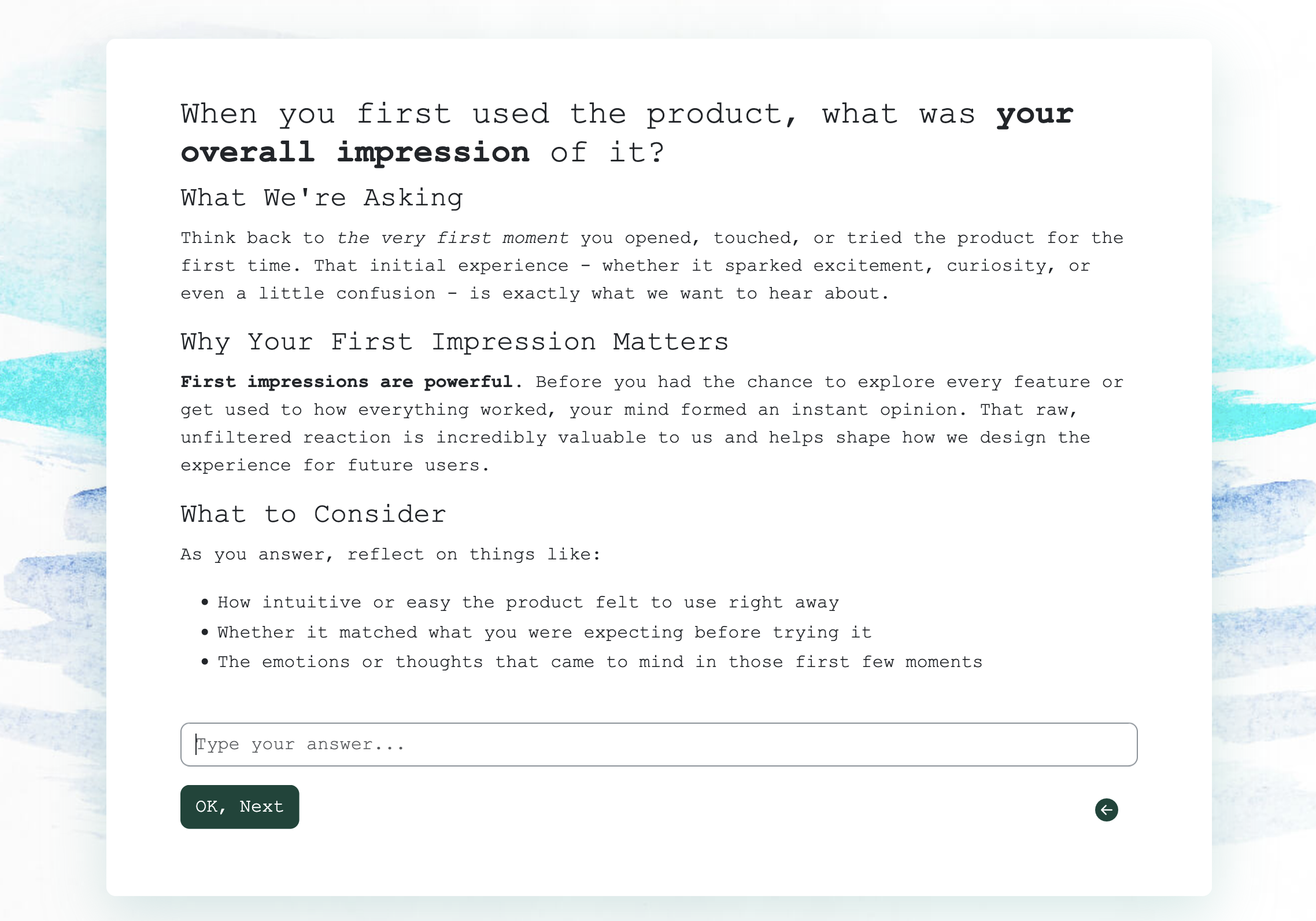
Create an event survey in 3 easy steps
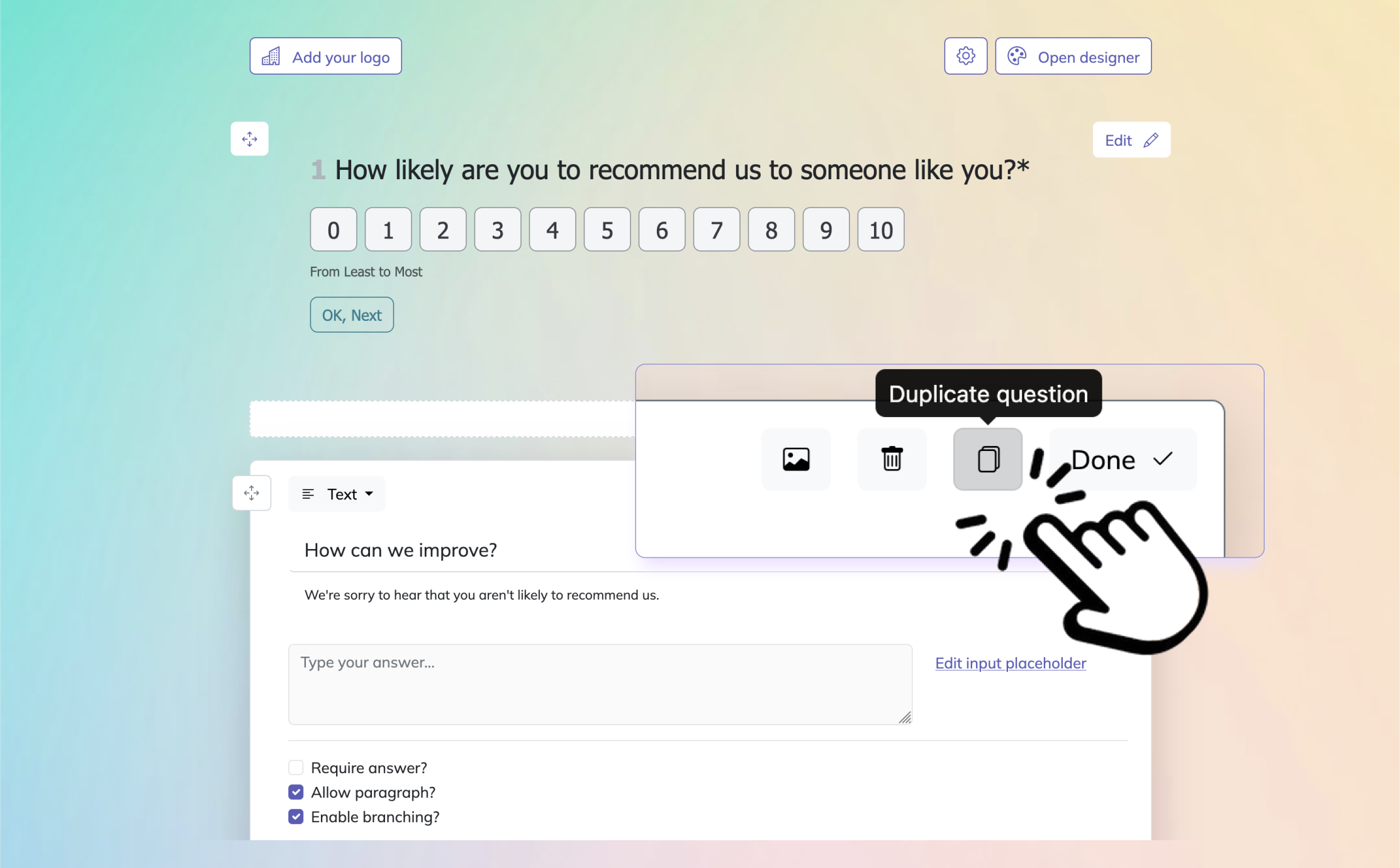
Create a new survey
Start by opening HeySurvey and choosing a template with the button below, or begin from scratch. Give your survey a clear name, then adjust the basic settings if needed. If you want to match your event brand, you can also add a logo and choose a simple design in the online survey tool editor.Add questions
Click Add Question to build your event survey. Use Choice questions for quick ratings, Scale or Emoji Rating for satisfaction, Text for open feedback, and Date or Contact Info if you need follow-up details. Keep questions short and focused so guests can answer quickly. Mark important questions as required.Publish survey
Preview your survey to check how it looks on desktop and mobile. When everything is ready, click Publish to get your shareable link. You can then send it to attendees, place it on your website, or use it after the event to collect feedback.
Attendee Satisfaction Survey Questions
Attendee satisfaction surveys help you zoom in on the real experience people had, from sign-up to final applause.
Why & When to Use
Attendee satisfaction surveys are more specific than broad post-event feedback surveys. Instead of asking for general impressions, they focus on measurable experience factors like logistics, content quality, communication, and engagement.
You can use these eventbrite survey questions during or after conferences, seminars, fundraisers, trade shows, and community events. Plus, they work just as well for in-person gatherings as they do for virtual event survey questions.
Here's the thing: if your goal is to find out exactly where the attendee journey felt smooth or frustrating, this is the survey type you want. It helps you spot friction points before they turn into repeat problems wearing a fake mustache.
A smart approach is to break your event questionnaire questions into clear categories, such as:
Registration
Communication
Content
Networking
Logistics
On top of that, use consistent rating scales across your eventbrite survey questions so results are easier to compare and analyze later. If one question uses a 1 to 5 scale and another uses thumbs, stars, and vibes, your reporting gets messy fast.
This section is especially useful when you want practical, decision-friendly feedback you can actually use to improve the next event.
Sample questions
How relevant was the session content to your needs or interests?
How would you rate the speaker’s clarity and delivery?
Did the session provide actionable insights or takeaways?
Was the session length appropriate?
What topics would you like us to cover at future events?
Research shows attendees’ perceived event quality strongly predicts satisfaction and revisit intentions, supporting survey questions on content, speakers, and logistics (ScienceDirect).
Speaker and Content Evaluation Survey Questions
Speaker and content surveys help you figure out whether your sessions actually landed, not just whether people politely clapped.
Why & When to Use
This type of survey helps you evaluate keynote speakers, breakout sessions, panels, workshops, and other educational content with much more precision than a general feedback form.
You can send these eventbrite survey questions right after an individual session or include them inside a larger post-event survey. Plus, they are especially useful for conferences, webinars, and training events where content quality is a big part of the value.
Here's the thing: strong event questionnaire questions should measure both the speaker’s performance and the usefulness of the material. A charming presenter is great, but charm alone does not count as a takeaway.
To make your virtual event survey questions more useful, connect them to attendee goals or learning outcomes, such as:
Whether the session matched attendee expectations
Whether the content felt practical or too basic
Whether the speaker explained ideas clearly
Whether attendees can apply what they learned
On top of that, include a mix of rating-scale and open-ended eventbrite survey questions so you get both easy-to-track data and richer comments.
Use the responses to improve future agendas, choose stronger speakers, and shape content around what your audience actually wants next.
Sample questions
How easy was it to register for the event?
How would you rate the event communication before the event?
Was the event schedule clear and well organized?
How satisfied were you with the venue, accessibility, or technical setup?
What logistical improvements would most improve your experience next time?
Event Planning and Logistics Survey Questions
Logistics feedback is where small fixes can create surprisingly big wins.
Why & When to Use
Logistics-focused event questionnaire questions help you spot what worked behind the scenes and what quietly made attendees want to scream into a tote bag.
They are especially useful for in-person, hybrid, and large-scale events where check-in, timing, signage, catering, seating, accessibility, or tech support can shape the whole experience.
You can use these eventbrite survey questions in a post-event survey, or send quick pulse checks during multi-day events when you still have time to fix issues fast.
Here's the thing: operational feedback often leads to the quickest improvements because it points to practical problems you can actually solve before the next event.
For cleaner analysis, keep logistics separate from speaker or content feedback so you know whether people disliked the schedule, not the session itself.
Your virtual event survey questions can also cover the attendee journey from start to finish, including:
Registration flow
Pre-event communication
Schedule clarity and timing
Accessibility and wayfinding
Food, seating, and comfort
Technical reliability and support
Plus, these event questionnaire questions help you improve the parts guests notice instantly, even if they never say it out loud.
On top of that, better logistics usually make the entire event feel more polished, which is a pretty nice trick for a few well-asked questions.
Sample questions
How easy was it to access and navigate the virtual event platform?
How would you rate the audio and video quality during the event?
Did you feel engaged throughout the virtual event?
Which virtual features did you use most, such as chat, polls, breakout rooms, or Q&A?
What would improve your virtual event experience in the future?
Research-backed post-event surveys are most effective when sent within 24 hours and limited to 5–7 questions covering logistics, content, and overall satisfaction (AhaSlides).
Virtual Event Survey Questions
Great virtual event survey questions help you fix the screen-side experience, not just the content.
Why & When to Use
Virtual event survey questions should zero in on digital experience, ease of access, engagement, and platform performance.
This section is especially useful if you are specifically looking for virtual event survey questions that tell you why attendees stayed tuned in, clicked away, or wrestled with the platform like it owed them money.
Use these eventbrite survey questions for webinars, online conferences, live streams, and the virtual side of hybrid events.
Here's the thing: if people cannot log in smoothly, hear clearly, or find key features, even great speakers will not save the experience.
That is why strong event questionnaire questions should ask about usability and tech issues directly, instead of hiding them inside general satisfaction questions.
For better insight, separate feedback about engagement tools from feedback about content quality so you can tell whether low energy came from the session or the setup.
Helpful areas to cover include:
Platform access and navigation
Audio and video quality
Chat, polls, breakout rooms, and Q&A
Ease of participation
Technical issues and support
Plus, keep your survey short.
Virtual attendees are more likely to drop off before finishing, so concise event questionnaire questions usually get you better answers and fewer abandoned forms.
Sample questions
How easy was it to find and register for the event?
Was the event description clear enough to help you decide to attend?
How satisfied were you with the ticketing or checkout process?
Did you receive the right amount of communication before the event?
How could the registration or check-in process be improved?
Eventbrite and Registration Experience Survey Questions
Smart eventbrite survey questions help you smooth out the path from discovery to check-in.
Why & When to Use
Some people searching for eventbrite survey questions really mean one thing: they want feedback on the registration experience, not just the event itself.
That includes how attendees found the event, whether the page convinced them to sign up, how easy checkout felt, and what happened after registration.
This is where strong event questionnaire questions can uncover friction around ticketing, confirmation emails, reminders, and on-site check-in.
Plus, this section works whether you use Eventbrite or another registration platform, so you are not locked into one tool or one logo.
Here’s the thing: if registration feels clunky, confusing, or slow, some people will vanish before they ever hit "buy ticket." That is not mystery, that is a leaky bucket.
Use these virtual event survey questions and registration-focused event questionnaire questions when you want to connect attendee feedback with conversion rates, no-show rates, and arrival flow.
Helpful areas to cover include:
Event discovery and sign-up ease
Clarity of the event listing or description
Ticketing and checkout experience
Confirmation and reminder communications
On-site or digital check-in process
On top of that, ask about both online registration and day-of entry.
That way, your eventbrite survey questions help you improve the full attendee journey, not just the part before someone clicks register.
Sample questions
Are these event survey questions tied to one clear goal, like satisfaction, learning, or lead quality?
Is each question simple, neutral, and easy to answer on a phone?
Do these virtual event survey questions include both ratings and a few useful follow-up prompts?
Is the survey short enough that attendees will actually finish it?
Have you tested the wording internally before sending it out?
Best Practices for Writing Event Survey Questions
Great eventbrite survey questions feel easy to answer and even easier to learn from.
Why & When to Use
When you write event questionnaire questions, the goal is not to sound impressive. It is to get feedback you can actually use without making attendees feel like they just opened homework.
Here’s the thing: the best eventbrite survey questions are focused, short, and built around one job at a time.
Use these best practices when creating virtual event survey questions for post-event feedback, session reviews, lead generation, or retention insights.
Dos
Align questions with a specific goal like satisfaction, education, retention, or lead quality.
Use simple, unbiased wording that does not push people toward one answer.
Mix quantitative ratings with a few qualitative follow-up questions.
Send surveys soon after the event or session, while memories are still fresh.
Keep surveys concise and mobile-friendly in concept, because thumbs get tired too.
Group event questionnaire questions by topic so the flow feels natural.
Don'ts
Do not ask too many questions. Around 5 to 10 is often plenty for better response rates.
Do not use vague, leading, or double-barreled wording.
Do not collect feedback you will not review or act on.
Do not cram too many objectives into one survey without structure.
Do not rely only on open-ended responses if you want measurable trends.
Do not ignore differences between in-person, hybrid, and virtual event survey questions.
Plus, test your survey internally first and segment results by attendee type when you analyze them.
Sample questions
Was any question in this survey unclear or difficult to answer?
Were there topics you expected us to ask about but did not?
Did the survey feel too long?
Were the answer choices appropriate for your experience?
Is there anything else you would like to share about how we collected feedback?
Common Mistakes to Avoid with Event Questionnaire Questions
Smart event questionnaire questions save you from messy data and forehead-slapping mistakes later.
Why & When to Use
This section helps you spot weak survey design before it wrecks your results.
If you are building event questionnaire questions for the first time, think of this as your practical troubleshooting guide for better feedback, cleaner patterns, and fewer responses that say a lot without saying anything.
Here’s the thing: even solid eventbrite survey questions can fall flat if they repeat the same idea, use confusing wording, or switch rating scales halfway through.
That matters even more with virtual event survey questions, where attention is shorter and small annoyances can send people straight to the exit button.
Watch for these common mistakes:
Asking redundant questions that give you duplicate data instead of new insight.
Using inconsistent scales, like switching from 1 to 5 in one question to 1 to 10 in the next.
Forgetting to define what success looks like before writing the survey.
Making the survey too long, which hurts completion and response quality.
Offering answer choices that do not fit real attendee experiences.
Plus, review survey performance metrics like completion rate, skipped questions, and drop-off points.
On top of that, ask for feedback on the survey itself and refine your eventbrite survey questions regularly.
A good survey is rarely perfect on round one, and that is normal, not a plot twist.
Sample questions
Which feedback themes appeared most often across responses?
What issues had the biggest impact on attendee satisfaction?
Which positive elements should be repeated at future events?
What is the top improvement to implement before the next event?
How will you communicate changes back to attendees, sponsors, or stakeholders?
Turn Event Survey Insights Into Action
The real win happens when you turn feedback into changes people can actually notice.
Why & When to Use
Collecting responses is only half the job.
Here’s the thing: eventbrite survey questions, virtual event survey questions, and other event questionnaire questions only become valuable when you use them to improve the next event in a measurable way.
This is your final step in the feedback process: analyze what people said, prioritize what matters most, implement changes, and then tell people what changed.
Start by grouping responses into clear themes so patterns are easier to spot.
For example:
Content and session quality
Logistics and scheduling
Speaker performance
Audience engagement
Platform or tech experience
Plus, do not treat every issue like it deserves the same fire drill.
Prioritize fixes based on two things:
Impact on attendee satisfaction
Feasibility before the next event
That helps you focus on improvements you can actually deliver, instead of building a giant wish list that lives forever in a spreadsheet cave.
On top of that, look for strengths worth repeating.
If attendees loved the speakers, networking, or pacing, keep those wins in your next round of eventbrite survey questions and planning decisions.
Finally, close the loop by sharing what you learned and what you will change next time.
That simple step builds trust and shows attendees their feedback was not just collected for decorative purposes.
Related Surveys
29 Social Media Survey Questions
Explore 25 social media survey questions with practical sample prompts to help gather insights on...
31 Job Satisfaction Survey Questions
Explore **25 job satisfaction survey questions** with sample prompts to improve employee feedback...
29 Quantitative Survey Questions Guide
Explore 25 quantitative survey questions with sample questions, examples, and tips to build effec...