31 Employee Perception Survey Questions
Explore 25 employee perception survey questions with sample answers, designed to help understand workplace sentiment and improve engagement.
If you want honest insight into how people really feel at work, employee perception survey questionnaire tools are a smart place to start. Employee perception survey questions help you understand employee experience, trust, engagement, communication, leadership, and workplace culture, without needing a mind reader in the break room.
Plus, “employee perception survey questionnaire” is a broader term for the full set of questions used in a survey. In this article, you’ll see the most useful survey categories, when to use them, sample questions, and how to turn feedback into action with an online survey tool.
Employee Engagement Survey Questions
Sample questions
Do you feel motivated to do your best work each day?
Do you understand how your work contributes to company goals?
Would you recommend this organization as a great place to work?
Do you feel recognized for your contributions in a meaningful way?
Do you see yourself working here a year from now?
Engagement shows you who is invested, not just comfortable.
Why & When to Use
An employee perception survey questionnaire focused on engagement helps you measure motivation, emotional commitment, discretionary effort, and how connected people feel to the organization.
Here’s the thing: engagement is not the same as satisfaction.
Someone can be satisfied with their paycheck, schedule, or team and still not feel energized to go the extra mile, which is why employee perception survey questionnaire items in this category matter so much.
Use these questions during annual engagement reviews, after major organizational changes, or when retention and productivity concerns start flashing like a dashboard warning light.
To get better insight, pair rating-scale questions with one or two open-ended follow-ups so you learn both the score and the story behind it.
For example, if someone rates motivation low, ask what would most improve their day-to-day experience.
Plus, track the same employee perception survey questionnaire results over time so you can benchmark trends instead of reacting to one rough week or one unusually sunny Friday.
Low engagement scores often point to deeper issues like:
weak leadership communication
limited recognition
heavy workload
unclear career growth
On top of that, when you spot patterns early, you can fix what is draining energy before your best people start browsing job boards at lunch.
Gallup’s meta-analysis found employee engagement survey items predict performance; highly engaged teams show 23% higher profitability and 18% higher productivity (source).
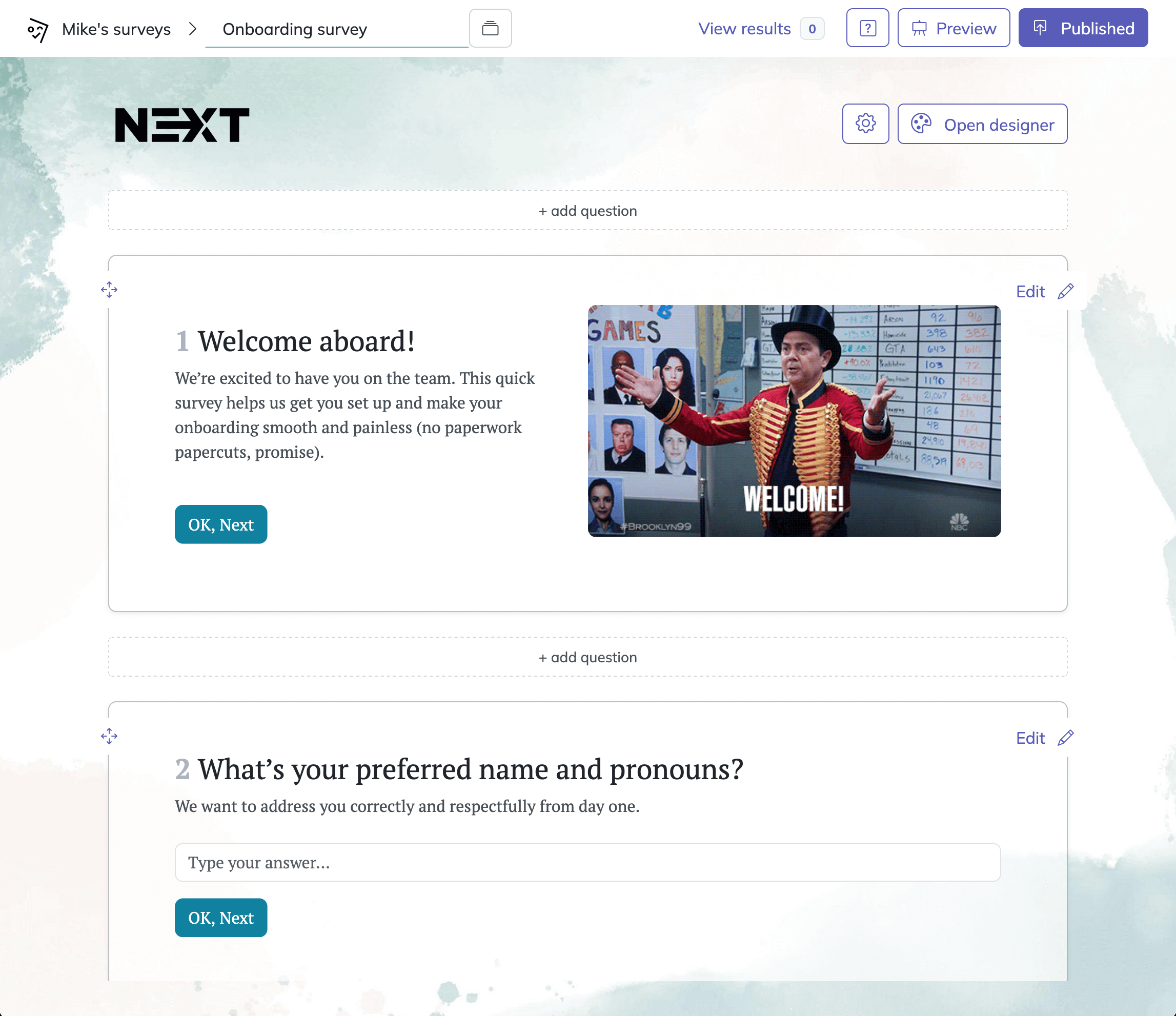
Create an employee perception survey in HeySurvey
Step 1: Create a new survey
Open HeySurvey and start with a template to save time, or choose an empty sheet if you want full control. Give your survey a clear internal name, then open the editor. If needed, add your company logo and adjust basic settings like the survey dates, progress bar, or response limit before you begin building.
Step 2: Add questions
Click Add Question to include the questions you need for employee perception feedback. Use Scale questions for ratings, Choice questions for multiple-choice answers, and Text questions for open comments. You can also add required questions, reorder them, and use branching to show follow-up questions based on earlier answers. Keep the wording simple and focused on topics like engagement, communication, leadership, and workplace culture.
Step 3: Publish survey
Preview the survey to check the flow and design. When everything looks right, click Publish to generate your shareable link. You can then send it to employees by email or embed it on your website.
Workplace Culture Survey Questions
Sample questions
Do you feel the company’s stated values are reflected in everyday decisions?
Do you feel respected by coworkers and leaders?
Does the workplace encourage open and honest communication?
Do you feel a sense of belonging on your team?
Are unhealthy workplace behaviors addressed appropriately?
Culture is what people experience, not what the poster in the break room promises.
Why & When to Use
A workplace culture employee perception survey questionnaire helps you understand how people actually experience values, belonging, respect, norms, and the day-to-day environment.
Here’s the thing: aspirational culture and lived culture are not always the same.
A company may talk about transparency, inclusion, or accountability, but your employee perception survey questionnaire should reveal whether those values show up in real meetings, decisions, and team behavior.
Use culture questions after mergers, leadership changes, DEI efforts, or when morale feels oddly strong on one team and flat on another.
Plus, culture perception often varies by department, tenure, manager, and location, which is why segmentation matters.
Break out employee perception survey questionnaire results by team, office, or function so you can spot culture gaps instead of averaging away the problem.
For honest feedback, make anonymity crystal clear.
People rarely tell the full truth about respect, belonging, or unhealthy behavior if they think their name might be attached, and nobody wants survey results polished shinier than reality.
Pay close attention when responses point to issues like:
inconsistent leadership behavior
poor communication norms
exclusion within teams
tolerance of toxic conduct
On top of that, these insights help you fix culture where it is actually fraying, not where it just looks messy from afar.
Gallup found only 20% of U.S. employees strongly agree they feel connected to their organization’s culture, highlighting why culture perception survey questions matter. Source
Leadership Perception Survey Questions
Sample questions
Do you trust senior leaders to make decisions in the best interest of employees and the business?
Does your direct manager communicate expectations clearly?
Do leaders follow through on commitments they make?
Do you feel comfortable raising concerns to your manager?
Do leaders demonstrate transparency during periods of change?
Leadership trust is earned in meetings, messages, and follow-through.
Why & When to Use
A leadership-focused employee perception survey questionnaire helps you measure trust, visibility, credibility, decision-making, and confidence in both executives and managers.
Here’s the thing: employees often rate direct managers very differently from senior leadership, and that gap tells you a lot.
Your direct manager shapes daily work, feedback, and clarity, while senior leaders influence strategy, change, and confidence in the company’s direction.
That is why your employee perception survey questionnaire should separate senior leadership feedback from direct manager feedback whenever possible.
Use this part of an employee perception survey questionnaire during restructuring, major strategy shifts, low-trust periods, or after leadership communication campaigns.
Plus, if leaders think one all-hands meeting fixed everything, your survey may deliver a gentle reality check.
Trust is usually built through a few repeat behaviors:
consistent decisions
clear communication
visible accountability
follow-through on commitments
On top of that, leadership scores become much more useful when you compare them with engagement, retention, and turnover trends.
If trust in executives drops while manager scores stay steady, the issue may be strategy or transparency.
If manager scores lag, you may need coaching, clearer expectations, or better people leadership at the front line.

Communication and Transparency Survey Questions
Sample questions
Do you receive enough information to do your job effectively?
Are organizational changes communicated clearly and in a timely way?
Do you know where to find important company updates?
Do leaders communicate honestly about challenges facing the organization?
Do you feel your feedback is heard and acknowledged?
Clear communication turns uncertainty into action.
Why & When to Use
This part of an employee perception survey questionnaire measures whether employees get information that is timely, clear, useful, and honest.
Here’s the thing: if people do not know what is changing, why it matters, or where to look, confusion spreads fast and productivity takes a little nap.
Use communication questions in your employee perception survey questionnaire after policy updates, organizational changes, new strategy rollouts, or anytime teams keep asking the same priority questions.
Plus, poor scores usually point to more than one issue.
They often reveal both message problems and channel problems, meaning what you said was unclear, where you said it was hard to find, or both.
A strong employee perception survey questionnaire should look at communication flowing in every direction:
downward from leaders to employees
upward from employees to leaders
cross-functional between teams and departments
On top of that, include blind spots like information overload, inconsistent manager messaging, and updates that live in five places at once, which is nobody’s dream.
Communication results become even more useful when you connect them to change readiness and employee trust.
If communication scores are low, employees may not just be missing updates.
They may be questioning clarity, consistency, and whether leadership is being fully transparent.
Nearly three in 10 employees report lacking clear, honest, or consistent leadership communication, linking transparency survey items directly to trust and engagement risk (source).
Job Satisfaction and Employee Experience Survey Questions
Sample questions
Are you satisfied with your current role and responsibilities?
Do you have the tools and resources needed to do your job well?
Is your workload manageable most of the time?
Are you satisfied with your work-life balance?
Do you feel the organization supports your overall wellbeing?
Daily experience shapes how long people want to stay.
Why & When to Use
These employee perception survey questions help you measure what work actually feels like day to day, not just how people feel in a big-picture, vague-cloud sort of way.
A strong employee perception survey questionnaire should use this section to assess role fit, workload, resources, flexibility, wellbeing, and the overall employee experience.
Use these questions in regular pulse surveys, during retention risk analysis, or when morale feels shaky and burnout concerns are climbing.
Plus, pulse surveys are especially useful because they help you spot patterns over time instead of reacting to one rough week.
Here’s the thing: one stressful deadline does not always mean people are deeply unhappy.
But if your employee perception survey questionnaire keeps showing low scores around workload, support, or work-life balance, you are likely looking at systemic dissatisfaction, not a temporary slump.
This section also helps connect employee experience to real business outcomes, including:
higher absenteeism
rising burnout risk
lower engagement
stronger intent to leave
On top of that, these questions strengthen broader employee perception survey questionnaire design because they capture practical workplace realities employees deal with every single day.
If satisfaction is low, the issue may not be motivation alone.
It may be role mismatch, missing tools, unrealistic expectations, or too much work packed into one human-sized calendar.
Career Development and Recognition Survey Questions
Sample questions
Do you have clear opportunities for career growth here?
Do you receive useful feedback that helps you improve?
Do you feel recognized when you do good work?
Do you understand what is required to advance in your career?
Does your manager support your professional development goals?
Growth and recognition tell you whether people can picture a future with you.
Why & When to Use
These employee perception survey questionnaire items reveal whether employees feel seen, supported, and able to grow inside your organization.
A strong employee perception survey questionnaire should explore both career direction and recognition, because people want more than a paycheck and a yearly "nice job" sticker.
Use this section when internal mobility is low, promotion paths feel fuzzy, or top performers keep heading for the exit.
Plus, these questions are especially useful when compensation is solid but engagement still looks flat.
Here’s the thing: competitive pay can keep people interested for a while, but lack of career visibility often chips away at motivation over time.
This part of your employee perception survey questionnaire should also separate formal promotion paths from everyday development support.
That includes things like coaching, feedback, stretch assignments, and manager advocacy, not just who gets the next title.
Frequent, specific recognition matters too, because vague praise rarely lands with much staying power.
This section can help uncover hidden retention risks, including:
employees who feel stuck despite strong performance
unclear advancement expectations
managers who are not actively developing their teams
recognition gaps that quietly lower engagement
On top of that, employee perception survey questionnaire results here can show whether your culture helps people grow or just expects them to figure it out alone.
How to Build an Effective Employee Perception Survey Questionnaire
Sample questions
Which survey goal matters most right now: engagement, culture, leadership, or retention?
Which employee groups should be surveyed separately for more accurate insights?
Are the questions clear, unbiased, and easy for employees to understand?
Does the survey balance rating-scale questions with a few open-ended prompts?
Is there a plan to communicate findings and next steps after the survey closes?
A smart employee perception survey questionnaire is built for clarity, not clutter.
Why & When to Use
This section should help you combine the right employee perception survey questionnaire items into one survey that actually produces useful insights.
Use it if you are building a new employee perception survey questionnaire from scratch, refreshing an outdated one, or trying to turn a messy list of questions into something people can answer without needing a decoder ring.
This guidance is especially helpful for HR leaders, managers, and internal communications teams who need a survey that feels clear, consistent, and worth completing.
Here’s the thing: the goal is not to ask more questions, but to ask the right questions in the right way.
A strong employee perception survey questionnaire should cover the basics that shape response quality, including:
survey length that respects employees’ time
clear, unbiased wording
anonymity that people trust
a survey cadence that supports action, not fatigue
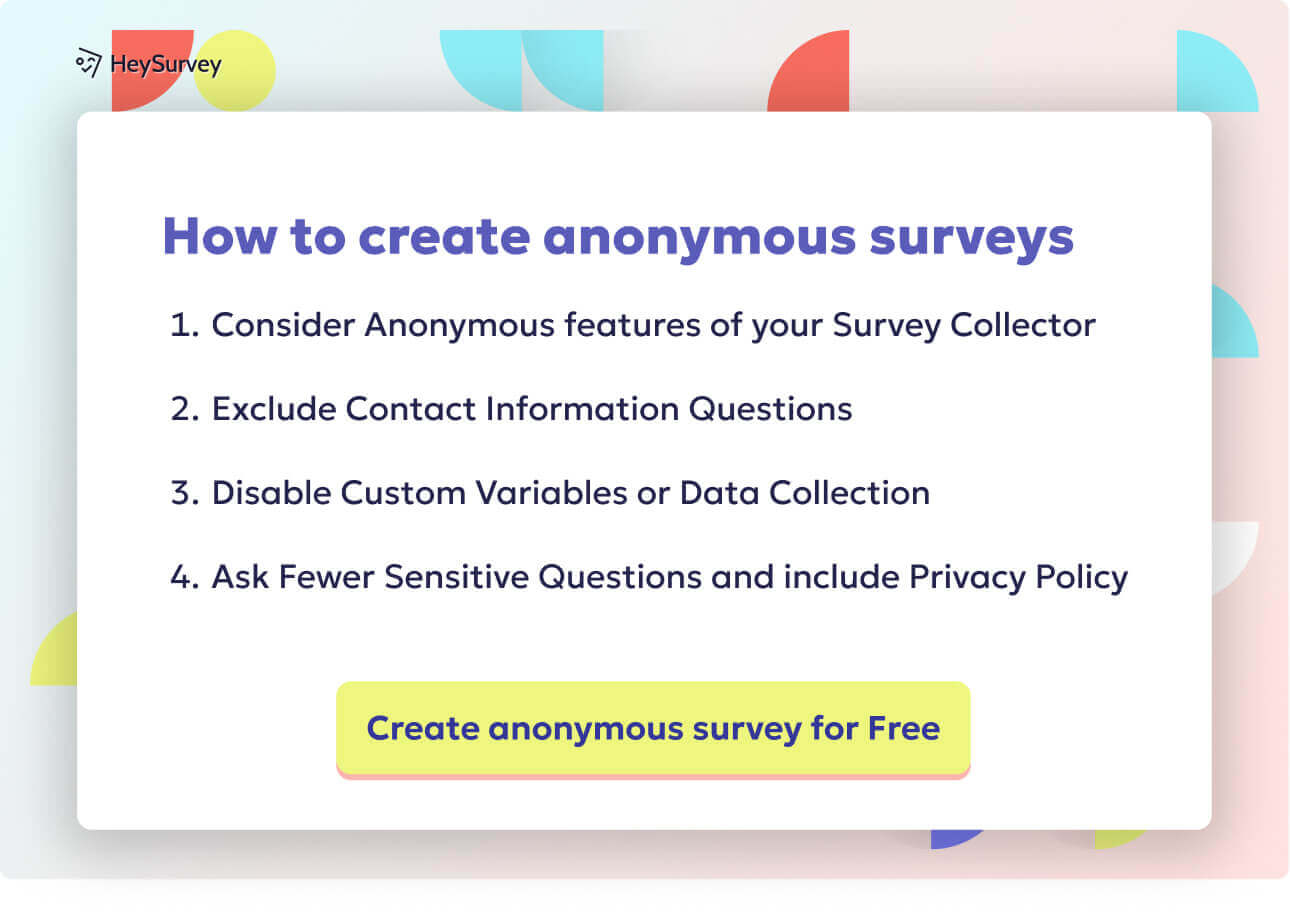
Plus, your employee perception survey questionnaire should avoid double-barreled, leading, or vague questions, because confusing questions create confusing data.
On top of that, you can segment results by team, level, or location for sharper insights, but only if confidentiality stays protected.
Balance rating-scale questions with a few open-ended prompts, then make a plan to share findings and next steps, because silence after a survey is a trust-killer.
Best Practices for Employee Perception Surveys
Sample questions
Is each part of your employee perception survey questionnaire tied to a clear business goal?
Are your questions simple, neutral, and focused on only one idea at a time?
Have you clearly explained anonymity, confidentiality, and how responses will be used?
Will you share results quickly and show employees what actions come next?
Are you repeating a few core questions so you can track trends over time?
A great employee perception survey questionnaire earns trust by being clear, useful, and actionable.
Why & When to Use
Use this checklist when you want your employee perception survey questionnaire to be practical, scannable, and worth employees' time.
Here's the thing: even a well-meaning survey can flop if it feels bloated, vague, or performative, which is corporate for "we asked and then vanished."
Keep the section easy to skim, and focus on choices that improve response quality fast:
Do keep the purpose specific and tied to a real business need.
Do use plain, neutral language in every employee perception survey questionnaire item.
Do protect anonymity and explain how responses will be used.
Do mix score-based questions with a small number of open-ended responses.
Do share results promptly, communicate action plans, and repeat core questions for trend tracking.
Just as important, flag the common mistakes to avoid:
Don't ask too many questions in one survey.
Don't combine multiple ideas into one question.
Don't launch a survey if leaders will not act on the results.
Don't ignore differences across teams, managers, or employee groups.
Don't over-survey people or present results without context, priorities, and follow-up.
Plus, brief good-versus-poor examples help. "My manager gives useful feedback" works better than "My manager communicates well and supports growth," because one question should do one job. Trust drops fast when an employee perception survey questionnaire leads to no visible action.
Turn Employee Perception Survey Insights Into Action
Sample questions
Which survey findings require immediate action versus longer-term planning?
Which themes appear consistently across teams or employee groups?
Who will own each improvement initiative?
How will progress be communicated back to employees?
When will the organization re-measure results to assess improvement?
Your employee perception survey questionnaire only starts paying off when you turn insight into action.
Why & When to Use
Use this section when you want to show readers that collecting responses is not the finish line.
Here's the thing: an employee perception survey questionnaire can gather helpful data, but the real win comes from turning patterns into visible, measurable improvements.
Start by helping readers prioritize findings based on impact and feasibility, because not every issue needs the fire alarm treatment.
Focus the follow-up on what matters most:
Fix urgent, high-impact problems first.
Separate quick wins from longer-term culture or process changes.
Look for themes that repeat across teams, levels, or locations.
Assign a clear owner to each next step.
Set a timeline to review progress and re-measure results.
Plus, manager-level action planning often makes the difference between broad company promises and changes people can actually feel day to day.
Readers should also explain how updates will be shared, so employees know what was heard, what is changing, and what may take more time.
That kind of follow-through builds trust, and trust is what gets people to complete the next employee perception survey questionnaire without rolling their eyes into another dimension.
On top of that, the strongest takeaway is simple: a smart employee perception survey questionnaire should spark dialogue, accountability, and continuous improvement, not just produce a slide deck that collects dust.
Related Surveys
29 Social Media Survey Questions
Explore 25 social media survey questions with practical sample prompts to help gather insights on...
31 Job Satisfaction Survey Questions
Explore **25 job satisfaction survey questions** with sample prompts to improve employee feedback...
29 Quantitative Survey Questions Guide
Explore 25 quantitative survey questions with sample questions, examples, and tips to build effec...