29 Employee Motivation Survey Questions
Explore 25 employee motivation survey questions with sample answers to assess engagement, boost morale, and improve workplace performance.
If you want better retention, stronger engagement, and a healthier culture, an employee motivation survey is one of the simplest places to start. It helps you see what drives your team, what drains them, and where productivity may be quietly wobbling.
In this guide, you’ll get practical employee motivation survey questions by category, when to use each employee motivation assessment or employee motivation questionnaire, and how to turn results into action. Plus, if you need a sample employee motivation survey questionnaire, you’re in the right place with the help of an online survey tool.
Job Satisfaction and Day-to-Day Motivation Survey Questions
Sample questions
How motivated do you feel to do your best work each day?
How satisfied are you with your current role and responsibilities?
To what extent does your daily work feel meaningful to you?
How often do you feel energized rather than drained by your work?
Do you feel your workload is manageable enough to stay motivated and productive?
This is your baseline pulse check.
Why & When to Use
This part of an employee motivation survey helps you measure how people feel about their everyday work, not just the big-picture stuff.
You’ll get a clearer read on daily motivation, job satisfaction, workload, role fit, and whether employees feel genuinely engaged or just professionally upright and pretending coffee is enough.
Here’s the thing, these employee motivation survey questions are a smart fit for:
routine employee motivation surveys
quarterly pulse checks
onboarding follow-ups
early retention-risk assessments
Plus, this set works as a strong starting point in any employee motivation survey template because it captures baseline sentiment you can track over time.
For the cleanest results, use the same rating scale across all five questions, such as a 1 to 5 agreement or satisfaction scale.
On top of that, these employee motivation questions are ideal for benchmarking, so you can compare results across teams, time periods, or before and after a major change.
It also helps to add one optional open-text prompt after the five questions, such as:
- “What is one thing that would improve your day-to-day motivation at work?”
That extra comment box often gives your employee motivation assessment the context numbers alone cannot.
Gallup’s meta-analysis of 3.3 million employees found engagement survey items strongly predict outcomes like productivity, satisfaction, and retention, validating motivation-focused survey questions (source).
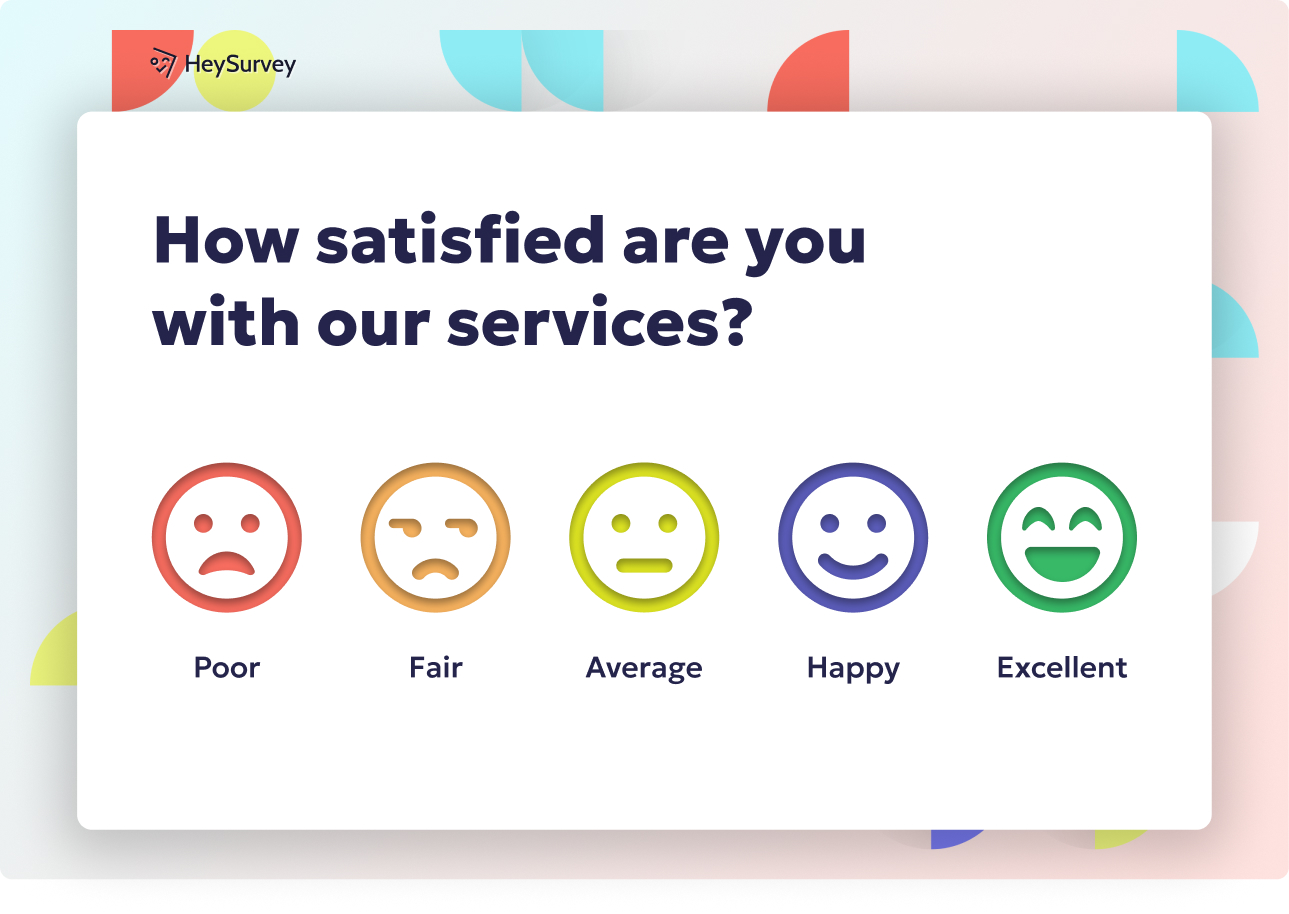
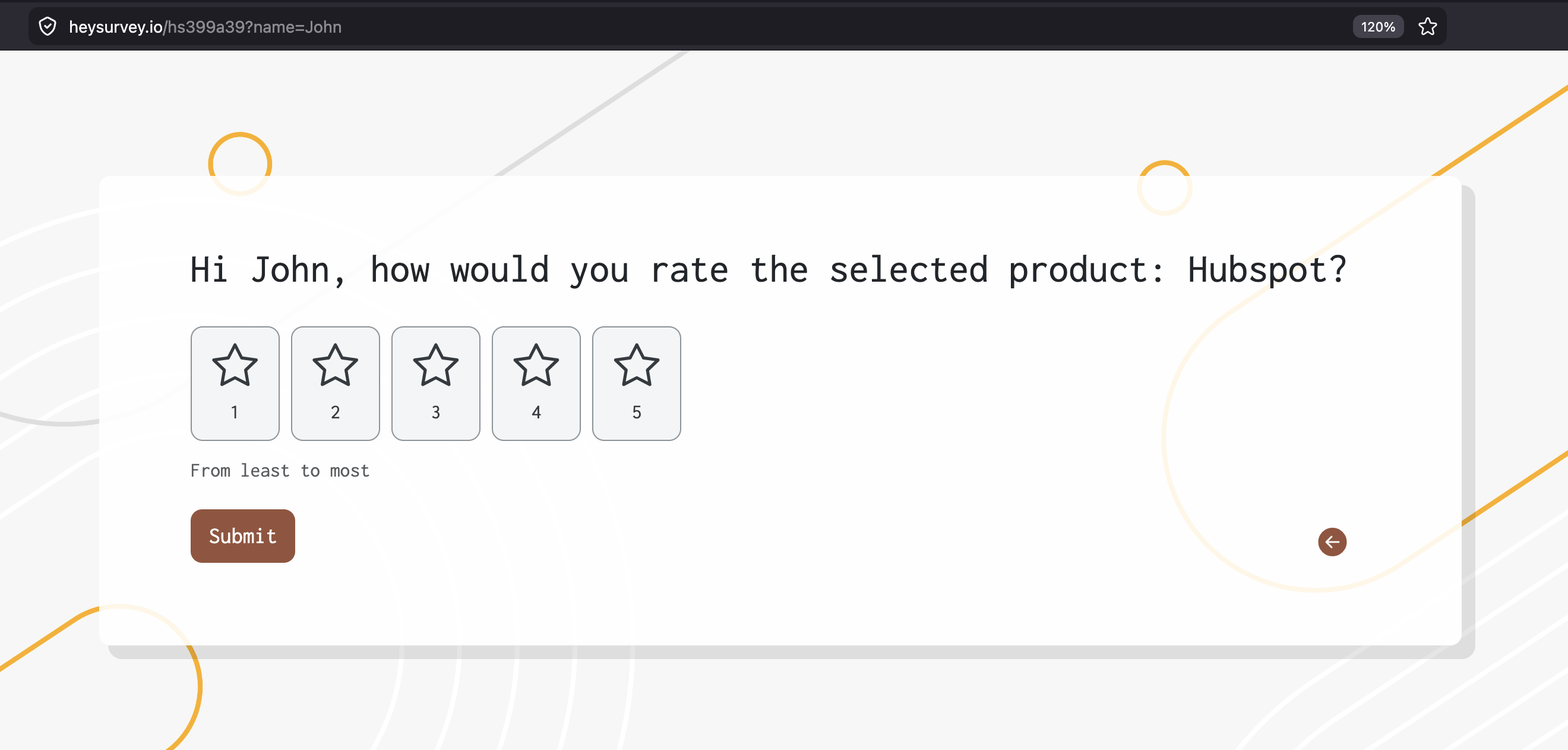
How to create an employee motivation survey in HeySurvey
Create a new survey
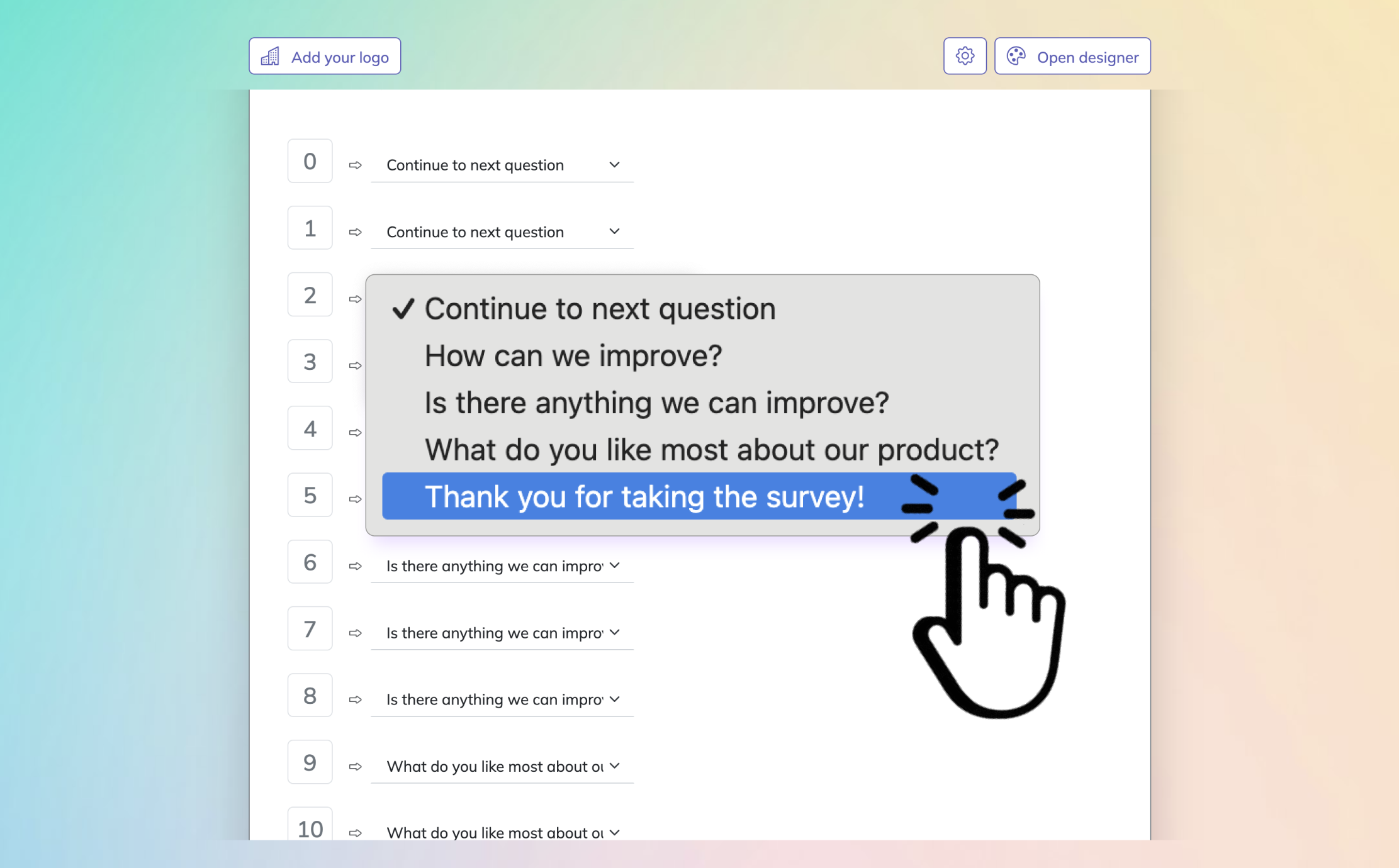
Start by opening a template with the button below, or choose an empty sheet if you want to build from scratch. Give your survey a clear internal name, such as “Employee Motivation Survey,” so you can find it easily later. If needed, add your logo and adjust the basic settings before moving on.Add questions
Click Add Question and include simple employee motivation survey questions. Use Scale questions for ratings like “How motivated do you feel at work?” and Choice questions for topics like recognition, workload, and leadership support. You can also add a Text question for comments or suggestions. Mark important questions as required.Publish survey
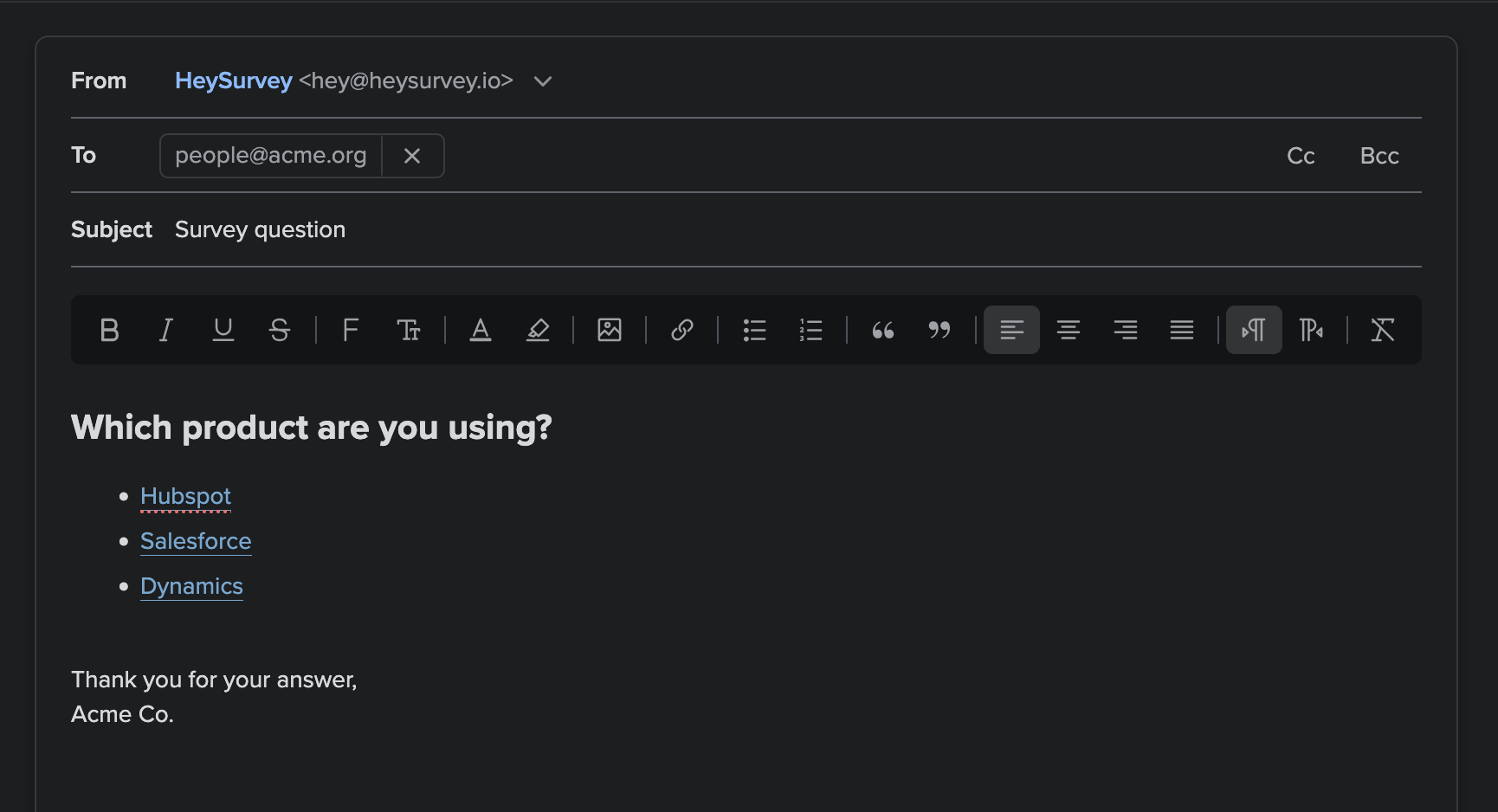
Preview the survey to check the flow and wording. When everything looks right, click Publish to create your shareable link. You can then send the survey to employees by email, chat, or embed it on your website.
Recognition and Rewards Survey Questions
Sample questions
Do you feel your contributions are recognized when you do good work?
How satisfied are you with the way managers acknowledge employee achievements?
Do rewards and recognition in the company feel fair and meaningful?
How motivated are you by the recognition you currently receive at work?
Do you believe strong performance leads to appropriate appreciation here?
Recognition fuels effort faster than a pizza party ever will.
Why & When to Use
Recognition is one of the most common drivers in any employee motivation survey, and it deserves its own spotlight instead of getting lumped in with pay.
Here’s the thing, compensation matters, but feeling seen for good work often shapes day-to-day energy, morale, and effort just as much.
This part of an employee motivation assessment helps you separate formal rewards, like bonuses or awards, from informal recognition, like a manager saying thank you at the right moment.
Use this section when you suspect morale issues, low appreciation, or slipping performance, especially if broader employee motivation survey results look weaker than expected.
Poor scores here often explain flat results across other employee motivation survey questions, because people rarely stay fired up when effort feels invisible.
Plus, this category fits especially well in an employee motivation questionnaire focused on retention and engagement.
It is also useful for comparing recognition patterns across teams, including manager-level differences that can quietly shape culture.
A smart way to use these employee motivation questionnaires is to review results by department and look for gaps in how appreciation is delivered.
Track formal rewards and informal recognition separately.
Compare manager-level recognition data across teams.
Watch for fairness concerns, not just frequency of praise.
Use findings to improve retention, engagement, and performance conversations.
Gallup and Workhuman found employees receiving manager feedback and recognition at least weekly are far more likely to be engaged, highlighting recognition’s motivational impact (source).
Career Growth and Development Survey Questions
Sample questions
Do you see clear opportunities for career growth within the organization?
How satisfied are you with the learning and development opportunities available to you?
Do you feel encouraged to build new skills that matter for your future?
Does your manager support your professional development goals?
How motivated are you by the career path available to you here?
If people cannot picture a future with you, their motivation usually packs a bag early.
Why & When to Use
Career growth plays a big role in any employee motivation survey, because motivation often fades when employees feel stuck, overlooked, or unsure what comes next.
Here’s the thing, people do not just want a job title today, they want signs that effort can lead somewhere useful tomorrow.
This part of an employee motivation assessment helps you measure both promotion paths and skill-building opportunities, which is important because growth is not only about climbing a ladder.
Use these employee motivation survey questions during annual reviews, talent development planning, internal mobility efforts, and employee motivation assessments for high-potential teams.
Plus, this category is essential if you are building a long-term employee motivation survey template that tracks retention risk and future leadership strength.
Growth-focused employee motivation questionnaires are especially helpful in competitive hiring markets, where ambitious people have options and they know it.
A smart move is to segment responses by tenure, since newer employees and long-timers often see development opportunities very differently.
Review promotion visibility and learning access separately.
Look at manager support for development, not just formal programs.
Segment employee motivation survey results by tenure to spot stalled growth perceptions.
Use findings to strengthen career paths, upskilling, and internal mobility plans.
Leadership and Management Support Survey Questions
Sample questions
Does your manager help you stay motivated and focused on meaningful goals?
Do you receive enough support from leadership to do your job effectively?
How comfortable do you feel sharing concerns or ideas with your manager?
Do leaders in the organization communicate in ways that increase motivation and trust?
Do you feel your manager removes obstacles that affect your performance and motivation?
Great managers can lift motivation fast, and shaky leadership can drain it before lunch.
Why & When to Use
Manager relationships have a direct impact on trust, motivation, and discretionary effort, which makes this a high-value category in any employee motivation survey.
Here’s the thing, people usually do not stay energized just because the company mission sounds nice. They stay motivated when their manager gives clarity, support, and follow-through.
This part of an employee motivation assessment helps you understand whether employees feel guided, heard, and backed up when challenges show up.
Use these employee motivation survey questions after leadership changes, team restructures, or when productivity looks wildly different across departments.
Plus, management scores often shape every other area in employee motivation surveys, from engagement and recognition to growth and retention. If leadership support is weak, the rest of the data can start wobbling like a sad office chair.
When you build this into an employee motivation questionnaire, separate direct-manager feedback from senior-leadership feedback so you can spot where support is strong and where it drops off.
On top of that, protect anonymity carefully in small teams, especially if you are running employee motivation questionnaires by department.
Separate feedback about direct managers and senior leaders.
Watch for low management scores that may influence broader employee motivation survey results.
Protect anonymity closely in small teams.
Use findings to improve communication, coaching, and obstacle removal.
Gallup research shows managers account for 70% of team engagement variance, making leadership-support questions essential in employee motivation surveys (source).
Work Environment, Culture, and Team Motivation Survey Questions
Sample questions
Do you feel supported by your team in a way that helps you stay motivated?
Does the workplace culture encourage you to do your best work?
Do you feel respected and included in your work environment?
How motivated are you by the level of collaboration within your team?
Does the overall work environment help you remain engaged and productive?
Culture quietly shapes motivation, even when the job itself looks fine on paper.
Why & When to Use
Your motivation is not shaped by tasks alone. It is also shaped by teamwork, inclusion, psychological safety, and the everyday feel of the workplace, which makes this section essential in any employee motivation survey.
Here’s the thing, people can like their role and still feel drained by the environment around them. That is why these employee motivation survey questions help you see whether low energy comes from the work itself or from the broader workplace context.
Use this part of your employee motivation assessment during culture reviews, hybrid work evaluations, and post-change employee motivation surveys. It is especially useful after reorganizations, policy changes, or return-to-office updates, because vibes are not a strategy.
Plus, this section works well in an employee motivation survey template when you want to compare remote, hybrid, and in-office experiences. On top of that, it can reveal whether collaboration and inclusion feel consistent across teams or wildly uneven.
Link responses from this employee motivation questionnaire to turnover risk and absenteeism patterns so you can spot culture issues before they grow teeth.
Compare remote, hybrid, and in-office responses.
Look for patterns tied to turnover risk and absenteeism.
Use findings to support a broader employee motivation assessment.
Separate role-related frustration from environment-related motivation issues.
Compensation, Benefits, and Motivation Survey Questions
Sample questions
How fairly do you feel you are compensated for the work you do?
Do your pay and benefits motivate you to stay committed to the organization?
How satisfied are you with the benefits offered to employees?
Do you believe compensation decisions are handled transparently and fairly?
To what extent do rewards here reflect employee effort and performance?
Fair pay does not buy passion, but unfair pay can crush it fast.
Why & When to Use
Compensation is not the only driver of motivation, but it absolutely shapes how valued you feel. In any employee motivation survey, pay and benefits often influence both day-to-day energy and long-term retention.
Here’s the thing, people do not expect magic, but they do expect fairness. That is why these employee motivation survey questions should explore how compensation affects motivation, trust, and commitment, not just whether payroll shows up on time.
Use this part of an employee motivation assessment during compensation reviews, benefits updates, or when exit feedback points to dissatisfaction. Plus, it fits well in an employee motivation survey template when you want to understand whether employees feel rewarded in a way that matches their effort and performance.
Careful wording matters here because this topic can get sensitive fast. On top of that, the goal is to learn how pay practices influence motivation, not to accidentally turn your employee motivation questionnaire into a salary negotiation with bullet points.
Keep questions neutral so they do not sound defensive or make promises.
Pair these items with recognition, fairness, and trust-focused employee motivation questions for better context.
Include this category in employee motivation questionnaires, but do not let it dominate the full employee motivation survey.
Focus on perceived fairness, transparency, and motivation impact rather than payroll administration alone.
How to Build an Effective Employee Motivation Survey Template
Sample questions
Which motivation factors have the strongest impact on your performance at work?
What is the biggest thing the company could change to improve your motivation?
What helps you stay motivated during challenging periods at work?
Which current workplace practices most reduce your motivation?
How likely are you to recommend this organization as a motivating place to work?
A great survey template saves you from reinventing the wheel every single time.
Why & When to Use
A long list of ideas is helpful, but turning them into a usable employee motivation survey template is where many teams get stuck. This section helps you shape employee motivation survey questions into a practical employee motivation survey questionnaire you can reuse, compare, and improve over time.
Use it when you are building your first employee motivation survey, updating old employee motivation surveys that feel dusty, or standardizing an employee motivation assessment across departments. Plus, it is especially useful if you want a sample employee motivation survey questionnaire that works for both quick pulse checks and larger annual surveys.
Here’s the thing, strong employee motivation questionnaires are usually simple, not fancy. Aim for a reasonable length, use consistent rating scales, protect anonymity, and balance score-based items with a few open-text employee motivation questions so people can explain the "why" behind the number.
A smart setup often includes:
10 to 20 questions for most teams, so attention stays high and eye-rolls stay low.
Core benchmark employee motivation survey questions used every cycle, plus a few company-specific items.
Clear scale choices, such as 1 to 5 agreement or satisfaction ratings.
Localized versions for global teams, including formats like fragen zur mitarbeitermotivation when multilingual access matters.
On top of that, the goal is not just to ask questions. It is to build a reusable employee motivation questionnaire that people can actually finish without needing a snack break first.
Best Practices for Employee Motivation Surveys
Sample questions
Are your employee motivation survey questions clear enough that employees can answer quickly without guessing what you mean?
Do you use the same response scale across your employee motivation assessment so results are easier to compare?
Have you explained why you are running this employee motivation survey and what will happen after it closes?
Does your employee motivation survey include at least one open-text question so people can add context behind their scores?
Are you surveying often enough to track trends, but not so often that people start treating it like wallpaper?
Small survey choices create big trust signals.
Why & When to Use
When you build an employee motivation survey, the best practices are not just nice extras. They shape whether your employee motivation assessment gives you useful truth or polished confusion.
Here’s the thing, strong employee motivation surveys are easy to answer, easy to compare, and easy to trust. That means simple wording, a consistent scale, clear purpose, and at least one open-text prompt to catch context the numbers miss.
Use these practices when drafting new employee motivation survey questions, reviewing an old employee motivation survey template, or tightening an employee motivation questionnaire before launch. Plus, they matter most when timing is tricky, trust is low, or survey fatigue is already lurking in the hallway.
Dos
Keep employee motivation questions simple, specific, and focused on one idea at a time.
Use a consistent response scale across most of the employee motivation survey.
Protect anonymity, especially for sensitive employee motivation questionnaire items.
Run surveys at regular intervals so you can compare results over time.
Segment findings by team, tenure, role, or location when sample size allows.
Include at least one open-text question for context.
Tell employees why the survey matters before launch.
Don’ts
Avoid leading, vague, or double-barreled employee motivation survey questions.
Do not make the survey too long, or response quality may nosedive fast.
Do not mix motivation, engagement, and satisfaction unless you define each clearly.
Do not collect feedback if leaders will not act on it.
Do not expose identifiable responses in small teams.
Do not obsess over pay alone while ignoring managers, culture, and growth.
Do not run a one-and-done survey with no follow-up plan.
Turning Employee Motivation Survey Results Into Action
Sample questions
Are you reviewing your employee motivation survey results by category so you can spot patterns instead of panicking over one ugly score?
Which 2 to 3 issues from your employee motivation assessment would make the biggest difference for employees and the business if you fixed them first?
Have you shared a clear summary of what your employee motivation survey questions revealed and what will happen next?
Are managers turning employee motivation survey results into specific team actions, not just nodding thoughtfully in meetings?
Have you assigned owners, deadlines, and follow-up checks so your employee motivation survey leads to real progress?
Insight only counts when it changes what people experience at work.
Why & When to Use
Once your employee motivation survey closes, your real job starts. The smartest move is to look for patterns across categories like recognition, growth, manager support, and workload instead of overreacting to one low number that barges in like it owns the place.
Use this approach when reviewing an employee motivation assessment, presenting findings to leaders, or updating an employee motivation survey template for future rounds. Plus, it helps you focus on what matters most, not what shouted loudest.
Start by picking 2 to 3 focus areas based on business impact, employee comments, and whether managers are ready to act.
Then turn your employee motivation survey questions into practical next steps:
Share a transparent summary of key findings with employees.
Build team-level action plans with clear priorities.
Coach managers where support or communication scored low.
Improve recognition habits, development options, or workload balance.
Set owners, deadlines, and follow-up pulse checks to measure progress.
On top of that, keep the loop closed with a short follow-up employee motivation survey or employee motivation questionnaire. The best employee motivation surveys create value only when you act on what employees actually said.
Sample Leadership & Management Support Survey Questions
Leaders inspire me to deliver my best work.
Management communicates a clear vision.
I trust senior leadership’s decisions.
My manager removes obstacles to my success.
Leadership actions reflect company values.
I receive regular feedback and coaching from my manager.
You’ll gain fresh insights into managerial strengths and weaknesses, plus ideas for building training plans that keep leadership motivational, effective, and authentic.
Related Employee Survey Surveys
28 Post Mortem Survey Questions
Explore 25 post mortem survey questions to uncover lessons, improve processes, and drive better r...
29 Change Readiness Survey Questions
Explore 25 sample questions for a change readiness survey, with keyword change readiness survey q...
29 Retreat Survey Questions
Explore 25 retreat survey questions with sample questions to gather honest feedback, improve gues...