28 Employee Morale Survey Questions
Explore 25 employee morale survey questions with examples to gauge team sentiment, boost engagement, and improve workplace morale.
If your team feels a little off, an employee morale survey can help you spot why before small issues become big, expensive ones. It is a simple way to measure how people feel about their work, leadership, and culture, because morale shapes retention, productivity, engagement, and whether Monday feels manageable or mildly dramatic. Plus, this guide walks you through practical morale survey questions by category, so you can build a useful online survey tool workplace morale survey, staff morale survey, or team morale survey with smarter employee morale survey questions and better questions to ask employees to improve morale.
Job Satisfaction and Day-to-Day Experience Survey Questions
Sample questions
How satisfied are you with your day-to-day work experience?
Do you feel your workload is manageable most of the time?
Do you clearly understand what is expected of you in your role?
How often do you feel motivated to do your best work?
What is one change that would improve your daily work experience?
This is your morale baseline.
Why & When to Use
This part of an employee morale survey helps you understand how people feel about their daily work, not just the big-picture culture stuff.
It is especially useful for measuring job satisfaction, workload, role clarity, motivation, and the small daily frustrations that can quietly drain energy like a phone battery at 4 percent.
Use these employee morale survey questions when you want a clear read on everyday experience, especially during:
quarterly check-ins
role changes or team restructuring
busy growth periods
early signs of disengagement, stress, or burnout
Here’s the thing: this section is a strong foundation for almost any workplace morale survey or staff morale survey.
If people do not feel good about the work they do every day, the rest of your work morale survey may point to symptoms without revealing the real cause.
Plus, it helps to mix rating-scale morale survey questions with one or two open-ended prompts.
Rating questions make trends easier to spot, while open-ended answers give context you can actually use.
Keep your wording simple and direct in your employee morale survey questions.
On top of that, watch for patterns around workload, unclear expectations, low motivation, and burnout risk, because those are often the early warning signs in any workplace morale survey.
Gallup found employees who clearly know what’s expected at work are 47% less likely to experience frequent burnout (source).
Create an employee morale survey in 3 easy steps
Create a new survey
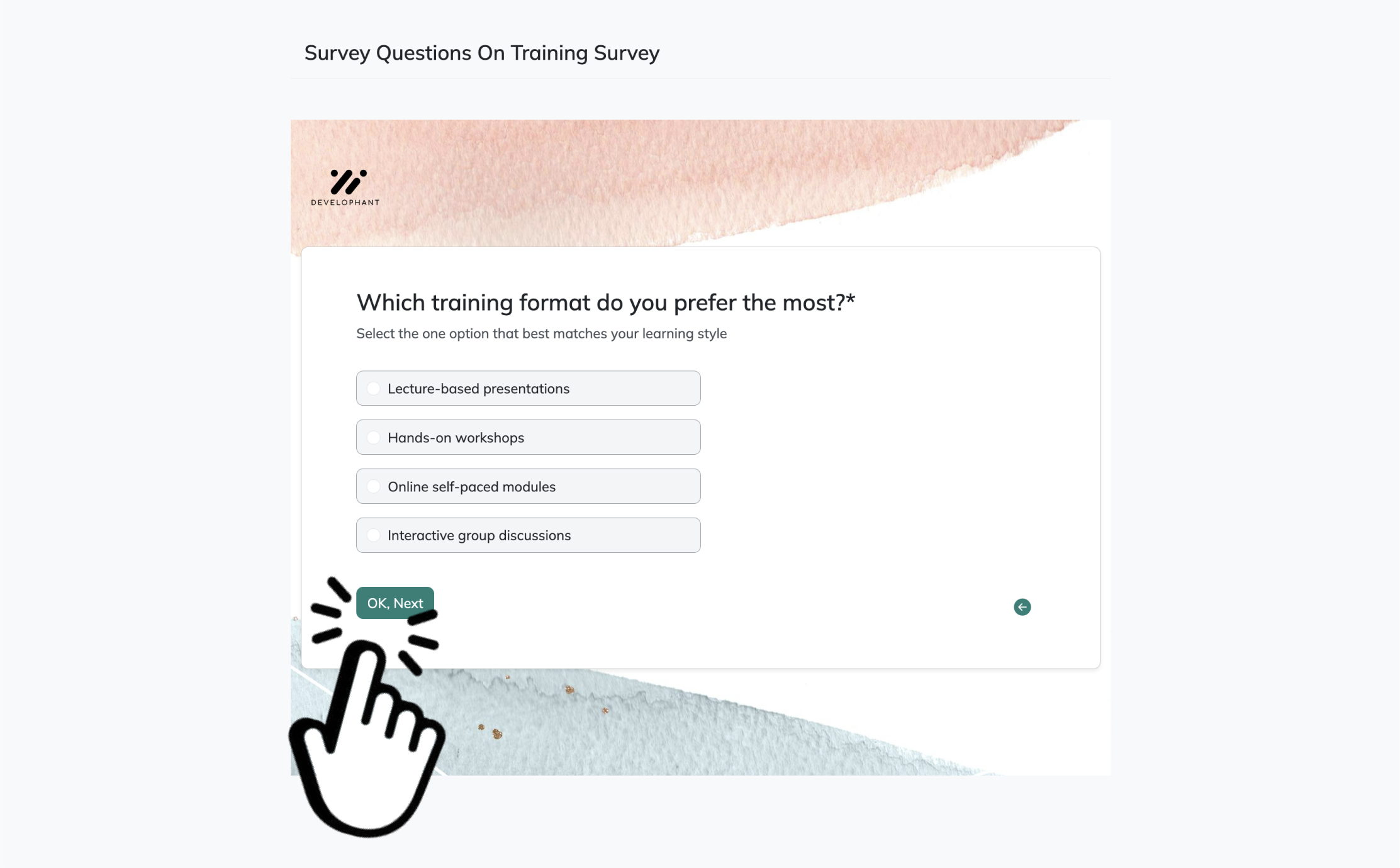
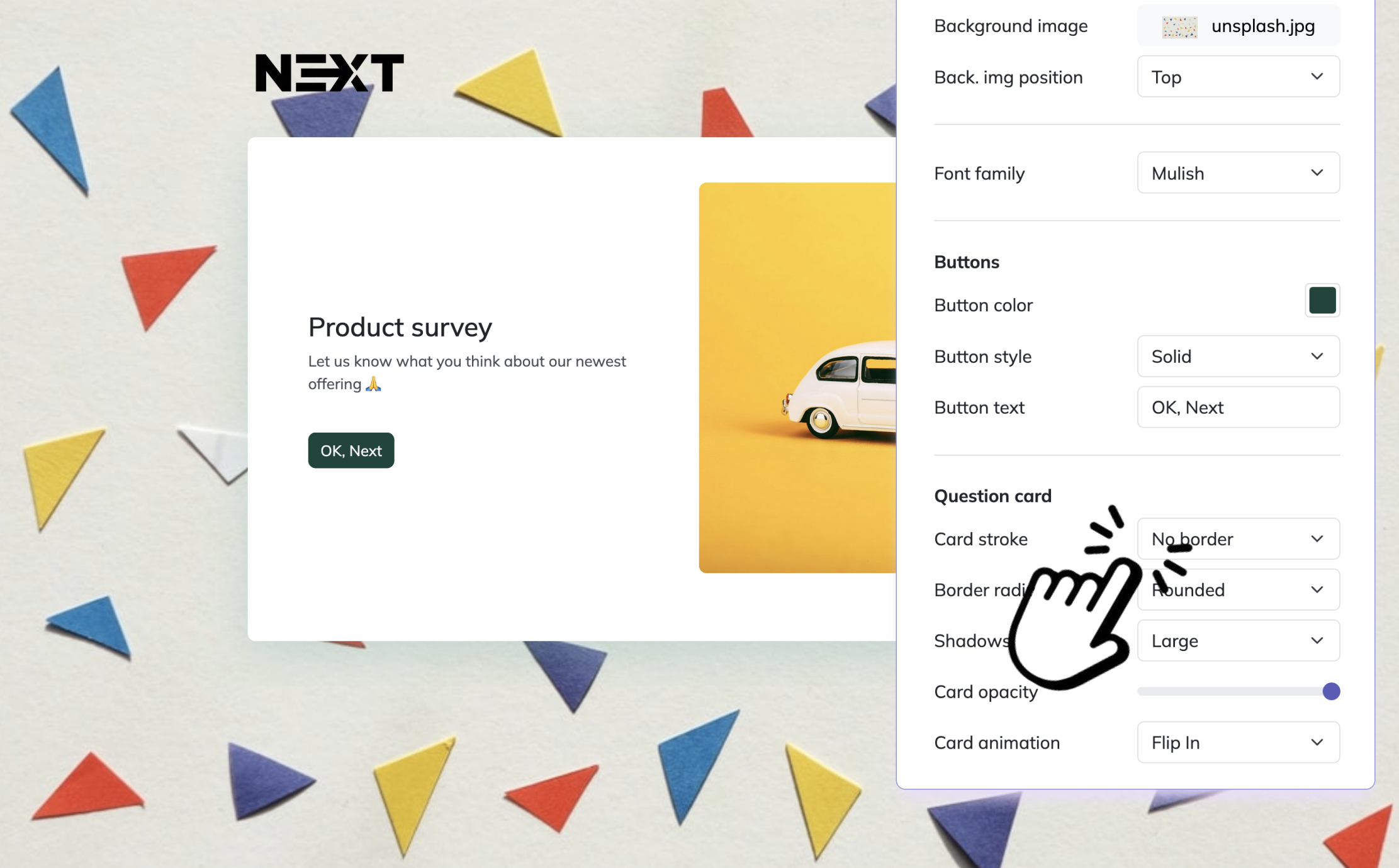
Start by clicking a template below or opening a blank survey in HeySurvey. If you’re new, a template is the fastest way to begin. You can edit the survey name right away and adjust the design later.Add questions
Click Add Question to include the items you want to measure morale, such as rating scales, multiple-choice questions, or short text feedback. For example, ask how supported employees feel, how satisfied they are with communication, or what could improve their work experience. Mark important questions as required if needed.Publish your survey
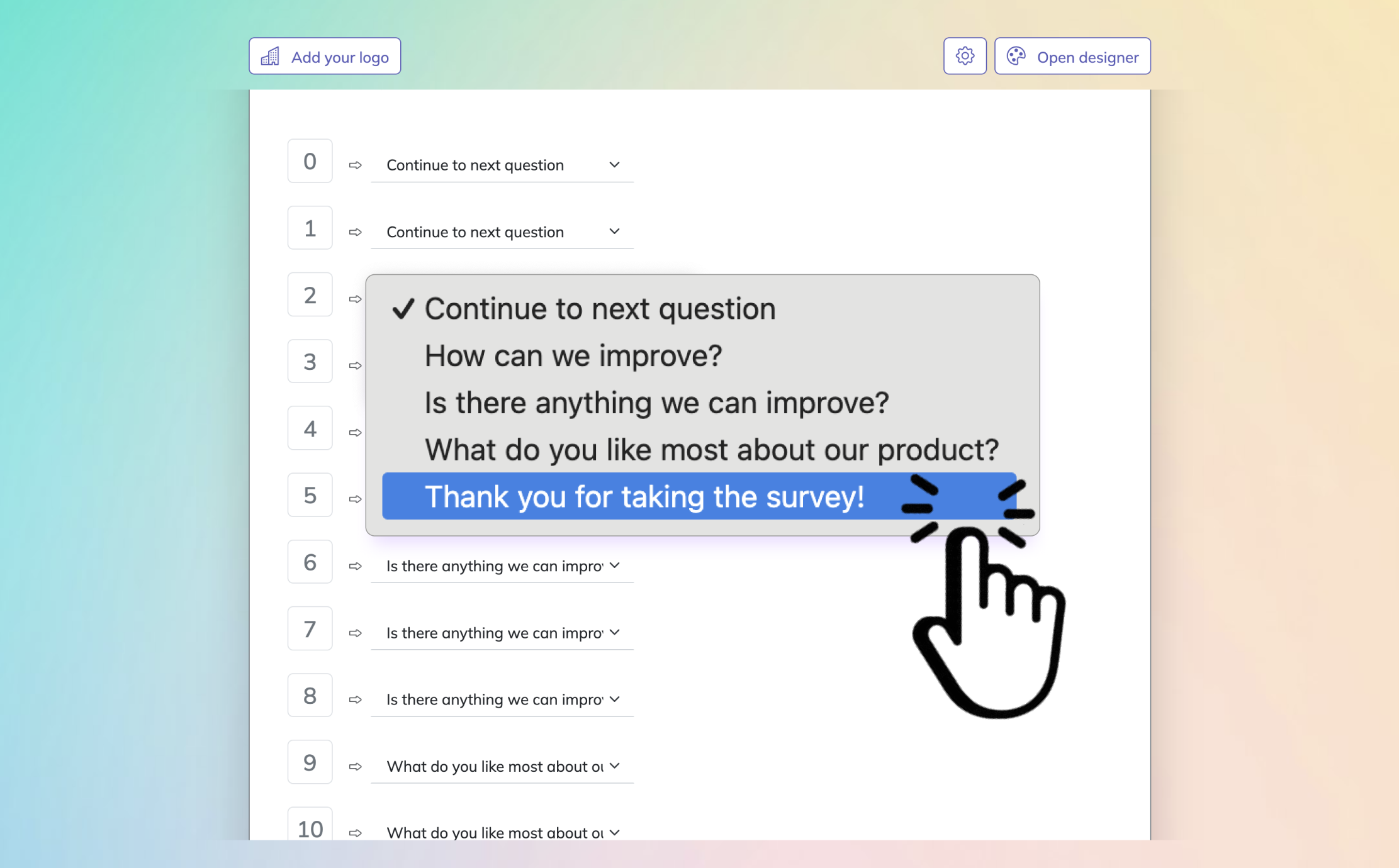
Review your questions, preview the survey, and make any final changes. When everything looks good, click Publish to create a shareable link. You can then send the survey to employees by email, chat, or embed it on an internal page.
Leadership and Management Support Survey Questions
Sample questions
Do you feel supported by your direct manager?
Does leadership communicate important updates clearly and honestly?
Do you feel comfortable raising concerns with your manager?
Do leaders follow through on commitments they make to employees?
What could your manager or leadership team do to better support morale?
Manager trust shapes morale fast.
Why & When to Use
In any employee morale survey, morale often rises or falls based on one simple thing: how people feel about their manager and whether they trust leadership.
Here’s the thing: a great mission statement cannot rescue a team that feels ignored, unsupported, or left guessing.
This part of a workplace morale survey helps you spot management-related morale barriers before they turn into bigger performance, retention, or communication problems.
Use this staff morale survey section when your organization is dealing with change, mixed messages, or uneven team performance.
It is especially useful during:
restructures or leadership transitions
communication breakdowns
culture repair efforts
teams with inconsistent engagement or results
Plus, anonymity matters a lot here.
If people think their answers can be traced back to them, your employee morale survey questions may get the polite version instead of the honest one, and polite data is not exactly a superhero.
On top of that, separate questions about direct supervisors from questions about executive leadership.
That makes your work morale survey more precise and helps you see whether trust issues live with frontline managers, senior leaders, or both.
Use the results to guide manager coaching, support habits, and follow-through, not just broader messaging.
That is what makes this section essential in employee morale surveys that aim to improve real day-to-day leadership support.
Gallup finds managers account for at least 70% of team engagement variance, making manager-support questions essential in employee morale surveys (source).
Recognition, Appreciation, and Motivation Survey Questions
Sample questions
Do you feel your work is recognized when you perform well?
How satisfied are you with the level of appreciation you receive at work?
Do you believe good performance is rewarded fairly here?
Does recognition at this company feel timely and meaningful?
What type of recognition would make you feel more valued?
Recognition fuels motivation surprisingly fast.
Why & When to Use
In an employee morale survey, recognition questions matter more than many teams expect.
When people feel overlooked, they often report lower motivation, lower loyalty, and weaker morale, even when they are still getting the job done.
Here’s the thing: employees do not need a parade and a brass band, but they do need to know their effort actually landed.
This workplace morale survey section is especially useful when turnover is rising, effort feels unnoticed, or teams are hitting goals while energy quietly drops.
Use this part of a staff morale survey to uncover gaps between effort, impact, and acknowledgment.
These are high-value morale survey questions because small improvements in recognition can lift morale quickly without requiring a giant policy overhaul.
Plus, recognition is not only about money.
It can show up in ways like:
public praise for strong work
private feedback that feels specific and sincere
development opportunities tied to good performance
peer recognition that helps appreciation feel shared
On top of that, your employee morale survey questions should help you see whether recognition feels fair, timely, and meaningful, not random or delayed.
That makes this work morale survey section useful for improving motivation fast and turning employee morale surveys into action, not just paperwork.
Team Relationships and Workplace Culture Survey Questions
Sample questions
Do you feel respected by your coworkers?
Does your team work well together to solve problems?
Do you feel comfortable sharing ideas or concerns with your team?
Do you feel included and welcomed in your workplace culture?
What is one thing your team could do to create a more positive work environment?
Healthy team dynamics shape morale every single day.
Why & When to Use
In an employee morale survey, team relationships deserve a close look because morale is not built on pay alone.
You can offer solid benefits and still have a team that feels tense, disconnected, or awkward enough to make Monday feel extra Monday.
Here’s the thing: peer relationships, inclusion, collaboration, and psychological safety all influence how people feel at work.
If employees do not feel respected, heard, or welcomed, a workplace morale survey will often reveal morale problems hiding underneath decent compensation.
This section works well in any staff morale survey, especially after restructuring, conflict, remote work changes, or a stretch of rapid hiring.
Plus, it fits both a company morale survey and a smaller team-level pulse check when you want fast insight without making the survey feel enormous.
Use these morale survey questions to explore areas like:
trust between coworkers
inclusion across the team
comfort speaking up about ideas or concerns
conflict resolution and how problems get handled
collaboration during everyday work
On top of that, compare employee morale survey questions by department to spot local culture issues.
That helps your work morale survey show whether morale challenges are company-wide or concentrated in one team, which is much more useful than guessing.
APA’s 2024 survey found higher psychological safety strongly correlates with better coworker relationships, supporting morale questions about respect, inclusion, and speaking up (source).
Growth, Development, and Career Opportunity Survey Questions
Sample questions
Do you see a clear path for growth at this company?
Do you have access to the training or development you need?
Do you feel your strengths are being used effectively in your role?
Do you believe the company supports your long-term career goals?
What additional development opportunity would most improve your experience here?
When people feel stuck, morale can slide fast.
Why & When to Use
In an employee morale survey, growth and career opportunity matter because people want to feel like they are going somewhere, not just keeping a chair warm.
If employees feel overlooked, underused, or unsure about what comes next, morale often drops before turnover shows up on a spreadsheet.
Here’s the thing: a workplace morale survey should separate promotion opportunities from skill-building opportunities.
Not everyone wants a new title right now, but many people do want better training, stretch projects, mentoring, or a clearer path to build new skills.
That is why this section works especially well in a staff morale survey during retention planning, performance review cycles, and internal mobility efforts.
Plus, it is especially useful if your company wants to reduce regrettable turnover before your best people quietly update their resumes. Sneaky little PDFs, right?
Use these morale survey questions to uncover issues like:
unclear career paths
limited access to development resources
strengths that are not being fully used
weak support for long-term career goals
silent retention risks that employees may not say out loud
On top of that, responses from employee morale surveys can help shape learning programs, mentoring support, and internal career pathways that give people a real reason to stay.
Compensation, Benefits, and Fairness Survey Questions
Sample questions
Do you feel your compensation is fair for the work you do?
Are you satisfied with the benefits offered by the company?
Do you believe rewards and opportunities are distributed fairly?
Do company policies feel fair and consistently applied?
What change to compensation, benefits, or fairness would most improve morale?
Fairness often matters as much as the paycheck itself.
Why & When to Use
In an employee morale survey, compensation matters, but perceived fairness usually carries just as much weight.
You can pay competitively and still have morale problems if employees think raises, rewards, or policies are inconsistent.
Here’s the thing: this workplace morale survey section is not just about salary.
It helps you understand how people view benefits, recognition, opportunities, and whether the rules feel evenly applied across teams.
Use this staff morale survey section when you are reviewing retention concerns, low benefit usage, or signs that employees do not feel fully valued.
Plus, it is especially useful when turnover feels confusing and everyone swears compensation is "fine." Famous last words.
This topic needs a careful touch because it can bring up strong emotions, trust concerns, and comparisons that employees may already be making quietly.
To get better responses in a work morale survey, keep the wording neutral and non-defensive, and ask about fairness and consistency, not only pay levels.
Use these morale survey questions to uncover issues like:
compensation that feels out of step with contribution
benefits employees do not understand or use
uneven access to rewards or growth opportunities
policies that feel inconsistent from one manager to another
trust risks that can quietly damage morale
On top of that, employee morale survey questions in this area work best when paired with retention data, tenure trends, and exit feedback so patterns are easier to spot.
How to Choose the Right Employee Morale Survey Questions
Sample questions
What is the main goal of this morale survey?
Which morale issues are most urgent to understand right now?
Do we need company-wide insights, team-specific insights, or both?
Are we asking questions employees can answer honestly and clearly?
How will we act on the feedback once we collect it?
Good survey questions are not random, they are chosen on purpose.
Why & When to Use
When you build an employee morale survey, the best questions depend on your company size, your goals, and the problems you are trying to understand.
A 20-person team usually needs a different workplace morale survey than a 2,000-person company with multiple departments, locations, and managers.
Here’s the thing: not every staff morale survey needs to cover everything at once.
If you are creating a new survey, improving existing employee morale surveys, or hunting for free employee morale survey questions you can adapt, this section helps you choose a smarter mix.
A broad annual workplace morale survey works best when you want a big-picture view across the company.
A shorter pulse-style team morale survey tool works better when you need fast feedback on a specific issue, change, or team concern.
To choose stronger morale survey questions, keep these practical rules in mind:
limit survey length so people actually finish it
use a few core recurring questions so you can track trends over time
add a small number of timely custom questions for current challenges
write in plain language so answers are clear, not cryptic little puzzles
use consistent rating scales for cleaner analysis
Plus, the real magic of employee morale survey questions is not just asking them.
It is choosing questions you can actually do something with after the results come in.
Employee Morale Survey Best Practices
Sample questions
Are employees confident that their responses will remain confidential?
Is the survey short enough to complete without fatigue?
Are the questions neutral and free from leading language?
Have we explained why we are running the survey now?
Have we prepared a plan to share results and next steps?
A great employee morale survey is not just about the questions, it is about the whole experience.
Why & When to Use
Even strong employee morale survey questions can flop if the survey process is clunky, confusing, or hard to trust.
This section gives you a practical checklist for HR leaders, people managers, and business owners who want a workplace morale survey that people actually complete honestly.
Here’s the thing: a smart staff morale survey feels easy, safe, and worth the time.
If employees think the survey is too long, too vague, or secretly not anonymous, your results can get weird fast. Nobody wants feedback shaped by eye-roll fatigue.
Use these dos and don’ts to tighten up your work morale survey process:
Do keep surveys focused and easy to complete.
Do protect anonymity whenever possible.
Do use a mix of scaled and open-ended morale survey questions.
Do repeat core questions over time to track trends in employee morale surveys.
Do communicate findings and follow-up actions promptly.
Don’t ask vague or double-barreled questions.
Don’t run an employee morale survey without a plan to act on results.
Don’t overload employees with too many surveys.
Don’t use survey results to single out individuals.
Don’t ignore low-scoring themes that repeat across teams.
Plus, the best workplace morale survey does more than collect opinions.
It helps you build trust, spot patterns, and take action people can actually feel.
Turning Morale Survey Results Into Action
Sample questions
Which morale issues have the greatest impact on employees right now?
Which findings require immediate action from leadership?
What can managers address quickly at the team level?
What longer-term changes should be prioritized company-wide?
How will we measure whether morale improves after changes are made?
The real magic of an employee morale survey happens after the survey closes.
Why & When to Use
A great employee morale survey is only useful if you do something with the results.
Here’s the thing: employees notice very quickly whether a workplace morale survey leads to action or just joins the dusty pile of forgotten good intentions.
This final step turns feedback into trust, clearer priorities, and stronger workplace morale.
After reviewing your staff morale survey results, resist the urge to fix everything at once. Trying to solve twelve problems in one heroic sprint usually ends with confusion, not progress.
Instead, focus on 2 to 3 actions that matter most.
Use your employee morale survey findings to separate urgent leadership issues from team-level fixes and longer-term company changes.
A practical action plan should include:
the top themes from the work morale survey
what will be addressed first
who owns each action
when employees can expect updates
how success will be measured
Plus, share that plan with employees clearly and simply.
On top of that, run follow-up pulse checks or shorter employee morale surveys to see whether changes are working.
That is how employee morale survey questions become real improvements.
Listen, respond, measure, and repeat.
That simple rhythm is how an employee morale survey builds lasting trust, and yes, it is much more impressive than a motivational pizza party.
Related Employee Survey Surveys
28 Post Mortem Survey Questions
Explore 25 post mortem survey questions to uncover lessons, improve processes, and drive better r...
29 Change Readiness Survey Questions
Explore 25 sample questions for a change readiness survey, with keyword change readiness survey q...
29 Retreat Survey Questions
Explore 25 retreat survey questions with sample questions to gather honest feedback, improve gues...