31 Employee Involvement Survey Questions
Explore 25 employee involvement survey questions with sample answers and practical insights to boost engagement, feedback, and workplace culture.
If you want a clearer picture of how engaged your team really feels, an employee involvement survey is a smart place to start. It helps you measure participation, ownership, communication, and how connected people feel to workplace goals.
Here’s the thing: good surveys do more than collect opinions. This article shares practical employee involvement survey questions by category, so you can build a better survey with an online survey maker, spot what matters, and turn feedback into action instead of letting it nap in a spreadsheet.
Sample questions
Do you feel your ideas are considered when decisions are made about your work?
How often are you asked for input before changes are introduced in your team?
Do leaders explain the reasons behind decisions that affect employees?
Do you feel comfortable speaking up with suggestions for improvement?
Do you believe employee feedback influences workplace decisions in meaningful ways?
Employee Involvement Survey Questions About Decision-Making
Decision-making questions reveal whether people feel heard or just politely observed.
Why & When to Use
This part of an employee involvement survey helps you understand whether employees feel included in decisions that affect their daily work, team processes, and even the bigger company direction.
Here’s the thing: being asked for input is not the same as seeing that input shape real decisions. If employees keep sharing ideas and nothing changes, they will notice fast, and not in a fun gold-star way.
Use this section when your workplace is going through change or trying to build stronger shared ownership.
It is especially useful:
during organizational change
after restructuring
when new workflows, tools, or processes are introduced
when employees say they feel unheard
when you want to strengthen participative management
Plus, low scores in this area often point to deeper issues with trust, leadership communication, or both. That makes this employee involvement survey category especially helpful when morale feels shaky or leaders want more buy-in.
On top of that, mix scale-based questions with open-ended ones. Ratings show patterns, while written comments tell you why employees feel included, ignored, or somewhere awkwardly in between.
Sample questions
Do you receive enough information to do your job effectively?
Do you feel comfortable raising concerns without fear of negative consequences?
Does your manager listen to your feedback and respond appropriately?
Are important updates communicated clearly and in a timely manner?
Do you believe your opinions are respected at work?
Participative decision-making positively influences job satisfaction directly and indirectly through employees’ perception of trust, supporting survey questions about whether opinions are respected and acted upon (source).
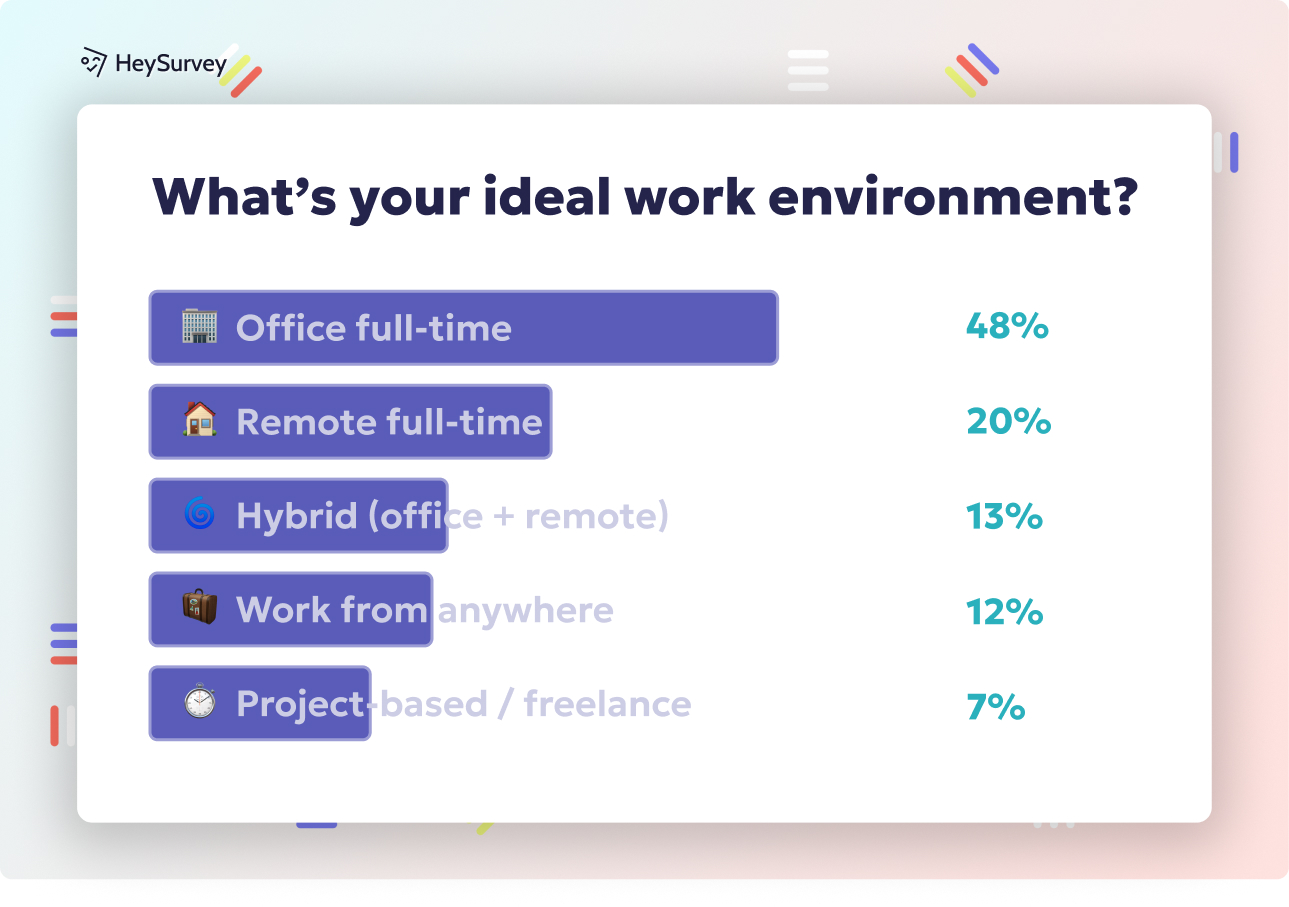
Create a new survey
Open HeySurvey and start from a template by clicking the button below, or choose a blank survey if you want to build from scratch. Give your survey a clear name, then open the settings to add your logo, choose a layout, and set any dates or response limits if needed. If you’re looking for an online survey maker, HeySurvey makes it easy to get started.Add questions
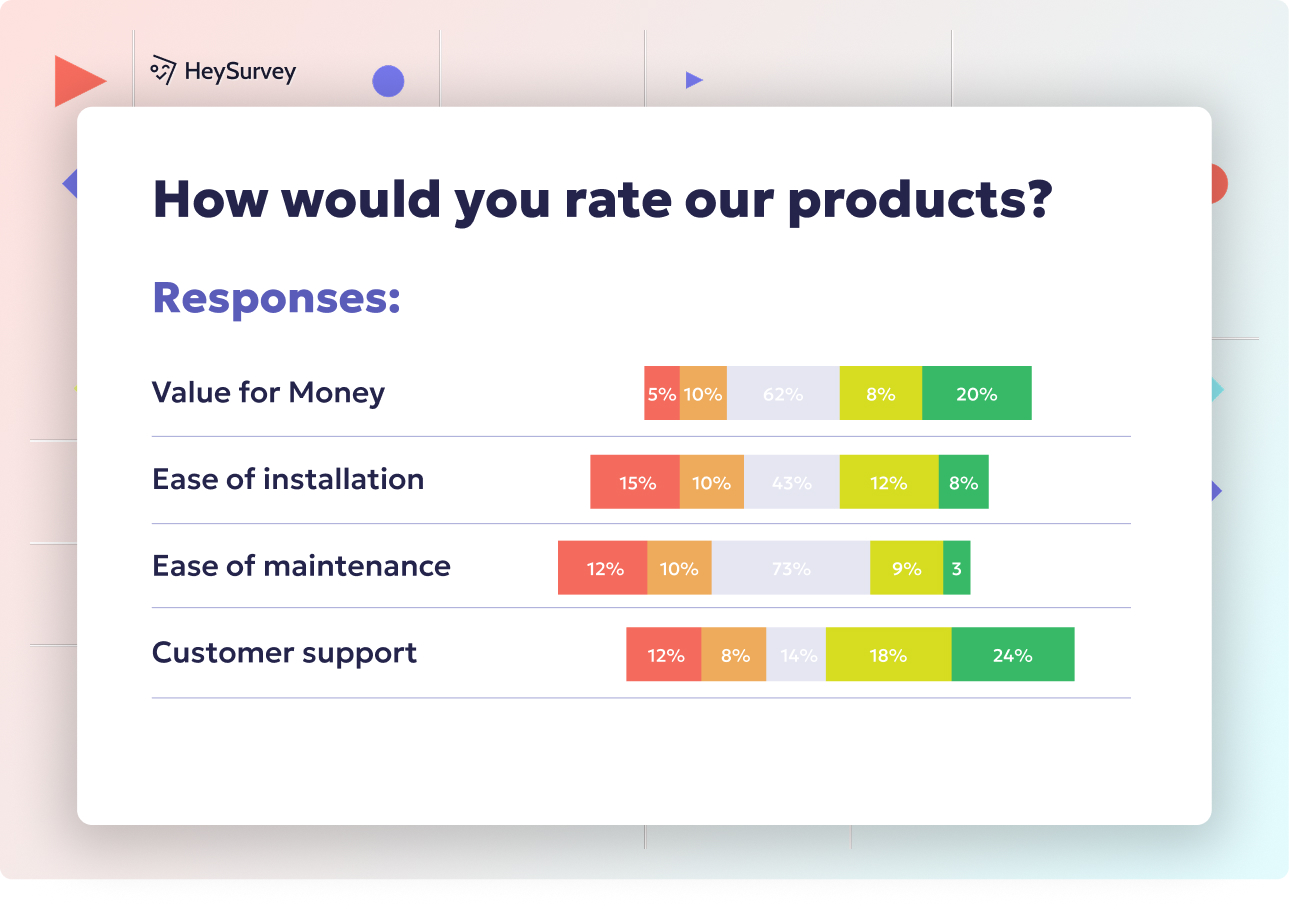
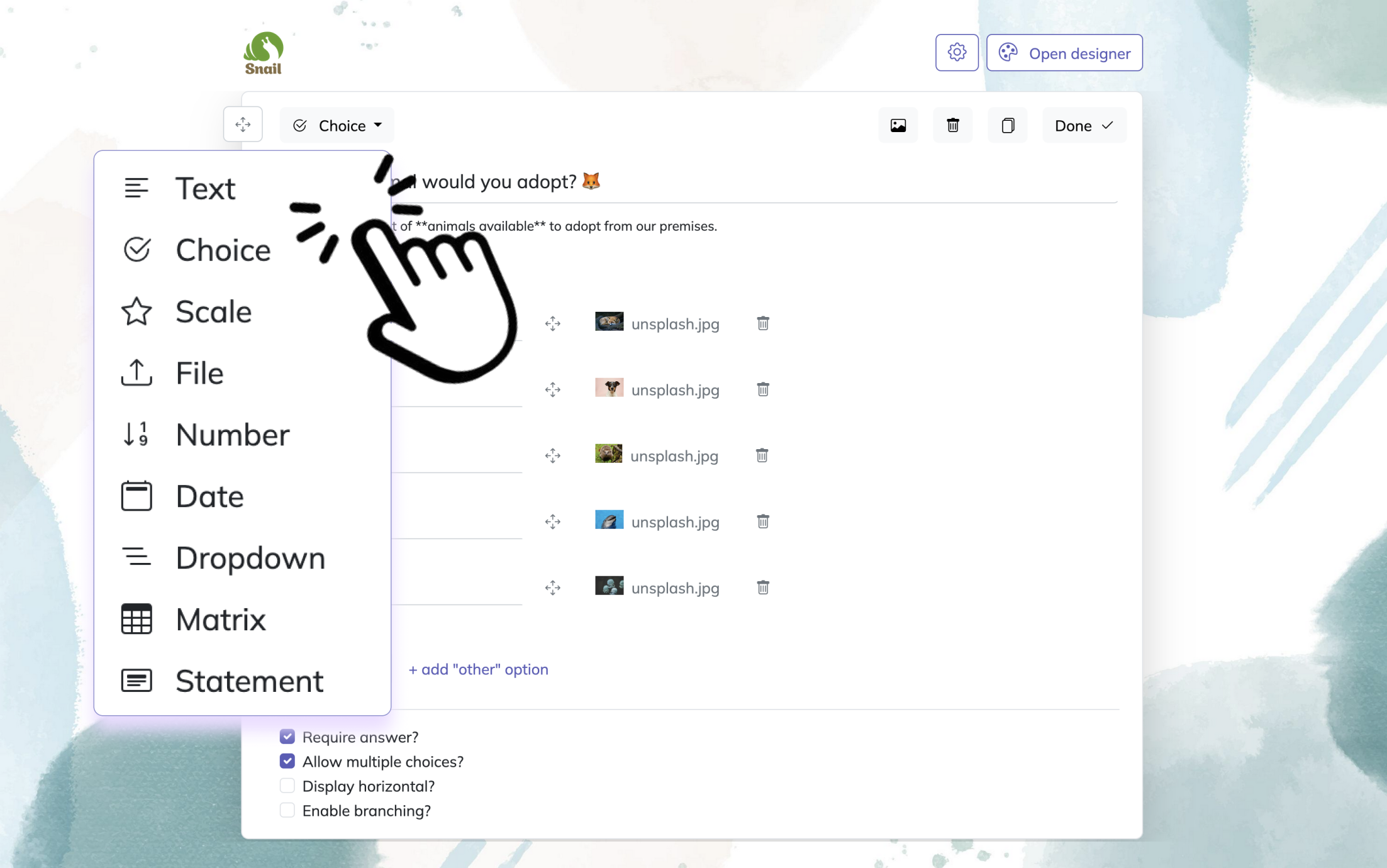
Click Add Question to build your employee involvement survey. Use Choice questions for multiple-choice items, Scale questions for ratings, and Text questions for open comments. Mark important questions as required, and add descriptions if you want to give employees more context. You can also reorder questions anytime.Publish survey
Preview the survey to make sure everything looks right. Then click Publish to create a shareable link. Send the link to your employees, or embed the survey on your website or intranet. Once published, you can track responses and review the results in HeySurvey.
Employee Involvement Survey Questions About Communication and Voice
Communication and voice questions show whether employees feel informed, safe to speak, and genuinely listened to.
Why & When to Use
This part of an employee involvement survey looks at whether employees get the information they need, feel heard when they speak up, and can share concerns, feedback, or ideas without worrying about backlash.
Here’s the thing: if people do not feel safe using their voice, involvement drops fast. You cannot have real participation when everyone is busy reading the room like it is a pop quiz.
Use this section when communication gaps start showing up in obvious ways.
It is especially useful:
when rumors are spreading faster than official updates
when morale feels low or uncertain
when teams seem confused about priorities or changes
when departments are misaligned or working in silos
when leaders want clearer two-way communication
Plus, this is a core part of any employee involvement survey because voice sits right at the center of involvement. If employees do not feel informed or respected, they are far less likely to contribute ideas that help the business improve.
On top of that, keep question wording neutral and easy to understand so responses reflect real experiences, not confusion. Anonymous surveys also matter a lot here, because honesty usually shows up faster when names do not.
Segment results by department, too. That helps you spot where communication breakdowns live, instead of treating the whole company like one giant group chat.
Sample questions
Do members of your team work well together to achieve shared goals?
Do you feel your contributions are valued by your coworkers?
Can your team openly discuss problems and find solutions together?
Do departments cooperate effectively when work overlaps?
Do you have the support you need from colleagues to do your job well?
Employees are more likely to speak up when they perceive psychological safety, supportive leadership, and opportunities for participation, making these core areas for survey questions. Source
Employee Involvement Survey Questions About Team Collaboration
Team collaboration questions reveal whether people can actually work together, not just politely coexist in the same Slack channels.
Why & When to Use
This part of an employee involvement survey focuses on how well employees collaborate, share responsibility, solve problems together, and support collective goals.
Here’s the thing: personal job satisfaction and functional collaboration are not the same. Someone can like their job and still be stuck on a team that struggles with handoffs, mixed priorities, or unclear ownership.
Use this section when teamwork plays a big role in performance, especially in environments where people rely on each other to get good work done.
It is especially useful:
for hybrid teams that need stronger coordination across locations
in cross-functional environments where departments regularly overlap
at fast-growing companies where roles and workflows are still settling
after conflict within teams or friction between departments
when leaders want to understand whether silos are blocking involvement
Plus, collaboration has a direct effect on engagement in any employee involvement survey. When teams feel disconnected, employees often feel less supported, less included, and less motivated to contribute.
On top of that, weak results here may point to system issues, not individual performance problems.
Follow-up actions can include:
setting clearer team norms
improving role clarity
tightening meeting structure
fixing cross-team handoffs
creating better problem-solving routines
That way, your employee involvement survey findings lead to better teamwork, not just a very organized spreadsheet.
Sample questions
Do you have enough authority to make decisions related to your work?
Do you understand what is expected of you in your role?
Are you encouraged to take initiative when you see a problem or opportunity?
Do you have the tools and resources needed to perform your job well?
Do you feel a strong sense of ownership over your work outcomes?
Employee Involvement Survey Questions About Job Ownership and Empowerment
Job ownership and empowerment questions show whether people feel trusted to act, clear on their role, and equipped to deliver.
Why & When to Use
This part of an employee involvement survey measures whether employees have the autonomy, accountability, and confidence to make decisions within their roles.
Here’s the thing: empowerment does not mean tossing people into the deep end with a cheerful wave. It means giving them enough authority to act, along with clear expectations, support, and the resources to do the job well.
Use this section when productivity is slipping, approval chains are painfully slow, or managers are hovering a little too close for comfort.
It is especially helpful:
when employees wait too long for basic decisions
when managers are overly controlling or involved in small tasks
when teams seem hesitant to take initiative
when ownership is unclear and accountability gets fuzzy
when you want your employee involvement survey to uncover barriers to stronger participation
Plus, empowered employees are usually more engaged in any employee involvement survey because they believe their actions can actually improve results.
On top of that, low scores here may reflect deeper issues:
poor training
unclear priorities
missing tools or resources
weak role clarity
micromanagement
Balance autonomy questions with questions about clarity and support, so your employee involvement survey reveals whether people need more freedom, better direction, or both.
Sample questions
Do you feel recognized for the work you do well?
Does your manager acknowledge your contributions in a meaningful way?
Do you understand how your work contributes to team or company goals?
Do you believe good performance is noticed consistently across the organization?
Do you feel your contributions make a real difference at work?
Survey items on autonomy, role clarity, and support are strong predictors of employee engagement, making them essential in employee involvement surveys (source).
Employee Involvement Survey Questions About Recognition and Contribution
Recognition and contribution questions reveal whether people feel seen, valued, and connected to something bigger than their task list.
Why & When to Use
This part of an employee involvement survey helps you measure whether employees believe their efforts matter and whether those efforts are acknowledged by managers, peers, or leadership.
Here’s the thing: people are far more likely to stay involved when they can see that their work counts and that someone actually notices it. Gold stars are optional, but sincere recognition is not.
Use this section when motivation feels flat, turnover is creeping up, or your strongest performers seem strangely invisible.
It is especially helpful:
when employees put in strong effort but hear little feedback
when recognition feels uneven, vague, or delayed
when people seem less willing to share ideas or go the extra mile
when you want your employee involvement survey to show whether contribution and appreciation are clearly linked
Plus, this section should cover both formal recognition and informal recognition, because a bonus matters, but so does a timely thank-you.
On top of that, recognition works best when it is:
specific
timely
fair
consistent across teams
Poor recognition often lowers future participation in an employee involvement survey and can quietly shrink idea-sharing, initiative, and trust.
When employees understand how their contributions support team or company goals, they are usually more invested, more vocal, and more willing to help move the organization forward.
Sample questions
Do you have opportunities to suggest improvements to how work is done?
Are you encouraged to learn new skills that support your role or career growth?
Do managers support employees who want to improve processes or solve recurring issues?
Do you receive useful feedback that helps you grow and contribute more effectively?
Do you believe the company invests in employee development in meaningful ways?
Employee Involvement Survey Questions About Growth and Continuous Improvement
Growth and improvement questions show whether employees are invited to build better work, better skills, and a better future.
Why & When to Use
This part of an employee involvement survey helps you understand whether employees are encouraged to improve processes, develop new capabilities, and play a real role in long-term success.
Here’s the thing: people invest more when they can shape not only today’s tasks, but also tomorrow’s opportunities. If growth feels blocked, involvement usually shrinks fast, and nobody gets excited about running into the same wall twice.
Use this section during performance planning, leadership development, retention efforts, or broader culture improvement initiatives.
It is especially useful:
when employees have ideas for improvement but rarely act on them
when feedback exists but does not lead to learning or next steps
when career growth feels unclear, uneven, or reserved for a lucky few
when your employee involvement survey needs to reveal whether development is truly supported
Plus, improvement-focused questions can uncover innovation barriers like slow approvals, manager resistance, or unclear ownership.
On top of that, pair development questions with action-oriented follow-up plans so employees can see that feedback leads somewhere.
When employees see their growth is supported, they usually become more engaged, more proactive, and more committed to helping the business improve.
Sample questions
Which business challenge are you trying to understand through this survey?
What behaviors best define employee involvement in your organization?
Which teams or employee groups need more targeted feedback?
Are you looking for broad benchmarks or actionable team-level insights?
What follow-up actions can leaders realistically take after the survey?
How to Choose the Right Employee Involvement Survey Questions
The best employee involvement survey questions match your goals, your people, and what you can actually improve next.
Why & When to Use
If you are building a new employee involvement survey from scratch, or cleaning up one that has grown a little wild, this section helps you choose smarter question categories.
Here’s the thing: not every employee involvement survey needs to cover everything at once, because that is how you end up with survey fatigue and responses powered mostly by sighing.
Start with your purpose, current pain points, workforce structure, and timing.
Use annual surveys when you want a broader view of culture, involvement trends, and benchmark data.
Use pulse surveys when you need quick feedback on a specific issue, team change, or recent initiative.
Tailor wording for frontline, office-based, remote, or leadership groups so questions feel relevant, not copy-pasted from another planet.
Mix rating-scale, yes/no, and open-text questions to get both measurable data and useful context.
Keep survey length reasonable so people finish thoughtfully instead of speed-clicking their way to freedom.
Plus, decide early whether you need company-wide insight or targeted feedback from certain teams.
On top of that, choose questions leaders can act on quickly, because an employee involvement survey works best when feedback turns into visible next steps.
Sample questions
Are your employee involvement survey questions simple enough that every employee will interpret them the same way?
Have you tested the survey with a small group before sending it company-wide?
Will employees clearly understand how confidentiality and anonymity are protected?
Are managers prepared to discuss results and act on feedback after the survey closes?
Does your employee involvement survey balance benchmark tracking with room for team-specific insights?
Best Practices for Writing and Using an Employee Involvement Survey
A great employee involvement survey is easy to answer, safe to trust, and useful enough to spark real action.
Why & When to Use
Use these best practices when you want your employee involvement survey to produce honest feedback instead of rushed clicks and diplomatic half-truths.
Here’s the thing: even strong questions can flop if the survey is too long, unclear, poorly timed, or followed by total silence from leaders.
Dos
Keep questions clear, specific, and focused on one idea at a time.
Use consistent rating scales throughout the employee involvement survey so results are easier to compare.
Protect anonymity, explain confidentiality clearly, and test questions with a small pilot group before launch.
Include a few open-ended questions for context, not a novel-writing assignment.
Tell employees why the survey matters, when it will happen, and what leaders will do next.
Share results, benchmarks, and action plans after the survey closes, with manager accountability built in.
Don’ts
Avoid leading, biased, repetitive, or double-barreled questions.
Do not run an employee involvement survey too often, because bad cadence can tank response quality fast.
Do not overcomplicate reporting with endless categories that hide the real story.
Do not ignore differences across teams, tenure, or remote versus onsite work.
Do not treat scores alone as truth, because comments and follow-up conversations usually spill the useful tea.
Sample questions
What are the top three themes emerging from the survey results?
Which issues are most urgent for employee trust, performance, or retention?
What actions can be taken at the company, team, and manager levels?
How will progress be communicated back to employees?
When will you measure whether changes improved employee involvement?
Turning Employee Involvement Survey Results Into Action
An employee involvement survey only matters if people can actually see what changed because of it.
Why & When to Use
Use this framework after every employee involvement survey, whether you run a big annual survey or smaller pulse checks during the year.
Here’s the thing: collecting feedback is the easy part, but turning it into visible, practical improvement is where culture change finally clocks in.
This is the bridge between smart employee involvement survey questions and a workplace that feels better, works better, and keeps your credibility intact.
A simple action process helps you move from results to response:
Review the data and identify the top themes.
Prioritize issues based on trust, performance, retention, and impact.
Assign clear owners at the company, team, and manager levels.
Communicate what will change, what will take longer, and why.
Revisit progress on a set timeline and measure improvement.
Plus, aim for both quick wins and longer-term fixes.
Quick wins might include clearer communication, better meeting habits, or faster recognition.
Longer-term changes may involve manager training, workload planning, career paths, or policy updates.
On top of that, always close the loop with employees, because silence after an employee involvement survey is basically a trust boomerang.
The practical takeaway is simple: the best employee involvement survey questions should lead to conversation, accountability, and measurable action.
Related Surveys
29 Social Media Survey Questions
Explore 25 social media survey questions with practical sample prompts to help gather insights on...
31 Job Satisfaction Survey Questions
Explore **25 job satisfaction survey questions** with sample prompts to improve employee feedback...
29 Quantitative Survey Questions Guide
Explore 25 quantitative survey questions with sample questions, examples, and tips to build effec...