29 Customer Service Survey Questions
Explore 25 customer service survey questions with practical sample questions to improve feedback, satisfaction, and service quality insights.
Great service should not feel like guesswork, and that is exactly where a customer services questionnaire helps. A survey on service uses smart support survey questions to measure service quality, customer satisfaction, support efficiency, and overall customer experience.
Here’s the thing, this guide walks you through the main types of surveys, when to use each one, sample customer service survey questions, and how to turn feedback into real improvements. Plus, you will also see how terms like customer service questionnaire, client service survey questions, and customer services survey fit into the bigger picture without making your brain file a complaint.
Sample questions
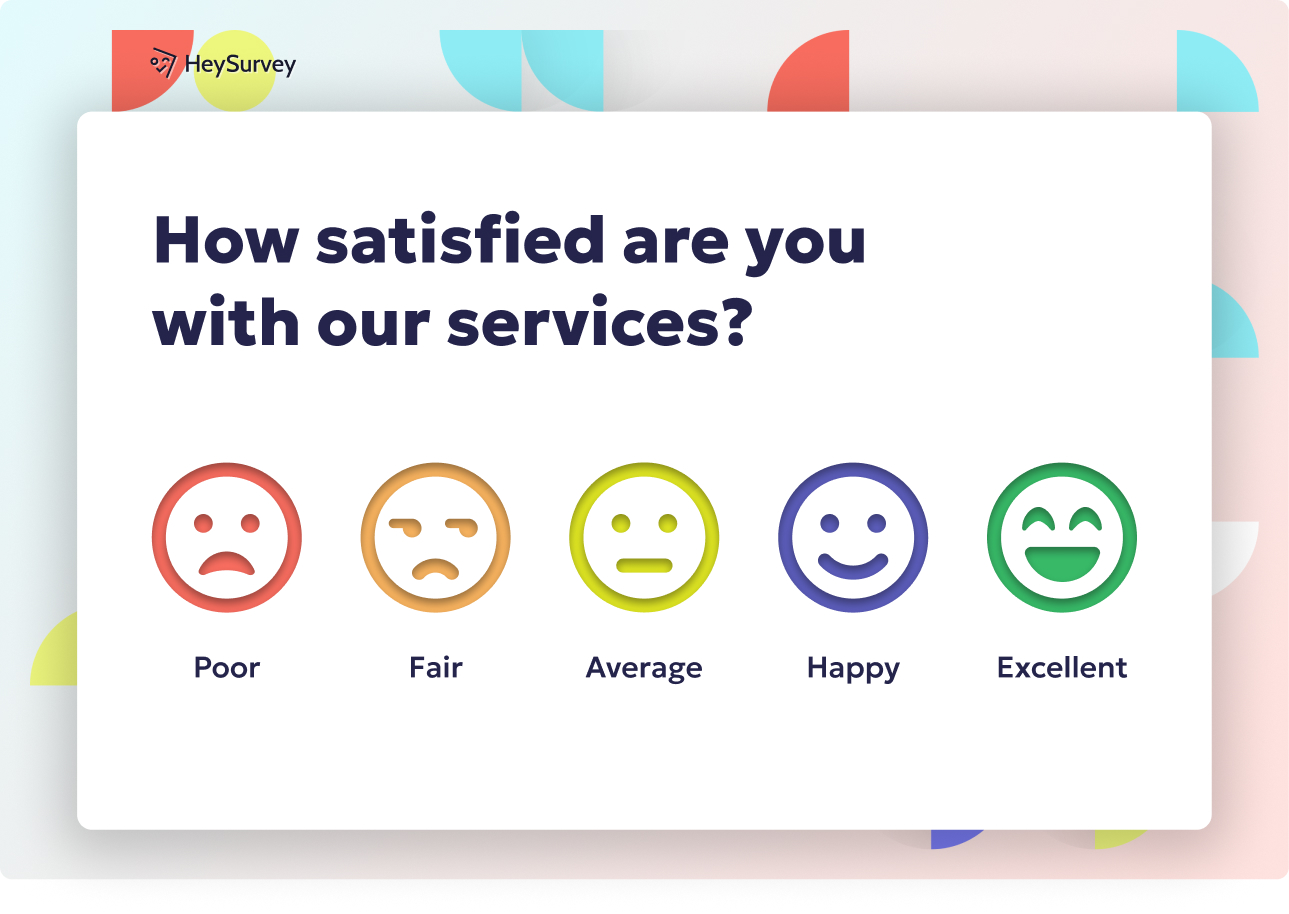
How satisfied were you with the support you received today?
Did our team resolve your issue to your satisfaction?
How would you rate the overall quality of service you received?
How well did our support team understand your needs?
What could we have done to improve your experience?
Customer Satisfaction Survey Questions
Quick pulse on service quality
Why & When to Use
A customer satisfaction survey is the classic customer services questionnaire you send after a support interaction, purchase, onboarding moment, or another account touchpoint.
It helps you measure one simple thing fast: did your service meet expectations?
Here’s the thing, satisfaction is not the same as loyalty or effort.
A survey on service like this tells you how the experience felt in the moment, while loyalty asks whether someone would stick with you, and effort asks how hard they had to work to get help.
That makes these support survey questions especially useful when you want a clear read on day-to-day service quality without turning the survey into a homework assignment.
Use this type of questionnaire of customer service right after moments like:
post-ticket resolution
post-chat support
post-call follow-up
after in-store support
after a service appointment
after onboarding or a key account interaction
Plus, short questionnaires for customer service usually get better response rates, so keep it tight and easy to answer.
On top of that, this format works well for broad customer services survey goals, whether you want to monitor trends, spot weak points, or catch little service hiccups before they grow teeth.
Sample questions
How easy was it to get the help you needed?
How much effort did you personally have to put in to resolve your issue?
How easy was it to understand the steps provided by our support team?
Did you have to contact us more than once to solve the problem?
What made this support experience easy or difficult?
McKinsey found measuring satisfaction across customer journeys is 30% more predictive of overall customer satisfaction than rating individual interactions alone (source).
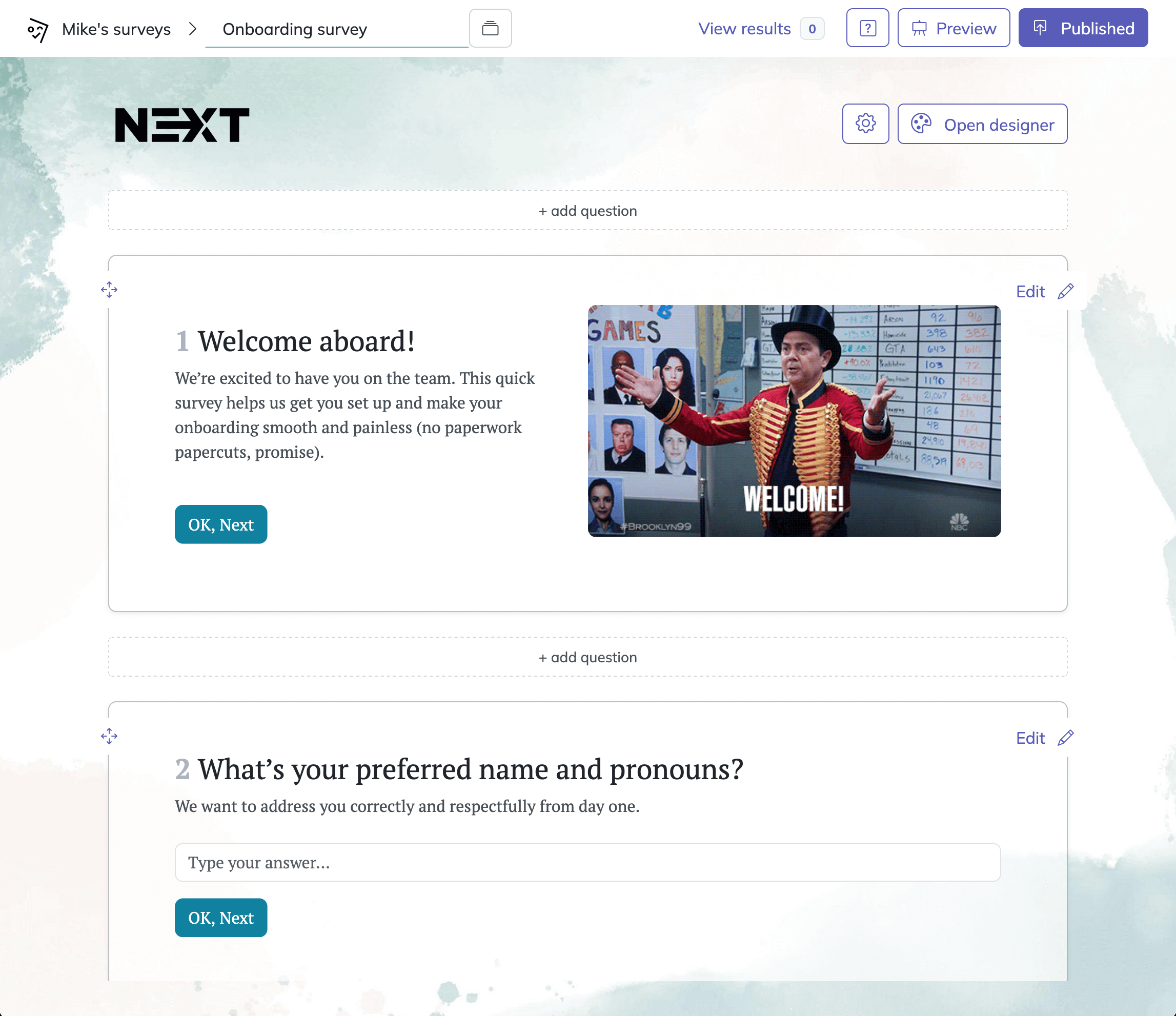
Create a new survey
Start by opening a customer service survey template with the button below, or choose an empty sheet if you want to build from scratch. HeySurvey opens the survey editor right away, where you can rename the survey and adjust basic settings. If you already know your questions, you can also paste them in as text and let HeySurvey's online survey tool format them for you.Add questions
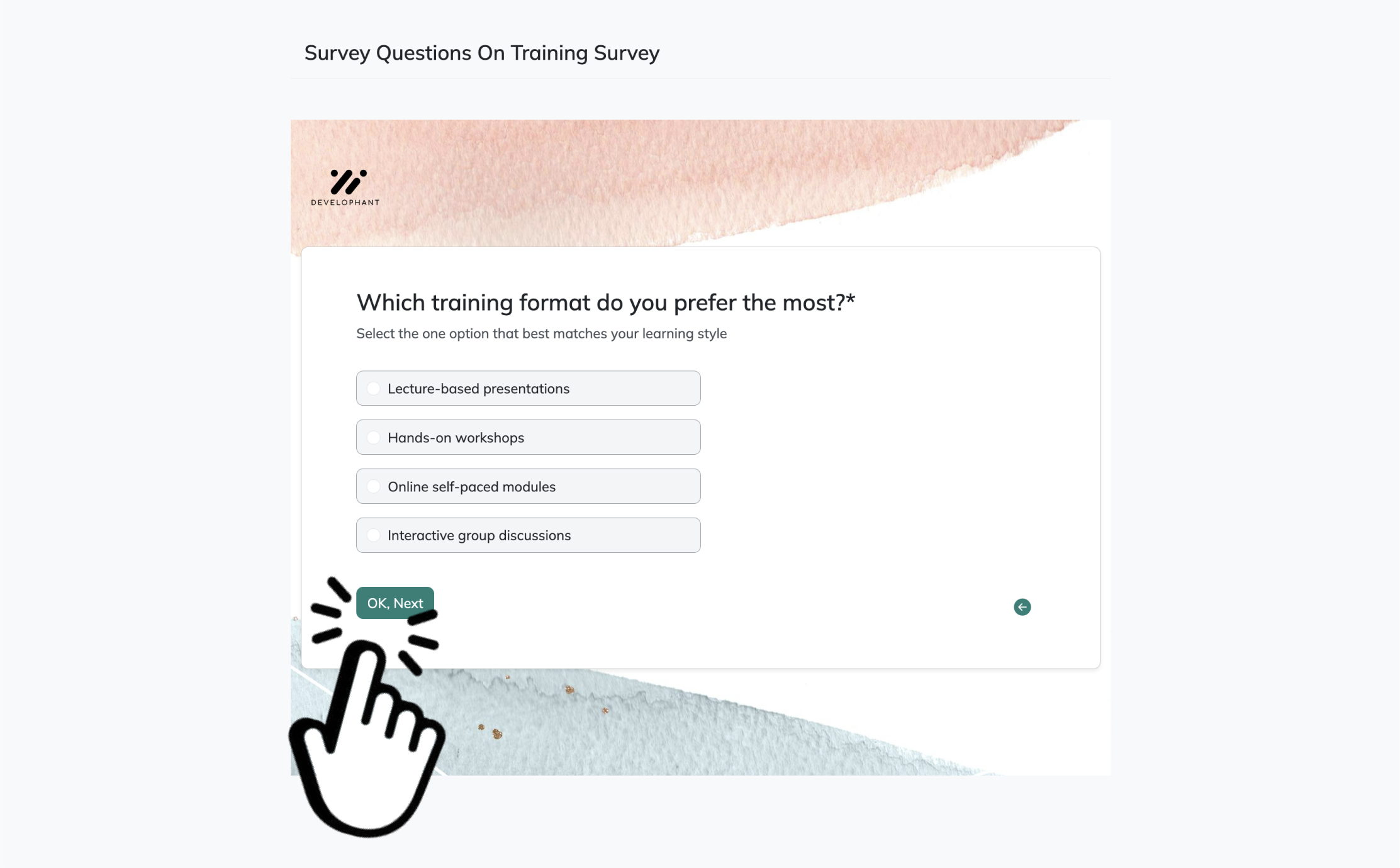
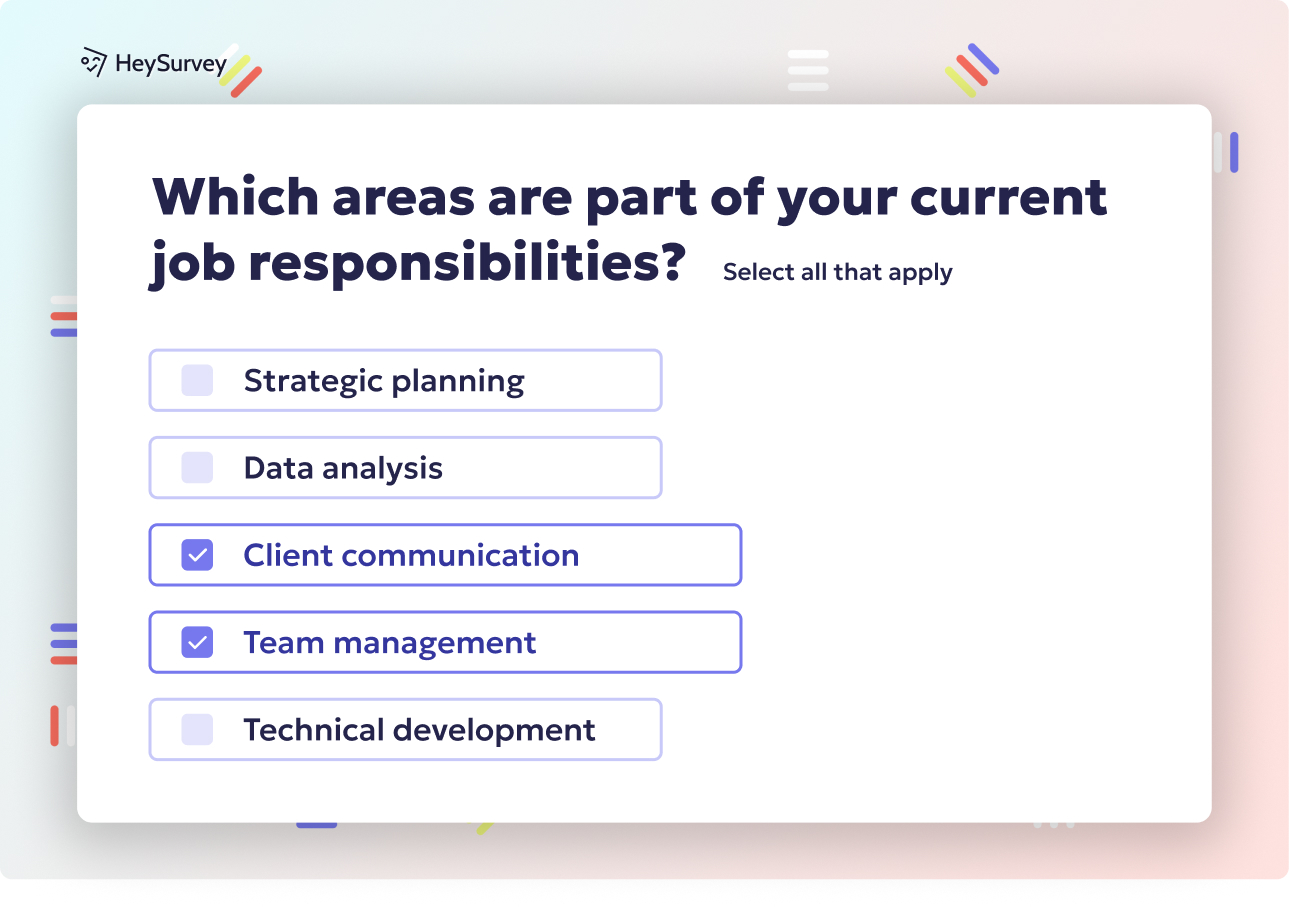
Click Add Question to build your survey. For customer service surveys, a Scale or NPS question works well for satisfaction and loyalty, while Choice questions are great for asking about the reason for the rating. You can also add a Text question for comments or suggestions. Mark important questions as required so respondents complete them before moving on.Publish survey
When your survey looks ready, preview it first to check the flow and design. Then click Publish to create a shareable link. After publishing, you can send the survey to customers, embed it on your website, or copy the link into email.
Customer Effort Score (CES) Survey Questions
Spot the friction before it annoys your customers
Why & When to Use
A Customer Effort Score survey measures how easy or difficult it was for you to get help, fix a problem, or complete a service-related task.
In plain English, this survey on service tells you whether customers got what they needed smoothly, or had to wrestle the process like a shopping cart with one bad wheel.
Here’s the thing, low effort often points to stronger retention.
When customers can solve issues quickly without jumping through hoops, they are more likely to stay, come back, and feel better about your brand.
That makes this customer services questionnaire especially useful for finding friction in support flows and help desk experiences.
Common effort pain points include:
getting transferred between agents
repeating the same issue more than once
waiting on long hold times
dealing with unclear instructions
needing multiple contacts to get one answer
Plus, these support survey questions work best right after the experience, while the details are still fresh.
Send this type of questionnaire of customer service immediately after moments like:
a support interaction
a returns process
a technical issue resolution
an account update
a help center journey
On top of that, a client service questionnaire like CES gives you practical clues you can actually fix fast, which is exactly what strong questionnaires for customer service should do.
Sample questions
How likely are you to recommend our company based on your recent service experience?
What is the main reason for your score?
How did our customer service team influence your opinion of our brand?
What could we do to improve your experience enough to earn a higher score?
How likely are you to continue using our services after this support experience?
Research of 75,000+ service interactions found reducing customer effort predicts loyalty better than delighting customers, making CES valuable for service surveys (source).
Net Promoter Score (NPS) Customer Service Questions
Measure loyalty, not just the last conversation
Why & When to Use
A Net Promoter Score survey measures how likely you are to recommend a company, which makes it a useful survey on service when you want to understand loyalty, trust, and long-term brand feelings.
Here’s the thing, great service does not just solve one problem.
It shapes whether customers stick around, speak positively about your brand, and tell other people to give you a try.
That is why NPS fits nicely into broader CX survey questions, especially when you want to connect service quality with customer advocacy.
Still, this customer services questionnaire should not replace transactional support survey questions.
A post-interaction survey asks about one specific service moment, while relationship NPS looks at the bigger picture over time.
Use both, and you get a much clearer view instead of trying to judge the whole pizza from one bite.
This type of questionnaires on customer service works well after important moments such as:
key service milestones
post-onboarding check-ins
quarterly customer experience reviews
periodic relationship surveys
major account support experiences
Plus, a strong client service questionnaire can pair NPS with follow-up questions to show why customers would recommend you, or why they absolutely would not.
On top of that, questionnaires for customer service like this help you spot whether support is building loyalty or quietly chipping away at it.
Sample questions
How courteous and professional was the support representative?
How clearly did our team explain the solution?
Did the representative seem knowledgeable about your issue?
How satisfied were you with the speed of the response?
What feedback do you have about the service representative who assisted you?

Customer Support Experience Survey Questions
Pinpoint what happened in one real support moment
Why & When to Use
This type of customer services questionnaire helps you evaluate one specific support interaction, not the whole customer relationship.
That makes it perfect after a phone call, email exchange, live chat, social media reply, in-person visit, or a closed support ticket.
Here’s the thing, when you ask right after the interaction, you get fresher and more useful feedback.
You also learn how your team performed in the moments that actually shape trust.
A solid survey on service should measure more than whether the issue got fixed.
It should also check friendliness, clarity, product knowledge, responsiveness, professionalism, and whether the agent inspired confidence instead of confusion.
These support survey questions are especially useful when you want to coach agents, improve workflows, and spot patterns across channels before small problems become big, annoying ones.
For best results, balance rating questions with open-ended prompts so you get both measurable data and real human detail.
Use this questionnaire of customer service when you want to review:
agent communication style
speed and timeliness of support
clarity of explanations
confidence in the solution provided
overall quality of the service interaction
Plus, customer service survey sample questions like these work well for comparing support performance across teams, channels, and ticket types.
On top of that, questionnaires for customer service help you catch weak spots early, before they start multiplying like browser tabs.
Sample questions
How satisfied were you with the resolution of your technical issue?
How quickly was your help desk request addressed?
Were the troubleshooting steps explained clearly?
Was your issue resolved on the first contact?
What could our IT or help desk team do better next time?
Qualtrics’ 2026 study of 7,000+ consumers found first-contact and issue resolution strongly shape agent ratings, validating survey questions on resolution, clarity, and speed (source)
Help Desk and IT Service Desk Survey Questions
Turn tech support feedback into fixes you can actually use
Why & When to Use
This customer services questionnaire is built for technical support teams handling incidents, service requests, account access issues, software bugs, hardware repairs, and everyday troubleshooting.
Unlike a general survey on service, this one focuses on IT-specific support moments where speed, clarity, and technical skill matter a lot.
Here’s the thing, help desk customer satisfaction survey questions are often used for internal employee-facing IT support, but they can also work for external customer technical support.
That difference matters because an employee locked out of payroll software needs a different experience than a customer struggling with your app, even if both are one coffee away from panic.
A strong set of support survey questions should measure more than overall satisfaction.
It should also track:
resolution speed
technical competence
first-contact resolution
downtime impact
number of ticket handoffs
clarity of troubleshooting instructions
quality of follow-up after the fix
Best timing for this questionnaire of customer service is right after ticket closure, a remote support session, a software issue resolution, a hardware repair, or the completion of an internal IT service request.
Plus, questionnaires on customer service like this help you spot where delays, confusing instructions, or repeated escalations are hurting trust.
On top of that, a client service questionnaire for IT teams gives you practical data to improve workflows, reduce back-and-forth, and make support feel less like a maze with blinking lights.
Sample questions
How satisfied are you with the overall level of service our team provides?
How responsive has our team been to your needs over time?
How well do we communicate updates, timelines, and next steps?
How confident are you in our ability to support your business goals?
What is the most important improvement we could make to our service relationship?
Client Service Relationship Survey Questions
Measure the health of the relationship, not just the last reply
Why & When to Use
This client service questionnaire is designed for ongoing relationships, not one-off service moments.
It works especially well for agencies, consultants, B2B service teams, account managers, and high-touch support models where the full experience builds over time.
Here’s the thing, a typical customer services questionnaire or survey on service often captures feedback about a single interaction.
A relationship-focused questionnaire of customer service looks wider and asks whether your team is dependable, clear, proactive, and genuinely valuable across weeks, months, or even years.
That makes these questionnaires for customer service especially useful when you want to assess:
consistency of support
trust in your team
communication quality over time
proactive updates and recommendations
alignment with client goals
long-term service value
renewal and retention risk
Best timing for these client service survey questions includes monthly check-ins, quarterly reviews, post-project wrap-ups, renewal periods, and account review cycles.
Plus, this type of support survey questions set helps you separate transactional satisfaction from relationship strength, which is a very different beast.
On top of that, questionnaires on customer service for long-term accounts can uncover whether clients feel guided, supported, and understood, not just politely answered with impressive speed and a smiley face.
Sample questions
What exactly are you trying to learn from this survey?
Which customer touchpoint are you measuring?
Is this survey about one interaction or the overall relationship?
What action will your team take based on each response?
Which questions are essential, and which can be removed to keep the survey concise?
How to Choose the Right Customer Service Survey Questions
Pick one clear goal before you write a single question
Why & When to Use
The best customer services questionnaire starts with your objective, not your question list.
Here’s the thing, if you try to measure satisfaction, effort, loyalty, agent quality, and technical support performance all in one survey on service, you will end up with muddy feedback and a tired reader who clicks away faster than free donuts disappear in a break room.
Choose one primary metric per survey.
Use CSAT for satisfaction, CES for ease, NPS for loyalty, agent-focused support survey questions for service quality, and technical performance questions when you need to assess issue resolution or product support.
Plus, match the questionnaire of customer service to the channel and journey stage.
Ecommerce support after delivery or return help should focus on speed and resolution.
SaaS support after onboarding or a ticket closure should measure clarity, usefulness, and effort.
B2B account service should use broader questionnaires for customer service that track relationship strength over time.
Help desk surveys should stay short and target a single support interaction.
Hospitality can use client service questionnaire formats that capture both staff helpfulness and problem resolution.
Use rating scales when you want trends you can compare.
On top of that, use open-ended questions when you want context, examples, or ideas for improvement.
Keep questionnaires on customer service short, time them close to the experience, and segment by audience so each client service survey questions set actually fits the people answering it.
Sample questions
Was this survey quick and easy to complete?
Are any of our questions unclear or repetitive?
Did this survey ask about the parts of the experience that mattered most?
Was the timing of this survey appropriate?
Is there anything else you would like to share about your service experience?
Best Practices for Writing and Using Customer Service Surveys
Great survey design turns feedback into action
Why & When to Use
Even strong support survey questions can flop if your customer services questionnaire is too long, biased, poorly timed, or disconnected from what your team will actually do next.
Here’s the thing, these best practices work for almost any survey on service, whether you are running a post-chat form, an email follow-up, or a broader client service questionnaire.
Keep your survey short, specific, and easy to answer.
Plus, write every question so it helps a marketer, support manager, CX lead, or service leader make one clear decision, because data without action is basically a spreadsheet in costume.
Do:
Keep questionnaires for customer service focused on one goal.
Send the survey close to the interaction.
Use simple, neutral language.
Pair a rating question with one open-text follow-up.
Segment results by channel, team, issue type, or customer group.
Review trends over time, not just one survey snapshot.
Follow up when feedback shows an unresolved issue.
Don’t:
Ask too many questions in one customer services questionnaire.
Mix multiple goals into the same questionnaire of customer service.
Use leading or loaded wording.
Survey every interaction without thinking about fatigue.
Collect feedback with no plan to act on it.
Judge teams by one score alone.
Ignore negative comments in open-ended responses.
Sample questions
What issue appears most often in negative survey responses?
Which service improvements would have the biggest customer impact?
Which teams or channels need additional coaching or support?
What changes can we implement in the next 30 days based on feedback?
How will we measure whether our improvements actually worked?
Turning Customer Service Survey Insights Into Action
Feedback only matters when you actually use it
Why & When to Use
Collecting responses is just the start. The real win from a customer services questionnaire comes when you spot patterns, choose the right fixes, coach your team, and improve the experience people remember.
Here’s the thing, a strong survey on service should shape real decisions. Your support survey questions can guide training, workflow updates, staffing choices, self-service content, and service recovery before small annoyances grow teeth.
A smart move is to group feedback into themes so trends are easier to spot.
Response speed
Empathy
Issue resolution
Clarity
Customer effort
Plus, build a simple action loop your team can repeat every time.
Collect feedback from your customer services questionnaire
Analyze themes and score trends
Prioritize the highest-impact fixes
Implement changes quickly
Follow up and measure results
On top of that, tie your questionnaire of customer service insights to business outcomes. Look at retention, repeat purchases, renewals, and reduced churn so your questionnaires for customer service connect to revenue, not just reporting.
If one channel keeps getting poor marks for clarity, update scripts and coach agents. If your client service questionnaire shows high effort, simplify the process because customers should not need a map, snacks, and emotional support to get help.
Related Surveys
29 Social Media Survey Questions
Explore 25 social media survey questions with practical sample prompts to help gather insights on...
31 Job Satisfaction Survey Questions
Explore **25 job satisfaction survey questions** with sample prompts to improve employee feedback...
29 Quantitative Survey Questions Guide
Explore 25 quantitative survey questions with sample questions, examples, and tips to build effec...