31 Close-Ended Survey Questions Examples
Explore 25 close-ended survey question examples with sample questions to improve surveys, boost response quality, and refine your research.
If you want survey results you can sort, compare, and act on fast, close ended questions are your best friend. They give people clear response options, which makes answers consistent, analysis quick, and decisions easier to scale, kind of like putting your data in neat little boxes on purpose.
Close ended survey questions make insights easier to use.
In this article, you’ll learn the main types, when to use each, sample questions, smart survey design tips, and how to turn customer feedback, employee surveys, market research, and quantitative data into action. If you’re looking for an online survey maker, this also shows how close ended questions can help you get cleaner data from the start.
Multiple Choice Questions
Sample questions
How did you first hear about our business?
Which of the following best describes your primary reason for visiting our website today?
What is your current job level?
Which product category are you most interested in?
How likely are you to purchase from us within the next 30 days?
Multiple choice questions help you get clear answers fast.
Why & When to Use
Multiple choice questions work best when you want people to choose one best answer from a limited set of options.
They are especially useful in customer feedback surveys, lead generation forms, product research, and audience profiling because they keep the path simple and the data tidy.
Here’s the thing, when answer choices are clear, people can respond quickly without overthinking it, which means you get cleaner results and easier comparisons across groups.
That makes it much easier to spot patterns by segment, like new visitors vs. returning customers, or managers vs. individual contributors. Your spreadsheet will not throw a parade, but it will be noticeably less chaotic.
To make these questions work well, your answer options should be mutually exclusive, so respondents do not get stuck choosing between two answers that both kind of fit.
Use single-select multiple choice when one answer should clearly win.
Save multi-select for cases where more than one answer is genuinely true, but keep this section focused on the classic pick-one format.
And only add “Other” when you truly need it.
Use clear, non-overlapping answer choices
Keep the number of options manageable
Choose single-select when you want one strongest answer
Add “Other” only if your list may miss a valid response
Pew Research Center advises closed-ended multiple-choice questions work best when response options are exhaustive and mutually exclusive, improving data quality and comparability (source).
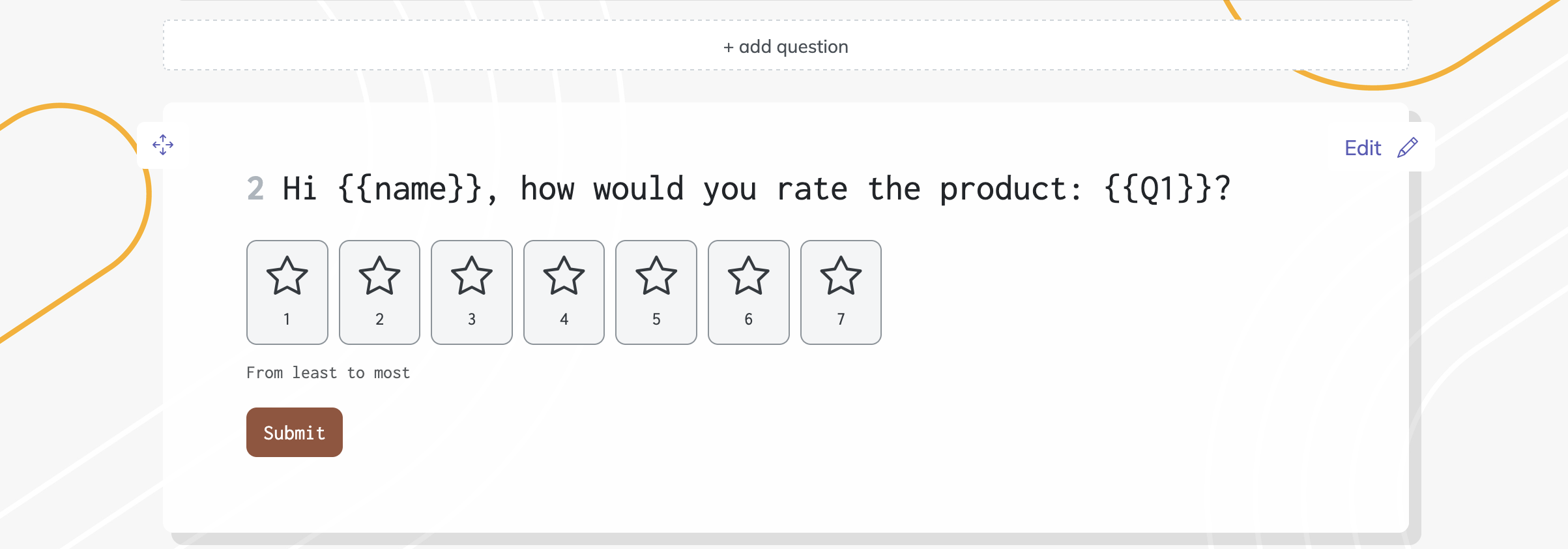
Create a close-ended survey in HeySurvey
Create a new survey
Open HeySurvey and start with a template by clicking the button below, or choose a blank survey if you want to build it yourself. You can begin without an account, but you’ll need one to publish and view responses. If you’re looking for an online survey tool, HeySurvey makes it easy to get started.Add questions
Click Add Question and use Choice, Scale, Dropdown, or Matrix questions for close-ended survey questions. Add your answer options, mark questions as required if needed, and reorder them anytime. These question types are ideal when respondents should pick from set answers instead of typing freely.Publish your survey
Preview your survey to check the flow, then click Publish when it looks ready. After publishing, HeySurvey gives you a shareable link so you can send the survey to respondents and start collecting answers right away.
Dichotomous Questions
Sample questions
Have you purchased from us before?
Did you find the information you needed today?
Are you currently using a competing product?
Would you recommend our service to a colleague?
Do you manage purchasing decisions for your team?
Dichotomous questions keep decisions quick and clean.
Why & When to Use
Dichotomous questions are closed-ended questions with only two possible answers, such as yes/no, true/false, or agree/disagree.
They work best when you need a fast, direct response and the situation is genuinely binary.
Here’s the thing, these questions are especially useful for screening respondents, qualifying leads, confirming facts, and triggering survey logic that sends people down the right path.
If someone answers “yes” to using a competing product, you can show a follow-up question right away instead of making everyone read questions that do not apply to them.
That low-friction setup helps people move quickly, which is great for forms, surveys, and lead capture pages. Plus, fewer choices often means fewer abandoned responses, which is a nice little win for everyone.
Still, dichotomous questions can oversimplify opinions if you lean on them too much.
They are strongest in factual or clearly binary situations, not when you are trying to understand complex attitudes, motivations, or mixed feelings.
Use them wisely with prompts like these:
Screen for fit or eligibility
Confirm a simple fact
Route respondents based on their answer
Add a follow-up question when a yes/no answer needs context
A yes or no is fast, but sometimes the real story shows up one question later.
Dichotomous yes/no questions are commonly used as screening items to filter respondents and route them to different follow-up questions based on their answers (source).
Rating Scale Questions
Sample questions
On a scale of 1 to 5, how satisfied are you with your recent purchase?
On a scale of 1 to 10, how easy was it to navigate our website?
How would you rate the value for money of our product?
How satisfied are you with the speed of our customer support?
How likely are you to continue using our service over the next six months?
Rating scale questions turn feelings into measurable feedback.
Why & When to Use
Rating scale questions ask people to score something on a numbered range, usually 1 to 5 or 1 to 10.
They are incredibly handy when you want to measure satisfaction, perceived quality, ease of use, or the overall experience without asking people to write a mini novel.
Here’s the thing, they give you feedback that is easy to compare across responses, which makes trends much easier to spot.
That is why you see them everywhere, including customer satisfaction surveys, employee feedback forms, and post-purchase questionnaires.
Plus, they help you quantify opinions that are not exactly yes or no, but also do not need a long explanation.
A few practical rules make them work much better:
Keep the scale direction consistent throughout the survey so higher numbers always mean the same thing.
Use clear labels at both endpoints, such as 1 = very dissatisfied and 5 = very satisfied.
Choose odd-numbered scales when you want to allow a neutral middle option.
Choose even-numbered scales when you want respondents to lean positive or negative instead of camping in the middle like it is a picnic.
On top of that, if your scale labels are vague or inconsistent, your data can get messy fast.

Likert Scale Questions
Sample questions
I find this product easy to use.
The checkout process was straightforward.
Our brand offers better value than competitors.
I feel confident recommending this service to others.
The training materials provided everything I needed to get started.
Likert scale questions help you measure opinions with more shape and nuance.
Why & When to Use
Likert scale questions present a statement and ask you to rate it by agreement, frequency, importance, or satisfaction.
Instead of scoring something as a raw number alone, you respond to a statement using choices like strongly disagree to strongly agree.
Here’s the thing, that is what makes them different from simple rating scale questions.
A rating scale usually asks how good, easy, or satisfying something was on a number range, while a Likert scale asks how much you agree with a specific statement.
That structure makes Likert questions especially useful when you want to understand opinions, attitudes, motivations, and perceptions without turning your survey into a guessing game.
They are a great fit for:
Employee engagement surveys
Brand perception studies
Customer experience research
Training and onboarding feedback
Plus, they work best when your response options feel balanced and consistent.
A classic setup is:
Strongly disagree
Disagree
Neither agree nor disagree
Agree
Strongly agree
On top of that, keep each statement clear and specific.
If a statement is vague, different people may interpret it in totally different ways, which is bad news for your data and a little rude to your spreadsheet.
Likert scale questions capture nuanced attitudes more effectively than simple yes/no or numeric ratings when statements are clear and response options balanced (Source).
Ranking Questions
Sample questions
Rank the following product features in order of importance to you.
Rank these factors based on what most influences your buying decision.
Rank the following support channels from most preferred to least preferred.
Rank these website improvements by priority.
Rank the following benefits in order of value to your team.
Ranking questions help you uncover what wins when options compete for attention.
Why & When to Use
Ranking questions ask you to place a list of options in order based on preference, priority, or importance.
Here’s the thing, they are especially useful when several factors are fighting for the top spot and you want to see what actually matters most.
That makes them a smart choice for:
Product development
Pricing research
Feature prioritization
Content strategy
Plus, ranking questions force trade-offs, which is where the good stuff usually shows up.
If everyone says everything is important, you learn almost nothing, and your survey basically shrugs at you.
On top of that, ranking helps you spot relative priorities fast.
You can see which features, benefits, or improvements rise to the top, even when the list includes several strong options.
A few practical notes matter here too:
Keep the list short to avoid respondent fatigue
Aim for 5 to 7 options when possible
Use clear, distinct choices that are easy to compare
Remember that rankings show order, not intensity
That last point is important.
If someone ranks Feature A above Feature B, you know A matters more, but you do not know whether it matters a little more or a lot more.
Frequency Questions
Sample questions
How often do you use our product each week?
How frequently do you contact customer support?
How often do you read our email newsletter?
How frequently does your team purchase supplies in this category?
How often do you compare our prices with competitors?
Frequency questions show you how often real behavior happens, not just how people feel about it.
Why & When to Use
Frequency questions are close ended questions that measure how often a behavior occurs using answer options like daily, weekly, monthly, or never.
Here’s the thing, they work best when you want a clear read on habits, usage patterns, engagement levels, and other repeat behaviors.
That makes them especially useful for:
SaaS surveys
Customer retention research
Employee workflow studies
Content consumption analysis
Plus, this question type helps you spot patterns that can be easy to miss in broader feedback.
If someone uses your product daily, reads every newsletter, and rarely contacts support, that tells a very different story from someone who pops in once a month like a surprise houseguest.
On top of that, frequency data can reveal engagement trends and even early churn risk.
If usage drops from weekly to rarely, or support requests suddenly spike, you may have a warning sign worth checking fast.
A few practical tips make these questions stronger:
Match the time frame to the behavior you are measuring
Use response options that are logical, evenly spaced, and easy to tell apart
Keep wording specific so people know exactly what period they are judging
Done right, frequency questions give you simple data with very useful patterns hiding inside it.
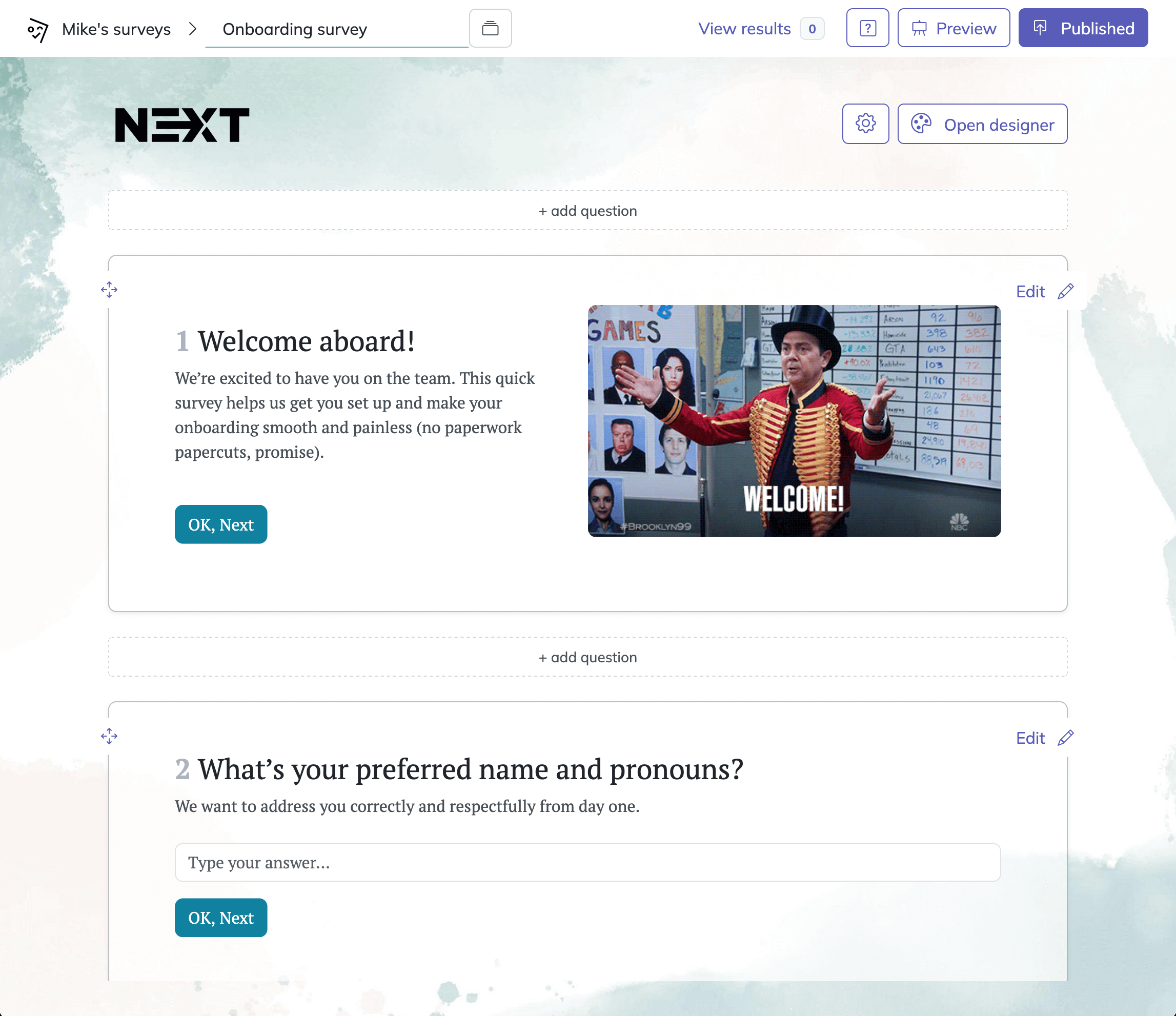
Best Practices for Writing Close Ended Survey Questions
Sample questions
Is this question easy to understand on the first read?
Do these answer choices cover all realistic responses?
Does this question ask about only one idea at a time?
Are the response options consistent with the rest of the survey?
Would a quick pilot test catch confusion before launch?
Good close ended questions feel effortless to answer and easy to analyze.
Why & When to Use
Here’s the thing, writing strong close ended questions is less about sounding clever and more about making life easy for the person answering.
When your wording is simple, your answer choices are clean, and your scales stay consistent, you get better data with a lot less head-scratching.
A solid checklist of dos can keep you out of trouble:
Use simple, specific wording
Keep response options mutually exclusive and collectively exhaustive where possible
Match the question type to your research goal
Keep scales consistent across the survey
Order questions logically from easy to more specific
Pilot test questions before full distribution
Include answer choices that reflect real customer language
Plus, knowing what not to do matters just as much, because one sloppy question can throw off a whole survey like a banana peel in a hallway.
Avoid these common mistakes:
Don’t use leading or loaded wording
Don’t combine two ideas into one question
Don’t offer overlapping response ranges
Don’t make answer choices unbalanced or biased
Don’t overload respondents with too many ranking or matrix-style items
Don’t force precision when respondents may not know the answer
Don’t use inconsistent scale labels from one question to the next
On top of that, if a question feels slightly confusing to you, it will probably feel very confusing to everyone else.
Common Mistakes to Avoid with Close Ended Survey Questions
Sample questions
Could different people interpret this question in different ways?
Are any realistic answer choices missing?
Does this question type match the kind of feedback you actually need?
Is the survey getting too long for someone to finish comfortably?
Does this question include a clear time frame?
Small survey mistakes can create big data headaches.
Why & When to Use
Here’s the thing, bad close ended survey questions do not just look a little messy. They can quietly produce misleading quantitative data, which is much worse because wrong numbers often look impressively official.
When you review your survey, check every question through three simple filters:
Clarity
Neutrality
Usability
A few common mistakes tend to cause the most trouble:
Vague wording that leaves too much room for interpretation
Missing answer options that force people into inaccurate responses
Using the wrong question type for the goal
Asking too many questions and exhausting respondents
Poor sequencing that makes the survey feel jumpy or confusing
Unclear time frames like “recently” or “often” without explanation
Plus, questions that seem obvious to you may confuse different audience segments in very different ways. A first-time customer, a long-time user, and a busy mobile respondent may all read the same question through totally different lenses.
On top of that, if respondents cannot find an answer that fits, they will guess, skip, or quit. That is not feedback, that is survey karaoke, and nobody wants off-key data.
So revise anything that feels even slightly fuzzy, biased, or awkward to answer.
How to Turn Survey Insights Into Action
Sample questions
Which survey results point to the biggest business problem first?
Are certain customer or employee segments responding differently?
What patterns show up consistently across multiple questions?
Which insights connect directly to a decision you can make?
What action can you measure after making a change?
Good survey data becomes useful when you turn answers into decisions.
Why & When to Use
Here’s the thing, close ended survey results are not the finish line. They are the map that helps you decide what to fix, improve, test, or double down on next.
Before you even launch a survey, tie each question to a decision. If an answer will not help you choose an action, it is probably just taking up valuable space.
When results come in, start by organizing responses into clear themes like satisfaction, usability, trust, communication, or support. Plus, compare results by segment so you can spot differences between new customers, loyal users, teams, locations, or job roles.
Look for patterns that deserve action first:
Low scores tied to high-value parts of the customer journey
Recurring complaints across multiple questions
Sharp differences between audience segments
Trends that improve or decline over time
Issues connected to revenue, retention, or team morale
On top of that, use what you find to improve customer experience, refine products, optimize marketing messages, and boost employee engagement. The smartest move is to prioritize changes with the biggest business impact first, not the loudest tiny annoyance.
A practical takeaway? Good close ended survey questions examples only matter if the answers lead to measurable action.
Related Surveys
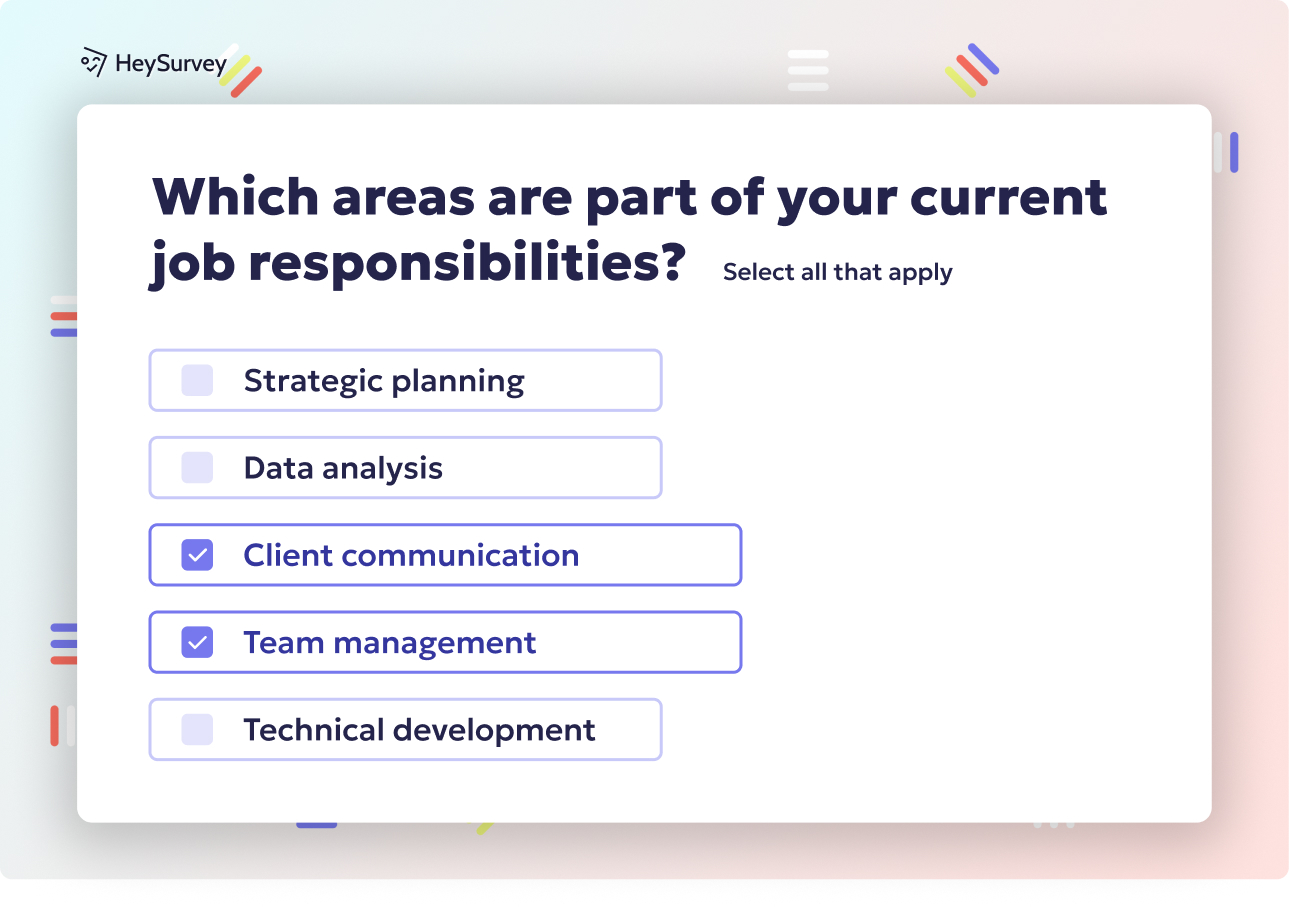
29 Social Media Survey Questions
Explore 25 social media survey questions with practical sample prompts to help gather insights on...
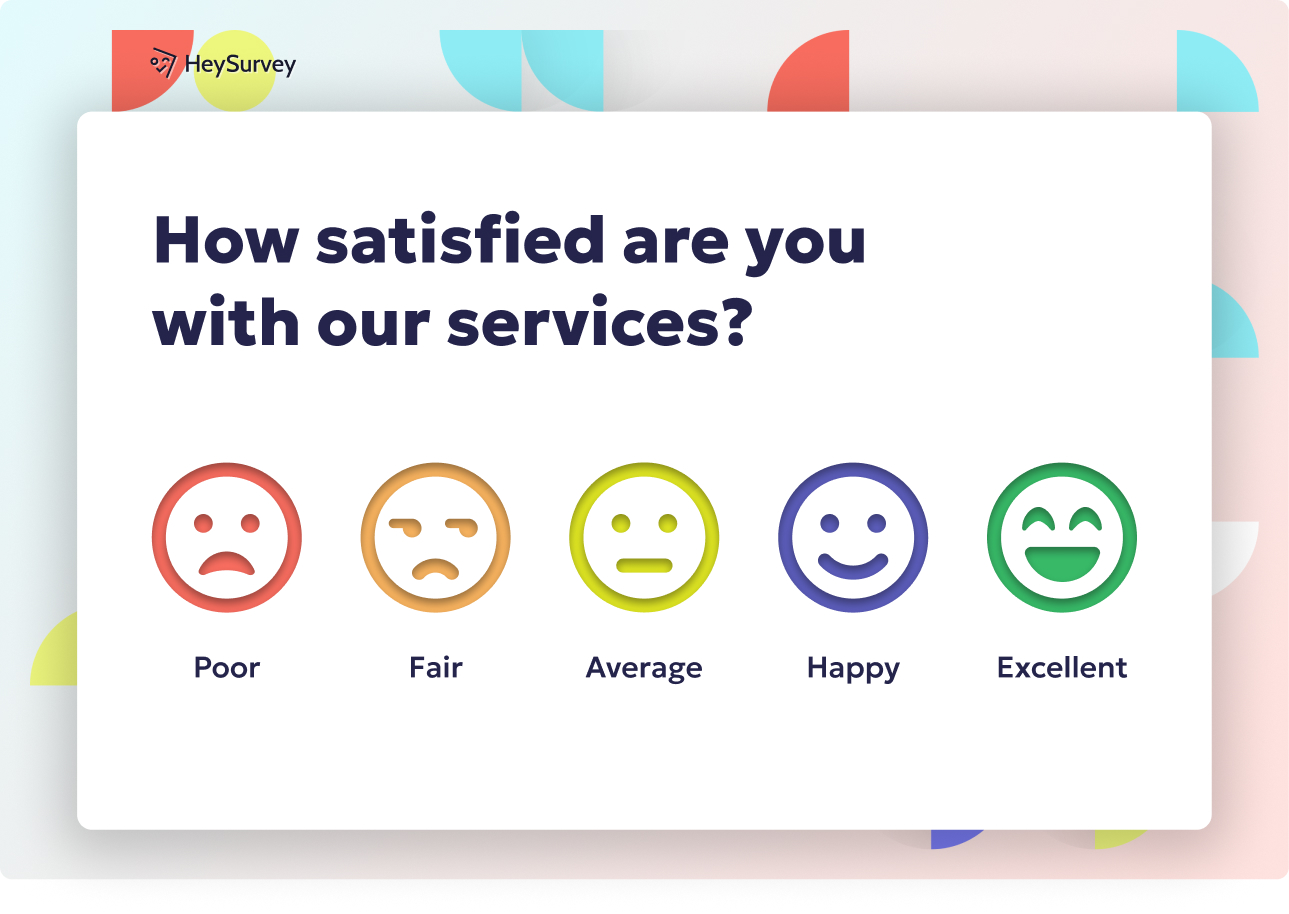
31 Job Satisfaction Survey Questions
Explore **25 job satisfaction survey questions** with sample prompts to improve employee feedback...
29 Quantitative Survey Questions Guide
Explore 25 quantitative survey questions with sample questions, examples, and tips to build effec...