31 CAHPS Survey Questions Explained
Explore 25 sample CHAPS survey questions with clear insights, useful examples, and practical guidance for better patient experience measurement.
If you are searching for cahps survey questions, you probably want real examples, not a dry definition. CAHPS is a family of standardized patient experience surveys used across healthcare settings, from clinics to hospitals to hospice.
Plus, people looking up cahps hospice survey questions or even the very specific based on the clinician and group cahps survey, which of the following questions is asked under the category of care coordination? usually want the right survey for the right setting, not a healthcare alphabet soup. This guide breaks down common CAHPS survey types, when each is used, sample question formats, and how to act on the results.
Sample questions
How often did providers explain things in a way the patient could understand?
How often did the patient get an appointment or needed care as soon as it was needed?
How often did staff treat the patient with courtesy and respect?
How often was information between different providers or services well coordinated?
How would the patient rate their overall healthcare experience?
What CAHPS Survey Questions Measure Across Healthcare Settings
CAHPS survey questions are built to measure patient experience, not medical outcomes.
Here’s the thing: whether you are reviewing cahps survey questions, hcahps survey questions, or cahps hospice survey questions, the goal is usually the same. These surveys ask what care felt like from the patient or family point of view, not whether a treatment changed a lab value or fixed a diagnosis.
That means CAHPS looks at shared experience themes across settings, including:
communication with providers
access to care and timeliness
care coordination between people and services
staff courtesy and respect
discharge or follow-up information
overall ratings of care
Plus, the wording can change depending on the setting, like hospital, clinic, home health, or hospice. Still, the intent stays standardized so results can be compared without turning the whole thing into a survey guessing game.
If you are searching for based on the clinician and group cahps survey, which of the following questions is asked under the category of care coordination?, you are really asking about one of CAHPS’s core domains. Care coordination questions usually focus on whether information was shared well, whether follow-up was clear, and whether different providers seemed on the same page.
Why & When to Use
Use this section when you want a fast, plain-English overview before comparing survey types like CG-CAHPS, HCAHPS, HHCAHPS, and hospice CAHPS questions.
It is especially useful for healthcare leaders, practice managers, and anyone trying to match the right health care satisfaction survey questions to the right care setting.
Sample questions
In the last 6 months, how often did you get an appointment for care as soon as you needed?
How often did this provider explain things in a way that was easy to understand?
How often did this provider seem to know important information about your medical history?
How often did you get test results as soon as you needed them?
How often were clerks and receptionists at this provider’s office helpful?
AHRQ states CAHPS surveys measure patient experience—especially communication, access, and care coordination—rather than clinical outcomes across healthcare settings (source).
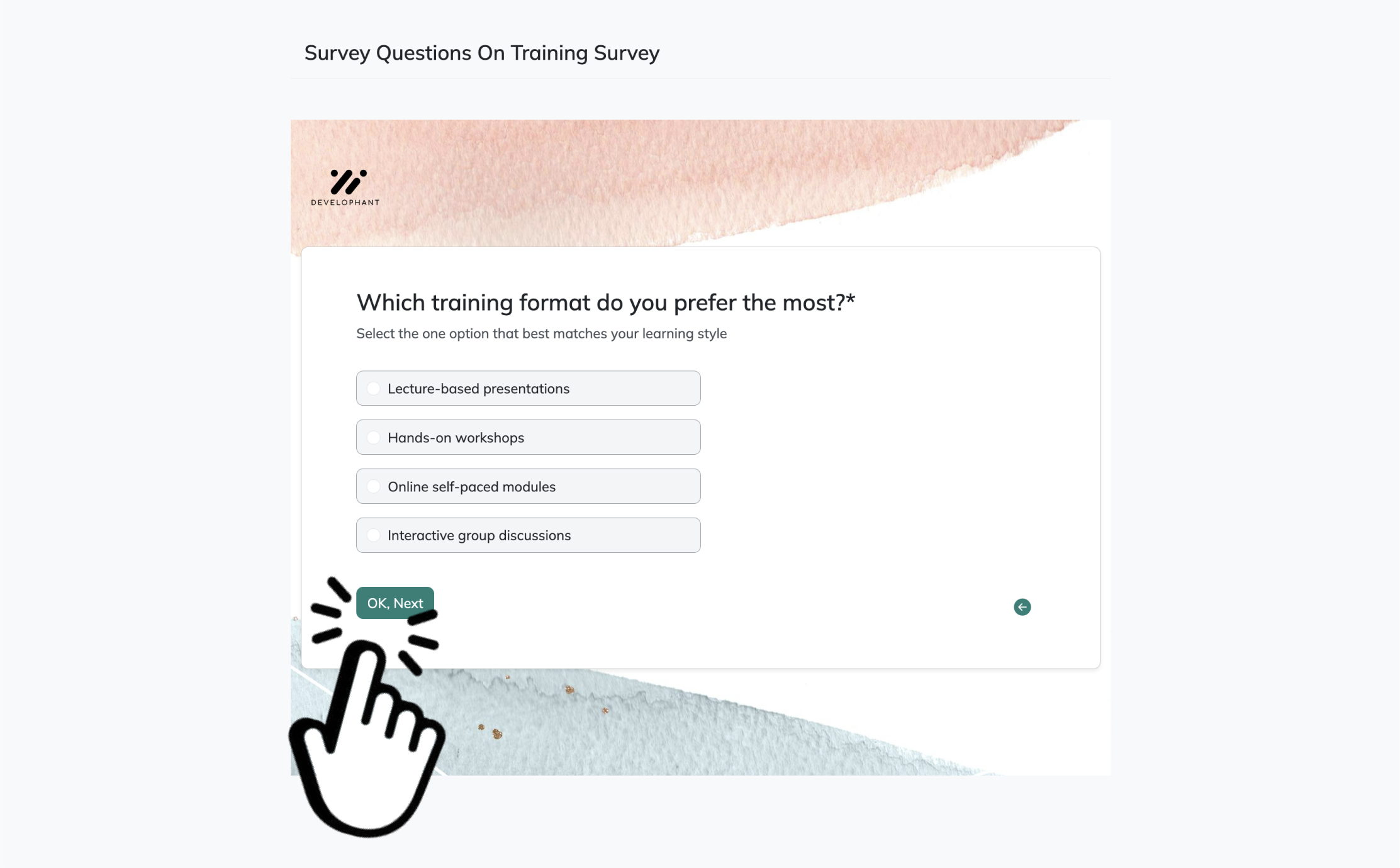
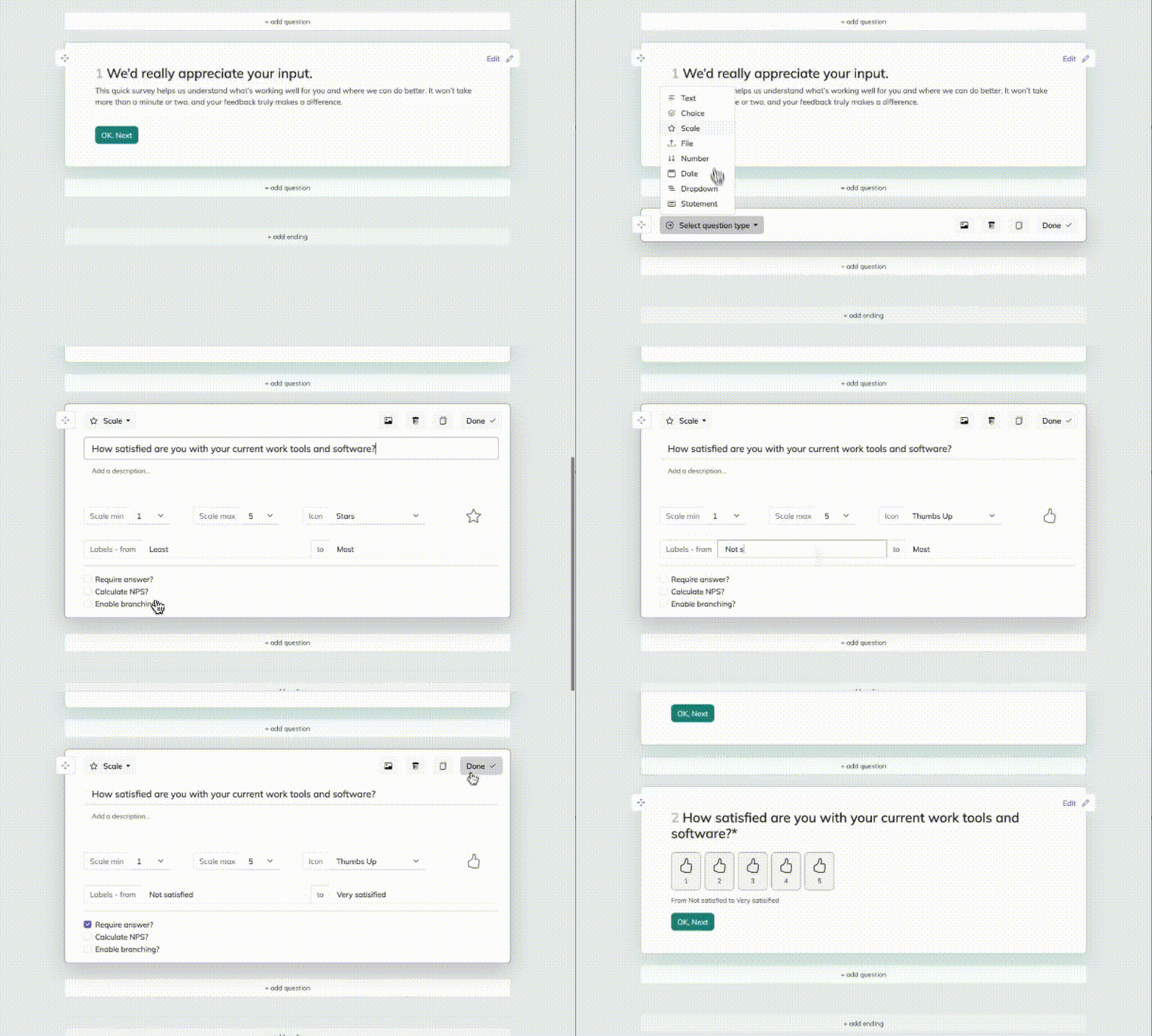
Create a new survey. Open HeySurvey and start with a blank survey or choose a template that fits your CAHPS survey needs. If you are new to the online survey tool, a template is the fastest way to begin, and you can adjust everything later in the editor.
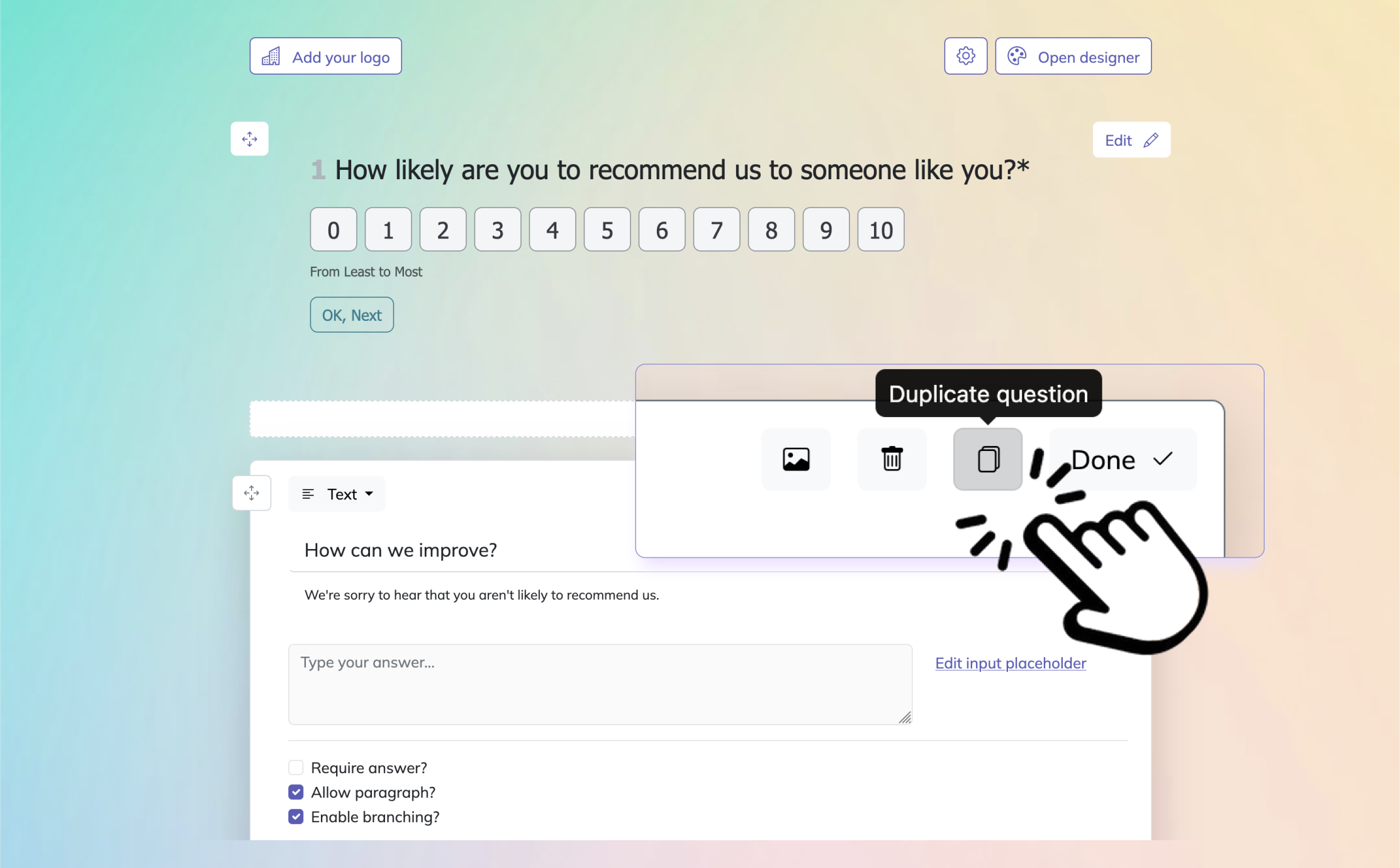
Add questions. Click Add Question and build your CAHPS survey one question at a time. Use Choice questions for multiple-choice items, Scale questions for rating questions, and Text questions for comments or explanations. Mark important questions as required to make sure respondents complete them.
Publish survey. Review your survey in Preview mode to check the wording and flow. When everything looks good, click Publish to create a shareable link. You can then send the survey to respondents or embed it on your website.
Clinician & Group CAHPS Survey Questions
CG-CAHPS helps you measure the outpatient experience across clinicians, staff, and follow-up touchpoints.
If you are looking at cahps survey questions for clinics or medical groups, this is the version to know. Based on the clinician and group CAHPS survey, these questions are designed for outpatient care, including primary care, specialty care, and multi-provider practices.
Here’s the thing: CG-CAHPS separates different parts of the visit so you can see what is working and what is making patients quietly sigh into the parking lot. That means access-to-care questions are not the same as provider communication questions.
For example, access questions ask about getting appointments quickly, reaching the office, or receiving test results on time. Provider communication questions focus more on whether the clinician explained things clearly, listened carefully, and showed respect.
Plus, care coordination is a major search topic for a reason. If you are asking, based on the clinician and group cahps survey which of the following questions is asked under the category of care coordination, this is the right section, because care coordination items usually ask whether the provider seemed informed about the patient’s medical history or whether care across visits felt connected.
Access to care covers speed, scheduling, and timeliness.
Provider communication covers clarity, listening, and respect.
Care coordination covers shared information, follow-up, and connected care.
Why & When to Use
Use this section when you want standardized feedback for outpatient settings, especially across primary care, specialty clinics, or larger physician groups.
On top of that, it is most useful when you need to compare appointment access, office staff helpfulness, provider communication, and coordination between visits or specialists.
Sample questions
During this hospital stay, how often did nurses treat the patient with courtesy and respect?
During this hospital stay, how often did doctors explain things in a way the patient could understand?
How often did the patient get help as soon as it was needed after pressing the call button?
Before the patient left the hospital, did staff talk about whether help would be needed after discharge?
Would the patient recommend this hospital to friends and family?
AHRQ’s CG-CAHPS measures outpatient experience across access, provider communication, care coordination, and staff interactions, supporting standardized clinic and medical-group comparisons (source).
HCAHPS Survey Questions for Hospitals
HCAHPS survey questions help you measure the inpatient experience from admission to discharge.
If you are comparing cahps survey questions across care settings, this is the hospital version to know. Unlike cahps hospice survey questions or outpatient tools based on the Clinician & Group survey, hcahps questions focus on what happened during an inpatient stay.
Here’s the thing: hcahps survey questions are built around the moments patients remember most, like whether nurses responded quickly, doctors explained things clearly, rooms felt clean, and nights were quiet enough for actual sleep, which in a hospital is basically luxury.
Common HCAHPS categories include:
Nurse communication
Doctor communication
Staff responsiveness
Pain communication
Discharge information
Cleanliness of the hospital environment
Quietness of the hospital environment
Plus, these questions are useful because results are often publicly reported and used for patient experience benchmarking. That means hospitals can compare performance over time and against peers, instead of guessing how the stay felt from the inside.
Why & When to Use
Use this survey when you need consistent feedback about the full inpatient experience in acute care hospitals.
On top of that, it works best when you want to track bedside communication, response times, hospital environment, discharge readiness, and overall trust in the hospital experience.
Sample questions
How often did home health providers listen carefully to the patient?
How often did home health providers explain things in a way that was easy to understand?
Did providers from the home health agency arrive at the scheduled time?
Did the patient get information about what to do in an emergency?
Did the patient feel involved in decisions about home health care?
HHCAHPS Survey Questions for Home Health Care
HHCAHPS survey questions show you what care feels like when it happens in the patient’s home.
If you are sorting through different cahps survey questions, this version focuses on people receiving skilled home health services at home. It is different from cahps hospice survey questions, which center on end-of-life support, and different from outpatient tools based on the clinician and group CAHPS survey, which look more at office-based care.
Here’s the thing: hhcahps survey questions are all about how care is delivered in real life, right where the patient lives. That includes whether clinicians communicate clearly, act professionally, arrive on time, and explain what the patient should do to stay safe between visits.
Core HHCAHPS themes often include:
Listening and respectful communication
Clear explanations and patient education
Timeliness of visits
Professionalism during home visits
Involvement in care decisions
Safety and emergency instructions
Plus, home health adds a layer that hospital and clinic surveys do not. The care team steps into the home, so little details matter a lot, and yes, showing up late with vague instructions is not exactly a confidence booster.
Why & When to Use
Use this survey when your home health agency wants feedback on visit quality, communication, punctuality, and whether patients felt ready to manage care at home.
On top of that, it is especially helpful when you want to monitor respectful treatment, home visit reliability, patient safety teaching, and how well staff prepared patients and families for what happens between visits.
Sample questions
How often did the hospice team keep the family informed about the patient’s condition?
How often did the hospice team listen carefully to the family’s concerns?
Did the hospice team provide the right amount of emotional support?
How often did the patient get help for pain and symptoms as soon as needed?
Did the family receive training about how to care for the patient at home?
CMS says HHCAHPS asks home health patients about provider communication, care quality, and recommendation likelihood, capturing key home-based care experiences (source).
Hospice CAHPS Survey Questions
CAHPS hospice survey questions help you understand whether families felt supported during one of life’s hardest moments.
If you are comparing different cahps survey questions, this set is built specifically for hospice, where the experience is usually reported by a family member or caregiver after care ends. That is a big difference from home health, and it is why hospice cahps questions focus more on comfort, communication, dignity, and support at the end of life.
Here’s the thing: cahps hospice survey questions are not just about whether services happened. They look at whether the hospice team explained what was happening, managed pain and symptoms quickly, treated everyone with respect, and helped caregivers feel less like they were winging it at 2 a.m.
Common hospice survey topics often include:
Emotional support for patients and families
Pain relief and symptom management
Clear communication about the patient’s condition
Respect, kindness, and dignity
Help for caregivers providing care at home
Training on medicines, equipment, and what to expect
Plus, while people may also search for hcahps questions or wonder, based on the clinician and group CAHPS survey, which of the following questions is asked under the category of care coordination, hospice experience surveys are different because the focus is end-of-life care, not hospital stays or routine clinic visits.
Why & When to Use
Use hospice cahps survey questions when your hospice organization wants practical feedback from families and caregivers about communication, compassion, symptom relief, and caregiver preparation.
On top of that, this survey works best when you want to know whether patients and families felt heard, supported, respected, and truly guided through the hospice experience.
Sample questions
How easy was it to find a dentist who accepts the plan?
How easy was it to get needed dental care through the plan?
How often did customer service provide the help needed?
How easy was it to understand what dental services were covered?
How would the member rate the dental plan overall?
Dental Plan CAHPS Survey Questions
Dental Plan CAHPS survey questions help you spot where benefits look fine on paper but feel confusing in real life.
If you are reviewing different cahps survey questions, this version is useful for dental plans, insurers, and organizations that want to understand the member experience beyond the exam chair. It widens the picture by showing how CAHPS can measure health plan experiences, not just hospital or clinic interactions.
Here’s the thing: not every reader will need dental-focused items, but this section is a handy reminder that CAHPS reaches across healthcare and insurance experiences. Plus, cahps survey questions in dental plans usually focus on access, coverage, service, and whether getting care feels simple or like a scavenger hunt with paperwork.
Common topics in dental plan surveys often include:
Finding an in-network dentist
Getting needed treatment without long delays
Understanding covered services and out-of-pocket costs
Getting clear answers from customer service
Rating the plan overall
On top of that, while some people search for cahps hospice survey questions, hcahps survey questions, or ask, based on the clinician and group CAHPS survey, which of the following questions is asked under the category of care coordination?, dental plan surveys serve a different goal: helping you measure how easy the plan is to use.
Why & When to Use
Use Dental Plan CAHPS survey questions when you want to uncover friction in finding dentists, understanding benefits, getting approvals, or reaching customer support.
Plus, this version works best when your goal is to improve member experience with coverage, access, and plan-related help before frustration turns into dropout.
Sample questions
Should you keep the original wording of CAHPS survey questions if you want to benchmark results?
When do supplemental internal questions make sense alongside standard CAHPS survey questions?
How many extra questions can you add before survey fatigue becomes a problem?
Should you report results by clinic, unit, provider, or location?
How do you interpret domain scores like communication and care coordination alongside overall ratings?
Best Practices for Writing, Choosing, and Interpreting CAHPS Survey Questions
The smartest move is to keep CAHPS survey questions standardized when comparison matters, then add only a few extras that lead to action.
If you work with cahps survey questions, start by matching the survey to the care setting, whether that means plan, hospital, clinic, or cahps hospice survey questions. Here’s the thing: mixing settings in one survey can turn your data into a smoothie when you needed clean slices.
Dos
Use the correct CAHPS survey for the care setting.
Preserve standardized wording when benchmarking matters.
Pair overall ratings with domain-level questions like communication and care coordination, especially if people ask, based on the clinician and group CAHPS survey, which of the following questions is asked under the category of care coordination?
Segment results by provider, unit, service line, or location when sample sizes allow.
Add only a small number of supplemental questions tied directly to action planning.
Don’ts
Don’t rewrite validated cahps survey questions if external comparison is a goal.
Don’t combine hcahps questions, hospice CAHPS questions, and clinic surveys without clear separation.
Don’t ask vague or overlapping questions that muddy interpretation.
Don’t collect feedback without a review plan, owner, and follow-up timeline.
Don’t look only at scores. Review comments and patterns by patient group too.
Why & When to Use
Use these best practices when you are selecting, editing, or interpreting cahps survey questions and want results you can actually trust.
Plus, they matter most when you need benchmarking, cleaner reporting, less survey fatigue, and clearer insights by service line or location.
Sample questions
Which low-scoring CAHPS question points to the biggest patient friction point?
Is the issue tied to communication, access, staff behavior, or care coordination?
Which team or leader owns the process behind that patient experience gap?
What change can be tested in the next 30 to 60 days?
How will the organization measure whether patient experience improves after the change?
How to Use CAHPS Survey Results to Improve Care Coordination and Experience
Turn low scores into small, owned fixes that patients can actually feel.
Once you collect cahps survey questions, the real win is using them to spot where care breaks down and then fixing the process behind the pain point.
Here’s the thing: if your team keeps asking, based on the clinician and group CAHPS survey, which of the following questions is asked under the category of care coordination?, they are usually trying to connect survey results to a real workflow issue, not win a trivia contest.
Start by grouping low scores into buckets like communication, access, discharge planning, education, and follow-up.
Then ask what happened operationally that may have caused the score to drop, whether in cahps hospice survey questions, clinic surveys, or even nearby hcahps survey questions work.
Link care coordination issues to handoff steps, referral tracking, discharge instructions, or callback systems.
Tie communication gaps to staff coaching, scripting, and teach-back training.
Connect confusion after visits to clearer patient education materials and next-step instructions.
Assign one owner for each fix, with a deadline and a simple success metric.
Plus, track trends over time instead of panicking over one rough month, because one survey dip can be drama, but a three-month pattern is data.
Why & When to Use
Use this approach after collecting cahps survey questions when you want to turn feedback into measurable service improvements.
On top of that, it works best when teams need a repeatable way to prioritize issues, assign owners, test changes in 30 to 60 days, and monitor whether care coordination and experience actually improve.
Sample questions
Which CAHPS survey fits this care setting: clinician & group, hospital, home health, hospice, or dental plan?
Which domain score shows the clearest gap in communication, access, or care coordination?
Based on the clinician and group CAHPS survey, which of the following questions is asked under the category of care coordination?
Are we reviewing cahps hospice survey questions, hcahps survey questions, or another CAHPS version before making changes?
What is one improvement we can assign today based on what patients told us?
Conclusion: Turn CAHPS Survey Insights Into Better Patient Experiences
Know the survey, read the signal, fix the experience.
Understanding cahps survey questions is your starting point, but action is where better patient experience actually happens.
You have now seen the big survey settings that matter most: clinician & group, hospital, home health, hospice, and dental plan.
Here’s the thing: each version asks different questions because each care setting creates different patient needs, so reading the right survey in the right context is half the battle.
That matters whether your team is reviewing cahps hospice survey questions, comparing hcahps questions, or asking, based on the clinician and group CAHPS survey, which of the following questions is asked under the category of care coordination?
Keep the takeaway simple and practical:
Choose the CAHPS survey that matches the care setting.
Interpret domain scores carefully instead of reacting to one question in isolation.
Use findings to improve communication, access, and coordination.
Assign owners, timelines, and follow-up steps so feedback turns into change.
Plus, patients do not care whether your spreadsheet looks beautiful, they care whether the next visit feels easier.
Why & When to Use
Use this conclusion when you want to wrap up a guide on cahps survey questions with a clear next step.
On top of that, it works well when your goal is to help readers move from understanding survey types to using results to improve real patient experiences.
Related Health Survey Surveys
31 Health Care Satisfaction Survey Questions
Explore 25 health care satisfaction survey questions with sample examples to improve patient feed...
31 Body Image Survey Questions
Explore 25 body image survey questions with sample prompts to assess confidence, self-perception,...
29 Domestic Violence Survey Questions
Explore 25 domestic violence survey questions with sample prompts, insights, and survey tips to b...