27 Brand Awareness Survey Questions
Explore 25 brand awareness survey questions with sample answers to measure recall, recognition, and improve brand awareness insights.
Want to know how well people actually know your brand, not just how often your team says “we’re getting traction”? A brand visibility questionnaire helps you measure visibility, recognition, recall, and perception across the customer journey, so you can see what is sticking and what is flying right past people.
In this guide, you’ll explore the main types of questionnaire brand awareness and brand tracking questions, when to use each, sample brand awareness questionnaire questions, and brand perception survey questions examples that turn survey data into smarter marketing moves.
Sample questions
When you think of [product category], which brands come to mind first?
What brands have you heard of in the [product category] market?
Which brand would you name as a leader in [product category]?
What brands would you consider if you needed [product/service] today?
Before this survey, which [product category] brands could you recall without looking anything up?
Unaided Brand Recall Survey Questions
Top-of-mind awareness starts here
Why & When to Use
Unaided recall shows whether people can name a brand from memory, with no prompts, hints, or helpful little nudges from you. In a brand visibility questionnaire, this is one of the clearest ways to see if your brand actually lives in someone’s head rent-free.
Here’s the thing, brand recall and brand recognition are not the same. Recall means someone names you on their own, while recognition means they identify you after seeing your name, logo, or a list of options.
Use these questionnaire brand awareness prompts when you want to measure early awareness, compare yourself with competitors, or build stronger brand tracking questions into recurring research. Plus, they are especially useful in crowded markets where being remembered first can matter more than being liked a lot.
The best format here is open-ended, because multiple choice can accidentally hand people the answer. Yes, that is a bit like letting the class peek at the test.
When you review responses, code them by:
how often your brand is mentioned
whether your brand is named first
which competitors appear most often
On top of that, compare results over time in your questionnaire brand awareness or brand tracking survey questions to spot growth, slippage, or sudden jumps in visibility.
Sample questions
Which of the following brands have you heard of before?
Before today, were you familiar with [brand name]?
Which of these logos or brand names do you recognize?
Have you seen or heard [brand name] in the past 30 days?
Which of these brands would you say you know at least a little about?
Unaided brand awareness is best measured with open-ended questions, because aided prompts can inflate awareness by effectively suggesting the answer (SurveyMonkey).
To create a brand awareness survey in HeySurvey, start with a template or an empty survey.
1. Create a new survey
Click the button below this guide to open a brand awareness template, or start from scratch if you prefer. You can use a survey without an account, but you’ll need one to publish and view responses. Give your survey a clear name so it’s easy to find later.
2. Add questions
Click Add Question and include questions that measure recognition, recall, and familiarity. For example, use Choice questions for “Which of these brands have you heard of?” and Scale or NPS questions to measure awareness or trust. You can also add a Text question for open feedback. Mark important questions as required if needed.
3. Publish survey
When your survey looks right, click Preview to check it, then Publish to create a shareable link. You can also customize settings, branding, and the thank-you page before sharing it with your audience.
Aided Brand Recognition Survey Questions
Recognition gets easier when you show the clues
Why & When to Use
Aided recognition measures whether people recognize a brand after seeing its name, logo, slogan, packaging, or product list. In a brand visibility questionnaire, this helps you learn whether your brand feels familiar even when people do not recall it on their own.
Here’s the thing, aided awareness usually scores higher than unaided recall. That is normal, because you are giving people a memory cue instead of asking them to pull the answer out of thin air like a magician with a spreadsheet.
Use this type of questionnaire brand awareness approach when your market is crowded, when you are testing a newer brand, or when you want to measure campaign lift after ads, sponsorships, or launches. Plus, it fits nicely into brand recognition survey questions examples, brand awareness survey sample content, and recurring brand tracking questions.
To keep results useful, build your answer choices carefully:
include your brand and real competitors
avoid overly long lists that create guessing
randomize answer order when possible
use current logos, names, or packaging
On top of that, watch for list bias. If your brand appears in a prompt by itself or beside weak comparison options, your questionnaire brand awareness results can look better than reality, which is great for your ego but not for your research.
These brand tracking questions also work well alongside brand perception survey questions examples for a fuller view of awareness.
Sample questions
How familiar are you with [brand name]?
Which products or services do you associate with [brand name]?
What does [brand name] primarily offer?
How well do you understand what makes [brand name] different from competitors?
How confident are you that you could explain [brand name] to someone else?
Nielsen found aided recall exceeds unaided recall in emerging media, reaching 79% vs. 62% for influencer marketing (source).
Brand Familiarity and Knowledge Questions
Familiarity shows whether people know your brand or actually get it
Why & When to Use
Brand familiarity questions help you see whether people simply recognize your name or truly understand what you sell, who it is for, and why it matters. In a brand visibility questionnaire, that difference is huge because awareness without understanding can look strong on paper but weak in real buying situations.
Here’s the thing, familiarity sits right between awareness and consideration. That makes these brand tracking questions especially useful when you want to know if your marketing is moving people from "I’ve heard of them" to "I know what they do."
Use this questionnaire brand awareness approach after awareness campaigns, product launches, rebrands, or category education efforts. Plus, it connects neatly with product awareness survey questions when you want to test whether people link your brand to the right offers instead of making wild guesses like they are speed-running a trivia game.
Keep the format simple and measurable:
use rating scales to measure depth of familiarity
use multiple-choice questions to test product or category knowledge
include answer options that reveal confusion with competitors
review wrong associations closely because they often point to positioning problems
On top of that, these brand awareness questionnaire questions can uncover whether your message is clear enough for people to repeat. That is why they pair well with brand perception survey questions examples and strengthen any brand tracking survey questions set or brand awareness survey sample.
Sample questions
Which three words best describe [brand name]?
How strongly do you associate [brand name] with quality, trust, innovation, or value?
Compared with similar brands, how positive is your overall impression of [brand name]?
What stands out to you most about [brand name]?
Which attributes do you most associate with [brand name]?
Brand Perception and Attribute Association Questions
Perception reveals what your audience thinks, feels, and assumes about you
Why & When to Use
Awareness alone is not enough, because knowing your name does not mean people like you, trust you, or see you the way you want. A strong brand visibility questionnaire should dig into perception so you can understand the ideas and emotions attached to your brand.
Here’s the thing, this is where questionnaire brand awareness becomes more useful. You are not just measuring recognition now, you are uncovering whether your brand feels premium, dependable, innovative, affordable, or maybe a little forgettable, which is not exactly the trophy result.
Use these brand tracking questions during rebrands, reputation management work, competitor benchmarking, and ongoing brand tracking survey questions. Plus, they are especially helpful when awareness is high but conversions are weak, because perception often explains why people notice you without choosing you.
For better results, keep the mix balanced:
use rating scales to measure strength of association with key attributes
include one open-ended question so people can describe your brand in their own words
cover both emotional associations like trust or excitement and functional ones like quality or value
compare responses against competitors to spot positioning gaps
On top of that, these brand perception survey questions examples can sharpen your brand awareness questionnaire questions and strengthen any brand awareness survey sample or brand awareness questionnaire questions set.
Sample questions
Which brands would you consider buying from in [product category]?
How likely are you to choose [brand name] the next time you need [product/service]?
Which brand in this category do you prefer most?
How likely are you to compare [brand name] with other options before purchasing?
If all brands were similarly priced, which would you choose?
Qualtrics recommends brand funnels include consideration, purchase intent, and preference questions to reveal whether awareness converts into choice (source).
Brand Consideration and Preference Questions
This is where awareness starts proving whether it can actually earn a spot on the shortlist
Why & When to Use
A smart brand visibility questionnaire should not stop at recognition. You also need to know whether people would seriously consider you, because being remembered is nice, but being shortlisted is what pays the bills.
Here’s the thing, awareness, consideration, and preference are three different steps. Questionnaire brand awareness tells you if people know you exist, consideration shows whether you make the cut, and preference reveals if you are the one they would pick when choices stack up.
Use these brand tracking questions for mid-funnel analysis, competitor comparisons, and campaign effectiveness measurement. Plus, they help you connect awareness to buying intent without sliding into full customer satisfaction mode, which belongs later in the journey.
This section is especially useful when you want to see whether your messaging and media spend are pulling the right weight.
Keep your approach practical:
benchmark your results against direct competitors, not just the whole category
compare consideration and preference results side by side to spot drop-off points
use findings to refine messaging, offers, and channel investment
include these brand tracking survey questions after awareness questions for a cleaner story
On top of that, this part of your questionnaire brand awareness flow can highlight where interest fades, where rivals win, and where your next campaign should work a little harder.
Sample questions
Where did you first hear about [brand name]?
In which places have you recently seen or heard [brand name]?
Which channel most influenced your awareness of [brand name]?
How often do you notice [brand name] compared with similar brands?
What type of content or message made you remember [brand name]?
Brand Discovery and Visibility Questions
This is the part of your brand visibility questionnaire that shows where awareness actually comes from
Why & When to Use
A strong questionnaire brand awareness section should tell you more than whether people know your name. It should show where they found you and which channels are doing the heavy lifting, because not every impression deserves a trophy.
Use these brand tracking questions when you are reviewing multi-channel campaigns, measuring launch performance, or improving your brand visibility questionnaire design. Plus, they are especially useful if you are trying to optimize paid ads, organic search, social media, PR, retail presence, or referral traffic.
Here’s the thing, self-reported answers are helpful, but they are not perfect attribution. People often remember the last place they saw you, not always the first or most influential touchpoint.
That is why it helps to group responses into simple buckets:
online channels like search, display, email, and social
offline channels like events, in-store, print, and outdoor
earned media like PR, reviews, and word of mouth
owned media like your website, blog, or newsletter
On top of that, this section supports smarter channel investment decisions. A brand awareness questionnaire questions set like this can reveal what builds visibility, what gets ignored, and what deserves a bigger slice of the budget.
If you want practical brand perception survey questions examples later, this section gives them much better context.
Sample questions
What is the main goal of this brand awareness survey?
Are you measuring recall, recognition, perception, or consideration?
Who is the audience you need feedback from?
Which competitors should be included in the survey?
How will you use the results after data collection?
How to Choose the Right Brand Awareness Survey Questions
The best brand visibility questionnaire is the one that fits your goal, not the one with the most questions
Why & When to Use
Not every questionnaire brand awareness project needs every possible question type, and that is actually good news for you. A shorter, smarter survey usually beats a giant question list that makes respondents tap out halfway through.
Here’s the thing, the right brand tracking questions depend on what you are trying to learn. If you are supporting a launch, you may focus on early awareness and message pickup, while rebranding work may lean harder on recognition and perception.
You should also match your survey to the audience. Customers, prospects, and a broader market sample can all give very different answers, which is exactly why segmentation matters in a useful brand visibility questionnaire.
A practical way to choose your question set is to start with the job the survey needs to do:
product launches: measure initial awareness, message recall, and first impressions
ongoing tracking: use consistent brand tracking questions on a regular schedule
competitor research: compare your brand with the brands people already know
rebranding: test whether people recognize the new identity and respond well to it
product awareness: separate awareness of the company from awareness of specific offers
Plus, think about what happens after data collection. If the results will not guide action, your survey is basically doing yoga without the stretching.
Sample questions
Are your brand tracking questions simple enough that anyone can answer them quickly?
Have you separated recall questions from recognition questions in your brand visibility questionnaire?
Will your questionnaire brand awareness results be comparable next quarter if you run it again?
Are you using a mix of open and closed questions without making the survey feel like homework?
Do you know what action you will take after reviewing the results?
Best Practices for Writing Brand Awareness Surveys
A strong brand visibility questionnaire feels easy to answer and hard to misread
Why & When to Use
When you write a brand visibility questionnaire, your job is not to sound impressive. Your job is to make every question clear, neutral, and useful so the answers actually mean something.
Here’s the thing, good questionnaire brand awareness design starts with order and consistency. Put broad recall questions first, then recognition, then perception, so you do not accidentally give people clues before they answer.
Use these dos to keep your survey sharp:
Keep wording simple, neutral, and specific.
Separate recall from recognition in your brand tracking questions.
Include competitors when comparison matters.
Mix open-ended and closed-ended formats with purpose.
Keep the survey short enough to protect completion quality.
Align every question with a reporting goal.
Test wording before launch.
Plus, avoid the classic traps:
Do not lead respondents toward your brand.
Do not cram two ideas into one question.
Do not overload scales or answer choices.
Do not confuse familiarity with positive perception.
Do not skip audience definition, sample size, or timing.
Do not change wording between waves if you want clean trend data.
People searching for download brand awareness survey questions often want a shortcut, but templates should be adapted, not copied. On top of that, solid brand perception survey questions examples only work when they fit your audience, survey timing, and the decisions you need to make.
Sample questions
Which awareness metric is weakest right now: recall, recognition, familiarity, perception, or consideration?
Which audience segments show the biggest awareness gap?
Which channels are driving the highest-quality awareness?
Which brand associations should be strengthened or corrected?
What specific campaign, messaging, or positioning change should happen next?
Turning Brand Awareness Survey Insights Into Action
The real win is turning answers into next steps you can actually use
Why & When to Use
Your brand visibility questionnaire becomes valuable when it helps you make smarter marketing decisions, not when it just creates a neat chart deck. Here’s the thing, survey results should point directly to what you need to fix, test, strengthen, or double down on next.
This final step is the bridge between data and action. A good questionnaire brand awareness process shows you where awareness is weak, which audiences need more attention, and which messages are helping or hurting your brand.
Start by looking for the biggest gaps in your brand tracking questions results:
Low recall but strong recognition often means people know you when prompted, but you are not top of mind yet.
Weak familiarity in one segment may signal a targeting or reach problem.
Strong awareness but shaky perception can mean your messaging needs a tune-up.
High-performing channels may deserve more budget, while weaker ones need rework.
Plus, do not stop at one survey wave and call it a masterpiece. Use brand tracking survey questions consistently over time, compare trends by audience and channel, and adjust campaigns based on what your brand awareness survey sample reveals.
On top of that, the best brand awareness questionnaire questions are the ones tied to clear business decisions. If your questionnaire brand awareness findings do not lead to action, they are just expensive trivia.
Related Surveys
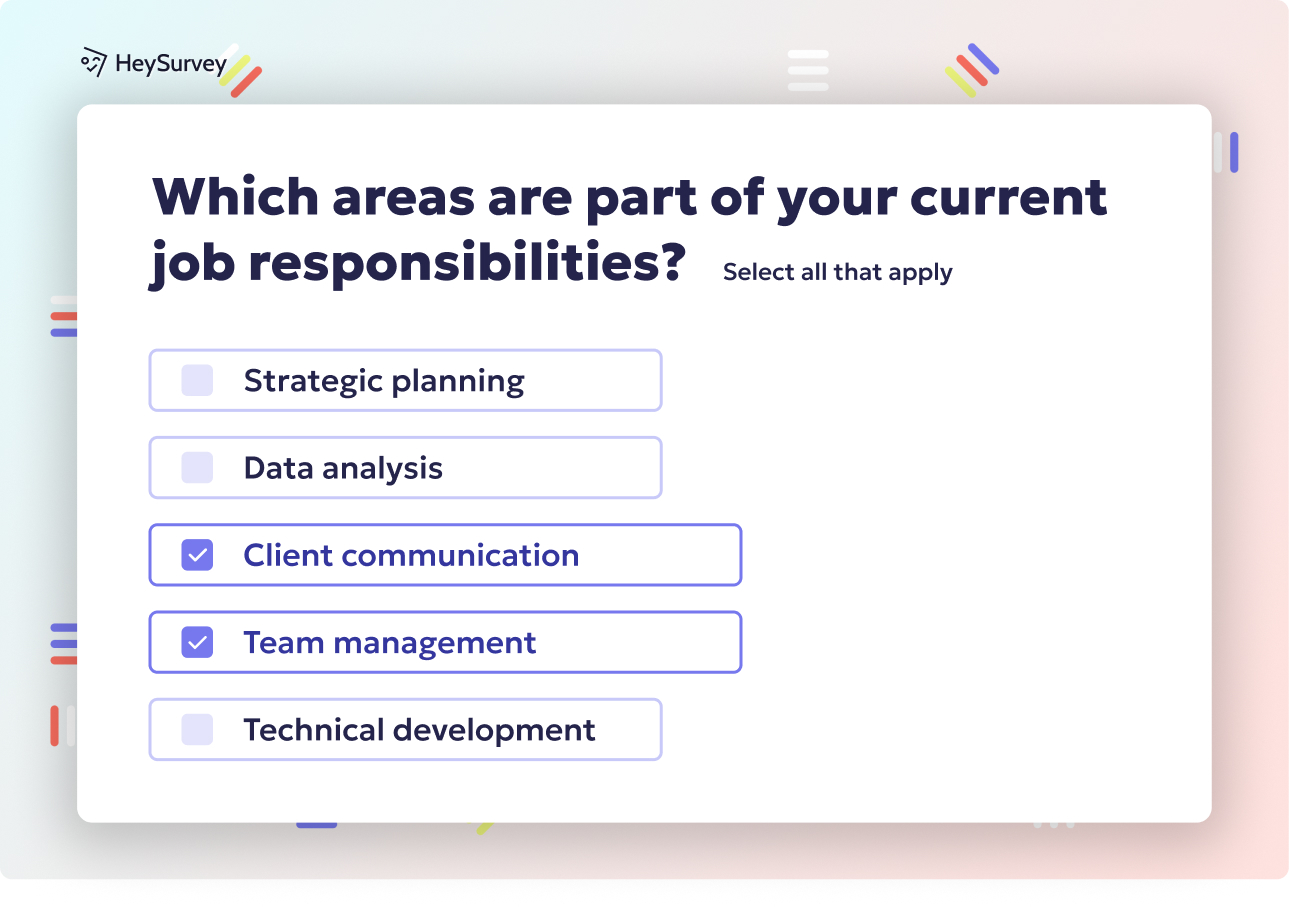
29 Social Media Survey Questions
Explore 25 social media survey questions with practical sample prompts to help gather insights on...
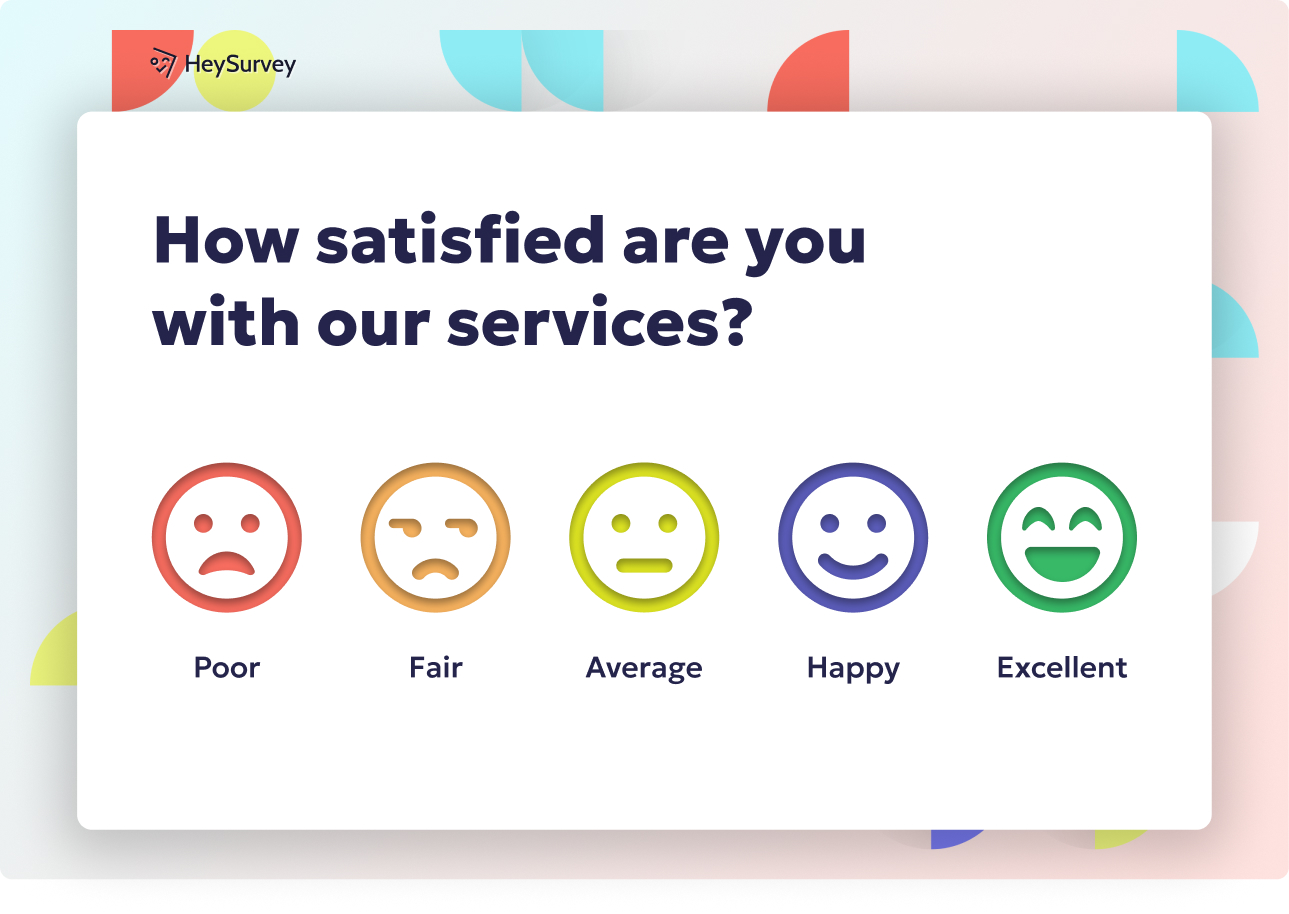
31 Job Satisfaction Survey Questions
Explore **25 job satisfaction survey questions** with sample prompts to improve employee feedback...
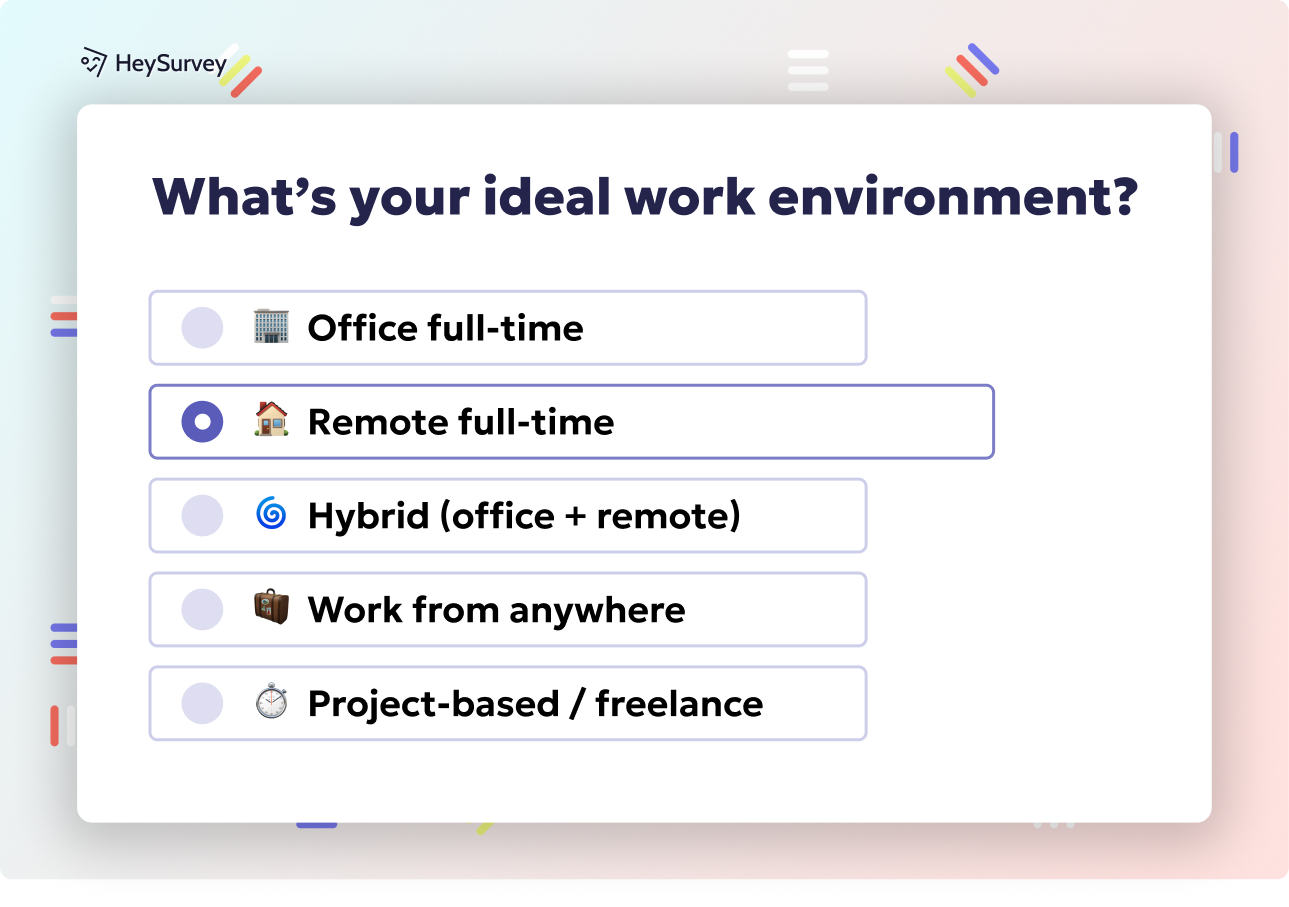
29 Quantitative Survey Questions Guide
Explore 25 quantitative survey questions with sample questions, examples, and tips to build effec...