29 Activity Survey Questions for Seniors
Discover 25 activity survey questions for seniors with sample questions, insights, and ideas to improve engagement, wellness, and daily living.
Getting to know older adults starts with asking the right questions, and that is where an assisted living questionnaire or activity survey shines. In senior living, adult day centers, churches, nonprofits, and family caregiving, thoughtful senior surveys help you uncover preferences, routines, social interests, mobility needs, and the little roadblocks that can stop participation cold.
Plus, whether you are building surveys for seniors, an activity survey template, or even senior night questions, the goal is simple: better engagement. Here’s the thing: this guide covers practical survey categories, sample questions, best practices, and smart ways to use answers without making it feel like homework. If you need an online survey maker, this is a great place to start.
Interest and Hobby Survey Questions for Seniors
Sample questions
What hobbies or activities do you most enjoy in your free time?
Which past hobbies would you like to start again if given the opportunity?
Are there any new activities or classes you would like to try?
Do you prefer creative activities, games, fitness, music, educational programs, or group discussions?
Which three activities would make you most excited to participate regularly?
Interest-based answers spark better programming.
Why & When to Use
This part of an assisted living questionnaire works especially well during new resident intake, annual activity planning, senior center enrollment, and one-on-one lifestyle assessments. Plus, it fits neatly into a broader program evaluation survey questions or an activity survey template when you want programs to feel personal, not random.
Interest-based senior surveys help you uncover meaningful hobbies, lifelong passions, and brand-new activities someone may be excited to try. Here's the thing: a great assisted living questionnaire is not just about needs, because joy belongs on the form too.
These questions also work nicely alongside senior night questions or a senior night questionnaire when you want to learn what truly motivates participation. On top of that, open-ended responses usually reveal more than checkbox-only formats, because people often mention the unexpected gems, like birdwatching, gospel music, or beating everyone at bingo with suspicious confidence.
When reviewing answers, balance familiar favorites with fresh options.
Group responses into themes like arts, recreation, learning, and social events.
Use repeated interests to shape calendars, clubs, and class signups.
Keep space for comments so senior surveys capture both long-loved hobbies and curious new ideas.
That mix helps surveys for seniors lead to activities people actually want to show up for.
In nursing homes, older adults’ activity preferences were identified using the open-ended question “What kind of activities do you like to do?”, supporting personalized programming (Frontiers).
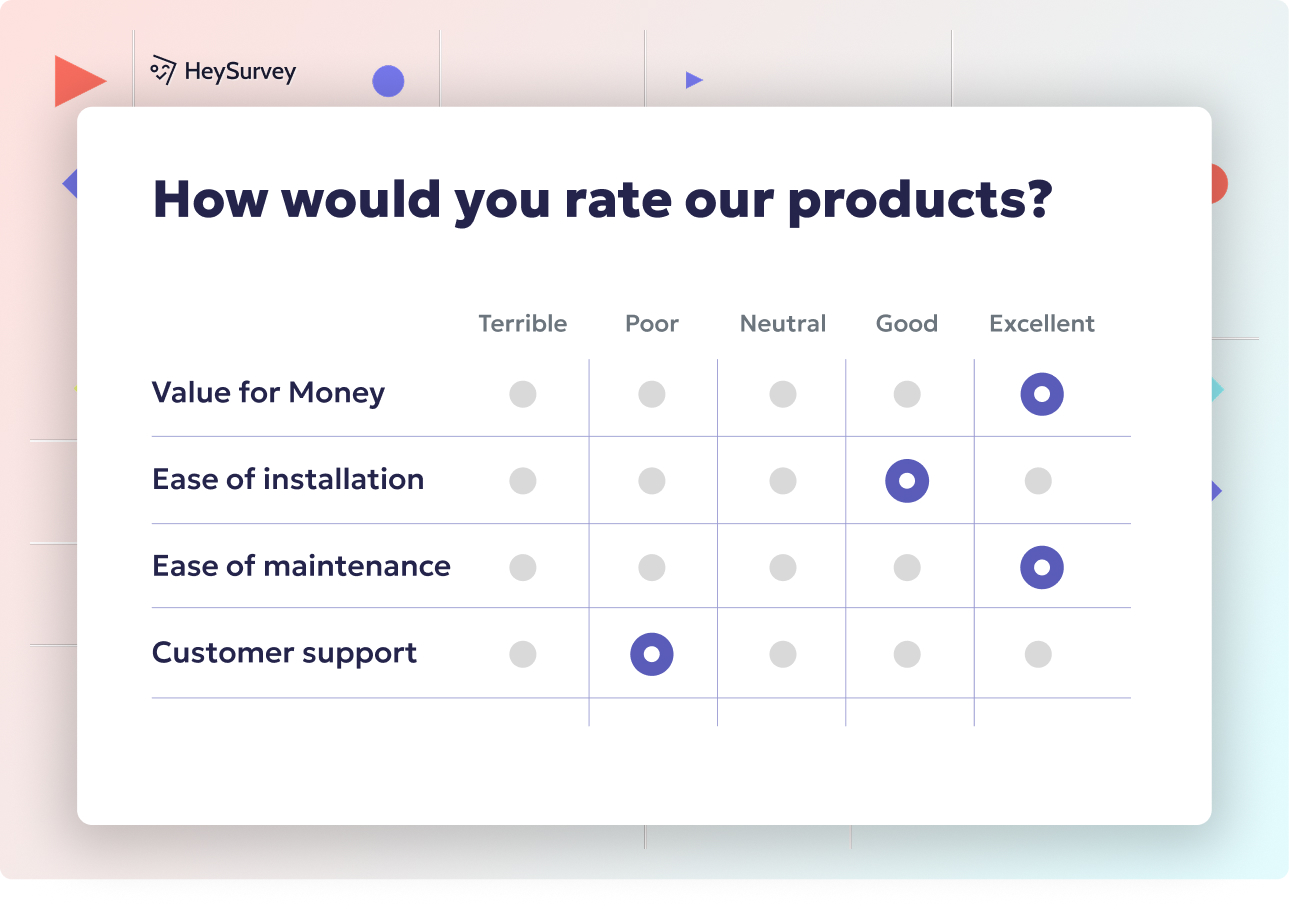
Create your activity survey for seniors in 3 easy steps
Create a new survey
Start by opening a template with the button below, or choose a blank survey if you want to build it from scratch. Give your survey a clear name, such as “Senior Activity Survey,” so it is easy to find later.Add questions
Click Add Question and include simple, senior-friendly questions about favorite activities, hobbies, exercise, social events, or how often they stay active. Use Choice questions for quick answers, Scale questions for ratings, and Text questions for open feedback. Keep wording short, clear, and easy to read.Publish your survey
When your questions are ready, click Preview to check everything, then Publish to create a shareable link. You can send the link to participants or embed the survey on your website. Once published, you can start collecting responses right away.
Social and Group Participation Survey Questions for Seniors
Sample questions
Do you prefer activities alone, with one other person, in small groups, or in large groups?
How often would you like to attend social events each week?
What types of group activities make you feel most comfortable?
Are there any social settings you prefer to avoid?
Would you enjoy participating in clubs, discussion groups, or community outings?
Social preferences shape better participation.
Why & When to Use
This part of an assisted living questionnaire helps you understand whether someone feels happiest one-on-one, in a small circle, or in the middle of a lively community event. Plus, it gives your activity survey more nuance, because social preference is not the same thing as social ability.
Some seniors can handle big events just fine but still prefer quieter connection. Here's the thing: introverted residents do not necessarily want less engagement, they often just want it in a calmer format with fewer jazz-hands moments.
Use this section when planning calendars in assisted living, independent living, senior centers, faith groups, or volunteer organizations. It also fits naturally into a senior night questionnaire, senior night questions list, or a broader activity survey template.
When you ask these questions clearly, senior surveys can help reduce isolation and improve attendance. On top of that, they help you build options that feel inviting instead of overwhelming.
Use responses to create a healthy mix of social choices:
Offer one-on-one visits, buddy programs, and quiet discussion groups.
Include small-group games, clubs, and relaxed community outings.
Add larger events for residents who enjoy energy, music, and full-room fun.
Note avoided settings so your senior surveys respect comfort, not just participation goals.
That way, surveys for seniors lead to connection that actually feels good.
In older adults, multicomponent, exercise, and technology-based social interventions were associated with reduced loneliness and social isolation, supporting tailored activity surveys that identify preferred participation formats (source).
Physical Activity and Mobility-Based Survey Questions for Seniors
Sample questions
What types of physical activities do you enjoy, such as walking, stretching, dancing, gardening, or chair exercises?
How often would you like to participate in physical activities?
Do you have any mobility concerns that affect the activities you can safely join?
Do you prefer indoor or outdoor physical activities?
Would you be more likely to participate in gentle exercise, structured classes, or casual movement-based activities?
Movement questions work best when they protect dignity.
Why & When to Use
This part of an assisted living questionnaire helps you plan safe, enjoyable movement options without making the conversation feel stiff or clinical. It fits beautifully into an activity survey, especially when you are organizing exercise classes, walking groups, chair-based programs, and adapted activities.
Use it during move-in, care plan updates, post-rehab transitions, or seasonal programming reviews. Plus, it works well in senior surveys, a senior night questionnaire, or even senior night questions when activity preferences matter.
Here's the thing: good surveys for seniors should uncover comfort level, limitations, and favorite ways to move without sounding like a medical form wearing khakis. Dignity-first wording matters, and so does avoiding assumptions about what someone can or cannot do.
The answers can help you shape better programming in practical ways:
Schedule the right mix of gentle exercise, structured classes, and casual movement activities.
Offer adaptive options so more people can participate safely and confidently.
Match staffing needs to support levels, supervision, and setup demands.
Improve accessibility planning for indoor spaces, outdoor paths, seating, and equipment.
On top of that, an activity survey template or senior night questionnaire template becomes far more useful when it leads to participation that feels safe, welcoming, and realistic.

Cognitive, Educational, and Enrichment Survey Questions for Seniors
Sample questions
What kinds of educational or brain-stimulating activities do you enjoy most?
Would you like to attend classes, guest talks, book discussions, or trivia sessions?
Are there topics you would like to learn more about?
Do you prefer structured learning activities or informal discussion-based programs?
How challenging do you like activities to be: easygoing, moderate, or more advanced?
Great enrichment questions help you spark curiosity, not just fill a calendar.
Why & When to Use
This part of an assisted living questionnaire helps you discover what keeps someone mentally engaged, curious, and connected to a sense of purpose. It works especially well in an activity survey when you want to plan lifelong learning, memory games, lectures, reading groups, trivia, and hands-on workshops.
Use these questions when building monthly calendars, shaping enrichment programs, or creating personalized engagement plans. Plus, they are especially useful in senior surveys that focus on mental stimulation, confidence, and meaningful daily routines.
Here's the thing: not every resident wants the same kind of challenge, and that is exactly the point. Some people love history talks and current events, while others light up for crafts with instruction, book chats, or word games that make the brain stretch a bit without doing backflips.
The answers help you match activity complexity to confidence and energy level in practical ways:
Offer easygoing, moderate, or advanced options so participation feels inviting, not intimidating.
Balance structured classes with casual discussion groups for different learning styles.
Plan stronger cognitive wellness programming with topics residents actually care about.
Improve your senior night questions, senior night questionnaire, or senior night questionnaire template with more purposeful enrichment ideas.
On top of that, a smart activity survey template helps turn surveys for seniors into programs people genuinely want to show up for.
A systematic review found mentally stimulating leisure activities in older adults were associated with better later-life cognition and less cognitive decline (PubMed).
Scheduling and Routine Preference Survey Questions for Seniors
Sample questions
What time of day do you usually feel most active and interested in participating?
How long do you prefer most activities to last?
How many activities would you ideally like to attend each week?
Do you prefer weekday programs, weekend events, or a mix of both?
Are there any regular routines, appointments, or rest times that staff should consider when scheduling activities?
The best activity in the world can still flop if it lands right in the middle of nap time.
Why & When to Use
This part of an assisted living questionnaire helps you figure out the best days, times, duration, and frequency for activities. In any activity survey, timing preferences matter just as much as content preferences, because even a great program can miss the mark when it is scheduled at an inconvenient hour.
Use these questions when attendance is inconsistent, residents seem interested but do not show up, or your calendar needs better flow. Plus, this section works well in senior surveys when you want to improve morning, afternoon, evening, and weekend programming without guessing.
Here’s the thing: routines shape participation more than many teams expect. Meal times, medication schedules, transportation needs, appointments, and rest periods all affect whether someone can join in comfortably.
The answers can help you build a more realistic and resident-friendly calendar:
Schedule popular programs at times when residents feel most alert and social.
Adjust activity length so events feel enjoyable, not draining.
Balance weekday and weekend offerings based on real preferences.
Avoid conflicts with meals, rides, care routines, and quiet time.
Strengthen your senior night questions, senior night questionnaire, or activity survey template with timing details that actually improve turnout.
On top of that, surveys for seniors become far more useful when they help you plan not just what people want, but when they will actually be ready to enjoy it.
Barriers, Comfort, and Accessibility Survey Questions for Seniors
Sample questions
What makes it difficult for you to join activities you might otherwise enjoy?
Do you need any support, accommodations, or reminders to participate comfortably?
Are activity locations easy for you to access?
Do you feel comfortable joining new activities, or do you prefer encouragement from staff, family, or friends?
What would make activities more enjoyable or easier for you to attend?
Sometimes the real problem is not the activity, it is everything around it.
Why & When to Use
This part of an assisted living questionnaire helps you uncover why some residents do not participate even when the activity itself sounds fun. In an activity survey, these answers often reveal quiet obstacles that are easy to miss but very fixable.
Use this section after low attendance, during resident satisfaction reviews, or anytime you want your senior surveys to be more useful and more inclusive. Plus, it fits naturally into an assisted living questionnaire, a senior night questionnaire, or even a senior night questionnaire template focused on participation.
Here’s the thing: barriers are usually about access, comfort, or confidence, not a lack of interest. Transportation, hearing, vision, fatigue, social anxiety, unclear communication, or not knowing what to expect can all keep someone away, even when they would probably enjoy the event.
This section can help you spot practical improvements like:
better reminders and clearer communication
escort support to activity spaces
easier-to-reach locations
improved room setup and sound levels
transportation help or friendlier introductions to new programs
On top of that, this activity survey template helps you treat barriers as program issues to solve, not resident shortcomings. That mindset shift is gold, and honestly, much more helpful than blaming bingo for not being irresistible enough.
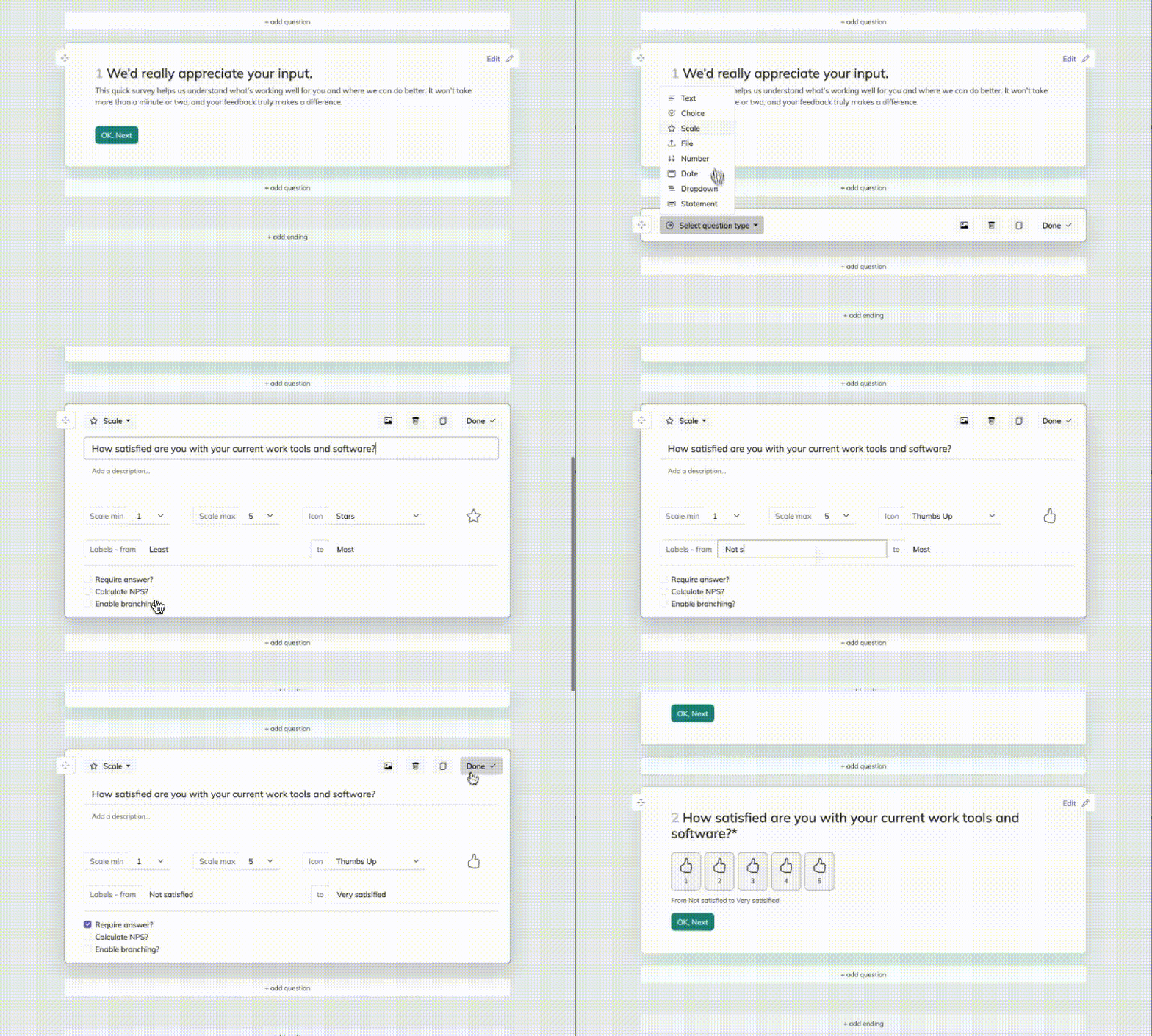
How to Build an Effective Activity Survey for Seniors
Sample questions
What is the main goal of this survey: intake, satisfaction, planning, or re-engagement?
Which question categories are most important for your setting and population?
Will responses be collected through written forms, interviews, group discussions, or family input?
How will you make the survey easy to understand and complete?
How often will you review and update survey responses?
A great survey is not longer, it is smarter.
Why & When to Use
This section helps you turn the categories above into a practical activity survey template you can actually use. If you are building an assisted living questionnaire, planning surveys for seniors at a community center, or creating senior surveys for family use, this is where everything starts to click.
Here’s the thing: the best activity survey is built around one clear goal. If you try to collect every possible detail at once, your form can feel like homework, and nobody gets excited about surprise homework.
Keep most surveys short and focused. If you need deeper feedback, use two or three smaller surveys instead of one giant form.
A strong setup usually includes:
plain language and short questions
large print for easier reading
optional verbal completion for residents who prefer talking
a mix of multiple-choice, rating scales, and open-ended questions
a simple review schedule so answers stay current
Plus, think about how responses will be gathered before you write the form. Written responses work well in some settings, but interviews, family input, or group discussions may give you richer answers in others.
On top of that, a thoughtful activity survey template helps you collect better insights without wearing people out, which is a win for everyone, especially your stapler.
Best Practices for Senior Activity Surveys
Sample questions
Are the questions respectful, clear, and free from infantilizing language?
Does the survey include both preferences and barriers to participation?
Are respondents given enough space to share personal interests in their own words?
Is the survey accessible for seniors with vision, hearing, cognitive, or mobility challenges?
Is there a process for acting on the survey results after collection?
Good senior surveys do more than gather answers, they shape better experiences.
Why & When to Use
This section helps you avoid the most common mistakes when creating or using a senior activity survey, assisted living questionnaire, or senior night questionnaire. It is especially useful for administrators, activity directors, caregivers, and program coordinators who want practical feedback they can actually use.
Here’s the thing: even a well-meaning activity survey can miss the mark if it feels vague, too long, or a little patronizing. You want your assisted living questionnaire to feel respectful, useful, and easy to complete, not like a pop quiz nobody asked for.
A strong senior night questions list or activity survey should cover interests, routines, and what may be getting in the way of participation.
Dos and Don'ts matter more than fancy formatting.
Do:
use simple, respectful, person-centered language
offer large-print or verbal survey options
include both current interests and past hobbies
ask about timing, accessibility, and comfort level
review responses regularly and update plans as needs change
Don't:
assume all seniors enjoy the same activities
make senior surveys too long or tiring
rely only on yes/no questions
ignore nonparticipants and their barriers
collect feedback without a plan to use it
Plus, if your survey results sit in a folder forever, your senior night questionnaire template is basically decorative paperwork wearing a serious face.
Turning Survey Insights Into Better Senior Activities
Sample questions
Which survey findings point to the highest-demand activities?
What low-attendance programs should be revised, replaced, or better supported?
Which barriers can be removed quickly for immediate improvement?
How can staff personalize invitations based on individual preferences?
When should you repeat the survey to measure change over time?
Your best survey results are the ones you actually use.
Why & When to Use
This wrap-up is where your assisted living questionnaire, activity survey, or senior night questionnaire stops being a stack of answers and starts becoming a better plan. The goal is simple: turn feedback into activities people genuinely want to join.
Here’s the thing: the best activity survey questions for seniors should lead to more personalized, inclusive, and better-attended programs. If your senior surveys reveal clear patterns, you already have a roadmap.
A practical way to sort responses is to group them into action steps:
keep programs residents already enjoy
add new activities based on strong interest
adapt activities that need better timing, access, or support
remove programs that consistently miss the mark
test new ideas in small pilot formats first
Plus, piloting a few top requests before going all in can save time, money, and a few forehead-slapping moments.
Use your activity survey template or senior night questionnaire template to spot quick wins first, like changing schedules, improving transportation, or offering clearer invitations. On top of that, staff can personalize outreach by matching residents with activities tied to their hobbies, routines, and social comfort.
Repeat the assisted living questionnaire regularly so you can measure what changed over time. Well-used surveys for seniors do more than improve calendars, they improve connection, participation, and day-to-day quality of life.

Related Program Evaluation Surveys
31 Recycling Survey Questions That Drive Better Insights
Explore 25 sample keyword recycling survey questions to boost feedback, improve sustainability in...
29 Non Profit Survey Questions
Explore 25 non profit survey questions with sample questions to improve donor feedback, volunteer...
31 Program Evaluation Survey Questions
Explore 25 program evaluation survey questions with sample questions to improve feedback, measure...