31 Sales Survey Questions to Boost Customer Insights
Discover 25 sales survey questions to improve customer insights, boost conversions, and refine your strategy with proven sample questions.
If you want better leads, smoother calls, and happier customers, sales surveys can give you the clues your team keeps chasing. These questions help you spot what improves lead quality, sales conversations, customer experience, and rep performance, without relying on guesswork or coffee-fueled hunches.
In this guide, you’ll see the most useful types of sales surveys, when to use a pre sales survey, and practical sample survey questions for sales team leaders. Plus, you’ll get example survey questions for sales team feedback and customer feedback collection that you can actually use with an online survey tool.
Pre-Sales Survey Questions
Sample questions
What challenge are you trying to solve right now?
Which product or service are you most interested in?
What is your timeline for making a purchase decision?
Who will be involved in evaluating or approving this purchase?
What budget range have you set for this solution?
A smart pre sales survey helps you qualify leads without sounding like a robot with a clipboard.
Why & When to Use
A pre sales survey helps you qualify prospects before a discovery call, demo, or proposal, so your team walks in prepared instead of guessing.
It works especially well for inbound leads, consultation bookings, pricing inquiries, and demo requests, where a little context upfront can save a lot of back-and-forth later.
Here’s the thing, good sales surveys do more than collect answers. They help you personalize outreach, spot urgency, understand budget, and see who actually makes the final call.
That means your reps can spend less time on dead-end conversations and more time on leads that fit, are ready, and know what they want. Nice for your calendar, and your sanity.
To keep the experience helpful instead of intrusive, balance open-ended questions with multiple-choice ones.
Open-ended questions reveal goals, pain points, and buying context.
Multiple-choice questions make it easier to measure lead quality and support lead scoring.
On top of that, the responses should shape your next step.
Tailor discovery calls around the prospect’s stated challenge.
Prioritize follow-up based on urgency, budget, and decision-making role.
Use sample survey questions for sales team workflows that turn answers into better conversations.
Done right, pre sales survey responses give your sales surveys real traction before the first call even starts.
Gartner Digital Markets found 52% of salespeople still rely on BANT-style qualification questions covering budget, authority, need, and timeline. Source
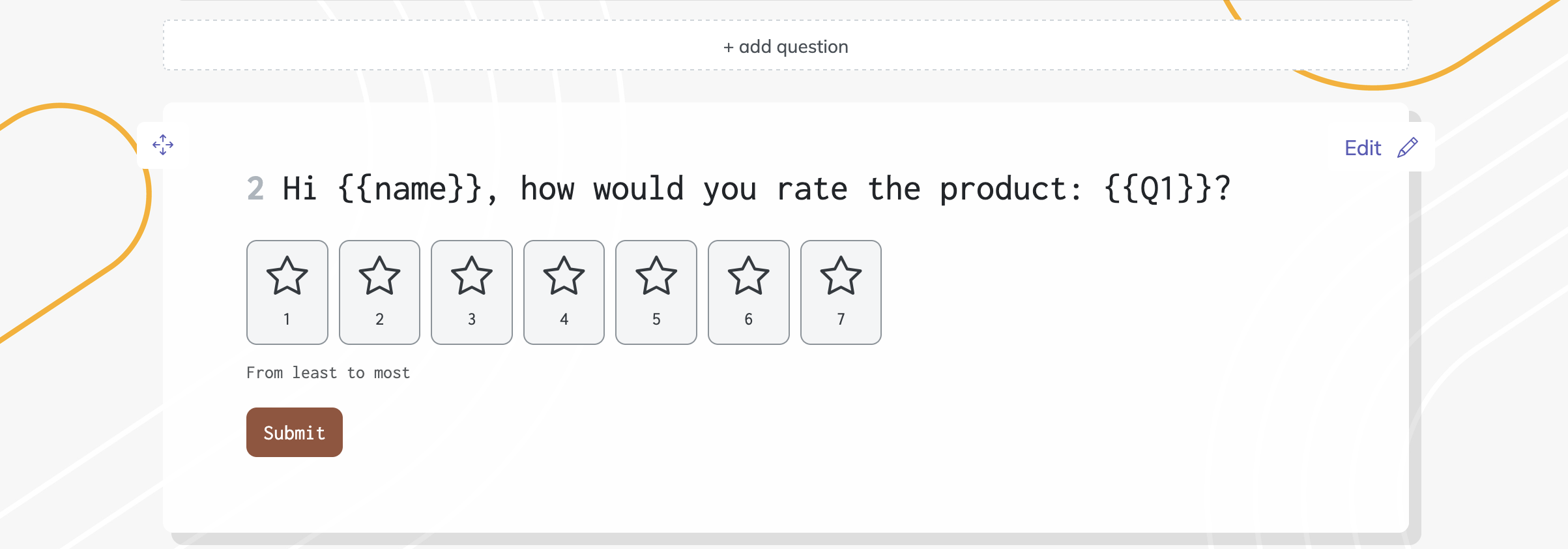
How to create a sales survey in HeySurvey
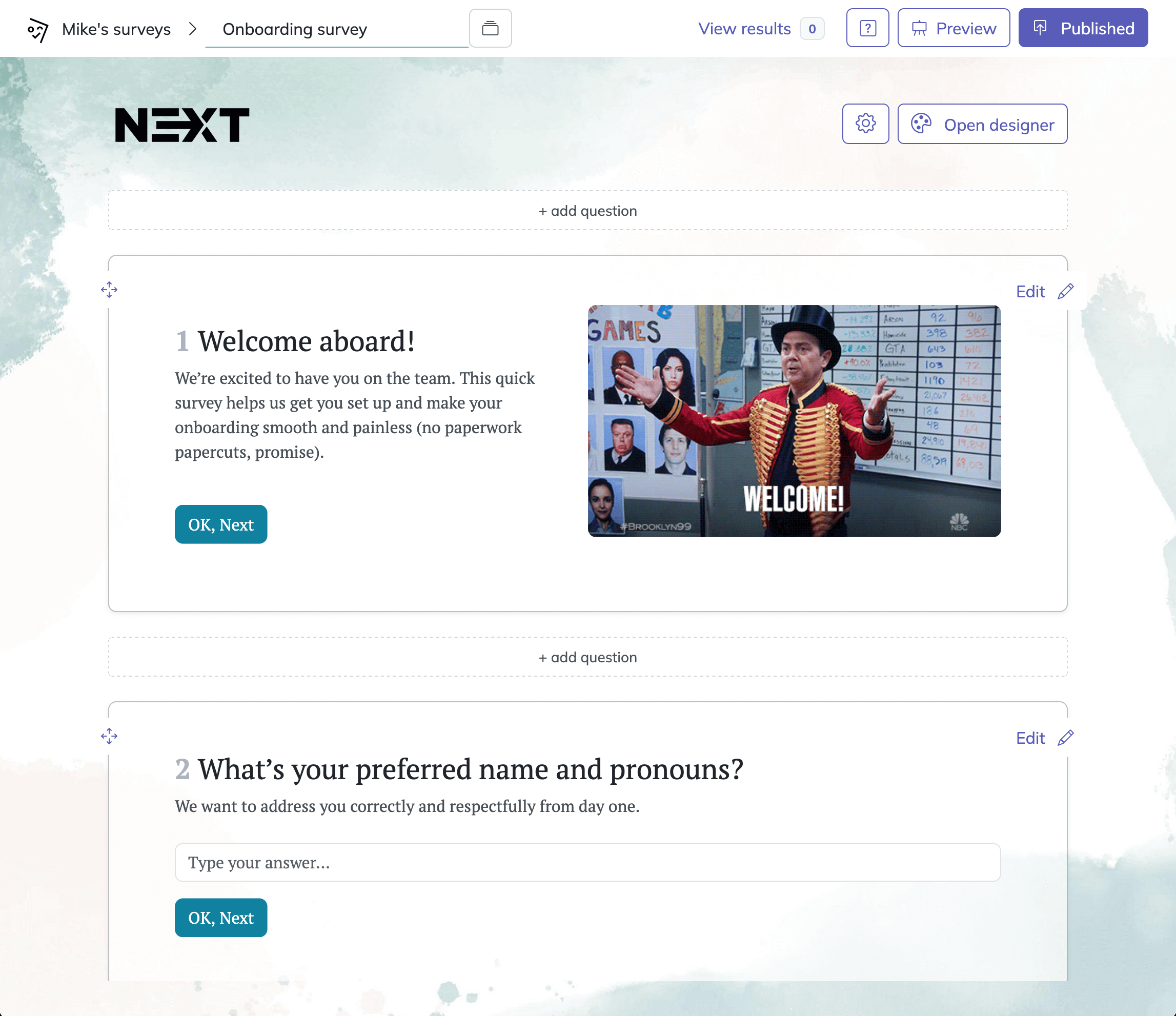
1. Create a new survey
Start by opening HeySurvey and choosing a sales survey template from the button below, or begin with an empty sheet if you want to build from scratch. If you do not have an account yet, you can still create the survey first. Give it a clear internal name so you can find it easily later.
2. Add questions
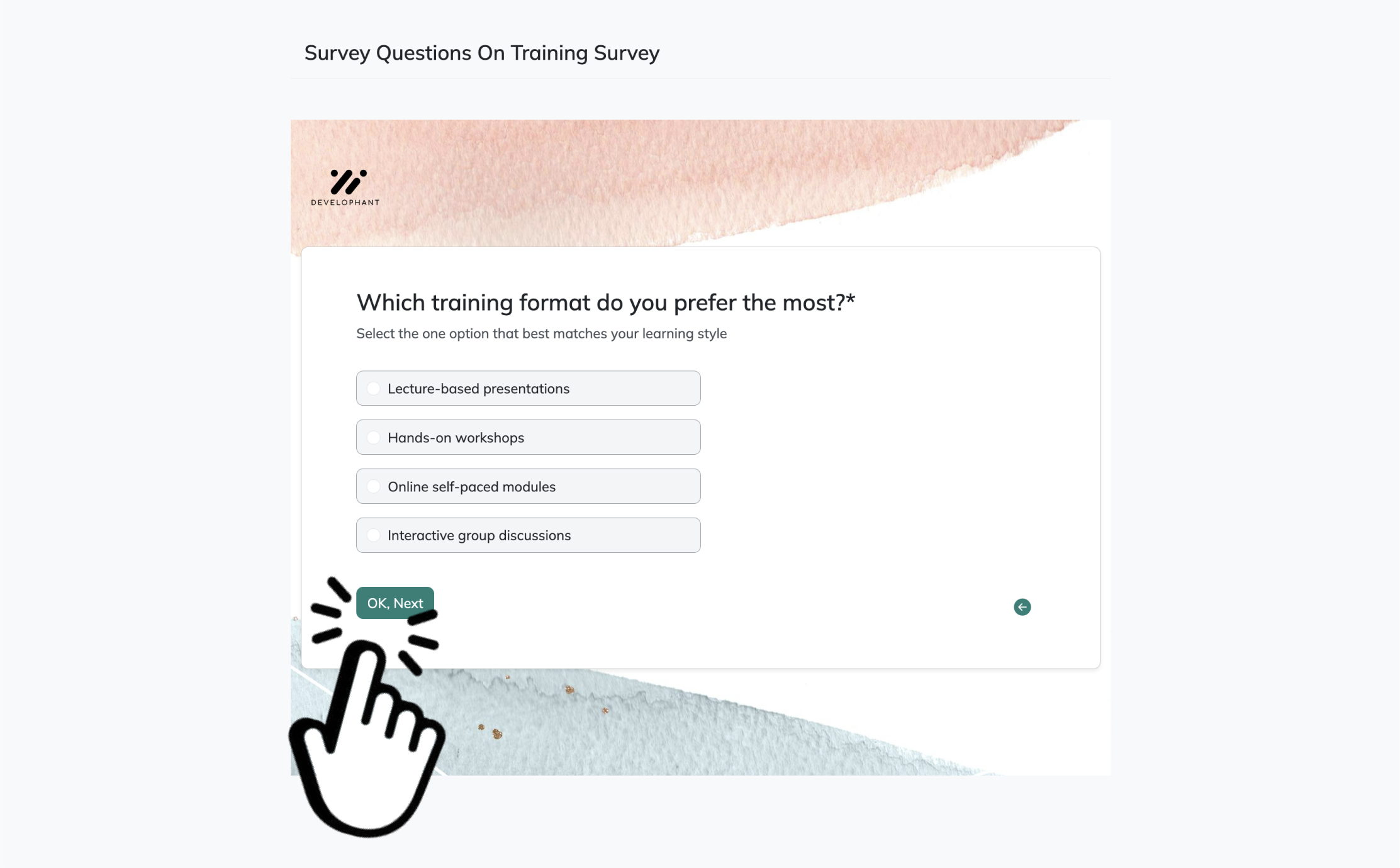
Click Add Question and build your sales survey with simple question types like Choice, Scale, NPS, or Text. Ask about buying intent, product interest, budget, satisfaction, or reasons for not purchasing. Mark important questions as required to make sure you collect complete answers. You can also add branching to show follow-up questions based on earlier responses.
3. Publish survey
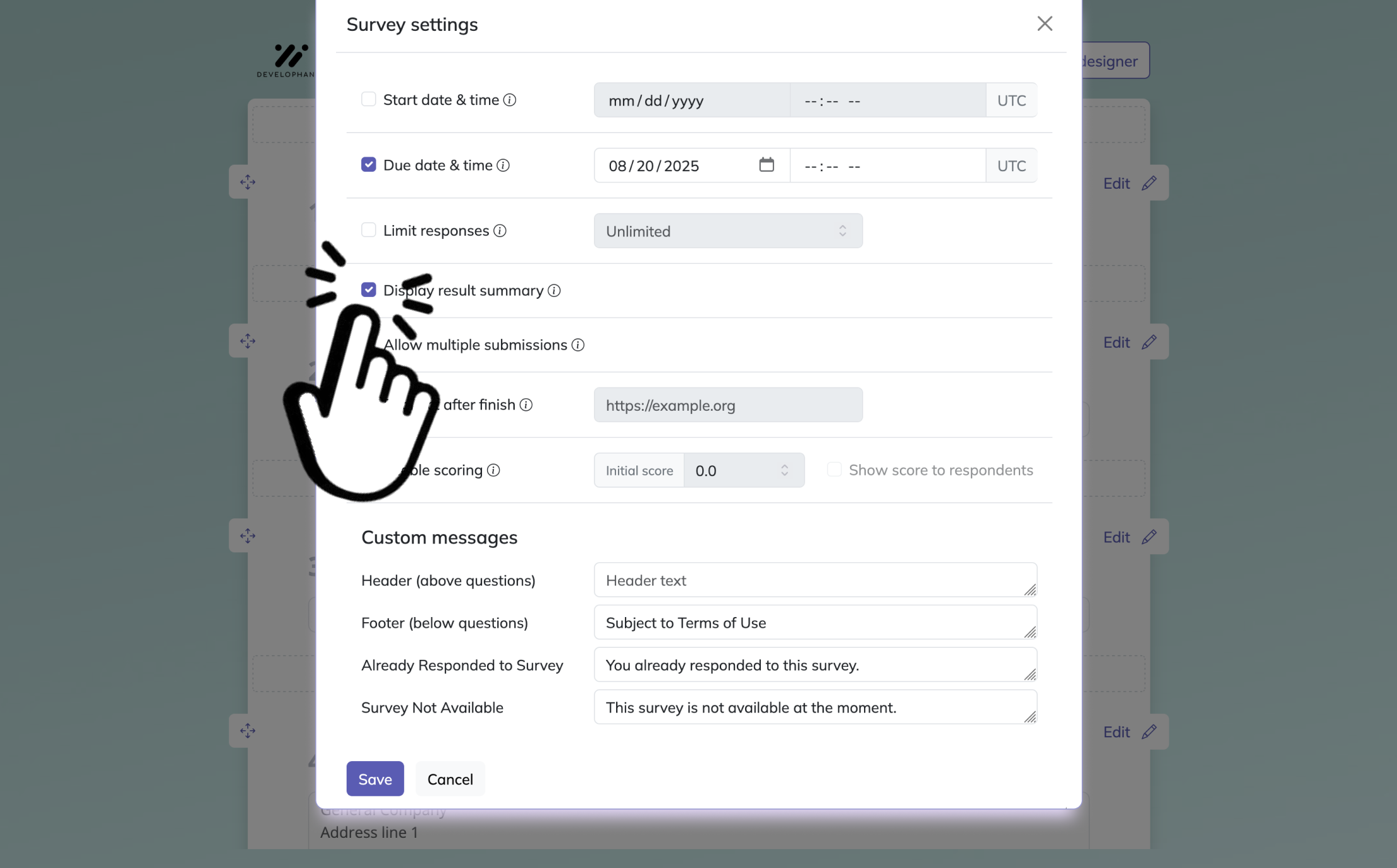
When your survey looks ready, click Preview to check it first. Then press Publish to make it live and get a shareable link. If needed, you can later edit design, settings, and questions before sending it to customers or prospects.
Post-Purchase Sales Survey Questions
Sample questions
How satisfied were you with the sales process overall?
Did the product or service match what was explained during the sales process?
How clear and transparent was the pricing information you received?
How confident did you feel in your decision by the time you purchased?
What nearly prevented you from moving forward?
Post-purchase sales surveys catch honest feedback while the experience is still fresh, before memory starts doing its creative writing thing.
Why & When to Use
Post-purchase sales surveys help you measure buyer satisfaction right after the deal closes or onboarding begins.
That timing matters because people still remember the details, the helpful moments, and the parts that felt clunky.
Here’s the thing, a strong post-purchase survey shows whether your sales process matched buyer expectations or accidentally oversold the experience.
It can also reveal friction points your team might miss during internal reviews.
Handoff issues between sales and onboarding
Confusing pricing communication
Weak product fit
Gaps in objection handling
Promise-versus-reality mismatches
Plus, these insights are not just nice-to-have notes for a slide deck.
They can help you connect pre sales survey expectations and closed-won feedback to onboarding success, retention trends, and early churn signals.
When responses are negative, do not treat them like random complaints.
Review whether the buyer heard inconsistent messaging
Check if reps explained pricing clearly enough
Look for signs the product was not framed accurately
Use example survey questions for sales team coaching and process fixes
On top of that, this is one of the most useful moments to collect feedback because the customer journey is still warm, not buried under six months of “wait, what happened again?”
A Journal of Business Research study found immediate post-consumption evaluations track actual experience more closely, while delayed surveys are more vulnerable to recall bias (source).
Lost Deal Survey Questions
Sample questions
What was the main reason you decided not to move forward with us?
Which alternative solution did you choose, if any?
Was price a major factor in your decision?
Did you feel your questions or concerns were fully addressed during the sales process?
What could our sales team have done better to earn your business?
Lost deal sales surveys turn awkward silence into useful answers, which is a much better trade than guessing with confidence.
Why & When to Use
Lost deal sales surveys help you understand why a prospect chose a competitor, paused the purchase, or quietly drifted out of the pipeline.
Here’s the thing, if you send the survey shortly after a closed-lost decision, the details are still fresh and the feedback is usually more accurate.
This makes the survey especially useful when you want clearer patterns instead of one-off opinions.
Plus, a well-timed pre sales survey and a closed-lost survey can work together to show where expectations broke down.
Use neutral wording so people do not feel pushed toward blaming price, product, or your sales team.
That keeps responses more honest and gives you cleaner data for pipeline improvement.
Categorize answers by pricing
Group feedback around timing or urgency
Tag product feature gaps
Note trust or credibility concerns
Track competitor mentions and positioning issues
On top of that, these sample survey questions for sales team reviews can improve objection handling, pricing strategy, and competitive messaging.
If several responses point to the same friction, that is not bad luck.
It is a signal your process needs tuning, and thankfully, that is cheaper than mind reading.
Sales Call and Demo Feedback Survey Questions
Sample questions
How helpful was the sales call or demo you attended?
Did the sales representative understand your needs and goals?
How clearly were the product benefits explained?
Did you leave the conversation with any unanswered questions?
How relevant was the presentation to your specific situation?
Sales surveys sent right after a call or demo help you catch the truth while it is still fresh, not after it has been polished by memory.
Why & When to Use
These sales surveys are designed to evaluate sales calls, consultations, and product demos soon after the interaction ends.
Here’s the thing, if you send them within a few hours, you usually get sharper feedback and fewer fuzzy half-memories.
This survey type is especially useful when you want to improve rep communication, discovery quality, and how relevant the presentation feels to the buyer.
Plus, a strong pre sales survey can set expectations before the call, while post-call feedback shows whether your team actually delivered on them.
Managers can use the results for coaching, call reviews, and sales enablement planning.
Customers can use the same survey to rate whether the conversation felt helpful, clear, and tailored to their situation.
That makes these sample survey questions for sales team improvement useful from both sides of the table.
Spot weak discovery habits
Identify unclear product messaging
Find presentation sections that miss the mark
Catch unanswered questions before the deal cools off
Support coaching with real buyer feedback
On top of that, these example survey questions for sales team performance review can reveal patterns across reps, not just one awkward demo that forgot its coffee.
Sending post-call surveys immediately after the interaction improves response rates because the experience is still fresh and more relevant to customers (source)
Sales Team Internal Feedback Survey Questions
Sample questions
How would you rate the quality of leads you are receiving?
What is the biggest obstacle slowing down your ability to close deals?
How effective are our current sales tools and resources?
What additional training or support would help you perform better?
How realistic and clear are your current sales goals or quotas?
Internal sales surveys help you hear what your reps actually need, not just what dashboards politely pretend is fine.
Why & When to Use
These sales surveys gather feedback directly from your team about lead quality, tools, processes, quotas, training, and management support.
Here’s the thing, your reps live inside the workflow every day, so they usually spot friction long before leadership sees it in the numbers.
This type of survey works especially well during quarterly reviews, after process changes, during a CRM rollout, or when you are shaping sales enablement plans.
Plus, if you are searching for sample survey questions for sales team operations and morale, this is the section that gets practical fast.
Honest internal feedback can improve productivity, reduce frustration, and support retention because people are more likely to stay when problems get fixed.
On top of that, anonymous responses often lead to more candid answers, which is useful when the topic is quotas, management support, or messy handoffs nobody wants to bring up in a meeting.
Use results to compare trends by:
team segment
tenure level
territory
role type
manager or region
A smart pre sales survey may help before prospect outreach, but internal surveys show what your team needs to perform better behind the scenes.
That makes these sample survey questions for sales team improvement a handy tool for stronger operations, better morale, and fewer "the CRM ate my day" complaints.
Customer Satisfaction and Sales Experience Survey Questions
Sample questions
How easy was it to work with our sales team?
How responsive was our team throughout the buying process?
Did you feel pressured at any point during the sales process?
How well did we understand your business needs?
How likely are you to recommend our company based on your sales experience?
These sales surveys help you measure how people felt about buying from you, which is often what they remember most.
Why & When to Use
These sales surveys focus on the customer’s full sales experience, not just whether they liked the product or service in the end.
Here’s the thing, a great offer can still lose points if your process feels confusing, pushy, slow, or oddly dramatic like a soap opera with pricing sheets.
Use this type of pre sales survey or follow-up survey after major milestones such as:
an initial consultation
proposal delivery
contract signing
onboarding kickoff
That timing helps you catch issues while the experience is still fresh and useful.
Plus, these sample survey questions for sales team performance can reveal trust issues, communication gaps, and moments where expectations were not handled well.
They also help you understand whether your team felt helpful, responsive, and tuned in to real business needs.
This section is especially useful in B2B and service-based sales environments, where the buying journey often matters just as much as the final result.
On top of that, responses can point to referral potential and brand reputation, since people who enjoy the sales process are more likely to recommend you.
If you are collecting example survey questions for sales team improvement, this set helps you improve experience quality before small annoyances turn into big reputation dents.
Best Practices for Writing and Using Sales Survey Questions
Sample questions
Are our sales surveys short enough to finish in under 3 minutes?
Does each pre sales survey match a specific stage in the buyer journey?
Are we using sample survey questions for sales team improvement that measure one clear goal at a time?
Do our questions stay neutral, clear, and easy to answer?
Are we reviewing trends over time instead of overreacting to one spicy comment?
The best sales surveys are short, clear, and tied to a real business goal.
Why & When to Use
Here’s the thing, even strong sample survey questions for sales team improvement can flop if the survey is too long, too vague, or sent at the wrong time.
A good rule is to keep most sales surveys to 5 to 10 questions, because brevity boosts completion rates and gives you cleaner feedback.
Use these best practices when building any pre sales survey, post-demo check-in, or follow-up form tied to pipeline performance.
Dos
Keep questions short, specific, and easy to answer.
Match the survey to the correct stage of the sales funnel.
Use a mix of rating-scale, multiple-choice, and open-ended questions.
Ask one concept per question to avoid confusion.
Send surveys while the interaction is still fresh.
Track trends over time instead of reacting to one-off responses.
Share relevant findings with sales reps, managers, and leadership.
Align every survey with a measurable goal, like improving demo conversion, response time, or trust.
Don'ts
Don’t ask too many questions in one survey.
Don’t use leading or defensive wording.
Don’t collect feedback without a plan to act on it.
Don’t ignore negative responses or low completion rates.
Don’t combine customer feedback and internal rep feedback in the same survey.
Don’t overlook segmentation by deal stage, rep, product line, or customer type.
Plus, if your example survey questions for sales team decisions are not helping you make better choices, they are just digital homework.
Common Mistakes That Reduce Sales Survey Response Quality
Sample questions
Are we sending sales surveys soon enough after the call, demo, or proposal?
Do our pre sales survey questions ask for one clear answer instead of vague opinions?
Are we using sample survey questions for sales team reviews differently from customer-facing surveys?
Have we explained why this feedback matters before asking people to complete the survey?
Do we follow up on survey responses so people know their input did not disappear into the internet void?
Even strong sales surveys can fail when timing, targeting, or follow-up is sloppy.
Why & When to Use
Here’s the thing, good sales surveys do not automatically create good data.
If your timing is off, your wording is fuzzy, or your audience gets the wrong survey, even smart sample survey questions for sales team improvement can produce weak answers and shaky conclusions.
Use this section when you want to improve response quality in a customer survey, a pre sales survey, or an internal rep feedback form.
Customer-facing surveys should focus on buyer experience, clarity, trust, and decision readiness.
Internal sample survey questions for sales team use should focus more on process gaps, tool friction, coaching needs, and handoff issues.
Key Mistakes to Avoid
Sending surveys too late, when details are already fuzzy.
Asking vague questions like “How was the experience?” instead of something specific.
Using too many open-ended prompts, which can feel like homework with extra sighing.
Failing to explain why the feedback matters.
Collecting responses and never sharing what changed next.
Plus, one of the fastest fixes is simple: send shorter sales surveys sooner, tailor the audience carefully, and close the loop after feedback arrives.
How to Turn Sales Survey Insights Into Action
Sample questions
Which themes show up most often in our sales surveys, such as lead quality, pricing objections, product fit, or communication issues?
Are we reviewing pre sales survey responses by stage, segment, or team so patterns are easier to spot?
What changes can we make right now from these sample survey questions for sales team improvement?
Have we turned feedback into practical updates like better scripts, tighter qualification criteria, or stronger handoffs?
Are we tracking whether survey-driven changes improve win rates, deal velocity, satisfaction, or rep confidence?
The real win is turning feedback into moves your team can actually use.
Why & When to Use
Here’s the thing, sales surveys are only useful when they help you make smarter decisions.
Use this section when you are ready to turn a pre sales survey, customer feedback form, or sample survey questions for sales team reviews into actions that improve selling across the funnel.
Start by grouping responses into themes so the noise becomes clearer signal.
Lead quality
Rep performance
Pricing objections
Product fit
Communication issues
Plus, sort findings by sales stage, segment, or team to see where problems actually live instead of guessing with confidence and a spreadsheet.
Then turn insight into action people can use on Monday morning.
Update scripts and objection-handling guides
Refine qualification criteria
Improve rep training
Fix handoffs between sales and customer success
Share relevant findings with marketing and leadership
On top of that, measure what changes next.
Track conversion rates, win rates, deal velocity, satisfaction, and rep confidence over time, then review results regularly so sales surveys become part of continuous improvement.
The best sales surveys, including pre sales survey work and example survey questions for sales team development, do their job only when insight leads to better decisions, better teamwork, and better selling.
Related Business Survey Surveys
31 Nonresponse vs Voluntary Response Survey Questions
Explore 25 sample questions for nonresponse vs voluntary response survey questions, with clear ex...
32 SWOT Survey Questions to Ask for Better Insights
Explore 25 SWOT survey questions with sample prompts to assess strengths, weaknesses, opportuniti...
29 Quality Assurance Survey Questions
Explore 25 quality assurance survey questions with sample responses to improve product quality, g...