31 Post Webinar Survey Questions
Explore 25 post webinar survey questions with sample questions to improve feedback, measure engagement, and refine your webinar strategy.
Want better webinars, not just polite applause? A smart post webinar survey questions strategy shows you what landed, what missed, and who is ready for the next step.
The right post webinar survey or webinar feedback survey helps you measure satisfaction, content relevance, speaker effectiveness, lead quality, and survey after webinar intent. Plus, this guide will walk you through webinar survey questions, webinar evaluation questions, real examples, best practices, and how to use feedback to make your next webinar sharper than your presenter’s blazer.
Sample questions
How satisfied were you with the webinar overall?
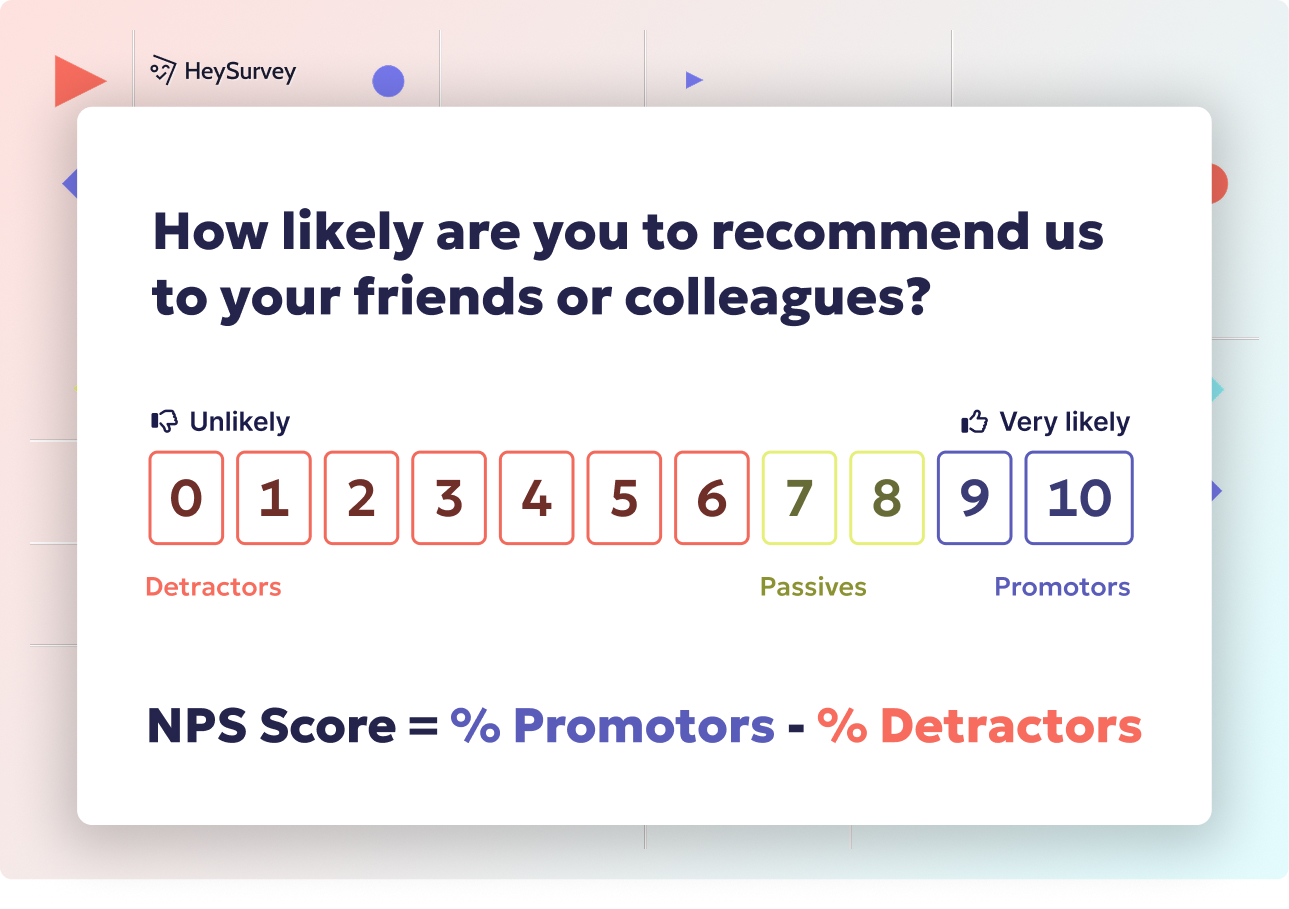
How likely are you to recommend this webinar to a colleague or friend?
Did the webinar meet your expectations?
How would you rate the overall quality of this webinar?
What was your biggest takeaway from the webinar?
Overall Satisfaction Survey Questions
These post webinar survey questions give you the clearest big-picture read on attendee sentiment.
Why & When to Use
If you want a simple pulse check, this is where to start. Overall satisfaction questions belong in almost every post webinar survey because they tell you, fast, whether people felt the session was worth their time.
Here’s the thing, these are foundational webinar survey questions for any webinar feedback form. They help you spot whether your content, speaker, pacing, and delivery worked together or fell a little flat.
Use this post webinar survey immediately after the session ends, while the experience is still fresh in your audience’s mind. Waiting too long is like asking someone to rate lunch three days later, and yes, the answers get fuzzier.
For better insight, mix rating-scale post webinar survey questions with at least one open-ended prompt. Numbers show trends, while written comments tell you why those scores happened.
These webinar satisfaction survey questions are also useful for benchmarking across multiple events. On top of that, you should compare satisfaction scores with:
attendance rate
drop-off rate
engagement metrics like chat activity, poll responses, and Q&A participation
That combo helps you see the full story. A high score with low engagement can still mean something felt a bit too sleepy, even if everyone was being polite.
Sample questions
How relevant was the webinar topic to your current needs or goals?
Did the webinar content match what you expected from the title and description?
How useful was the information shared during the webinar?
Which topic or segment was most valuable to you?
What additional topics would you like us to cover in future webinars?
Showing the survey in-platform during the webinar’s final two minutes can earn 3–5× higher response rates than post-event email, improving satisfaction benchmarking (source).
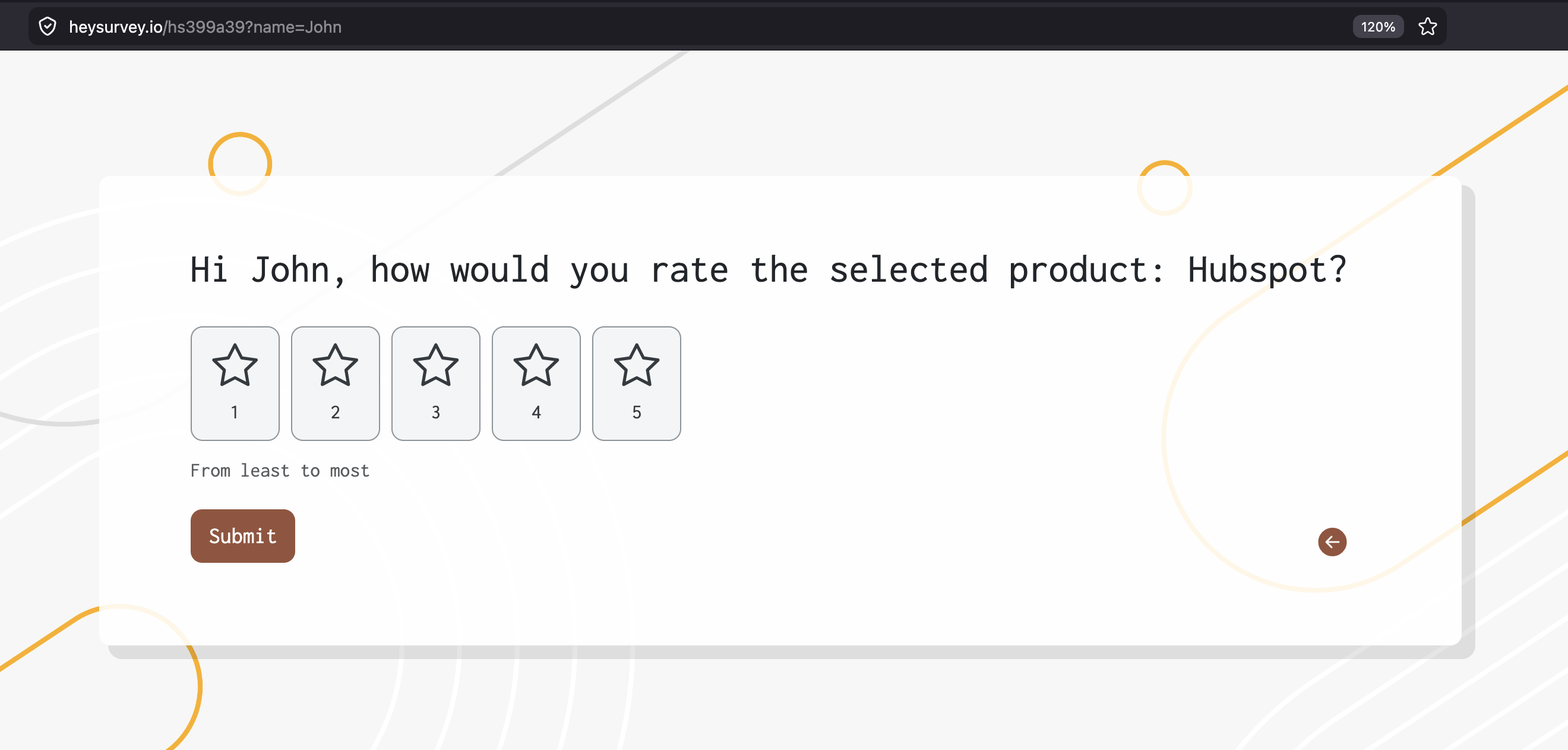
How to create a post-webinar survey in HeySurvey
Create a new survey
Click the button below to open a template or start from scratch. If you’re new to HeySurvey, just choose a post-webinar survey template and open it in the survey editor. You can edit the survey name, add your logo, and adjust settings before you begin.Add questions
Click Add Question to include the questions you want to ask after the webinar. Use Choice, Scale, NPS, or Text questions to collect feedback on content, speaker quality, pace, and overall experience. Mark important questions as required if you want every respondent to answer them.Publish survey
When your survey looks ready, click Preview to check it, then click Publish to generate a shareable link. You can send that link to attendees right after the webinar, or embed the survey on your website or in an online survey tool email.
Content Relevance and Value Survey Questions
These post webinar survey questions show whether your content truly landed with the right people.
Why & When to Use
Use these webinar survey questions when you want to know if the topic matched what your audience actually cared about, searched for, and signed up expecting to get.
That makes this kind of post webinar survey especially useful for educational webinars, thought leadership sessions, and content marketing campaigns where relevance is the whole game.
Here’s the thing, a strong turnout means very little if the webinar title promised steak and the session served a side salad. These post webinar survey questions help you check whether your promotion and your actual delivery stayed aligned.
Plus, a webinar feedback survey like this helps you find content gaps fast. If people wanted deeper examples, more tactical advice, or a different angle, their answers can shape better webinar questions and stronger future topics.
These webinar feedback survey questions are also great for uncovering buyer-stage needs and audience pain points. You can use responses to guide your editorial calendar, refine your webinar survey, and plan follow-up content that feels genuinely useful.
Look for patterns in answers like:
which topics felt most practical
where expectations did not match the session
what audience problems still need solving
which future webinar ideas show the strongest interest
That is how your post webinar survey turns feedback into smarter content, not just nicer charts.
Sample questions
How would you rate the speaker’s knowledge of the topic?
How clear and easy to follow was the presentation?
Was the pace of the webinar too fast, too slow, or about right?
How engaging did you find the speaker or panelists?
What could the speaker do to improve future webinars?
A 2021 survey study found 98.3% of webinar attendees agreed the content was pertinent to their practice, supporting relevance-focused post-webinar survey questions (Frontiers).
Speaker and Presentation Feedback Questions
These post webinar survey questions help you measure how well the presenter actually connected, not just what they said.
Why & When to Use
Use this part of your post webinar survey when delivery plays a big role in whether people learn, stay engaged, and trust the message.
These webinar survey questions focus on presenter clarity, pacing, authority, and audience connection. In other words, you are measuring how the session felt in the room, even if the room was a laptop and a half-finished coffee.
Here’s the thing, strong content can still fall flat if the speaker rushes, rambles, or sounds unclear. That is why post webinar survey questions about presentation quality matter so much after expert-led sessions, panel discussions, product demos, and educational webinars.
Plus, a webinar feedback survey helps you separate speaker performance from content quality. That distinction makes your webinar survey questions far more useful because a great topic and a confusing presentation are two very different problems.
If your session included multiple speakers or a live Q&A, include webinar feedback form questions about moderation too. Smooth handoffs, balanced talk time, and clear facilitation can make a panel feel polished instead of like group project day.
Look for feedback on:
speaker knowledge and credibility
clarity and ease of explanation
pacing and flow
engagement from the speaker or panelists
moderation quality during panels or Q&A
On top of that, constructive webinar feedback survey questions are especially helpful for recurring hosts who want to improve coaching, structure, and delivery over time.
Sample questions
How engaging was the webinar from start to finish?
Did the webinar include enough opportunities for interaction?
How useful was the Q&A portion of the webinar?
Did you feel your questions or interests were addressed?
What would have made the webinar more interactive for you?
Engagement and Interaction Survey Questions
These post webinar survey questions show you whether attendees felt involved, included, and part of the experience instead of just parked in front of a screen.
Why & When to Use
Use this part of your post webinar survey when your session is supposed to feel interactive, not one-way.
These webinar survey questions work best for webinars that include polls, live chat, Q&A, workshops, breakout discussion, or open discussion moments. If people were meant to participate, your post webinar survey questions should tell you whether that actually happened.
Here’s the thing, a webinar can have strong content and still feel flat if attendees never get pulled in. That is where a webinar feedback survey helps, because it shows whether your audience felt heard, involved, and able to contribute instead of silently clicking the leave button like tiny digital ninjas.
A good post webinar survey also helps you improve participation rates and the overall event experience. On top of that, these webinar survey questions can reveal whether your interaction format was clear, timely, and worth joining.
Look for feedback on:
live chat usefulness
poll participation and relevance
Q&A quality and timing
breakout discussion value
whether attendee questions were addressed
Plus, low engagement scores can point to pacing problems, weak topic fit, or a webinar that ran too long. For the best read, compare webinar feedback survey questions with actual data like chat activity, poll responses, and Q&A participation.
Sample questions
How would you rate the audio and video quality of the webinar?
Did you experience any technical issues during the webinar?
How easy was it to join and access the webinar?
Was the webinar platform easy to use?
What technical improvements would you suggest for future webinars?
Perceived interaction was the only statistically significant predictor of engagement and satisfaction in online learning, supporting post-webinar questions on chat, polls, and Q&A quality (source).
Technical Experience Survey Questions
These post webinar survey questions help you spot the little tech hiccups that quietly wreck a good webinar.
Why & When to Use
Use this part of your post webinar survey for every event, not just the ones that visibly go off the rails.
Even when your content is excellent, technical friction can drag down satisfaction fast. If people struggle with registration, joining, streaming, audio, chat, or replay access, your webinar survey questions need to uncover that before you assume the content was the problem.
Here’s the thing, attendees often remember the spinning load screen almost as much as the speaker. That is why webinar feedback form questions about technical experience are essential if you want to improve attendance, retention, and overall trust in your events.
A strong post webinar survey should cover the full attendee journey, including:
registration and confirmation emails
login and join experience
audio and video quality
ease of using chat, polls, or Q&A
replay and on-demand access
Plus, technical complaints can skew the rest of your webinar feedback survey results if you do not review them separately. A short freeze, bad sound, or confusing platform flow can make solid content feel worse than it was, which means these webinar feedback survey questions protect your data as much as your reputation.
On top of that, even small issues can lower completion rates and leave your brand looking less polished than you intended.
Sample questions
Would you like to learn more about the product, service, or topic discussed?
What type of follow-up would be most helpful to you?
Are you interested in speaking with a specialist or sales representative?
How likely are you to attend a future webinar from us?
What is your next priority related to this topic?
Follow-Up Intent and Conversion Survey Questions
These post webinar survey questions help you understand who is curious, who is qualified, and who just wants the slides.
Why & When to Use
Use this part of your post webinar survey when your goal is not just applause, but action.
These webinar survey questions reveal post-event intent, lead readiness, and next-step preferences, which makes them especially useful for demand generation, product marketing, sales webinars, and B2B lead nurturing. Plus, they help you connect webinar performance to pipeline impact instead of stopping at attendee sentiment.
Here’s the thing, the best webinar follow up survey questions should feel optional and low-friction, not like a surprise sales tackle. You want honest signals, not panic-clicks.
A smart post webinar survey can help you segment attendees by:
interest level
job role
use case
buying urgency
preferred next step
On top of that, this section makes your webinar feedback survey more actionable because it shows what people want after the event, not just what they thought about it. That means your team can tailor nurture emails, content offers, and sales outreach based on real responses.
Good webinar feedback survey questions here also help you spot future opportunities, like repeat attendees, warm leads, and people who need education before they are ready to talk. Not every click means “book the demo now,” and honestly, your audience will appreciate that you know the difference.
Sample questions
What did you like most about the webinar?
What did you like least about the webinar?
What would you improve for next time?
Was there anything you expected that was not covered?
Any additional comments or suggestions?
Open-Ended Webinar Feedback Questions
Open-ended post webinar survey questions give you the gold hiding between the checkboxes.
Why & When to Use
Use open-ended webinar feedback survey questions in every post webinar survey because they capture nuance that rating scales simply cannot.
A score can tell you something felt off, but a written answer tells you what actually happened, which is where the useful stuff lives.
These webinar survey questions are especially helpful for spotting unexpected issues, repeated pain points, surprising wins, and even the exact words your audience uses to describe what mattered most. Plus, sometimes one sentence from an attendee is more useful than ten neat little numbers. Data is great, but comments spill the tea.
Keep the number of open-ended prompts limited so your webinar feedback survey stays easy to finish.
Here’s the thing, if you ask too many broad questions, people get tired and start typing things like “good webinar,” which is not exactly a strategy jackpot.
To get better answers in your post webinar survey, keep prompts specific and clearly tied to the webinar experience, content, or expectations.
Use responses to look for recurring themes such as:
unclear sections
unanswered webinar questions
strong audience wording
testimonial-style praise
ideas for future webinar topics
On top of that, strong positive comments from your webinar survey can inspire sharper messaging, better positioning, and future promotion that sounds more like your audience and less like a brochure.
Sample questions
How satisfied were you with the webinar overall?
Which part of the webinar was most valuable to you?
Did the webinar meet your expectations based on the event description?
What could we improve for future webinars?
Would you attend another webinar from us?
Best Practices for Creating a Webinar Feedback Survey
Great post webinar survey questions make it easier for people to answer and easier for you to act.
Why & When to Use
Use these best practices any time you want to build a stronger post webinar survey, whether your event was a product demo, training session, expert panel, or lead generation webinar.
The goal is simple: improve response rates and get cleaner, more useful feedback from your webinar survey questions.
Here’s the thing, even smart teams get messy data when a webinar feedback survey is too long, vague, or awkward to answer.
A well-built post webinar survey helps you learn what worked, what flopped, and what to fix before your next event. Plus, if your survey feels painless, more people will actually finish it. A tiny miracle, honestly.
Use these dos and don’ts when shaping your webinar feedback form questions:
Do keep the survey short and focused.
Do send the post webinar survey soon after the webinar ends.
Do combine ratings with open-ended webinar feedback survey questions.
Do align webinar survey questions with your goals.
Do use simple language and ask only what you will use.
Don’t ask repetitive webinar questions.
Don’t make every question required.
Don’t combine multiple ideas into one question.
Don’t lead the witness with biased wording.
Don’t ignore technical feedback or collect answers without a follow-up plan.
On top of that, the best post webinar survey questions respect your audience’s time while giving you feedback you can actually use.
Sample questions
Which survey trends appeared consistently across responses?
What were the top three strengths attendees highlighted?
What were the top three improvement areas attendees identified?
Which attendee segments responded most positively or negatively?
What changes should be prioritized before the next webinar?
How to Turn Post Webinar Survey Insights Into Action
A smart post webinar survey only pays off when you use the answers to make your next webinar better.
Why & When to Use
Gathering responses is just step one, but the real value of post webinar survey questions shows up when feedback turns into action.
Here’s the thing, this is the bridge between collecting opinions and improving future webinars, content strategy, and conversion results.
Start by grouping webinar survey questions and answers into clear themes so patterns are easy to spot.
Content
Speaker performance
Engagement
Technical issues
Conversion intent
Once your post webinar survey data is organized, look for what comes up most often and what affects the attendee experience the most.
Plus, prioritize fixes by frequency and impact, not by whoever complained the loudest in Slack.
Use those insights to make practical updates across your process.
Adjust future webinar topics based on repeated interest
Improve speaker prep if clarity or pacing got weak marks
Change follow-up campaigns if attendees showed strong or low buying intent
Fix technical issues fast if they hurt engagement or watch time
Refine content structure if attendees wanted more demos, examples, or Q&A
On top of that, compare feedback by audience segment so you can see who loved the webinar and who quietly ran for the digital exits.
Treat every post webinar survey as an ongoing optimization tool, not a box-checking task, and your webinar feedback survey questions will keep making each event sharper, more useful, and more effective.
Related Event Survey Surveys

29 Conference Survey Questions That Get Better Feedback
Explore 25 conference survey questions sample questions to improve event feedback, measure satisf...
28 Valentine's Day Survey Questions to Boost Engagement
Discover 25 unique Valentine's Day survey questions to boost engagement and insights for your nex...
31 Retreat Feedback Survey Questions
Explore 25 sample retreat feedback survey questions to improve your event with clear insights, ra...