31 Persona Survey Questions That Drive Better Insights
Explore 25 persona survey questions with sample questions to build better audience insights, refine targeting, and improve research accuracy.
Persona survey questions help you understand who your audience is, what they need, how they behave, and what nudges them to buy.
Good questions turn guesses into usable insights.
In this guide, you’ll see the main survey types, sample research survey questions, and target market survey questions that help shape stronger personas.
Plus, you’ll get sample marketing survey questions, questions for audience personas, and practical ways to turn real responses into clear, useful customer profiles, because guessing is a terrible business plan.
Sample questions
Which age range best describes you?
What is your current job title or primary role?
What industry do you work in?
What is your household income range or company size?
Which of the following best describes your education level?
Demographic Persona Survey Questions
Start with the basics that actually matter.
Why & When to Use
Demographic persona survey questions help you sort people into useful groups like life stage, role, income range, education level, household makeup, or company type.
These sample research survey questions are most useful at the start of persona research, when you need a clear snapshot of who is in your audience before digging into what they want and why they buy.
Here’s the thing, target market survey questions like these help you spot meaningful segments fast.
You might find that one age group prefers quick how-to content, while another needs deeper comparisons before making a decision.
But demographic data should support your persona work, not run the whole show.
If you stop here, you get a profile on paper, not a real person, which is a bit like judging a pizza by the box.
Use sample marketing survey questions like these when you want to:
group respondents into clear audience segments
compare answers across roles, industries, or income levels
shape better messaging, offers, and content paths
identify which groups are worth deeper follow-up research
On top of that, questions for audience personas work best when you only include demographics tied to purchase behavior, content needs, or decision-making.
If a detail will not change your strategy, you probably do not need to ask it.
Sample questions
What matters most to you when choosing a product or service like ours?
Which personal or professional goals are you actively working toward right now?
How do you usually define a successful purchase decision?
Which values most influence the brands you trust?
What frustrations do you have with the options currently available in this category?
Effective persona research should pair demographic questions with goals, motivations, and pain points, because demographics alone rarely produce actionable customer segments (source).
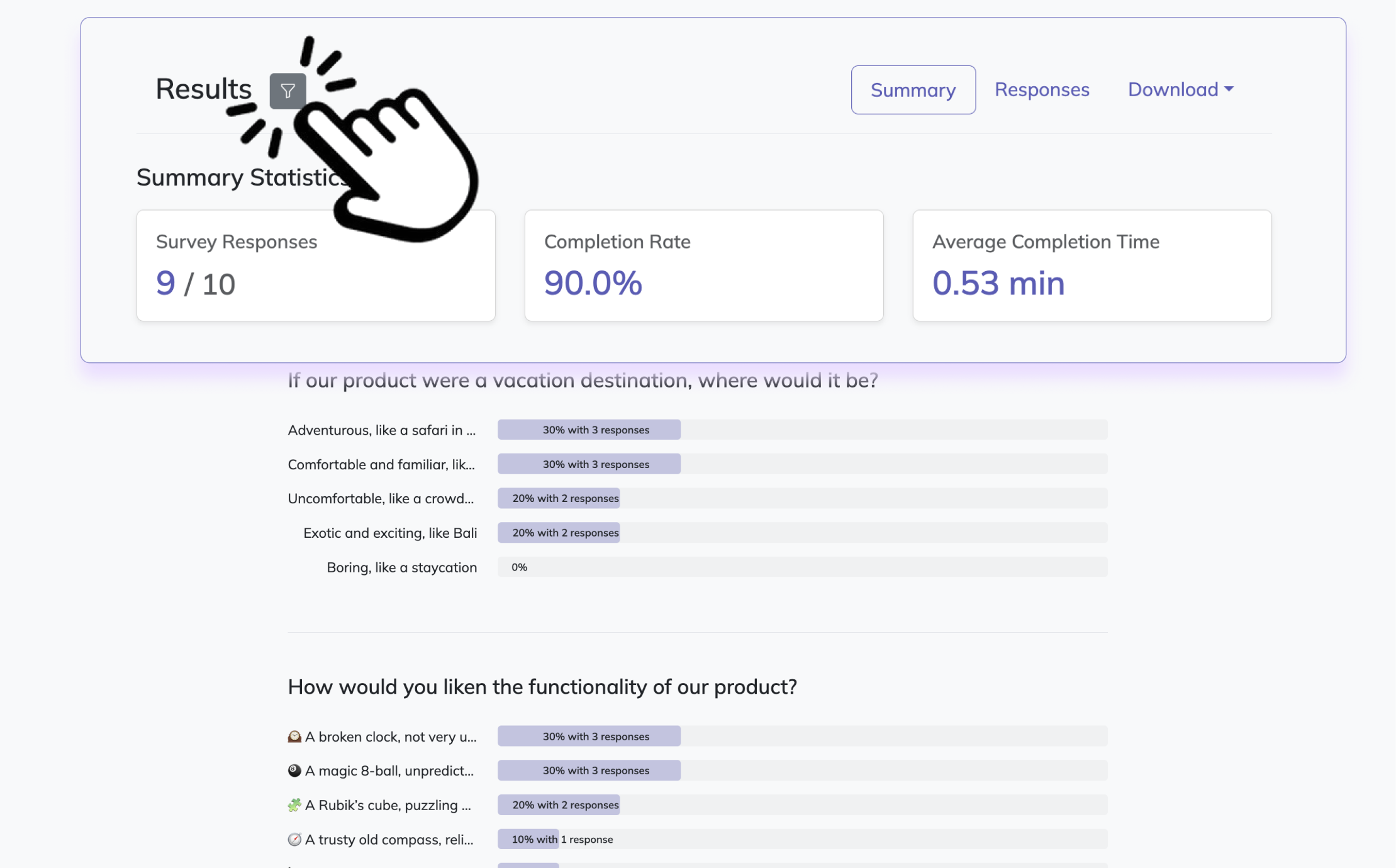
Create a persona survey in HeySurvey in 3 easy steps
Create a new survey
Start by opening a persona survey template from the button below, or choose a blank sheet if you want to build it from scratch. You can begin without an account, but you’ll need one to publish and view responses later. Once the survey opens in the editor, give it a clear internal name and adjust any basic settings you need.Add questions
Click Add Question and include the fields that help you understand your audience: choice questions for demographics, scale questions for preferences, and text questions for short descriptions. You can mark questions as required, add answer options, and use branching to show follow-up questions based on earlier answers. Keep questions simple and focused so respondents can complete the survey quickly.Publish survey
Preview your survey to check the flow, wording, and design. When everything looks right, click Publish to generate a shareable link. You can then send the survey to your audience and start collecting persona data right away.
Psychographic Persona Survey Questions
Get past who people are and into why they choose.
Why & When to Use
Psychographic persona survey questions help you understand the values, priorities, attitudes, interests, and lifestyle patterns that shape buying decisions.
These sample research survey questions are especially useful when demographics tell you who your audience is, but not why one segment clicks, buys, or bounces.
Here’s the thing, target market survey questions like these uncover the motivation behind product choices, brand preferences, and channel behavior.
You start seeing why one group wants convenience, while another cares more about trust, status, price, or long-term results.
That makes this section a big deal for stronger messaging, sharper brand voice, and better audience personas that feel human instead of flat.
Plus, sample marketing survey questions focused on psychographics can help you match offers and content to what your audience actually cares about.
Use sample research survey questions like these when you want to:
understand what drives decision-making across audience segments
improve messaging based on values, goals, and frustrations
build better target market survey questions for campaigns and positioning
create questions for audience personas that go beyond surface-level traits
On top of that, psychographic answers often work best when paired with open-ended follow-up questions.
That is where people reveal the good stuff, and sometimes the oddly passionate opinions too.
Sample questions
How often do you purchase or use products or services in this category?
What usually triggers you to start looking for a solution like this?
Which brands or tools have you used in the past 12 months?
How much time do you typically spend researching before making a decision?
What action do you usually take after discovering a new brand?
Research shows psychographic data on motivations, attitudes, and values gives marketers a deeper understanding of consumer behavior than demographics alone. Source
Behavioral Persona Survey Questions
Watch what people do, not just what they say.
Why & When to Use
Behavioral persona survey questions help you uncover habits, routines, product usage patterns, and real-world actions that shape buying behavior.
These sample research survey questions are especially useful when you want to see how people actually move from awareness to action, not how they think they behave on their best day.
Here’s the thing, target market survey questions like these can reveal who buys often, who comes back, and who only shows up when the stars align and a discount appears.
That makes them perfect for spotting high-intent users, repeat customers, and the difference between occasional buyers and loyal ones.
Plus, sample marketing survey questions built around behavior can improve segmentation, lifecycle messaging, and offer targeting.
You can use these insights to tailor follow-ups, refine timing, and send the right message before your audience wanders off for a snack.
Use sample research survey questions like these when you want to:
identify frequent users versus occasional buyers
understand buying triggers and decision timing
improve lifecycle campaigns and retention messaging
build sharper target market survey questions based on real actions
create stronger sample marketing survey questions and questions for audience personas
On top of that, focus on observable actions instead of guesses or hypothetical behavior.
That is where the useful truth lives.
Sample questions
What is the biggest challenge you face related to this problem?
What have you tried before that did not work well for you?
What slows you down or makes this process harder than it should be?
What is the most frustrating part of finding the right solution?
If you could fix one issue immediately, what would it be?

Pain Point and Challenge Survey Questions
Find the friction before you write the fix.
Why & When to Use
Pain point and challenge survey questions help you uncover obstacles, unmet needs, workflow problems, emotional friction, and the buying barriers that keep people stuck.
That makes this one of the most valuable groups of sample research survey questions because it shows you not just what your audience wants, but what is getting in their way right now.
Here’s the thing, strong survey target market survey questions in this area can sharpen product positioning, improve sales messaging, and give your content a much clearer job to do.
Plus, sample marketing survey questions about challenges often reveal the exact words people use when they describe their problem, which is pure gold for copy.
You can also use these as sample research survey questions when validating a new segment, especially if you want to see whether their frustrations are serious enough to justify a different offer or message.
Use pain point questions when you want to:
uncover practical problems in daily workflows
spot emotional frustrations like stress, confusion, or hesitation
improve positioning, sales conversations, and content planning
build better target market survey questions for new audience segments
create stronger sample marketing survey questions and questions for audience personas
Writer tip: cover both practical issues and emotional frustrations.
If you only ask about logistics, you miss the human part, and that is usually where the good stuff is hiding.
Sample questions
What are the top factors you consider before choosing a provider or product?
Who else is involved in the decision-making process?
What concerns or objections do you usually have before purchasing?
Where do you go to compare options or validate your choice?
What usually convinces you that one option is better than another?
Survey-based buyer persona research should capture both quantitative traits and qualitative pain points in customers’ own words to improve targeting and messaging (SurveyMonkey).
Buying Decision and Purchase Journey Survey Questions
See how people actually move from maybe to yes.
Why & When to Use
Buying decision and purchase journey survey questions help you understand how people compare options, what builds trust, who influences the choice, and what slows the purchase down.
That makes them especially useful target market survey questions when you want to improve conversions, tighten messaging, or stop guessing why people stall right before the finish line. Spoiler: it is rarely because they love paperwork.
Here’s the thing, these are some of the most practical sample research survey questions for B2B personas, expensive services, and high-consideration offers where buyers need time, proof, and sometimes a small committee to say yes.
Plus, sample marketing survey questions in this category can help you map answers to the full journey:
awareness stage, where people first realize they have a need
consideration stage, where they compare providers, features, or approaches
decision stage, where objections, proof, and pricing details matter most
On top of that, this group works well for sample research survey questions when you want to identify which content, conversations, or comparisons actually push people forward.
Use buying journey questions when you want to:
uncover decision criteria and hidden objections
learn who influences the final purchase
improve funnel messaging and conversion points
build better target market survey questions and questions for audience personas
Writer tip: cover both decision criteria and objections.
If you only ask why people buy, you miss why they hesitate, and that is where the conversion clues like to hide.
Sample questions
What type of content do you prefer when researching a problem or solution?
Which topics do you want more information about before making a decision?
Where do you usually discover helpful content in this space?
How do you prefer brands to communicate with you after initial contact?
What makes a piece of content useful enough for you to save, share, or revisit?
Content Preference and Information-Gathering Survey Questions
Find out what your audience actually wants to read, watch, and click.
Why & When to Use
Content preference and information-gathering questions are some of the most useful content marketing survey questions because they show you which formats, topics, channels, and trust sources connect with each persona.
Here’s the thing, great content is not just about what you want to publish. It is about what your audience will actually use before they bounce off to pet a different internet tab.
These sample research survey questions help you plan smarter content for every stage of the funnel, from early education to late-stage decision support.
Plus, they give you practical direction for:
SEO content planning
lead magnets and downloadable resources
email strategy and follow-up sequences
social distribution and promotion choices
stronger target market survey questions and questions for audience personas
On top of that, these sample marketing survey questions work especially well if you are refining an editorial calendar, testing new content formats, or creating content for different buyer stages.
Use this survey type when you want to learn what people trust, where they discover ideas, and what makes content feel worth saving or sharing.
Writer tip: connect answers to clear action.
Turn responses into content themes, preferred formats, and channel priorities so your next plan is built on evidence, not vibes.
Sample questions
What is the main goal of this survey from the respondent’s perspective?
Which answers would directly influence a marketing, product, or sales decision?
Are any questions collecting information that will not be used?
Do the questions cover both who the audience is and why they act?
Will the responses make it easier to segment people into distinct personas?
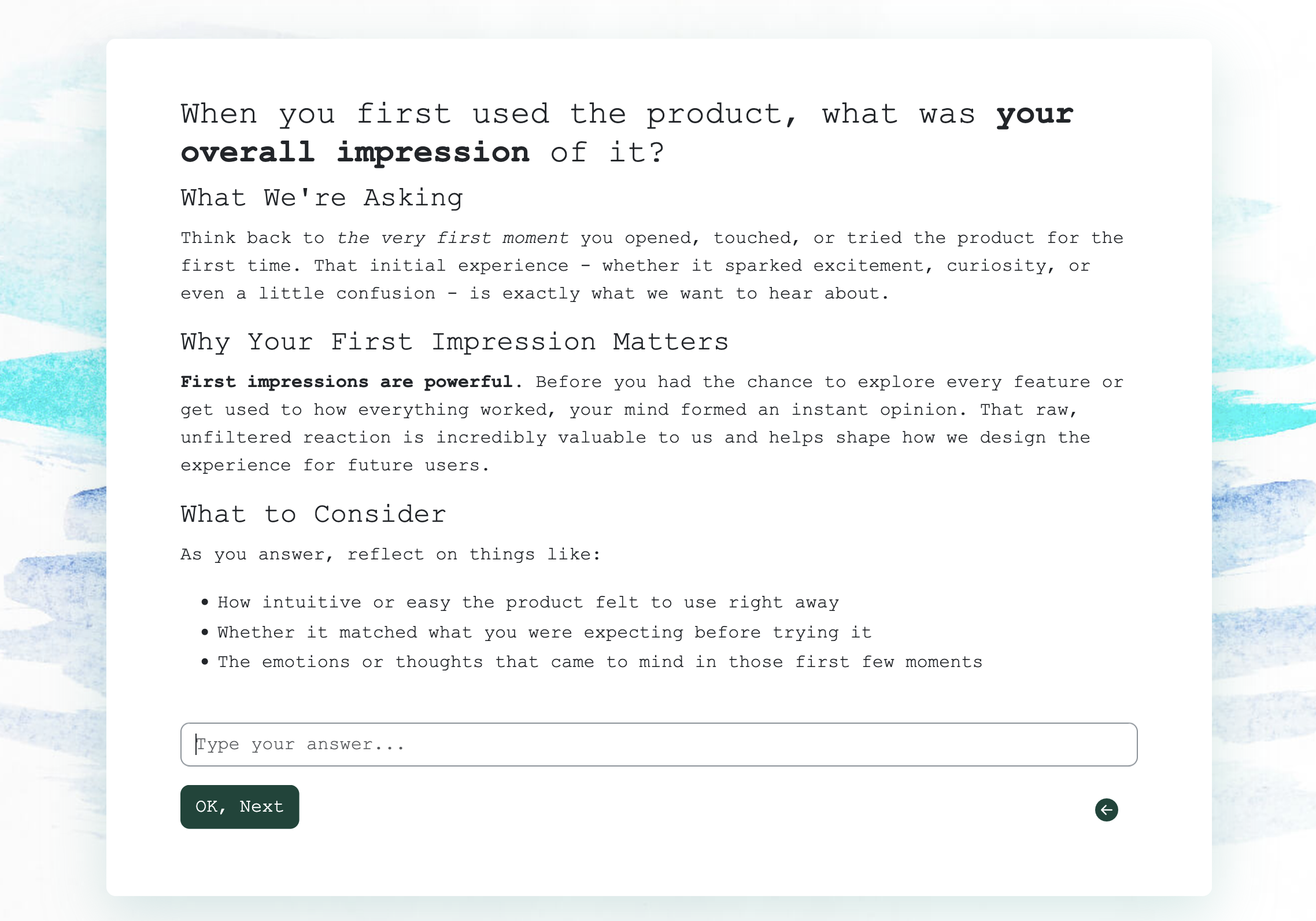
How to Choose the Right Persona Survey Questions
Pick questions that earn their spot.
Why & When to Use
The best sample research survey questions start with your goal, not a giant wishlist of things you are merely curious about.
If you want audience discovery, ask who people are, what they need, and how they search for solutions.
If you want persona validation, focus on target market survey questions that confirm behaviors, motivations, and pain points.
If your goal is product messaging or content strategy, lean on sample marketing survey questions about challenges, objections, buying triggers, and content preferences.
For retention, ask what keeps customers engaged, what nearly sends them running, and what support helps most. Here’s the thing, every question should help you make a real decision later.
Balance your survey across key areas so you get a full picture:
demographics for basic context
psychographics for values, attitudes, and priorities
behaviors for actions and habits
challenges for pain points and blockers
content preferences for format, channel, and trust signals
Use multiple-choice for fast segmentation, rating scales for patterns you can compare, and open-ended prompts when you need richer questions for audience personas.
Writer tip: keep it tight.
Cut repeats, remove nice-to-know questions, and keep only what will shape marketing, product, or sales moves because nobody wakes up hoping to finish a 47-question survey.
Sample questions
Are your sample research survey questions tied to one clear decision, such as messaging, segmentation, or offer strategy?
Could a respondent answer each question quickly without guessing what you mean?
Do your target market survey questions mix ratings, multiple-choice, and open text responses?
Can you segment answers by role, buying stage, or use case once the survey is complete?
Are any sample marketing survey questions leading people toward the answer you hope to hear?
Persona Survey Best Practices
Good survey habits create better personas.
Why & When to Use
When you build persona surveys, the little choices matter a lot.
Here’s the thing, strong sample research survey questions give you cleaner answers, sharper patterns, and way fewer forehead-slapping moments later.
Use these best practices when writing target market survey questions for audience research, campaign planning, or refining questions for audience personas.
Dos
These moves improve data quality because they make responses easier to trust and easier to analyze:
Start with a clear research goal so every question earns its place.
Ask neutral, specific questions because vague wording creates fuzzy data.
Mix quantitative and qualitative formats so you get both trends and real voice-of-customer detail.
Segment responses by role, use case, or buying stage so personas reflect meaningful differences.
Test the survey with a small group first because confusing wording loves to hide in plain sight.
Don’ts
These mistakes weaken sample marketing survey questions fast:
Do not ask leading questions like “How helpful was our amazing onboarding?” Ask “How would you rate the onboarding experience?”
Do not overload demographic fields unless they help targeting or persona creation.
Do not rely only on yes/no questions for complex behavior or motivation.
Do not combine two ideas in one prompt like “Was pricing clear and affordable?” Split it into two.
Do not collect data you will never use because extra clutter makes surveys feel like homework with worse snacks.
Sample questions
Which response patterns show clear audience segments?
What pain points appear most often across high-value respondents?
Which motivations align with specific products, services, or campaigns?
What content preferences should shape future SEO and content marketing plans?
What message, offer, or channel changes should be tested first based on the survey findings?
Turn Persona Survey Insights Into Action
Good data only matters if you actually use it.
Why & When to Use
Once you collect sample research survey questions, the real win is turning answers into audience personas you can use on Monday morning, not someday in a mythical strategy meeting.
Here’s the thing, target market survey questions should lead you toward clear groups with shared traits, needs, buying triggers, objections, and preferred channels.
Start by sorting responses into patterns.
Look for repeated goals, common pain points, decision factors, and content preferences across similar respondents, especially in your best-fit or highest-value segments.
Plus, organize your findings into simple persona summaries so your team can act fast.
Each profile should include:
goals
pain points
buying triggers
objections
content preferences
favorite channels
On top of that, sample marketing survey questions can directly improve how you market, sell, and build.
Use your insights to guide:
messaging that matches what people actually care about
targeting based on role, use case, or stage of awareness
offers that connect to real motivations
content marketing survey questions and SEO topics shaped by audience interests
sales enablement built around objections and proof points
product decisions based on unmet needs
If you stop at collecting questions for audience personas, you just own a spreadsheet with vibes. Turn the patterns into practical personas, then test message, offer, and channel changes first.
Related Market Survey Surveys
31 Market Research Survey Questions
Explore 25 market research survey questions with sample insights to improve your strategy, unders...
29 Coffee Survey Questions for Better Customer Insights
Explore 25 coffee survey questions with sample responses to sharpen your research, uncover prefer...
29 Content Marketing Survey Questions
Explore 25 content marketing survey questions with sample questions, insights, and tips to improv...