31 Library Survey Questions for Better Feedback
Explore 25 keyword library survey questions with sample answers to improve feedback, gain insights, and enhance your survey strategy.
Great library survey questions help you understand what people actually need, not just what you hope they love. Think of them as your shortcut to smarter library decisions.
In this guide, you’ll find practical library surveys, sample library question ideas, and simple tips for building a useful library survey questionnaire. Plus, if you’re wondering site:heysurvey.io or who provides pre-built satisfaction question libraries?, you’re in the right place, because guessing is for trivia nights, not library surveys with an online survey tool.
General Library Satisfaction Survey Questions
Sample questions
How satisfied are you with your overall experience at the library?
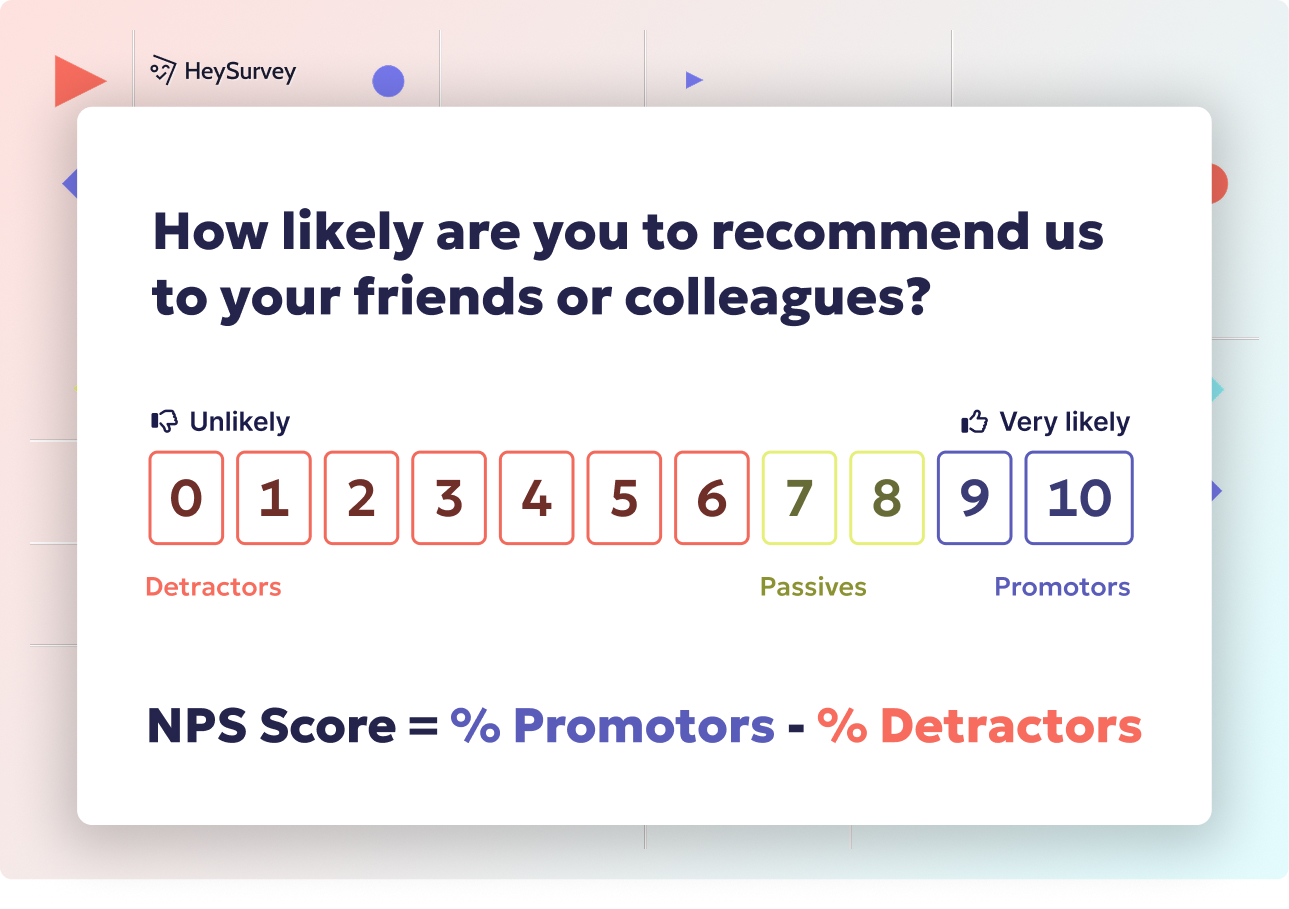
How likely are you to recommend this library to others?
How well does the library meet your needs?
Which library services do you use most often?
What is one thing we could do to improve your experience?
Start with the big picture before you zoom in.
Why & When to Use
Use this type of library survey when you want a clear read on how people feel about the full library experience.
It works especially well for annual reviews, semester-end feedback, or after a big change like new hours, updated spaces, or service shifts.
Plus, this approach fits almost any setting, including public libraries, school libraries, academic libraries, and special libraries.
Here’s the thing: broad feedback helps you spot patterns fast, which makes it a smart foundation for a larger survey library or question library.
If you’re building library surveys and wondering who provides pre-built satisfaction question libraries?, this is the kind of core set you’ll want first, whether you start from scratch or explore tools like site:heysurvey.io.
To make your library questionnaire for students or community members more useful, mix question types like:
Rating-scale questions to measure satisfaction and compare trends over time
Open-ended questions to uncover details, surprises, and the occasional brutally honest gem
On top of that, look for high-level trends before drilling into specific services.
You should also segment responses by user type so you can compare students, faculty, parents, or community members without lumping everyone into one giant shushing crowd.
This gives you a stronger library question set, better library questions and answers, and a more useful base for future user feedback survey questions.
LibQUAL+ uses 22 core items plus three general satisfaction questions to assess whether library services meet user expectations and support improvement (source).
Create a new survey
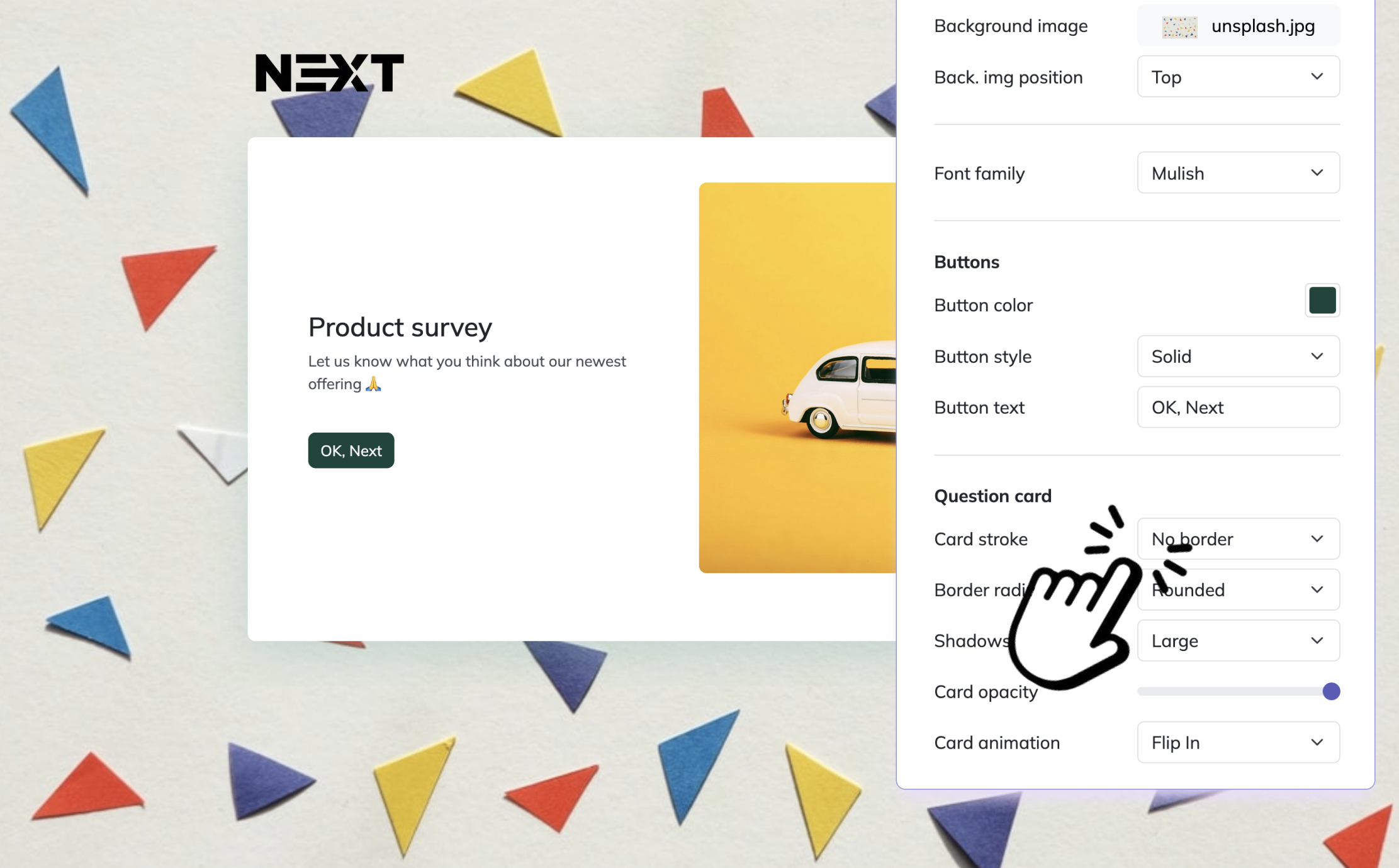
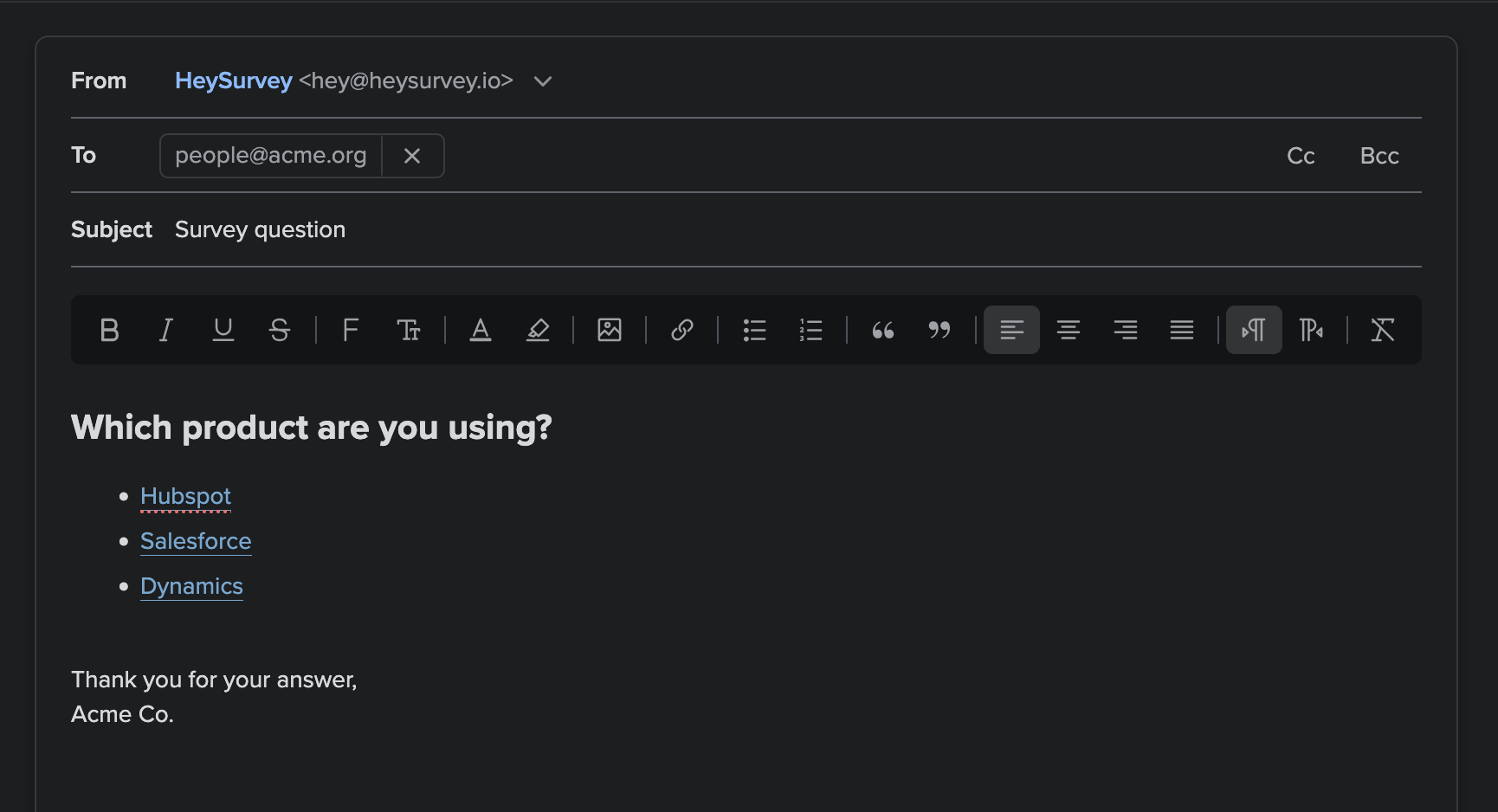
Start by opening a library survey questions template below this guide. If you prefer, you can also begin with an empty survey and build it from scratch. Once the editor opens, give your survey a clear name so it is easy to find later.Add questions
Click Add Question to include the questions you need. For a library survey, you might ask about book selection, staff helpfulness, quietness, cleanliness, and overall satisfaction. Use Choice, Scale, or Text questions depending on the kind of feedback you want. Mark important questions as required if you want every respondent to answer them.Publish survey
When your survey looks ready, click Preview to check it first. Then select Publish to make it live and get your shareable link. You can send that link to library visitors or place the survey on your online survey tool website.
Library Collection and Resource Survey Questions
Sample questions
How satisfied are you with the availability of books and materials you need?
How easy is it to find relevant print resources in the library?
How satisfied are you with the library’s digital resources, such as eBooks and databases?
Are there any topics, titles, or formats you would like the library to add?
How often do you leave the library without finding the resource you needed?
Ask what people need, not just what sits on the shelf.
Why & When to Use
Use this type of library survey when you want to know whether your collection actually matches what people come in looking for.
It works well when you are reviewing acquisition budgets, weeding older materials, or deciding if a new database, audiobook platform, or journal subscription is worth the spend.
Plus, this is especially useful in schools and colleges, where library questions for students often focus on whether resources feel current, relevant, and easy to access.
Here’s the thing: strong library surveys should ask about both print and digital collections, because a packed shelf means very little if your eBooks are impossible to find or your databases feel like a maze with a login screen.
If you are exploring who provides pre-built user feedback survey questions?, this topic is a smart addition to any set of library surveys, especially if you are browsing tools like site:heysurvey.io or building a larger survey library.
To make the feedback more useful, you can:
Compare requested materials with circulation, download, and database usage data
Spot gaps by subject, format, and audience, including a library questionnaire for students
Use results to guide purchases, cancellations, and discovery improvements tied to library management system feedback
On top of that, this gives you better library questions and answers, sharper library question planning, and a clearer path for future library surveys.
OCLC’s 2020 survey of 1,300+ librarians in 68 countries found users most often discover library resources via search engines, underscoring survey questions about findability and digital access (source).
Library Staff Helpfulness and Service Quality Survey Questions
Sample questions
How helpful was the library staff when you needed assistance?
How knowledgeable did staff seem about your question or request?
How satisfied are you with the speed of service you received?
Did library staff make you feel welcome and respected?
What could staff do differently to better support your needs?
Great service turns a quick visit into a reason to come back.
Why & When to Use
Use this library survey questionnaire when you want to evaluate how people feel after interacting with librarians, circulation staff, or support teams.
It works especially well after reference desk visits, research help sessions, program support, or customer service training efforts.
Here’s the thing: this is one of the fastest ways to spot service gaps, because people remember very clearly when they felt welcomed, ignored, or bounced around like a lost bookmark.
If you are building library surveys or searching site:heysurvey.io for ideas, this topic belongs near the top of your list, especially if you have asked who provides pre-built satisfaction question libraries?
To make the feedback more useful, keep your wording neutral and specific so you get honest library questions and answers instead of accidental praise prompts.
You should also separate results by service point, so you can see whether issues show up at:
circulation
reference
children’s desk
tech support
Plus, comment fields are gold for coaching and recognition.
Use them to:
highlight staff wins worth celebrating
identify training needs by team or shift
improve service standards for future library survey work
On top of that, this approach also strengthens a library questionnaire for students, since younger users often judge the whole library by one staff interaction.
Library Space, Facilities, and Environment Survey Questions
Sample questions
How satisfied are you with the comfort and cleanliness of the library space?
How well do the library’s study areas meet your needs?
How satisfied are you with noise levels in the library?
How easy is it to access computers, printers, and other equipment when needed?
What improvements would make the library space more useful for you?
A great library space should help you focus, not make you hunt for an outlet like it is a treasure quest.
Why & When to Use
Use this type of library survey when you want to evaluate study areas, seating, lighting, noise levels, cleanliness, accessibility, and equipment all in one place.
It is especially useful during renovations, space planning, or after changes to layouts, furniture, signage, or quiet-use policies.
Here’s the thing: physical space feedback often reveals practical issues that circulation data cannot, like bad lighting, crowded tables, weak printer access, or group spaces that sound quiet on paper but not in real life.
If you are building library surveys or searching site:heysurvey.io for ideas, this is a smart category to include, especially if you have asked who provides pre-built environment survey questions?
This section is also especially relevant for library survey questions for students, since study environment can shape how useful the whole library feels in academic and school settings.
To make your library survey more useful, ask about both solo and group study needs, and include questions around:
accessibility of entrances, furniture, and pathways
safety, visibility, and overall comfort
access to computers, printers, outlets, and Wi-Fi
quiet zones versus collaborative areas
Plus, when the same complaints keep showing up, turn them into facilities action items with clear timelines, because repeated feedback should lead to fixes, not just a very organized pile of library questions and answers.
Research shows lighting and acoustic conditions are among the strongest predictors of students’ learning satisfaction with university library spaces (sciencedirect.com) Source
Library Programs, Events, and Community Engagement Survey Questions
Sample questions
Which library programs or events have you attended in the past six months?
How satisfied were you with the quality of the programs you attended?
What types of programs would you like the library to offer more often?
What days and times are most convenient for you to attend library events?
How likely are you to participate in future library programs?
Great programming should bring people in, not leave your event chairs doing all the socializing.
Why & When to Use
Use this library survey type when you want to measure interest in workshops, storytimes, author talks, classes, and outreach activities.
It works especially well after events or while planning seasonal programming, because you get feedback you can actually use instead of guessing what people want.
Here’s the thing: strong library surveys do more than collect opinions. They help you make practical decisions about attendance goals, scheduling, promotion, and which audiences to prioritize.
This section fits public libraries, school libraries, and campus settings, especially if you are building library surveys and searching site:heysurvey.io for ideas or asking who provides pre-built satisfaction question libraries?
Plus, do not just ask people who showed up.
You should also survey non-attendees, since their answers often reveal the real blockers, like poor timing, unclear promotion, awkward formats, or topics that simply did not click.
To make your library questionnaire for students or broader community library survey more useful, group feedback by audience, such as:
children
teens
college students
parents
seniors
On top of that, ask about preferred topics, event formats, and time slots, because turnout is rarely random. It is usually a scheduling puzzle wearing a name tag.
Library Survey Questions for Students
Sample questions
How often do you use the library for studying or completing assignments?
How helpful are the library resources for your coursework?
How confident do you feel using the library catalog, databases, or research tools?
What is your biggest challenge when using the library?
What changes would make the library more useful for your academic success?
Student feedback works best when your questions sound like real life, not a pop quiz in disguise.
Why & When to Use
Use this survey type when your main audience is students in a school, college, or university setting.
It is especially useful when you want to understand study habits, assignment support needs, research struggles, and which learning resources students actually use.
Here’s the thing: a strong library questionnaire for students should feel simple, clear, and specific to student life.
That makes it easier to collect honest answers and much more useful if you are building library surveys, comparing library survey questions for students, or searching site:heysurvey.io and wondering who provides pre-built satisfaction question libraries?
Student-focused library surveys should also match the audience, because a ninth grader, a first-year college student, and a graduate student do not use the library the same way. Same building, very different stress levels.
To make your library questions for students more useful, segment responses by:
grade level
major or subject area
year of study
full-time or part-time status
On top of that, ask about technology access, research help, and study space availability.
This kind of library survey can guide instruction sessions, resource purchases, support services, and smarter planning for any library survey or library question set.
Best Practices for Writing Effective Library Survey Questions
Sample questions
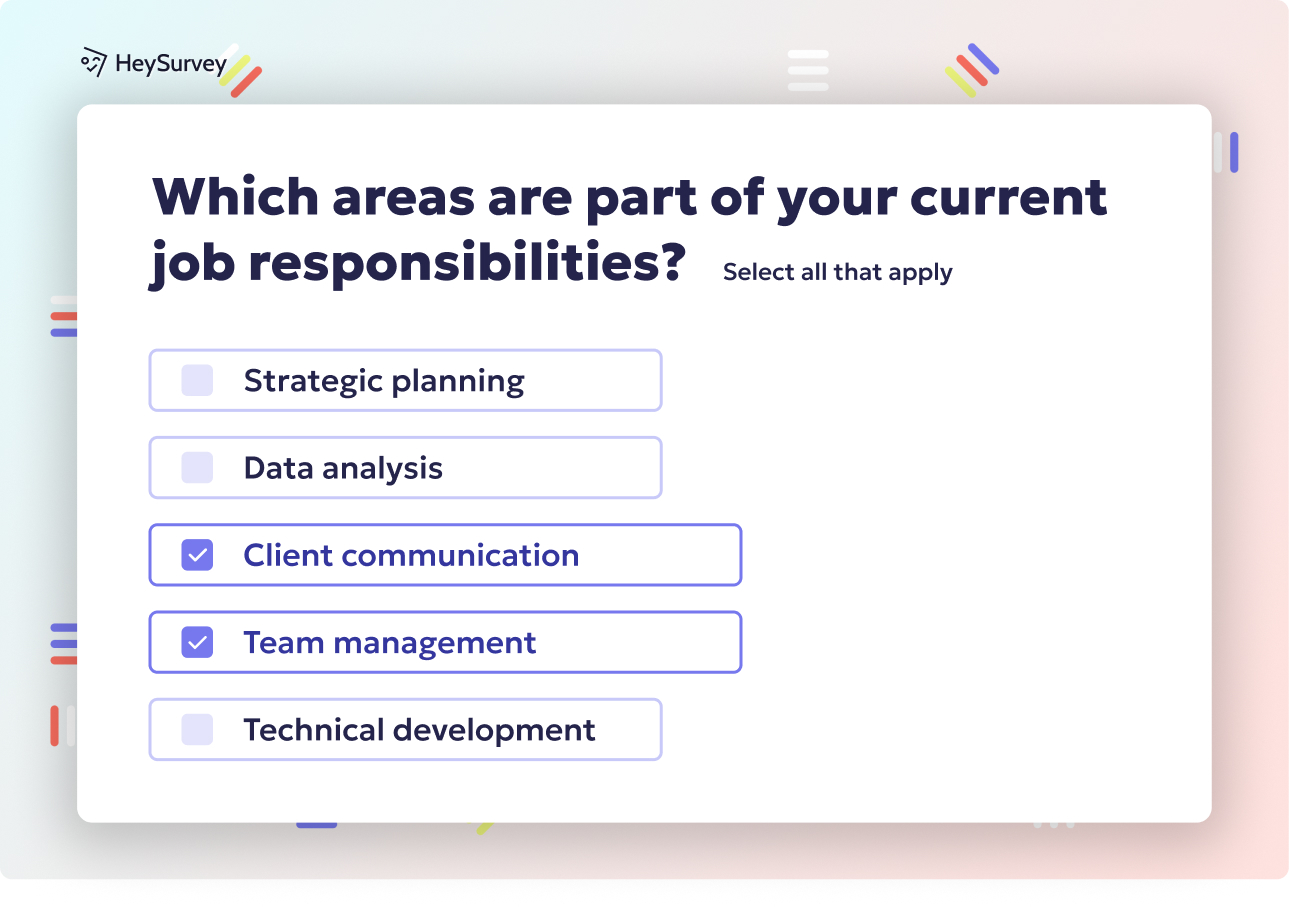
Is each question in your survey focused on one clear idea?
Can most patrons finish your library survey in under five minutes?
Are your questions written in language your audience actually uses?
Do you include both rating-scale and open-ended questions?
Have you tested the survey with a small group before sharing it widely?
Great survey writing is less about asking more and more about asking better.
Why & When to Use
Use these best practices when you are building library surveys from scratch, updating an older library survey, or comparing templates through searches like site:heysurvey.io and who provides pre-built satisfaction question libraries?
Here’s the thing: strong questions make your results more useful, while weak ones give you messy feedback that looks busy but says very little. Even the fanciest chart cannot rescue a confusing library question.
Dos
Keep your survey practical and easy to finish.
Use clear wording that matches your patrons' reading level.
Keep the survey short enough to complete in just a few minutes.
Ask one thing per question so answers stay clean and easy to interpret.
Mix quantitative and qualitative questions for both trends and real-world comments.
Tailor each library survey to the audience, whether it is public users, students, faculty, or staff.
Test your draft with a small group before launch.
Save your strongest prompts in a well-built question library so you can reuse what works instead of reinventing the wheel every time.
Don’ts
Avoid the usual survey traps.
Do not ask leading, vague, or double-barreled questions.
Do not ask about unused services without a skip option or filter question.
Do not make every question required, especially open-ended ones.
Do not collect personal information you do not truly need.
Do not launch a survey unless you plan to review results and act on them.
Plus, better response quality always beats a giant pile of half-baked answers.
Common Mistakes to Avoid in a Library Survey Questionnaire
Sample questions
Have we asked about the specific library services you actually use?
Are any survey questions unclear or open to multiple interpretations?
Does the survey feel too long to complete comfortably?
Are we collecting feedback from all key user groups?
Do we know how we will use the responses once the survey closes?
The biggest survey mistake is asking questions you cannot actually use.
Why & When to Use
Use this section before you launch any library survey, especially if you are creating a first-time library survey questionnaire or adding new templates to your survey library of reusable forms.
Here’s the thing: this works best right after reviewing best practices, because you can compare what strong library surveys do well versus what weak ones quietly mess up. If you have searched site:heysurvey.io, who provides pre-built satisfaction question libraries?, or library surveys for ideas, this is the checkpoint that helps you dodge the classic potholes.
Common mistakes usually look small at first, then turn your results into soup.
Asking vague questions that mean different things to different patrons.
Making the survey too long, which sends completion rates sliding downhill fast.
Sending it at the wrong time, like during holidays, exams, or building disruptions.
Hearing only from one group, while missing students, families, staff, or occasional users.
Collecting responses without a plan for follow-up, analysis, or action.
On top of that, review every library question from the patron’s perspective before launch.
Can they answer it easily?
Does it connect to a real decision?
Would the results help improve services?
Plus, every good library questionnaire should earn its spot. Your survey is not a junk drawer, even if your desk is.
Turning Library Survey Insights Into Action
Sample questions
Which survey results point to the most urgent service issues?
What feedback themes appear most often across patron groups?
Which improvements are low-cost and easy to implement quickly?
How will we communicate changes to patrons after the survey?
When should we run a follow-up library survey to measure progress?
The real win with library surveys is what you do after the answers come in.
Why & When to Use
Use this final section when you are ready to turn feedback into decisions your patrons can actually feel. It works especially well as the close of an article, training guide, or planning session for library leaders and staff.
Here’s the thing: collecting responses is only half the job. If you have been exploring site:heysurvey.io, who provides pre-built satisfaction question libraries?, library surveys, or a library questionnaire for students, this is the part that turns useful data into real improvement.
Start by grouping responses into themes so patterns are easier to spot.
Collections
Staff
Space
Programs
Technology or access
Plus, look across patron groups to see where the same library question keeps popping up. When the same complaint shows up three different ways, that is your cue, not a coincidence wearing a fake mustache.
Next, prioritize actions based on what matters most.
High impact for patrons
Low cost to implement
Easy wins that can happen quickly
Bigger changes that need budget or planning
On top of that, tell patrons what changed with simple “you said, we did” updates. Strong library survey questions lead to better decisions, better services, and better patron experiences, which is exactly why library surveys should never end in a spreadsheet nap.
Related Feedback Survey Surveys
29 Catering Survey Questions to Ask Customers
Explore 25 sample catering survey questions to gather feedback, improve events, and understand cl...
29 User Feedback Survey Questions
Explore 25 user feedback survey questions with sample prompts, practical tips, and ideas to impro...
29 Environment Survey Questions to Ask Today
Discover 25 environment survey questions with sample answers to improve feedback, measure awarene...