29 Grocery Store Survey Questions
Explore 25 grocery store survey questions with sample answers, designed to improve customer feedback, store experience, and retail insights.
Grocery store survey questions are the simple prompts you use to learn what shoppers love, what frustrates them, and what keeps them coming back. The right questions turn everyday feedback into smarter shelves, smoother operations, and stronger loyalty.
In this guide, you’ll find practical store survey questions, a grocery store survey framework, and even sample survey questions for new food product launches for both in-store and online experiences, using an online survey tool. Plus, you’ll see how supermarkets measure customer satisfaction, what customers want in a grocery store, and what complaints show up most often in grocery reviews, because yes, the shopping cart has opinions too.
Customer Satisfaction Survey Questions for Grocery Stores
Sample questions
How satisfied were you with your overall shopping experience today?
How likely are you to shop at our grocery store again?
How easy was it to find the products you needed?
How would you rate the helpfulness and friendliness of our staff?
What is one thing we could improve to make your next visit better?
These store survey questions help you spot what is working, what is slipping, and what brings shoppers back for round two.
Why & When to Use
This type of grocery store survey works best when you want a big-picture view of customer sentiment after a visit.
It helps you track service quality, compare locations, and identify broad satisfaction trends before small annoyances turn into big loyalty leaks.
Here’s the thing, if you’re wondering how do supermarkets measure customer satisfaction at a high level, this is usually the starting point.
You can send this supermarket survey right after checkout, add it to a receipt invite, include it in an email follow-up, place it in your loyalty app, or run it as part of periodic grocery-feedback campaigns.
For stronger results, keep the survey short and mix rating questions with one open-ended prompt.
That gives you quick numbers for trends and richer comments that explain the why behind them, which is where the good stuff hides.
Use these sample survey questions for new food product and service insights only when they fit the visit context, but keep the main focus on the overall experience.
Plus, segment results so your grocery store survey tells a clearer story:
by location
by daypart
by customer type
On top of that, these insights connect directly to repeat visits, loyalty, and store reputation, because happy shoppers talk and unhappy ones definitely do too.
Intercept surveys of 480 supermarket customers found service quality significantly drives satisfaction and loyalty, supporting short post-visit grocery surveys focused on staff, ease, and overall experience (source)
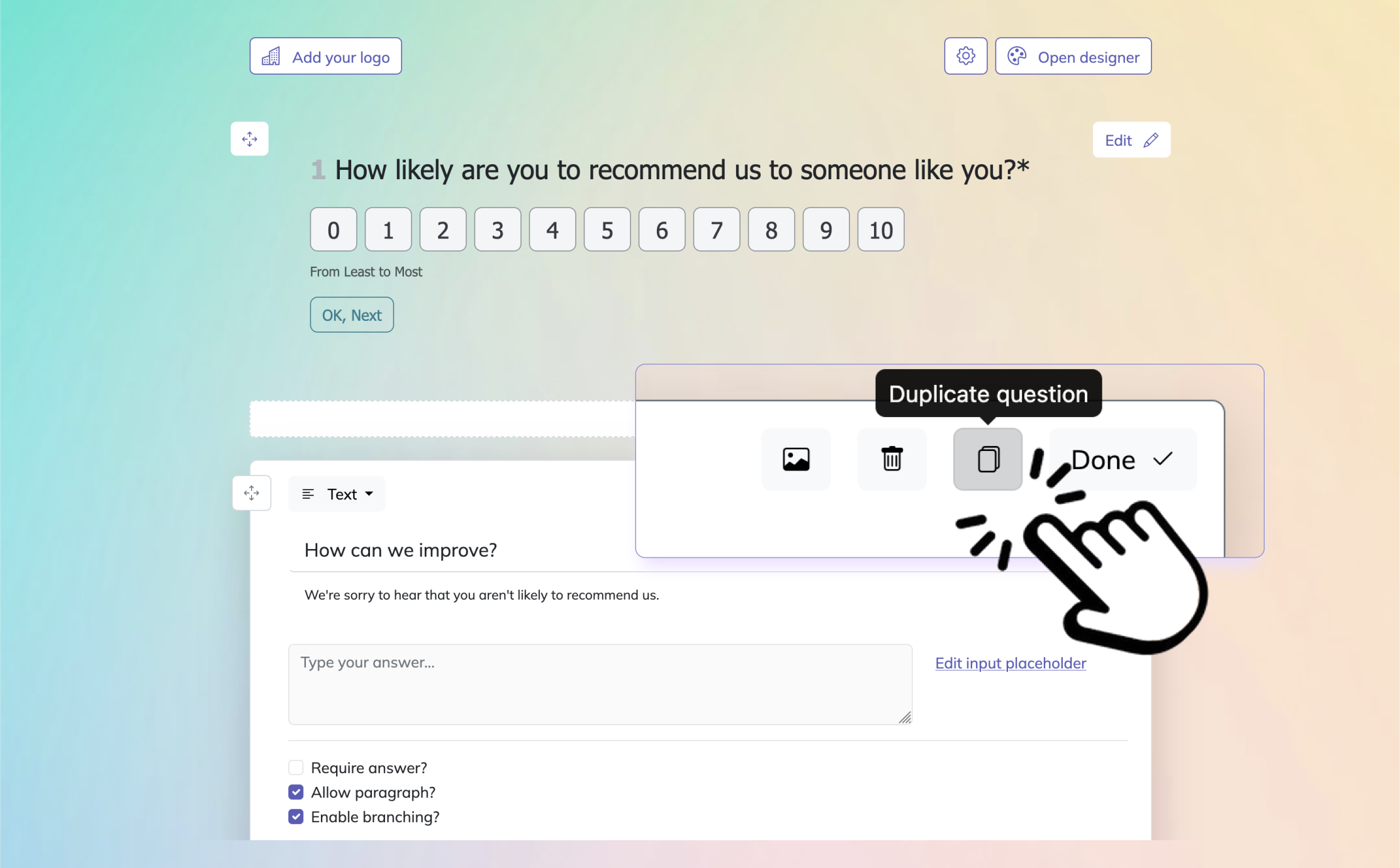
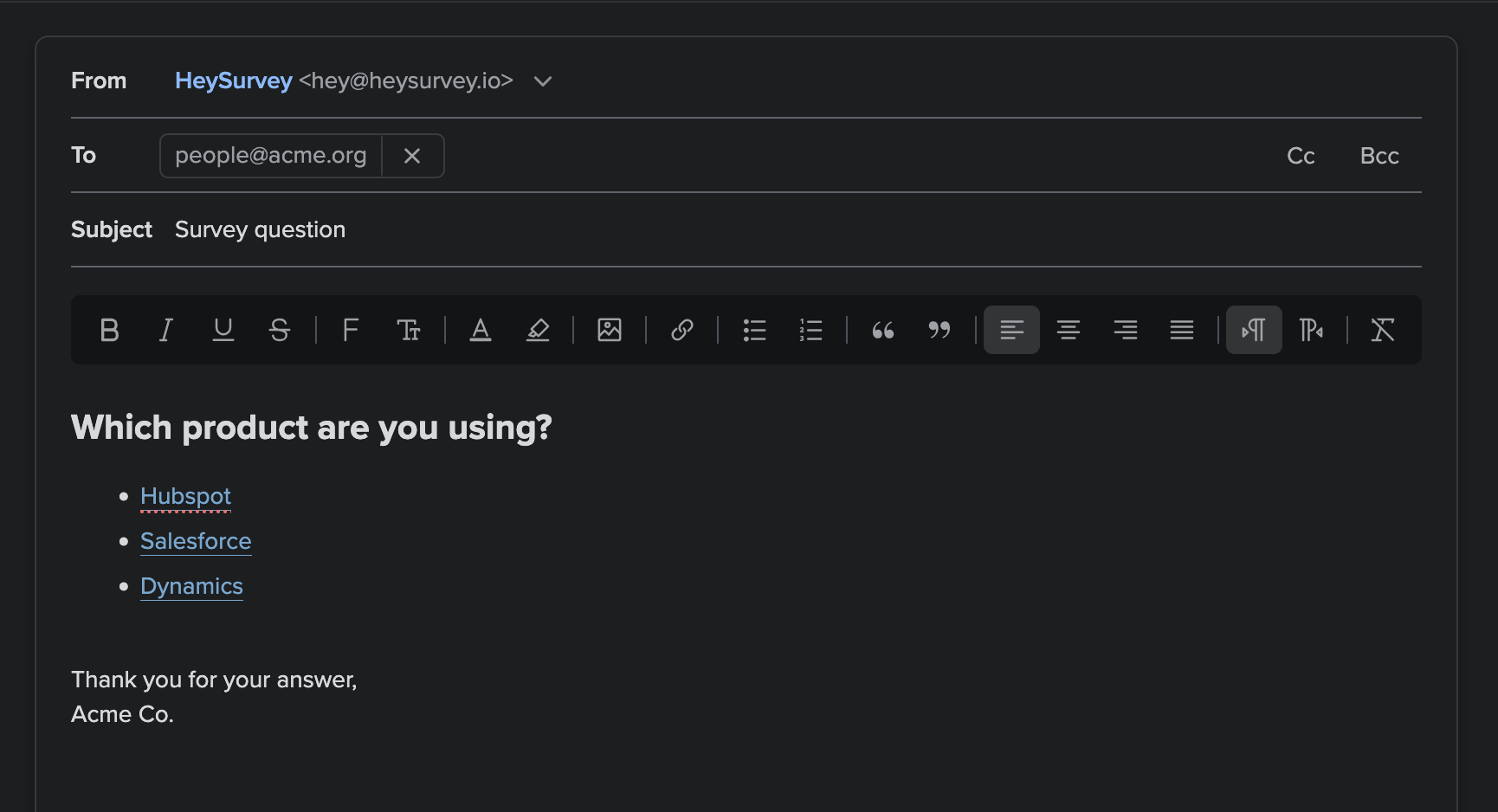
Create your grocery store survey in HeySurvey
1. Create a new survey
Open HeySurvey and start with a template using the button below, or choose a blank survey if you want to build it from scratch. Give your survey a clear name, such as “Grocery Store Feedback,” so you can find it easily later. You can work without an account at first, but you’ll need one to publish and view responses.
2. Add questions
Click Add Question to include the questions you need. For a grocery store survey, try a mix of Choice, Scale, and Text questions. For example: ask how often customers shop, rate cleanliness or staff friendliness, and leave space for comments. Mark important questions as Required if you want every response completed.
3. Publish your survey
When your survey looks ready, click Preview to check it, then hit Publish to create a shareable link. After publishing, you can send the survey to customers by email, social media, or place it on your website.
Product Selection and Inventory Survey Questions
Sample questions
Were you able to find all the items on your shopping list today?
Which products or brands were unavailable during your visit?
How satisfied are you with our selection of fresh produce, dairy, meat, and pantry staples?
Are there any brands, organic options, or specialty items you wish we carried?
How well do our prices match the value and variety of products offered?
These store survey questions help you see whether shoppers are finding the right products, or leaving with a cart full of compromises.
Why & When to Use
This grocery store survey type helps you understand whether customers can actually find the products, brands, pack sizes, and categories they came in for.
Here's the thing, if shoppers keep hunting and still come up empty-handed, they do not blame the shelf, they blame the store.
Use this kind of grocery store survey when you are dealing with stockouts, changing assortments, expanding private-label lines, or planning seasonal inventory.
It is also useful when you want clearer answers to what customers want in a grocery store, especially when grocery-feedback and store survey questions keep pointing to missing favorites.
On top of that, this survey helps explain what complaints show up most often in grocery reviews, and what do they reveal about expectations? Very often, it is unavailable items, weak variety, or prices that feel off for the selection.
For better insights, review responses by department so your supermarket survey shows where the gaps really are:
produce
dairy
meat
pantry staples
frozen
specialty and organic
Plus, track recurring out-of-stocks and repeated product requests, then use that data for assortment planning, category expansion, vendor conversations, and even sample survey questions for new food product launches.
Surveying grocery shoppers about missing items matters because a 631-consumer study found out-of-stocks significantly influence store-switching behavior and satisfaction (source).
Store Cleanliness, Layout, and In-Store Experience Survey Questions
Sample questions
How clean and well-maintained was the store during your visit?
How easy was it to navigate the aisles and locate key departments?
Were product shelves clearly labeled and organized?
How satisfied were you with the checkout wait time?
Did anything about the store environment make shopping more difficult or frustrating?
These store survey questions help you measure the shopping experience people notice fast, even before they toss one avocado into the cart.
Why & When to Use
This type of grocery store survey focuses on the physical experience inside your store, including cleanliness, organization, signage, crowding, and checkout flow.
Here's the thing, shoppers may forgive a sold-out cereal, but they rarely forget sticky floors or a checkout line that moves like it is on vacation.
Use these store survey questions after remodels, layout resets, seasonal traffic spikes, or anytime grocery-feedback mentions messy aisles, confusing departments, or long waits.
Plus, this is one of the most useful ways to uncover operational pain points that standard sales reports quietly ignore.
Your supermarket survey should cover common issues like:
cluttered aisles
poor shelf labels or missing signs
blocked displays
long checkout lines
hard-to-find departments
On top of that, tie responses to store operations so patterns become easier to act on:
staffing schedules
maintenance checks
traffic flow analysis
checkout lane coverage
peak-hour performance
Compare results by weekday, weekend, and busy hours to see when the in-store experience slips.
That also helps answer what complaints show up most often in grocery reviews, and what do they reveal about expectations? Usually, customers want a store that feels easy, clean, and calm, not a scavenger hunt with shopping carts.
Customer Service and Staff Performance Survey Questions
Sample questions
How would you rate the courtesy of our staff during your visit?
Were team members available when you needed assistance?
How knowledgeable was our staff about products, promotions, or store policies?
If you had an issue, how effectively was it resolved?
Which department provided the best or worst service experience today?
These store survey questions reveal how people felt about the humans behind the name tags, which is often what they remember most.
Why & When to Use
This type of grocery store survey focuses on customer interactions with cashiers, floor staff, deli teams, customer service desks, and pickup staff.
Here's the thing, even a well-stocked store can lose points fast if service feels cold, rushed, or harder to find than the peanut butter.
Use this grocery store survey when you are training teams, checking service consistency across departments, or looking into praise and complaints tied to employee behavior.
Plus, if you want to understand what customers want in a grocery store, helpful and respectful service is usually near the top of the list.
Service quality also shapes overall help desk survey questions results more than many teams expect, especially when a shopper needs help, has a problem, or wants a quick answer.
To get more useful feedback, add department-specific follow-up questions such as:
cashier friendliness and speed
deli counter helpfulness
pickup order handoff experience
customer service desk problem resolution
floor staff availability by department
On top of that, balance employee feedback with operational context like short staffing, peak-hour traffic, or unclear policies.
Open-text responses are especially useful here because they can uncover coaching opportunities, highlight standout employees, and show how supermarkets measure customer satisfaction in real life, not just on paper.
Supermarket research found staff interaction has a strong, positive, significant relationship with overall customer satisfaction, making service-focused survey questions especially valuable (ScienceDirect).
Pricing, Promotions, and Value Perception Survey Questions
Sample questions
How would you rate the overall value you received from your shopping trip?
Were our prices competitive compared with other grocery stores you shop at?
How easy was it to understand and use our promotions or discounts?
Which types of deals matter most to you: everyday low prices, coupons, loyalty rewards, or bulk savings?
Were there any products you felt were overpriced?
These store survey questions help you see whether shoppers think your prices feel fair, your deals feel useful, and your value promise actually lands.
Why & When to Use
This grocery store survey type helps you understand how customers judge pricing, promotions, and overall value, which is not always the same thing as asking whether something is cheap.
Here's the thing, shoppers often forgive a higher price when quality, convenience, or savings are clear, but confusing promos can make even a good deal feel like homework.
Use these sample survey questions for new food product launches, pricing updates, inflation-heavy periods, or when testing loyalty offers, digital coupons, weekly ads, and in-store discounts.
Plus, this feedback supports a bigger question about what customers want in a grocery store, because most people want fair prices, yes, but they also want deals that are easy to spot and even easier to use.
A smart supermarket survey should look at value perception, not just absolute price, and compare results across groups like:
budget-conscious shoppers
families shopping larger baskets
premium buyers focused on quality
On top of that, review promotion clarity, shelf tags, and coupon usability in your grocery-feedback analysis.
These store survey questions can also reveal what complaints show up most often in grocery reviews, and what do they reveal about expectations, especially around pricing trust.
Tie findings to basket size, repeat visits, and competitive positioning, because confusing coupons should not require a treasure map.
Online Grocery Shopping and Delivery Survey Questions
Sample questions
How easy was it to place your grocery order online?
Were the product descriptions, images, and availability information accurate?
How satisfied were you with substitutions for out-of-stock items?
Was your order delivered or prepared for pickup within the expected time?
What could we improve about our online grocery shopping experience?
These store survey questions help you measure how smooth, accurate, and convenient your digital grocery experience feels from click to doorstep.
Why & When to Use
This type of grocery store survey is built for ecommerce, curbside pickup, and home delivery, not just the in-store trip with a cart and a hopeful attitude.
Use it after online orders to evaluate website or app usability, substitutions, delivery timing, order accuracy, and pickup convenience.
A strong questionnaire for online grocery shopping should treat the digital experience as its own journey, because online grocery surveys often uncover very different issues than a standard grocery shopping survey.
Here's the thing, shoppers may love your store but still get frustrated if inventory looks wrong, bananas arrive bruised, or substitutions feel like a chaotic plot twist.
Your online grocery shopping questionnaire should measure separate parts of the experience, such as:
website or app ease of use
curbside pickup speed and convenience
home delivery timing and item condition
substitution quality and order accuracy
Plus, compare feedback from first-time online shoppers and repeat digital customers, because expectations usually change once people know the system.
On top of that, these sample survey questions for new food product launches can also show whether online listings, images, and stock visibility support discovery, or quietly make new products harder to find.
New Food Product and Merchandising Survey Questions
Sample questions
How interested would you be in trying this new food product?
What factors would most influence your decision to buy it: price, ingredients, brand, packaging, or convenience?
How appealing does this product look compared with similar items you already buy?
Where in the store would you expect to find this product?
What concerns, if any, would stop you from purchasing this item?
These sample survey questions for new food product decisions help you test demand before you bet the whole snack aisle on a maybe.
Why & When to Use
This type of grocery store survey helps you validate interest in new items before launch, whether you are testing seasonal products, prepared foods, private-label releases, or fresh merchandising ideas.
Use it before rollout, during a pilot, or after launch to measure trial, appeal, packaging, pricing, and shelf placement without relying on crossed fingers and aisle magic.
Here’s the thing, sample survey questions for new food product research can reveal whether shoppers are genuinely curious, only mildly interested, or already spotting deal-breakers.
A smart supermarket survey in this category should cover:
concept testing and first impressions
taste or visual appeal
price sensitivity and value perception
packaging clarity and product claims
expected shelf location and in-store visibility
Plus, segment your feedback by likely buyers, such as health-focused shoppers, busy families, or budget-conscious customers, before a chain-wide rollout.
On top of that, these store survey questions help you refine packaging, claims, and placement so the product fits both customer expectations and your broader merchandising strategy.
That matters because what customers want in a grocery store is not just more choice, but the right choice in the right spot at the right price.
Best Practices for Writing and Using Grocery Store Surveys
Sample questions
Is each question specific enough to produce actionable feedback?
Are we asking about only one topic per question?
Does the survey length match the customer’s time and attention span?
Are we offering answer choices that reflect real customer experiences?
Do we have a plan to act on the responses we collect?
Great grocery store survey results start with sharper questions, not longer ones.
Why & When to Use
Use these best practices before launching any grocery store survey, whether it is for in-store visits, online orders, delivery feedback, or sample survey questions for new food product testing.
Think of this section as your practical checklist for better response quality and more useful decisions, because messy store survey questions tend to create messy answers. Cute for confetti, not for research.
Here’s the thing, a strong grocery store survey should make it easy for customers to answer quickly and honestly.
Do this:
Keep most store survey questions short, clear, and focused on one issue.
Mix rating-scale questions with a few open-ended grocery-feedback prompts.
Send surveys close to the shopping experience, while details are still fresh.
Segment results by location, department, order type, and visit frequency.
Share what changed based on feedback so customers know they were heard.
Avoid this:
Asking too many questions in one supermarket survey.
Using vague, leading, or complicated wording.
Collecting feedback without assigning someone to review and act on it.
Ignoring patterns in what complaints show up most often in grocery reviews, and what they reveal about expectations.
Treating online and in-store surveys as if they work the same way.
Plus, when you follow these basics, you learn more about what customers want in a grocery store and how do supermarkets measure customer satisfaction in a way that actually helps.
How to Turn Grocery Survey Insights Into Action
Sample questions
Which issues appear most often across survey responses and reviews?
What problems have the biggest impact on customer satisfaction or repeat visits?
Which concerns can be fixed quickly at the store level?
What trends require longer-term investment or policy changes?
How will we measure whether changes actually improved the customer experience?
The real win is turning grocery store survey answers into changes customers can actually notice.
Why & When to Use
A grocery store survey only earns its keep when you use the results to improve service, inventory, pricing, and the digital experience.
Here’s the thing, collecting store survey questions and supermarket survey responses is the easy part.
The useful part is turning that feedback into smarter decisions your team can track, test, and improve over time.
Start by ranking issues using three filters:
How often the problem appears in your grocery-feedback data
How strongly it affects customer satisfaction or repeat visits
How easy it is to fix quickly
Plus, organize action plans by department so the right teams own the right changes:
Operations for checkout speed, cleanliness, and stock flow
Merchandising for product mix and sample survey questions for new food product insights
Staffing for service quality and training gaps
Ecommerce for delivery issues, substitutions, and app usability
Pricing for value perception and promotion clarity
On top of that, track before-and-after results so you know whether your fixes worked:
Satisfaction scores
Complaint volume
Repeat purchases
Online order ratings
Review trends
If you want to know what customers want in a grocery store, watch what improves after you act, not just what gets mentioned in the survey.
Good store survey questions are powerful, but only when the feedback leads to visible upgrades. Otherwise, it is just a very organized suggestion box wearing a tie.
Related Customer Survey Surveys
29 Restaurant Survey Questions
Explore 25 sample restaurant survey questions to improve customer feedback, boost service quality...

29 Airbnb Survey Questions to Ask Guests
Discover 25 Airbnb survey questions with sample questions, insights, and practical examples to im...
32 Interior Design Survey Questions
Explore 25 interior design survey questions with sample questions to gather client insights, refi...