31 Fun Survey Questions Ideas
Explore 25 fun survey questions ideas with sample questions to inspire engaging, creative surveys for any audience and topic.
Fun surveys are playful question sets that make people actually want to answer, which means you get more replies, more honesty, and more shareable moments. Fun surveys turn random poll questions into easy conversation starters for friends, teams, classrooms, social media, events, customer groups, or even surveys for fun when you are bored.
Here’s the thing, this guide rounds up fun survey ideas by category, with practical use cases, sample random survey questions, and smarter questions to ask in a survey. Because nobody dreams of filling out a boring questionnaire before coffee.
Sample questions
What is your go-to comfort food?
If you could instantly master one hobby, what would it be?
What is the first thing you would buy if you won a small lottery prize?
Which season matches your personality best?
What is one movie or show you can rewatch forever?
Icebreaker Survey Questions
Low-pressure questions get people talking fast.
Why & When to Use
Icebreaker survey questions work best right at the start, when people are still warming up and trying to figure out the vibe. They are perfect for team meetings, workshops, classes, onboarding, community events, and even group chats that need a little life.
For fun surveys, random poll questions, and surveys for fun, your goal is simple: make answering feel easy. If the first question feels like a job interview, people mentally disappear faster than free donuts at a morning meeting.
Here’s the thing, the best icebreaker prompts are safe, quick, and light. You want questions to ask in a survey that anyone can answer without overthinking or sharing anything too personal.
Use simple formats so people can respond fast:
either/or questions
multiple-choice options
short-answer prompts with one-line replies
Plus, avoid sensitive topics in first-touch random surveys. Skip questions about money, health, politics, religion, or anything else that can make introductions feel awkward.
These are some of the best questions to put in a questionnaire when people are meeting for the first time. On top of that, a smart mix often works best: pair one familiar question with one slightly unexpected one, so your random survey questions feel comfortable but not boring.
Sample questions
Would you rather always be 10 minutes early or always 20 minutes late?
Would you rather give up coffee or dessert for a month?
Would you rather work from a beach or a mountain cabin?
Would you rather only watch comedies or only listen to podcasts?
Would you rather have a four-day workweek or unlimited snack breaks?
Research suggests psychologically safe, low-pressure meeting prompts increase participation, and each standard-deviation rise in meeting psychological safety predicts a 35% higher chance of productivity (source).
How to create your fun survey with HeySurvey
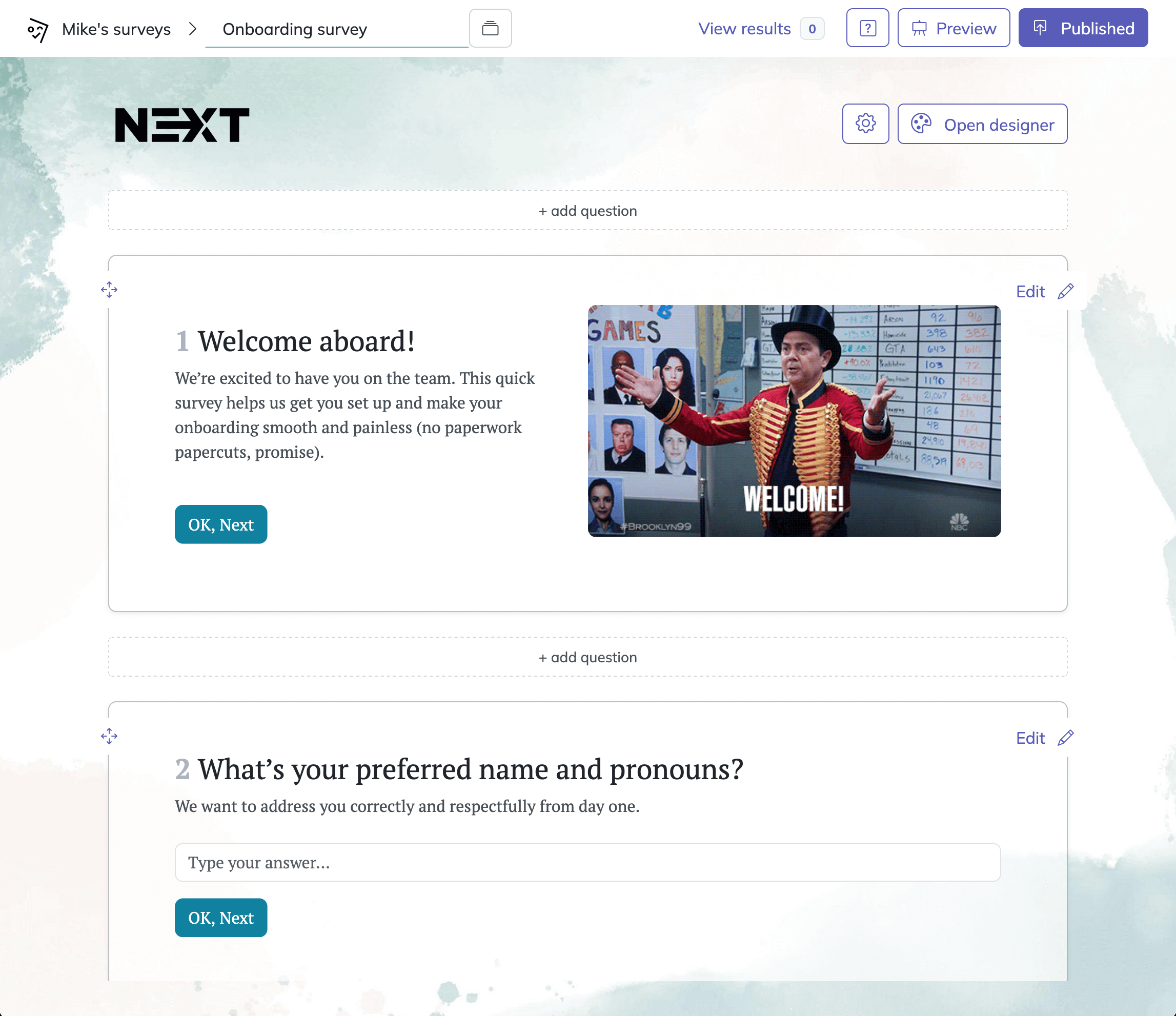
1. Create a new survey
Start by opening a template from the button below, or choose a blank survey if you want full control. If you’re new to HeySurvey, a template is the quickest way to begin. You can rename your survey right away in the editor and adjust the basic settings later if needed. If you’re looking for an online survey maker, HeySurvey makes it easy to get started.
2. Add questions
Click Add Question to build your survey. For a fun survey, mix question types like Choice, Scale, and Text to keep it interesting. You can ask playful questions, add answer options, include images, and mark important questions as required. If you want a more engaging flow, duplicate questions or use branching to send people to different follow-up questions based on their answers.
3. Publish survey
Before sharing, use Preview to check how it looks on desktop and mobile. Make any final design changes in the sidebar, then click Publish to create your shareable link. After publishing, send the survey to your audience and start collecting responses.
Would You Rather Survey Questions
Quick choices make fun surveys feel effortless.
Why & When to Use
Would you rather questions are perfect when you want high engagement without making people think too hard. They work especially well in fun surveys, random poll questions, and surveys for fun where fast participation matters more than long, thoughtful answers.
These are great for social media stories, team fun, school activities, newsletters, and random surveys because nearly everyone can pick between two options in seconds. Here's the thing, forced-choice formats often get strong response rates and make results wonderfully easy to analyze, which is basically the dream.
They also shine when your audience prefers close ended survey questions over open-ended writing. Playful trade-offs can reveal real preferences without making the survey feel like homework wearing business casual.
To make these random survey questions work better, keep the choices balanced:
Make both options appealing in different ways.
Avoid pairing one clearly better answer with one obvious dud.
Use topics people can answer fast, without needing extra context.
Add one optional "why?" field if you want richer insight.
Plus, these are smart poll questions ideas when you want speed and personality at the same time. They are some of the easiest questions to ask in a survey and great questions to put in a questionnaire when you want lively answers with very little friction.
Sample questions
Are you more of a planner or a go-with-the-flow person?
Do you recharge better alone or around other people?
Which best describes your decision-making style: fast, careful, or somewhere in between?
What kind of weekend sounds best: adventure, rest, socializing, or learning something new?
Which motivates you more: rewards, recognition, curiosity, or competition?
Pew research found forced-choice yes/no survey questions produce higher item endorsement than check-all formats, supporting quick, engaging poll designs (source).
Personality and Preference Survey Questions
These fun surveys reveal useful patterns without feeling weirdly clinical.
Why & When to Use
Personality and preference prompts are great when you want to understand how people think, work, and choose, without turning your survey into a pop psychology quiz.
They work especially well for audience segmentation, team bonding, classroom engagement, and community-building. Plus, they are some of the best questions to ask in a survey when you want to tailor content, events, or product messaging to real preferences.
These random poll questions can feel playful on the surface, but they still give you helpful patterns. That makes them ideal surveys for fun that also support smart decisions behind the scenes.
For example, you might use responses to shape:
content topics and formats
event themes or activity types
team communication styles
product messaging and campaign angles
Here's the thing, the best random survey questions in this category use relatable wording, not overly psychological labels. You want answer choices that reflect different styles without making one sound better than another, because nobody enjoys being sorted into the "chaotic goblin" bucket.
On top of that, these are strong questions to put in a questionnaire for audience profiling because they balance personality, usefulness, and ease. When done well, random surveys like this help you learn a lot while keeping the vibe light.
Sample questions
Which movie genre could you watch every weekend?
What is the best type of binge-watch: crime drama, sitcom, reality TV, or documentaries?
Which fictional world would you most want to visit?
What is your all-time favorite karaoke song?
Which is more important in a show: plot twists, characters, humor, or visuals?
Pop Culture and Entertainment Survey Questions
These fun surveys turn everyday opinions into easy clicks, laughs, and lively comment sections.
Why & When to Use
Pop culture and entertainment prompts are perfect when you want low-pressure engagement that still gets people talking.
They work especially well for social audiences, student groups, fan communities, office fun, and brand engagement campaigns. Plus, they are excellent random poll questions when your audience shares enough cultural familiarity for the references to actually land.
Entertainment-based surveys for fun feel light, familiar, and easy to answer. Here's the thing, people may skip serious forms, but ask about karaoke songs or binge-watch picks and suddenly everyone has opinions.
These random survey questions are especially strong for online communities, newsletters, and casual engagement posts because they invite quick responses and spark follow-up discussion.
To keep your fun surveys effective, stick with themes your audience will recognize:
music
TV shows
movies
books
gaming
On top of that, keep references broad, current, and easy to recognize for your specific group. Avoid super niche fandom prompts unless your audience is highly specific, because confusion is not exactly a party starter.
If you want fresh surveys for fun, rotate themes regularly so your content stays familiar without feeling repetitive. That makes these some of the best good survey questions to put in a questionnaire when you want shareable, low-stakes participation.
Sample questions
Which meeting format do you secretly prefer: quick stand-up, no meeting at all, brainstorming session, or async update?
What is your ideal workday soundtrack: silence, playlists, coffee shop noise, or podcasts?
Which office perk would improve your week the most?
What is your productivity superpower: focus, organization, creativity, or speed?
If your team had a mascot, what should it be?
Pew found 64% of Americans often discuss movies, TV, or music with close friends and family, showing entertainment questions reliably spark conversation (source).
Workplace and Team Fun Survey Questions
These fun surveys help your team connect like humans, not just calendar invites with profile photos.
Why & When to Use
Workplace-focused surveys for fun are great for employee engagement, virtual team-building, onboarding, retreats, and internal newsletters.
They work best when you want connection, culture insight, and easy participation without making the whole thing feel like HR paperwork in disguise.
Here's the thing, fun surveys at work can do more than get a few laughs. They can uncover communication styles, meeting preferences, motivation patterns, and the small team habits that shape how people actually work together.
That makes them especially useful before team events, culture initiatives, or planning sessions when you want a quick read on what people enjoy and how they operate.
Keep the tone playful, but always workplace-appropriate. You want random poll questions that feel light, not awkward, and useful, not weirdly personal.
A smart mix usually works best:
one humorous question to loosen people up
one practical question to gather real team insight
one easy opinion prompt that everyone can answer fast
Plus, anonymous responses often lead to more honest answers in internal settings. That is especially helpful when you are using random survey questions to explore morale, communication preferences, or what your team actually wants more of.
On top of that, these are excellent questions to ask in a survey when meetings need a little more energy and a little less beige.
Sample questions
What is your favorite holiday tradition?
Which fall activity sounds most appealing: baking, hiking, decorating, or movie nights?
What is your must-have at a party: music, food, games, or good conversation?
Which type of event giveaway would you actually want?
What theme should our next team or community event have?
Seasonal, Holiday, and Event Survey Questions
Seasonal fun surveys give people a timely reason to click, answer, and actually care.
Why & When to Use
Seasonal and event-based surveys for fun work especially well around holidays, company parties, school functions, birthdays, conferences, and themed campaigns.
Here’s the thing, when your survey matches what is already happening on the calendar, it feels relevant instead of random.
That simple timing boost can improve open rates and response rates because people instantly understand why you are asking now, not three Tuesdays from now when the pumpkin spice has emotionally moved on.
These fun surveys are a smart fit for brands, teachers, organizers, and teams that want fresh random poll questions throughout the year without repeating the same tired prompts.
Plus, they are useful before planning events or promotions because they help you gather preferences while excitement is already building.
Use them in places where people already engage:
email newsletters
private communities
social media posts
event registration follow-ups
On top of that, add at least one planning-focused question so your random survey questions do more than entertain.
For example, ask about preferred themes, giveaways, activities, or food choices.
That turns fun surveys into practical research, which is a lovely trick when you want better participation and better decisions at the same time.
Sample questions
If animals could talk, which one would be the rudest?
Which would be worse: always squeaky shoes or always sticky hands?
If your fridge had a personality, how would you describe it?
What would you name your personal yacht, even if you never plan to own one?
If you had to swap lives with a cartoon character for a week, who would it be?
Funny Random Survey Questions
Funny random poll questions turn boredom into clicks, comments, and surprisingly strong engagement.
Why & When to Use
Use funny fun surveys when your goal is simple: entertain people, spark social interaction, and give them something delightfully pointless to answer while pretending they are being productive.
These surveys for fun work best in casual spaces like friend groups, creator communities, team chats, newsletters, and social posts.
Here’s the thing, absurd questions often get the biggest reaction because they feel unexpected, easy, and shareable.
That makes them a strong fit for random surveys, random poll questions, and fun surveys to do when bored, especially when you want fast participation without asking people to think too hard before coffee.
Plus, funny random survey questions can do more than fill time.
They often lead to comments, shares, inside jokes, and repeat participation because people want to see how others answered.
Keep your questions playful but clear, so people know how to respond without needing a decoder ring.
A few practical ways to use them:
social media story polls
icebreakers in group chats or online communities
low-pressure audience engagement for creators
casual email or newsletter content
On top of that, keep humor inclusive.
The best questions to ask in a survey are silly without making any group the punchline, which keeps your random surveys light, welcoming, and a lot more fun.
Sample questions
Is this question easy to answer in under 10 seconds?
Are the answer options balanced and mutually clear?
Will this question feel fun to the target audience rather than confusing?
Does this question avoid sensitive or overly personal territory?
Can the response actually help guide content, events, or decisions?
Best Practices for Writing Fun Survey Questions
Great fun surveys feel playful on the surface, but they are built with real intention underneath.
Why & When to Use
Use this as your go-to guide when you are writing fun surveys, random poll questions, or surveys for fun for work, school, social media, or online communities.
Here’s the thing, even the silliest random surveys work better when they have structure, clear wording, and a good read on the audience.
If people are confused, bored, or slightly alarmed, your fun survey questions are not doing their job.
Plus, the best questions to ask in a survey feel easy and light while still giving you answers you can actually use for content, events, planning, or group engagement.
A few simple Dos and Don’ts can save your questionnaire from becoming digital wallpaper.
Keep it fun, but keep it useful.
Do:
match the tone to your audience
keep questions short and conversational
mix multiple-choice with occasional open-ended questions
test for clarity before sending
use fun surveys alongside a clear purpose
Don’t:
ask embarrassing, divisive, or invasive questions
overload one survey with too many open responses
use vague wording or overlapping answer choices
make every question a joke if you need usable insights
ignore mobile-friendly length and readability
On top of that, when writing questions to put in a questionnaire, remember that clarity beats cleverness every time.
A smart random survey question should be fun in 10 seconds, not feel like a pop quiz wearing a party hat.
Sample questions
Which answers appeared most often?
Which responses surprised you?
What themes showed up across different questions?
Which results suggest a clear next action?
What follow-up survey or poll should you run next?
How to Turn Fun Survey Responses Into Useful Insights
The real magic happens when fun surveys stop being just entertaining and start showing you what people actually want.
Why & When to Use
Use this step when you want your fun surveys, random poll questions, or surveys for fun to lead somewhere useful.
It works especially well for creators, marketers, managers, teachers, and community leaders who want more than a quick laugh and a pile of oddly passionate snack opinions.
Here’s the thing, the best random surveys can reveal patterns in preferences, interests, habits, and event choices if you take a minute to sort the answers.
Try grouping responses into simple buckets like:
preferences
interests
habits
event choices
future content ideas
Plus, once you spot themes, you can actually do something with them.
You might use random survey questions to plan content topics, choose team activities, shape offers, organize class discussions, or decide which follow-up poll to run next.
On top of that, share a few top findings back with participants so they know their input mattered.
That small step builds trust, boosts future engagement, and makes your surveys for fun feel more like a conversation than a black hole.
The takeaway is simple: the best questions to ask in a survey are fun to answer, easy to scan, and connected to a real purpose.
That is how fun surveys to do when bored turn into insights you can actually use.
Related Question Design Surveys
29 Quantitative Survey Research Questions Examples
Explore 25 sample quantitative survey research questions and survey questions example to guide re...

28 Good Survey Questions
Discover 25 good survey questions to improve feedback quality, boost response rates, and inspire ...
29 Survey Questions Mistakes
Discover 25 survey questions mistakes with sample questions and expert tips to improve responses,...