31 Fitness Survey Questions for Better Health Insights
Explore 25 fitness survey questions covering workout habits, goals, and preferences. Use these practical examples to create a survey that captures meaningful feedback.
Whether you run a gym, coach clients, or manage a fitness app, the right survey questions help you understand goals, spot participation barriers, and improve your members’ experience with an online survey tool.
You’ll find six survey types with ready-to-use questions, from gym comprehension questions to check understanding to a fitness poll or French-language questionnaire salle de sport.
Here’s the thing: choose questions for one specific decision, rather than combining every example into one long fitness questionnaire. Your members came for a workout, not a paperwork marathon.
Fitness Assessment and Goal-Setting Survey Questions for New Clients
Sample questions
What is your primary fitness goal? Options: Build strength; improve endurance; increase mobility; manage weight; support general well-being; other.
How would you describe your current exercise experience? Options: New to exercise; returning after a break; exercising occasionally; exercising regularly.
How many days per week can you realistically dedicate to exercise? Options: 0–1; 2; 3; 4; 5 or more.
Which activities would you most like to include in your training?
Are there any movements you would prefer to avoid or discuss privately with your trainer? Include “Prefer not to answer.”
What would meaningful progress look like to you over the next three months?
Your fitness questions for clients should shape a realistic starting plan, not a fitness report card.
Use single-choice responses for primary goals and open text for personal definitions of progress, without judging experience, body size, or motivation.
Unlike a quick fitness poll or gym comprehension questions, this onboarding questionnaire explores individual needs. If you offer a French-language questionnaire salle de sport, keep that same focus.
Plus, your onboarding questionnaire does not replace appropriate health screening or medical advice. For more ideas on gathering client input, see user feedback survey questions.
Why & When to Use
Send it before an initial consultation, personal-training program, or trial-week orientation.
Use answers to agree on goals, set realistic session frequency, and include preferred exercises.
A meta-analysis found multi-component goal-setting interventions improved physical activity with a moderate effect (Cohen’s d = 0.55). Source
How to create a fitness survey with HeySurvey
1. Create a new survey
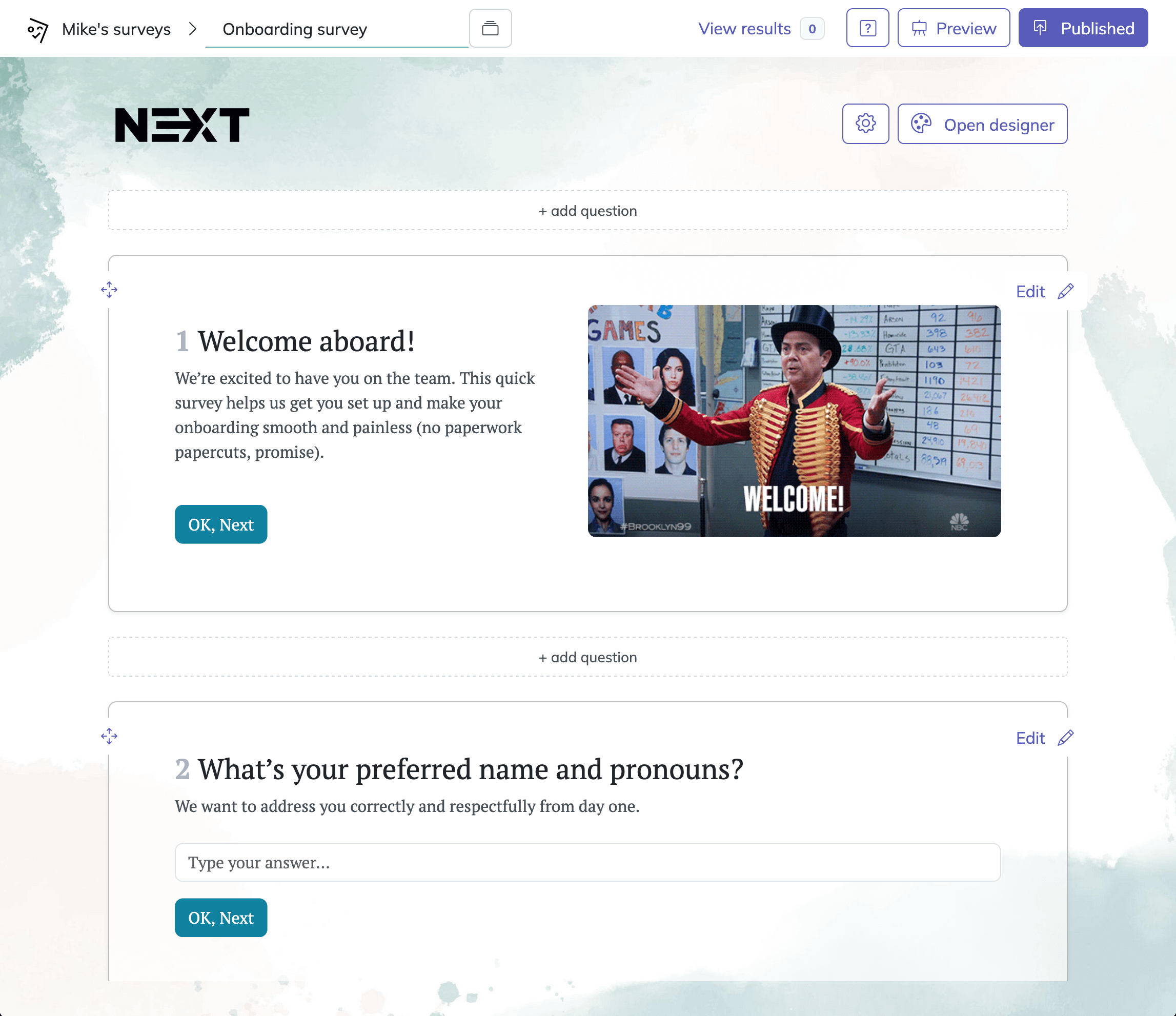
Click the template button below these instructions to open a fitness survey template in HeySurvey. You can start editing without an account. If you’d rather build from scratch, choose an empty sheet or enter your questions as text. Give your survey a clear name, such as “Fitness Habits Survey.” HeySurvey is an online survey maker for creating surveys like this.
2. Add and customize questions
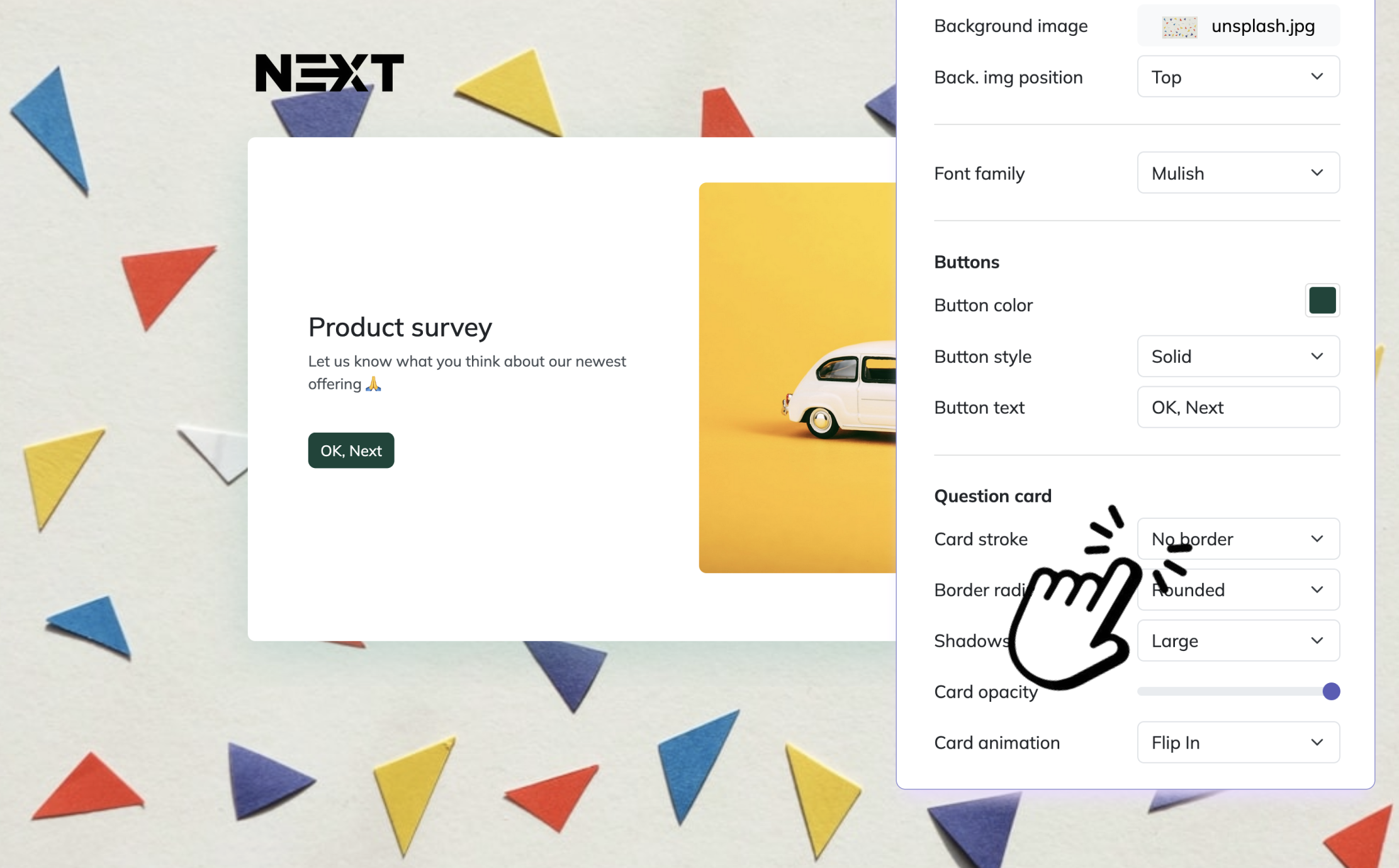
Add questions about respondents’ exercise routines, fitness goals, preferred activities, or barriers to staying active. Choose the question type that fits: use Choice for workout preferences, Scale for activity or motivation ratings, and Number for details such as weekly workout frequency. Click Add Question to include more questions, and mark important ones as required. You can also adjust the survey’s appearance in the Designer Sidebar and preview it as you work.
3. Publish your survey
When your survey is ready, click Preview to check how it looks to respondents. Make any final changes, then click Publish to get a shareable link. You’ll need an account to publish the survey and view responses. Share the link with your intended audience to start collecting feedback.
Workout Habits and Exercise Barrier Survey Questions
Sample questions
During the past seven days, on how many days did you exercise? Options: 0–7 days.
Where do you usually exercise? Options: Gym; home; outdoors; studio; other; not currently exercising.
What most often prevents you from exercising? Select up to three: Time; cost; low energy; uncertainty about what to do; accessibility; caregiving; other; no current barriers.
Which times are usually realistic for your workouts? Include “No suitable time currently.”
How confident are you that you can maintain your current routine over the next month? Scale: 1. Not at all confident; 2. Slightly confident; 3. Moderately confident; 4. Very confident; 5. Extremely confident. Include “Not currently exercising” separately.
What one change would make exercising more manageable for you?
Build your fitness poll around real-life barriers, not assumptions about motivation. Your members’ calendars might already qualify as an endurance sport.
Use defined recall periods rather than “Do you exercise often?” Plus, include people without an established routine.
Whether you call these gym comprehension questions or include them in a questionnaire salle de sport, keep wording neutral.
Why & When to Use
Use these gym questions when participation drops, clients struggle with consistency, or you’re planning support services.
Connect answers to practical changes: shorter sessions, flexible schedules, and beginner guidance.
A review of 58 studies identified time constraints, fatigue, financial restrictions, and limited facilities as common physical activity barriers. Source For more question ideas, see these user feedback survey questions.
Gym Member Satisfaction and Retention Survey Questions
Sample questions
Overall, how satisfied are you with your gym experience? Scale: Very dissatisfied; dissatisfied; neither satisfied nor dissatisfied; satisfied; very satisfied.
How satisfied are you with the cleanliness of the facilities? Use the same five-point scale.
How often can you access the equipment you want without a longer wait than you consider acceptable? Options: Never; rarely; sometimes; often; always; not applicable.
How comfortable do you feel asking staff for help? Options: Very uncomfortable; uncomfortable; neither comfortable nor uncomfortable; comfortable; very comfortable; haven’t needed help.
How likely are you to renew your membership when it next expires? Options: Very unlikely; unlikely; unsure; likely; very likely; not applicable.
What is the single most important improvement we could make?
Keep your fitness poll focused on feedback you can act on. Separate cleanliness, equipment availability, staff support, and value rather than bundling them into one rating.
Anonymous gym comprehension questions may encourage candor when members worry about awkward conversations. Feedback shouldn’t require a disguise.
Plus, compare your questionnaire salle de sport results by membership tenure or visit frequency, reporting only groups large enough to protect identities.
Make follow-up permission optional, not names mandatory.
Why & When to Use
Use periodically, after a member’s first month, or following a major service change.
Look for renewal concerns alongside satisfaction gaps to spot retention risks and prioritize improvements your members value.
Fitness Class and Personal Training Feedback Questions
Sample questions
Which class or training session are you evaluating?
How appropriate was the session difficulty for you? Options: Much too easy; slightly too easy; about right; slightly too difficult; much too difficult.
How clear were the instructor’s explanations? Options: Very unclear; somewhat unclear; neither clear nor unclear; somewhat clear; very clear.
Did you receive suitable exercise alternatives when you needed them? Options: Yes; partly; no; did not need alternatives.
How well did the session match your goals?
What should we keep or change for your next session?
Send your fitness poll soon after the session, while details are fresh but members have caught their breath.
Keep communication, difficulty, and scheduling separate so you know whether to adjust coaching, exercise intensity, or the timetable.
Your gym comprehension questions should check understanding without testing or embarrassing anyone. Try, “Which exercise instructions would you like explained again?” rather than turning cooldown into a pop quiz.
Plus, keep your questionnaire salle de sport brief so members can finish it before heading home.
Why & When to Use
Use these fitness questions for clients after trial classes, new programs, or an initial personal-training session.
Use results to improve coaching explanations, offer suitable exercise modifications, and shape class programming around members’ goals and feedback.
A survey of 322 personal-training clients linked service empathy, assurance, and reliability with higher customer satisfaction. (kci.go.kr) Source
Fitness App Experience Survey Questions
Sample questions
What was your main reason for using the app?
How easy or difficult was it to find a workout suited to your needs?
Which features have you used in the past 30 days?
How useful were the workout recommendations? Options: Not useful; somewhat useful; very useful; have not used them.
Since you started using the app, how, if at all, has your exercise consistency changed? Options: Decreased; stayed the same; increased; not sure.
What is one problem you encountered while using the app?
Keep your fitness poll focused on usability, perceived usefulness, and self-reported behavior, not objectively measured health outcomes.
Avoid “How much has our app improved your overall health and fitness since you started using it?” It assumes improvement and credits the app, taking a victory lap before checking the results.
Self-reports cannot establish medical improvement or causation. Instead, use the neutral consistency question above, which allows decreased activity, no change, or uncertainty.
Plus, use gym comprehension questions to check whether workout instructions make sense, not to claim health benefits.
Why & When to Use
Send your questionnaire salle de sport after onboarding, meaningful feature use, or subscription cancellation.
Use answers to identify friction and guide product improvements without overstating health benefits.
Fitness Poll Questions for Instagram and Gym Member Engagement
Sample questions
- Preferred workout time
Slide text: “When would you try your first workout with us?”
Poll options: “Before work” / “After work”
Invitation: “Want to try that time? Ask us to book your free trial week.”
- Training preference
Slide text: “What would you rather try during a free gym week?”
Poll options: “Strength training” / “Group classes”
Invitation: “Tell us your pick when you book your free trial week.”
- First-visit support
Slide text: “What would help you feel ready for your first gym visit?”
Poll options: “A gym tour” / “A starter workout”
Invitation: “Ask about getting started during your free trial week.”
- Fun workout preference
Slide text: “Your ideal workout soundtrack?”
Poll options: “Throwback hits” / “High-energy beats”
Invitation: “Come find your workout rhythm! Ask to book a free trial week.”
- Training company
Slide text: “How do you prefer to work out?”
Poll options: “On my own” / “With a buddy”
Invitation: “Ready to give us a try? Ask to book your free trial week.”
Keep each fitness poll focused on one easy choice. These gym poll questions for Instagram capture participating viewers’ preferences, not representative findings about all members.
Fun questions to ask gym members start conversations without probing personal details. Save the interrogation for whoever keeps hiding the dumbbells.
Plus, use free-trial wording only if you offer it, with eligibility and restrictions clearly stated. A vote is neither a booking nor consent to marketing.
Keep gym comprehension questions about understanding instructions separate from preference polls, whether on Instagram or in your questionnaire salle de sport.
Why & When to Use
Use a fitness poll for lightweight engagement, quick preference checks, and conversations with prospective members.
Track social poll interest separately from confirmed trial bookings and attendance.
Best Practices for Writing Fitness Survey Questions
Sample questions
Over the past seven days, how satisfied were you with equipment availability? Very dissatisfied / Dissatisfied / Neither satisfied nor dissatisfied / Satisfied / Very satisfied / Not applicable.
Which instruction in your gym orientation, if any, needs clarification? Open response / Not sure.
Start with one decision your survey should inform, such as whether to revise your orientation. Your fitness poll needs a purpose, not a clipboard costume.
Dos
Keep your survey short; prioritize answers you can act on.
Use neutral wording, specific time frames, and clearly labeled response scales.
Ask one thing per question.
Offer “Not applicable,” “Not sure,” or “Prefer not to answer” where appropriate.
Explain why you collect information and how you will use responses.
Test questions with a few people before sharing widely.
Don’ts
Avoid leading gym questions like “How amazing was your workout?”
Don’t combine topics: “How satisfied are you with our trainers and equipment?”
Don’t require sensitive health details for routine satisfaction feedback.
Don’t treat social poll respondents as representative of all members.
Don’t equate perceived improvement with verified health outcomes.
Don’t squeeze every keyword variation into your questionnaire salle de sport or article.
Why & When to Use
Use these checks before launching a fitness poll or updating your questionnaire salle de sport. Plus, keep gym comprehension questions focused on understanding instructions, separate from satisfaction or preference questions.
Turn Fitness Survey Insights Into Action
Sample questions
Which part of your gym onboarding, if any, still needs clarification? Equipment setup / Booking classes / Finding support / Accessibility information / Nothing / Other.
Which single change would most improve your experience? More class times / Clearer coaching / Better equipment availability / Easier onboarding / Improved accessibility / Other.
Your fitness poll should lead to a small, clear action plan, not a spreadsheet that becomes your newest dust collector.
Prioritize Findings and Assign Next Steps
Group responses into scheduling, coaching, equipment, onboarding, and accessibility themes.
Review percentages alongside response counts and relevant audience segments, such as new versus longtime members.
Choose one to three improvements based on frequency, impact, and feasibility.
Give each improvement an owner and a realistic deadline.
Close the Feedback Loop and Measure Progress
Share a concise “You said, we did” update, summarizing themes without exposing personal responses.
Plus, connect each measure to your original goal:
Track trial attendance, class participation, or membership renewal where relevant.
Repeat relevant fitness poll questions using consistent wording and scales.
Repeat gym comprehension questions to check whether revised instructions are clearer, rather than treating satisfaction as proof of understanding.
Why & When to Use
Use this process after reviewing your questionnaire salle de sport or other member survey.
Choose one survey type, collect a baseline, and act on a manageable set of findings before expanding your efforts.
How to Turn Fitness Survey Insights Into Action
Sample questions
Which feedback themes appear most often across responses?
Which issues have the biggest effect on retention or satisfaction?
What quick wins can we implement in the next 30 days?
Which longer-term improvements require budget or staffing changes?
How will we measure whether our changes actually improved member experience?
Action beats collection every time
Why & When to Use
Collecting responses is only useful if your fitness surveys lead to better experiences, stronger retention, and smarter service decisions.
Here’s the thing: the final step after any gym survey, fitness poll, or set of questions to ask gym members is turning patterns into action, not letting them nap inside a spreadsheet.
Start by grouping gym survey questions and answers into recurring themes like equipment, cleanliness, staff support, class schedule, or onboarding.
Plus, prioritize fixes based on three things:
Impact on member satisfaction or retention
Frequency across gym surveys
Feasibility based on time, budget, and staffing
Then build a simple action roadmap.
Assign one owner to each improvement
Set deadlines for 30-day wins and longer-term projects
Track one or two metrics like renewals, visit frequency, or satisfaction scores
Review progress regularly so nothing slips into the "someday" pile
On top of that, close the loop with members by sharing what changed because of their feedback.
That step matters more than many fitness brands realize, because people love being heard almost as much as they love a working treadmill.
The best fitness survey questions are clear, timely, and tied to real decisions.
Pick one gym survey, customize a few questions, use solid fitness survey templates if helpful, and start gathering feedback consistently so you can improve satisfaction, engagement, and retention.
Related Feedback Survey Surveys
29 Catering Survey Questions to Ask Customers
Explore 25 sample catering survey questions to gather feedback, improve events, and understand cl...
29 User Feedback Survey Questions for Better Insights
Explore 25 user feedback survey questions to uncover insights, improve your product, and create b...
29 Environment Survey Questions to Ask Today
Discover 25 environment survey questions with sample answers to improve feedback, measure awarene...